Create catering trends
At just after 6 p.m., Huashan Road in Shanghai enters its busiest time of the day. Several groups of diners are already waiting for tables at the "Hao Guozi" restaurant. Looking through the glass, nearly all the dozen or so tables of this newly opened Guangxi cuisine bistro are fully occupied.
Right next to it is "Sanbaibei", a popular Taizhou cuisine restaurant. This section of Huashan Road connects Jing'an Temple and the Hengfu Historical Conservation Zone, with a high density of trendy small bistros and restaurants in the surrounding area. Many of Shanghai's catering trends first emerge in such neighborhoods, and Hao Guozi is the first Guangxi cuisine restaurant on this street.
Liu Ye, the founder, has been testing dishes for a whole week. Local Guangxi specialties including snail and duck feet hot pot, Guangxi charcoal grilled skewers and roasted chicken, and stir-fried old friend noodles are now appearing on the tables of Shanghai diners. In the past, the "pungent smell" from sour bamboo shoots was hardly associated with the city's sophisticated dining atmosphere; today, this flavor with a distinct regional label has instead become a popular trend pursued by young consumers.
"Do you think this level of acidity and spiciness is acceptable?" Liu Ye keeps asking guests questions, and calls the kitchen supervisor to the table to collect feedback, looking for the perfect balance of flavors across all dishes.
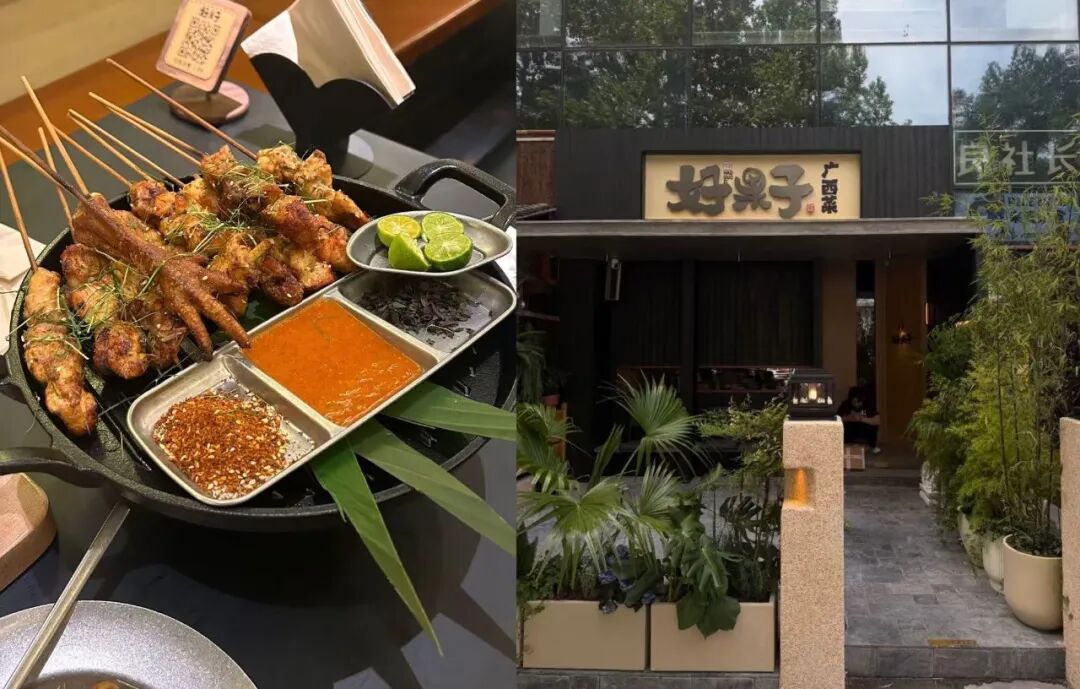
Photo by Li Ye, Jiemian News; Hao Guozi
A short distance east along Huashan Road, long queues have already formed at "Mo Ran" in Shanghai CP Jing'an; another Guangxi cuisine restaurant "Gui Bajiao" has opened in Jing'an Kerry Centre. These restaurants are not far from each other, but their chefs are facing similar problems: how to retain the distinct flavors of Guangxi cuisine while making them acceptable for guests - after all, no one wants to leave a restaurant with a lingering "pungent smell" on their clothes after a meal.
Liu Ye chose sour bamboo shoots with a relatively mild flavor and shorter fermentation time. At the same time, all dishes are fully stir-fried in the kitchen, and no further heating is applied after they are served to the table, to prevent the smell from spreading throughout the restaurant. Gui Bajiao also specifically addressed this problem before opening. The restaurant's executive chef Wu Jianbin selected high-quality bamboo shoots from Guangxi, re-controlled the pickling time, and removed part of the strong pungent flavor through sufficient stir-frying.
In the eyes of Wang Shiwei, a catering franchisee, any cuisine that has the potential to become popular in recent years must first have a clear memorable selling point. "Yunnan-Guizhou cuisine stands out for its special spices and wild mushrooms, Guangxi cuisine for its local sour and spicy unique flavors, and Fujian cuisine for its freshness," she told Jiemian News.
But these flavors did not spread out of Guangxi on their own.
Sour bamboo shoots, perilla leaves, and the sour fruit snacks that were originally sold in plastic bags for people to eat while walking, have traveled more than a thousand kilometers to reach shopping malls in first-tier cities, with the per-person price of a meal reaching nearly 100 yuan. They were not discovered by consumers, but deliberately planned and promoted by experienced catering operators.
"Bale Guangxi Bistro" in Chongqing and Chengdu is the work of the An Nago team. Right before Guangxi cuisine became popular, they already participated in creating the previous wave of Yunnan-Guizhou cuisine trend. The "Gui Bajiao" in Shanghai is backed by Hong Kong's Poets Group, which founded well-known restaurants including Brownstone and Thai Lion. The "Li Jiang" restaurant in Wuhan MixC is operated by a team closely related to Mud Boots and Bie Wu - the latter two are already familiar players in this current wave of "aesthetically pleasing casual dining".
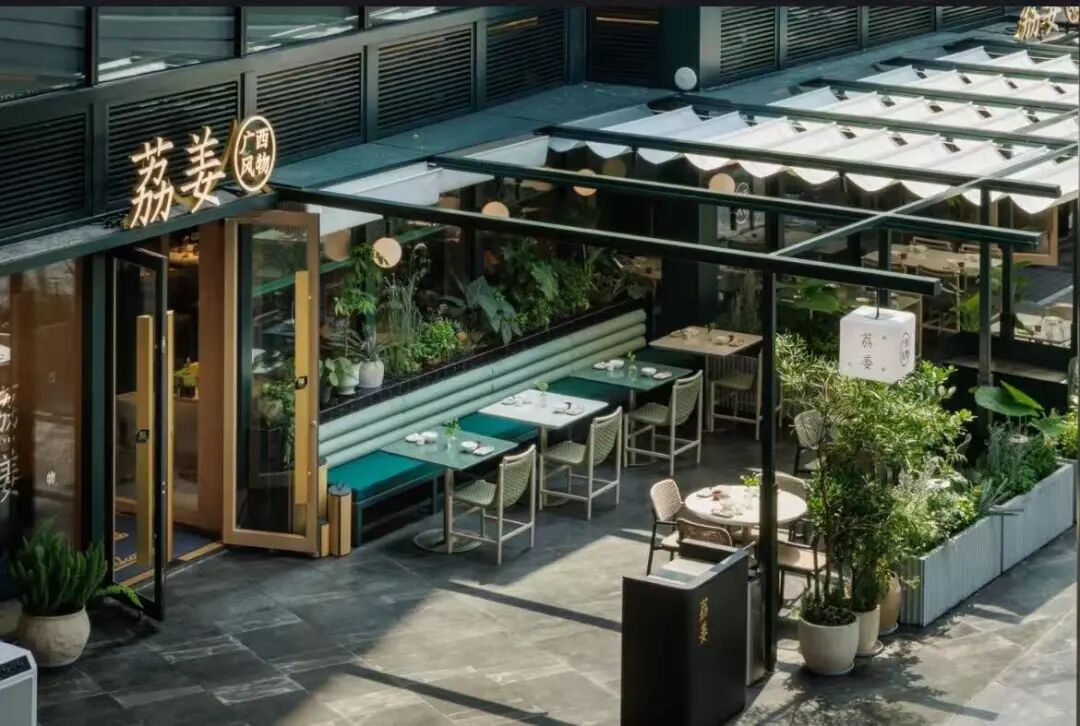
Image source: Li Jiang's official Xiaohongshu account
Even Mo Ran is not an isolated restaurant that suddenly emerged from Guangxi. Its team has participated in the establishment of other regional cuisine brands. After its first store proved a viable business model in Shanghai CP Jing'an, it quickly expanded to Hangzhou, Shenzhen, Beijing, Nanjing and Ningbo.
The newly opened "Monon" next to it, which focuses on Guangxi cinnamon grilled fish, shares the same catering planning team as Mo Ran. The restaurant is decorated with Guangxi-style elements including bamboo woven ceilings, campfires and dead wood. Public information shows that Liu Tianmiao, co-founder of Monon, has previously joined well-known restaurant brands including baking brand Hot Collection, Malajie, and Yunnan-Guizhou cuisine restaurant Ameigo.
If you draw a research route map for this group of catering practitioners, their destinations a few years ago were still Yunnan and Guizhou, with tasks to find wild mushrooms and try Houttuynia cordata, but now their coordinates have moved to Guangxi. They walk into farmlands and wet markets, looking for all kinds of "local specialties" that can be brought back to first-tier cities.
What supports these new flavors to "suddenly" become popular is a mature mechanism: find distinctive niche flavors, and then transform them into the "aesthetically pleasing casual dining" style.
Whether it is Mo Ran, Hao Guozi, or Li Jiang, they all have such characteristics. Especially Li Jiang, which is backed by an experienced casual dining team, serves the common Guangxi sour fruit snacks in light celadon bowls, with carambola, sweet peaches and guava cut into neat shapes. In Guangxi, sour fruit snacks are street-side snacks, but the carefully arranged plating allows them to be sold at nearly ten times the original price.
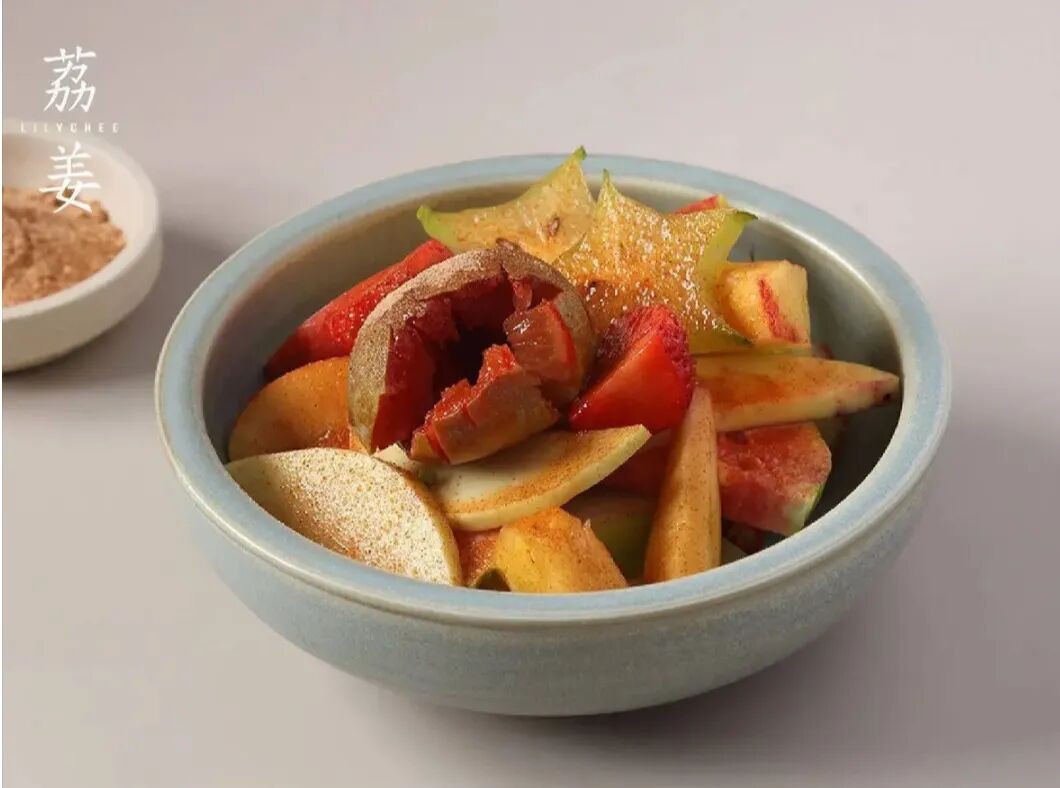
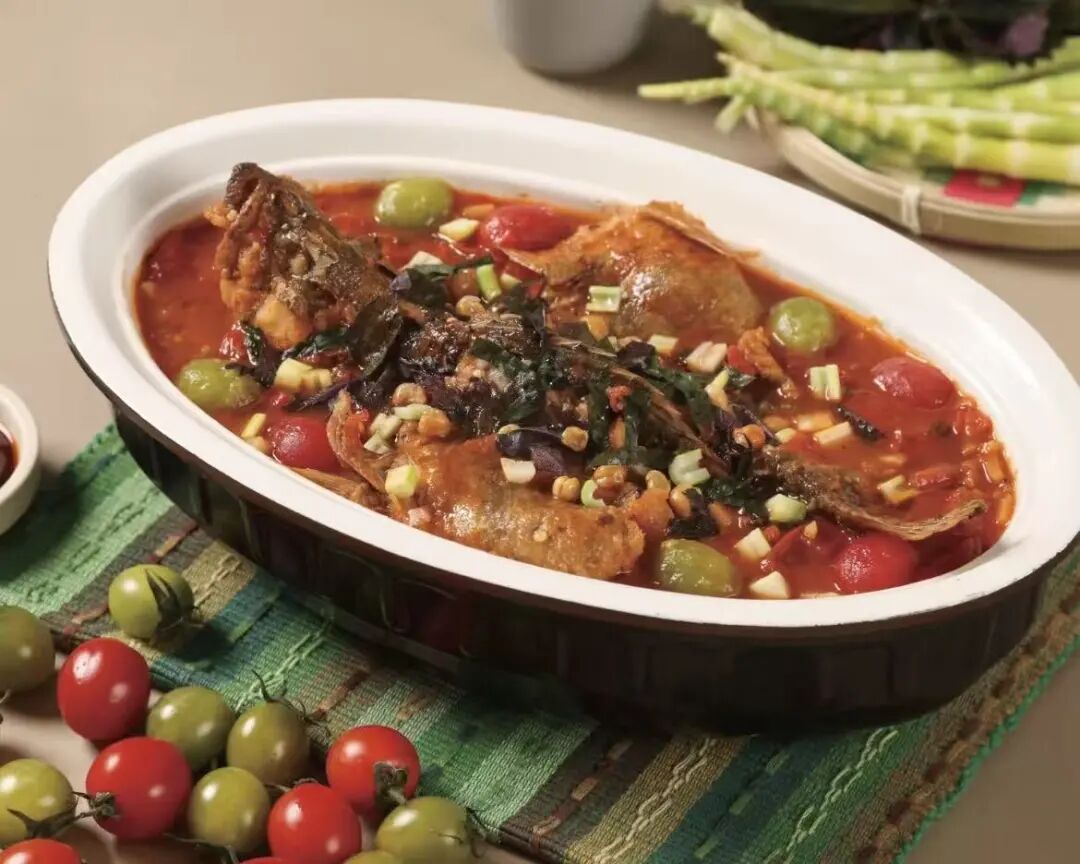
Dishes at Li Jiang, Image source: Li Jiang's Dianping page
However, this "aesthetically pleasing casual dining" transformation is not only about changing plating, but also includes re-exploring and combining dish structures and flavor expressions. While retaining regional elements, it draws on the expression styles of Bistro, Southeast Asian cuisine and Western food, with the goal of making local characteristic food accepted by a wider range of guests.
For example, Hao Guozi serves stir-fried old friend noodles and duck feet hot pot, but its signature dish is stir-fried waxy corn with beef brisket fat, a dish Liu Ye developed to cater to the preference of Jiangsu-Zhejiang-Shanghai diners for chewy, glutinous flavors. Mo Ran serves deep-fried taro slices as a pre-meal snack, which is very similar to the style of Southeast Asian cuisine, while its crispy cheese mashed potato and passion fruit shrimp balls incorporate Western food elements.
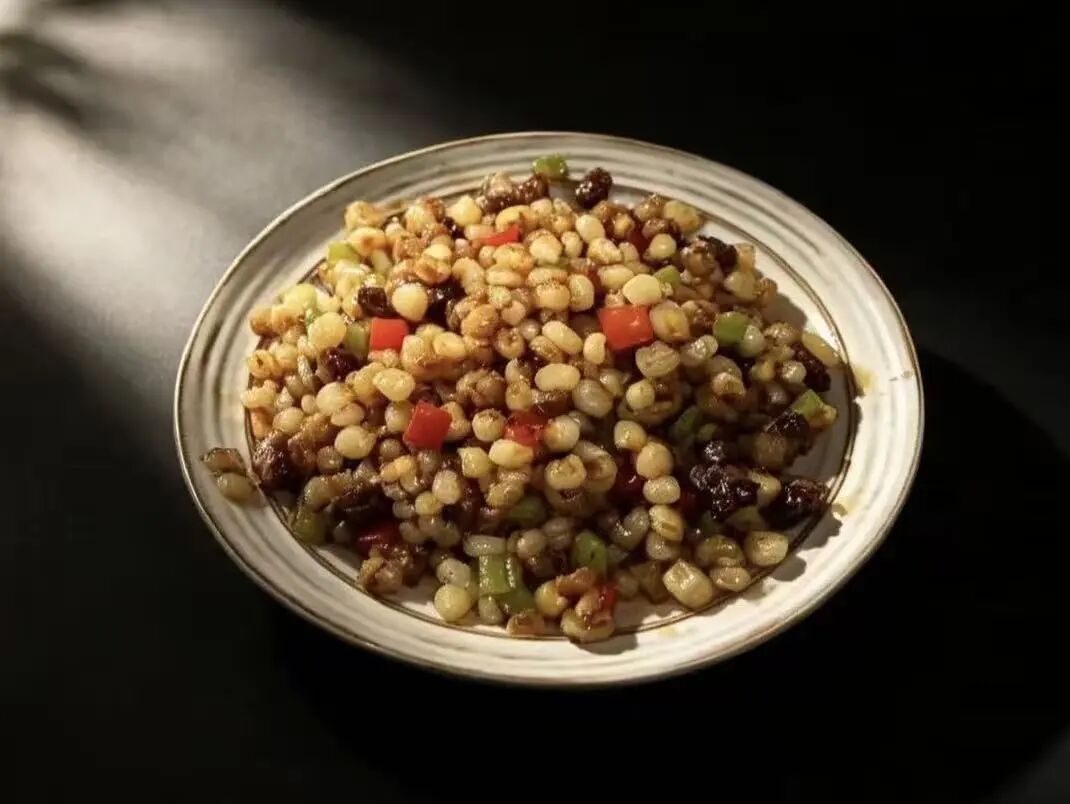
Stir-fried waxy corn with beef brisket fat at Hao Guozi, Image source: Hao Guozi's Dianping page
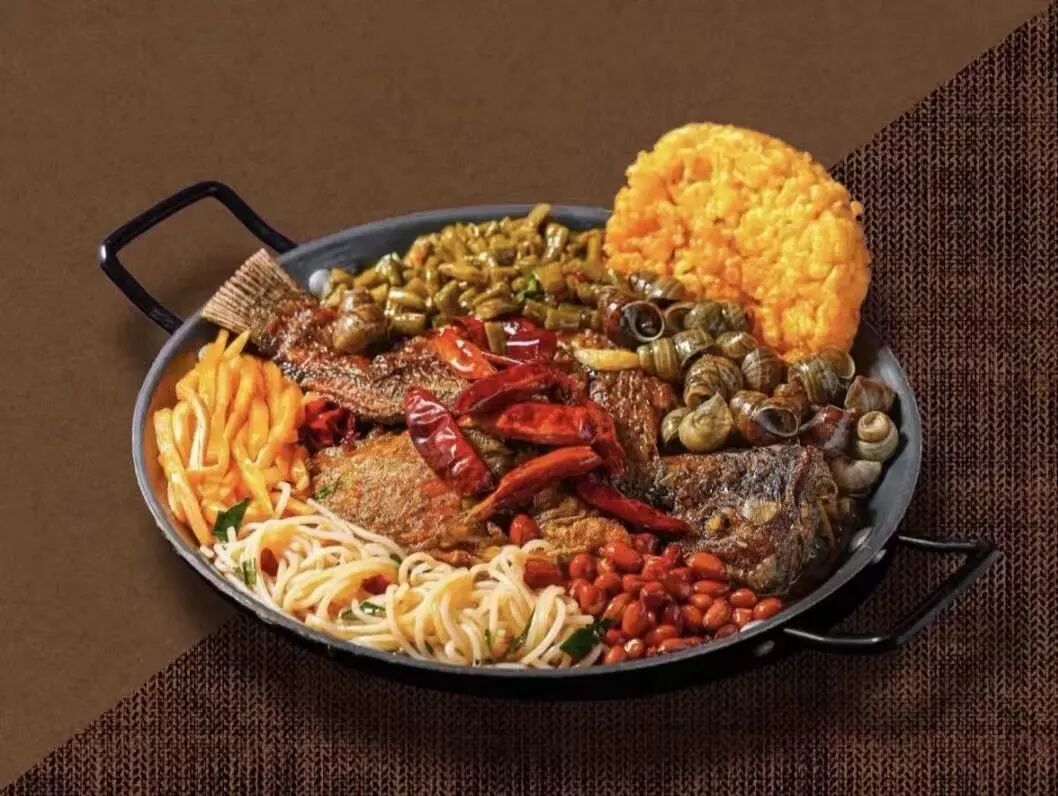
Dishes at Mo Ran, Image source: Mo Ran's Dianping page
But this is only the first step.
Long before the catering industry, local culture had already verified the feasibility of this trend-generating mechanism on social platforms. Cultural and tourism official accounts across different regions have been refining highly recognizable content from dialects, local specialties and regional daily life, and social media platforms such as Xiaohongshu and Douyin have further amplified the spread of these niche cultures.
A catering entrepreneur told Jiemian News that products with outstanding visual effects and segmented categories are particularly easy to gain traffic on Xiaohongshu. "China's catering industry has completed a round of iteration in the era when Xiaohongshu is the main media platform," he said.
Guangxi cuisine has also gone through a similar process. As of September 2025, the total views of Guangxi cuisine-related topics on Xiaohongshu reached 21.065 million, which has exceeded 40 million in less than a year, close to the 46 million views of topics related to Yunnan, Guizhou and Sichuan cuisines. Continuous exposure has aggregated scattered local cultural content into a consumption trend, and commercial players have quickly entered the market afterwards.
Franchisee Wang Shiwei selects investment categories through social media traffic data, and she leads a mature team. When Yunnan-Guizhou cuisine became popular last time, she joined Ameigo and opened its first store in North China. Now, she has also made investments in Fujian cuisine. In her view, trending categories are more likely to get natural platform traffic.
Shopping malls are also part of this mechanism. After the first Mo Ran store entered Shanghai CP Jing'an, which is operated by China Resources Mixc Lifestyle, it was quickly replicated to multiple Mixc and Mixc World projects across the country. A person close to China Resources Land told Jiemian News that local cuisines can attract foot traffic, which shopping malls need to drive overall consumption. Mature catering groups can provide stable brands for investment promotion, and even replicate them in different commercial projects of the mall. The two sides support each other and promote mutual development.
In this way, a complete trend generation chain has gradually taken shape: local culture provides creative materials, platforms amplify public attention, entrepreneurs turn the concepts into marketable products, and shopping malls promote large-scale replication. The catering industry is exactly one of the fields where this mechanism is easiest to implement.
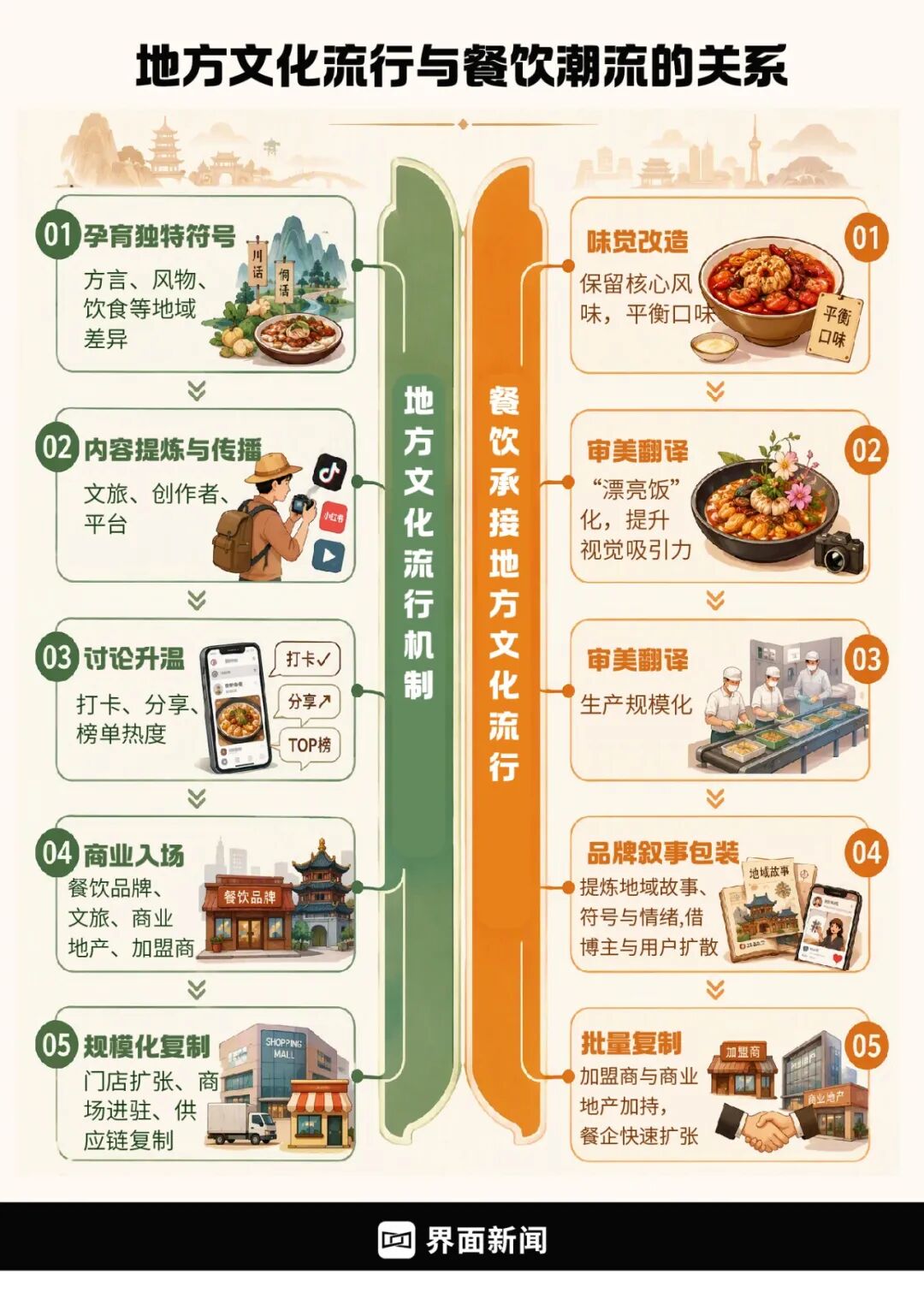
In this catering trend manufacturing mechanism, the development model of the industry has gradually become fast-fashion oriented.
This is completely different from the success model imagined by Chinese catering entrepreneurs more than a decade ago.
In 2012, at a catering chain conference, a senior industry figure said to Jia Guolong, the founder of Xibei, that no Chinese restaurant in history had ever managed to open more than 300 stores. Jia Guolong did not accept this statement, and promised on the spot that he would definitely open 300 stores by 2019. He also joked with Zhang Yong, the founder of Xinrongji, saying: "You focus on building top-tier high-end brands, and I focus on expanding everywhere." Xinrongji focuses on high-end positioning and Michelin stars, while Jia Guolong's ideal is to open his restaurants everywhere.
"Expanding everywhere" was almost the most straightforward ambition of the previous generation of chain catering entrepreneurs. When they started their businesses, the successful benchmark they targeted was KFC and McDonald's from Western countries - building century-old brands with large-scale expansion.
Zhang Yong of Haidilao is the same. In the middle of his entrepreneurial journey, he opened the first overseas store at Clarke Quay in Singapore. He felt that the biggest shortcoming of Haidilao at that time was standardization and institutionalization, so he went abroad to test whether this management system could still be replicated outside China.
But today's catering entrepreneurs who create trends follow a completely different paradigm - they may not even believe that a brand should expand to a thousand stores.
"We all know this set of ideas and strategies, but the probability of it succeeding now is very low," said the founder of a leading catering group to Jiemian News. He has incubated many catering brands with good public attention and store numbers in the past one or two years. "Among the brands that have emerged in recent years, you can hardly find one that has opened 1000 stores in a short period of time."
Even though the dessert and tea brands incubated by this entrepreneur are very popular right now, he has already started preparing for other new brands and overseas expansion plans. Some catering practitioners have gradually realized that in the current environment where consumption cycles are iterating faster and are highly unpredictable, launching new popular brands faster is more important than extending the life cycle of a single brand.
Compared with maintaining the replication of one brand for ten or twenty years, they care more about whether they can be the first to discover a rising flavor trend, quickly launch products to the market before consumers get aesthetic fatigue, and seize the trend window.
A practitioner with many years of catering franchise experience told Jiemian News that the most direct audience for creative catering brands has always been young people, but the instantly changing traffic content on social media has undoubtedly greatly increased the chance of people seeing new brands, accelerating the diversion of customer groups. "The periodicity of trends is irreversible," the above-mentioned catering entrepreneur admitted.
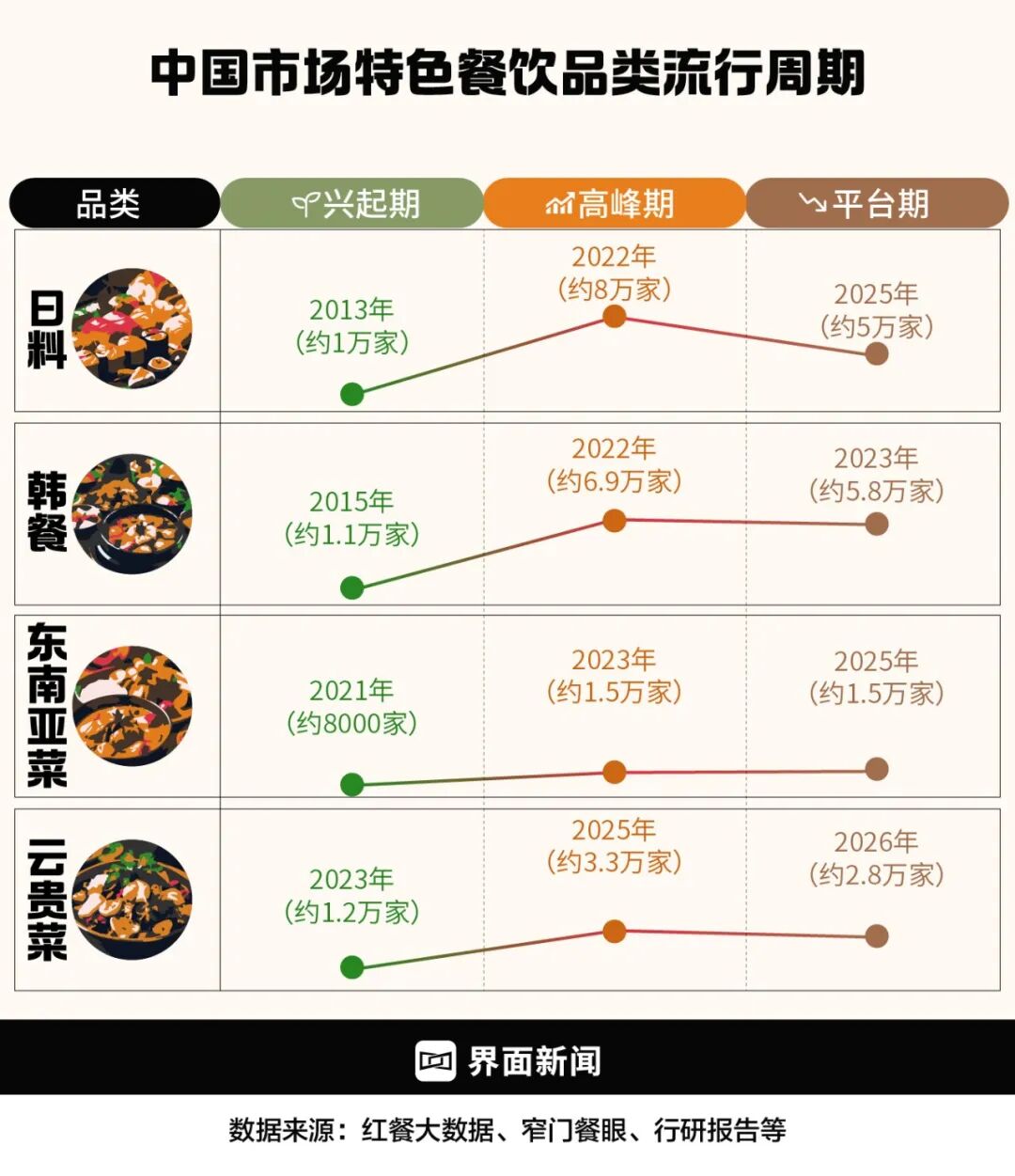
And when catering practitioners need to constantly find styles that can quickly form a distinct identity, regional cuisines just provide a steady stream of inspiration.
In fact, this is not just an isolated catering trend.
In the past few years, a widespread "return to regional characteristics" has emerged in China's cultural consumption. People are starting to pursue differences and niche characteristics amid homogeneous aesthetics and consumption.
This feature is particularly obvious in the film and cultural tourism sectors. Quanzhou in Fujian has become a popular travel destination relying on the Zhanhua flower hairpin custom and Minnan ancient houses. The TV series *My Altay* has brought the daily life of northern Xinjiang pastures and Kazakh people into the national vision. The film *Love Letter to Grandma* has gained popularity outside South China relying on Chaoshan dialect and the history of people migrating to Southeast Asia. Li Wensi, associate researcher at the Institute of Literature of the Chinese Academy of Social Sciences, once stated that this shows that local culture is becoming unique cultural resources for different regions.
