Leading AI Medtech Firm Claims Its First Profit — We Pored Over Its Full Financial Report: It Is Not the AI Business That Makes Money.
Amid the current red-hot market, is AI healthcare actually making profits?
Recently, Tempus AI (NASDAQ: TEM), the leading US-listed AI healthcare player, released its latest Q2 2026 financial report, announcing that it had achieved quarterly profit for the first time.
This immediately sparked widespread public acclaim, many voices regard Tempus AI crossing the break-even point as a key sign that AI healthcare has established a viable business model.
The public's high recognition of Tempus AI partly stems from the huge popularity the company has received in the capital market.
Since its listing in June 2024, Tempus AI's share price has hit a peak of $104.32, with its current market value approaching 10 billion US dollars and a price-to-sales ratio exceeding 6x.
Cathie Wood, a well-known Wall Street investor, has long held a heavy position in Tempus AI, and Duan Yongping, known as the "Chinese Warren Buffett", once took a small position in the stock, which further made Tempus AI well-known in China.
Tempus AI's position in the industry should not be underestimated.
The company is one of the largest genetic sequencing institutions for cancer and other disease patients in the United States, and 19 of the world's top 20 listed pharmaceutical companies are its clients.
As a healthcare technology company with "AI" in its name, Tempus AI claims that it is "focused on bringing artificial intelligence and machine learning into the healthcare sector".
At a time when the AI wave is sweeping the healthcare industry, the first profit report of such a company is worth our careful examination by sifting through complicated figures and capital hype.
What exactly has AI brought to healthcare? Is it really profitable?
01
The Truth:
Turnaround from loss to profit relies on "other income"
Purely from the perspective of net profit, Tempus AI did turn a loss into a profit in the second quarter of 2026.
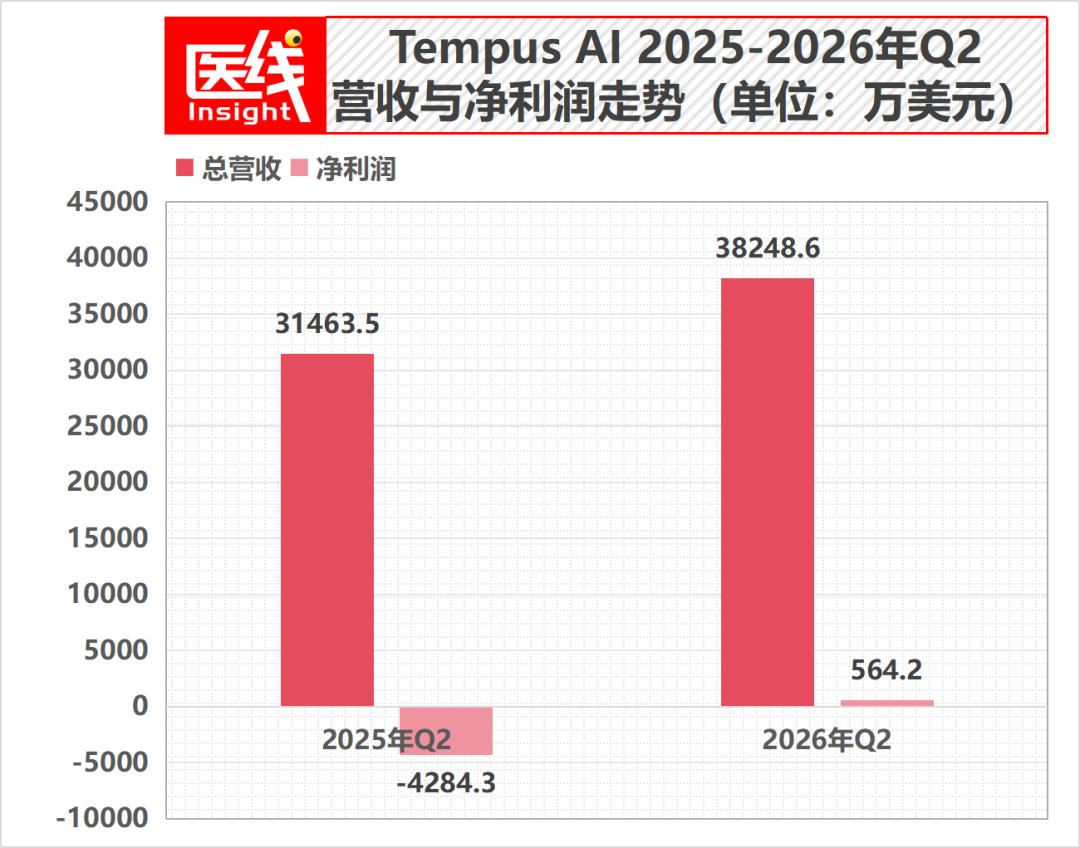
The Q2 2026 financial report shows that Tempus AI posted revenue of 380 million US dollars, up 22% year on year.
Its net profit reached 5.642 million US dollars, compared with a loss of 42.843 million US dollars in the same period of 2025, so it is reasonable to call this its first quarterly profit.
Data source: Tempus AI Q2 2026 financial report
However, it is overstating the case to judge that Tempus AI has crossed the break-even line based on this, or even take it as a sign that the medical AI business model has been fully validated.
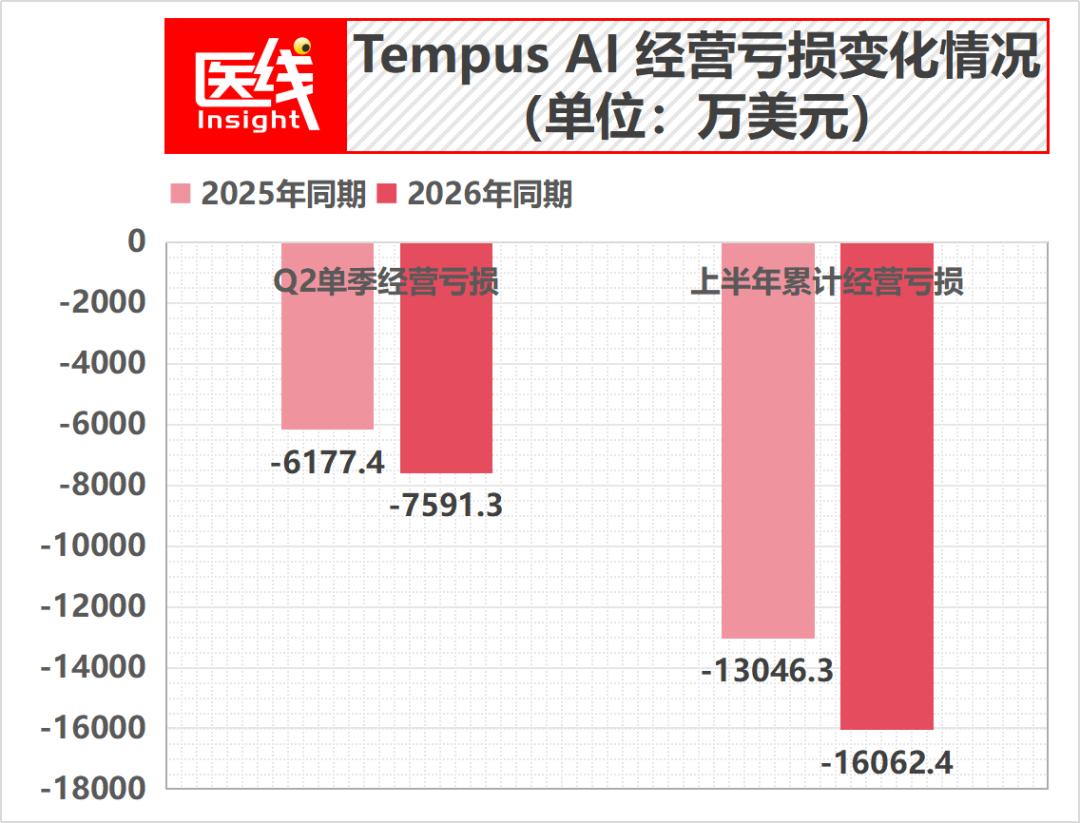
A close look at the financial report reveals that Tempus AI's operating profit in Q2 2026 was actually in deficit, and the loss of 75.913 million US dollars even expanded by 22.89% compared with the same period last year.
This means that Tempus AI's main business has not really begun to generate sustainable cash flow, and losses are still continuing.
If we extend the time horizon to the first half of the year, this actual loss in core business becomes even more obvious.
The latest financial report shows that Tempus AI recorded an operating loss of 160 million US dollars in the first half of 2026, 30 million US dollars more than the same period last year.
Data source: Tempus AI Q2 2026 financial report
If we further break down its cost structure, we will find that the important driver behind the expanding operating loss is its high internal expenses.
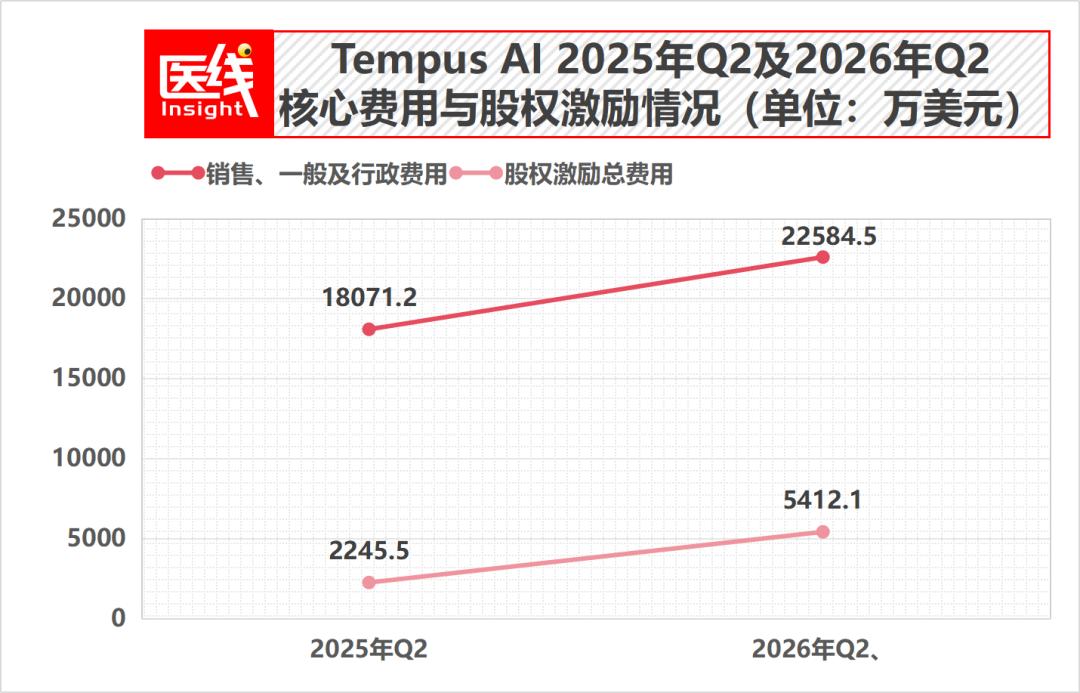
The financial report shows that in Q2 2026, Tempus AI's sales, general and administrative expenses reached 226 million US dollars, accounting for nearly 60% of the total revenue of the quarter.
At the same time, the company's total "equity incentive expenses" for the quarter hit as high as 54.12 million US dollars (of which 35.59 million US dollars were included in sales, general and administrative expenses), more than doubling from 22.45 million US dollars in the same period last year.
While the core business lacks sufficient cash generation capacity, the company still maintains huge expenditures by distributing a large number of stocks, and its actual profitability remains weak.
Data source: Tempus AI Q2 2026 financial report
Then how did it achieve the turnaround from loss to profit in Q2 2026?
The answer lies in interest income and other income.
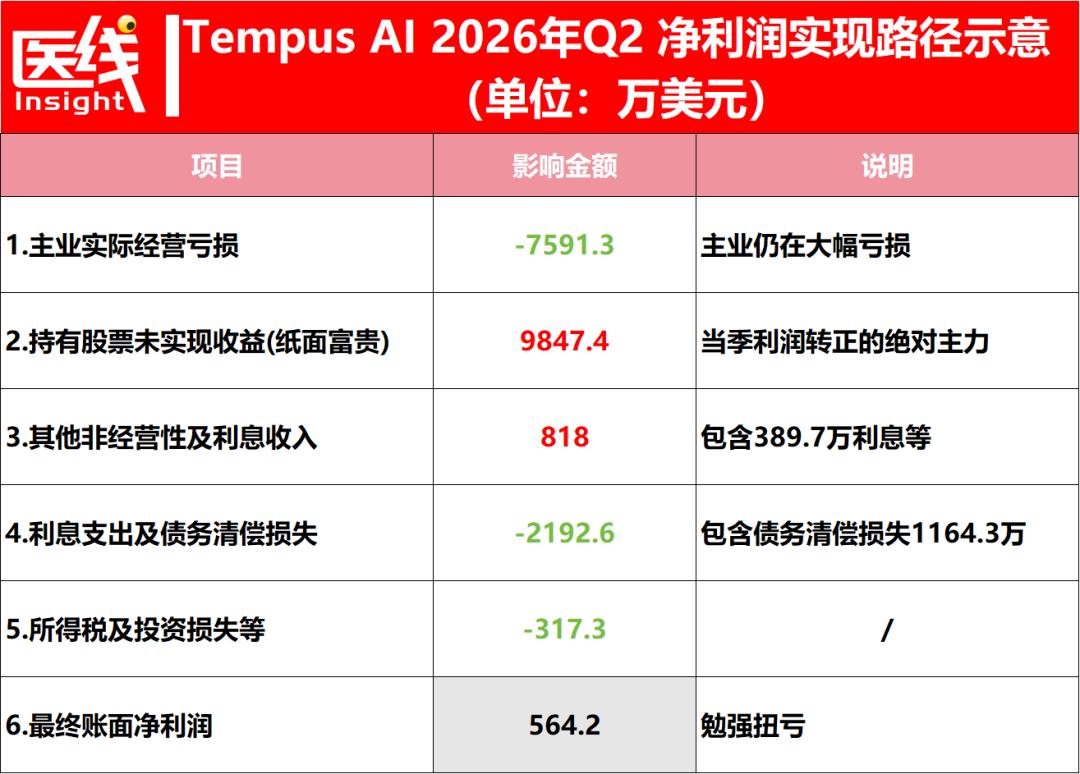
The financial report discloses that Tempus AI recorded 3.897 million US dollars in interest income and about 103 million US dollars in other income in Q2 2026.
It is with these two huge non-operating gains that after covering nearly 76 million US dollars of operating losses and offsetting tens of millions of US dollars in interest expenses and debt settlement losses, the company barely turned its net profit positive to more than 5 million US dollars.
Data source: Tempus AI Q2 2026 financial report
In other words, the roughly 103 million US dollars in other income is the real reason why Tempus AI achieved its first quarterly profit.
This income nominally includes foreign exchange gains, intellectual property licensing fees, and gains from holding marketable securities.
02
Further Inquiry:
The "profit" is full of inflated elements
In any case, Tempus AI eventually reported a profit. But an in-depth dive into the financial report finds that the credibility of this "profit" is full of moisture.
Data shows that of the roughly 103 million US dollars in other income in Q2, as much as 98.47 million US dollars came from "unrealized gains" on the stocks it holds, accounting for nearly 96%.
This means that the vast majority of the funds that forcibly pulled Tempus AI over the break-even line are not real, cashed-in money, but purely "paper wealth" brought by stock price fluctuations in the capital market.
For comparison, just three months earlier in Q1 2026, Tempus AI recorded an unrealized loss of more than 32 million US dollars due to the drop in the same stock positions.
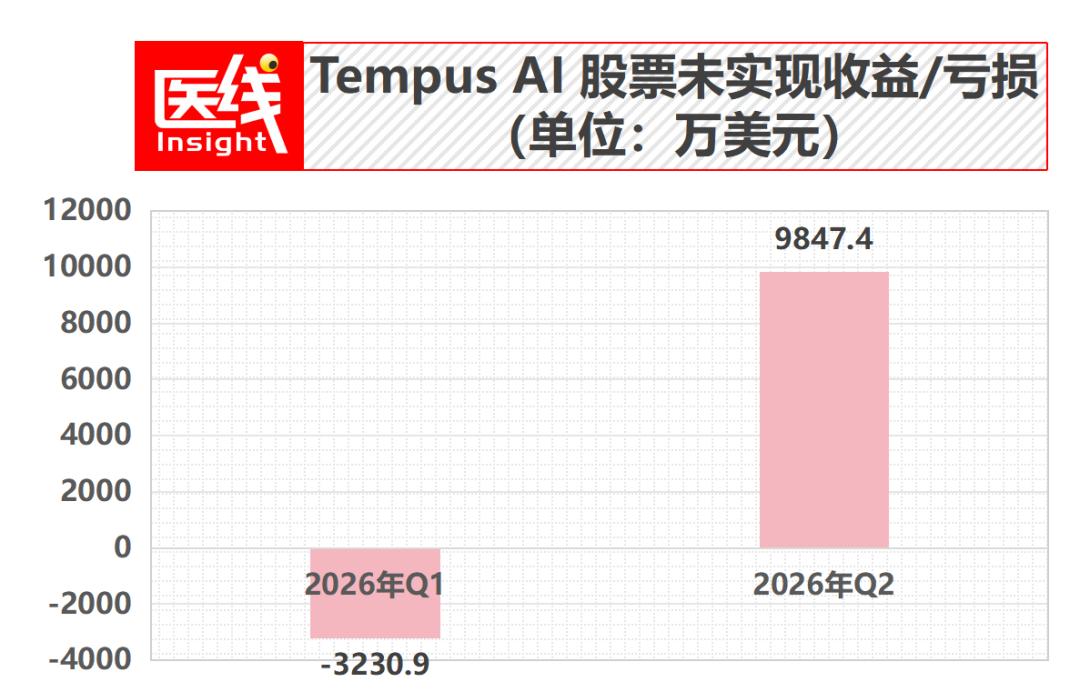
Data source: Tempus AI Q1 and Q2 2026 financial reports
This kind of roller-coaster revenue that "depends on the weather" obviously cannot prove the sustainability of its business model.
What deserves more attention is the underlying assets it holds.
The financial report shows that the stocks held by Tempus AI are mainly Recursion (NASDAQ: RXRX) and Personalis (NASDAQ: PSNL).
According to the "Subsequent Events" section of the Q2 financial report, Tempus AI just announced on July 20 this year that it plans to acquire the remaining shares of Personalis for a total enterprise value of 1.5 billion US dollars.
Using the paper premium brought by the rising stock price of the "to-be-acquired target" to fill its own huge loss in the quarter is not so much a victory for AI commercialization as a precise capital operation game.
The intellectual property is licensed to SB Tempus.
This is an affiliated enterprise of Tempus AI, which was established as a joint venture between Tempus AI and SoftBank Japan in 2024, aiming to introduce Tempus AI's precision medicine and AI technology into the Japanese market.
Having understood the truth behind Tempus AI's quarterly profit, what is its actual business operation status?
Judging from the financial report, Tempus AI's revenue mainly comes from its diagnostic business and data & applications business.
The diagnostic business refers to genetic sequencing, with the vast majority of its revenue coming from clinical orders for doctors and patients (the costs are mainly covered by federal Medicare and commercial insurance), and a small portion from B-end clients such as research institutions, pharmaceutical companies and other third parties.
The data & applications business provides data licensing and clinical trial services to pharmaceutical and biotech companies, which means selling data, helping pharmaceutical companies recruit patients for clinical trials, and other related services.
Tempus AI's business logic is very clear: obtain a large amount of medical data through genetic sequencing, and then generate derivative businesses such as data trading and clinical trials based on these data.
However, different from the "wool comes from the dog" play that domestic internet companies are keen on, which drives traffic through entry points and then monetizes the traffic, genetic sequencing is not only Tempus AI's data entry point, but also its cash cow.
The financial report shows that the diagnostic business contributed about 290 million US dollars in revenue to Tempus AI in Q2 2026, accounting for more than three quarters of the total. The data & applications business generated close to 100 million US dollars in revenue, accounting for less than a quarter.
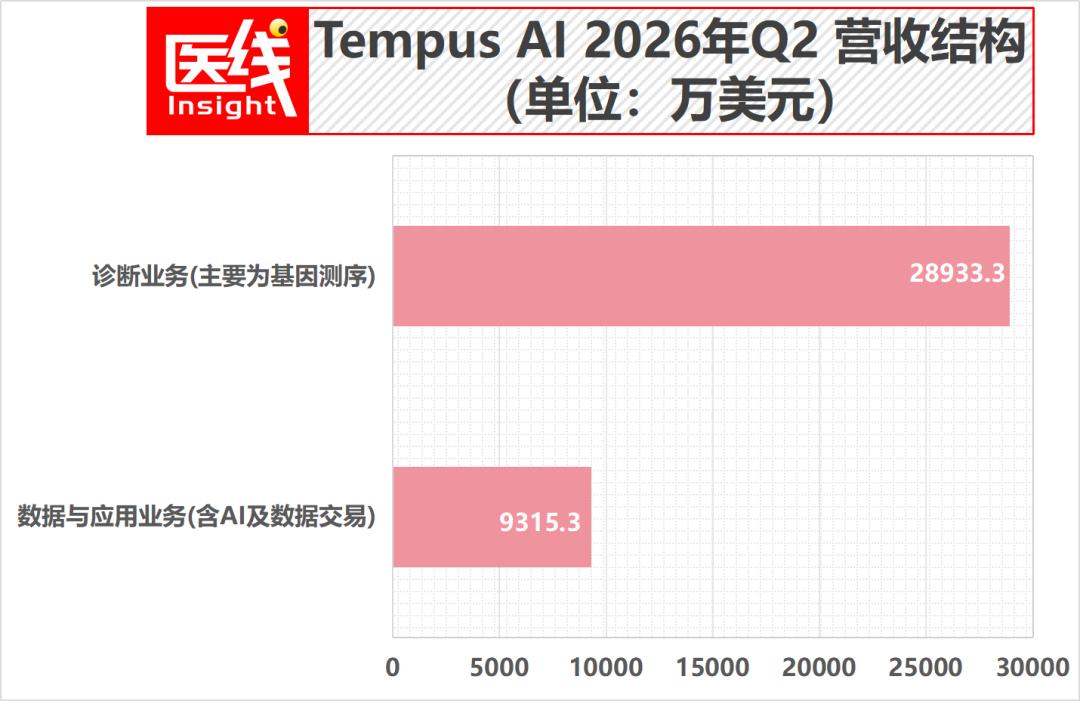
Data source: Tempus AI Q2 2026 financial report
In other words, at least at the current stage, Tempus AI is essentially still a genetic sequencing company.
As such a genetic sequencing company, where is its AI content? Where has the "artificial intelligence and machine learning to be introduced into the healthcare sector" it claimed been applied?
03
Business Perspective:
The actual growth of AI business is also unsatisfactory
At present, Tempus AI's AI business is mainly included in the data & applications segment.
In this part of the business, in addition to selling data, it also includes clinical trial matching and analysis services using artificial intelligence technology.
This is specifically embodied in a product called Next.
Tempus AI introduces that "this is an artificial intelligence platform that uses machine learning technology to build an 'intelligence layer' on top of routinely generated data, which can proactively identify and narrow the care gaps for cancer and heart disease patients."
Roughly speaking, this Next AI product can act like a detective, automatically finding patients whose conditions are missed by doctors or who may have problems in the future from a large amount of routine data generated by hospitals every day (such as test sheets and medical records), and alerting doctors to deal with them as soon as possible, so that cancer and heart disease patients can receive more timely and comprehensive treatment.
However, the revenue contributed by this AI product to Tempus AI is still limited.
Next generated 6.3 million US dollars in revenue in the second quarter of 2026, compared with 5.7 million US dollars in the same period last year; the cumulative revenue in the first half of 2026 was 12 million US dollars, compared with 8.4 million US dollars in the same period last year.
Whether last year or this year, Next's revenue accounted for less than 2% of the total revenue in the corresponding period, which is basically negligible.
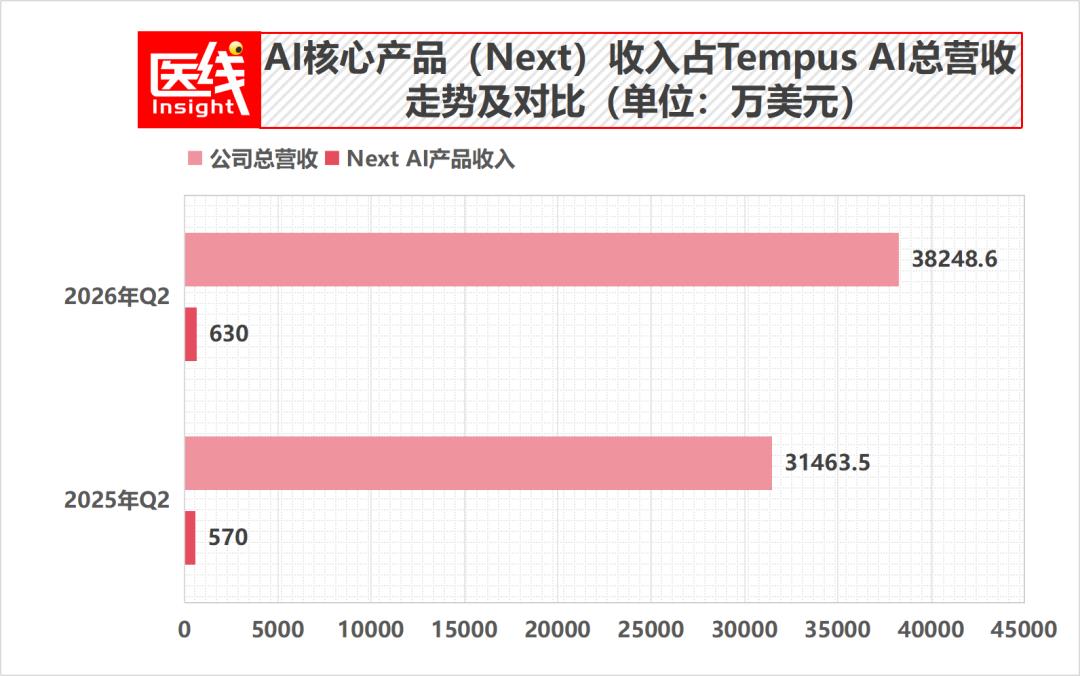
Data source: Tempus AI Q2 2026 financial report
Frankly speaking, at a time when a large number of AI enterprises focusing on large models have not yet achieved real profits, it is perhaps too much to expect a healthcare technology enterprise applying AI to make money purely from AI.
What the capital market pays for is more the potential possibility that AI can bring changes and generate returns for the healthcare industry.
The possibility demonstrated by Tempus AI stems from the massive medical data accumulated from its genetic sequencing business. This data can be directly exchanged for cash, and can also be used to train models.
Although the absolute revenue contributed by the data & applications business is less than that of the genetic sequencing business at present, it has a higher gross profit margin and faster growth rate.
In Q2 2026, Tempus AI's data & applications business recorded a gross profit margin of over 70%, with revenue growing 28% year on year. Both indicators were nearly 10 percentage points ahead of the diagnostic business.
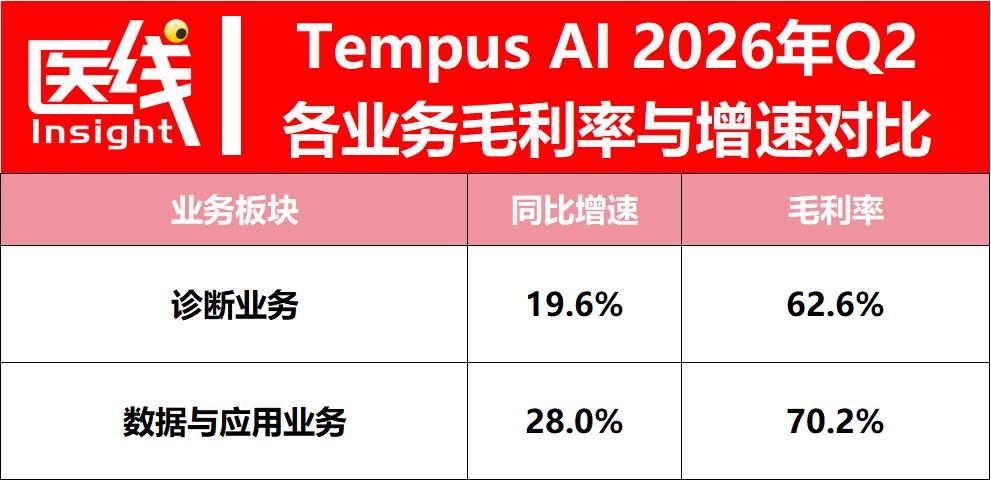
Data source: Tempus AI Q2 2026 financial report
However, the quality of growth of this high-margin AI business, which is placed with high hopes, needs to be viewed with great suspicion.
The Q2 financial report