Xiaomi has already forayed into the extended-range EV sector, yet you are still talking down this technical route?
A few years ago, no one would argue with you if you claimed that extended-range technology was the key growth driver for the expansion of the new energy vehicle market; but today, if you still advocate for extended-range solutions, plenty of people will say you are not sober-minded. After all, against the backdrop of the overall decline in the automotive market, extended-range vehicles with additional fuel tanks have long lost their past glory.
According to data from the China Passenger Car Association (CPCA), the total volume of China's automotive market dropped in the first half of this year. The overall retail sales of the passenger vehicle market fell from 10.901 million units in 2025 to 8.701 million units, a year-on-year decline of 20.2%. Both fuel vehicles and electric vehicles are continuing to hit new lows.
Among them, retail sales of domestic new energy passenger vehicles reached 4.704 million units, down 14% year on year. Fortunately, new energy vehicles are far more "resistant to decline" than traditional fuel vehicles, so that the retail penetration rate of new energy vehicles in the first half of this year did not drop but rose, increasing from 50.2% in 2025 to 54.1%.
However, no matter how "resistant to decline" they are, the new energy vehicle market cannot avoid a downward trend under the influence of the overall market. Among them, the retail sales of models with three different power forms, namely Battery Electric Vehicle (BEV), Plug-in Hybrid Electric Vehicle (PHEV) and Extended-Range Electric Vehicle (EREV), have shown obvious differentiation:
In the first half of this year, BEV retail sales only fell by 6.6% year on year, with the strongest resilience; the cumulative retail sales of narrow-sense PHEV decreased by 27.6% year on year; the cumulative retail sales of EREV reached 439,000 units, down 19.4% year on year, making it the only track among the three new energy routes that saw double declines in both wholesale and retail sales.
Regarding the sluggish and poor sales performance of the automotive market in the first half of the year, many reasons have long been identified inside and outside the industry, such as subsidy phase-out, weakening demand, the shift from an incremental market to a stock market, intense price wars that make consumers hold money and wait-and-see...
No matter what the reason is, the market data for the first half of this year shows that extended-range vehicles have indeed borne the brunt, and even formed an inertial downward trend.
Surprisingly, in the face of this objective fact, Xiaomi Auto, which has achieved outstanding sales performance in the pure electric vehicle segment, left its comfort zone and entered the extended-range market against the trend. The sudden launch of Xiaomi Pengcheng has triggered more wait-and-see sentiment — is there still a chance for extended-range vehicles to turn around?
01
The Old Extended-Range Track Is Dead
Yet Product Innovation Still Remains Vigorous
Li Auto has secured a strong market position relying on extended-range vehicles, AITO has gained a firm foothold in the high-end new energy market with extended-range models, Xpeng Motors has effectively eased its operational pressure through extended-range products, and Leapmotor's monthly sales exceeding 100,000 units are also inseparable from the contribution of its extended-range vehicle lineup. Even joint-venture automakers such as Volkswagen and Nissan, who once looked down on new energy vehicles, are continuously pouring into the extended-range market.
Are they all unaware of the changes in sales figures in the extended-range market?
Of course they are. But compared to the changes in the extended-range market, automakers seem more willing to bet on the certainty of extended-range vehicles.
In other words, the 0-to-1 user education process has been completed. As long as extended-range vehicles with stronger product competitiveness are launched, market share can be seized. Therefore, compared with "following the trend to take sides", the reaction of these automakers is more like a kind of business consensus.
This is similar to the concept of "daring to be the latecomer who outperforms early movers". Relying on strong supply chain capabilities, the market will enter a new round of reshuffling, and then the latecomers can seize the leading position. During the pre-heating period of Xiaomi Pengcheng, Lei Jun further explained this point.
"Whether to choose extended-range or pure electric is never a dispute over technical routes, but a choice of product definition and experience pursuit." According to Lei Jun, the extended-range market is far from saturated, and on the contrary, there is huge room for development. To illustrate this point, Lei Jun cited the example of the new generation Li Auto L6:
"The new generation Li Auto L6 was newly launched, with sales continuing to rise, and it has no impact on Li Auto i6 at all. This proves that the demand for extended-range vehicles is real and strong, and users are willing to pay for excellent extended-range products."
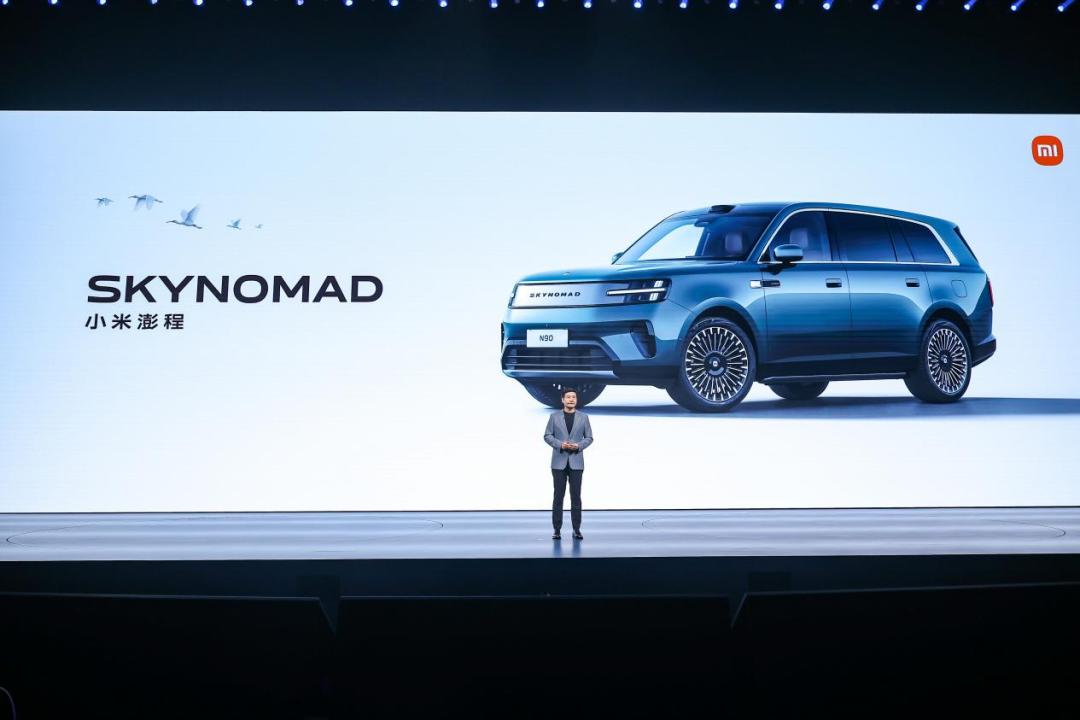
In fact, there are many internal and external factors that prompted Xiaomi Auto to launch the Pengcheng series; according to its official statement, this is actually a card that has been "held back" for 3 years. But if you simply assume that Xiaomi Auto defined Pengcheng based on the market and technical standards 3 years ago, you are really too naive.
Take the Pengcheng N90 as an example. This vehicle is positioned as a large-size family SUV, with a total vehicle weight close to 2.8 tons, and its square shape brings an unavoidable high wind resistance. If it is forcibly made into a pure electric version, to achieve a considerable cruising range, the only option is to continuously stack batteries.
The heavier the vehicle, the higher the energy consumption; the higher the energy consumption, the larger the battery needs to be installed, which eventually falls into a vicious circle. Battery weight, total vehicle cost and purchase price will all rise accordingly, and the final product will be separated from the mainstream 250,000 to 300,000 RMB family vehicle market. The extended-range technology can just break this deadlock and achieve a balance between cost and gross profit.
Therefore, rather than saying that Xiaomi Auto chose the extended-range technology, it is more accurate to say that the extended-range solution for the Pengcheng product defined by Xiaomi Auto better conforms to the "first principle". Under the red-hot competition in the extended-range market, Xiaomi Pengcheng is trying to break through with more product innovations —
Relying on the large battery solution, the maximum 505km CLTC pure electric cruising range covers daily commuting scenarios; for fuel consumption in power-depleted state, the Pengcheng N70 series achieves a minimum of 5.7L/100km, and the N90 series four-wheel drive model reaches 6.26L/100km; it supports No. 92 gasoline, and the range extender only needs maintenance 3 years or 30,000 km after the first maintenance; the spatial functionality is fully optimized, with a versatile cabin layout that meets the needs of various scenarios.
There is no doubt that the extensive growth "old extended-range era" has come to an end. As the category dividend gradually fades away, market competition has officially entered the stage where product competitiveness determines the final outcome. At this stage, everything is judged by product innovation! That is why when Xiaomi was questioned that it was too late to enter the extended-range market now, Lei Jun firmly said those two words: "It's not too late".
02
Pure Electric and Extended-Range
Are Never a Zero-Sum Game
"People in Beijing and Shanghai think charging is no longer a problem, that's because they haven't seen the scene of long queues at highway service areas in county towns on the second day of the Lunar New Year."
Many people believe that batteries with higher energy density, more popular fast charging facilities, and lower vehicle usage costs are destined to make pure electric vehicles the mainstream form of future mobility. Little do they know that regional differences and resource gaps will keep pushing back the timeline for the final victory of pure electric vehicles.
It is undeniable that the extended-range vehicle market will most likely further shrink in the future, which is also related to the overall economic environment. But it needs to be made clear that there has never been a zero-sum game between the extended-range and pure electric markets, and they are more inclined to complement and coexist with each other.
First of all, the core user groups of pure electric vehicles and extended-range vehicles are inherently different.
Pure electric vehicles are more suitable for urban users with convenient charging conditions; while a large part of the user group of extended-range vehicles targets large-size SUVs, who hope to get the driving experience of electric drive, but are restricted by practical conditions such as no home charging piles, frequent long-distance travel, and low-temperature range anxiety.
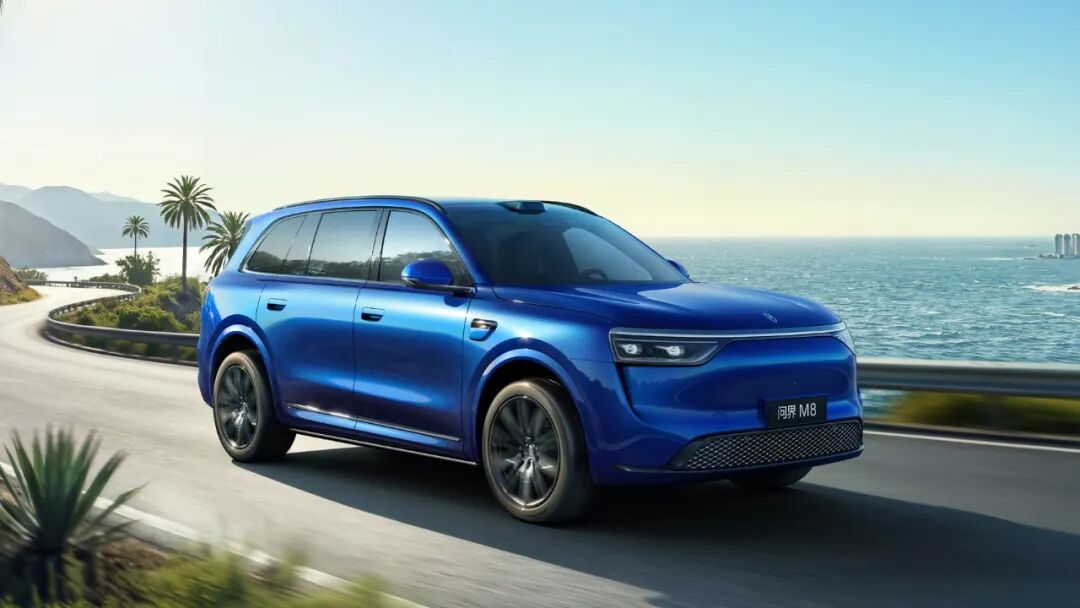
In short, extended-range vehicles are actually seizing the stock market share of fuel vehicles, rather than snatching customers from pure electric vehicle brands. Take AITO M8 as an example, the vast majority of its trade-in users come from owners of traditional fuel SUVs of BBA, Volkswagen, Toyota and other brands, while very few users trade in their pure electric vehicles for it.
However, the so-called complementary coexistence does not mean that all products in the extended-range track can survive. Old extended-range products have obvious inherent shortcomings — short pure electric cruising range, prominent noise and vibration in power-depleted state, cumbersome maintenance of the range extender, and the overall experience is greatly reduced without home charging piles.
In the early stage, the supply of extended-range vehicles was scarce, there were not many market players, and users had limited options; now the industry has ushered in a new round of reshuffling, independent brands continue to iterate their products, and many joint-venture brands have also entered the market one after another, which accelerates the elimination of old extended-range products. They are either squeezed out by more mature pure electric products, or eliminated by new generation extended-range models.
Secondly, from the business perspective of automakers, in the large-size heavy SUV segment, extended-range technology often has unique cost advantages, which can save a large sum of battery expenditure. The two new cars of Xiaomi Pengcheng fall exactly into this category.
However, deploying dual-power architectures on midsize and compact models will increase the hardware burden; coupled with R&D amortization such as range extender calibration, power-depleted NVH tuning, and dual-system thermal management, this will become an uneconomical deal.
Therefore, the future development direction of the extended-range market will most likely focus on the large-size SUV track, aiming to pursue more profits. This change is destined to not achieve very high sales volume, but in return, there is considerable profit margin in this segment.
To be fair, the view on extended-range technology should never be black or white. Pessimists see the continuously declining sales data and the end of the dividend era; while optimists see the real retained demand and structural profit in the large-size family SUV segment.
Extended-range technology will not become the mainstream, but it also has an irreplaceable position. What is eliminated is never the extended-range route itself, but the old products that survive by relying on market dividends.
Just like Xiaomi Pengcheng choosing to enter the market at this moment, after this round of industry reshuffling, the extended-range market will usher in new opportunities.
This article is from the WeChat Official Account "Auto Community" (ID: iAUTO2010), written by Zhang Zhidong, edited by He Zengrong, and published with authorization from 36Kr.