The competition is incredibly fierce: Devin, the pioneer of AI programming, has seen its valuation overtake that of Cursor.
The AI programming track has become so fiercely competitive that people are numb to it.
Just now, Devin's developer Cognition released a new performance report: its Annual Recurring Revenue (ARR) is approaching 1 billion US dollars, almost doubling from the previous financing round.
Behind this performance report is a new round of financing that has not been officially announced yet, with a target valuation heading straight for 40 billion US dollars.
Three months ago, this figure stood at 26 billion US dollars, representing a 54% increase...
This means Cognition will officially surpass Cursor's $29.3 billion valuation in the private market before it was acquired by SpaceX.
It is worth noting that prior to this, Cursor was once known as "the fastest-growing software company in history".
But now, its own valuation has barely settled, and it is almost caught up by Devin, the AI programmer.
What makes this company so outstanding?
Set up a full development environment in 3 seconds
Cognition's revenue multiple has been shrinking continuously.
Calculated based on the new $40 billion valuation, Cognition's revenue multiple is about 40 times; three months ago, this multiple was 52.
This indicator is usually used to measure how aggressive investors' expectations for the company's future growth are. The shrinking multiple means the company's actual revenue growth rate is faster than the rate at which investors raise valuations.
In other words, Cognition's skyrocketing valuation not only comes from narrative hype, but also from genuinely growing revenue.

The new technology Cognition announced at the same time may explain this high expectation:
According to Cognition, Devin's cloud-based agent can now run multiple systems at once:
macOS, Linux, Windows, Android, plus any sandbox and server environment...
A corresponding environment will be launched every time a new work session is started.
The configuration process is so easy that you only need to speak a command: give Devin a sentence, and Devin will handle all the work for you.
It only takes 3 seconds for the system to create a snapshot, including code repositories, development tools, environment variables, and dependencies.
In comparison, configuring a complete local development environment may take engineers several days to deal with various problems such as dependency conflicts and version adaptation.
3 seconds... It is equivalent to being able to summon engineers infinitely.
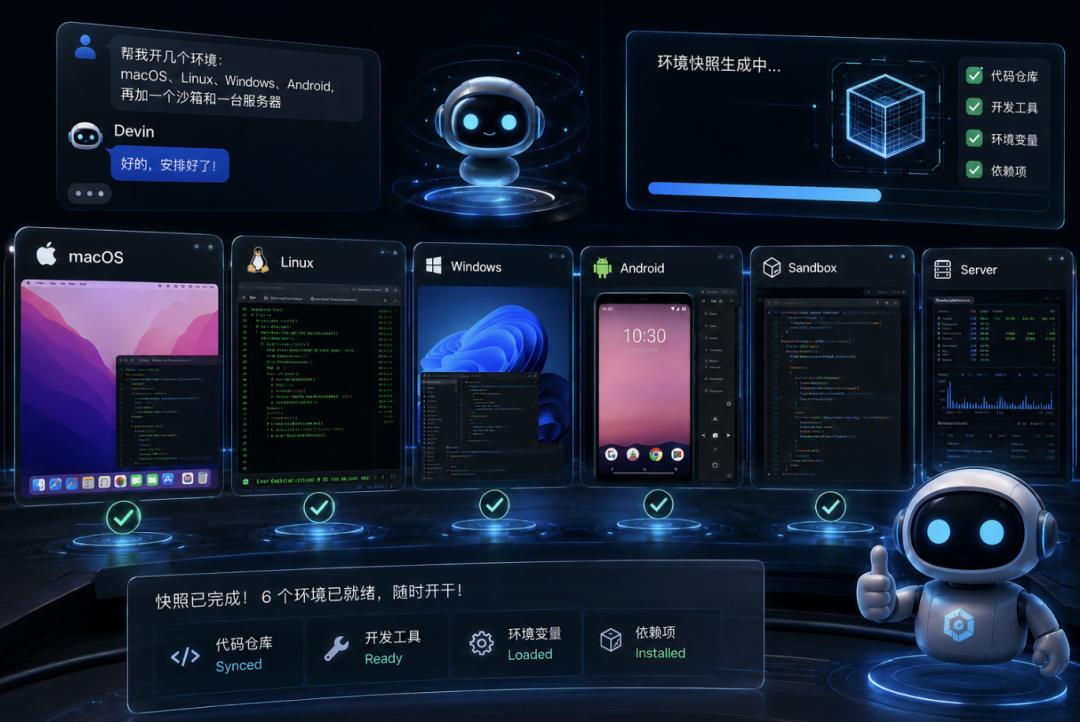
△ The image is AI-generated
As model companies such as Anthropic and OpenAI are also developing towards agents that can run independently for hours or even days, the ability to write error-free code has become the entry threshold and minimum requirement for this track.
The speed of environment configuration and the coverage of multiple platforms may become the specific indicators for programming agent products to compete in the next stage.
Diverging from Cursor's development path: How to "grow faster and faster"
In fact, Cognition was founded in 2023, less than 3 years ago, and it follows the same story of "starting by writing code in a small apartment".
(But now there is nothing surprising about that...)
All three co-founders of Cognition come from the International Olympiad in Informatics (IOI) system.
According to statistics, its early founding team has won a total of 10 competition gold medals.
A real gold medal team!
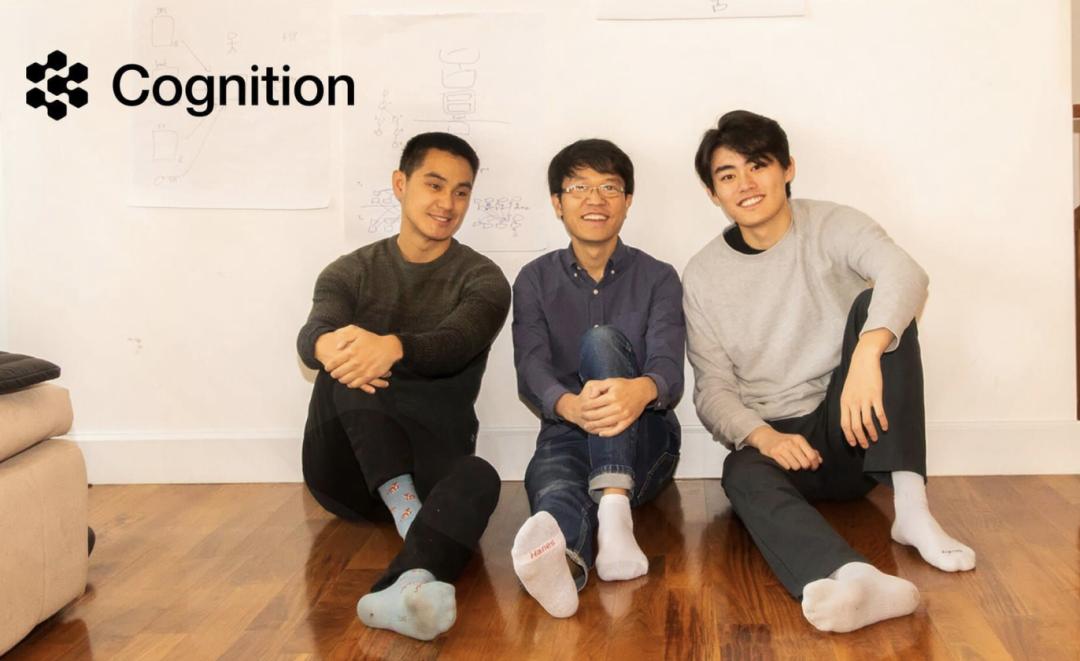
△ Group photo of the Cognition team
CEO Scott Wu graduated from Harvard University, majoring in economics. He has won three IOI gold medals, reached the "Legendary Grandmaster" rank on the programming competition platform Codeforces, with a peak rating of about 3350 points.
CTO Steven Hao graduated from the Massachusetts Institute of Technology with a degree in Mathematics and Computer Science. He won a gold medal in the 2014 IOI competition, ranking 6th globally.
And CPO Walden Yan dropped out of Harvard University in 2023 to start his business. He previously worked at Cursor for a short time, and he is also the gold medalist of IOI 2020.
Both are making AI programming products, but Devin's product path is completely different from Cursor from the very beginning.
Cursor takes the native editor path: developers stay in the integrated development environment the whole time, AI provides code suggestions, and developers confirm line by line whether to adopt them. Essentially, it is an efficiency tool that speeds up coding.
While Devin follows the full agent path, after developers assign a task to it, it independently completes the subsequent process, including reading work orders, exploring the codebase structure, writing code, running tests, finding and fixing bugs, and finally submitting code change requests.
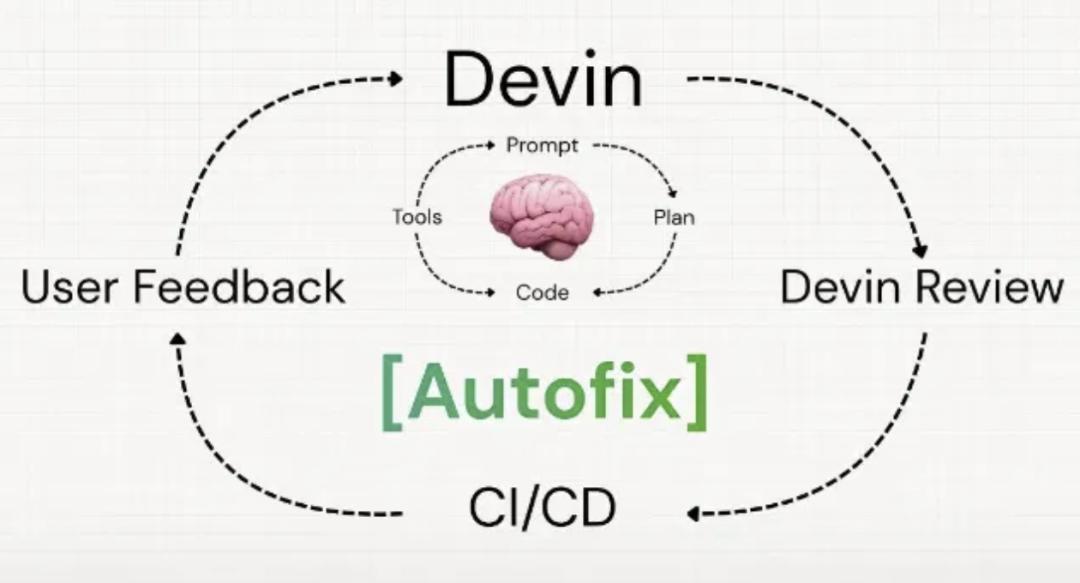
△
Cognition's CEO talked about this difference in a previous interview, he believes that —
Tools represented by Copilot solve the problem of "making developers type faster at the keyboard"; while Devin represents an asynchronous paradigm, where developers are responsible for defining task intentions and reviewing execution plans, and the specific execution process is completed elsewhere.
AI programming is getting more crowded: Financing boom, big tech competition, M&A integration
Cognition's huge financing round this time is not an isolated case. From a macro perspective, it may be a slice under the superposition of three trends in the AI programming track: capital concentration, fierce competition among players, and accelerating mergers and acquisitions.
In terms of track scale, the AI programming assistant market reached 128 billion US dollars in 2026, and is expected to increase to 301 billion US dollars by 2032.
In the relevant industry pattern assessment, Anthropic, Cursor, GitHub, and OpenAI are listed as "Leaders";
while AWS, Google, Alibaba Cloud and Cognition are listed as "Challengers".
In terms of player composition, large model companies are directly developing their own products, no longer just opening interfaces to third parties.
Within 9 months of its launch, Claude Code has achieved an annualized revenue of 2.5 billion US dollars;
SpaceX acquired Cursor in a $60 billion all-stock transaction, which is the largest acquisition of a startup on record.
In terms of capital flow, the concentration within the track is also increasing.
According to statistics, 23 disclosed financings took place in the AI programming tool track in the past year, with a total amount of 52.1 billion US dollars. Cursor alone accounts for 44% of the disclosed capital, and the top three transactions together account for 71%.
Funds are concentrating on a few leading companies rather than being evenly distributed across the track, which is also one of the backgrounds for frequent mergers and acquisitions:
Earlier this year, Google acquired the founders and core team of AI programming company Windsurf in a $2.4 billion license and talent deal, and then Cognition bought the remaining products, brands and teams of Windsurf.
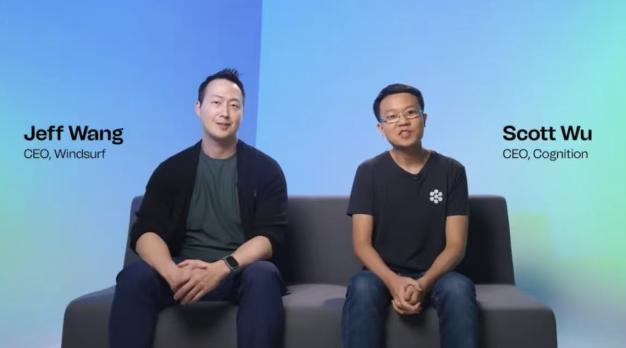
This arms race around AI Coding is still moving forward at full speed, the door to the trillion-level market is slowly opening, and the valuation chase between Cognition and Cursor is just the first sign of this intelligent wave...
This article is from the WeChat official account "QbitAI", author: Focus on cutting-edge technology, published with authorization from 36Kr.