Another heavyweight player has entered the commercial real estate REITs track.
The commercial real estate REITs track has welcomed a "heavyweight player".
On July 28, Huaxia Joy City Commercial REIT was officially filed with the Shenzhen Stock Exchange. This means that following the Chengdu Joy City Consumer REIT, Joy City Holdings has once again pushed its core commercial assets onto the capital market. This time, what it brings may not be an ordinary REIT, but an "ace asset" in the current commercial REITs market.
The underlying asset is Tianjin Joy City Shopping Center, which has been in operation for more than 15 years.
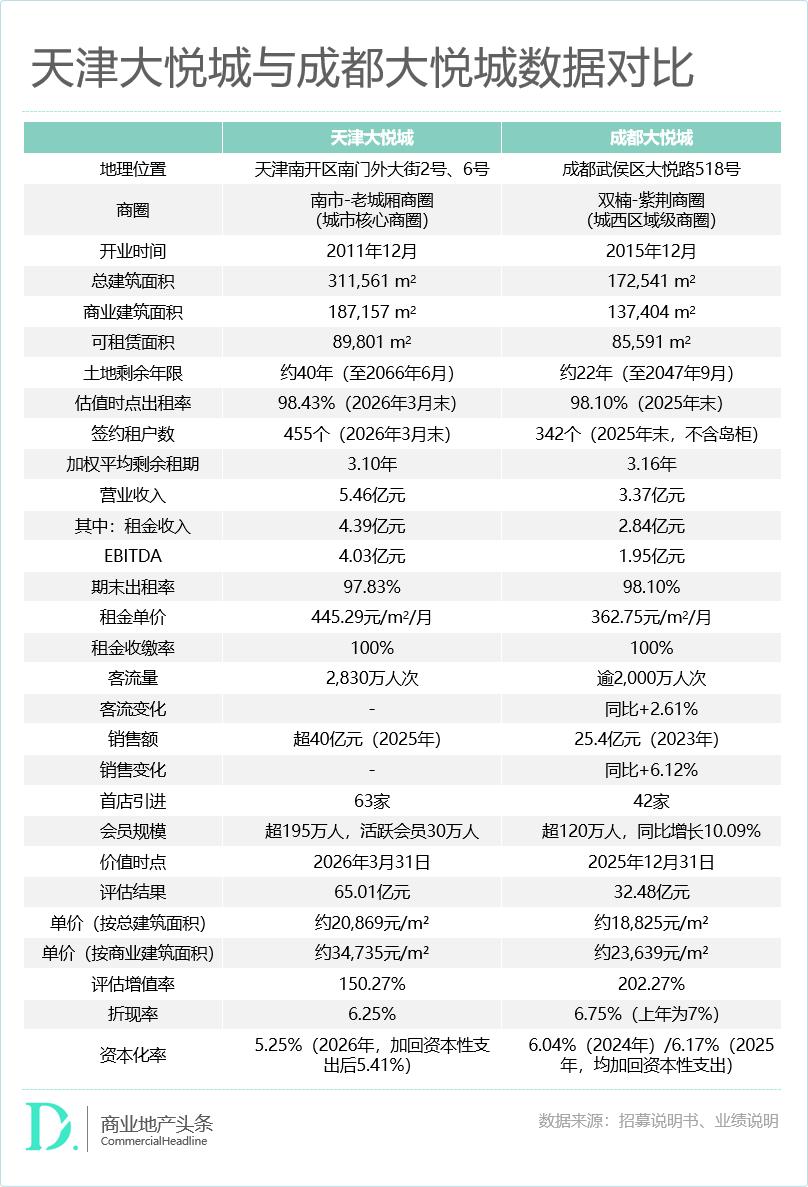
This urban-level commercial complex located in the core business district of Nankai District, Tianjin, opened in 2011 with a total construction area of more than 310,000 square meters. Calculated as of the valuation benchmark date on March 31, 2026, Cushman & Wakefield adopted the income capitalization approach to assess its value at 6.501 billion yuan. Compared with the original book value of 2.598 billion yuan, the value-added rate is as high as 150.27%. The project is expected to raise a scale of 5.555 billion yuan.
What is more noteworthy is that this is likely to be the "ceiling-level" project with a shopping center as the underlying asset in the current commercial real estate REITs sector — with the highest valuation and highest unit rent.
Why can Tianjin Joy City become the "king bomb candidate" in the commercial REITs market? The answer is not just the asset scale.
Against the general backdrop of overall pressure on Tianjin's commercial sector, slowing consumption growth, and shopping centers entering the stock competition stage, Tianjin Joy City has maintained strong operational resilience: its sales volume has exceeded 4 billion yuan in each of the past three years, with passenger flow reaching 28.3 million person-times in 2025; its rental income reached 439 million yuan in 2025, which is at the leading level nationwide among non-luxury shopping centers.
It is a new sample of mature commercial assets. In the past, shopping centers relied on development dividends to achieve growth; today, the capital market is starting to look for consumer assets that truly have cash flow capabilities, operational capabilities and urban influence.
As consumer REITs enter a new stage of competing for underlying asset quality, will Tianjin Joy City become the "strongest king bomb" in the true sense of the industry? The answer may be revealed in the capital market.
01.
In Tianjin,
Who are Joy City's competitors?
Tianjin is often referred to as a "commercial Bermuda" together with Suzhou and Foshan. Behind the stereotype lies the weak macro consumption indicators.
In 2016, Tianjin's GDP reached 1.7885 trillion yuan, ranking fifth nationwide, a veritable "northern economic center". In 2025, Tianjin's GDP was 1.8539 trillion yuan, ranking 12th nationwide, with no growth and falling out of the top 10 nationwide, making it one of the cities with the largest ranking drop among the top 20 cities in the same period.
In 2016, Tianjin's permanent resident population reached a peak of 14.43 million in nearly a decade, while by the end of 2025, the permanent resident population dropped to 13.63 million. Comparing the permanent resident population data of 29 trillion GDP cities between the 7th National Population Census in 2020 and the end of 2025, the three trillion GDP cities in Beijing-Tianjin-Hebei region (Beijing, Tianjin, Tangshan) all recorded negative growth, with a total net decrease of about 470,000. Tianjin (-236,000) has the most serious population loss among all trillion GDP cities, and has been under continuous pressure for five years.
Retail sales of consumer goods are also not prosperous, and do not match the fundamentals. Since 2014, the year-on-year growth rate of Tianjin's total retail sales of consumer goods has basically been lower than the national level in the same period. In 2024, the total retail sales of consumer goods just exceeded 410 billion yuan (data from *2025 Tianjin Statistical Yearbook*), which is in extreme contrast with the basic passenger flow of 13.64 million permanent residents, per capita disposable income of 55,900 yuan, and annual tourist arrivals of 272 million person-times.
Under layers of misalignment, Tianjin's commerce has entered an in-depth adjustment period of "high stock, high pressure and high renewal": the city's average vacancy rate is under pressure, traditional department stores and old shopping malls are in urgent need of renewal; stock transformation has become the mainstream, and the revitalization of industrial relics and historical buildings has become the main force of new supply.
According to Winshang Big Data, the stock quantity and area of shopping centers (shopping centers with 30,000 square meters and above) in Tianjin rank 13th nationwide. The number of stock shopping centers increased from 49 in 2016 to 102 in 2025; the stock volume increased from 4.5606 million square meters in 2016 to 9.6978 million square meters in 2025. Over the past decade, the number and volume of commercial facilities have climbed steadily, but the annual increment of quantity has never exceeded 15%, and the growth rate has slowed down to below 7% since 2022.
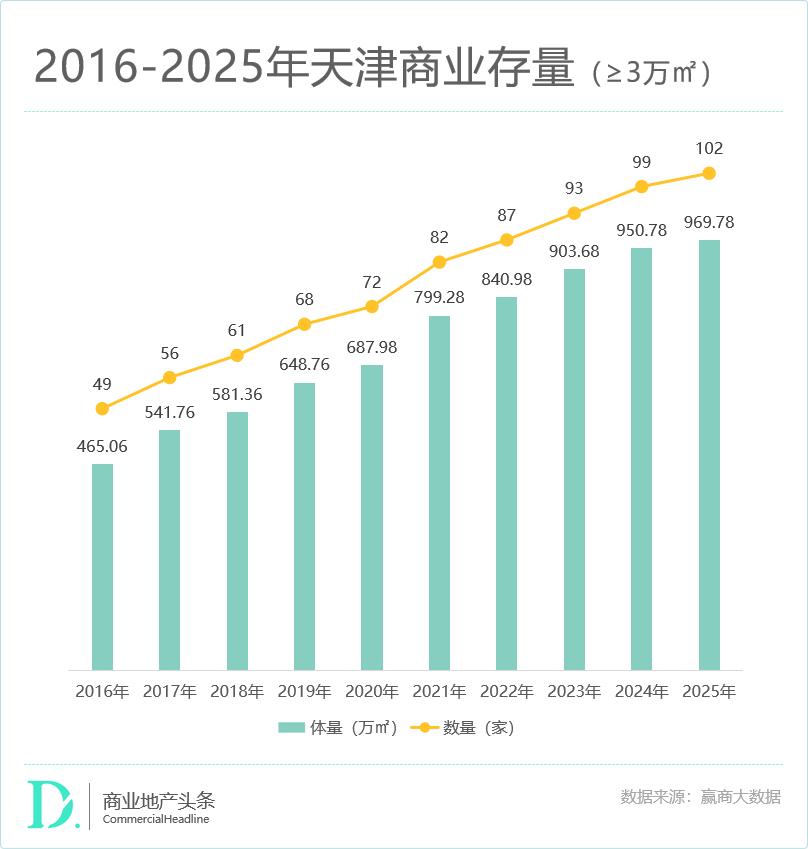
In addition, as a quasi-first-tier commercial city, Tianjin's per capita commercial area in 2025 is 0.81 ㎡/person, ranking 22nd nationwide, lower than the per capita commercial area level (1.02 ㎡/person) of quasi-first-tier commercial cities in 2025, and the commercial increment in the next three years may exceed 1 million ㎡. It can be seen that commercial operators are relatively cautious in their willingness to invest in Tianjin, and on the other hand, the competition pattern will also be relatively clear.
This hourglass-shaped market has a large total volume, many players, scattered business districts, passenger flow and rents are highly concentrated in head projects, and the tail projects are continuously cleared. As one of the few urban-level projects, Tianjin Joy City does not have many heavyweight direct competitors, among which Tianjin MixC and Tianjin Teemall are typical representatives, but the projects belong to different business districts, forming a dislocation competition of trend vs high-end vs fashion.
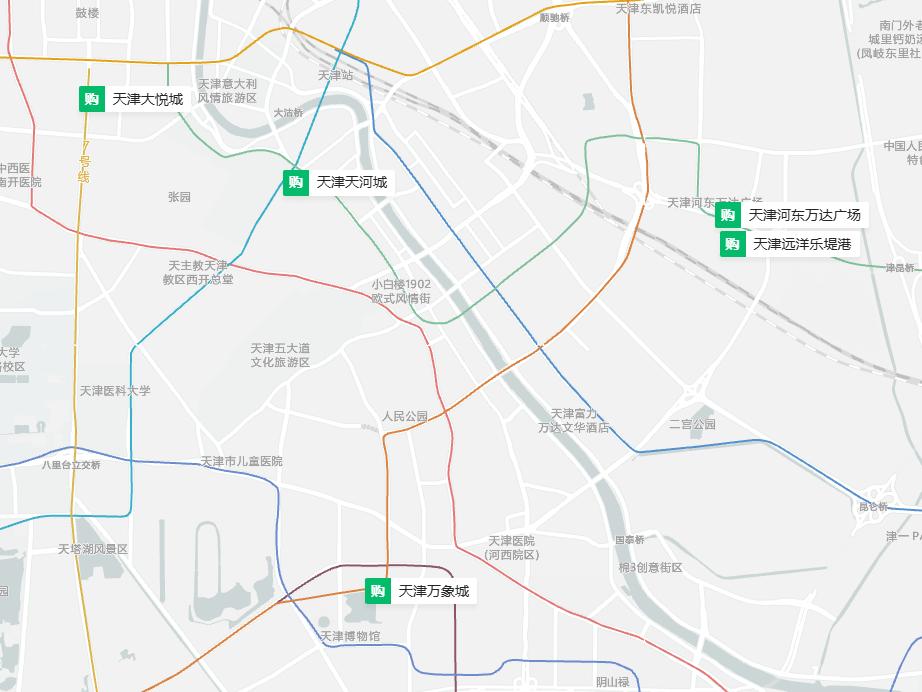
Tianjin Teemall is currently the project with the largest passenger flow in Tianjin, but it is not listed as a benchmark in Joy City's prospectus, which takes Hedong Wanda and Yuanyang Lokti Port located in the same Jinbin Avenue business district as benchmarks. From this perspective, Joy City is stuck in the unique position of "urban-level trend", younger than MixC, more trendy than Wanda, and higher in brand level than Lokti Port.
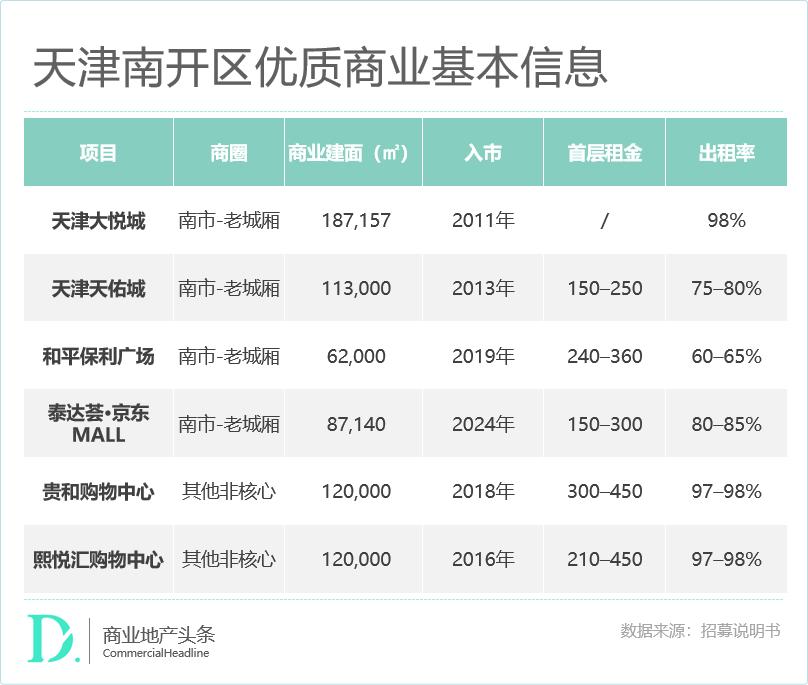
If we focus on the Nanshi-Laochengxiang business district, Tianjin Joy City is almost "standing out alone". Within the business district, the occupancy rate of Tianyou City is 75%-80%, Poly Plaza is 60%-65%, TEDA Hui is 80%-85%, while Joy City reaches 98.43%, with a significant siphon effect.
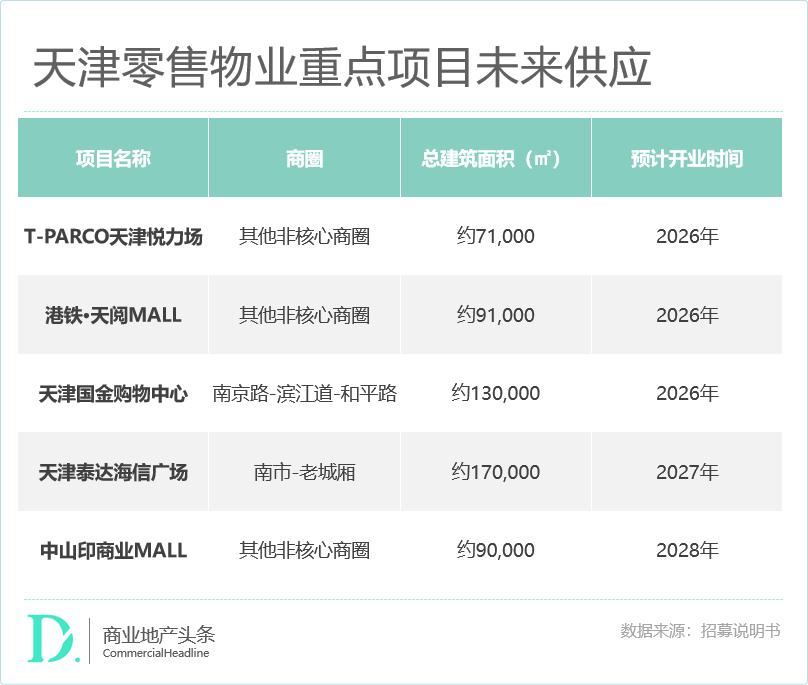
Looking at the future supply competition, TEDA Hisense Plaza (about 170,000 ㎡) which will open in 2027 is the largest new supply in the next three years, and will directly enter the absolute home court of Tianjin Joy City. The "Xiaobailou" that has accompanied Tianjin people for nearly 20 years will end its operation on November 30 this year and move to TEDA Hisense Plaza as a whole. The former once created the legend of Tianjin's department store industry with single-day sales exceeding 100 million yuan, and is one of the well-deserved top 3 luxury shopping destinations in Tianjin.
TEDA Hisense Plaza is located opposite Joy City, planned to open in September 2027, with a total construction area of about 224,000 ㎡, positioned as "luxury + trendy luxury + art social", and its volume will be about 4 times that of the current Xiaobailou site. In addition to numerous first stores and luxury brands, the mall will have a super-large facade display, sky garden, naked-eye 3D and other facilities, and is expected to introduce more than 500 brands.
Although Hisense is not a commercial internet-famous enterprise, it has high recognition for operating high-end projects in northern cities. For example, Qingdao Hisense Plaza has long been the most important luxury project in Qingdao. According to the survey of Winshang Network, the impact of the opening of TEDA Hisense Plaza on Joy City is uncertain: whether it will mutually promote the expansion of the business district or intensify the diversion of customer groups.
02.
Tianjin Joy City
Why has it become the "king bomb candidate" for commercial REITs?
Tianjin has 16 administrative districts under its jurisdiction, and among the six central districts, Heping, Hexi and Nankai are the top three, with highly concentrated commerce.
The area around Heping Road - Binjiang Avenue - Nanjing Road is the most representative traditional core business district in Tianjin, with outstanding brand agglomeration, passenger flow foundation and urban recognition. According to the caliber of the prospectus, among the 2.877 million ㎡ of high-quality commercial properties in Tianjin in Q1 2026, the two major business districts of Nanjing Road-Binjiang Avenue-Heping Road (Jinjie) and Nanshi-Laochengxiang account for 38.1% in total, forming the absolute core.
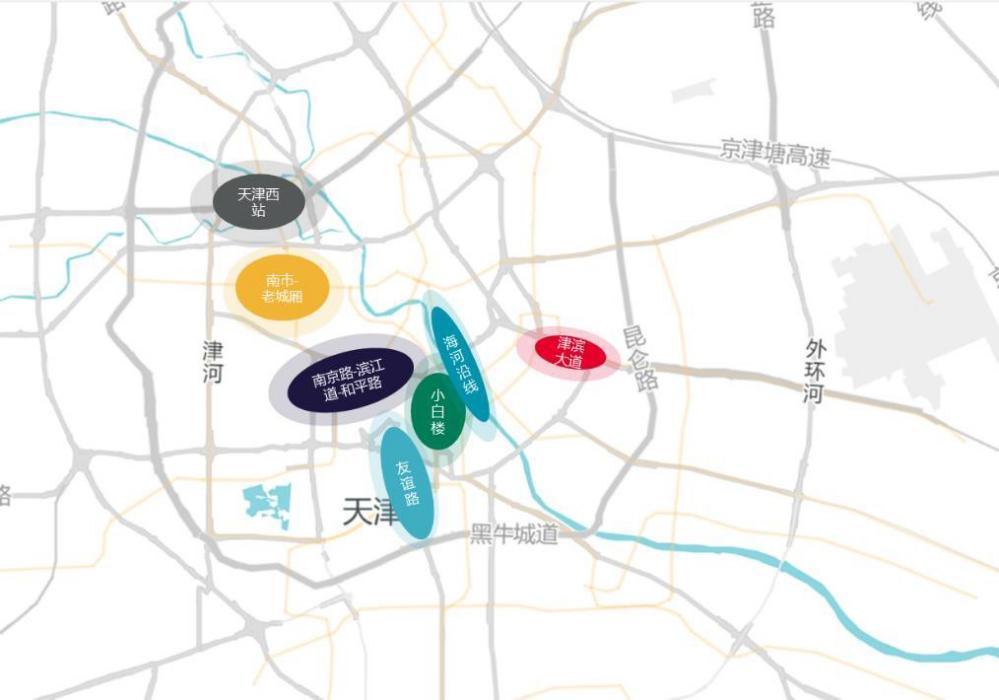
From 2011 to 2017, the core increment period of Tianjin's shopping centers, developers entered the market intensively, COFCO, Hang Lung, China Resources, Wanda, Teemall, and SCPG deployed projects intensively, raising the commercial grade and operation level of Tianjin to the next level.
Tianjin Joy City's leading position came into being from this period. According to the survey of Winshang Research Center, considering brand energy level, operating scale, passenger flow performance, urban influence and continuous operation capability, Tianjin MixC, Tianjin Joy City, Tianjin Teemall, Riverside 66, and Tianjin Hisense Plaza are in the first echelon. Tianjin MixC has strong high-end brands and regional radiation, while Tianjin Joy City has advantages in passenger flow, young customer groups and operational vitality.
It is also worth mentioning that in the entire Joy City system, Tianjin Joy City's rental income is second only to the two projects in Beijing, making it an absolute ace. Joy City has shown great sincerity for public offering REITs.
Location and customer groups: Directly above the subway + golden intersection, driven by both young customers and family customers
Tianjin Joy City has a large volume, with a commercial construction area of 187,200 square meters. It is located at the intersection of Nankai and Heping districts, right at the "golden intersection" of the main roads in the core of the old city, directly connected to Gulou Station, the interchange station of Metro Line 2 and Line 7, about 2.9 km away from Tianjin Railway Station and about 3.0 km away from Tianjin West Railway Station. The multi-dimensional three-dimensional transportation supports the rapid arrival of passenger flow from the whole city.
There are about 800,000 permanent residents within 3 km of the project, with Nankai High School, Tianjin Medical University General Hospital and Nankai Park in the surrounding area. In Nankai District where it is located, the total retail sales of consumer goods ranks first among the six central districts. The region has a large population base, solid consumption foundation, diverse customer group structure, gathering permanent residents, college teachers and students, office workers in office buildings and cultural tourism tourists.
In terms of customer group labels, Tianjin Joy City focuses on young customers and quality family customers. On the one hand, through the combination of trendy retail, themed activities and catering entertainment, it continuously attracts young consumers who pursue freshness and social experience; on the other hand, relying on supermarkets, parent-child education and family-friendly supporting facilities, it strengthens the attractiveness and stickiness to medium and high-frequency family customers. The two-wheel driven customer group structure effectively supports the stability of passenger flow on working days and weekends, and enhances operational resilience.
Operation and finance: Annual sales exceed 4 billion yuan, and rental income ranks among the top non-luxury projects
Since its opening, Tianjin Joy City has always changed the lifestyle of Tianjin people with a pioneering attitude, from the country's first themed block "Goose Village", the first "Crazy Shopping Festival" IP, the first Strawberry Music Festival held in a shopping mall, to the strongest "first store harvester" in Tianjin, step by step becoming a unique carrier connecting commerce and the city.
Data shows that the sales volume of the project has exceeded 4 billion yuan in the past three years, surpassing Hefei Intime Centre which is positioned as a luxury shopping destination. In terms of passenger flow performance, the passenger flow reached 28.3 million person-times in 2025.
Translated into financial results, Tianjin Joy City's rental income in 2025 was 439 million yuan, ranking among the top non-luxury projects. Although the operating revenue fluctuated slightly, the fluctuation range was less than 2%, which is a typical mature and stable asset with stable growth space and extremely high certainty.