The boxing business has set its sights on Chinese workers.
Recently, Zou Shiming has once again stepped into the center of public opinion. What people are discussing, however, is not his gold belt, but his boxing gym business.
In 2018, Zou Shiming opened the "No.1 Sports Center" in Shanghai, which focused on high-end boxing experience. The rest of the story is no stranger to anyone who has seen the recent hot searches: "the worst performance was only profitable for one month in a year", "lost more than 200 million yuan in 7 years", "sold the last house he owned"... One entry after another has repeatedly refreshed the public's perception of boxing.
If we shift our attention from Zou Shiming to China's boxing consumer market, we will see a completely different booming scene.
Between the disillusionment of professional glory and the burst of public enthusiasm, what kind of business is it really to run a boxing gym in China?
01
In China,
White-collar workers are the most passionate group who love boxing
On the ring of China's combat events, white-collar boxers like Shi Ming, the female combat practitioner of traditional Chinese medicine who rose to fame overnight in UFC, are not rare cases, and even account for the majority of contestants.
In July, the AGF Proud City Urban Boxing Super League kicked off in Changsha. Amid the cheers of hundreds of spectators, Fu Xinyao, a 24-year-old postgraduate of oral and maxillofacial surgery, stepped onto the ring of women's professional bantamweight for the first time, while her opponent was a music teacher from Wuhan.
"It took me about four years to go from a complete beginner to a professional boxer." Fu Xinyao shared. When she was an undergraduate, she tried boxing on a whim, and then became completely obsessed with it. From the first group class once a week at the beginning, to three training sessions a week, then to her first appearance in the white-collar boxing competition at the end of 2023, her training frequency kept increasing, and her competitive strength improved by leaps and bounds.
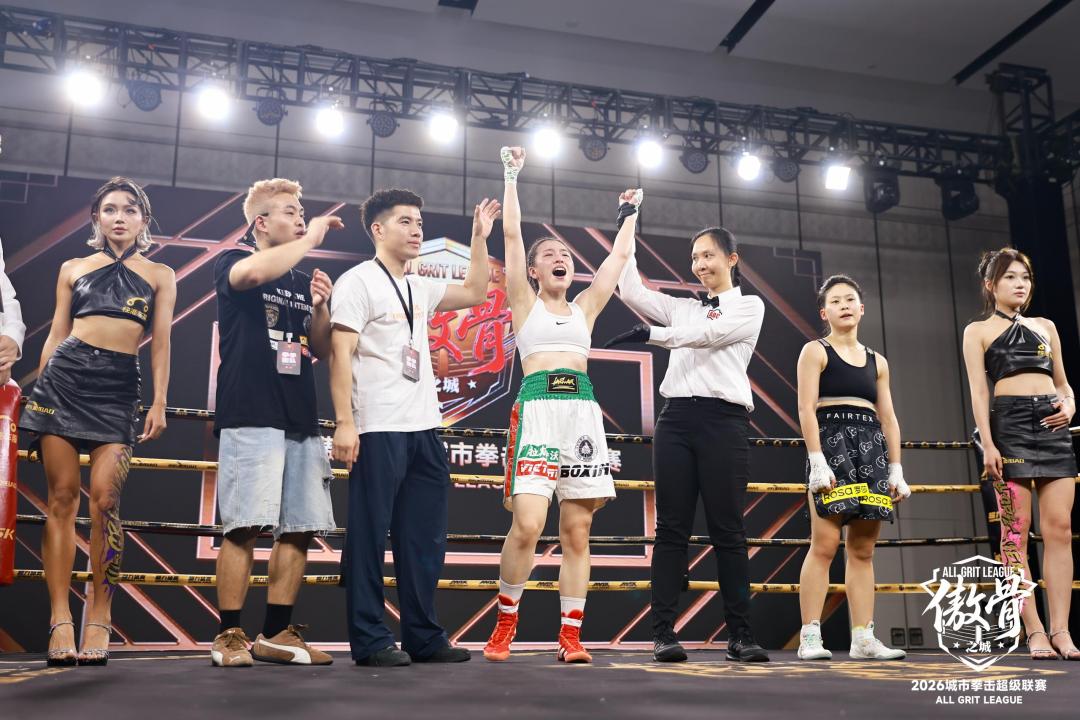
Fu Xinyao on the competition ring
The willpower and quality required by boxing also inspired Fu Xinyao's busy academic and clinical work. She once heard a saying: "People who are mainly engaged in mental work lack physical pain experience more, and boxing can stimulate the primitive urge to fight." For her, the pain of boxing is not only a release of pressure, but also a kind of enjoyment.
After playing 10 white-collar boxing matches, Fu Xinyao decided to step into the professional group to pursue greater breakthroughs: "When I played in white-collar competitions, only friends from the boxing gym came to cheer me on. But when I stepped onto the professional arena, looking around, there were dense crowds of spectators, and the deafening cheers surrounded me instantly."
This kind of arena experience that makes ordinary people shine has also healed Wu Tao, who once received professional training.
Recalling the boxing events he participated in during his youth, Wu Tao seemed to always "lack a little luck", and even once fell into a slump and began to drink excessively. But on the arena of the "Pride Fight", he said frankly that he seemed to have found his "second life".
In Wu Tao's memory, the competition scene there is more like a party. "Even if the audience doesn't understand boxing at all, as long as the people standing on the stage are friends they have met in daily life, the audience's sensory experience and emotions will be infinitely amplified by the atmosphere of the arena."
This deep sense of empathy has built a deeper bond between boxers and the audience. As the competitions become more and more exciting, the wide spread of events has allowed many boxers like Wu Tao to gradually build their own fan circles, further expanding the boundaries of their lives.
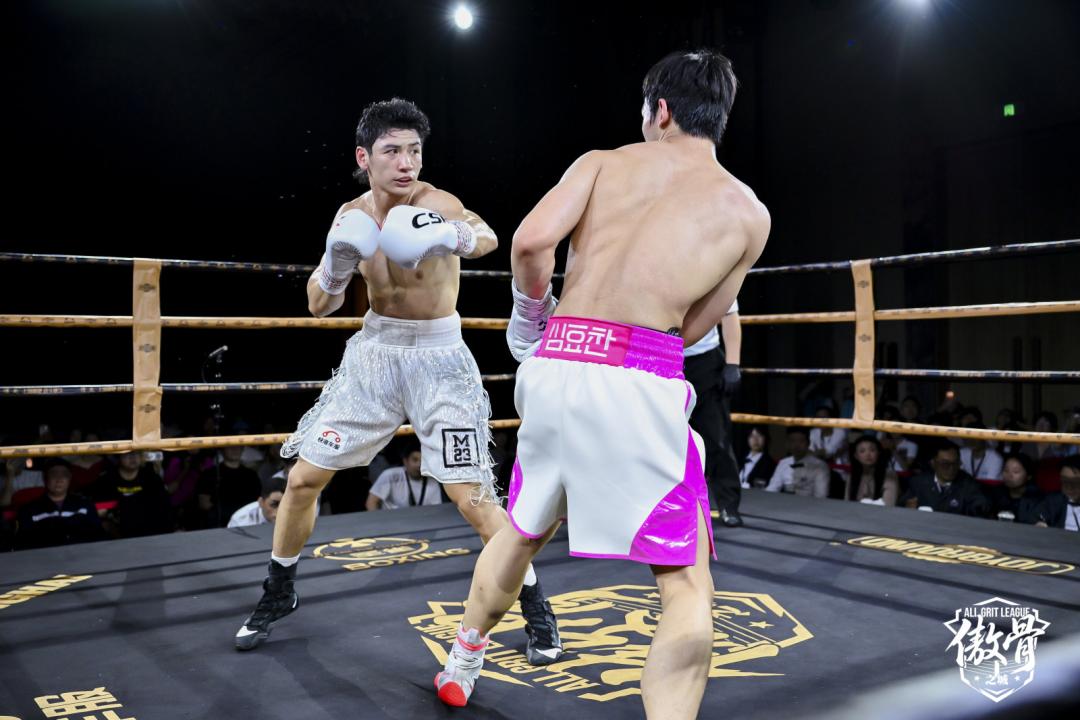
Wu Tao on the competition ring
Although not every boxing enthusiast will step onto the ring, the appeal of boxing to the younger generation in China is self-evident. It is not only a high-intensity healthy sport, but also a good medicine for the soul. In the confrontations within the rules, people throw punches to release the pressure from real life and work, and regain the power to control themselves from it.
When one of them puts on the fighting suit and steps onto the ring, he can usually drive more than a dozen or even dozens of relatives and friends to watch. It is these immersive viewing experiences that have brought boxing to the general public.
However, the market visibility of mass boxing was not like this five years ago.
02
From the professional altar,
To the mass sports community
In the eyes of many industry insiders, the period from 2008 to around 2020 was the "golden age" of Chinese professional boxing. At that time, the event broadcasts on CCTV prime time cultivated a group of boxing audiences, and the emergence of leading enterprises such as SECA and Wuxuan Sports brought extremely attractive professional event experiences to Chinese audiences.
At the same time, top boxers and high-frequency commercial events pushed professional boxing to its peak. From Zou Shiming winning the WBO Flyweight World Gold Belt, Xu Can winning the WBA Featherweight World Championship away, to the "Power of Boxing League" events that nearly 80% of Chinese professional boxers have participated in... More and more Chinese audiences are able to distinguish boxing from other combat sports.
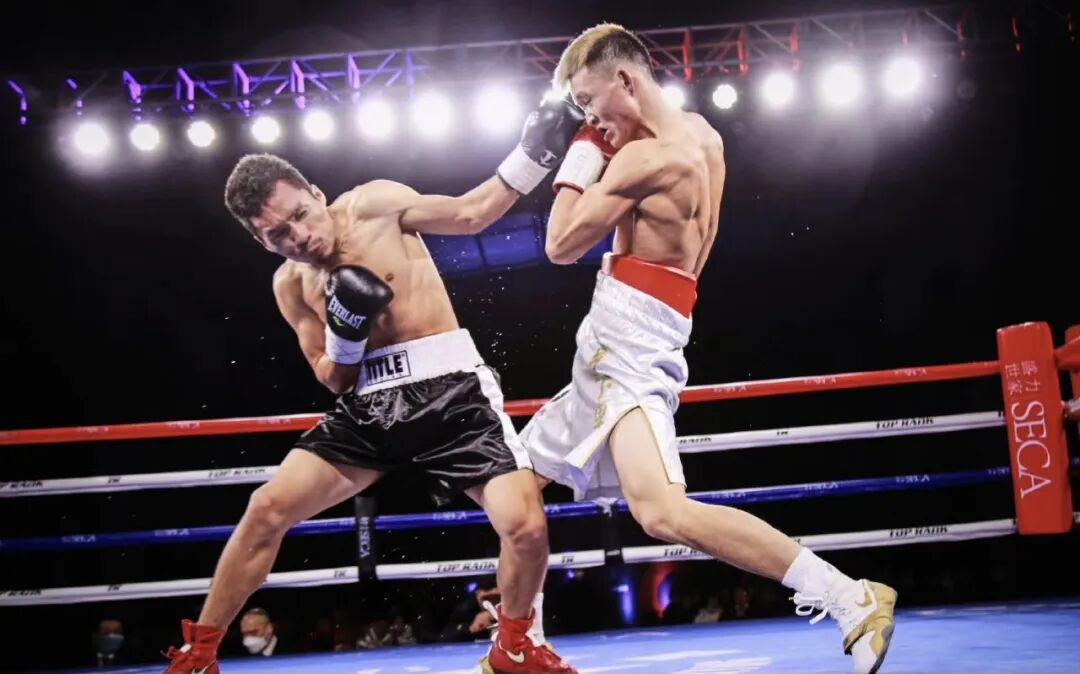
Power of Boxing League event
However, there are also hidden dangers under the seemingly prosperous surface: High-spec professional events have limited ability to monetize traffic; some boxing gyms rely too much on the pre-payment model. When the epidemic hit and the cash flow broke, the events were forced to suspend, and a wave of closures hit some individual boxing gyms — Zou Shiming's "No.1 Sports Center" is just a microcosm of the industry changes at that stage.
The spotlight of professional events gradually dimmed, and Chinese boxing urgently needs to find a new, more stable way to survive.
The inflection point occurred around 2024. This year, the blockbuster hit *Yo, Rock It, Rock It* made boxing enter the public view once again.
In the view of Lu Xiaolong, founder of M23, The value of this film is that it shows a large number of basic boxing training scenes, not just the highlight moments on the ring. The real footage and the changes Jia Ling experienced after practicing boxing effectively improved the public's systematic understanding of the sport.
Also during this period, a large number of scattered white-collar boxing competitions sprung up in cities across the country. They may not have well-known IPs, and may only rent hotel banquet halls or shopping mall atriums, but they show extremely tenacious vitality.
These scattered sparks just show that the public's demand for boxing is shifting from "watching" to "participating in person". More and more white-collar contestants have begun to become the most basic and active part of the industry.
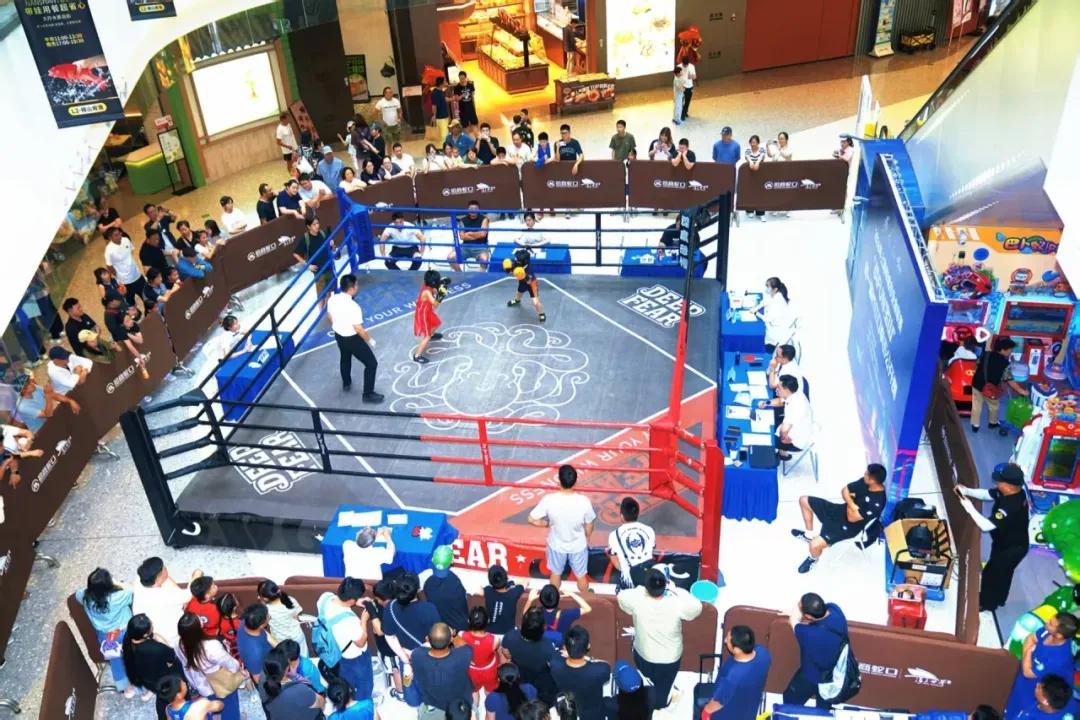
Boxing event in Shanghai business district Source: Baoshan Sports
The "Pride Fight" incubated by M23 is a landmark IP born from this mass soil. From the free white-collar competition in 2024, to the national tour in 2025, and then to the "Pride City" national league IP in 2026, no matter how it is upgraded, white-collar workers are always the core part of the "Pride Fight" event system.
While the events are booming, offline boxing gyms have also regained their vitality one after another. According to data from Qichacha, there are currently 2,690 existing boxing-related enterprises in China, and the number of new registrations every year since 2022 has remained stable at more than 200. These boxing gyms and communities active in various cities are the foundation of mass-participated events.
After talking with many boxing gym practitioners, the Sports Industry Ecosystem noticed that the operation of Chinese boxing gyms is showing two very distinct trends. The first is the systematization of the training system.
Taking boxing gyms such as M23 as an example, the integrated courses that connect beginners to professional levels allow professional players and mass enthusiasts to train under the same system. The professional ability of professional players forms the confidence for mass enthusiasts to make progress, and the friendship from training on the same field also makes mass enthusiasts the loyal fan base of professional players.
The second is the two-wheel drive of boxing and "physical fitness". According to data from Qichacha, about 52.8% of boxing enterprises across the country have added keywords such as "physical fitness" and "fitness" to their names or business scopes. With the popularity of physical fitness events such as Spartan and HYROX, and well-known athletes like Li Jingliang appearing in physical fitness competitions, many boxing gyms have also developed physical training and mass fitness as their pillar businesses.
This choice is not only out of the need of boxing training, but also out of the consideration of business survival.
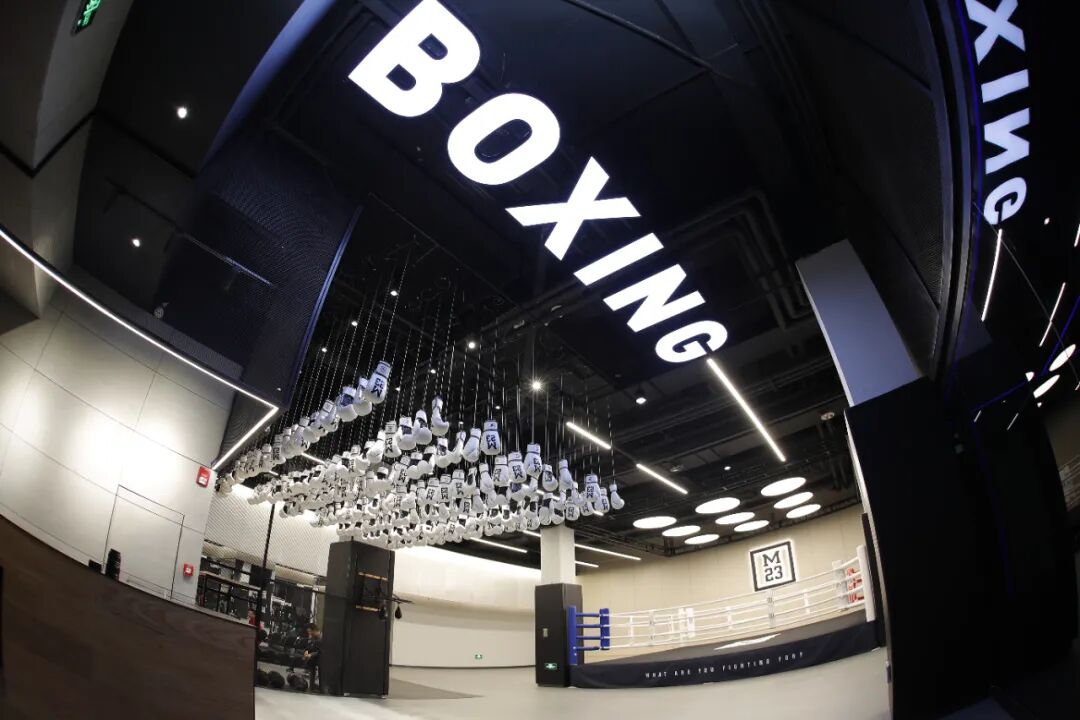
M23 Boxing Fitness Club
From the professional gold belt to the market supported by countless ordinary people today, Chinese boxing has undergone a thorough transformation in more than ten years. Beyond the peak duels of a tiny number of elite athletes, boxing is becoming a mass sports lifestyle that integrates physical fitness, emotional needs and social interaction.
Behind this, of course, is also the boost of the traffic era.
03
Under the traffic boom,
Boxing still has a long way to go
According to the official statistics of Shanghai Municipal Bureau of Sports, the number of on-site spectators at the 2025 UFC Fight Night Shanghai station reached as high as 11,885. For the local event "Pride Fight", 1000 tickets for each session have been sold out every time since last year; the number of viewers in the live online broadcast has soared to 1.2 million per session; the traffic of related topics on Douyin has nearly tripled.
With the same top-level event specifications, the same rich visual effects and on-site experience, driven by events such as "Pride Fight", the viewing distance between professional boxing and mass boxing is constantly shortening.
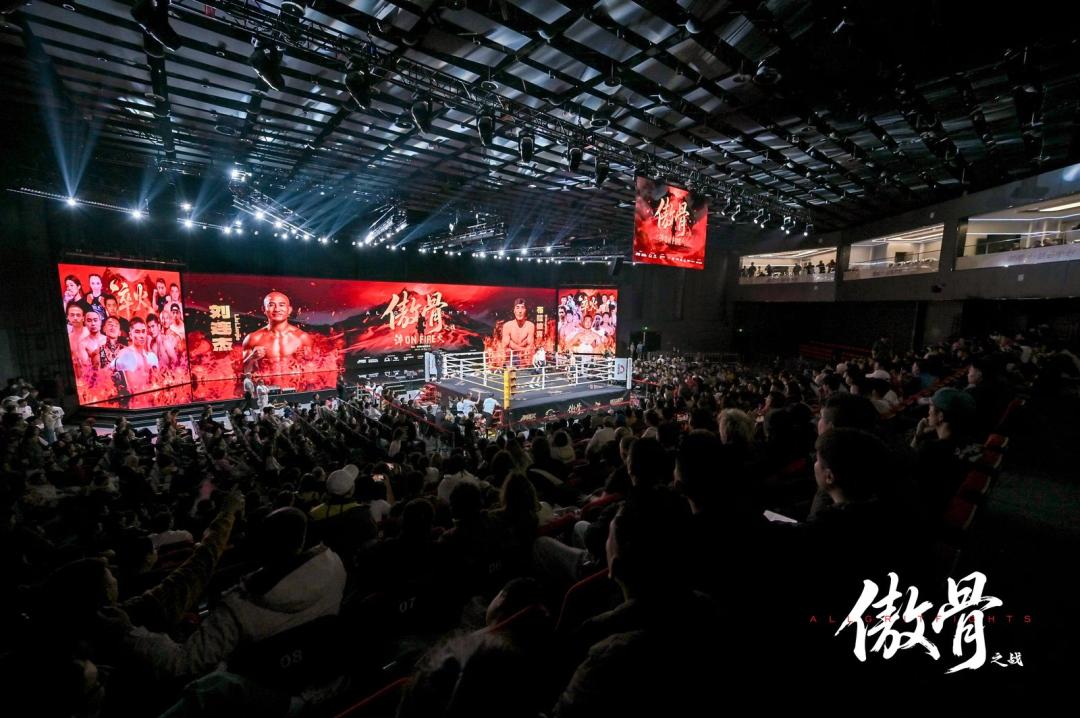
"Pride Fight" event scene
Lu Xiaolong always emphasizes a concept: "Among all paid users of boxing, the most loyal ones are definitely those who practice boxing in person. They should get the greatest respect, and more importantly, get the most display opportunities." Judging from the composition of the consumer market, this is indeed the case. Paid training and paid viewing make up the majority of the boxing industry, and the part with the largest incremental space is precisely the mass boxing market.
However, the practical problem facing the industry is: The vast majority of ordinary people's perception of boxing still remains in the stereotypes of "violence" and "danger", and market education still has a long way to go.
Interestingly, this popularization work is being undertaken spontaneously by more and more social media creators.
Peng Yuanlong, general manager of Qingdao Zhongkai Tianyou Fighting Club Co., Ltd., has a more well-known account "Coach Peng's Boxing Class". On Douyin alone, he has more than 155,000 fans.
"At first, many people thought that doing self-media was too low, and thought many bloggers were posting fragmented content to make quick money." Peng Yuanlong said frankly: "But in my opinion, if a sport wants to develop truly, if it does not provide emotional value and lower the threshold, it cannot be popularized. The scoring rules of boxing are relatively complicated, and someone needs to remove these thresholds and explain them to the public."
While consolidating the teaching ability of the team, Peng Yuanlong also encourages every coach to build their personal IP through social media. "The new generation of consumers pays attention to the 'attractiveness' of sports. Our team has approachable, funny, cute boy-style, tough-guy-style coaches... Creating diverse coach personas can provide consumers with more dimensional access options."
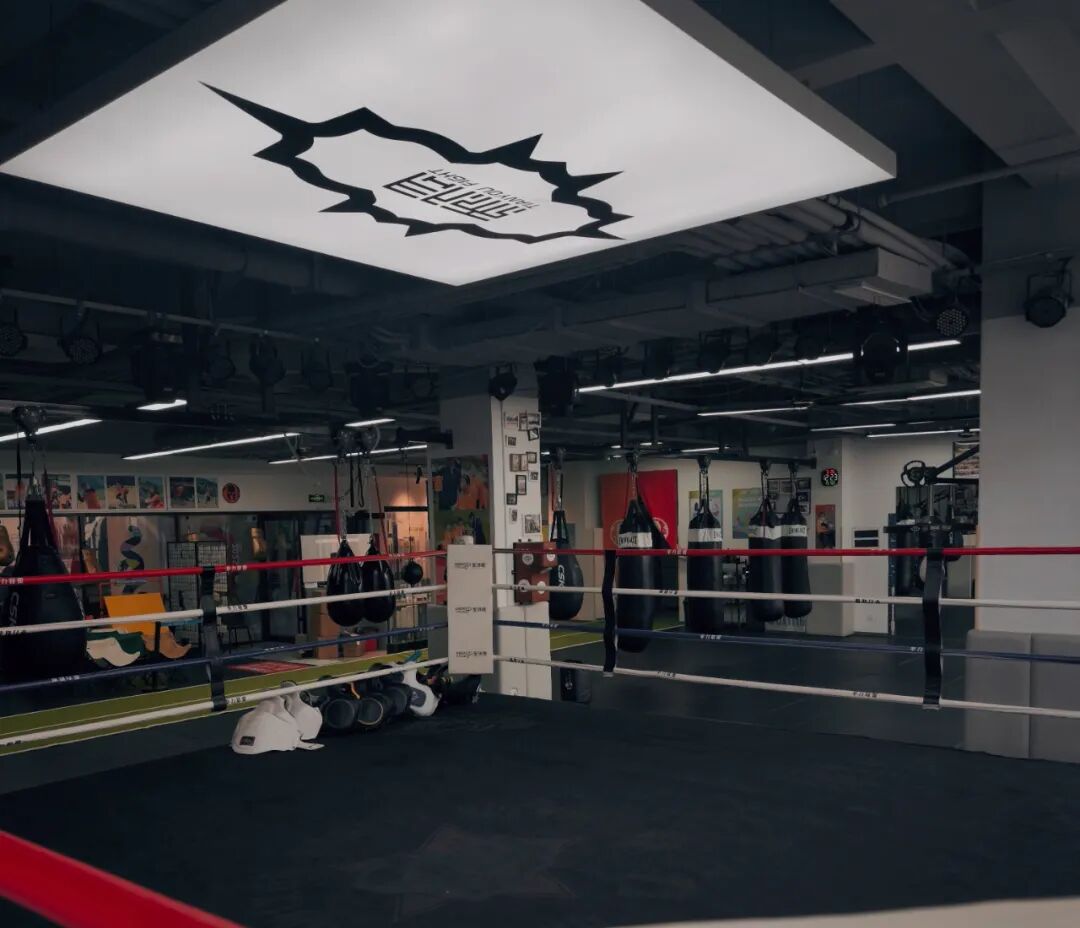
Zhongkai Tianyou Boxing and Physical Fitness Center
This is not an isolated case. In actual interviews, many institutions said that in the era of traffic, experience courses and group courses have become the main entry point to attract new students. The main group that retains and repurchases is still concentrated in urban white-collar workers and teenagers.
At the same time, in order to cater to user preferences and enhance users' sense of belonging, more and more institutions have begun to take the initiative to shoot the daily training of students, and build exclusive honor walls, gradually guiding the public from "beginners" to advanced levels.
On the event side and the player side, social media communication has also become a must. Not only event platforms such as "Pride Fight" share clips of wonderful duels, many white-collar boxers and professional boxers have begun to operate their personal accounts spontaneously, using their own power to influence more people.
Wu Tao himself has more than 10,000 fans across all platforms. He usually shares his competition preparation schedule and even participates in fashion events across different fields, hoping to let the public understand the spiritual value beyond winning or losing through this window; Fu Xinyao, who has just stepped into the professional arena, has also started to operate her social media account, using her own experience to prove that women have unlimited possibilities in academics, careers and competitive sports.