Why are Marriott and other leading hotel groups scrambling to acquire old hotels in China?
01
Yesterday, Lao Ding, the owner of a business hotel in Jiangsu, came to Beijing and told me a thing that puzzled him a lot recently when we were having tea.
Lao Ding's hotel has been open for more than ten years, located at the junction of the old urban area and the development zone, with more than 160 guest rooms in total.
In the early years, he built it according to the standard of local four-star business hotels. The lobby and banquet hall are quite large, and the guest rooms are spacious enough. When the manufacturing industry was in good shape, conferences and corporate customers once contributed most of the hotel's revenue.
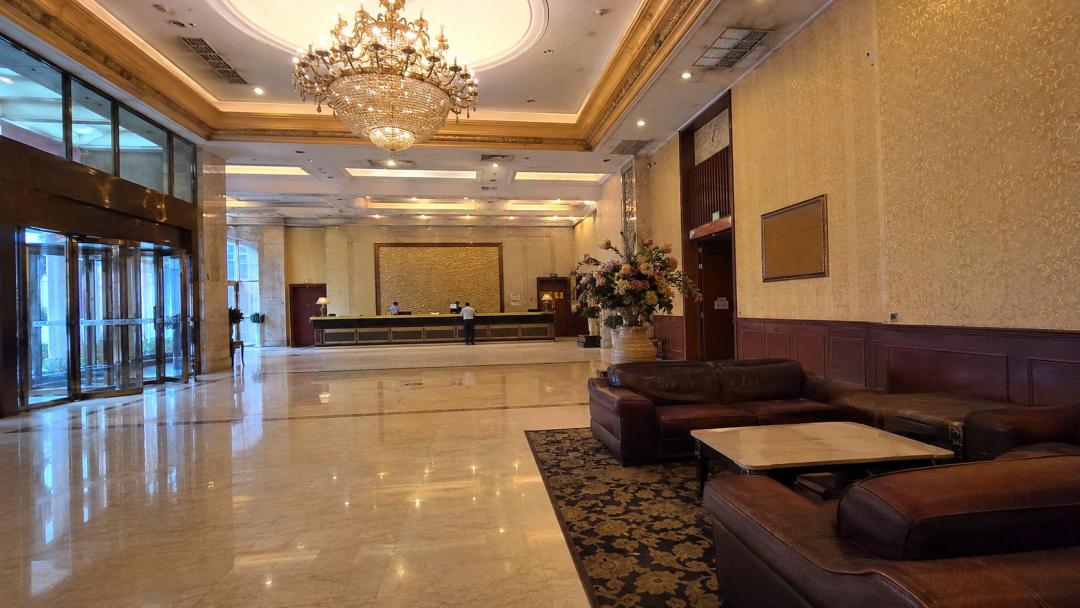
However, in recent years, more and more new hotels have opened around, while Lao Ding's hotel has hardly been renovated. The wallpaper, bathroom and air conditioning equipment have shown obvious signs of aging, and the lobby that suited the economic boom era no longer fits the wabi-sabi aesthetic favored by young people nowadays.
He has long known that the hotel needs renovation, but the full-building renovation costs a lot, and he has never been sure whether the room rate can be raised after the renovation.
At first, Lao Ding planned to choose one of several mid-to-high-end brands under Atour and Huazhu. Unexpectedly, since this spring, developers from brands or cooperation platforms under InterContinental, Marriott and Hyatt have also come to visit one after another.
These groups of people said almost the same thing. After learning about the room size and electromechanical conditions, they told him that the original layout does not need to be completely demolished, and the brand standards can also be adjusted according to the property conditions.
What surprised Lao Ding even more was that there were some familiar faces among the visitors. Some of them used to work in development for local hotel groups such as Huazhu and Dongcheng, but now their business cards have changed, and they talk about international brand members, channels and systems with great expertise.
"Has the industry been so fiercely competitive now?" Lao Ding was a little confused.
He remembered that a few years ago, he took the hotel materials to consult some foreign brands. At that time, those brands thought the property was too old and the renovation cost was too high. Now the hotel that was once ignored has unexpectedly attracted several international groups to visit in turn.
The situation Lao Ding encountered is not accidental. Since the beginning of this year, foreign hotel brands have frequently made moves in China's mid-range existing hotel market.
Early last month, I attended an Accor media event in Shanghai. Sébastien Bazin, Chairman and CEO of Accor, was present and announced the plan to increase the number of hotels in Greater China from the current 830+ to 1600 in the next five to six years.
In Accor's China strategy that Bazin emphasized, deep cultivation of the mid-range market is a key direction. He also said that the group will continue to strengthen cooperation with Jin Jiang, Huazhu and Shama Digital Intelligence.
Earlier this year, the Shanghai Hongqiao Accor Handwritten Hotel, renovated from a legacy hotel property, opened with 360 guest rooms, becoming the first store of this brand in Greater China.
Accor is not the only foreign group that has set its sights on such properties. Marriott recently brought its Series by Marriott, which focuses on select service and mainly includes regional brands and independent hotels, into the Chinese market, and plans to invest in and develop 100 Series by Marriott hotels in China in the next ten years.

InterContinental took actions even earlier. In March this year, its voco brand, which focuses on existing property renovation, officially entered China. The first store in Beijing 798 Art Zone has been open for business, and projects in Shanghai Lujiazui, Chongqing Jiefangbei and Hangzhou West Lake have also been signed one after another.
For different properties, voco provides several renovation modes of light, medium and heavy levels.
Even Hyatt, which has long focused on high-end brands in China, has cooperated with Dongcheng to introduce its mid-to-high-end brand Hyatt Adjoin, which accepts both new-build and existing property renovation projects.
In just a few months, Marriott, InterContinental, Hyatt and Accor have made frequent moves in China's mid-range market. Those hotels with good locations but outdated products have suddenly become the targets that developers keep visiting.
02
The reason why international hotel groups are suddenly keen to rebrand old domestic hotels lies in the very realistic scale accounting behind it.
In recent years, the domestic real estate economy has slowed down. There are still investors for high-star hotels, but the whole process from land acquisition, construction to official opening usually takes several years, and may be affected by capital, planning and project progress during the period.
The renovation of existing hotels saves the long construction cycle. An already operating hotel can soon hang up a new brand sign after completing design adjustment, equipment update and system access.
Data released by Marriott shows that in 2025, the group signed nearly 400 existing property renovation projects worldwide, involving more than 50,000 guest rooms, accounting for more than 30% of the total number of independently signed guest rooms for the whole year, of which about 75% of the existing renovation projects opened within 12 months after signing.
Compared with building a hotel from scratch, rebranding old hotels obviously better meets the expansion speed that international groups are pursuing in China now.
The other side of the coin is that China just has a large number of old hotels waiting for renovation.
The "2026 China Hotel Industry Development Report" released by China Tourism Hotels Association shows that by the end of 2025, there are 374,700 hotels and 18.7364 million guest rooms in China. Calculated by the number of guest rooms, the hotel chain rate is 41.8%, while calculated by the number of hotel outlets, the rate is only 28.37%.
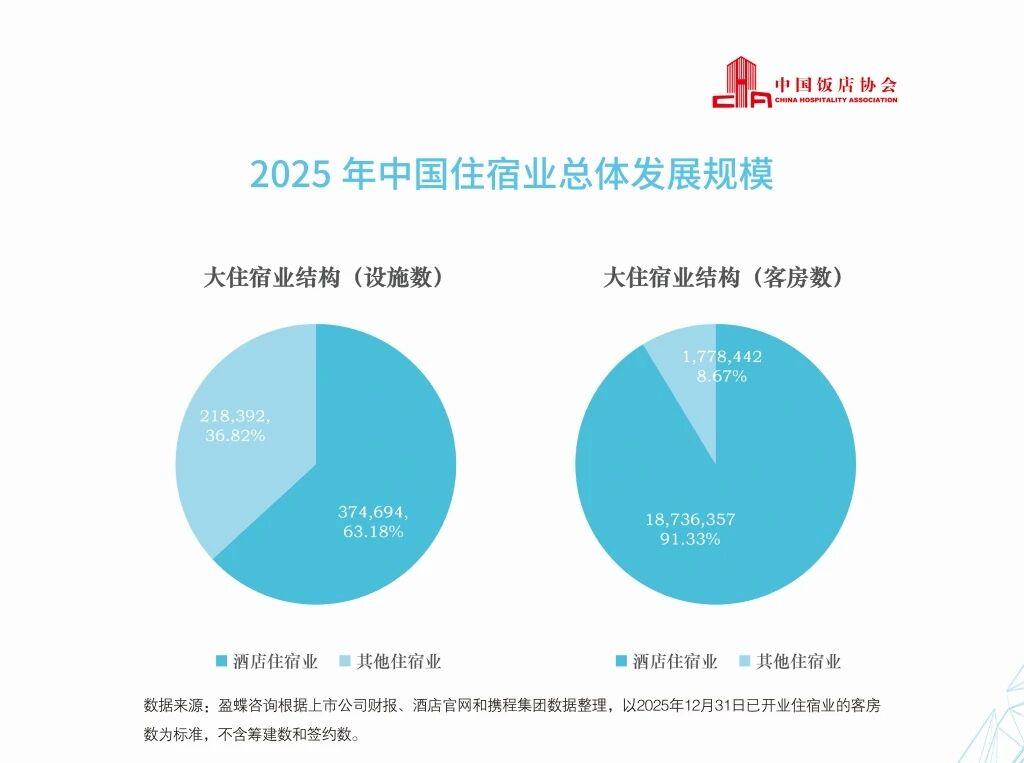
Roughly calculated, there are still nearly 270,000 hotels in China that have not joined any chain system.
Of course, not all of them are the targets that Marriott and InterContinental want. Small inns, family hotels and properties with incomplete certificates can hardly meet the requirements of international brands.
The hotel owned by Lao Ding is very suitable. It has more than 160 guest rooms, clear property rights and complete certificates, spacious rooms, and the electromechanical and public area foundation left by the original business hotel.
Although the hotel is old, its main structure is intact. After removing part of the outdated decoration and adding a laundry room, gym and new catering space, it can be put back into operation.
In fact, such properties are very common across China. Most of them were built in the last round of expansion of business hotels and high-star hotels. They used to make good profits by relying on banquets, conferences and government & enterprise customers. Later, as consumption habits changed, their decoration and services failed to keep up, so the room rate gradually dropped.
It is worth mentioning that the market scale and brand awareness of Holiday Inn Express and Hampton by Hilton in China have also shown international hotel groups the potential to further penetrate into the mid-end market.
However, Holiday Inn Express and Hampton by Hilton are already mature brands with high standardization, while Series by Marriott and voco adopt more flexible modes.
For example, Series by Marriott allows regional brands to retain their original names and characteristics, and voco provides renovation solutions of different depths. What they want to cover are exactly the hotels that are hard to be included by mature brand standards, or whose owners are unwilling to make large-scale renovations.
For international groups, after the number of their brands increases, developers have more available options. When Holiday Inn Express, Hampton by Hilton or Fairfield by Marriott have already settled in, new brands can still continue to look for suitable projects.
After listening to several rounds of introductions from foreign brand developers, Lao Ding also found that the core competitive advantages of these unfamiliar foreign brands are almost the same.
What the developers repeatedly emphasize is nothing more than how many members and direct sales channels Marriott Bonvoy, IHG One Rewards and World of Hyatt can bring, and then the group will also provide procurement, revenue management, IT systems and training support.
But Lao Ding still has some doubts. He remembers that when Hyatt and BTG Homeinns launched the Urbrand brand in the past, the story of dual membership and dual channels was also very attractive. But after several years of operation, there were continuous negative public opinions, and the actual number of opened hotels was far from the declared target of signing more than 300 hotels in five years.
Lao Ding has no idea about the outcome.
03
In fact, the experience of international hotel groups in China's mid-range market is far less smooth than what the developers described.
Marriott should have the deepest experience of this.
In 2016, when Marriott first cooperated with Dongcheng to introduce the Fairfield brand into China, the two sides set a very aggressive target: to develop 140 hotels in five years, 100 of which should be opened before 2021.
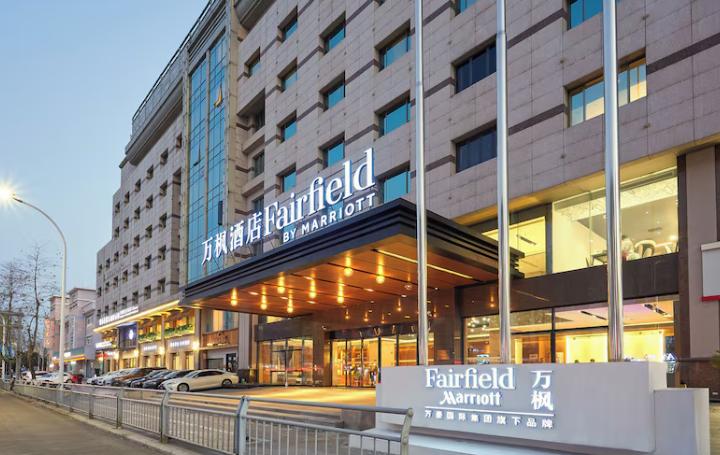
This cooperation only lasted for three years. In 2019, Dongcheng withdrew from the new project development of Fairfield in Chinese mainland, and the original hotel opening plan was not fulfilled as scheduled.
Later, Marriott took back the development of Fairfield and renamed it Fairfield by Marriott. It was not until April this year that the brand welcomed its 100th hotel in Greater China.
Fairfield by Marriott is still opening new hotels now, but the target that was originally planned to be completed in 2021 has been delayed by five full years.
In 2024, Marriott cooperated with Delong Group again, planning to let more than 100 full-service hotels under Delong join The Luxury Collection, which also accepts existing hotel properties.
In the year when the cooperation was announced, the two sides only signed 8 projects, which is still far from the original target of more than 100 hotels, and the landing process is still very long.
Now, Marriott, which has kept trying despite previous failures, has brought Series by Marriott to the larger select service market with lower average room rate.
After several adjustments of partners and brands, Marriott has never given up absorbing a large number of local hotels in China.
During this period, China's mid-range hotel industry has gone through multiple rounds of product upgrading.
The hot breakfast, coffee, flexible lobby and community experience that new international brands emphasize at press conferences have long been very mature for local mid-range hotel chain brands.
Robot delivery, intelligent room control and sleep-related products can hardly surprise consumers anymore.
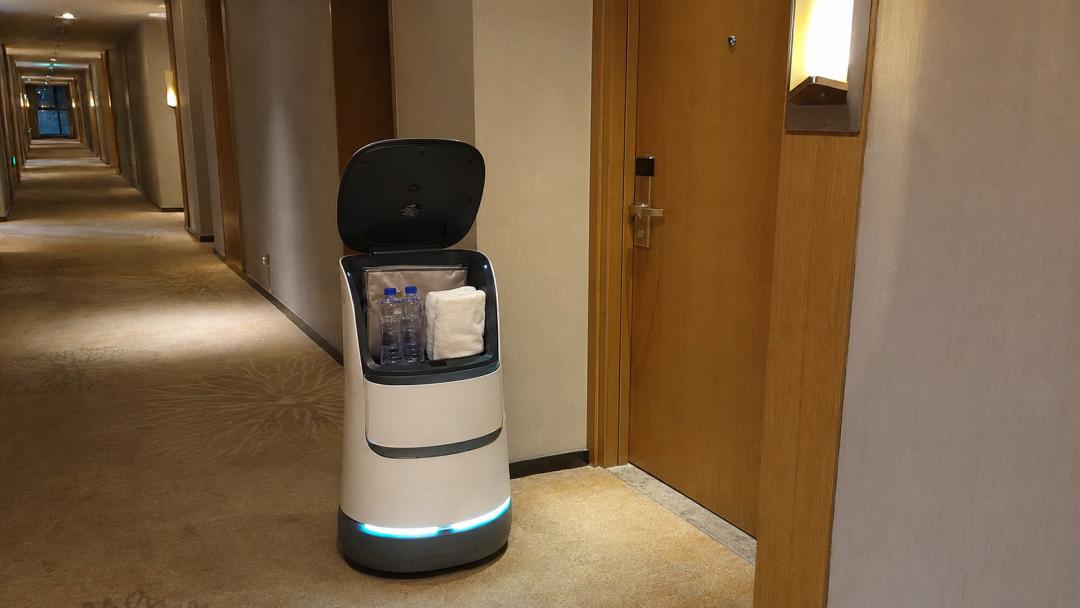
While some foreign hotel brands are still trying to explain until what time the breakfast is served, local groups have begun to study midnight snacks, pet-friendly services and more detailed demands of female guests.
The product gap brought by new foreign brands is getting smaller and smaller, while hotel owners can hardly find the operating results they care most about from public information.
At present, neither Holiday Inn Express, Hampton by Hilton, Hilton Garden Inn nor Home2 Suites by Hilton has systematically disclosed the annual operating performance of existing renovated stores in China.
Among the newly entered renovation brands in China, Series by Marriott and Hyatt Adjoin have not opened their first stores in China, and voco only has a small number of projects in operation. Existing hotel owners who want to know whether the early pilot projects can make profits still need to wait for a longer time.
If an international brand can only increase the room rate by more than ten yuan, and the orders it brings are not enough to improve the annual occupancy rate, the renovation investment will be very difficult to recover within the expected time.
At the end of our conversation, Lao Ding took out the operating data of Atour and Huazhu again.
He said that local brands may not make the hotel sound more high-end and international, but at least in the southern Jiangsu market where he is located, there are a large number of local reference cases showing where the guests come from and what the actual operation situation is, so he knows clearly both the good and bad sides.
Foreign groups have taken a fancy to China's old hotels, but owners like Lao Ding prefer to invest their money in a transparent and understandable financial statement.
This article is from the WeChat Official Account "Lvjie", author: Theodore Xishao, published with authorization from 36Kr.