CoreWeave: The inflection point has arrived, can the "hard-pressed workers" finally make money?
Coreweave, the new AI cloud unicorn, released its Q2 2026 financial results after US stock market hours on August 12, and its share price rose by about 15% immediately after the release. Overall, from the perspective of expectation gap, the performance of this quarter is not particularly outstanding.
The core positive factor is that, in terms of trend, while the company's business and revenue scale continue to grow at an accelerating pace, its profit margin does show signs of bottoming out and rebounding, and the computing power delivery speed that had been delayed many times before has been greatly improved this quarter.
In terms of guidance, although the guidance for the next quarter and the full year is not much better than expected, it continues to point to the trend of accelerating growth and rising profit margins, which is also a positive for the medium and long-term narrative. Specifically:
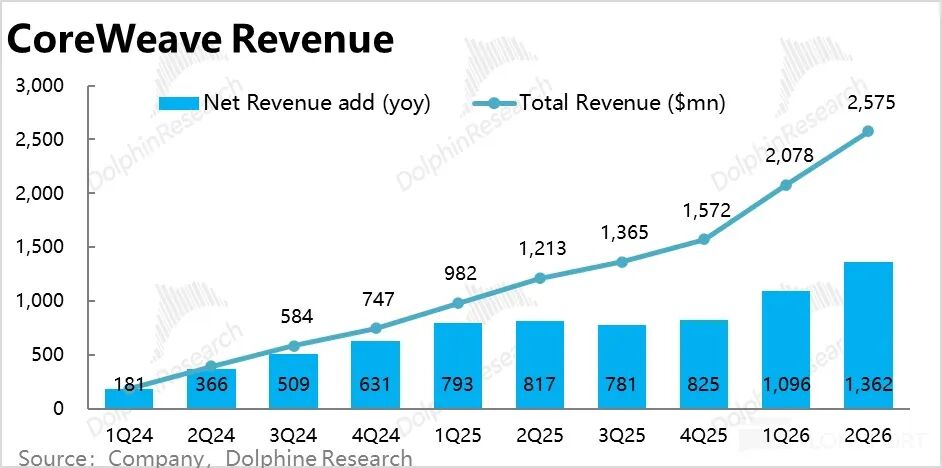
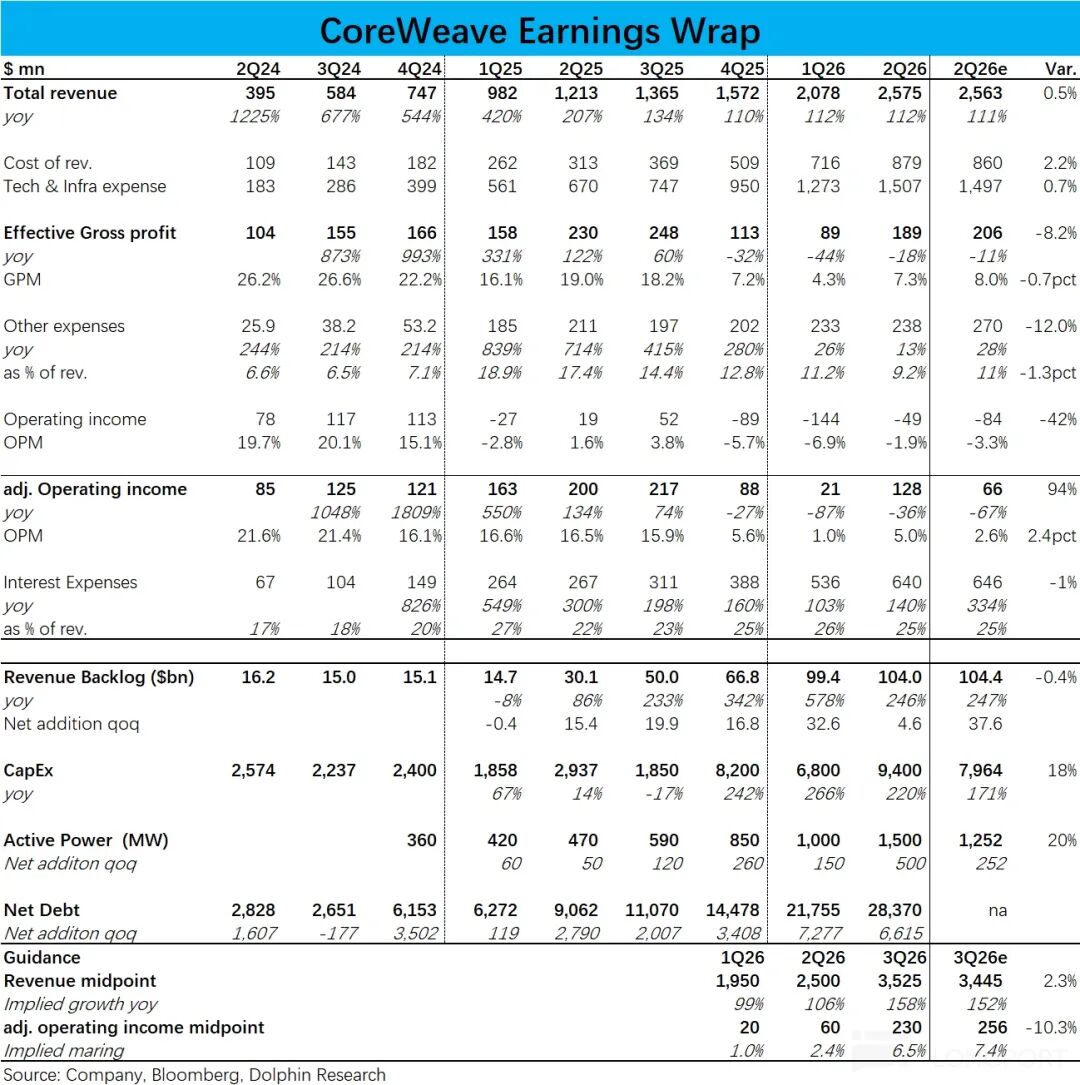
1. Growth continues to accelerate but is not a surprise: The company's total revenue reached nearly $2.58 billion this quarter, up 112% year-on-year, with a net increase of nearly $1.4 billion, and the growth momentum continues to rise. However, it is slightly lower than the upper limit of the previous guidance and is roughly in line with market expectations, so there is no surprise from the perspective of expectation gap.
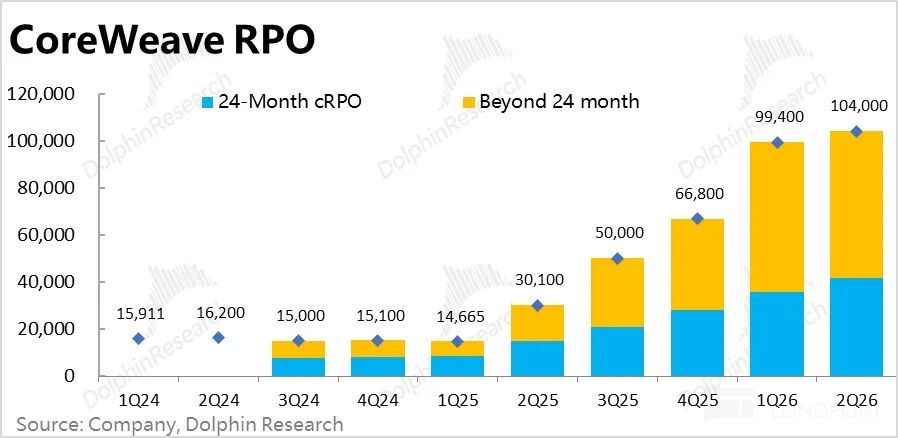
At the end of this quarter, the remaining performance obligation (RPO) reached 104 billion US dollars, with only a small increase of 4.6 billion US dollars compared with the previous quarter. As there has been no news report of the company signing new large orders recently, the market's expectation for RPO growth is indeed not high. However, Dolphin Research noticed that some investment banks expected the figure to be 10 billion US dollars, and the actual performance is also slightly lower than expected.
In addition, according to the company's disclosure, the amount of new contracts signed by the company since the third quarter is about 25 billion US dollars, and the growth momentum has rebounded.
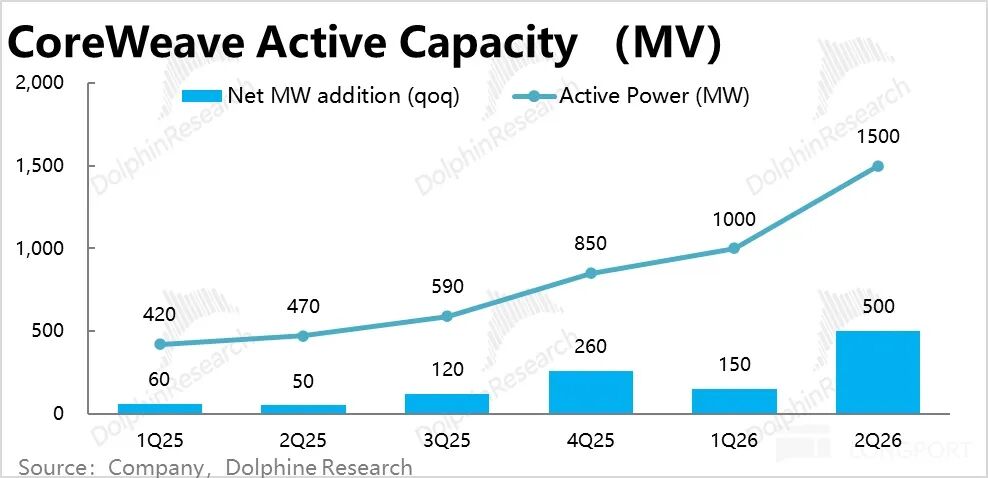
2. The pace of computing power launch accelerates: The most important operational indicator -- the scale of launched computing power (Active Power) reached 1500Mw this quarter, with a net sequential increase of 500Mw in a single quarter, hitting a record high, significantly exceeding the market expectation of 250~300Mw.
One of the main doubts in the market last quarter was that the launch speed of computing power was too slow, which made people worry about the company's poor execution efficiency. This time, the company dispelled such doubts with practical actions, and as a leading indicator, it indicates that the subsequent revenue release will be greatly accelerated.
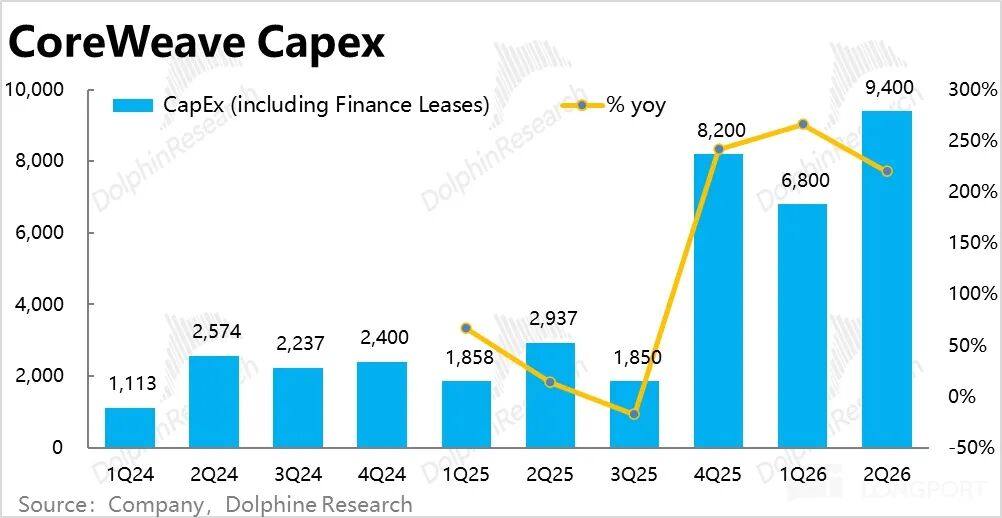
Corresponding to the significant acceleration and over-expectation of computing power construction, Capex investment this quarter reached 9.4 billion US dollars, a sequential increase of 2.6 billion US dollars, which also hit a new record high, significantly higher than the market expectation of 7.96 billion US dollars.
And according to the company's guidance, Capex in the next quarter will be further increased to 11.5~13.5 billion US dollars (according to the full-year guidance, it may fall below 10 billion US dollars in the fourth quarter). Although part of the increased Capex is due to the price rise of hardware, it also means that the scale of computing power launched in the next quarter will be larger than that of this quarter, and both computing power construction and investment have entered an acceleration stage.
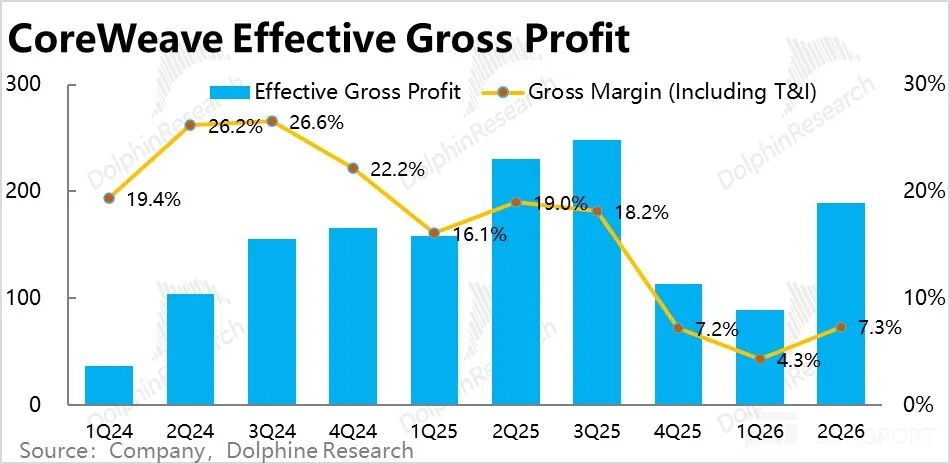
3. Has the profit inflection point come? With the rapid expansion of revenue scale, the company's scale effect and profit margin inflection point seem to have emerged. This quarter, the "real" gross profit margin (after deducting revenue cost and Tech & Infra expenses) reached 7.3%, up 3 percentage points from the low point of the previous quarter.
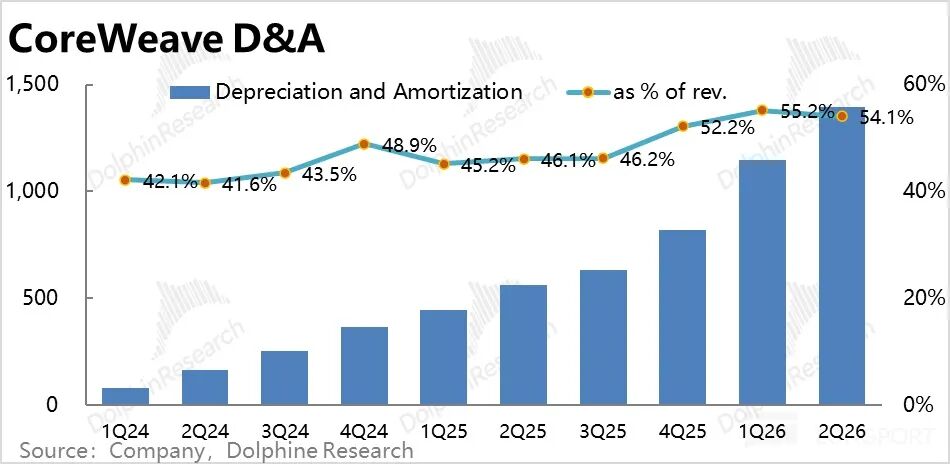
The largest single cost item among them -- depreciation and amortization reached 1.39 billion US dollars, a year-on-year increase of 149%, accounting for 54.1% of revenue, down 1.1 percentage points from the previous quarter. It can be seen that under the stronger revenue scale effect, the inflection point of the depreciation rate being diluted has also begun to appear.
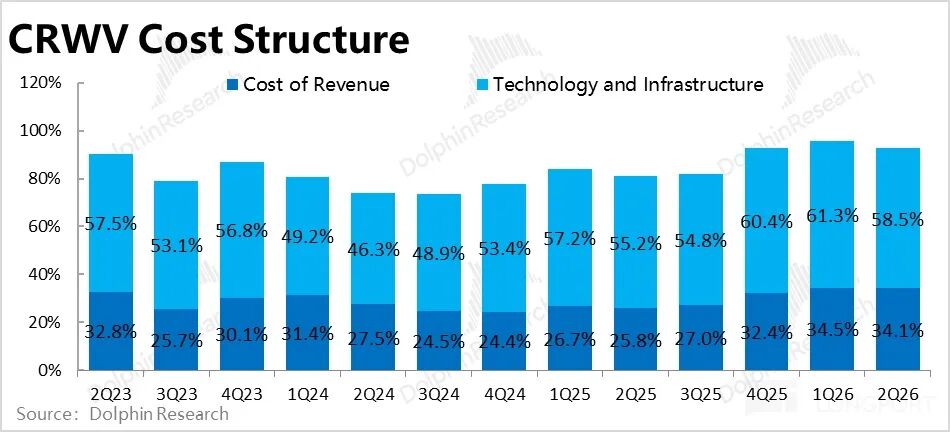
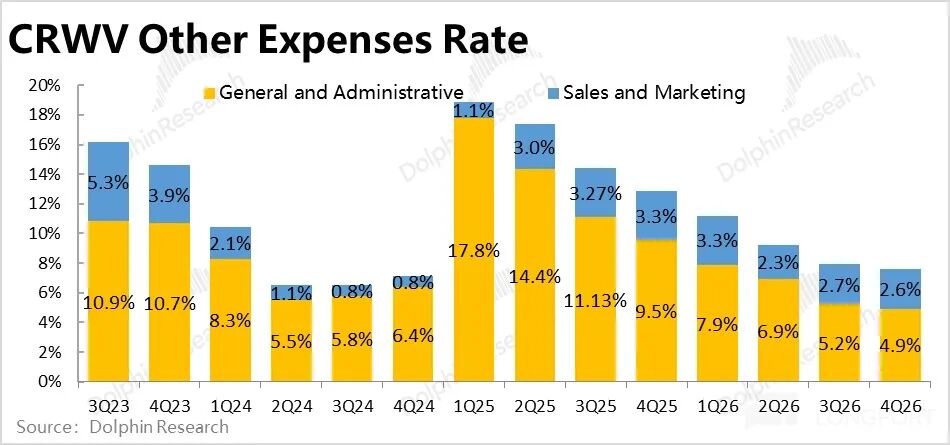
With the improvement of gross profit, and the company's marketing and management expenses are relatively "inert" with limited growth, so the expense rate is gradually diluted by the growing revenue scale, and about 0.3 percentage points of profit margin has been squeezed out sequentially this quarter.
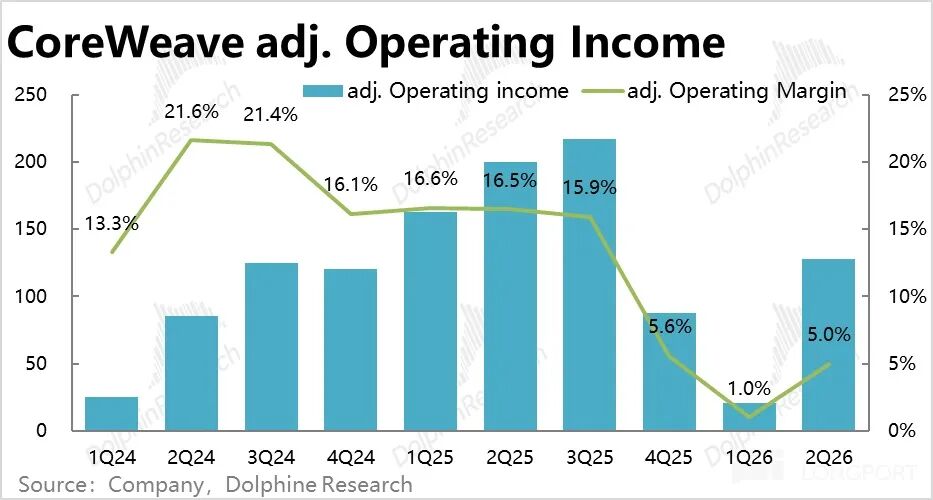
At the same time, the proportion of equity incentive expenses in revenue this quarter also decreased by about 1 percentage point sequentially. With multiple boosts, the adjusted operating profit margin that the company focuses on reached 5% this quarter, a significant improvement from 1% in the previous quarter.
This is consistent with the management's previous promise that the first quarter would be the low point of profit margin, and also conforms to the judgment in Dolphin Research's previous in-depth analysis that the profit margins of cloud vendors' AI businesses may be generally underestimated.
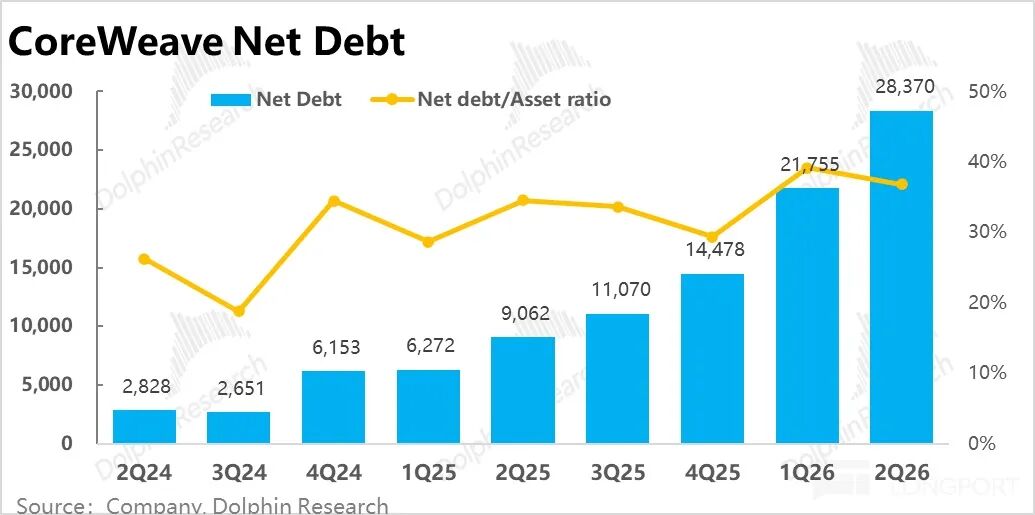
4. Debt scale continues to grow, but the pressure no longer rises: Since the company's current investment far exceeds the cash flow it can generate, the company's business is essentially driven by financing. Therefore, whether sufficient funds can be obtained and the corresponding risks are also crucial factors.
Net debt at the end of this quarter has reached nearly 27.3 billion US dollars, with a sequential increase of about 6.6 billion US dollars, and the year-on-year growth scale has slightly decreased compared with the previous quarter. The debt ratio (as a percentage of total assets) reached 37%, also slightly down from 39% in the previous quarter.
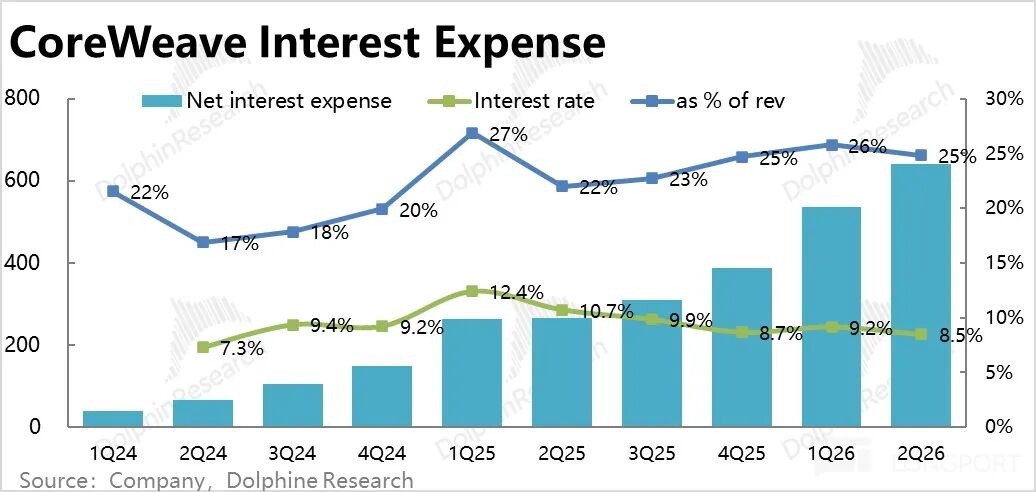
At the same time, interest expenses reached 640 million US dollars, compared with 540 million US dollars in the previous quarter, continuing to rise. However, whether from the proportion of interest expenses in revenue (down from 26% to 25%), or from the average interest rate of debt (down from 9.2% to 8.5%), the pressure of debt and its erosion on profits are relatively easing.
During this earnings call, the company also announced that it has locked in cumulative equity/debt funding sources of more than 14 billion US dollars to ensure the capital sources for investment in the next few quarters.
Key Information of the Financial Report at a Glance
Dolphin Research Views:
1. As can be seen from the above analysis, the core positive confidence conveyed in the company's this quarter performance mainly includes: a. The speed of computing power construction greatly exceeds expectations, and more and faster computing power supply also means faster revenue ramp-up. b. With the accelerated growth of business scale, under the stronger scale effect, depreciation, expenses, interest expenses, etc. are all diluted, gross profit margin and operating profit margin both bottom out and rebound, and the input-output ratio that the market is most worried about shows a trend of continuous improvement.
2. Not only the performance of this quarter, the guidance also points to the trend that revenue growth rate continues to accelerate and profit margin continues to rise.
First of all, for the guidance of the next quarter, according to the median guidance, the revenue of the next quarter is 3.53 billion US dollars, with a growth rate of 158%, and both the absolute amount and growth rate are significantly accelerated compared with this quarter. The adjusted profit in the next quarter is 230 million US dollars, with a profit margin of 6.5%, which is slightly lower than the market expectation of 260 million US dollars. However, the implied profit margin continues to rise compared with this quarter.
In addition, the company also raised its full-year guidance for 2026 again this time. After calculation, the implied revenue expectation for the fourth quarter is 4.3 billion to 4.9 billion US dollars, with a median year-on-year growth rate of 194%, further accelerating compared with the third quarter.
At the same time, the expected adjusted operating profit for the fourth quarter is 610 million to 740 million US dollars, with an implied profit margin of 14.6%, indicating that the company's subsequent profit margin will climb very rapidly, and the 25%~30% profit margin target is not far away.
3. Recent Developments and Investment Logic
Regardless of the financial results, just looking at the stock price performance of many technology companies that Dolphin Research has followed recently, there is a sign that the market's risk appetite has rebounded slightly. After companies including but not limited to Shopify, Airbnb, Sea, Unity, Palantir delivered better-than-expected financial results (even if the extent of outperformance is not necessarily very large), their stock prices have risen by at least 10%, and increases of 15%~20% are not uncommon. Therefore, for a company with high elasticity, CoreWeave's post-market increase is not exaggerated.
In addition, the market once became extremely worried about the ROI of investment because cloud vendors are the main undertakers of Capex expenditure and the main victims of hardware price increases such as memory, which led to cloud vendors generally becoming the short side in pair trading, and their stock price performance was generally poor, with the new cloud vendors seeing even larger declines.
But recently, the cloud business growth of giants such as Microsoft and Amazon has accelerated more than expected, and the profit margin of AI cloud business does not seem as bad as previously worried, so the market's attitude towards cloud vendors has reversed again.
In terms of recent developments, there are two other important positive news. First, the company announced that after July, it has generally raised the pricing of its product lines by 25% (part of which is to hedge against the rise in hardware prices). We believe that this is undoubtedly a reflection of the current significant shortage of computing power supply, and will also significantly help improve the company's profit margin.
The other point is that in addition to the "bare metal" direct hardware rental business, the company has begun to launch TaaS-like services – Managed Inference, which means deploying models on servers for users to call APIs directly. According to Dolphin Research's previous analysis, the profit margin of TaaS-like services will be significantly higher than that of "bare metal" rental, which is also a positive for the company's profit margin.
Therefore, at present, it no longer seems so unreachable for the company to achieve a steady-state profit margin of about 25%~30%.
4. In the long run, the long-term competitive pattern prospect of new cloud vendors is not very good. After