Unitree's listing sparks a frenzy in the A-share market: nearly 10 million investors are scrambling to grab shares, and the post-90s founder has built a personal net worth of 18 billion yuan.
A Hangzhou-based company that started with quadruped robotic dogs has stepped onto the capital market under the full spotlight every step of the way.
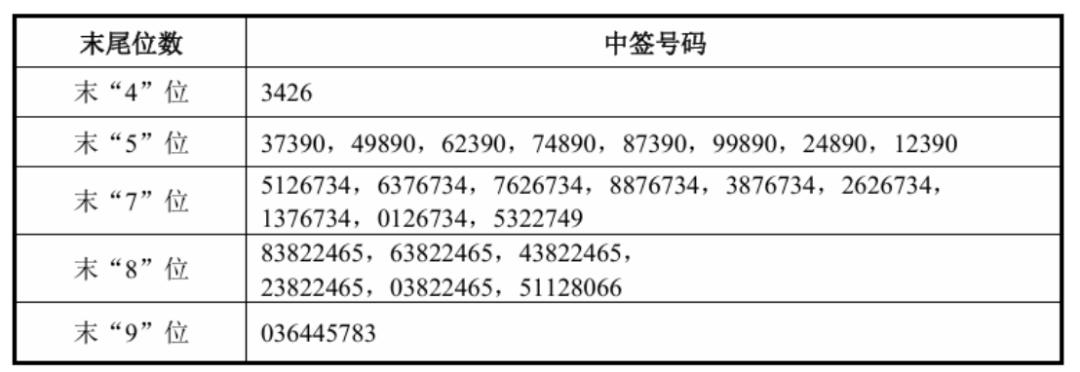
On the evening of August 11, Unitree Robotics announced the lottery results for its new share offering: the number of valid subscription households reached 9.7846 million, with a total of 19,414 winning numbers, and the winning rate was only 0.01809759%. Each winning number can only subscribe for 500 A-shares, which means that only 1 in more than 5,500 subscription accounts can win the lottery, and the lucky ones are extremely rare.
With an issue price of 150.80 yuan, a price-to-earnings ratio of 219 times, an ultra-low winning rate of 0.0181%, plus the scarce aura of "the first Chinese humanoid robot stock", market enthusiasm has already boiled over.
Behind this wealth feast, many people are calculating an income bill: winning one lot (500 shares) requires a payment of 75,400 yuan. According to the average 466% first-day increase of STAR Market new A-shares this year, the profit can reach 350,000 yuan; even calculated by the average 276% increase of new shares within the year, the profit can still hit 200,000 yuan.
At the current issue price, Unitree Robotics' corresponding market capitalization upon issuance has reached about 60.993 billion yuan (approximately 61 billion yuan). Some market institutions predict that against the promising prospects of the embodied intelligence track, the company has the potential to hit the 100-billion-yuan mark after listing.
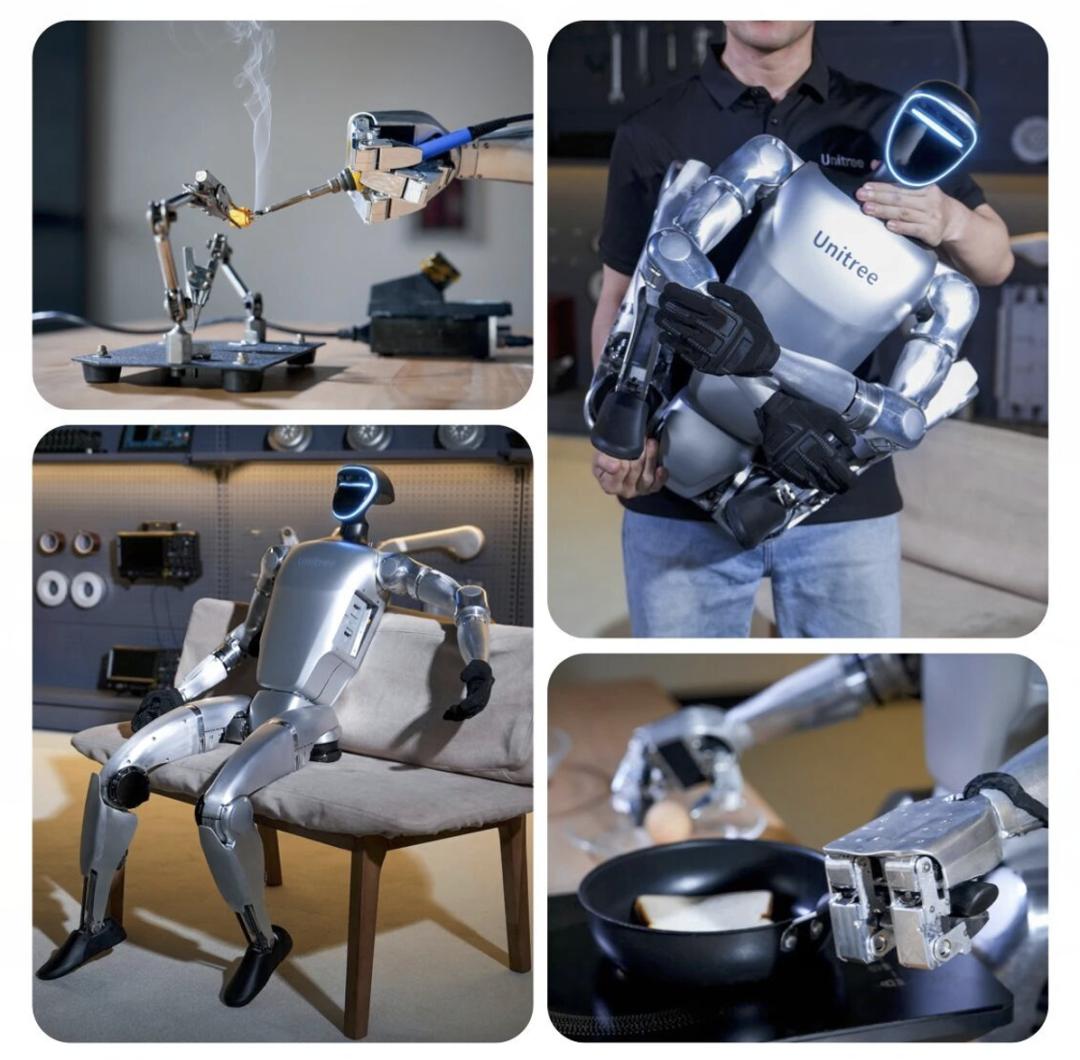
In the past few years, Unitree Robotics is undoubtedly one of the most eye-catching companies in the embodied intelligence wave. It has appeared on the stage of CCTV Spring Festival Gala for many times, performing cyber-style yangko dance, and its G1 series robots are global internet celebrities, frequently showing up in fighting arenas, developer videos and laboratories.
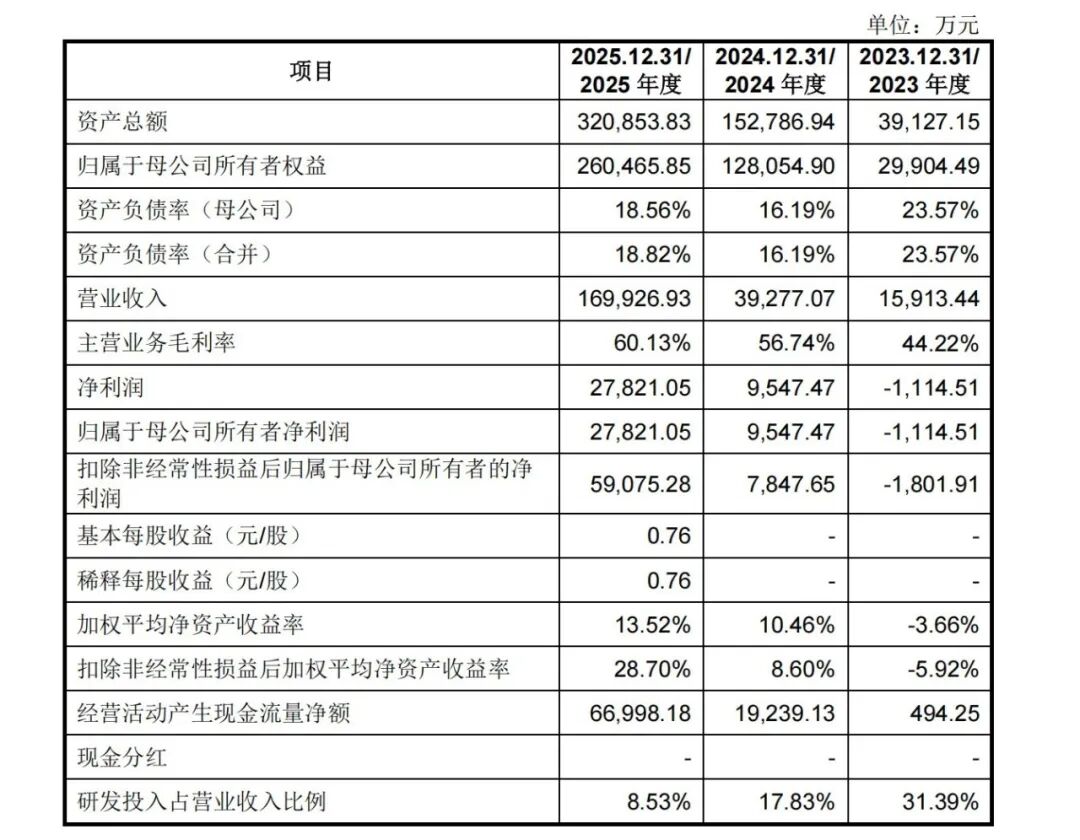
Along with the soaring exposure, its revenue curve is also rising. From 2023 to 2025, Unitree Robotics' operating revenue increased from 159 million yuan to 1.699 billion yuan, with a tenfold revenue growth in three years; in the same period, the non-recurring profit and loss attributable to shareholders of the parent company rose from a loss of 18.0191 million yuan to a net profit of 78.4765 million yuan in 2024, and then surged to 591 million yuan in 2025.
The prospectus shows that in 2025, the company's shipment volume of humanoid robots exceeded 5,500 units. Combined with the shipment data of humanoid robots from other enterprises in the global industry surveyed in the *2025 Humanoid Robot Market Research Report*, Unitree ranked first in the global humanoid robot shipment volume in 2025.
At the moment of listing, the resume of founder Wang Xingxing has also been widely discussed.
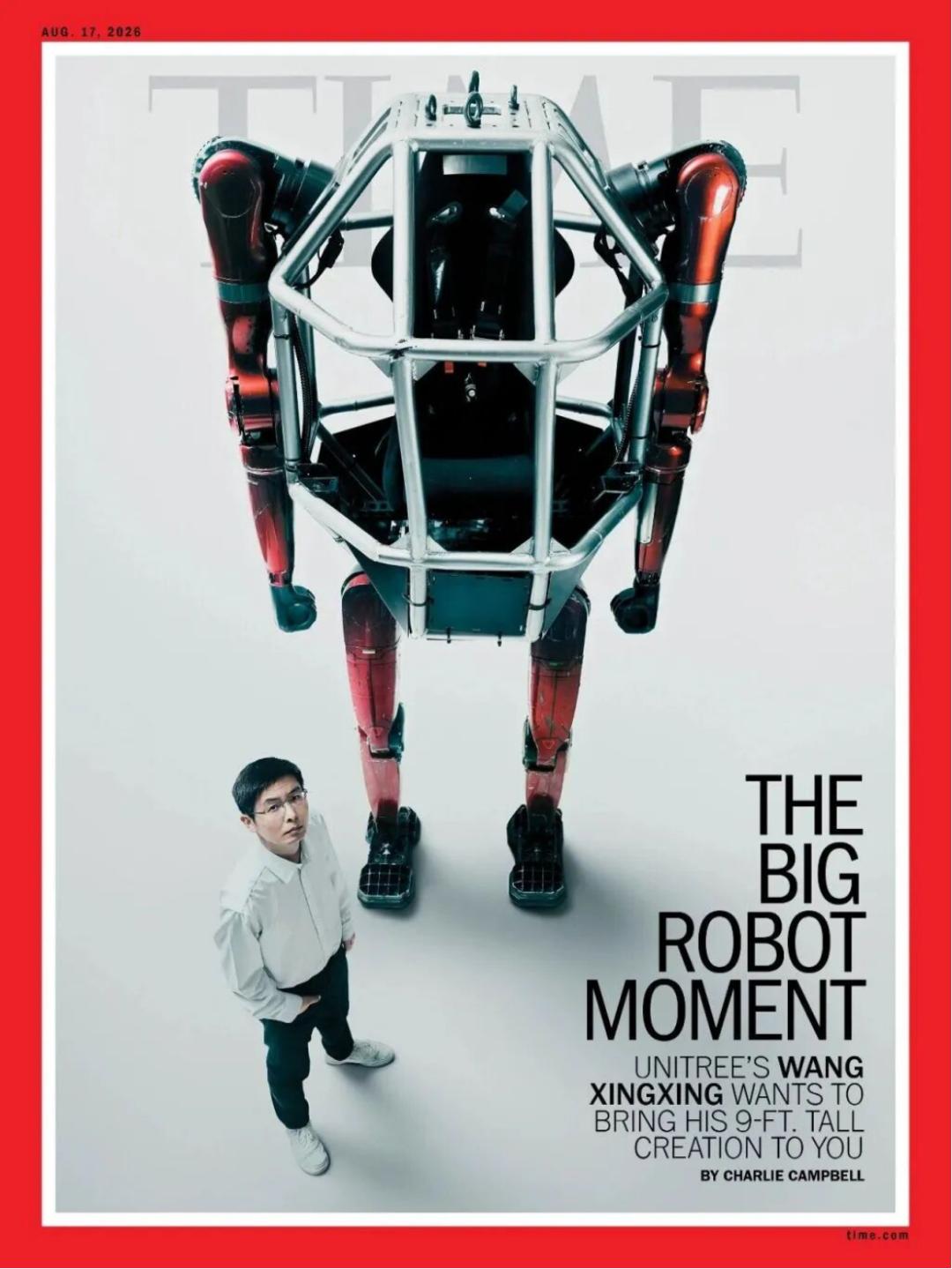
In this IPO, Unitree expects to raise a total of about 6.099 billion yuan, which is a significant over-subscription compared with the originally planned 4.202 billion yuan. Calculated at the issue price, Wang Xingxing holds a total of 33.36% of shares directly and indirectly, and some media estimate that the corresponding market value of his shareholding is about 18.3 billion yuan. A poor student who hand-assembled motors in a rental house has become the helmsman of a robot company with a market value of tens of billions in ten years, and his story has even appeared on the cover of *Time* magazine.
But listing is only the transition of the story. In the past, relying on motion control, cost control and rapid iteration, Unitree made robots flexible enough, cheap enough, and eye-catching enough.
An industry insider revealed to *Tianxia Wangshang* that although robots are extremely popular in the capital market, according to the actual consumer application data, the market sales growth rate of leading brands is not obvious at present.
Breaking through the market noise, the capital market and industrial customers will raise more difficult questions next: whether these robots can truly enter factories, service industries and families, work stably in complex real environments, and continuously create value.
"Dual-faced" Unitree: Net profit of nearly 600 million yuan in one year, profit plummeted in the first quarter of this year
Looking through Unitree Robotics' prospectus, the most striking figure is growth.
In the past few years, Unitree Robotics' performance has been growing, and the gross profit margin of its main business has climbed all the way from 44.22% to 60.13%, which is an enviable figure for competitors in the hardware industry.
The growth is driven by three business lines: quadruped robots, humanoid robots and robot components.
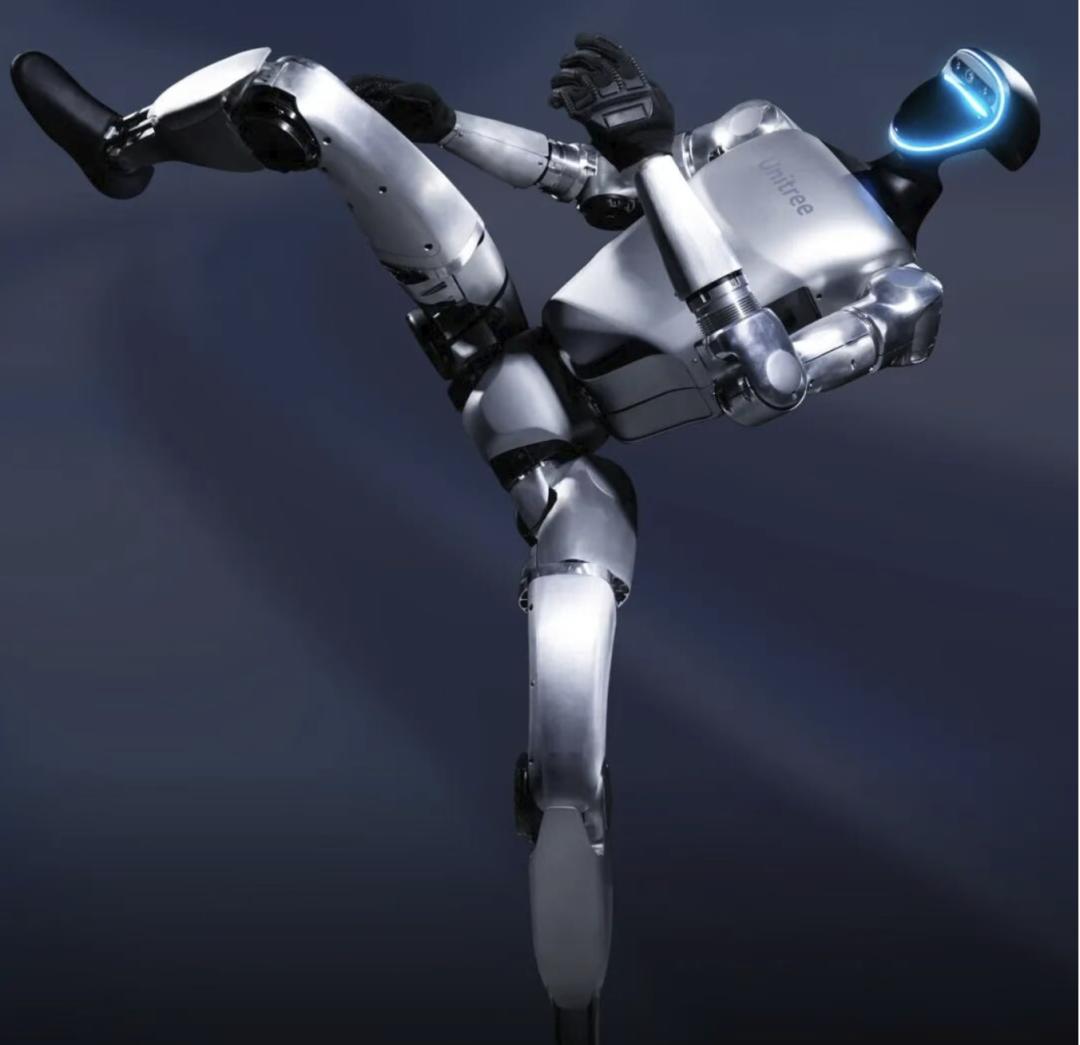
The outbreak of humanoid robots is the most prominent. In 2025, Unitree's humanoid robot revenue reached 868 million yuan, accounting for 51.78% of the main business revenue, becoming the largest source of revenue of the company for the first time; the revenue of quadruped robots was 698 million yuan, accounting for 41.62%; the revenue of robot components was 104 million yuan, accounting for 6.19%.
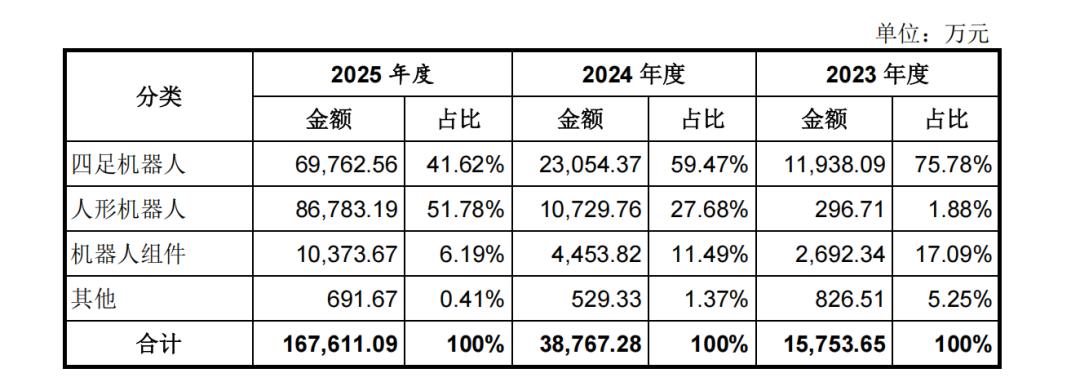
Looking further back, the revenue of humanoid robots in 2023 was only 2.9671 million yuan, accounting for 1.88%; it rose to 107 million yuan in 2024, accounting for 27.68%. In just three years, humanoid robots have developed from a marginal business to the primary growth engine.
At the same time, as the founding business, the quadruped robot sector still has a solid foundation. Its revenue in 2025 was 698 million yuan, accounting for 41.62%, with a global market share of nearly 60%. For any robot company, this is a remarkable base business.
The robot component sector contributed 104 million yuan, which is not a large volume, but its gross profit margin reached 59.36%, making it the most profitable among the three lines. This line sells core components such as servo motors, joint modules and LiDAR, with customers being other robot companies and university laboratories, essentially earning the window dividend when the supply chain is not yet mature.
(Image from the official WeChat public account of Unitree Robotics)
Behind the rapid revenue growth is the substantial increase in shipment volume. In 2025, Unitree's humanoid robot shipments exceeded 5,500 units. The prospectus shows that from 2023 to 2025, the company's cumulative sales of humanoid robots reached 5,632 units, and the cumulative sales of quadruped robots reached 33,294 units.
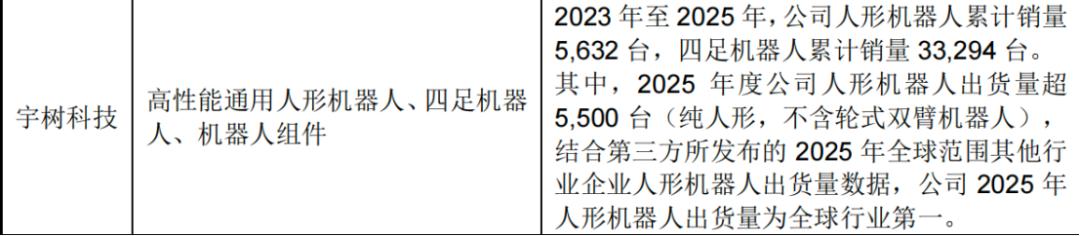
This set of data is very important. What the humanoid robot industry has lacked most for many years is not concepts, but deliverable machines. It is completely different for a robot to complete a backflip at a press conference and for thousands of machines to be stably produced, delivered and provided with after-sales services. Unitree's current core competitiveness actually lies in the mass production and delivery link.
The gross profit margin structure is also noteworthy. In 2025, the gross profit margin of Unitree's quadruped robots was 56.72%, the gross profit margin of humanoid robots was 63.18%, and the gross profit margin of robot components was 59.36%. Such gross profit levels show that Unitree's low-price strategy does not rely on sacrificing profits to expand scale, but is driven by its cost structure, product definition and large-scale manufacturing capabilities.
This IPO also brings tangible wealth returns to the company's technical backbones. The announcement shows that Unitree has set up two special employee asset management plans to participate in the strategic placement, covering a total of 171 executives and core employees. Calculated at the issue price of 150.80 yuan, these early shareholding employees may get a hundredfold floating profit. The listing of a hard technology company not only creates wealth for the founder, but also brings a group of engineers who are dedicated to R&D under the wealth spotlight.
However, the company's rapid growth has shown signs of slowdown.
In the first quarter of 2026, Unitree Robotics achieved an operating revenue of 423 million yuan, a year-on-year increase of 68.49%, and the growth rate dropped significantly from the high level in 2025; the non-recurring net profit after deduction was 40.2536 million yuan, a year-on-year decrease of 52.55%. The explanation given by the company in the prospectus directly points out the reasons: "The substantial increase in revenue base, the gradual easing of industry popularity, the increasingly fierce market competition and the rapid growth of expenses."
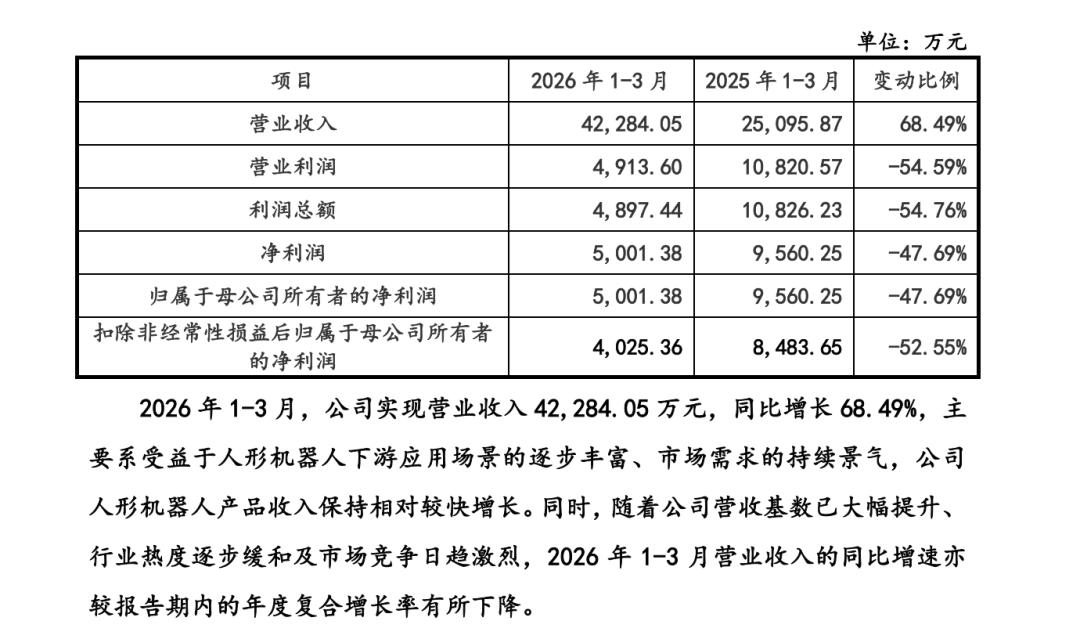
The superposition of three factors: easing industry popularity, intensifying competition, and simultaneous rise in R&D and sales expenses, is directly reflected in the income statement.
The capital market is willing to pay for the label of "the first humanoid robot stock", but whether the high valuation can be stabilized ultimately depends on the order repurchase rate and the landing effect of robots in real scenarios.
From "hand-assembled" motors to global No.1: the extreme pragmatism of a partial-advantage student
In today's narrative of embodied intelligence, robots are often described as the ultimate carrier for large models to land in the physical world. But Unitree's starting point is actually very simple.
According to media reports, Wang Xingxing graduated from Zhejiang Sci-Tech University with a bachelor's degree, and later became a postgraduate student at the School of Mechanical and Electrical Engineering and Automation, Shanghai University. In an interview with *China News Weekly*, Wang Xingxing admitted that he was "seriously partial to subjects" during his school years, and he only passed the English exam about 3 times in high school.
But the difference is that he pushed what he is good at to the extreme. Unitree Robotics' current position in the industry is closely related to Wang Xingxing's almost paranoid engineer temperament.
(Image from the official WeChat public account of Unitree Robotics)
During his postgraduate studies, he independently designed and developed the first product XDog, a small quadruped robot driven by an outer rotor brushless motor, with clear core indicators: high performance and low cost. This robotic dog attracted small-scale attention in the robot circle at that time, but no one cared about the student behind it. After graduating with a master's degree in 2016, Wang Xingxing founded Unitree Robotics with this paper and the technical foundation of XDog.
Entering the quadruped robot track at this point in time does not seem to be a smart choice. At that time, there was only one benchmark in the global track: Boston Dynamics. Its products are hydraulically driven, powerful and fast-moving, but a robotic dog is priced at more than one million yuan, and commercialization is far from being realized. The entire academic and industrial circles are moving along that path.
Wang Xingxing chose a direction that no one was optimistic about: electric drive.
The logic behind this choice is extremely pragmatic. The hydraulic system has high cost, complex structure and difficult maintenance, while once the electric drive technology is mature, the cost can drop exponentially. He independently developed a high torque density brushless motor. From that moment on, Unitree's underlying logic has been anchored: full-stack self-research with low cost. All valuable core components on a robot, including motors, reducers, controllers, LiDAR and motion algorithms, are all manufactured by itself.
The advantage of this route is very direct. When peers sell robotic dogs for hundreds of thousands of yuan, Unitree can lower the price to less than 10,000 yuan, while maintaining a gross profit margin of more than 50%. Its cost advantage is saved bit by bit from self-research and self-production.
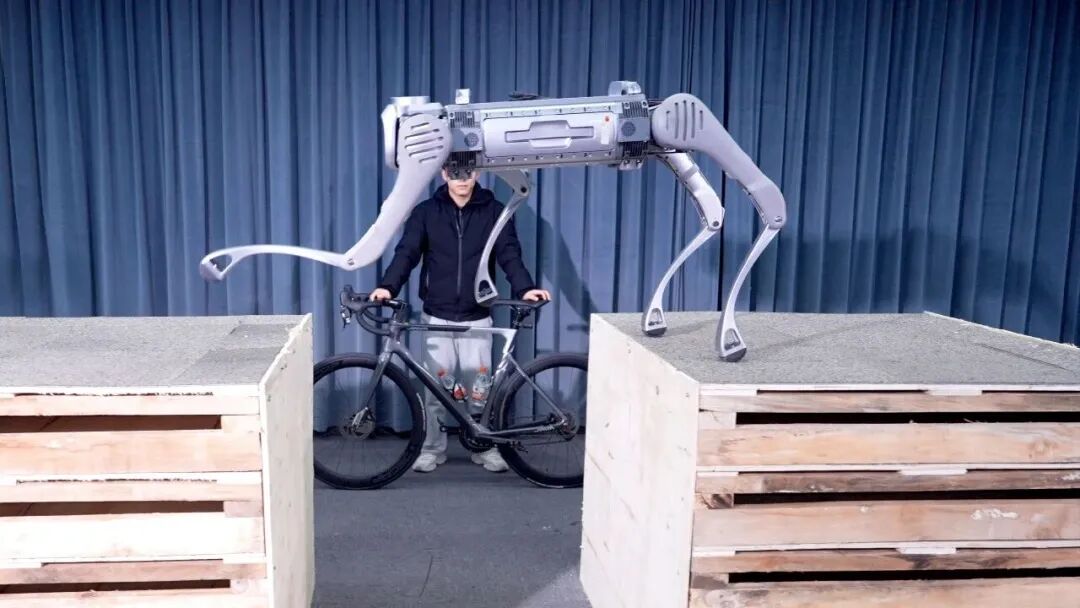
(Image from the official WeChat public account of Unitree Robotics)
Unitree's product iteration rhythm is always following this logic line.
In 2017, the first commercial product Laikago was released, which verified the technical route first. In 2020, the A1 quadruped robot reached a maximum running speed of 3.3 m/s, and the company began to push products to the consumer-grade market.
In 2023, Go