Alo's enemy is itself, not lululemon
Alo's biggest foe in China is the "self" imagined by consumers.
Alo Yoga's first official entry point in China has ultimately settled online.
On August 12, Alo's Tmall store officially opened for sales, and its WeChat Mini Program boutique launched simultaneously.
On the first day of opening, Alo's Tmall store performed well. The top-selling item was the stretch trousers in the same style that Zhao Lusi wears, priced at just over 1,000 RMB, with over 7,000 units sold. The German training shoes priced at nearly 2,000 RMB also sold more than 2,000 pairs.
Put simply, Alo, which arrived 13 full years later than lululemon, no longer needs to educate the market on pricing, as Chinese consumers have already accepted yoga pants priced at over 1,000 RMB.
On the other hand, lululemon has spent 13 years building a high-end, professional brand identity for itself, while on social media, the Alo brand remains vague and undefined in the eyes of most consumers.
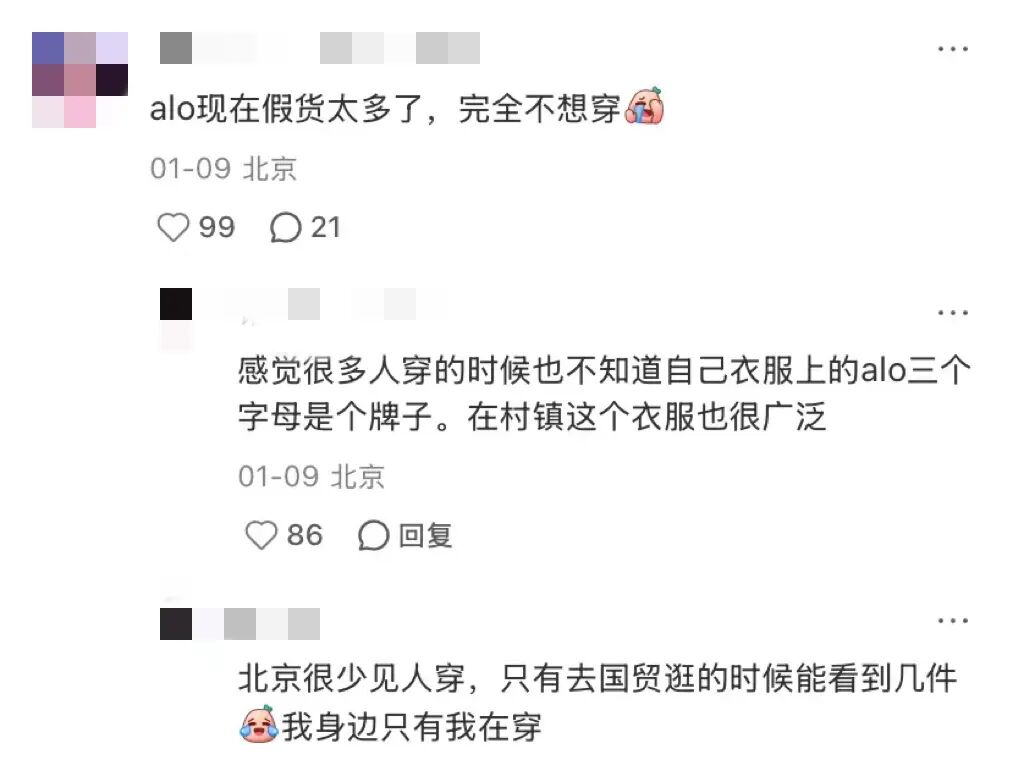
Some people joke that in the US market, Alo counts as a cutting-edge sportswear brand, but in the eyes of Chinese consumers, it is a "past-its-prime" internet-famous brand. "What first store? Counterfeits have already spread to fourth-tier cities", "You can find them for 15 RMB a piece at night markets now".
Some people are glad they no longer need to find personal shoppers to buy Alo products, while more people believe the brand has long been eroded in advance by counterfeits.
01
The premium alternative to lululemon has arrived
Alo was founded in Los Angeles, USA in 2007, and its name is derived from Air, Land and Ocean.
In terms of scale, Alo is still far smaller than lululemon at present.
Financial reports show that lululemon's net revenue reached 11.1 billion USD in fiscal year 2025. Alo is not yet listed. According to previous disclosures, its revenue exceeded 1 billion USD in 2024. The brand is enjoying strong growth momentum globally, but even calculated at a 50% growth rate, its revenue last year was only 1.5 billion USD.
In terms of valuation, foreign media reports put Alo's valuation between 8 billion and 10 billion USD. Calculated based on lululemon's share price on August 11, its total market capitalization stood at 136.2 billion USD. The market has expectations of a "high growth premium" for Alo.
For the high-end yoga apparel category, fashion-focused consumers always have the incentive to explore new brands to avoid wearing the same outfit as others in the gym.
High-end brands do not compete on cost performance, and Alo presents itself as a premium alternative to lululemon both in the US and China.
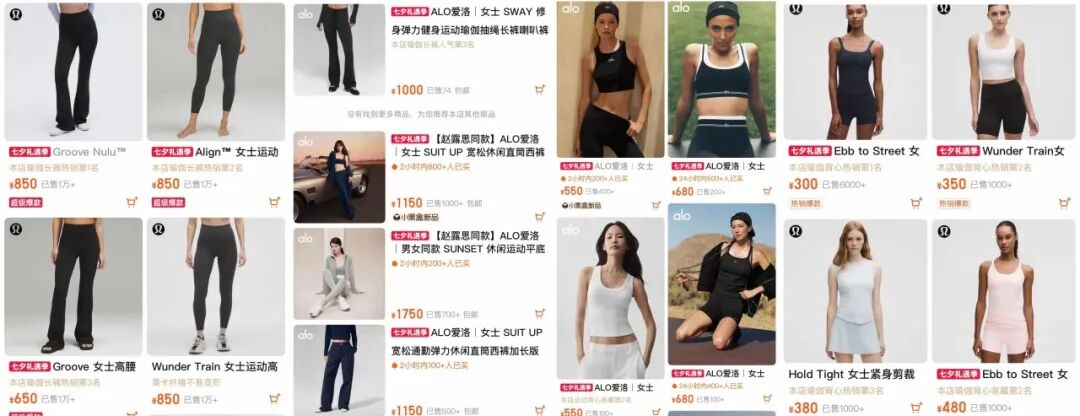
We compared the pricing of the two brands' Tmall flagship stores. Taking iconic yoga pants and tank tops as examples, Alo's products are about 15% to 80% more expensive.
Alo's pricing in the Chinese market is also around 10% higher than its official US website.
For Alo fans, this price is completely acceptable, because whether they buy through cross-border e-commerce or personal shoppers, the total cost including shipping, tariffs and service fees is basically the same as the Tmall price.
If this is Alo's pricing strategy, it can be inferred that Alo may not have deployed local supply chains yet. However, operating with a pure import model may lead to slower responses than peers in the future. Just one day after the online store opened, several best-selling products already had partial size shortages.
If we further compare the pricing on Alo and lululemon's official websites, Alo is also slightly more expensive, but the gap is not as large as that on Tmall, at around 5%.
lululemon has cultivated the Chinese market for many years, and its advantages in localized supply chains are very prominent.
Alo came prepared for this entry into the Chinese market. Months ago, rumors spread that the public was guessing which city would host its first physical store, but Alo took an unconventional path and opened an online store first.
As early as last month, Alo registered its Xiaohongshu account, which now has 37,000 followers. The first post on the account mainly gathered fans of the brand and its global spokesperson Ning Yizhuo. In comparison, lululemon's Xiaohongshu account has more than 300,000 followers.
The gap is even more obvious when comparing online store follower counts: lululemon has over 6 million followers, while Alo only has 150,000.
Alo, which arrived late, has captured the existing traffic from previous cross-border purchases, personal shoppers and unofficial authorized stores, but the next problem it faces is how to win over the broader mass market.
Announced at the same time as the flagship store launch was the collaboration with Zhao Lusi, whose traffic and product endorsement capabilities were verified on the first day of opening. This shows Alo's eagerness to tap into the mass market, however, Zhao Lusi does not have a strong sports or yoga-related personal label. On social platforms, a consumer who previously bought Alo products through a personal shopper complained: "This is not the Alo I know!"
02
The familiar stranger
Alo is one of the rare overseas brands where piracy has run rampant before the brand even officially entered China, and counterfeits have even penetrated into county-level areas.
Few brands have had such a large number of "users" before entering a market. In the past, there were counterfeit brands mimicking famous domestic brands, and now there are counterfeit Alo products sold under names like ala, olo, alb, and even aloof with deliberately reduced font sizes to confuse consumers.
During the 2024 Double 11 shopping festival, Alo's brand name appeared on the "Tmall Double 11 Top New Store Ranking". Soon after, people discovered that the store with such rapid sales growth was actually an unofficial, unauthorized store.
Now, when searching for "Alo" on e-commerce platforms, a large number of similar products can still be found, priced from dozens of RMB to one or two hundred RMB. According to public trademark data, more than 1,300 trademarks similar to Alo have been preemptively registered in China under the "first-to-file" principle.
Some confused consumers asked: "Why is a brand that sells for such high prices in the US so low-quality in China?" Kind consumers replied in the comment section that those products are counterfeits.
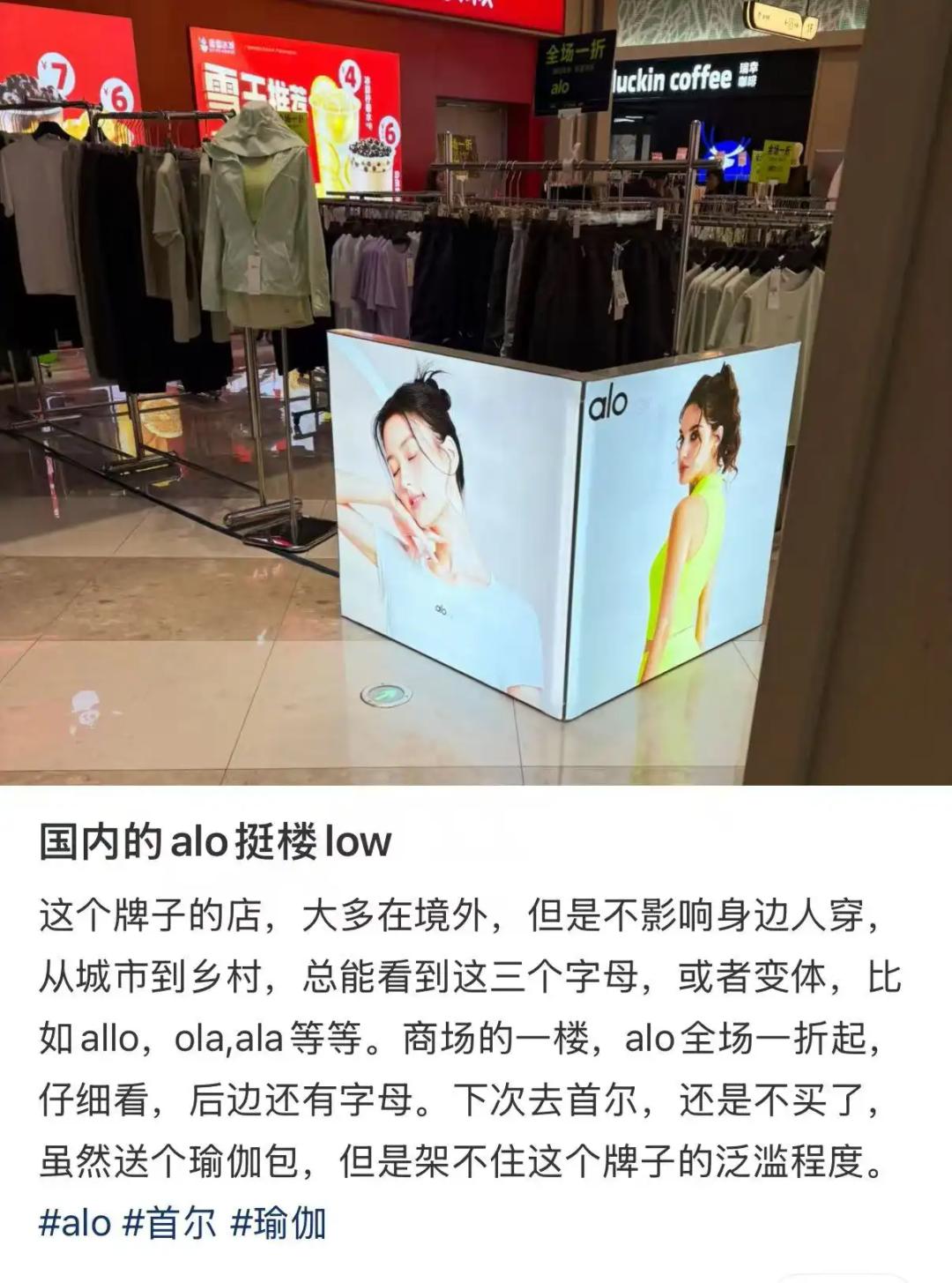
It is rather funny that some merchants have even taken the initiative to "improve" Alo's designs, adding built-in chest pads to Alo's best-selling tank tops, which Chinese consumers prefer. Many other merchants simply stick the Alo label on unbranded clothes to create non-existent new products.
So why are so many people making counterfeit Alo products? One core reason is that it is currently the highest-traffic brand in North America that has not yet officially entered the Chinese market.
This is directly related to Alo's marketing model. If you search for reports about Alo in European and American media, you will find they simply define it as a "celebrity brand" — not a sportswear brand, nor a casual wear brand, but a brand endorsed by celebrities and internet influencers.
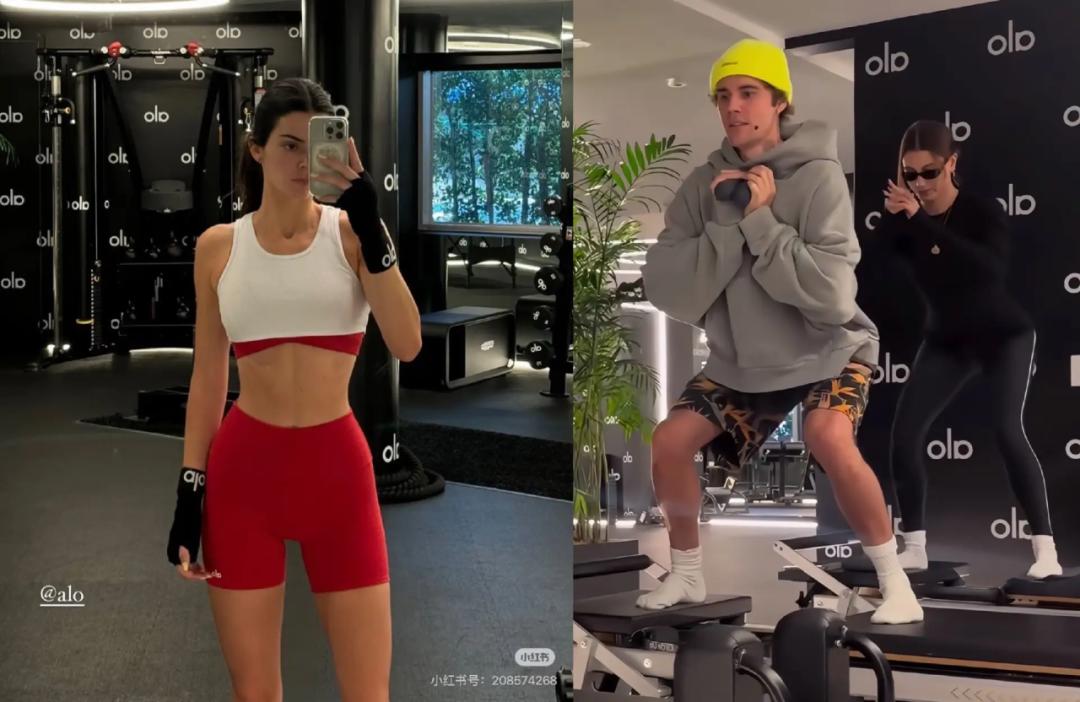
Leading the promotion are global top influencers including Kendall Jenner, Hailey Bieber and Bella Hadid, as well as many other Hollywood celebrities. But this is only one important step in the whole strategy.
The key is that through these celebrities, Alo has successfully portrayed the image of wealthy California girls, and created a carefree lifestyle picture of living in Beverly Hills — this is the brand positioning that truly makes consumers yearn for it.
Other sportswear brands only describe their usage scenarios in a conventional way, such as running, training, outdoor activities, leisure and so on, while Alo defines its target scenarios as VIP lounges (for travel), Pilates, yoga, running, court sports (a term commonly used in membership-based country clubs, not just simple ball games) and training, which is like a full lifestyle guide for the leisure life of American upper-class women.
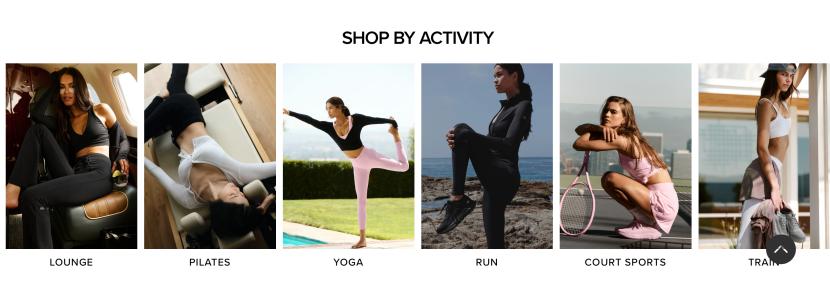
For Alo, the widespread piracy is not entirely a bad thing, after all, almost everyone already knows the brand. But first, it has to win the war of "retrieving its own identity", so that Chinese consumers can clearly perceive and resonate with its real brand narrative. This is a systematic project covering multiple touchpoints including advertising, social media communication, offline events and in-store experiences.
I believe that as long as sufficient capital and legal resources are invested, the previous negative impression caused by counterfeits can be reversed quickly, which many luxury brands have already achieved.
But this brings us to another question: can Chinese consumers accept Alo's set of narratives and operation methods?
At present, Alo's entry into the Asia-Pacific and Chinese markets still follows the brand's consistent path: signing top idols that the younger generation of women look up to, such as Kim Jisoo from the girl group Blackpink, Ning Yizhuo from Aespa, and Zhao Lusi, who was just announced as a new spokesperson recently.
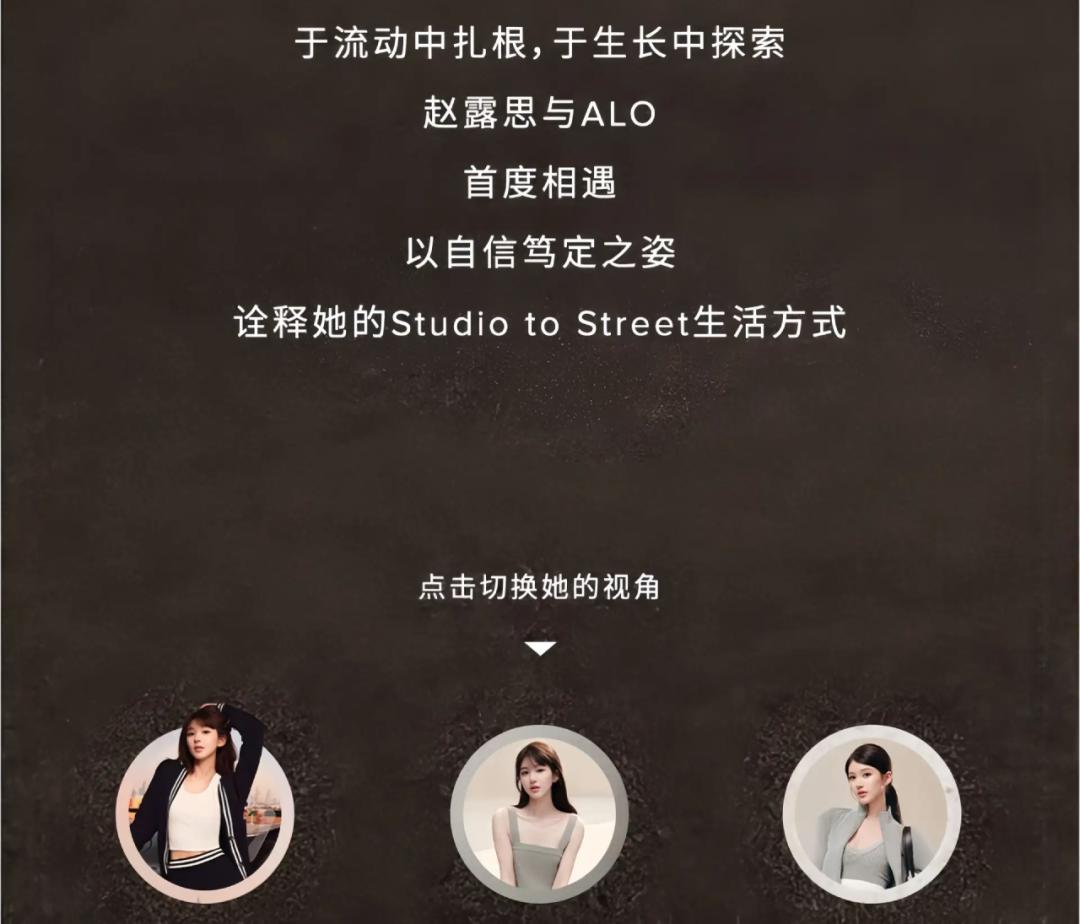
After that, it will open physical stores and develop community activities. Judging from the current reputation in the North American market, Alo is more interested in sponsoring influencers to wear Alo products in high-end gyms than in deeply engaging with sports enthusiasts — which is again the narrative of an upper-class lifestyle brand.
Frankly speaking, any brand that can label itself as mid-range class and achieve a young image can perform well in the Chinese market. Ralph Lauren's revenue surged 40% last quarter, and Descente and Salomon are both rising star brands under Anta. On and lululemon have even achieved growth momentum in China that goes against their performance trends in the international market. Fashionable and youthful Alo has advantages in this regard.
However, according to past consumer reviews, Alo's quality is still slightly inferior to its long-time rival lululemon. lululemon's slowing growth in China, the loss of core users after its rapid expansion, and its localized missteps have all left gaps for Alo. But consumers' perception of yoga apparel has already been defined by lululemon.
What Alo needs to do is not fill a gap, but redefine the category, and then achieve differentiated competition.
03
Sports luxury is an incremental opportunity, but also a trap
Alo's real target is not lululemon. Its operation strategy in the past two years is very similar to that of Miu Miu, so it has been labeled as "the Miu Miu of the sports industry", which is the so-called sports luxury.
According to multiple foreign media reports, Alo's parent company is divesting its other businesses to prepare for an IPO or an overall sale.
Therefore, Alo's goal of building itself into a "sports luxury" brand in one step and accelerating global expansion is also to support a more imaginative capital story. Its future development is closely tied to its operation of the "sports luxury" positioning.
To achieve this goal, Alo has built a core team with members from luxury brands.
Among them, Benedetta Petruzzo, who was announced as CEO of International Business earlier this year, previously led operations at Miu Miu and Dior, and her most notable achievement before joining was driving explosive growth at Miu Miu. Jimmy Zhu, who serves as President of Alo China and North Asia, is the former General Manager of Givenchy Greater China.
Alo is also driving up product prices through category expansion, for example, bags priced from 1,200 to 3,600 USD, and glasses priced from 250 to 375 USD.
In April this year, Alo launched its first trail running shoe, priced at 2,280 RMB in China, which is far higher than the price of high-end professional brands such as On and Salomon, and reaches the price range of Arc'teryx.
"Sports luxury" is a good business. Arc'teryx has already completed the popularization of this concept in the Chinese market, and luxury brands have been getting closer to the sports and outdoor field in recent years. But precisely because everyone is entering this track, consumers have not yet formed a stable perception of sports luxury.
A practical problem is that physical stores are the core element for building a brand's sports luxury image, but Alo's offline store expansion in China is progressing slowly, and may be more difficult than expected.
Alo calls its stores "Sanctuary", all located in top business districts of cities, creating a strong brand experience through large space and high investment. For example, its Asian flagship store in Seoul is adjacent to the Hermès Maison, covering an area of 6,000 square meters; its first store in Hong Kong is located in K11 MUSEA, surrounded by luxury brands such as Louis Vuitton and Gucci.
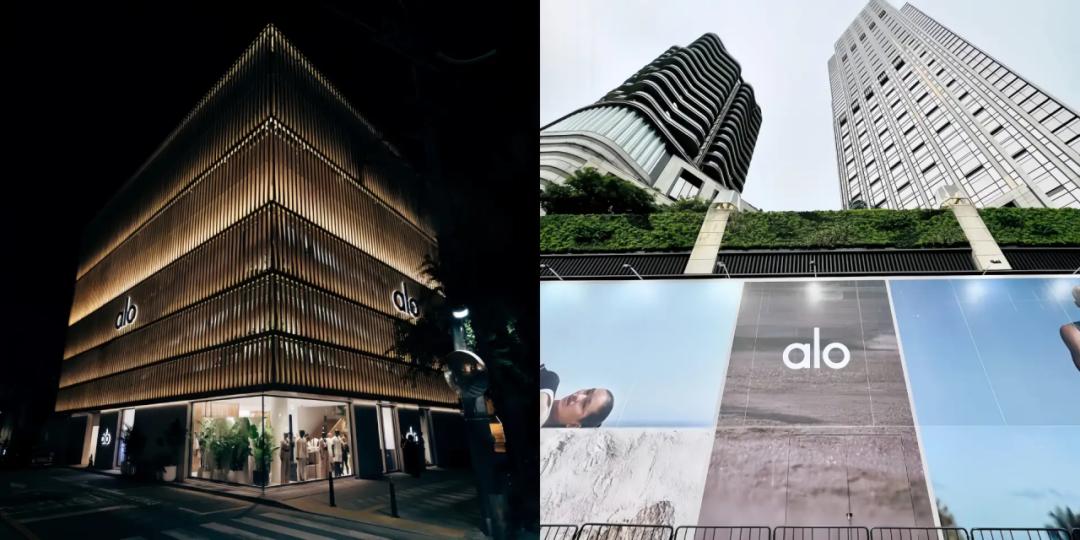
Left: Alo's Asian flagship store Right: Alo's Hong Kong store under renovation
However, apart from the Hong Kong store which has put up construction barriers and is expected to open in September, Alo's stores in mainland China have not been finalized. Instead, its competitors Sweaty Betty and Skims have confirmed that they will open stores at Xinjia Center and Xingtai Taikoo Hui in Shanghai respectively.
According to current information, Alo's target locations include Kerry Centre in Shanghai, Taikoo Li Sanlitun in Beijing, Intime in77 in Hangzhou, and Mix