Why did Kong Tao, a PhD in Computer Science from Tsinghua University, leave ByteDance and choose to join Lei Jun to engage in robotics-related work?
Kong Tao, former head of ByteDance's robotics team, quietly joined Xiaomi in the summer of 2025 and currently serves as the head of Xiaomi's robotics foundational model team. Multiple authoritative domestic media have verified and reported this news.
Both companies are developing robotics businesses, but ByteDance focuses on AI algorithms, leaning toward software. Xiaomi focuses on scenario-based applications of robots, and its "human-machine co-creation" environment in the automotive sector is considered attractive to Kong Tao.
From a "One-Person Team" to the Top Leader
In July 2019, Kong Tao graduated with a doctorate from the Department of Computer Science, Tsinghua University, under the supervision of Professor Sun Fuchun.
On the official website of Tsinghua University, Professor Sun Fuchun is currently the deputy director of the State Key Laboratory of Intelligent Technology and Systems. He has built the first domestic flexible dual-arm space robot and the teleoperation ground experiment system for on-orbit services.
In June this year, the Youth2Real Team supervised by Professor Sun Fuchun won the championships in two tracks, "Human-Robot Object Handover" and "Cluttered Object Sorting", at the 2026 IEEE International Conference on Robotics and Automation (ICRA 2026) held in Austria.
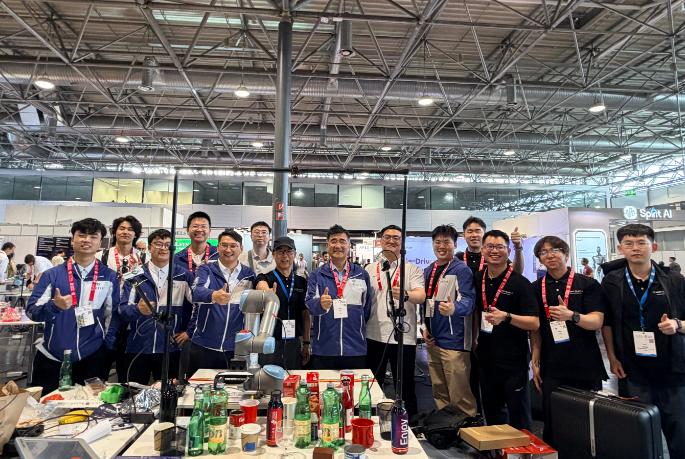
Various plastic bottles in the picture need to be sorted by robots
Under the supervision of his tutor, Kong Tao's doctoral dissertation was also nominated for the Excellent Doctoral Dissertation Award of the Chinese Association for Artificial Intelligence. Media reports show that as of June 2025, his dissertation has been cited more than 15,000 times.
In 2019, Kong Tao joined ByteDance as a fresh doctoral graduate. According to public information, Kong Tao was the first person to launch ByteDance's robotics project, completing the business setup from 0 to 1. It is said that his reporting line was to Li Hang, head of ByteDance's research department, and he led the Seed Robotics team.
Information disclosed by Tsinghua University shows that there is a "academic research intersection" between Li Hang and Kong Tao.
Li Hang belongs to the "Japan-educated group". He graduated from the Department of Electrical Engineering, Kyoto University, Japan in 1988, obtained his doctorate in computer science from the University of Tokyo, Japan in 1998, and has worked successively at Microsoft Research Asia, served as chief scientist of Huawei Noah's Ark Laboratory, and joined ByteDance in 2017 as director of the Artificial Intelligence Laboratory and head of the research department.
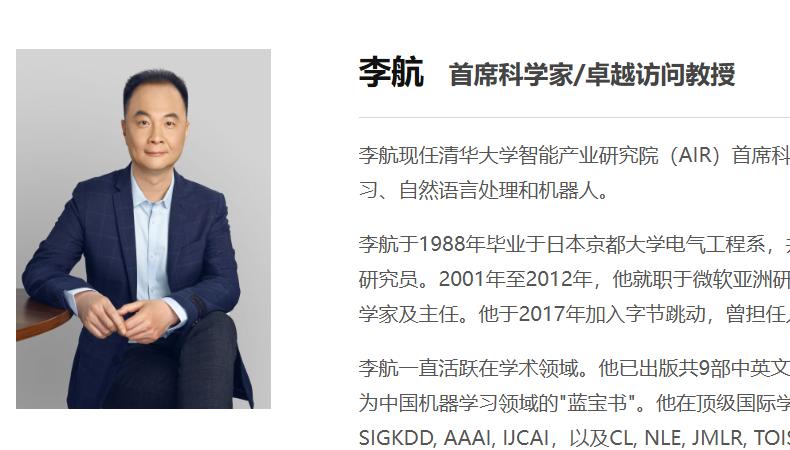
Source: Tsinghua University official website
Li Hang serves as chief scientist and distinguished visiting professor at the Tsinghua University AIR (Institute for Intelligent Industrial Research), and this information is still available online, making him Kong Tao's "senior fellow apprentice" in the academic context.
Some media reported that Kong Tao resigned from ByteDance in June 2024.
However, in the post published by ByteDance's official public account on July 8, 2024, Kong Tao was still a "top mentor" in ByteDance's "Somersault Cloud Talent Program". The introduction column states: Head of ByteDance Robotics Research.

Figure | From ByteDance Public Account (published on July 8, 2024)
"Somersault Cloud Program" is a special high-end technical talent recruitment program targeting top doctors around the world, aiming to recruit "breakthrough makers" who can solve cutting-edge technical problems, mainly doctoral students, and provide competitive compensation and incentives.
So the specific resignation date of Kong Tao may be incorrect. But this is not important.
What matters is that ByteDance has carried out an organizational restructuring afterwards. The Seed Robotics team previously led by Li Hang was adjusted to report to Zhou Chang, head of the multimodal department. Zhou Chang graduated from Fudan University with a bachelor's degree in 2012 and obtained his doctorate from Peking University in 2017.
This adjustment reveals ByteDance's strategic framework design:
To form "business synergy" between robotics and the multimodal and world model businesses led by Zhou Chang. Robots are regarded as the carrier for large models to land in the physical world, and also a key scenario for obtaining real interactive data. Vision, multimodal and world models can enable robots to understand complex real environments.
After Kong Tao left, ByteDance was recruiting a technical lead for embodied intelligence at the L8 level (equivalent to Alibaba's P10-P11), responsible for the overall planning of the robotics business, reporting to Zhou Chang.
Why Kong Tao and Xiaomi Need Each Other
Different from ByteDance's lightweight path in the robotics field, some public opinions say that Xiaomi's layout of robotics has been deeply bound to its "people-car-home full ecosystem" strategy from the very beginning.
However, this is slightly different from the facts.
The internet has a long memory. Lei Jun's first exploration in the robotics field should be a robotic dog named "Tiedan".
In August 2021, Xiaomi released the first-generation CyberDog, priced at 9999 yuan, a typical Xiaomi-style pricing. At the same time, Boston Dynamics' quadruped robot was priced at hundreds of thousands of RMB.
Lei Jun positioned this product as an "engineering exploration version" that just came out of the laboratory. In August 2023, the second-generation CyberDog 2 was released, with the price rising to 12999 yuan.
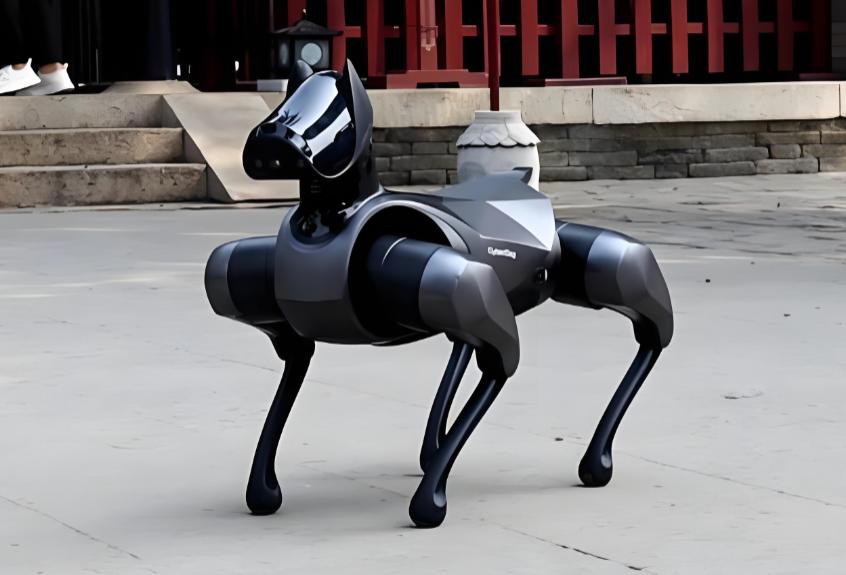
Source: Internet | Tiedan 2nd Generation
The transition from "robotic dog" to the high-profile claim that Xiaomi is "one of the first companies to research embodied intelligent robots" took place when the new SU7 model was released in March this year. Lei Jun said frankly at that time that every robot is currently in a loss-making state, but he is extremely optimistic about the future of embodied intelligent robots, and plans to invest 200 billion yuan in the next 5 years to make breakthroughs in chips, AI, operating systems and other fields.
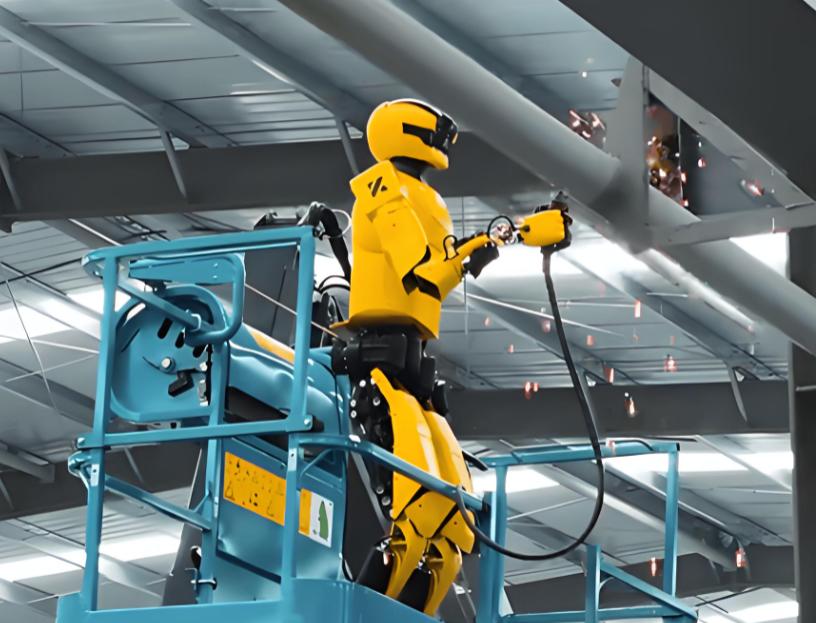
Lei Jun revealed that Xiaomi's humanoid robots have already been interning in its automobile factories, and it is expected that "a large number of humanoid robots will enter Xiaomi's factories to work in the next 5 years".
According to media reports, Xiaomi's robotics division currently has about 200 people, covering R&D of ontology, cerebellum, brain and operating systems. Different departments even pre-research the same direction, such as world models. In August 2026, Xiaomi internally established a new "Embodied Intelligence and Application Department", with Kong Tao as the head, integrating the VLA (Vision-Language-Action) team and the embodied R&D department, giving him full unified command authority.
Compared with ByteDance whose advantages are mainly focused on AI algorithms, one element that Xiaomi provides to Kong Tao is something ByteDance cannot easily offer — real physical scenarios.
Xiaomi, which is advancing rapidly in intelligent vehicle manufacturing, has automobile factories that can best allow "robots" to learn data and exercise practical application capabilities.
According to its release, at the beginning of 2026, Xiaomi robots started "internship" at the self-tapping nut loading station in its automobile factory. In March, the bilateral installation success rate reached 90.2% after 3 hours of continuous autonomous operation, and rose to 98% in July, only 1% lower than manual operation, and has been officially "confirmed for the position". The robot also opened a new workstation in the logistics area of the general assembly workshop: sorting of center console side covers and folding and recycling of material boxes, both reaching a 90% success rate.
For researchers of foundational models, the evolution speed of models trained in simulation environments cannot be compared with that of models iterated on real production lines.
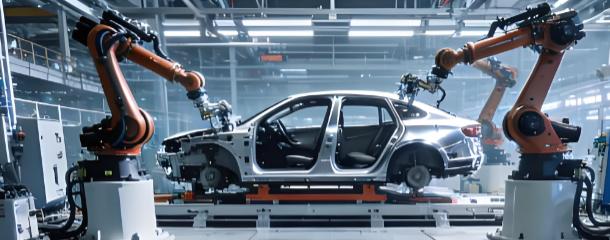
Judgment of Tsinghua University Doctoral Students
To outsiders, both ByteDance and Xiaomi are high-quality companies, and ByteDance even plays a more leading role in the AI industry. Its Doubao large model and Seedance have a place in the industry.
However, for practitioners in the embodied intelligence field, they have their own industry perspectives.
An industry insider told Muhe Business Finance: For companies with internet backgrounds, they tend to regard hardware as their own traffic entry, but the first principle of hardware is obviously not this, "The first principle of hardware is ultimate performance. Ultimate technology, ultimate performance, ultimate price."
Looking back at the industry, he pointed out that there are many cases of internet companies failing in hardware businesses in the past, so that the industry has developed a metaphysical interpretation of the term "gene". Neither Google, Amazon nor Meta has achieved full success in hardware. Domestic large internet companies have not produced many outstanding hardware achievements so far.
In the view of another industry insider in the embodied intelligence field, ByteDance currently regards robots as a data entry and a scenario to verify the physical world understanding ability of large models. Its advantage lies in low investment, and its shortcoming lies in the difficulty of "perception-decision-execution" in the real physical environment.
In contrast, Xiaomi self-develops chips, builds its own factories, produces automobiles by itself, and self-develops robots. The scenario closed loop and data flywheel allow robots to iterate directly on the automobile production line.
This is probably the most attractive part for Kong Tao. After all, he has done more than enough projects in the laboratory.
Of course, it should also be noted that in recent years, many scientists in the field of embodied intelligence are leaving automobile companies in batches, joining or directly establishing embodied intelligence companies by themselves.
For example, intelligent driving technical leaders from car companies such as XPeng, Li Auto, Huawei and Great Wall have successively joined or established companies such as Qunqing, Wujie Power, Kunlunxing and Toshi Zhihang, shifting from "AI in wheels" to "AI in bodies".
Industry data shows that the embodied intelligence track is on the eve of an outbreak. The size of China's embodied intelligence market is expected to reach 5.295 billion yuan in 2025, with an annual growth rate of over 40%.
Kong Tao's job change is nothing more than a lane change in this long competition.
This article is from the WeChat public account "Muhe Business Finance", author: Gong Zheng, published with authorization from 36Kr.