After frequent "flops", looking into the future of AI short drama advertisements.
The AI short drama series *The Laid-off Girl* has recently exploded in popularity, with its total view count exceeding 200 million. As an AI character, the "female lead" Fang Taozi has also been known and loved by more audiences through the unusual elaborate planning and operation launched by the short drama production team in the follow-up stage.
However, as the old saying goes, "fame attracts unwanted trouble", a recent advertisement of "Fang Taozi" suffered a public relations fiasco: on its Douyin homepage, one of its colored contact lens ad videos was quickly removed after triggering widespread controversy.
Earlier in mid-July, a series of AI short drama marketing content released by well-known home appliance brand SUPOR was also taken down due to controversy over suggestive content. Although it was later confirmed that these materials were published by the brand's distributors, the incident still reflects in the AI era, what kind of negative effects may arise once large brands have loopholes in their content management and publishing review mechanisms.
In the past, cases of real-person celebrity endorsement scandals were not rare. The whole set of processes including ad content removal, statement release, apology and final rectification is familiar to all people. This is because a complete and stable ethical system based on the rules of the real-person content media industry and public content consumption concepts has taken shape, and advertising and related marketing communication activities are all carried out within this framework.
The recent "backfires" of these AI short drama ad campaigns can be used as an entry point to make us think about the future of advertising behind the increasingly popular AI short drama track.
1
AI Short Drama Advertising: Dancing Under Constraints
As an emerging form of media content, the explosive growth of AI short dramas this year is obvious to all. According to relevant statistics, among the nearly 130,000 micro short drama works launched in the first quarter of 2026 alone, AI short dramas account for nearly 95%. Although the remaining 5% of real-person short dramas still maintain a leading position in view count, AI short dramas, with a series of advantages such as lower cost threshold, fast generation and production, and reusability, have formed a "siege" trend against real-person short dramas like an army of ants.
The competition between the two for audience attention and traffic will naturally extend to the competition at the back-end commercial and advertising level.
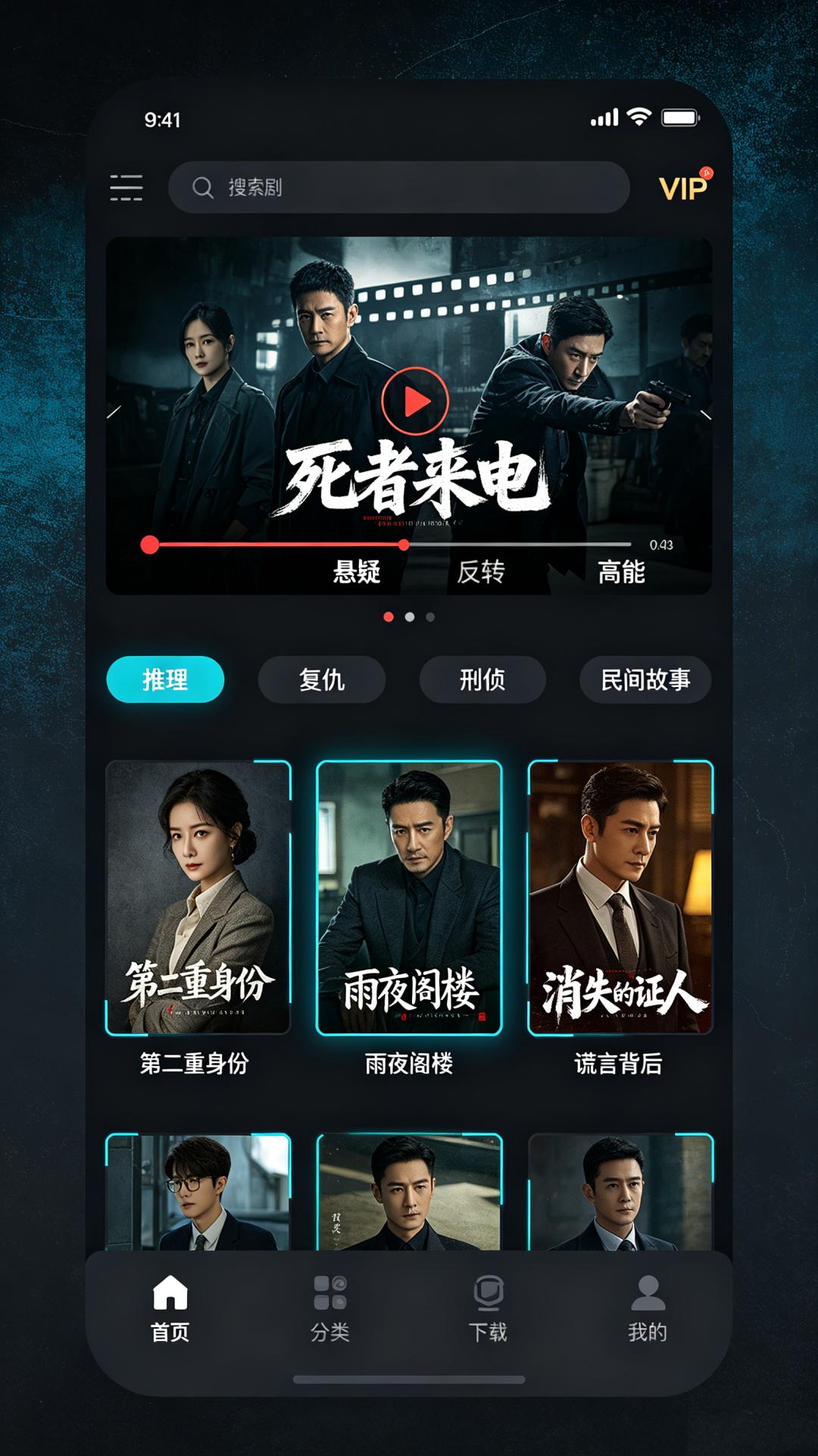
Just like its competitors, AI short drama advertising will first encounter the inherent limitations of the short drama media form itself.
Audience who have watched short dramas can all feel that due to the natural time length limitation of short dramas, almost all content elements in this media form need to be built around the core of "stimulating the audience", rather than following the logic of "unfolding the plot" and "advancing step by step" that applies to longer-form content. The presentation of factors such as the personality of the protagonist, which is crucial for content IP, often relies more on the reactions of characters such as facial expressions when facing "stimulation points" in short dramas, and it is difficult to achieve through patient story layout.
As consumers of short drama content, people are often immersed in this kind of stimulation, putting the demand for emotional rewards that can be obtained in a short period of time in the first place, so they will naturally reject any element (such as advertising) that diverts their attention from this demand. Once an advertisement appears in a plot-driven short drama, it will easily impact the audience's psychological expectation during content consumption.
Therefore, rather than saying that the "biggest enemy" of advertising in short dramas is the time length limit, it is better to say that producers are worried that advertising will damage the core user experience of short dramas and have to make trade-offs.
(Image generated by AI)
Secondly, there are limitations inherent to AI short dramas themselves.
Since the core production logic of this type of short drama is that AI quickly generates images, its advantage lies in its low cost to present scenes and special effects that are impossible for real-person short dramas.
Audiences are well aware of this point, and they often hold the view that this kind of short drama is "something made for fun". Just as we often say that some content or items have a "plastic texture", which refers to the obvious difference from the real thing that appears after the attempt to simulate reality fails to achieve the desired effect.
Users' lowered expectation for the content quality of AI short dramas will naturally weaken their trust in related commercial sectors such as advertising.
Some people may ask, for content and images that are also virtually produced, why the advertising marketing of some animation IPs will not be affected by the "not real enough" problem? In addition to the existing accumulation of these IPs, it is also because the media channels behind these marketing activities have formed a mature commercial communication ethics, which has a certain supporting effect.
It is also worth mentioning the "Uncanny Valley" effect. Also in July, Anhui TV broadcast the AI-produced short drama *The Story of Taohua Pool*. After many audiences watched it out of novelty, they found obvious problems such as the stereotyped face shapes of AI short drama protagonists. This effect caused by the failure of "human simulation" due to modeling and other reasons will also greatly reduce the audience's favor for the content, making the subsequent commercial development effect impossible to talk about.
All the above factors lead to the fact that the advertising development of AI short dramas is restricted to varying degrees, but this restriction will not last forever. The so-called bottlenecks such as "plastic texture" are actually problems that may be encountered in the early stage of media and technology development, and are expected to be gradually overcome with the development of technical means and popularization degree. Several mainstream media methods in human history have more or less gone through this process.
As for the limitations of duration and content itself, in fact, we can already see that IPs like "Fang Taozi" mentioned at the beginning can plan and produce different content such as daily vlogs and side stories of the IP protagonist, extend more materials and shots to form scenes that do not conflict with the main plot content, so as to carry the possibility of commercialization.
2
Two Pitfalls to Avoid in the Commercial Maturation of AI Short Drama IPs
Looking at the history of media evolution, it can be said that AI-generated content is a content production method that takes freedom and efficiency as its primary advantages; but it is precisely this unprecedented freedom and efficiency that has planted two hidden dangers for the mature commercialization of AI short drama IPs.
The first one is the mismatch between the seemingly unrestrained AI productivity and the social commercial ethics system.
Under the excessive pursuit of traffic, some content producers driven by curiosity and other mentality expect AI-generated content to get rid of the inherent ethical restrictions. In the past, some plot elements that were too dramatic, "unreasonable" or even suggestive and could not be realized in real-person short dramas were regarded as "pleasure points" to stimulate audiences to consume short dramas, and became part of AI short dramas.
Such content undoubtedly challenges and violates the existing content communication order and social commercial ethics. Even if it can gain some attention and traffic for a while, the content and the surrounding IP cannot gain a foothold, let alone the commercial possibilities and communication effects it wants to carry.
The recently removed SUPOR marketing case is proof of this point. It shows that before entering the public communication field, the review and control of many elements of the work including plot scenes, aesthetics and shot scale should always be the standard we adhere to, and cannot be loosened because of the great improvement of content production efficiency.
For commercial brands that now attach great importance to "public favorability" and online reputation, such cases also suggest that today, when content materials are increasingly easy to generate, how important a content marketing system that integrates content management, centralized review and rapid response is.
The second point is to try to bridge the gap between the content IP and the real world, so as to reduce the distance from the commercial "real experience".

(Image generated by AI)
The improvement of production creativity has allowed AI works to reach a previously unreachable level of imagination in the increasingly competitive short drama market. Elements such as time travel, rebirth, horror, ghost stories, thrillers, and immortal cultivation are flooding the AI short drama market.
In the increasingly refined production process, producers are paying more and more attention to making short dramas form coordination and unification in many aspects such as design style, plot logic, and character lines, creating virtual story worlds with different degrees of absurdity.
At the same time, this virtual world also has scenes and elements that are common in daily life, so as to provide the audience with a sense of difference or even weirdness based on the "understandable world", and finally attract content consumers.
In addition, the "non-real-person attribute" of the AI image as the protagonist of the short drama will further widen the distance between the content and the audience who are real people; the more the content only brings stimulation, weirdness and other feelings, the less it can provide the audience with the feelings and experiences of daily life, and the latter is the atmosphere that is conducive to business and advertising.
The recent controversial and removed colored contact lens ad of "Fang Taozi" is precisely because many netizens pointed out the "non-real-person attribute" of the AI image, which makes it impossible for "Fang Taozi" to have a real experience of using the product, thus forming a contradiction with the advertising slogan that emphasizes the sense of use experience.

(The controversial colored contact lens ad of "Fang Taozi" that was taken down)
Even if "Fang Taozi" has previously presented a character image as close to a real actor as possible through life-oriented plots and a large number of daily materials outside the main plot line, the clear difference between the screen content and the real world is still enough to make the audience feel something wrong when they see this ad.
3
What Kind of AI Short Drama IP Is More Suitable for Advertising?
Some people may ask, under so many restrictions, is there really a possibility of commercialization for AI short dramas and their IPs?
The answer is definitely yes. The controllable, "safe" and other attributes of these IP characters, coupled with the feature of low-cost reusability after the model is built, make them have unique advantages compared with real actors. What's more, there have been so many cases of animation and virtual characters that have completed excellent commercial communication and advertising performance.
Looking back further, print media allowed people to convey product information through detailed and beautiful text expression, radio media made tone and voice the carrier of the emotions that products want to convey, and video media such as television became a channel for three-dimensionally displaying product features. All of them took some time to explore and build an "advertising language" that matches the characteristics of their own media.
AI short dramas are just embarking on this path.
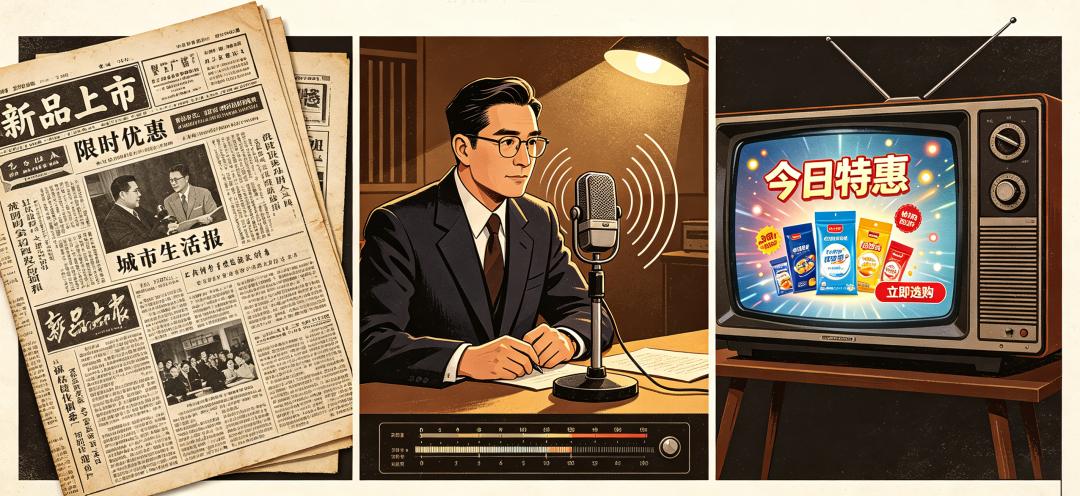
(Different media have formed their own unique advertising languages)
So what kind of AI short drama character IP is more suitable for advertising? For those AI short dramas that can win the traffic competition, further careful operation is needed to seize this market share.
Being close to reality is certainly a way to build a bond between IP, audience and business.
The time length limit of short dramas often makes it impossible for IP to complete complex character development. Coupled with the imitative characteristics of AI production, it is easy to make the IP look flat and lack the necessary sense of hierarchy.
However, through long-term patient operation and continuous output, if it is made close enough to reality, the audience will have a certain sense of identification and projection, and even help content producers solve some problems of the character's personality connotation through brain supplementation and other ways.
After gradually establishing personalized traits in the hearts of users, ensure the unity of IP tonality and commercialization attempts, integrate the IP into the product, and cooperate with appropriate product introduction methods and focuses, for example, let the AI protagonist help the audience understand the functions of the product, and avoid tasks that AI characters are not competent for such as experiencing the emotional feeling brought by the product.
For the vast number of AI short dramas of other themes, their commercialization attempts should find the right track. On the basis of building their own story world, they should construct an extended commercial advertising narrative that does not conflict with the story content and is best integrated into the story.
Any content industry will enter a stage of high-quality development to varying degrees after fierce competition, until the next round of production mode reform and user habit changes bring new forms of competition, and commercialization will surely go hand in hand with this process.
AI-generated content seems to offer countless possibilities, but which possibility to choose, including how to connect content with commercialization, ultimately tests the wisdom and experience of producers.
This article is from the WeChat official account "Cai Guan Er Jie", the author is Er Jie, and it is authorized to be released by 36Kr.