Unity 2.0 Launch Conference: Is the best era for Chinese game developers coming?
On July 28, Unity China held the launch event of Tuanjie Engine 2.0 at Hyatt on the Bund Shanghai.
Compared with the 1.0 major version, Tuanjie Engine 2.0 has fully reconstructed the underlying architecture of the engine, and completed upgrades around three major directions: core capabilities, cross-platform deployment, and AI-native architecture. The biggest change comes from its launch of a set of AI Agent that can independently perform game development tasks — Tuanjie Codely, which covers the full link of the game from R&D to distribution.
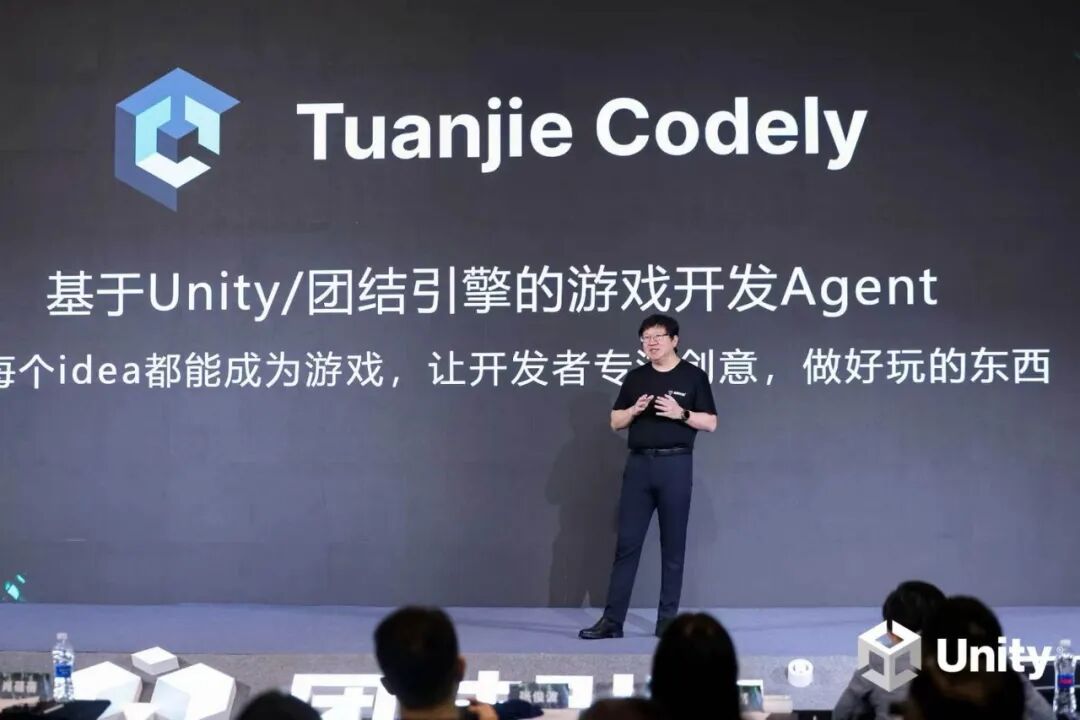
Junbo Zhang, CEO of Unity China
This also means that Tuanjie Engine is evolving from a game development tool to a basic game production infrastructure for the AI era.
Tuanjie Engine 2.0: From AI Practice to Mechanism Reconstruction
Tuanjie Codely has been developed internally by Unity China for nearly two years, and the invitation test was launched in May 2026. According to official statistics from Unity China, the previous product had about 800,000 daily API calls, 95% of which were code generation and engineering assistance tasks. About one-third of users use Codely for more than 2 hours every day.
From a development perspective, the difference of Codely is that it is not an independent dialogue window, but a complete set of workflows deeply embedded in the editor.
In the past, when using AI tools, developers often needed to switch back and forth between multiple platforms or tools. Codely adds a collaborator in the editor that can independently complete part of the development tasks. After the developer puts forward requirements, Codely can continue to write code, build scenes, run tests, analyze errors and fix problems, and finally deliver complete results that can be inspected and verified.
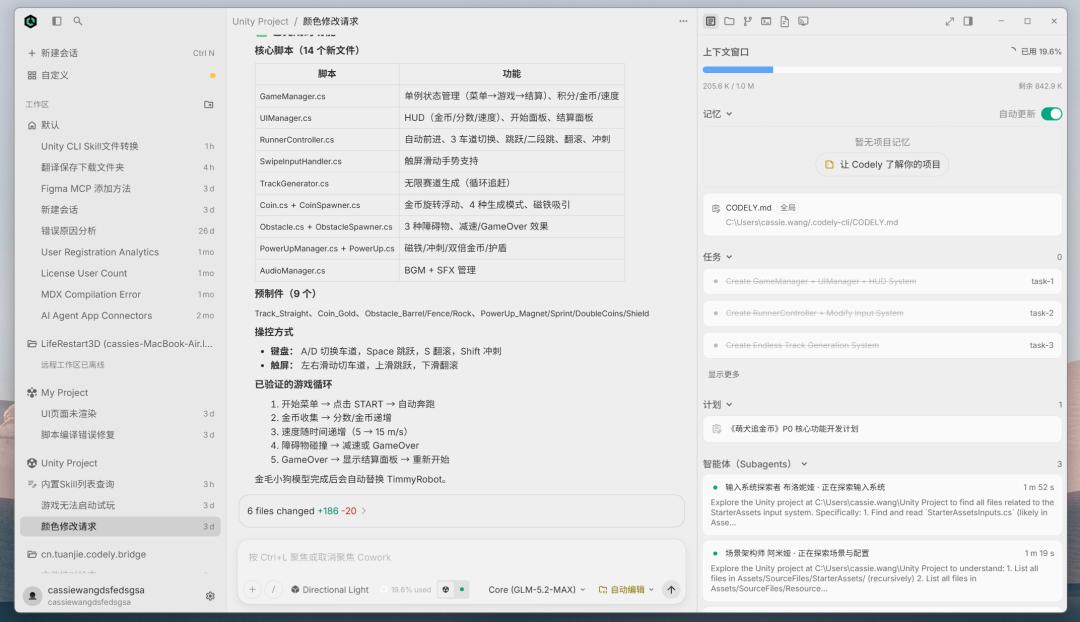
Source: Tuanjie Engine
This working method is also called Loop Engineering, which was proposed by Addy Osmani, Director of Google AI, in June this year. Its essence is to require AI not only to "complete" the task, but also to ensure the "quality" of the finished product through autonomous inspection.
Of course, it is not realistic to implement Loop Engineering in the game industry.
Most of the time, developers including Unity China itself have found a problem: the biggest difficulty of AI at present does not lie in creation, but in modification. Even sometimes the token cost of modification will be several times that of writing a piece of code. In the process of game development, there will be more and more various modification problems, and it is easy to cause the situation that modifying a certain function leads to the total collapse of the code.
In the past, this problem would basically fall back to the developer, that is, the developer himself must still have the ability to read, understand and modify the code. But in many cases, if the finished product of AI needs the developer to modify from scratch, its so-called "cost reduction and efficiency improvement" ability will be greatly reduced.
To solve this problem, Tuanjie Engine 2.0 also tries to make optimizations in two directions.
First of all, they will give priority to responding to AI models with stronger capabilities, fundamentally reducing the cost of modifying code, such as Zhipu's GLM model, Kimi-3, etc. The core elements are strong programming capabilities and certain advantages in cost performance.
Secondly, Tuanjie Engine 2.0 has also re-transformed the underlying data format of the engine based on references such as user experience and content synthetic data.
Traditional Unity projects mainly consist of C# scripts and YAML files. The latter records the state at a certain moment, such as light color, object position, etc. AI can basically read the state data of these contents at the corresponding moment, but cannot truly understand the relationship between them and content presentation, as well as the purpose of user execution. In other words, in the past, AI might know what color a certain light is, but did not know why it should be this color, and naturally could not understand the purpose and underlying logic of user modification. This problem has also become a classic joke of AI on Internet content platforms this year.
Around this problem, Tuanjie Engine 2.0 has deeply transformed Bridge and built a new AI-friendly data format, so that the content assets themselves carry process information and contextual relationships. In this way, AI can not only understand the current state data of the program and the evolution process of the entire game project, but also continuously accumulate operation corpora, and more directly understand the needs expressed by users in natural language.
At present, Tuanjie Engine 2.0 has connected three creation methods: natural language, visual nodes and code, and added mechanisms such as modification comparison, version traceability and permission control. AI-generated content can be inspected, reviewed and rolled back, gradually moving from an auxiliary tool for personal use to the official development process of enterprises.
On this basis, perhaps Tuanjie Engine 2.0 cannot completely realize "making games with zero foundation", but it has greatly reduced the R&D costs of the three links of development, testing and dialogue debugging. Even if developers do not understand relevant knowledge, they can still have a pretty good experience in most cases. Not long ago, a colleague in our team who knew nothing about code spent 2 days running out a Demo that can verify the creativity based on Codely.
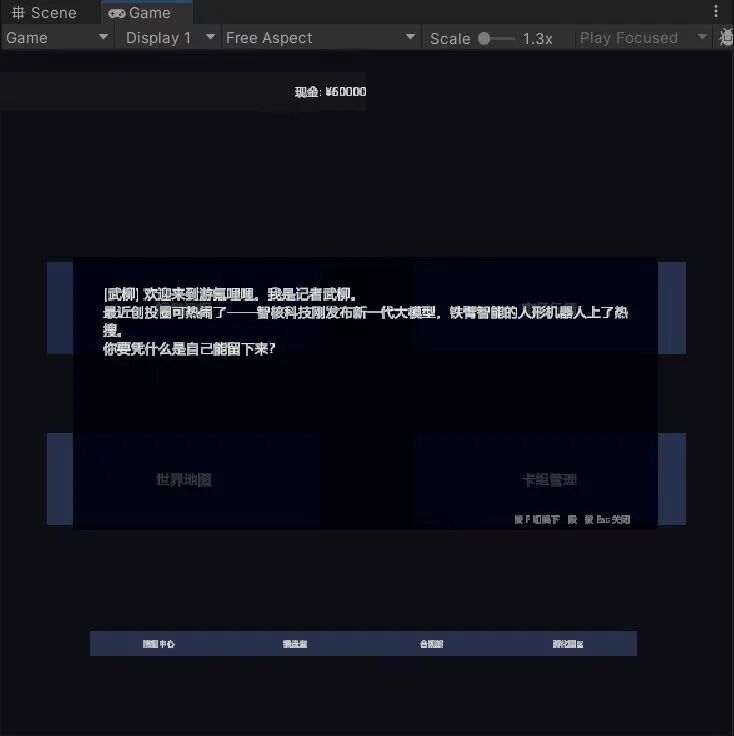
The 36Kr Games team ran out a playable Demo when using Codely
Consolidating the Foundation and Expanding Scenarios Is the Inevitable Choice for Unity China
In addition, Tuanjie Engine 2.0 has also completed systematic upgrades in cross-platform and rendering capabilities.
In terms of cross-platform, Tuanjie Engine 2.0 has officially added development support for PlayStation 5, Xbox Series X|S, Nintendo Switch 2 and Nintendo Switch console platforms. Together with the existing PC, mobile terminals, WeChat and Douyin mini-games, open source Hongmeng, and smart car cockpits, Tuanjie Engine has formed a complete matrix covering the world's mainstream terminals and China's local digital ecology.
In terms of rendering capabilities, Virtual Geometry technology allows high-precision models to be put into use directly, and the engine automatically completes loading and scheduling. Real-time dynamic global illumination gets rid of pre-baking restrictions, and complex light and shadow changes such as day and night alternation and indoor and outdoor switching can be presented in real time. With the upgraded shadow system, Tuanjie animation system, particle system and parallel rendering capability, version 2.0 provides a technical base for large high-quality projects such as open world.
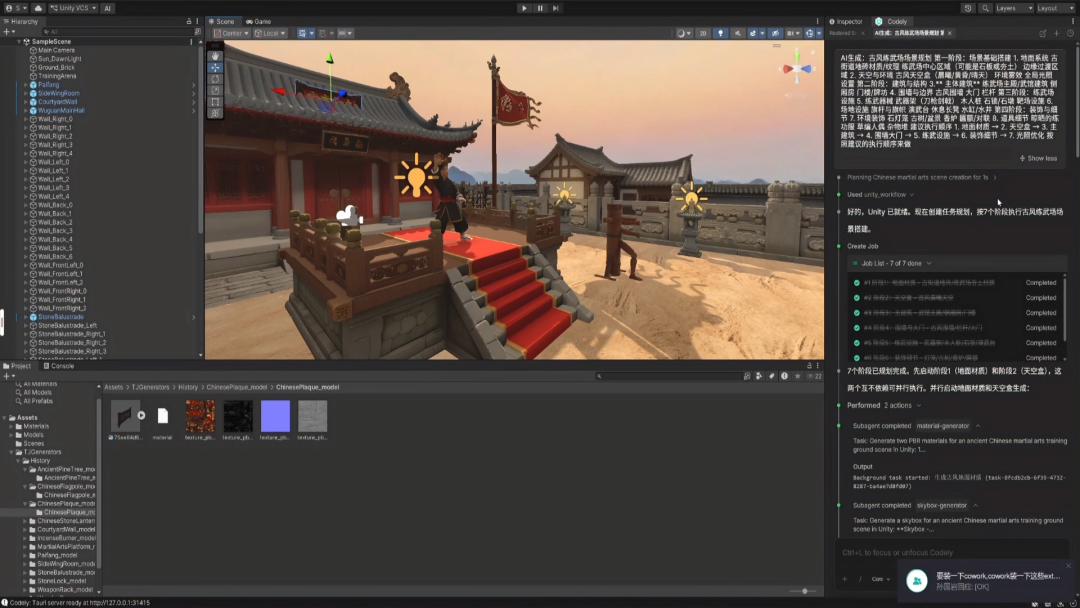
Source: Tuanjie Engine
In a sense, Tuanjie Engine 2.0 consolidating the foundation and embracing AI is an inevitable trend for Unity China.
When Unity China first launched Tuanjie Engine, it actually had a lot of thinking about the local ecology of the Chinese game market. In August 2022, Unity announced cooperation with Alibaba, China Mobile, Gbits, miHoYo, Douyin Group and other enterprises to establish Unity China. In early 2024, Tuanjie Engine 1.0 was officially available for download, becoming the first engine version of Unity in the world that was customized and developed for a single market.
At that time, Tuanjie Engine mainly focused on two dimensions.
On the one hand, they continued to optimize the Tuanjie system built on Unity, so that it can adapt to and serve the local game market ecology in China, such as strengthening the development and distribution support of mini-games, adapting products to diverse game scenarios such as smart car cockpits, and so on.
The most obvious difference from overseas Unity is that Tuanjie Engine was already able to independently generate game versions for different platforms such as iOS, Android, mini-games, and car machines around the same piece of code, greatly reducing the cross-platform development requirements for developers to adapt to different platforms.
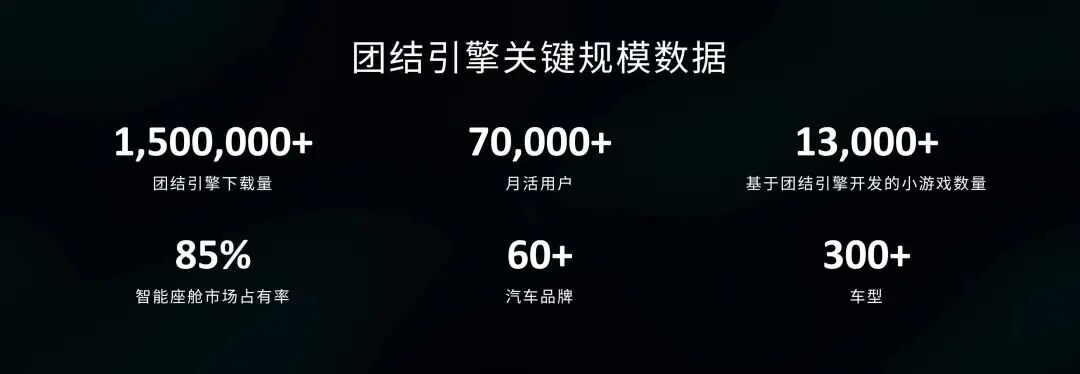
More and more users from different fields are using Tuanjie Engine
On the other hand, as the engine is gradually cloudified and AI-enabled, editor data and AI infrastructure involve data segmentation and compliance issues at home and abroad. Unity China does not want to collect developer data in the Chinese market for overseas services. This decision means that Tuanjie Engine must undertake all the functions originally provided by the global version. Correspondingly, in early 2025, Unity 6 and subsequent versions will no longer be open to Chinese users.
However, it is not easy for Unity China to build a "customized" platform. Last year, the Tuanjie Engine product was still in the early stage, and many functions needed Unity China to repeatedly optimize and develop around market demands.
Tuanjie Engine started two years later than the global version, with limited team and R&D resources. If all functions are synchronized mechanically, it will not only lose the market advantage, but also have no practical significance.
In fact, from mini-games and car machines last year to Tuanjie AI Agent this year, Unity China has found a relatively clear development path, which is to do business for mass users. After all, mini-games and AI games are both targeting "small teams doing big business", allowing more people to not be limited by technical thresholds and use their own unique creativity to make money — which will also be the core trend of China's future market, as many self-media on social platforms have proved.
Conclusion
For the industry, the entry of traditional engine companies into AI may represent many things. For example, the quality and quantity of game products in the market will change dramatically, and the business composition may be more complex than in the past. At the same time, under the background of AI detonating productivity, developers' thinking and expression of products will also become the core of competition in the future market.
To put it bluntly, many people may still use traditional thinking to look at the AI game industry, that is, "when production is no longer a problem, everyone will continue to launch homogeneous products around hit titles".
But in fact, the essence of the emergence of homogeneous products in the past is that the development cycle of games is too long, and commercial products often take several years to develop. If developers do not choose an effective and proven product model, they will easily face many challenges — but most people do not want to be the first to eat crabs. Instead, when someone finds that crabs are edible, they can make a fortune by selling crabs.
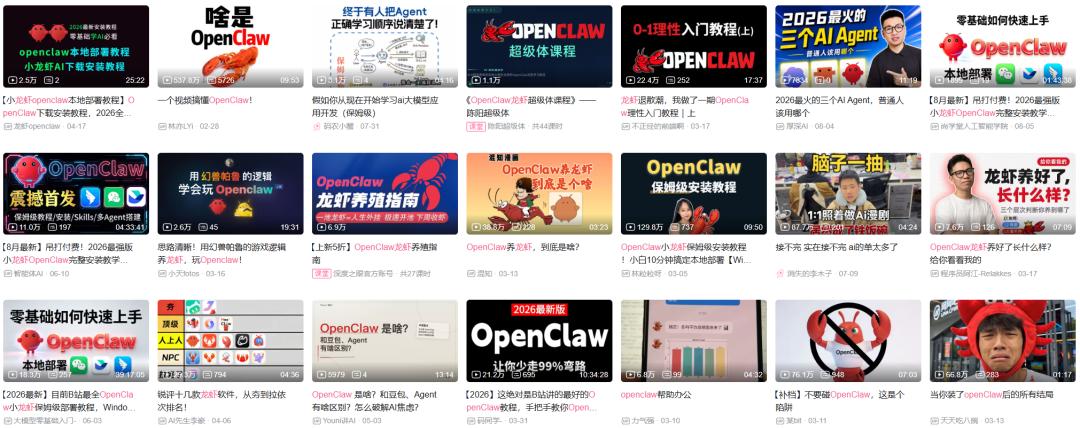
"Openclaw" is exactly the most iconic example at the moment
After AI really enters the industry, what it really triggers is not a large number of homogenized games, but the breadth of content. In the case that similar products in the industry are destined to explode, users will pay more attention to whether new products can make their eyes shine, or what is different about them.
Therefore, the current application of AI in the game industry has no more than two modes: one is to be a technology provider, and the other is to be a creative developer.
Taking self-media as an example, the former essentially packages the experience accumulated in technology and industry in the past into AI, forming a usable development template to "sell" to developers in need, such as platforms that simplify editing and PS design like Jianying and Meitu Xiuxiu. The latter, on this basis, continuously provides communication content for the community, such as dances, memes, shooting techniques, etc.
Under the background that mass creation has become the mainstream, many future development trends of AI games can already be glimpsed.
This article is first published in "36Kr Games".