Concealing the death of a pediatric patient for 16 months, yet publishing a top-tier journal paper to gild one's academic reputation: a tragedy of human genetic experiment
On March 24, 2025, in the ward of Xinhua Hospital Affiliated to Shanghai Jiao Tong University School of Medicine, 6-year-old girl Xiao Mei (pseudonym) received an experimental brain base editing therapy claimed as "the world's first".
If everything went smoothly, this therapy would make history.
But history did not follow the ideal script.
On the third day after the therapy, Xiao Mei developed fever, anuria, and a sharp drop in platelet count; within a week, she died of thrombotic microangiopathy caused by a severe immune reaction.
Her death was kept as a secret. Until 16 months later, on July 23, 2026, top international academic journal *Science* and well-known academic integrity supervision platform Retraction Watch jointly published an investigative report, and this fatal trial was exposed to the public for the first time.
During this period, in February 2026, the team of Qiu Zilong, the actual lead researcher of this clinical study and senior researcher of Songjiang Research Institute of Shanghai Jiao Tong University School of Medicine, published a relevant animal research paper in *Nature*. The paper neither mentioned the already conducted human gene editing trial nor disclosed Xiao Mei's death.
A child whose mother spent millions out of her own pocket with the hope of cure eventually became a sacrificed test subject in this adventure. Behind the incident, the disputes over the risks of gene editing and the "chase for the world's first" as well as the ethical boundaries involved have only just begun.
01
The Shattered Illusion of Cure
In March 2023, 4-year-old Xiao Mei was diagnosed with Snyder-Bloch-Campos syndrome (SNIBCPS syndrome) at a pediatric hospital in Shanghai, a rare neurodevelopmental disorder caused by CHD3 gene mutation.
Apart from Xiao Mei, there are only 236 known patients worldwide at present. This disease does not cause death directly, but the patient's language, cognitive and motor development will gradually fall behind their peers, accompanied by intellectual disability.
Fortunately, Xiao Mei's symptoms were relatively mild, and her parents hoped to go all out to intervene before their daughter's gap with her peers widened.
They heard about Qiu Zilong in a parent group for rare disease patients. The senior researcher of Songjiang Research Institute of Shanghai Jiao Tong University School of Medicine focuses on neurodevelopment, brain development diseases and autism. The world's first non-human primate model of autism established by his team was selected as one of the "Top 10 Scientific Progresses of China in 2016" by the Ministry of Science and Technology. He has published dozens of research papers and invited reviews in top international journals such as *Nature*, and is also the author of the popular science book *The Revelation of Genes*. A series of brilliant and authoritative resumes have won the trust of many rare disease patients.
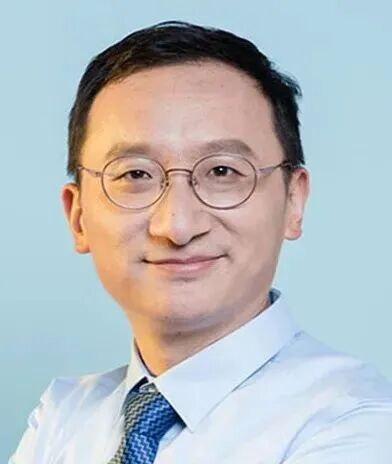
Qiu Zilong Image Source: Official website of Songjiang Research Institute of Shanghai Jiao Tong University School of Medicine
Xiao Mei's parents sent the medical records by email, contacted Qiu Zilong and hoped to try gene therapy, and the two sides met soon.
In order to cure their daughter through gene editing, the parents spared no expense to spend a large sum of money. According to the transfer records obtained by *Southern Weekly*, from July 2023 to January 2025, they spent more than 6.2 million yuan in total, covering vector preparation, animal experiments and part of the R&D costs.
On March 24, 2025, 6-year-old Xiao Mei was pushed into the operating room of Xinhua Hospital. The doctor injected the virus carrying the genetic instruction of base editor into her cerebrospinal fluid through lumbar puncture.
Unexpectedly, Xiao Mei developed fever, anuria, her platelet count dropped to a dangerous level, and her kidneys were severely damaged. A week later, Xiao Mei died.
According to the report of *Science*, the hospital's ethics committee determined that Xiao Mei's cause of death was thrombotic microangiopathy, and the death was "definitely related to the therapy".
According to the penalty notice issued by the Yangpu District Health Commission of Shanghai in September 2025, Xinhua Hospital was only fined 3,600 US dollars (equivalent to 24,000 yuan) after the incident. The reason was that the hospital failed to properly supervise this trial and did not register the trial as a commercially funded research project in the relevant database.
What Xiao Mei's parents could not accept most was that on February 18 this year, Qiu Zilong, together with the team of Cheng Tianlin from Fudan University and the team of Li Fei from Xinhua Hospital, published a mouse research paper in *Nature*, titled *In vivo base editing of Chd3 rescues behavioural abnormalities in mice*. The paper stated that the base editor TeABE technology was used to correct the CHD3 gene mutation in mice and improve some behavioral abnormalities.
After reading the full text, there is no content about the previously conducted gene editing therapy on human patients, nor is the related patient death incident disclosed.
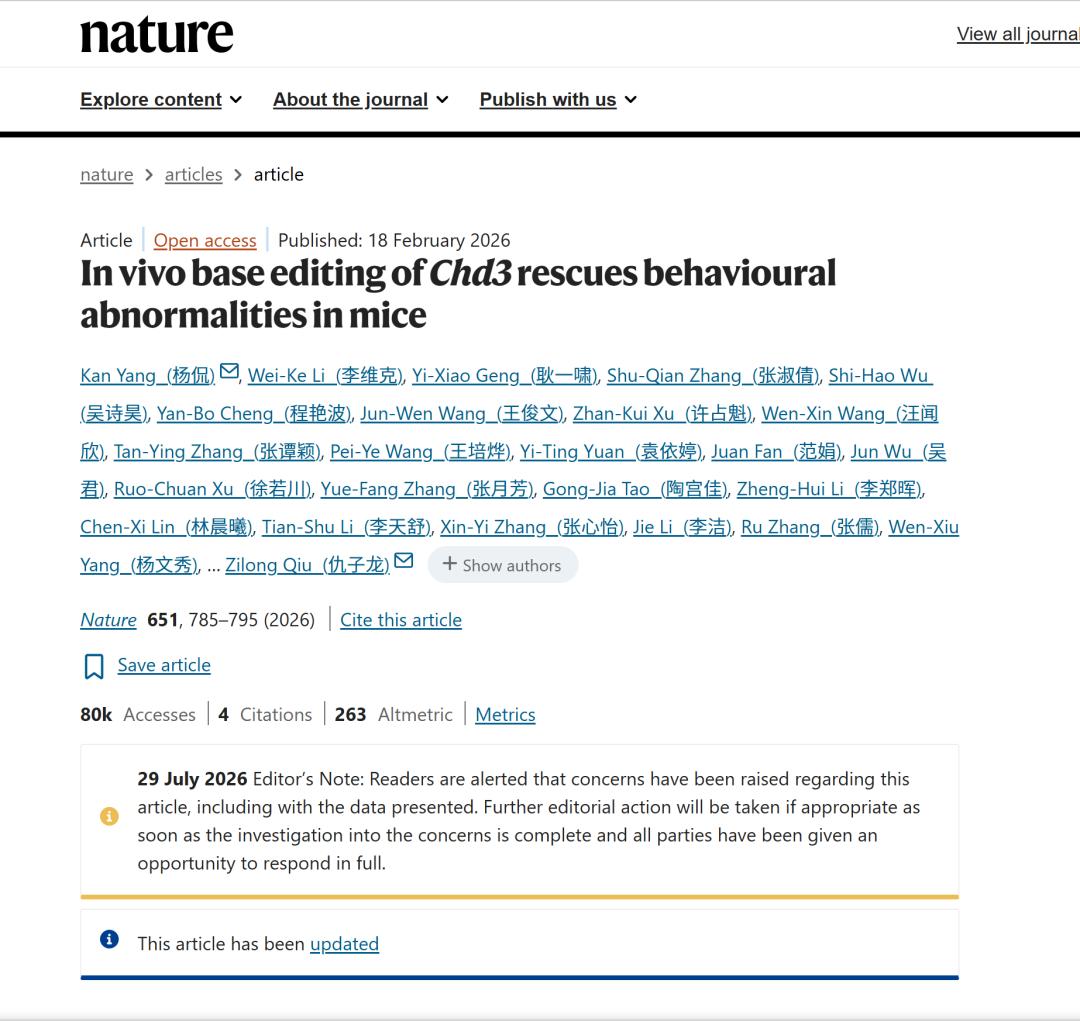
Qiu Zilong published the relevant research in *Nature*.
The research project funded by the parents who spent all their savings eventually became a stepping stone for others to polish their academic resumes, and their daughter bore all the risks. When Xiao Mei's parents realized this, their biggest concern was that the relevant paper would mislead researchers and other families with similar sick children.
They first submitted a complaint to Shanghai Jiao Tong University School of Medicine, and then wrote to *Nature* to request a retraction.
Truth will eventually come out. On July 23 this year, the incident was exposed, and public opinion erupted.
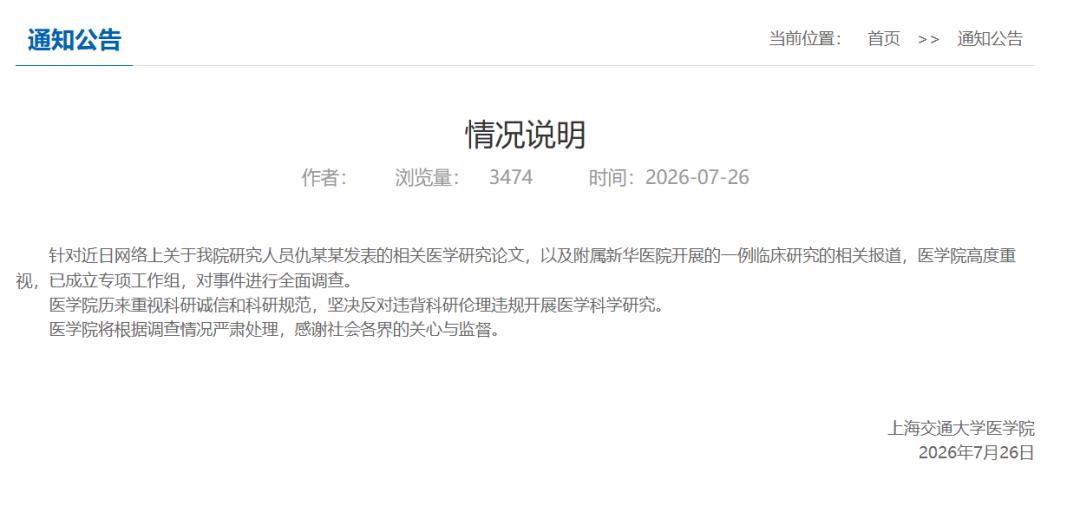
In response to the relevant public opinion, on July 26, Shanghai Jiao Tong University School of Medicine issued a statement saying that a special working group had been set up for investigation; on July 29, *Nature* posted an editorial note on the paper page: "This article and the data presented in it have raised concerns. Further editorial measures will be taken as appropriate after the relevant investigation is completed and all parties have the opportunity to respond fully."
On July 30, the online data update of this clinical trial submitted by researchers on Clinical Trials showed that on March 31, 2025, the only subject died of thrombotic microangiopathy, which was a serious adverse event and was assessed to be clearly related to the study.
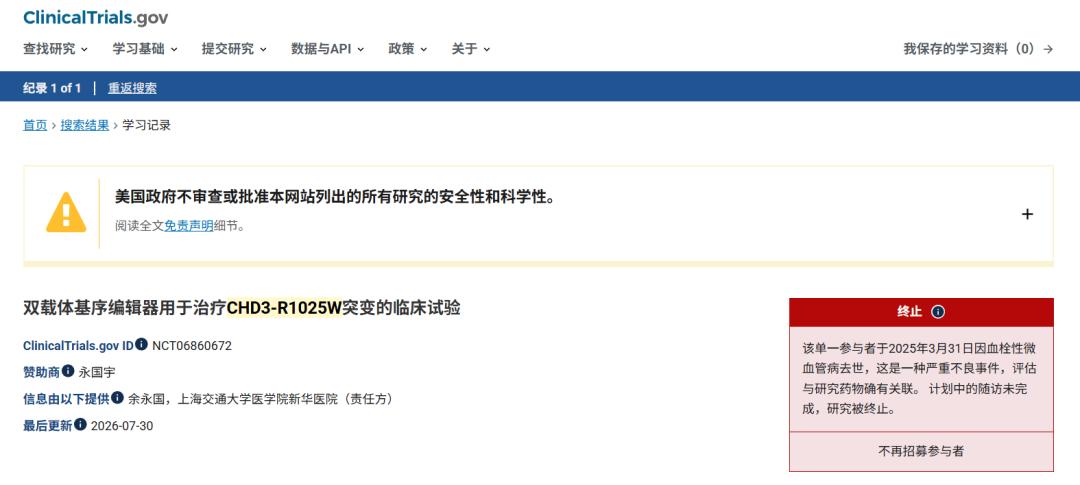
From diagnosis to death, Xiao Mei's life stopped at the age of 6, and eventually became a small line of text added to the trial information. More clues surrounding this incident are still "under investigation".
02
Spent About 6 Million Out of Pocket and Bore Fatal Risks
Xiao Mei passed away, and the news was concealed for 16 months. Now as the investigation reveals, multiple controversies behind this trial have come to light.
At present, the most concentrated criticism from the outside world is that the family members did not receive complete risk notification at the beginning.
According to *Science*, in the child version of the informed consent form provided by Xinhua Hospital, the human gene is compared to a "book", and there is an error in Xiao Mei's "book", so it needs to be corrected.
However, neither the child version nor the parent version of the informed consent form mentioned the risk of death.
According to the report of *Southern Weekly*, the recording shows that Qiu Zilong once comforted the parents: "Top tertiary hospitals will put patient safety first, and the hospital has the ability to control the situation and will not do dangerous things." He added: "The premise and standard for the hospital to approve clinical trials are that there is no alternative treatment at present, the patient is willing to participate, and the trial is sufficiently safe."
In fact, just one month before Xiao Mei's therapy, the primate toxicology study report conducted by PriMed in cooperation with Qiu Zilong's team showed that whether receiving low-dose or high-dose therapy, all four monkeys developed moderate to severe liver injury. Another monkey that received high-dose virus therapy also had kidney injury.
This is exactly the typical warning sign of thrombotic microangiopathy.
It is worth noting that the report was issued on February 17, 2025, and the approval for Xiao Mei's clinical trial project by the Ethics Committee of Xinhua Hospital was issued on January 2, 2025. That is to say, before the monkey toxicology data came out, the ethics approval that determined the fate of the child had been approved smoothly without any obstacles.
The huge amount of money paid by the patient's family for the trial and therapy out of their own pockets is another controversy.
Xiao Mei's parents paid about 6 million yuan in total, part of which was directly transferred to the personal account of Yang Kan, a member of the scientific research team. During this period, Yang Kan also asked for additional fees.
But the informed consent form clearly stated in black and white: Participating in this study will not cause additional expenses for the subjects, and all expenses will be borne by Lanqi Xintu Gene Technology (Shanghai) Co., Ltd.
At the same time, the information from Tianyancha shows that Qiu Zilong and Yang Kan are not on the shareholder list of Lanqi Xintu, but the inventors of a core patent applied by this company — "A Method for Introducing Genes into the Brain Based on Adeno-Associated Virus" — are exactly the two of them.
According to *Protecting Patients, Preserving Integrity, Promoting Health: Accelerating the Implementation of Conflict of Interest Policies in Human Subject Research* issued by the Association of American Universities (AAU) and the Association of American Medical Colleges (AAMC), this kind of patent directly related to clinical trials belongs to significant economic interests. However, when the paper was published in *Nature*, the authors claimed that "there is no conflict of interest".
03
The Reckless Risk of Pursuing the "World's First"
"If everything goes smoothly, Xinhua Hospital Affiliated to Shanghai Jiao Tong University School of Medicine will make history. Xiao Mei will become the first patient in the world to receive brain gene editing therapy," the relevant report of *Science* wrote.
The aura of "the world's first" is indeed very attractive.
Qiu Zilong also told the family that Xiao Mei's therapy would cause a greater sensation, and this was the first gene editing therapy for the brain.
In order to achieve this final breakthrough, Qiu Zilong did not submit the monkey pathology report to the ethics committee. Perhaps he underestimated the immune reaction risk of high-dose AAV, or the temptation of "the world's first" overwhelmed prudence, so Xiao Mei was pushed to the operating table when the timing was not mature.
This eager pursuit of "the first" has caused more than one tragedy in the field of gene editing therapy.
Just on August 5 this year, less than two weeks after Xiao Mei's death incident was exposed, Shanghai-based HuiGene issued a statement, admitting that in August 2025, a child subject with Duchenne Muscular Dystrophy (DMD) died after systemic administration of high-dose AAV, and the cause of the subject's death was "acute respiratory distress syndrome (ARDS) occurring under the background of severe activation of complement and cytokines after systemic administration of high-dose adeno-associated virus (AAV) vector".
The two child death incidents, five months apart, were both carried out under the framework of Investigator-Initiated Clinical Trial (IIT), and both were hidden for nearly a year before being exposed.
The original intention of IIT is to allow doctors to explore new clinical problems, but in recent years, it has become a shortcut for many teams to bypass the strict supervision of pharmaceutical companies. After all, the first paper in top journal, the first indication, the first technical path are followed by project completion, talent titles, company valuation and patent licensing...
What is thought-provoking is Qiu Zilong's own statement.
In May 2026, more than a year after Xiao Mei's death, he shared an article about the clinical expectations of gene editing on WeChat Moments, and specially extracted the expert view in the article:
"We must not exaggerate the curative effect, sell hope, nor convey unrealistic illusions to the families of sick children. We bear a heavy ethical responsibility, and must not mislead the public to have excessive expectations for the real boundary of gene therapy."
References:
*Behind the Death of a 6-Year-Old Girl, a Failed "World's First" Brain Gene Editing Trial*, The Beijing News
*Gene Editing, the Death of a 6-Year-Old Girl*, Nanfeng Chuang
*Fatal Hope: Key Details of the Girl's Death Incident in Gene Therapy*, Southern Weekly
This article is from WeChat Official Account "Phoenix Finance", Author: Phoenix Finance, 36Kr is authorized to distribute it.