Distributors are exiting the market in batches, as they can no longer make ends meet and have no clear direction to move forward.
In 2025, China's auto sales reached 34.4 million units, up 9.4% year on year, and its production and sales volume has ranked first in the world for consecutive years across the globe.
However, the sharp profit decline of the entire industrial chain in this year is also clearly visible to all. Except for a small number of front-end suppliers that can maximize profits, almost all practitioners in the automotive industry are complaining that the survival pressure has never been so high.
The most typical manifestation is that news about major automotive dealer groups facing operational crises, suspension of business, closure or restructuring frequently hits the public opinion spotlight. Complaints that "the more cars you sell, the more losses you incur" can be heard everywhere.
Earlier this year, the China Automobile Dealers Association successively released the 2025 National Automobile Dealer Survival Status Survey Report and the 2025-2026 China Automotive Distribution Industry Development Report, pointing out that the proportion of profitable domestic auto dealers in 2025 dropped sharply to 23.5% from 39.3% in 2024, while 55.7% of dealers fell into losses, with the loss ratio rising compared with 41.7% in the same period of the previous year.
As time goes by, the retail sales of the auto market in the first half of the year saw a nearly 20% decline. The survival status of dealers of all sizes can be described as "miserable". Driven by operational pressure, store closures are only minor issues. If the entire automotive operation ecosystem in China falls into the predicament of unsustainable development, "car selling" will become a huge challenge that requires full reconstruction from scratch.
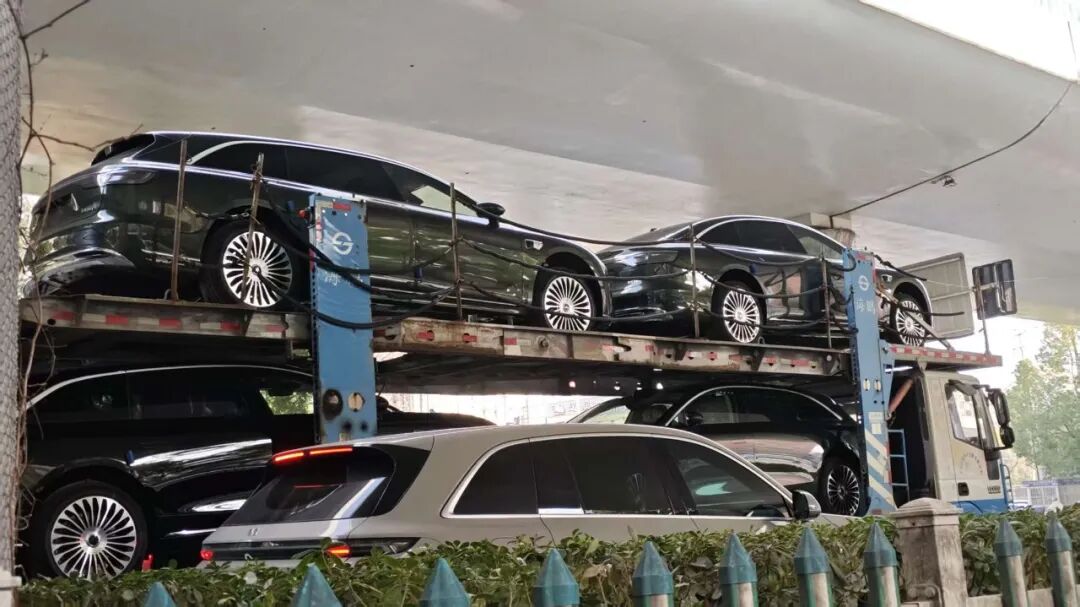
At present, it is clear that the automotive distribution system is going through an in-depth adjustment period featuring two consecutive years of negative growth in 4S networks and more than half of dealers suffering losses. In this context, the industry needs to answer: why the automotive terminal price system keeps collapsing, and why the traditional distribution network keeps losing vitality with no ability to rescue itself? With the in-depth development of the new energy industry, what direction should the industry move towards in the future?
01
Giving back all the profits earned in the past
The automotive industry is very active this year, with more than 500 new car models launched within half a year. However, the recession of the auto market has hit most dealers hard. The description of "the cradle is shaking right above hell" is more accurate than any industry white paper.
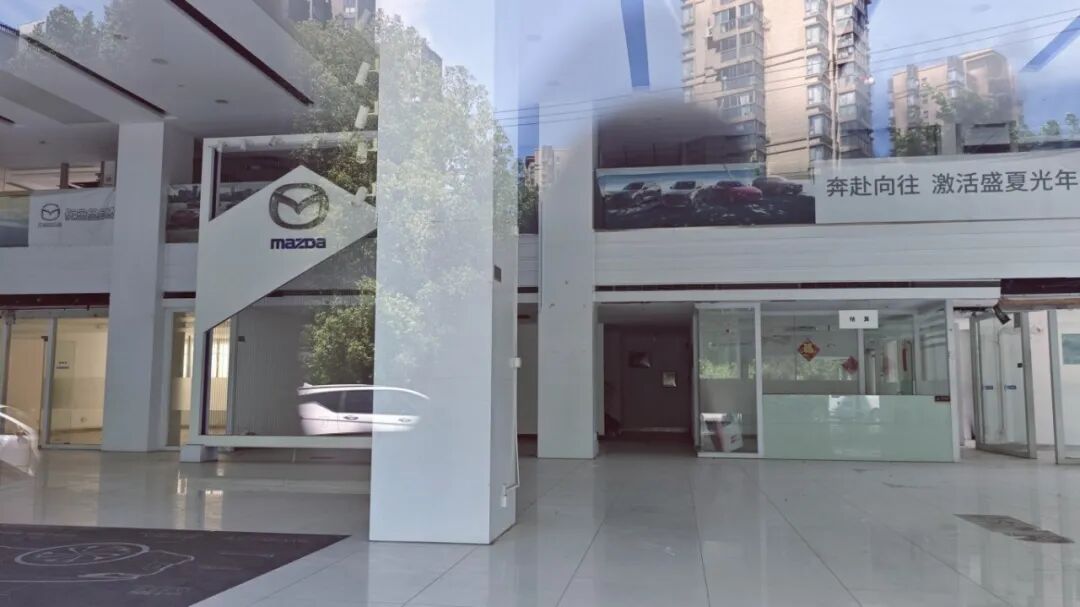
Based on the real data that domestic sales have dropped by 20% and the industry profit is even lower than the return of bank time deposits, looking at the survival status of dealers, rows of traditional 4S stores in auto cities across the country are like blood-drained shells: the barely surviving ones are struggling to hold on, while the ones that cannot survive have long switched to new energy brand dealerships.
But looking back 10 years ago, investors used to carry tens of millions of cash and wait at the gate of automakers' sales companies to seek a joint-venture brand dealership authorization. "Opening a 4S store is equivalent to running a money printer" was the common belief of that generation of automotive practitioners.
In my personal experience, I have witnessed some weak dealer groups that had to open a Hongqi store or a Haima store in the corresponding city if they wanted to operate a FAW Audi 4S store. As long as the overall operation could still make profits, they would bite the bullet and carry out the layout.
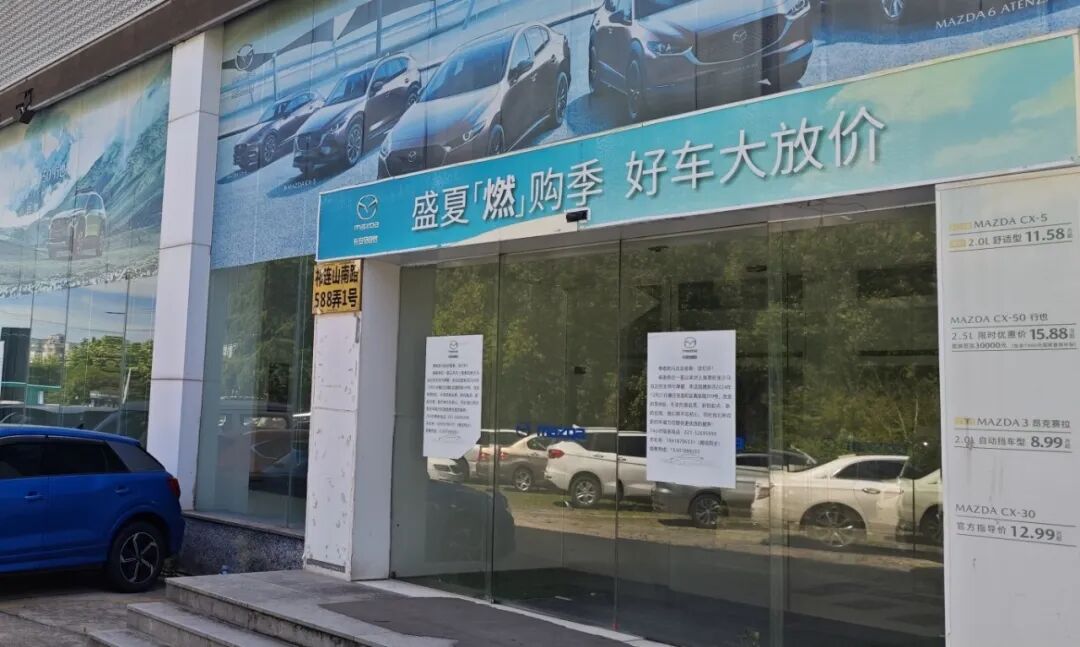
Now many years later, that belief has collapsed in an instant. In the first half of 2026, 1,800 authorized dealerships across the industry shut down. Together with the 4,961 stores that quit the network in 2025, nearly 15,000 4S stores have disappeared from the map in the past five years, with an average of 13 stores permanently closing down every day.
Obviously, this is not just a normal adjustment, but a precursor to the collective exit of 4S stores.
The profit formula in the fuel vehicle era is very simple: low-margin new car sales to drive volume → rebates from automakers to make up for the gap → high profits from after-sales maintenance → additional revenue from financial and insurance services. This set of logic has operated for 20 years. Practitioners familiar with this model could rely on the stores of several hot-selling brands to support all their loss-making stores of weak brands, and make huge profits easily.
In the early years, the first generation of new EV car makers launched the direct sales model and took back the pricing power. Although the direct sales and agency models eliminated the concept of "purchase and sales price difference", traditional authorized stores still had to purchase vehicles at the wholesale price, bear their own inventory pressure, be forced to cut prices, and face unfulfilled rebate promises. When the market trend was positive, they could still survive for several years with the profits they earned in the past.
But no one expected that the so-called in-depth market adjustment would overturn the entire industry and restart the game from scratch.
Near the Middle Ring Road in Shanghai, there used to be two small but well-run dealerships of Subaru and Mazda, which operated side by side, selling dozens of cars each month and earning modest profits.
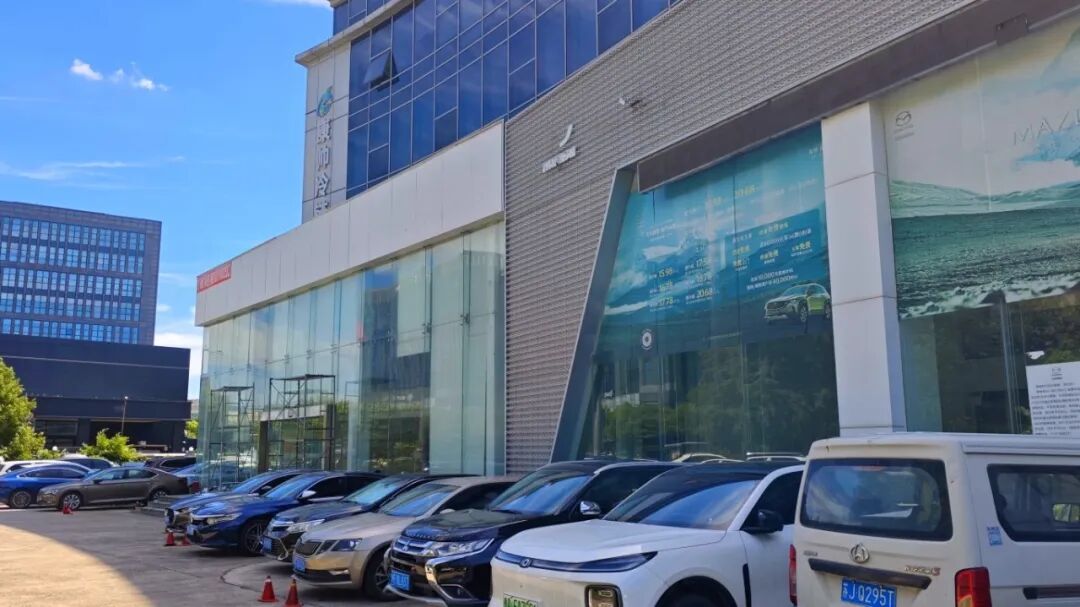
Under the impact of survival pressure, they could no longer afford the annual booth rent of 700,000 yuan. One chose to relocate, and the other closed down completely. The temporary occupant of the site was a pop-up store selling discounted off-season clothing, and now Deepal will officially take over the location.
Even though the turnover of dealerships is as fast as a revolving lantern, the fundamental reason is that the industry can no longer maintain the sustainable profitability of a single store.
Even the long-hidden conflict between automakers and dealers was completely exposed in 2026. The rumor that "a dealer beat a manufacturer's executive to hospital" in the first half of the year was refuted, but no one could laugh it off. Those who could take extreme actions are still holding back, and those who cannot tolerate it have long removed their brand signs and exited the market.
There are also more severe problems: as pre-sales business becomes increasingly difficult, after two years of market overdraft, the traditional 4S after-sales business can no longer rely on the old tricks to underpin the store's profitability as it used to be. With the rising ownership of new energy vehicles, more and more traditional fuel vehicles are being sent to scrap yards, and this trend is almost irreversible.
In mid-2026, the China Passenger Car Association revised its annual sales forecast from "1% decline" to "11% decline". Cui Dongshu said this was a "rare sharp revision in history". But at the moment, when the cracks in terminal retail are widening, no one can easily rewrite the fate of dealers with a few words. Where will they go in the future? A clear answer is urgently needed.
02
Quitting the market in dismay: where is the way out?
Some people say that the poor market environment only makes dealers return part of the fast money they earned in the past, and the heavy losses are entirely their own fault.
Grand Automotive China, once known as the "king of 4S stores" with nearly 700 stores and a market value of 100 billion yuan, was delisted in 2024 and completely ceased its business in March 2026, with almost all its outlets closed. The huge 1000-store empire of Pang Da went through restructuring in 2019 and was delisted in 2023. Baolide, a leading private luxury car dealer in East China, saw 56 of its affiliated companies go bankrupt and liquidated, and its actual controller was detained on suspicion of fraud. More than 140 outlets of Tongyuan Group have suspended delivery since August 2025. Henan Dong'an Holdings emptied its offices overnight, and its Porsche store was shut down. In response to car owners' rights protection demands, Alexander Pollich, CEO of Porsche China, had to come forward to make promises.
Coincidentally, it seems that Porsche took the initiative to implement a contraction strategy, and clearly terminated sales authorizations in Huai'an (Jiangsu), Nanning Xingning (Guangxi), Wuhu (Anhui, retained after-sales service), Jining (Shandong, cancelled independent authorization and merged into Zibo) in the first half of 2026. In fact, the 4S store ecosystem that has been used in China's auto market for nearly 30 years has come to the end of its life cycle.
Even if it is pointed out that the dealers that collapsed suddenly all touched the minefields: land acquisition, store construction, heavy inventory holding, betting on rebates, re-mortgaging and re-expansion. When the gross profit of new cars turns negative, inventory equals liabilities, and the maintenance frequency of pure electric vehicles cuts after-sales revenue by two-thirds, the leverage will backfire immediately.
And those surviving dealers trapped in the predicament are also responsible for their own situation.
When automakers set tasks at the beginning of the month, and stipulate that rebates will be cancelled, next month's car allocation will be halved, and qualification for year-end awards will be disqualified if the completion rate fails to meet the standard at the end of the month, dealers choose to sell cars at a price 20,000 to 30,000 yuan lower than the purchase price to get the meager quarterly rebates. The more they sell, the more they lose; if they stop selling, their capital chain will break first. The cars parked in the warehouse are devouring interest, site fees, depreciation costs, and even the hope of surviving every day.
In any case, the harsh reality will not spare anyone because of a wrong choice.
After going through these changes, some dealers turned to the new energy industry. Zhongsheng and Yongda have both transformed to become authorized dealers of leading new EV car makers, but no one can guarantee that getting new energy brand authorization is a lifeline.
Direct sales dominate the pricing, and authorized stores only earn delivery commissions, with gross profit per store thinner than a piece of paper. The NPS, delivery efficiency and lead conversion assessment from automakers are stricter and more detailed than that in the fuel vehicle era. After these rounds of screening, can the surviving dealers really represent the future development direction of the automotive distribution system?
More small and medium investors are trapped in a dilemma. If they quit fuel vehicle brands, their customer assets accumulated over more than 10 years will be cleared, and the brand cancellation and liquidation process will take 2 to 3 years. If they transform to new energy, they need to invest millions to renovate the exhibition hall, but the automaker may switch to direct sales to take back the right of operation next year, making the return of upfront investment an unsolved mystery.
All of these in 2026 are telling the same story: the era of low profit is over, and the era of negative profit is coming. Dealers are not unable to calculate accounts, but they are trapped in the old operation model and can not find a way to survive.
So what is the way forward?
The final definition given by the China Automobile Dealers Association is very clear: to become a comprehensive mobility service provider.
The full operation chain can be connected as follows: new car sales (customer acquisition entry) → delivery (experience) → charging / battery swapping / energy storage (high-frequency business) → three-electric system maintenance + regular maintenance (high gross profit) → insurance renewal / extended warranty (financial stickiness) → used car trade-in / retail / export (asset turnover) → scrapping and recycling (compliance closed loop).
Users are not "orders that disappear after car purchase", but assets that can be realized repeatedly. Baolide Group implemented the strategy combining "butler-style service" and digital operation, successfully converting one-time transaction customers into long-term ecological users. Harmony Auto has built its second growth curve by integrating domestic used car refurbishment and overseas export business, which both follow this logic. Furthermore, for overseas expansion, as domestic new car sales are getting more and more unprofitable, the demand for Chinese new energy used cars and after-sales parts in Southeast Asia, the Middle East and CIS countries is a premium market, which Harmony Auto and Yongda have already laid out.
Unfortunately, no one knows what the outcome of this path will be.
When the old era and the new era start to separate, the ones that can really survive are those who dare to treat new car gross profit as a sunk cost, dare to take after-sales business as their core business, and dare to regard users as reusable assets rather than one-time orders. Perhaps 2026 is not the doomsday of auto dealers, but the doomsday of "price difference profiteers". What is dying out is not the identity of "automotive dealer", but the old "inventory pressure-rebate-price difference" operation system that has been used for 30 years.
Responsible Editor: Yang Jing, Editor: Wang Yue
This article is from WeChat official account "Auto Pub" (ID: iAUTO2010), written by Cao Jiadong, and authorized for release by 36Kr.