After finishing their roles as overbearing CEOs and returning home to sell vegetables, many short drama actors who graduated from the Central Academy of Drama can no longer find any roles to shoot.
A rickety tricycle is fully loaded with plump onions, fresh green scallions, and newly unearthed potatoes. On the cart, the vendor, speaking with a genuine Pingdu accent, is calling out enthusiastically to passersby: "Onions! 1.5 yuan for 2 jin!"
What is the first thing that comes to your mind when you think of this scene? Is it the bustling rural open-air market, or the rural vendor working hard to make a living for their family? Few people would associate this scene with an actor, but that is exactly the case. The man yelling to sell goods on the tricycle, Xu Peng, is 184cm tall, a formally trained actor who graduated from the Central Academy of Drama. Before the Spring Festival this year, he played a "dominant CEO" in a short drama; after the Spring Festival, he became the enthusiastic vegetable stall vendor calling out to customers from a tricycle.
Xu Peng is very calm about this. This is the long-lost, real worldly liveliness for him, a memory that he was once extremely familiar with then gradually drifted away from, and is now picking up again. It is also his new attempt as an actor amid the AI wave.
01
From Full-Length Dramas to Short Dramas
Since he entered the Central Academy of Drama for study and graduated to work, Xu Peng has played many roles in film and television dramas. He played Zuo Gong in Ancient Secrets of the Ming Dynasty, Wu Qiang in Tropical Homeland on the Horizon, Zhou Shuang in If Sound Has Memory... He was not the lead role, but he was no unknown nobody.
After more than 10 years of working hard in the industry, he reached a somewhat awkward position: he was always lacking opportunities to move up a level, yet he was unwilling to step back.
Among his classmates who graduated at the same time, some entered the film and television circle and became household names; some entered the short drama field and got leading actor roles very early, which is also a new choice for many actors amid the booming development of short dramas.
According to Wang Xiaoliang, Director of the Network Audio-visual Program Management Department of the National Radio and Television Administration, 33,000 micro short dramas were launched and broadcast in China in 2025, with nearly 700 million domestic users, and the market size exceeded 100 billion yuan, doubling that of 2024.
The huge market has quietly changed the status of short dramas. In the past, short dramas were long positioned at the downstream of full-length dramas, and some full-length drama directors would even reject actors who had acted in short dramas when selecting casts. But gradually, short dramas have become increasingly popular, the disdain chain between short dramas and full-length dramas has gradually disappeared, and even a two-way flow trend has emerged.
Well-known full-length drama actors such as Yang Rong, Liu Xiaoqing, Li Ruotong have all "stepped down" to participate in short dramas, while short drama actors such as Yu Yin, Ke Chun, Guo Yuxin have also successfully "moved up" to full-length dramas with their unique charm and solid acting skills.
Around Xu Peng, many friends who used to film full-length dramas and had good resources have quietly appeared in short dramas. He also found that there are more and more short drama crews in Hengdian.
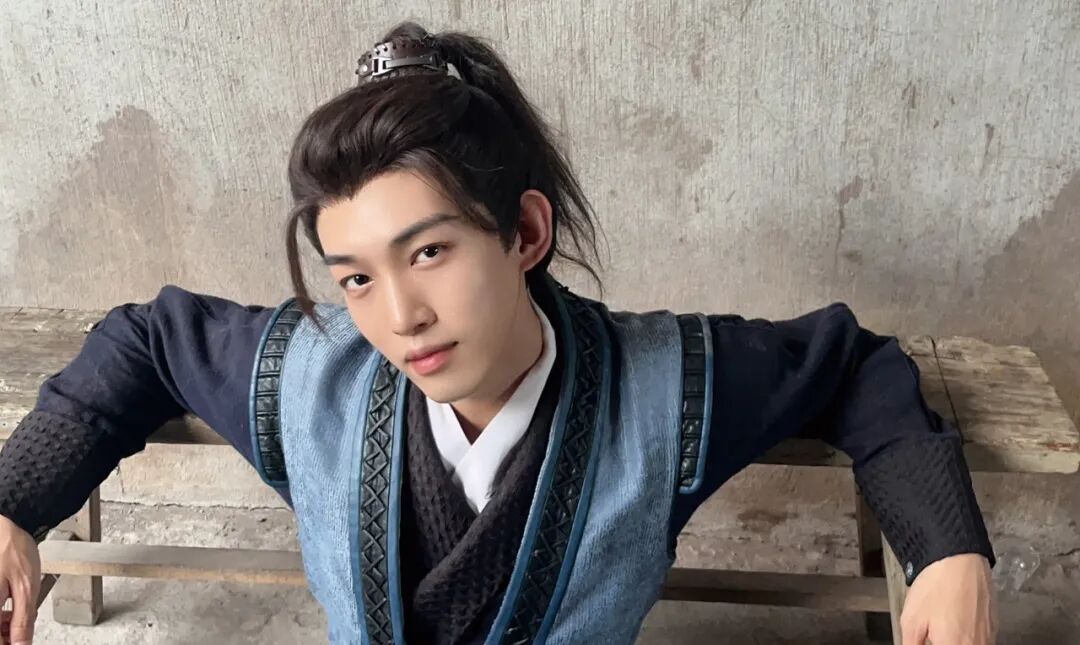
Stills from the short drama project that Xu Peng participated in. (Photo / Provided by the interviewee)
The reason behind this is self-evident. For producers, short dramas have short investment cycles, low capital consumption, but considerable return rates; for actors, short dramas provide more exposure opportunities and the possibility of rapid monetization, with relatively low thresholds, making it easier to become a well-known performer.
After 8 years of hard work in the full-length drama field, Xu Peng has deep personal experience of this. Once, he stayed in a full-length drama crew for 3 months, filming many scenes to the best of his ability. But when the TV series was finally broadcast, many of his scenes were cut out, and the number of shots that fully showed his face could be counted on one's fingers.
On another occasion, he played the third male lead in a full-length drama crew — an adult male with an IQ equivalent to a five or six-year-old boy. To fit the role, he repeatedly studied the character biography, rehearsed the character's words and deeds, and specially watched many videos of five or six-year-old boys. During the shooting, the director, producer and other actors in the group all expressed high appreciation for his acting skills. But when the TV series was broadcast later, Xu Peng found that almost all his scenes were cut out again — this had nothing to do with the director, but was a mandatory requirement of the platform, because too many scenes of other actors would affect the romantic interactions between the male and female leads.
Compared with the "being cut out entirely" situation in full-length dramas, short dramas feature fast pace and dense elements, with every second advancing the plot, so every expression and every line of the actors can be presented to the maximum extent. Moreover, actors who are already familiar to the audience in the full-length drama field can more easily make a breakthrough in short dramas and get the opportunity to play leading roles.
This certainty of "being seen" has become a major reason that attracted Xu Peng to make the transition. In addition, his grandmother was in poor health at that time, and he wanted more time to accompany her. The speed of "one work in 7 days" for short dramas exactly met his needs.
Therefore, after careful consideration, Xu Peng took his first short drama in his life, playing the villain male lead in a revenge drama without romance.
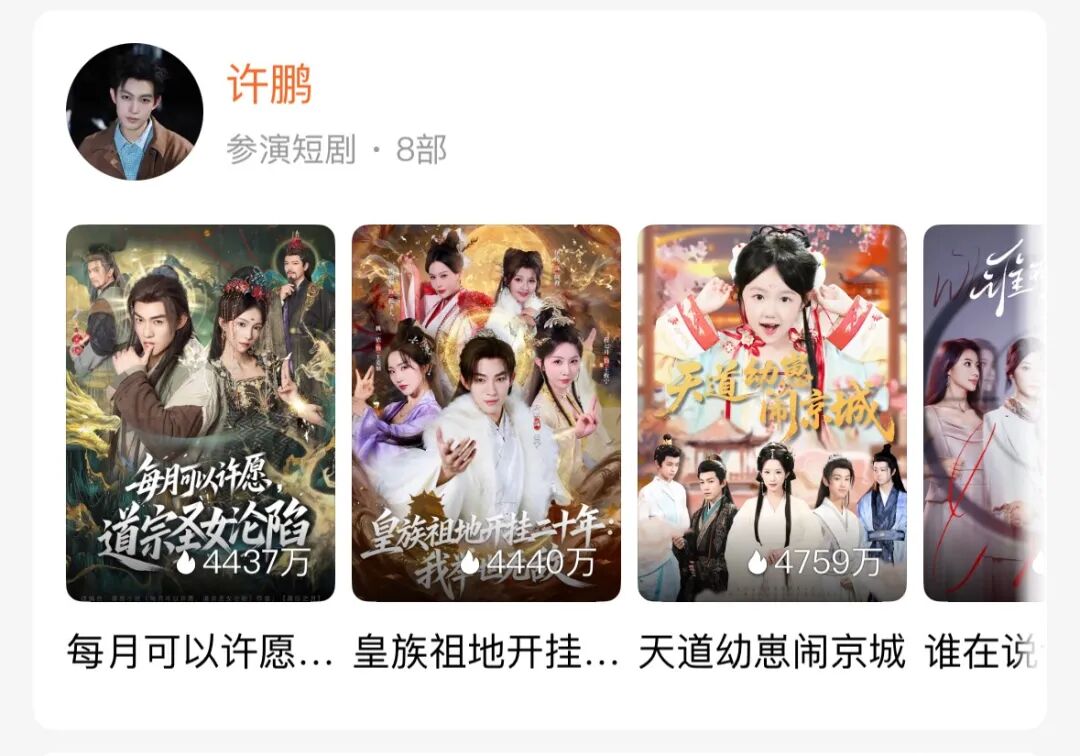
The short drama that Xu Peng once participated in. (Photo / Screenshot from the reading platform)
02
Abandoning Character Biographies to Perform Well in Short Dramas
Xu Peng's hometown is Pingdu City, Shandong Province, a small city on the Jiaodong Peninsula, and also a famous vegetable production base in China. Vegetables such as tomatoes, radishes for fruit consumption, and ginger are grown here, passing from the fields to dining tables, and from Shandong to the rest of the world through the hands of thousands of farmers.
Xu Peng's childhood was closely connected with the land and vegetables. When he was little, he often followed his grandparents to the fields to play, and got to know many crops. When the vegetables in the fields were ripe and ready to be sold, his grandfather would take him to the open-air market, not to let him help, but just to let him wander around. Most of the time, his grandfather would give Xu Peng some pocket money, and he would take the money to walk around, buying food and toys he wanted.
Later, Xu Peng traveled all the way from Pingdu to Beijing, became a student at the Central Academy of Drama, and also became a stranger far from home.
During the long school years, he studied while looking for acting opportunities everywhere. After graduation, he started to enter different crews frequently to act. The beautiful memories of childhood gradually faded away as he grew up, and even the people and scenery in his hometown became blurred.
Xu Peng did a calculation: in the 10 years from age 20 to 30, he spent less than 150 days at home. Such a short period of time left very limited memories for Xu Peng, so much so that in his memory, his grandparents seemed to age overnight, and the years in between seemed to be stolen and skipped.
After entering the short drama industry, Xu Peng had more time to spend with his grandparents — the 7-day-per-work rhythm of short dramas gave him more rest time after high-pressure work, he could directly reject scripts he did not like, and did not have to rush around desperately to meet scheduled appearances.
The only thing he felt unaccustomed to was that some short drama directors would explicitly require actors to speak faster and exaggerate their expressions when performing, such as opening their eyes wide and opening their mouths wide.
This ran counter to the performance experience Xu Peng had accumulated over the years. In the past when filming full-length dramas, he would always spend a long time studying the character biography, thinking about what the character would say and do in specific situations, but when filming short dramas, these thoughts that laid the foundation for the character became unimportant.
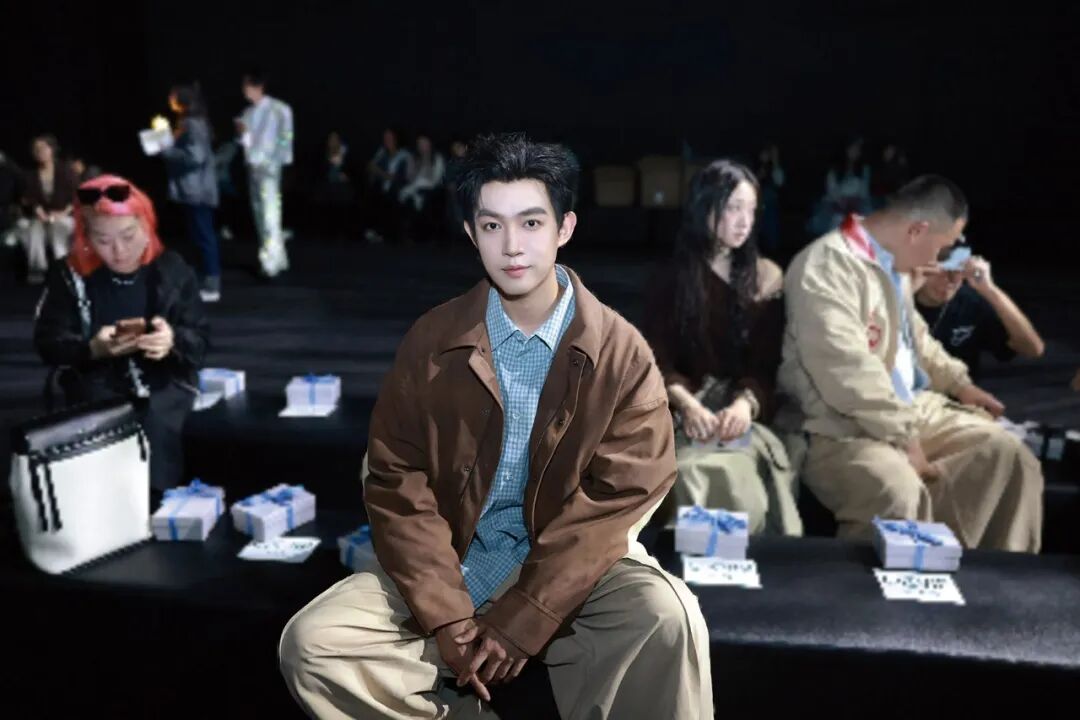
Xu Peng attending a fashion week event. (Photo / Provided by the interviewee)
Actress Hao Lei once imitated a similar performance style in a variety show to satirize the awkward state of actors performing for the sake of performing: eyes wandering, mouth slightly open, shaking their heads immediately when questioned by others — almost writing "I am the murderer" on their foreheads.
Xu Peng once doubted that the problem was with himself. After many adjustments with no results, he went to communicate with the director, who directly told him: "Don't think about logic, don't think about rationality, just treat it as if you are shooting short videos." Even some of his colleagues told him: "When filming short dramas, you don't need to read the character biography at all, and you don't need to care about the difference between scripts, just perform according to the style given by the script."
Xu Peng suddenly realized: "The characters in short dramas are all cut from the same mold. When actors face the same type of themes, they only need to perform in one fixed way."
Relying on this set of summed-up performance rules, Xu Peng gained a foothold in the short drama field, and lived a life of splitting his time between home and the crew. After a year of traveling back and forth between the two places, Xu Peng was pleasantly surprised to find that with the development of the short drama industry, more and more directors began to focus on the texture of performances, the assembly-line type of low-quality short dramas are becoming fewer, and high-quality content is increasing — which gave him more motivation to perform.
When he had no scheduled appearances, Xu Peng would return to his hometown in Pingdu. When his grandparents saw him, they showed uncontrollable happiness, the dining table was filled with all his favorite foods, and his grandmother would specially steam two full layers of big beef buns for him every time.
Xu Peng eats seven or eight big buns a day — not because he has a big appetite, but to live up to his grandmother's kindness. After eating like this for a period of time, he gained weight at a speed visible to the naked eye, so that when he entered a new crew, someone would always ask him: "How did you gain so much weight in such a short time?"
Xu Peng would always smile and answer: "My grandmother is the culprit."
03
The Former "Dominant CEO" Wants to Sell Vegetables
If life had gone on like this, Xu Peng might have been working on short dramas all the time. But before he went home to rest for the Spring Festival this year, his grandmother was suddenly hospitalized due to illness. When he went to the hospital to take care of her, he found that his grandmother in his memory had become so thin that he could barely recognize her.
In front of his grandmother's hospital bed, Xu Peng felt a deep sense of powerlessness. He began to think: his grandparents are getting older and older, if he keeps drifting outside filming, playing stereotyped roles, and maybe even having his scenes cut out, is all this meaningful?
Time soon forced him to make a choice. During the Spring Festival, AI suddenly blew through every street and alley in Hengdian like a strong east wind. Many companies that were vigorously selecting casts before began to transition to making AI short dramas.
What Xu Peng felt most deeply was that many projects were suddenly aborted — he received two leading actor offers before the Spring Festival, but there was no news at all after the holiday; the short drama that had already finished filming before the Spring Festival was suddenly announced to no longer be edited and launched, and the production company carried out large-scale layoffs, focusing on AI-generated content.
The production speed of short dramas has become even faster — in the past, the cycle of filming a short drama was about 7 days, but now it has been compressed to 3 to 5 days. Moreover, fewer and fewer crews are responsible for arranging travel and accommodation for actors, and food, clothing, housing and transportation have become burdens that actors have to face. More importantly, under the influence of AI technology, actors' pay is also shrinking rapidly. Except for a small number of top actors, most actors' income is only one third of what it used to be.
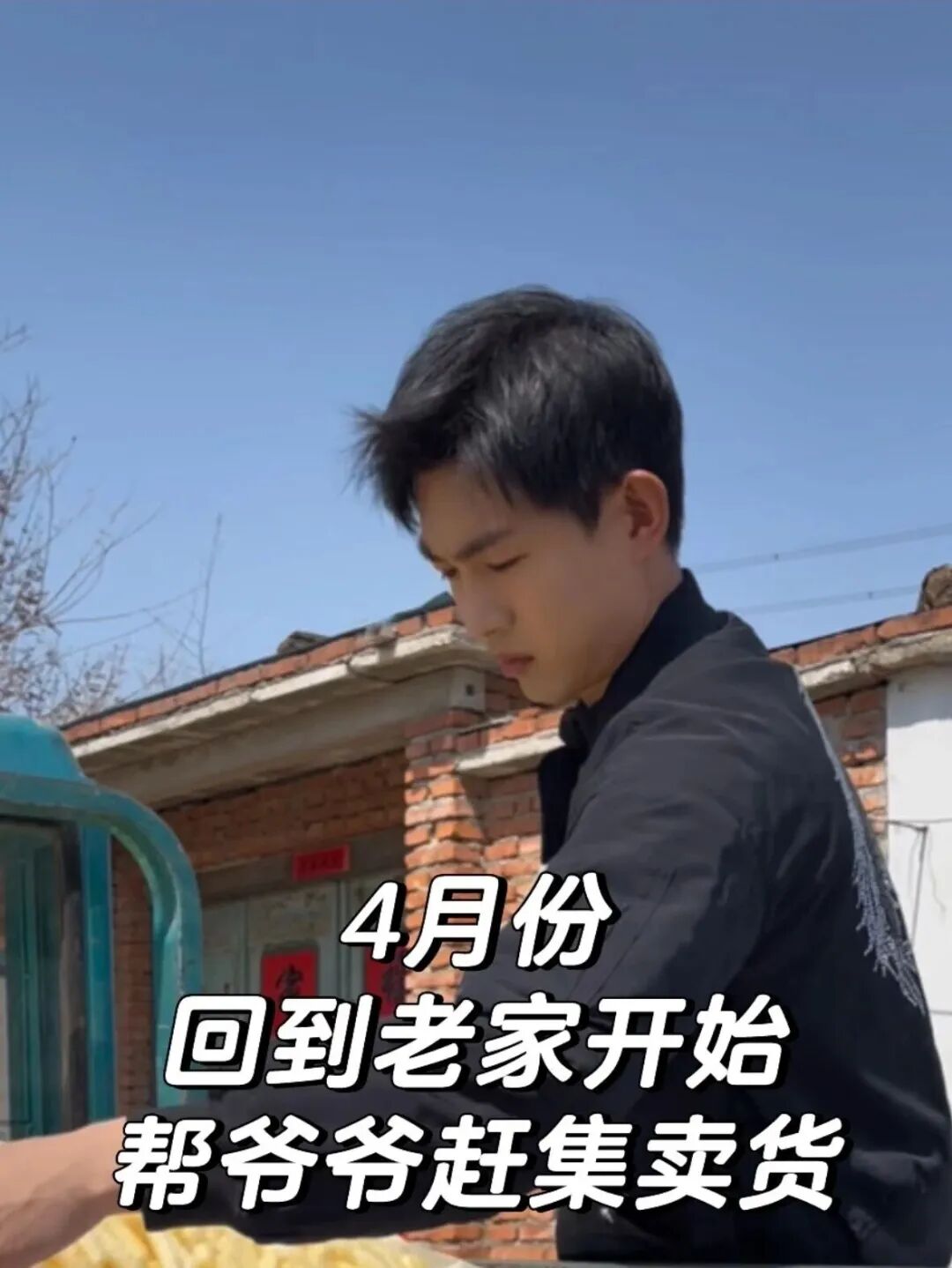
Xu Peng selling goods at the market when he returns home. (Photo / Screenshot from social media platform)
Xu Peng was forced to spend more time at home. When he was bored with nothing to do, he decided to go to the market to sell vegetables with his grandfather. On the crowded streets, there were countless vivid faces, people speaking the familiar local dialect, which gave Xu Peng a sense of reality and vividness that he could hardly feel in the crew.
Greeting passersby, teasing children walking by, Xu Peng found that he could so easily take off the "actor" label and enjoy the slow-paced life.
He filmed these daily moments into videos and posted them on his personal short video account, which unexpectedly gained a lot of attention. Among them, the series of short videos titled "What is the experience of talking to my grandma with the lines of a dominant CEO in short dramas" got high views, and these videos were written and filmed by Xu Peng himself.
In the footage, Xu Peng in a suit walks down from a rickety tricycle, confesses his love to his grandmother who is working and gives her gifts — sometimes it is "garlic bought back from Dubai", sometimes it is "buns brought back from France"... The absurd and interesting videos touched countless netizens, and also enriched the elderly life of his grandparents.
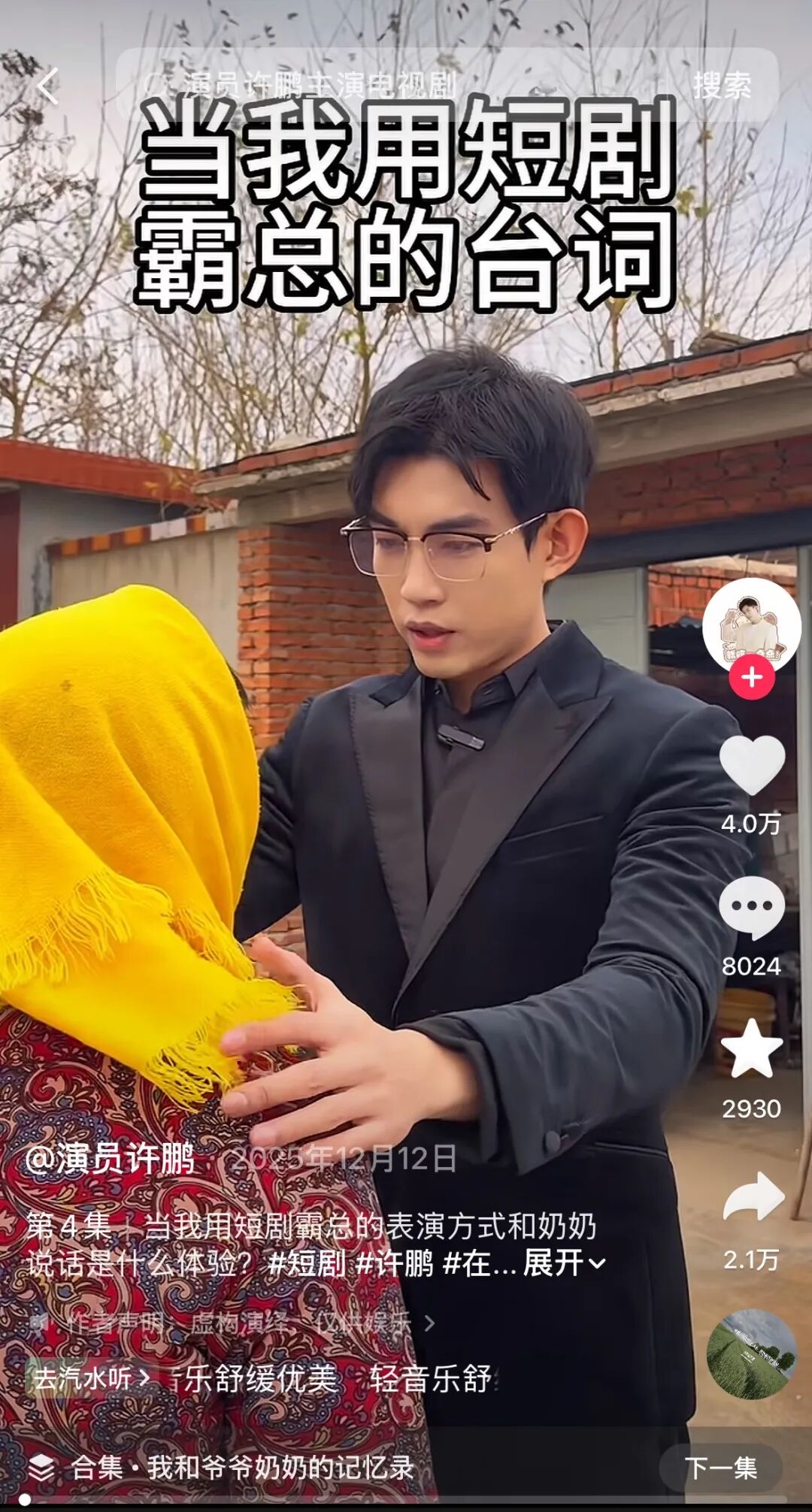
Videos from Xu Peng's account. (Photo / Screenshot from social media platform)
Later, his grandmother would ask Xu Peng every few days: "When are we going to shoot videos again?" Xu Peng then realized that his grandmother had become addicted to shooting videos, and many netizens said that her acting skills were comparable to those of veteran actors. He began to wonder if he could really make a rural-themed short drama and let his grandparents act in it.
He is very confident about this. Especially after the Chaoshan dialect film Love Letter to Grandma became popular in May this year, Xu Peng was more convinced that the audience does not only care about actors' faces and traffic, and everyone can distinguish the quality of a good drama and a good work.
Because there was no extra budget to recruit actors across the country, he set up a performance training camp in his hometown, wanting to recruit some local actors to shoot a short drama that belongs to the countryside and belongs to himself, telling the lives of people who have lived and struggled in the villages all their lives — not taking profit