Why does the high gross margin of embodied intelligence look more like a signal of a price war?
On August 6, Unitree Robotics issued an announcement stating that the offering price was determined through negotiation to be 150.80 yuan per share, and the bookbuilding inquiry for offline issuance will no longer be conducted.
According to the prospectus, Unitree plans to publicly issue 40,446,434 new shares, accounting for 10% of the total share capital after issuance, raising about 4.202 billion yuan, corresponding to an implied post-money valuation of about 42 billion yuan.
Calculated based on the total share capital after issuance, the corresponding market value of Unitree Robotics is about 61 billion yuan, and the P/E ratio of the offering is as high as 219.23 times.
Unitree Robotics (688836.SH) launched the inquiry for its Sci-Tech Innovation Board IPO yesterday, held an online roadshow on August 7, and will formally open subscription on August 10.
This is a historic moment for the first A-share humanoid robot stock to accept market-based valuation and pricing, but the initial signals from the market are far more complex than the 61 billion yuan figure.
On the one hand, quotations from some institutions pushed the valuation up from 42 billion yuan to 61 billion yuan; on the other hand, 171 executives and core employees participated in the strategic placement through two asset management plans, with a total subscription amount of about 270 million yuan, of which Chairman Wang Xingxing personally contributed 15 million yuan.
At the same time, the two asset management plans have lock-up periods of 12 months and 36 months respectively, and the management expressed its long-term confidence in the company with chips that cannot be cashed out immediately.
At present, the narrative around humanoid robots is undergoing subtle changes, and some top Silicon Valley investors have publicly questioned the practicality of humanoid robots and begun to bet on non-humanoid tracks.
In fact, as early as 2023, Baidu founder Li Yanhong publicly stated that turning machines into humans should not be the direction of our efforts. Rodney Brooks, the founder of modern robotics, was more straightforward, believing that humanoid robots are a bubble destined to burst.
However, entering 2026, the voice of questioning has evolved from individual opinions to systematic reflection.
In May, Zhang Jun, Chairman of China Europe Capital, spoke at the Yangtze River Delta Industrial Technology Forum, saying that the humanoid robot track is facing the dilemma of sufficient production capacity but insufficient demand. In July, in the global debate hosted by CGTN on "whether we should embrace humanoid robots", the opposing side won with 56% of the vote. Ajay Agarwal, a partner at Bain Capital Ventures, publicly stated that humanoid robots are more likely to become demonstration products, and some products may even remain at the demo level for a long time.
From attracting widespread attention to aesthetic fatigue, from technology worship to practicality questioning, from capital boom to rational differentiation, Unitree's humanoid robot and the entire embodied intelligence industry are facing a direct question: if robots do not need to be humanoid, what is Unitree's high valuation built on?
This question is particularly urgent for Unitree, because today's Unitree is no longer a robotic dog company.
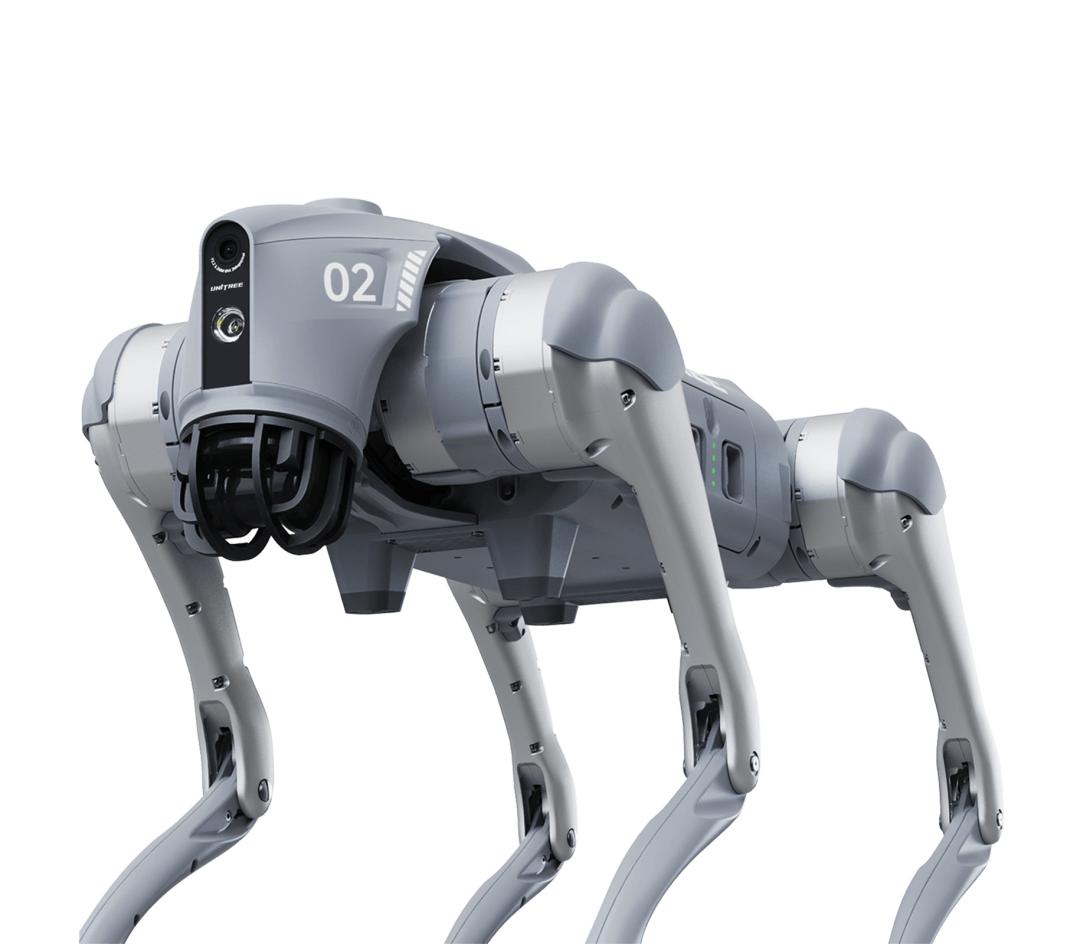
Image source: Unitree Robotics
Over the past decade, the market's perception of Unitree Robotics has always revolved around one label: the maker of robotic dogs. From the first commercialized quadruped robot Laikago in 2017 to the subsequent Go series and B series, Unitree's cumulative shipment of quadruped robots has exceeded 30,000 units, with a global market share of over 60%, making it the absolute leader in this niche track.
According to data from the prospectus, in 2023, quadruped robots still contributed 75.78% of Unitree's main operating revenue, while humanoid robots accounted for only 1.88%. By 2025, the revenue of humanoid robots surged to 868 million yuan, accounting for 51.78% of the main business revenue, surpassing quadruped robots for the first time (698 million yuan, accounting for 41.62%) and becoming the largest source of revenue.
In three years, Unitree Robotics has become a company where humanoid robot business accounts for more than half of its revenue, and it has heavily bet on the very track whose necessity of existence is still under debate.
A figure hidden in the profit section of the prospectus raises deeper questions: Unitree's gross profit margin of main business is as high as 60.13%.
What does a 60.13% gross profit margin mean?
In the world of manufacturing, this is a figure significantly higher than the industry average. FANUC has been making industrial robots for half a century, and its gross profit margin has basically remained between 35% and 40% in the past five years. The operating EBITDA margin of ABB's robotics division once dropped to 9.1% in the second quarter of 2025. CATL's gross profit margin for power batteries has dropped from 43.7% in 2016 to 22.41% in the first half of 2025, with a cumulative decline of about 50% in ten years.
The gross profit margin of listed companies in the same industry generally remains at around 37%, while Unitree has reached 60% in the initial stage of volume expansion.
If the core business of a company is exactly in the most controversial track, and its gross profit margin is almost twice that of its manufacturing peers, has the market completed the pricing for the gross profit margin to regress from 60% to the manufacturing average when giving a valuation of 61 billion yuan? Then, is such a high gross profit margin an impregnable moat, or a signal that attracts competition?
Zhiqidao attempts to conduct a financial stress test on Unitree Robotics from the perspective of a financial variable, expand its vision to the entire embodied intelligence industry, and finally place this emerging industry in the historical coordinate system of China's manufacturing industry to find referable rules.
I. A Sand Table Simulation
Unitree's 60.13% is the overall gross profit margin. If you break it down, there are structural changes that are easily overlooked.
The prospectus shows that the gross profit margin of humanoid robots dropped from 87.67% in 2023 to 68.44% in 2024, and further dropped to 62.91% in the first three quarters of 2025, a decrease of nearly 25 percentage points in less than three years. The gross profit margin of quadruped robots shows the opposite trend, rising steadily from 51.50% in 2024 to 55.49% in the first three quarters of 2025.
The reason why the overall gross profit margin climbed from 44.18% in 2022 to over 60% in 2025 is that the revenue proportion of high-margin humanoid robots is rising rapidly, rising from less than 2% in 2023 to 51.78% in 2025, surpassing quadruped robots for the first time to become the largest source of revenue.
This is a signal that is easily misread. The rise in overall gross profit margin is not because products are sold at higher and higher prices, but because more high-priced products are sold. Once the gross profit margin of humanoid robots itself continues to decline, or the revenue growth rate slows down, the structural support for the overall gross profit margin will quickly face challenges.
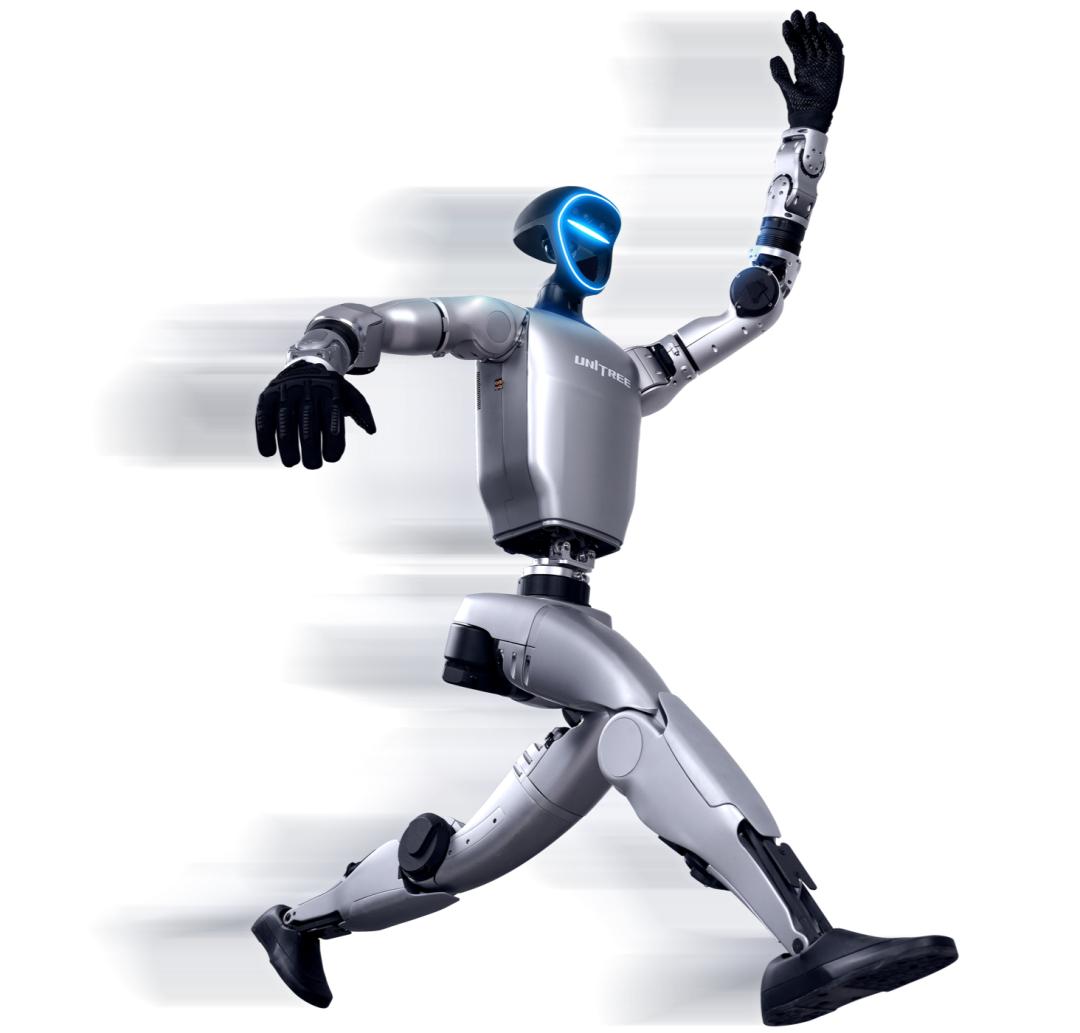
Image source: Unitree Robotics
What is more noteworthy is the scissors gap between price and cost.
The average selling price of humanoid robots dropped from 593,400 yuan in 2023 to 260,400 yuan in 2024, and then to 166,400 yuan in 2025, a decrease of about 72% in two years. However, the unit cost only dropped from 73,200 yuan in 2023 to 62,200 yuan in the first three quarters of 2025, with a decrease of only 15%. This means that the maintenance of gross profit margin is increasingly dependent on the premium ability on the selling price side, rather than continuous optimization on the cost side.
In April 2026, Unitree released the R1 dual-arm version, with the starting price further dropping to 26,900 yuan. From 590,000 yuan to 26,900 yuan, the price fell by nearly 95% in three years. In other words, every maintenance of gross profit margin is facing increasing pressure.
Moreover, Unitree's high gross profit margin has a specific support: customer structure.
In the first three quarters of 2025, 73.6% of the revenue of Unitree's humanoid robots came from the scientific research and education fields. Universities, scientific research institutions and technology companies have sufficient budgets and are not sensitive to prices. They buy robots for research and secondary development, which is a customer group willing to pay a high premium for cutting-edge technology.
However, the ceiling of the scientific research and education market is much lower than that of the industrial market. How many universities around the world need humanoid robots? How much shipment volume can this market support? Some analyses point out that if calculated on the basis of 50 units purchased by each of the top 200 universities in the world, the capacity of this market is only 10,000 units, and Unitree can fill it up in two years.

Image source: UBTECH
From another dimension, although Unitree's humanoid robot gross profit margin is as high as over 60%, its revenue scale is still limited.
In 2025, the total shipment of Unitree's humanoid robots exceeded 5,500 units, with a revenue of about 868 million yuan. Even calculated at a 60% gross profit margin, the absolute value of gross profit contributed by humanoid robots is about 520 million yuan, while the gross profit margin of UBTECH's full-size humanoid robot business in the same period was 54.6%, and the gross profit gap between the two is less than 100 million yuan. A business with a 60% gross profit margin earns less than 100 million yuan more than a business with a 54.6% gross profit margin, and the gap is far smaller than the percentage figures suggest.
This leads to a more cruel question: is Unitree's 60% gross profit margin really because the product is worth the price, or is it because the track is too early and no one has come to compete yet?
In 2025, Unitree achieved a total revenue of about 1.708 billion yuan, and the non-recurring profit attributable to shareholders of the parent company after deducting non-recurring gains and losses was about 600 million yuan. Calculated at a 60% gross profit margin, the gross profit is about 1.02 billion yuan, and the total period expenses are about 420 million yuan.
Behind the rapid revenue growth, the expense side is expanding rapidly. In the first quarter of 2026, Unitree achieved a revenue of 423 million yuan, a year-on-year increase of 68.49%. This figure still looks bright, but compared with the 332.64% increase in the same period of 2025, the growth rate has slowed down significantly.
What is more noteworthy is the non-recurring profit after deduction: the non-deducted profit in the first quarter of 2026 was 40.2536 million yuan, a year-on-year decrease of 52.55%. Revenue is still growing, but profits have almost halved.
The direct cause of the profit decline is the sharp rise in expenses, and R&D expenses and sales expenses are expanding rapidly. Of the 4.202 billion yuan raised in this IPO, the largest single item of 2.022 billion yuan will be invested in intelligent robot model R&D, which is a mandatory investment.
Unitree's short board lies in the brain level. In the first three quarters of 2025, the R&D expense was only 90.2094 million yuan, and the R&D expense ratio was only 7.73%, far lower than the average level of 27.92% of comparable companies in the industry. This catch-up is destined to be expensive. Large model R&D is a typical capital-intensive investment, and the expense side will continue to expand.
Image source: Unitree Robotics
Where is the tipping point? We might as well do a sand table simulation.
Assuming that the full-year revenue in 2026 is around 2 billion yuan, and the total period expenses increase to 700-800 million yuan (increased R&D investment and expanded sales system), when the gross profit margin drops to what level, the gross profit will not be able to cover the period expenses?
- Gross profit margin 50%: gross profit is about 1 billion yuan, which can still cover 700-800 million yuan of expenses, but the non-deducted profit will shrink sharply from 600 million yuan to 200-300 million yuan;
- Gross profit margin 40%: gross profit is about 800 million yuan, if the expense is at the upper end of the range (800 million yuan), there will be slight profit or even break even;
- Gross profit margin 30%: gross profit is about 600 million yuan, which is lower than the expense level, and the company will fall into losses.
When the gross profit margin falls below the 35%-40% range, Unitree may slide from a profit star to a money-burning machine.
Such a stress test is not alarmist talk. The capital market often moves ahead of financial data. Those companies that once amazed the market with high gross profit margins provide references with their real stock price trends.
In May 2026, AI chip company Cerebras was listed on NASDAQ. This new player famous for wafer-level chips had a core gross profit margin of 47% in the first quarter, but the company immediately predicted that the core gross profit margin in the second quarter would narrow to 36%-38%. Revenue almost doubled, but the stock price fell by nearly 20%, falling below the IPO offering price, and accumulating a drop of about 50% from the post-listing high.
The premise for the market to give a high valuation is the sustainability of high gross profit margin. Once this premise is broken, the valuation logic will be reconstructed accordingly.
In July 2026, Tesla's second-quarter financial report showed that the automotive gross profit margin excluding regulatory credits plummeted from 19.2% in the first quarter to 16.3%. After the financial report was released, the