From being impacted by AI to fighting back with AI: Chegg splits courses into 5,000 content fragments
A total of $14.4 million in severance payments was made in the first half of the year.
On the evening of August 6, Chegg, Inc. (NYSE: CHGG), a global company focused on learning and workplace skill improvement, released its quarterly financial results for the period ended June 30, 2026.
Chegg's total net revenue in the second quarter of 2026 was $51.8 million, down 51% year over year; among which, revenue from Chegg Skills business was $17.5 million, up 2% year over year. The gross margin stood at 55%.
Chegg recorded a net loss of $2.951 million in the second quarter of 2026, narrowing by approximately 91.7% year over year; adjusted EBITDA reached $9.1 million.
Free cash flow for the quarter was $6.4 million, including approximately $1.5 million in severance payments related to prior restructuring actions. After paying $14.4 million in severance in the first half of the year, Chegg still generated $9.5 million in free cash flow.
"In the second quarter, our revenue, adjusted EBITDA and cash flow all exceeded expectations, which reflects our ability to execute on priorities while investing in future growth," said Dan Rosensweig, CEO and Executive Chairman of Chegg, "Our long-term goals remain unchanged: restore Chegg to growth while maintaining high profit margins and strong free cash flow."
Chegg CFO David Longo said: "We have consolidated the business foundation for long-term success. The company is leaner, more efficient, and fully prepared to generate considerable free cash flow in 2026."
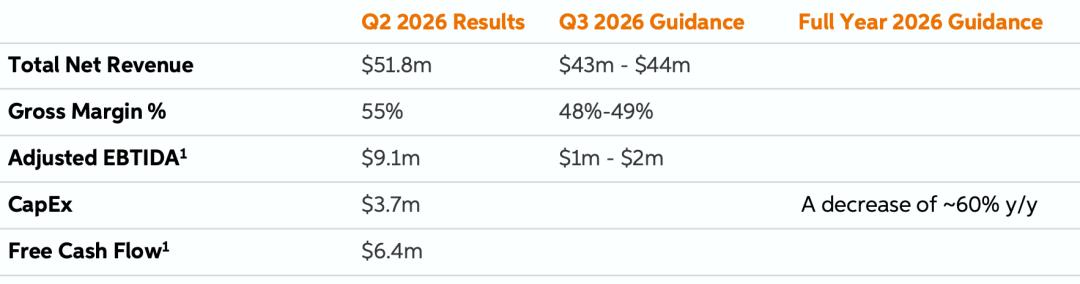
Total net revenue for the third quarter of 2026 is expected to be between $43 million and $44 million, with a gross margin between 48% and 49%, and adjusted EBITDA between $1 million and $2 million.
During the earnings release and the subsequent earnings call, CEO Dan Rosensweig elaborated on Chegg's further transformation to help students build skills, confidence and connections, so that they can graduate smoothly, land internship opportunities and transition to the workplace.
He introduced that Chegg is integrating its three major segments of academic platform, skills business and language learning capabilities into a one-stop employability service platform to address one of the most pressing needs students face today. According to his disclosure, more than 10,000 students have already used the beta version and provided feedback, and the new service will be gradually rolled out on Chegg and the website Internships.com starting from the third quarter and throughout 2027.
The following are the key contents of Chegg's earnings call (compiled and edited by Duozhi):
01 Targeting the employability of 20 million students, the new one-stop employability service platform will be launched in the third quarter
In Chegg's view, higher education is constantly evolving, but students ultimately need a job. For nearly 20 million students who will enter the job market in the coming years, this transition is full of challenges and uncertainties. Starting from the third quarter, Chegg will soft-launch its next-generation platform, which combines proprietary data, artificial intelligence and insights into learning patterns and career development paths to reduce the friction for students to get internships and eventually land jobs.
The new version of Chegg will help automate the job search and matching process, while adding tutoring functions to help students choose the right majors and appropriate courses, and evaluate the required skills, realizing automation of search, matching and tutoring, so that students can build the right skills, take the right courses and establish the right connections.
Chegg will handle the pain points in the application process, including customizing resumes, drafting cover letters, automatically filling in and submitting applications, and even initiating alumni outreach on behalf of students. The platform will also add company-specific interview preparation, personalized feedback and targeted skill improvement courses to bridge the gap between students and their desired jobs, eventually forming a one-stop platform that transforms students from the state of "I need a job" to "I am prepared, I have applied, and I have built connections".
This is integrating the academic platform, skills business and language learning capabilities into one service to address one of the most urgent needs of today's students. More than 10,000 students have used the beta version and provided feedback, and starting from the third quarter and throughout 2027, Chegg will gradually roll out this new service on the main Chegg site and the Internships.com website.
02 Academic business remains a priority: all courses have been converted into 5000 content fragments
Dan Rosensweig stated that Chegg is focused on academics. Now Chegg will pay attention to both academic and employment-related issues. In terms of content creation, this will be one of the key areas. At the same time, the SEO strategy will be greatly expanded based on job information and student data. What differentiates Chegg from others is that it starts with the schools students attend, the courses they take, and their majors. Chegg is able to identify people who have taken these courses and where they work, identify those alumni, and try to build connections between students and alumni.
Chegg has converted all the courses it has developed into 5000 content fragments to make them shorter, easier to access and more affordable, so as to assess the skills students believe they have, and then train them at a very affordable price.
These contents will keep evolving, just like the academic Q&A centered on students' major needs, and will be guided by the skills required by students as actually recommended by companies. AI enables us to accomplish all this quickly and cost-effectively, and personalize each experience.
03 The skills business will continue to expand to enterprises and schools
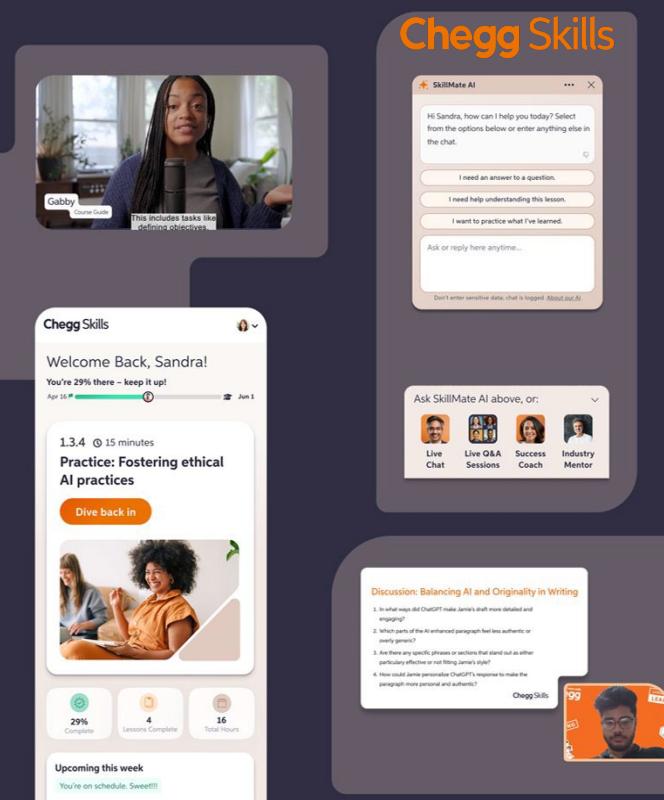
As the focus expands to employability, the skills business (Chegg Skills) remains an important part of future opportunities. By helping organizations build workforce capabilities and helping learners develop and apply relevant skills, Chegg is creating a platform that connects learning, skill development and career outcomes.
Chegg Skills has been built as a multi-channel platform covering enterprises, institutions, employers and market channels, laying a more diversified foundation for growth. 6 new partners have been signed this year, including OpenSesame and Dale Carnegie, and these collaborations will officially go online in the second half of the year.
In the coming years, Chegg will continue to expand to enterprises and schools, using AI and data to greatly expand and personalize the course catalog, while making courses more affordable.
04 The AI agent coach in language skill products will be integrated into the workflow
Language skills are an important part of employability, helping professionals and students acquire practical, job-related skills that drive real business outcomes.
The biggest difference of Chegg's language product Busuu is that it is directly linked to work scenarios and result-oriented. Its "AI agent coach" first understands the goals of each learner, personalizes the content according to the specific context of each interaction, provides guidance at critical moments, supports more scenarios such as customer calls, presentations and interviews, and provides instant learning support when needed.
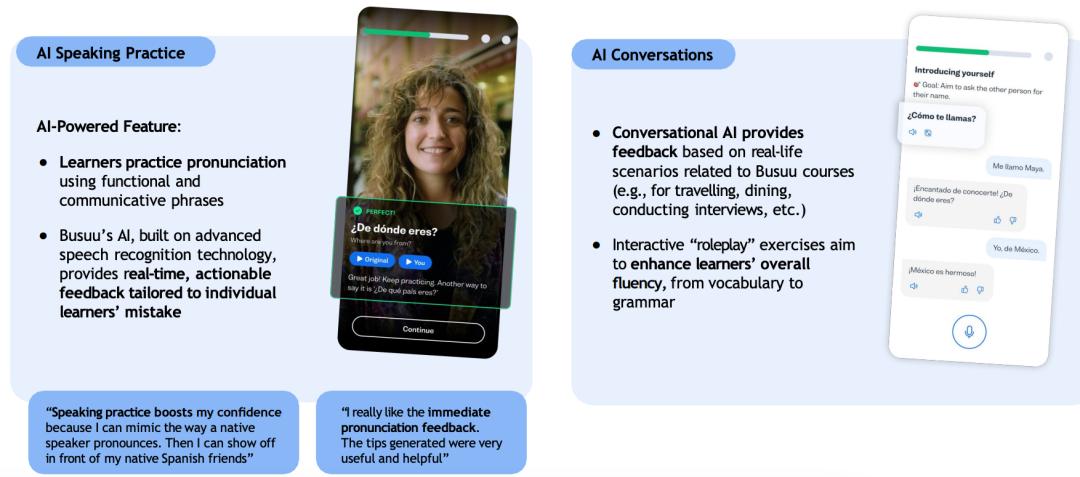
According to the introduction, Chegg is transforming its language product Busuu from a language learning application into a performance platform that helps people communicate confidently and effectively in any language at critical moments.
The new intelligent agent coach can understand each learner's goals and the context of each interaction, helping them prepare for important moments such as customer calls, presentations or interviews.
Early next year, Chegg plans to seamlessly integrate the AI agent coach into learners' actual work workflows to provide learning support at the time and place where it is most needed.
At the same time, Chegg is expanding its skill products to Europe, combining language learning with broader workforce capabilities.
05 AI-first operation model
Since last autumn, Chegg has opened a new chapter centered on AI-first, accelerating the realization of a greater vision by restructuring the company's architecture, establishing a sustainable cost structure and strengthening its balance sheet.
According to the introduction, Chegg's mission of "putting students first and helping them move from learning to career" has remained unshaken for nearly 20 years. From pioneering the textbook rental model, launching Chegg Study to provide 7×24 hour learning support, to adding skill-based courses, every transformation has opened a new chapter of growth.
Now, based on the accumulation in products, technology and data, Chegg is expanding its focus to the field of employability, helping students develop the skills, confidence and connections needed to graduate, land internship opportunities and enter the workplace.
Chegg believes that restructuring its workforce to be AI-first is the foundation of all these strategies. AI enables Chegg to achieve personalized learning, improve outcomes, and scale in a more efficient and cost-effective way, providing a leaner operation model that allows it to return to high-margin growth business.
Looking back on the established development path and the future direction, the management is full of confidence — AI has brought real headwinds to the company, and Chegg has responded by strengthening its balance sheet, rebuilding an AI-first cost structure and expanding its vision to larger opportunities.
Chegg believes that the company is becoming an employability enterprise that helps students develop skills, find internships, land jobs and continuously grow in their careers. This is a more durable market, and Chegg is uniquely positioned to capture it.
This article is from the WeChat official account "Duozhiwang" (ID: duozhiwang), written by Wang Shang, and published with authorization from 36Kr.