The Still-Fractured Alibaba in Latin America: E-Commerce Burns Cash in Fierce Competition, While Lending Tightens Access Thresholds
The Latin American version of "Alibaba" — Mercado Libre (hereinafter referred to as $Latin American Commercial Services (MELI.US)) released its Q2 earnings on the morning of August 6. Overall, the growth of its business and revenue remains strong, with the nominal revenue growth rate close to 50%, significantly exceeding market expectations.
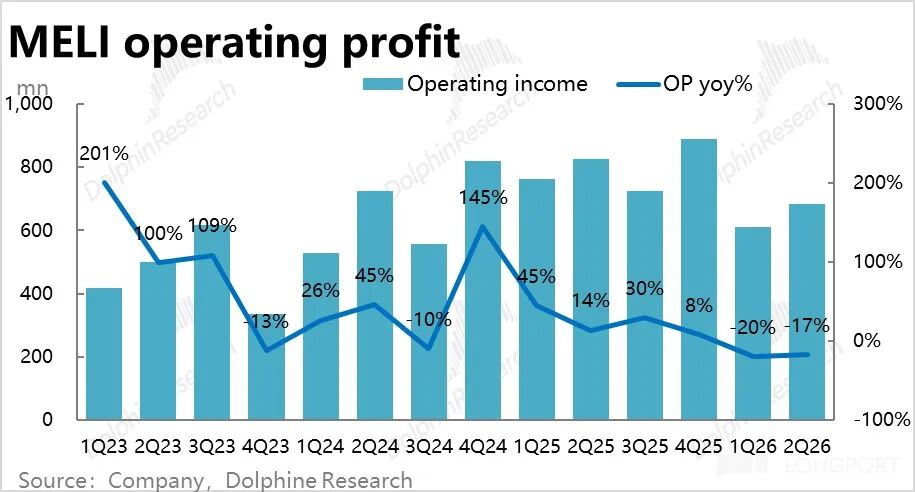
However, operating profit still fell year-on-year (-17%), which was roughly in line with expectations. The problem of growth without profit still exists, which is not favored by the market at present. The details are as follows:
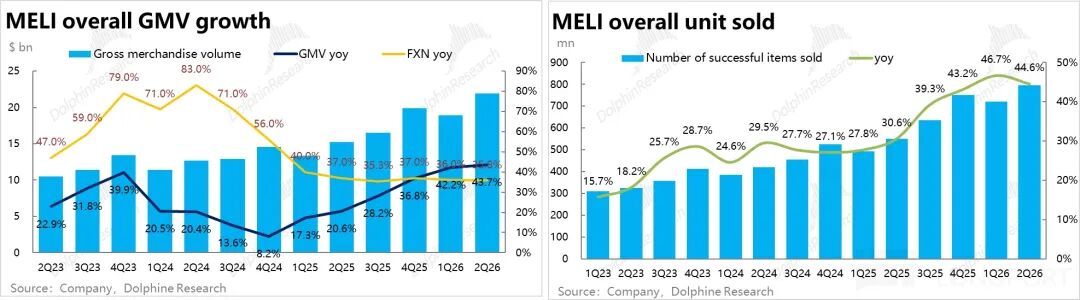
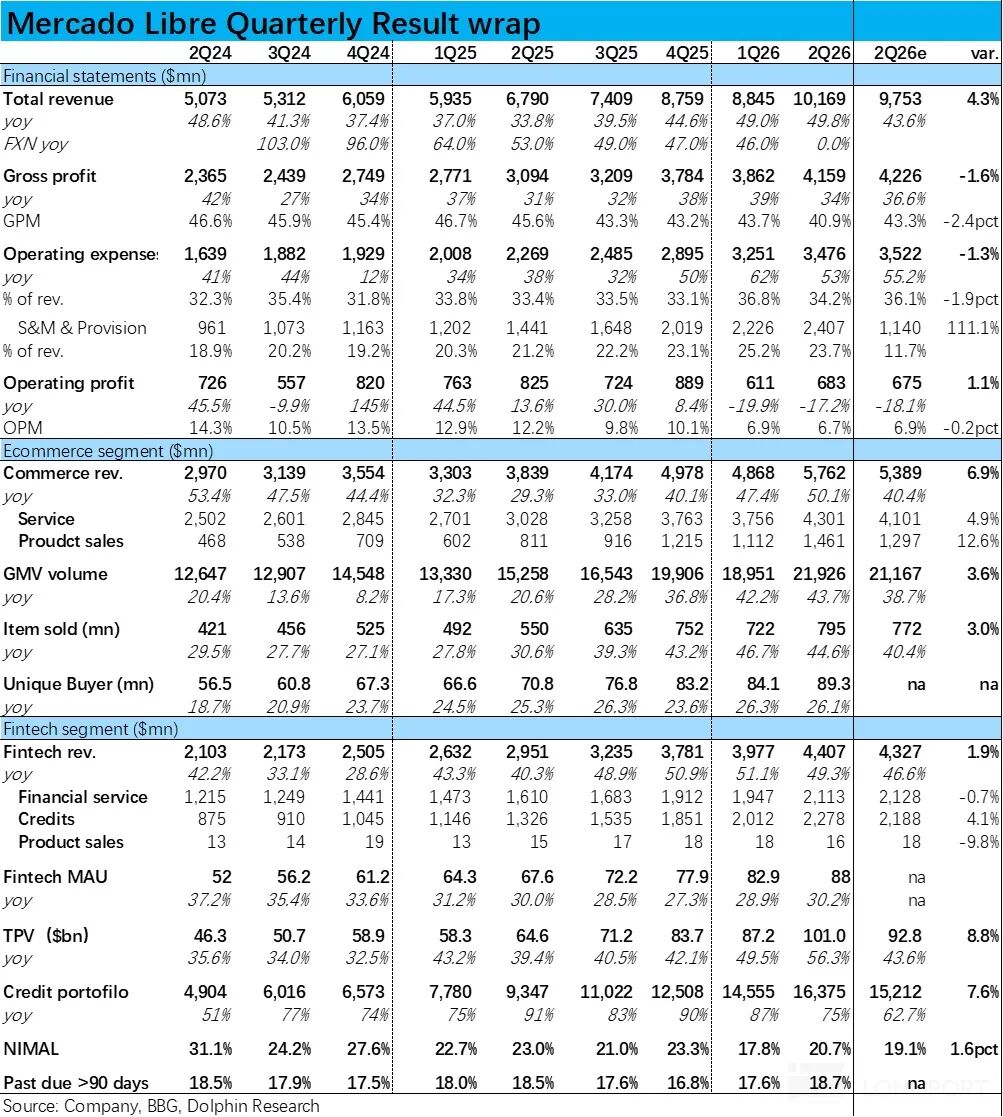
1. Fruitful logistics investment, GMV continues rapid growth: For the e-commerce business, GMV in this quarter increased by about 44% year-on-year, and by about 36% at fixed exchange rates, which is basically consistent with the growth rate of the previous quarter, and the growth momentum remains strong.
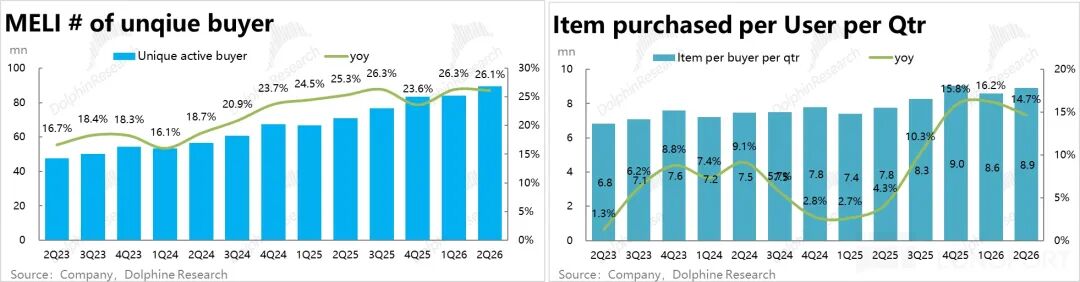
Breaking down price and volume factors, the order volume in this quarter increased by nearly 45% year-on-year, slightly down by about 1 percentage point from the previous quarter, but still significantly higher than the normal growth rate of around 30% in previous periods.
Further, the growth rate of unique buyers in this quarter remained stable, and the slowdown in order volume growth was mainly due to the slowdown in the growth rate of per capita order volume of the whole group. However, according to the company's disclosure, in the Brazilian market where free shipping was the key promotion focus, the number of purchases per capita in this quarter still increased by 19% year-on-year, and after the threshold for free shipping was lowered, the growth rate of daily active users continued to outpace that of monthly active users, which shows that improving delivery efficiency and lowering the free shipping threshold have delivered good results in stimulating demand and enhancing user stickiness.
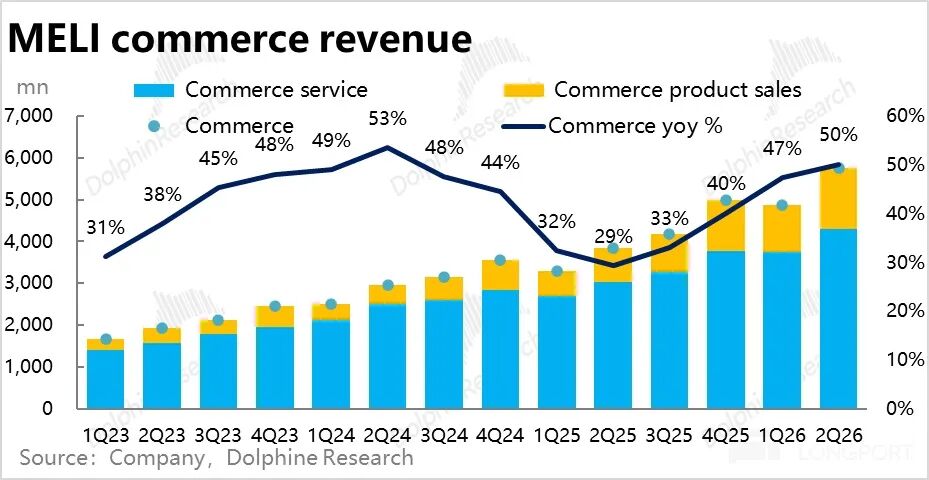
2. Active commission reduction, competition in Brazil's e-commerce market becomes increasingly fierce: In this quarter, the total e-commerce revenue increased by about 50% year-on-year, slightly accelerating from 47% in the previous quarter. Specifically, the growth rate of the 1P self-operated business reached as high as 80%, but it slowed down quarter-on-quarter. Meanwhile, the 3P platform revenue accelerated quarter-on-quarter to 42%.
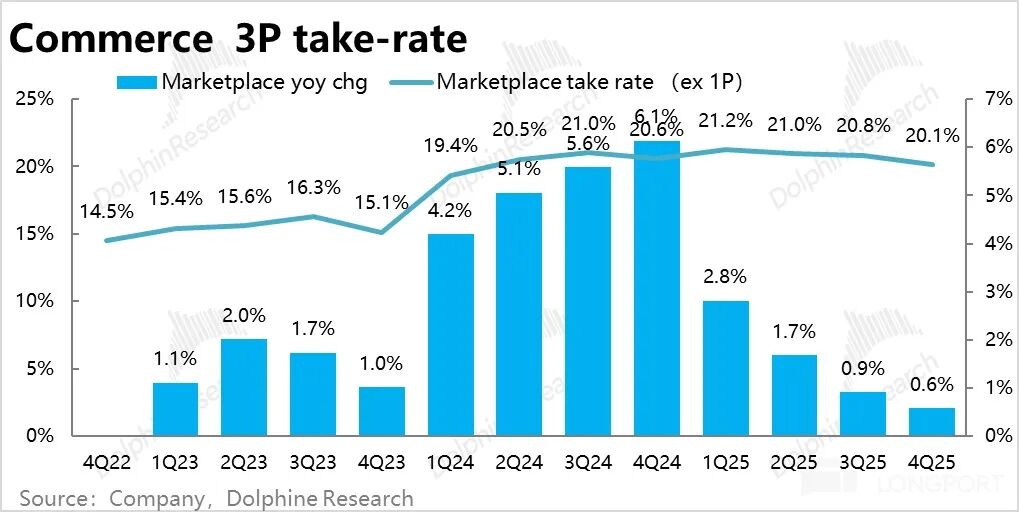
The calculated comprehensive monetization rate of the e-commerce platform is 20.1%, which has declined quarter-on-quarter for three consecutive quarters. According to the company's disclosure, in addition to the reduction of logistics fees, the company also lowered the commission-based monetization for some categories in the Brazilian market. It can be inferred that Meli has adopted a more aggressive competition strategy in the Brazilian market.
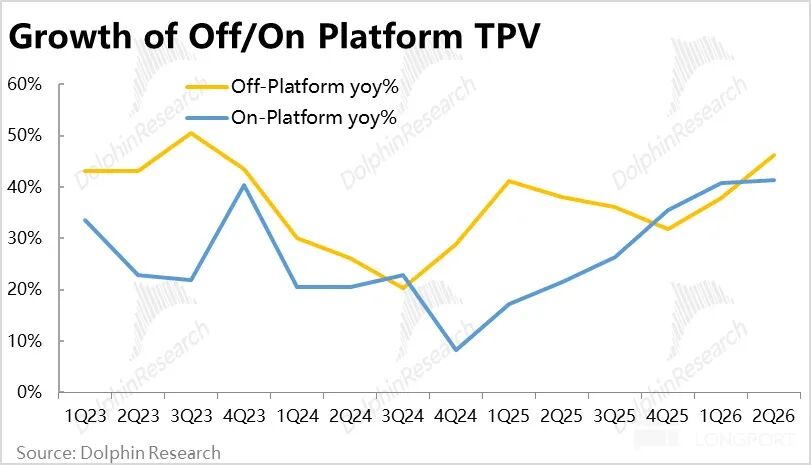
3. Stable high growth of payment business, initial results seen in penetrating off-system payments: For the first segment of the company's financial business, the total payment volume of the payment business in this quarter increased by 56% year-on-year, a significant acceleration compared with the previous quarter, which was mainly driven by favorable exchange rate movements. Excluding the exchange rate benefit, the growth rate only accelerated slightly by about 1.2 percentage points.
By segment, one major change in this quarter is that the growth rate of off-platform acquiring payment volume exceeded that of in-platform payment volume, which is a positive signal, indicating that Mercado Payment has made progress in penetrating scenarios beyond its own e-commerce business, and is also conducive to the growth of payment revenue (no extra fees are charged for in-platform payments).
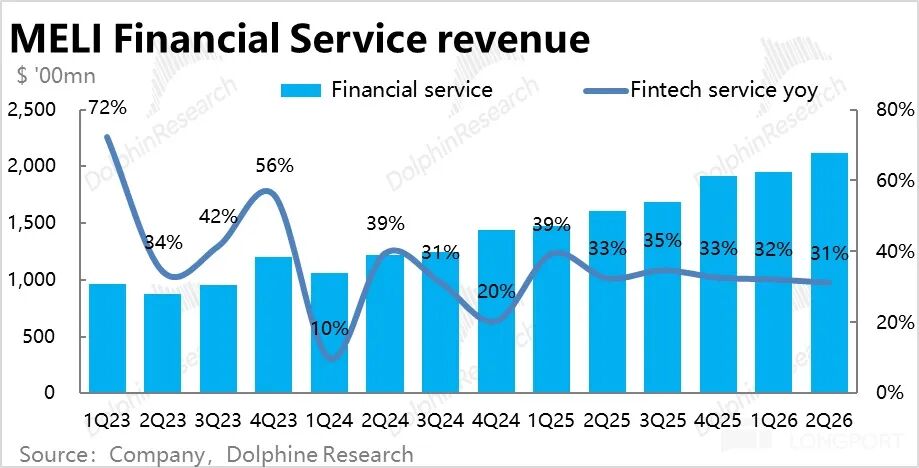
However, as we have mentioned many times, the payment fee rate is generally on a downward trend (partly due to changes in payment structure). The financial service revenue mainly composed of payment fee income increased by 31% year-on-year in this quarter, and its growth rate is still declining slightly quarter-on-quarter.
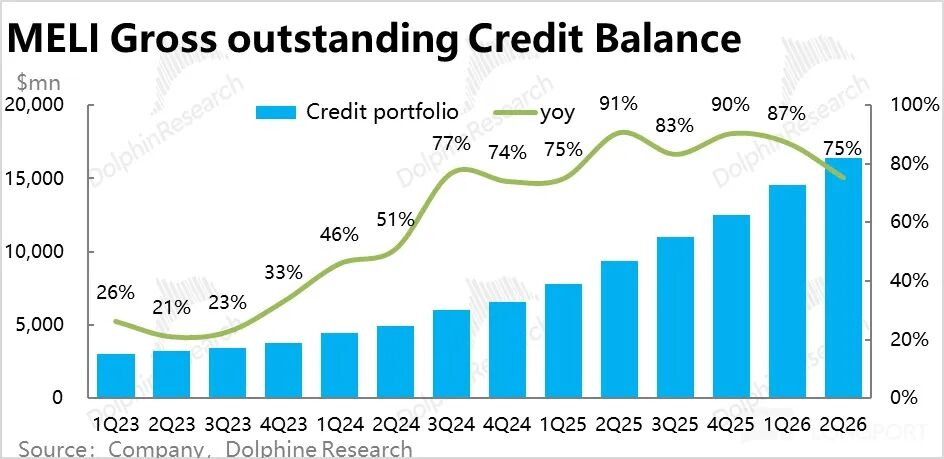
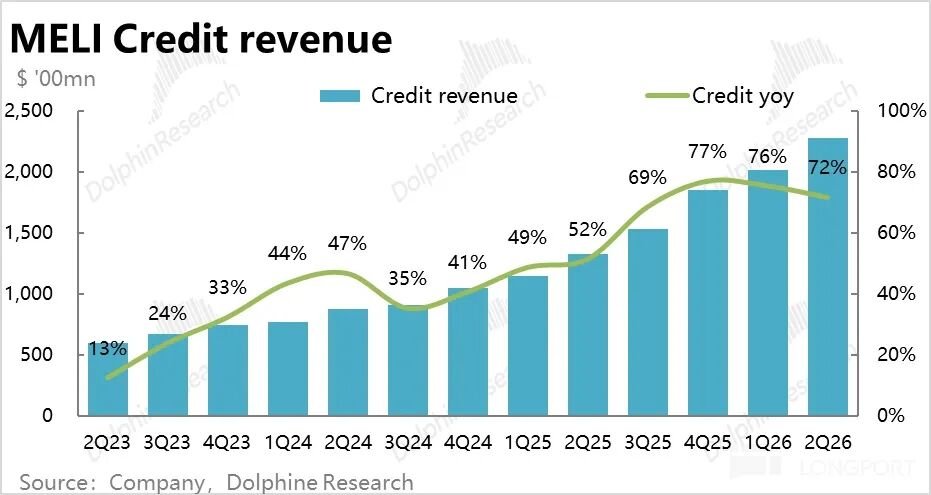
4. Active risk control tightening, credit growth slows down slightly: For the more important credit business in the financial segment, the total loan balance reached $16.4 billion in this quarter, with a year-on-year growth rate of 75%, a significant slowdown from 87% in the previous quarter.
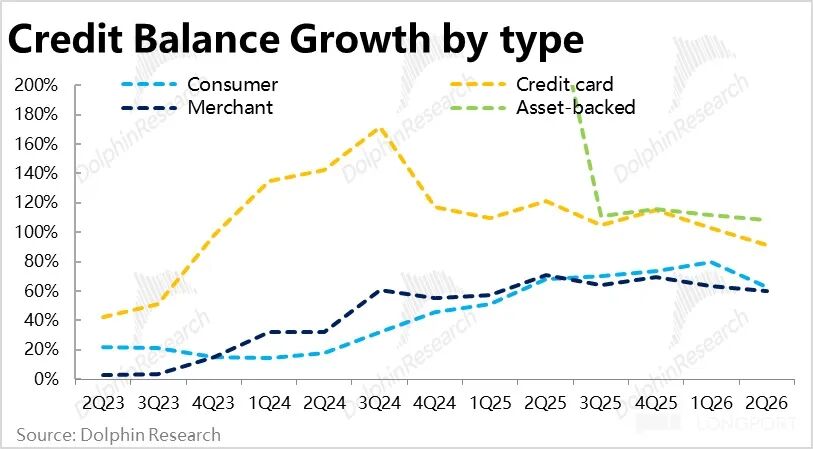
By segment, the previous main growth driver — the growth of consumer loan and credit card loan balance both slowed down by about 10 percentage points quarter-on-quarter. According to the company's explanation, it has actively tightened loan approval, and tends to only issue loans to high-credit users. Affected by this, the growth rate of credit revenue in this quarter also slowed down to 72%.
Combined with recent communications, the company may foresee a potential rise in credit risks in Latin America, so it has raised risk control standards to avoid excessive bad debt losses.
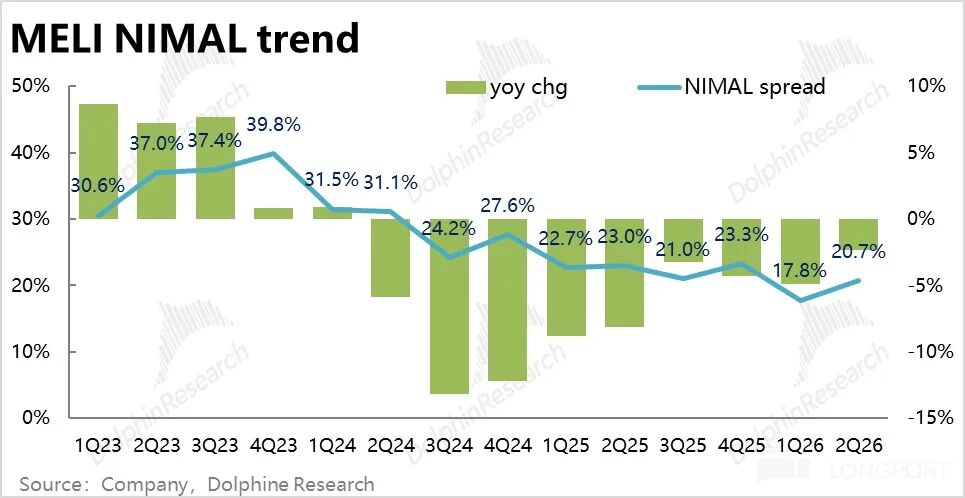
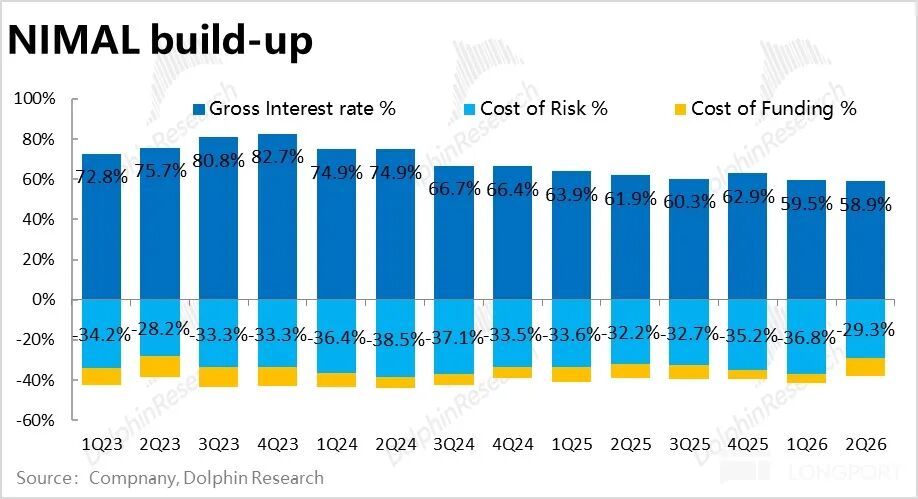
5. Net interest margin continues to improve: Along with the company's active raising of credit approval thresholds, the net interest margin of the credit business continued to rise to 20.7% in this quarter, a considerable improvement from 17.8% in the previous quarter. From a structural perspective, the major positive factor driving the rise in net interest margin is the significant drop in the bad debt provision rate, which fell from nearly 37% in the previous quarter to about 29%, consistent with the trend of stricter risk control.
However, the cost of funds in this quarter rose significantly, which exerted a considerable drag on the net interest margin, seemingly indicating that the capital environment in Latin America may indeed be tightening.
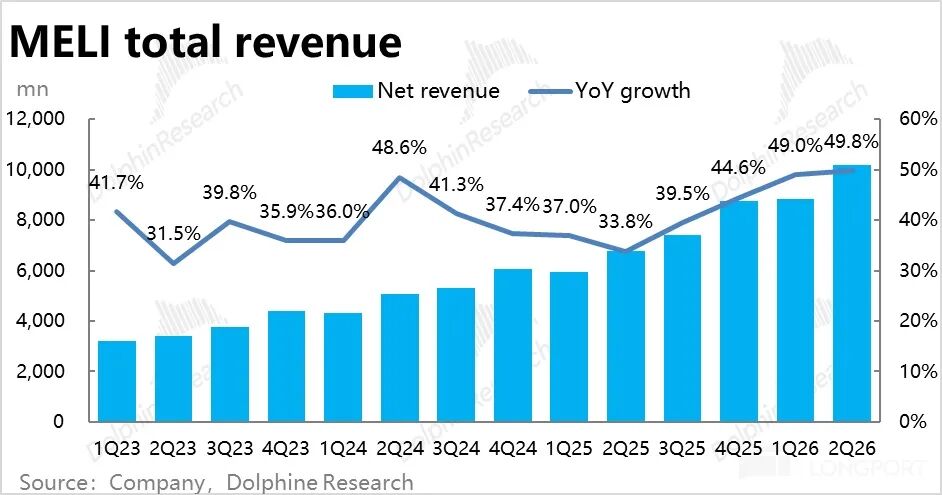
6. Strong business growth, profit remains under pressure: Overall, Meli's total revenue in this quarter increased by nearly 50% year-on-year. After excluding the exchange rate benefit, however, the actual growth rate is about 43%, a considerable slowdown from 46% in the previous quarter, which is mainly affected by the slowdown in credit balance and revenue growth. Nevertheless, market expectations were even lower, and the actual performance outperformed expectations by a large margin.
The main problem still lies in profit: the total operating profit in this quarter was 680 million US dollars, down by about 17% year-on-year, which is roughly in line with market expectations. However, revenue in this quarter exceeded expectations, so the actual operating profit margin was 6.7%, about 0.2 percentage points lower than market expectations.
Similar to the situation in the previous two quarters, the main reasons for the drop in profit instead of growth include the free shipping investment in the Brazilian market, commission reduction for some categories, and the impact of rising prices of energy and IT equipment recently. In addition, the factor that benefits the profit margin in this quarter is that under the tightened risk control of the credit business, the net interest margin rises, which improves the profit margin of the lending business.
7. Key Information of Financial Report at a Glance
Dolphin Research View:
1. Overall, the main line of Meli's earnings this time is roughly the same as that of the previous two quarters — it still increases investment and bears short-to-medium term profit pressure in order to pursue faster growth, broader long-term space, and actively cope with competition.
Judging from the actual performance, the effect of the investment has been verified. The GMV and order volume of the e-commerce business still maintain rapid growth, with almost no slowdown compared with the previous quarter.
For the payment business, the growth rate of total payment volume is accelerating, and the off-system growth rate has outpaced the in-system growth rate, indicating that Mercado Payment has made certain achievements in penetrating general payment scenarios beyond its own e-commerce business, which is a positive signal.
For the credit business, as the company has actively tightened loan approval and focused more on high-credit users, on the one hand, the growth rate of loan balance has indeed slowed down considerably, on the other hand, after the bad debt provision is reduced, the net interest margin, that is, the profit margin of the credit business, is improving.
However, according to the communication during the earnings call, the market seems to be worried that the credit market in emerging markets such as Brazil may deteriorate in the second half of the year (rising bad debt rate, tightening capital adequacy). Although the company stated that no such signs have been observed, the active tightening of risk control may be a precautionary measure in advance.
Since most of the company's current profits come from the financial business, if the credit market in Latin America does deteriorate in the future, it will obviously not be good news for the company that is currently "fighting a price war" in the e-commerce business.
3. From the perspective of investment logic, the capital market currently prefers earnings certainty rather than "pie-in-the-sky long-term stories". Meli, which is currently in the stage of exchanging investment for growth, is obviously not the preferred target for capital at present. In addition, the risk of a weakening credit market cannot be ignored.
Although the company's business growth is really outstanding, the Dolphin analyst personally recognizes the long-term prospect of Meli as the largest and most comprehensive internet leader in Latin America. But in the short-to-medium term, only after we see the narrowing of e-commerce investment, or at least the overall operating profit stops falling year-on-year, can there be greater possibility of a trend investment opportunity.