Wukong has been "disappeared" for four months. Why are major tech companies placing so much emphasis on AI Work?
On August 3, Qwen Office, the enterprise-level Agent product under Alibaba, officially launched public beta testing.
Alibaba defines Qwen Office as a one-stop AI office platform, emphasizing that users only need to describe their goals, and the Agent can break down tasks, call tools, and finally deliver files and results that can be used directly. It has initially connected to DingTalk IM, and the next step will be to connect to enterprise databases and real work workflows.
Qwen Office is fully integrated from three products: QoderWork, Wukong and MuleRun. The three products will no longer exist independently in the future, and relevant personnel will also be incorporated into the unified Qwen Office system. The former Wukong Business Unit has been upgraded to the Qwen Office Business Unit, becoming a first-level business unit under the Alibaba Token Hub (ATH) business group.
Among them, Wukong was still the protagonist of Alibaba's enterprise AI strategy only four and a half months ago.
On March 17, Alibaba released Wukong, defining it as an enterprise-level AI-native work platform. To this end, DingTalk rewrote its underlying code and carried out a comprehensive CLI transformation, converting capabilities such as approval, schedule, communication and documents into interfaces that Agents can call directly.
Chen Hang, then CEO of DingTalk, said at the launch event: "Today, we break DingTalk apart, rebuild it with AI, and forge 'Wukong'."
Just four and a half months later, Wukong's independent brand disappeared, yet the enterprise AI direction it represents has obtained a higher organizational level. Such a short product cycle reflects that the competition in AI office is rapidly moving past the stage of "building an Agent". What large manufacturers need to solve next is how to integrate models, desktop execution, enterprise data, permissions and commercialization capabilities into a single product.
This change is not unique to Alibaba.
01. AI Can Generate Revenue by "Completing Tasks"
The first stage of generative AI entering office scenarios was once defined by Microsoft.
In 2023, Microsoft 365 Copilot was integrated into Word, Excel, Outlook and Teams. AI can draft emails, summarize meetings, and generate PPTs, but humans are still responsible for driving the full workflow.
Microsoft called it Copilot, which accurately reflects the product relationship at that time: humans are responsible for driving, and AI sits aside to assist.
Microsoft has the most suitable conditions for this path. Enterprises have been working in Microsoft 365, and employee identities, organizational relationships, emails, files and meeting records are also stored in Microsoft Graph. Microsoft only needs to bring AI to enterprises along the original seat sales system.
This path was quickly verified commercially. By the end of June 2026, the number of paid seats for Microsoft 365 Copilot exceeded 30 million; Accenture purchased more than 740,000 seats, while Bayer, Johnson & Johnson, Mercedes-Benz and Roche each promised to deploy at least 90,000 seats.
Microsoft has proved that enterprises are willing to pay for AI in office software, but whether AI can independently complete a job rather than just act as a "co-pilot" has not been fully verified in Microsoft's scenarios.
The change took place in the code scenario. In May 2025, Claude Code was opened to the public. By February 2026, its ARR had exceeded 2.5 billion US dollars, and its weekly active users had doubled compared to the beginning of the year.
Coding tasks can be broken down, tools are already digitalized, and results can be verified through compilation, testing and operation. Therefore, Agent can read projects, modify multiple files, run tests, and continue to make corrections based on feedback.
For the first time, Claude Code proved with revenue that users are willing to pay for "completing tasks". The value of AI is no longer limited to generating a piece of content. It can access tools, environments and feedback, and keep working until results are delivered.
This verification soon began to spread beyond programming.
02. Tencent Developed the WorkBuddy Prototype
On January 12, 2026, Anthropic launched Claude Cowork.
Cowork brings the Agent capabilities of Claude Code to daily knowledge work. Users can specify a local folder, and let Claude read materials, organize files, analyze data and generate documents. Later, it added browser operation, scheduled tasks, continuous running threads and enterprise plugins.
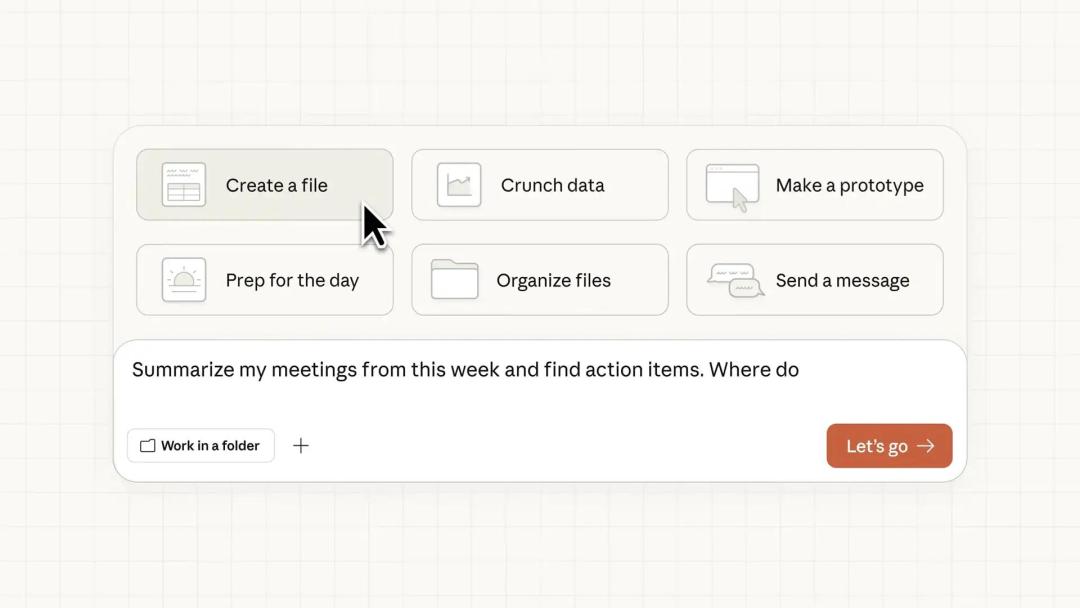
Cowork was not the first to propose enterprise Agent. Google Workspace Studio was released in December 2025, and OpenAI also launched AgentKit in October of the same year. The real impact it brought was to put the product logic that Claude Code had verified in front of all knowledge workers:
Programmers can hand over tasks to Claude Code, and many other knowledge workers can also hand over their work to an Agent.
On the other side of the Pacific, on January 17, five days after Cowork went online, several team members developed the WorkBuddy 0.01 version over a weekend. On March 9, WorkBuddy officially launched public beta testing.
Wang Shengjie, Product Manager of WorkBuddy, later recalled that the Tencent Cloud CodeBuddy team had already accumulated Agent architecture, open platform and SDK at that time, so they could quickly migrate programming capabilities to general office scenarios.
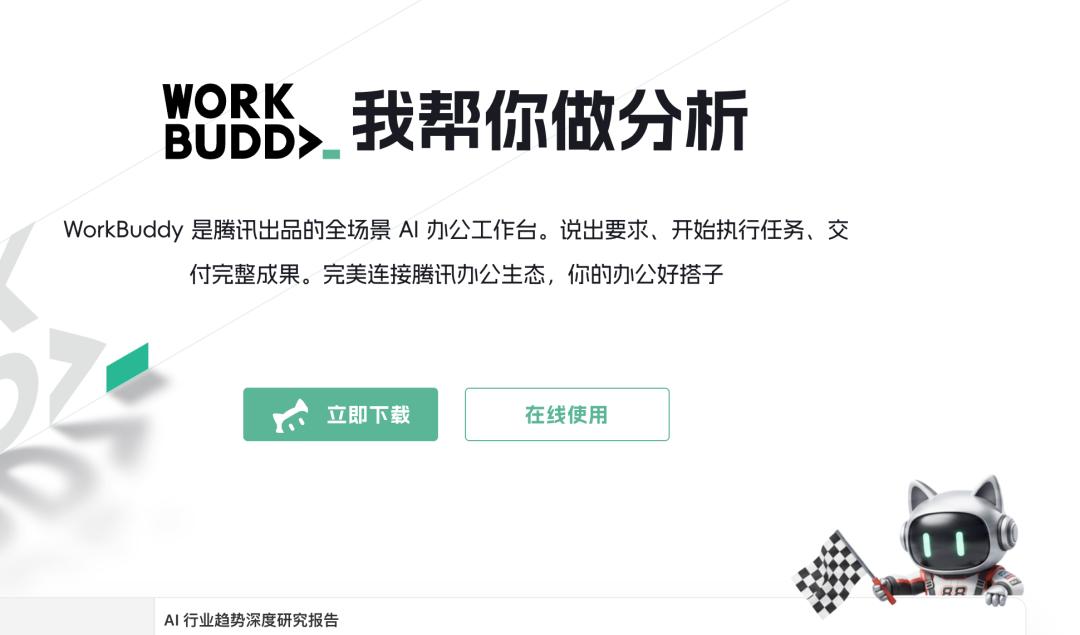
Wang Shengjie said that WorkBuddy uses Tencent's self-developed CodeBuddy Agent framework. Cowork provided inspiration for the product form, and the execution capabilities accumulated from AI Coding can be repackaged for users who cannot write code.
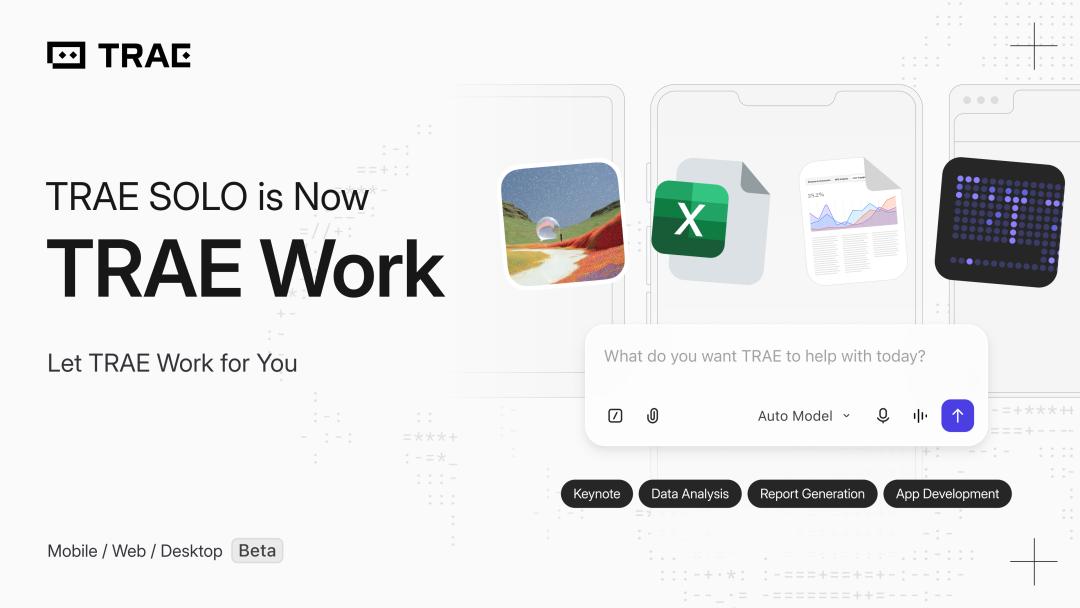
The path of ByteDance's TRAE is somewhat similar. TRAE originally served programmers. As users began to use it to make prototypes, analyze data, organize plans and generate research reports, the boundary between programming and general work gradually blurred. On June 9, TRAE SOLO was renamed TRAE Work, officially incorporating "work beyond coding" into its product positioning.
AI Coding has thus become one of the most important technical foundations for AI Work.
03. OpenClaw, Desktop Agent
Claude Cowork proved the possibility of expanding from code to general work, and the popularity of OpenClaw in early 2026 lowered the threshold for desktop Agents to enter the ordinary user market.
It made the industry see that Agents can run locally, call files and software, and also receive remote instructions through instant messaging tools. The model thus changed from a chat window to an executor that can continuously operate the computer.
Three different product solutions emerged within Alibaba.
QoderWork targets desktop execution, and can operate local files, browsers and software; MuleRun focuses on Agent operation, skills and task delivery; Wukong, released on March 17, relies on DingTalk to solve enterprise organization, permission and security issues.
These products are not completely repetitive. They each capture part of the capabilities required for AI Work: the code Agent provides the execution framework, the desktop Agent obtains file and software permissions, the enterprise collaboration platform provides organizational relationships, and the cloud platform is responsible for operation, governance and commercialization.
In March 2026, major domestic manufacturers intensively launched Agent products, which can be regarded as a round of product experiments jointly promoted by Cowork and OpenClaw. Everyone already believes that AI can work, but has not yet determined what kind of entrance users need.
Some expand outward from programming tools, some transform inward from enterprise IM, and some try to rebuild a workbench on the computer desktop.
The real problem soon emerged: no single path can complete the full closed loop required for enterprise work.
04. Personal Agents Are Starting to Face the Constraints of Enterprise Organizations
In the first half of 2026, AI office first gained traffic on the personal side.
A third-party statistic from Analysys shows that in June 2026, the total visits of 17 Chinese desktop AI-native office Agents exceeded 60 million. Tencent stated in its first quarter 2026 performance announcement that in terms of daily active accounts, WorkBuddy has become the most widely used efficiency AI Agent service in China.
At the same time, overseas competition has also begun to shift from personal tools to enterprise deployment.
Microsoft upgraded Copilot from a synchronous response assistant to an "asynchronous colleague" that can perform long-term tasks; Anthropic added enterprise plugins, permission control and management functions to Cowork; OpenAI launched Frontier in February to provide identity, permissions and operation boundaries for enterprise Agents; Google called Gemini's entrance in Chat the "unified command line for work".
Major manufacturers are gradually facing the same bottleneck: models can perform tasks, but enterprises cannot hand over all files, permissions and business systems to them without any restrictions.
For Agents to enter organizations, five issues need to be solved at the same time: understanding tasks, operating tools, obtaining enterprise context, complying with permissions, and making results auditable.
After June, domestic products began to make corresponding adjustments and upgrades.
On June 5, Tencent launched the WorkBuddy Enterprise Edition and Agent Suite, connecting Tencent Docs, Tencent Cloud Drive and Tencent Le to the workbench, and adding digital employees, team collaboration and enterprise management backstage.
Liu Yi, Vice President of Tencent Cloud, put forward the judgment that personal efficiency improvement will not automatically translate into organizational efficiency. Putting multiple "super individuals" together cannot naturally form a "super team". Enterprises also need to share knowledge, manage Agents and govern AI assets.
Four days later, TRAE SOLO was renamed TRAE Work, expanding the product boundary from programmers to all knowledge workers.
On June 11, Chen Yusen, head of MuleRun, took over as CEO of DingTalk.
From this point on, the competition of AI Work has changed in stages. The focus in March was to develop Agents as soon as possible, and the focus in June began to shift to how to combine desktop execution, enterprise data, permissions and commercialization capabilities.
This directly led to the adjustments in July.
Alibaba's adjustments are the most thorough.
QoderWork solves desktop operations, MuleRun solves Agent operation and task delivery, and Wukong solves enterprise organization and permissions. The three paths were advanced separately before, and at the stage of enterprise deployment, no single product can independently cover the full chain.
After Chen Yusen took over as CEO of DingTalk, he took charge of the three products. The former Wukong Business Unit was upgraded to the Qwen Office Business Unit, the three teams joined the same system, and the new product was redeveloped based on the technical accumulation of the three parties.
This adjustment cannot be simply attributed to the failure of the horse racing mechanism. A more accurate understanding is that Alibaba has previously verified three necessary capabilities of AI Work separately, and now it is beginning to assemble them into a product for enterprise organizations.
On July 30, the Feishu product team and the Doubao product team were integrated to form a new Doubao product team; the Feishu GTM team and the Volcano Engine team were integrated to form a unified To B organization responsible for MaaS and SaaS marketing, sales and customer service.
Feishu products and services will continue to be retained. This change mainly occurs in the reporting relationship: the Feishu product team reports to the Doubao product system, and the Feishu GTM team joins the commercial system led by Volcano Engine. The publicly announced organizational adjustments do not involve TRAE, and it is not yet possible to judge what kind of product relationship it will eventually form with Doubao and Feishu.
Therefore, the organizational adjustments concentrated in July are the natural result of half a year of product experiments. Major manufacturers are beginning to shift from "anyone can build an Agent" to "who will carry the full entrance to enterprise work".
05. The Task Entrance Redistributes Software Value
In the past, employees needed to switch between email, browser, Excel, Word and instant messaging software to complete a job.
Now there is only the "task entrance" of the Agent.
Whoever controls this task entrance will have the opportunity to decide which model the enterprise uses, which software to call, and where data and budgets eventually flow. AI Work can connect the three layers of business: model, cloud and software.
Enterprise Agents continuously process emails, meetings, customer service, sales and financial processes, which will also bring more stable Token and cloud resource consumption, and gradually increase customer migration costs.
Along this industrial line, it is no longer unexpected that Wukong was integrated just over three months after its launch. In 2025, code Agents verified AI's ability to deliver tasks; in January 2026, Claude Cowork extended this to knowledge work; in March, major Chinese manufacturers intensively launched desktop Agents; in June, the competition shifted to enterprise deployment; in July, the model, execution, collaboration and commercialization capabilities scattered in different teams began to be recombined.
Major manufacturers have realized that in the future, enterprises will not need many general work entrances at the same time. Once workers form the habit of "handing tasks to a certain Agent first", subsequent models, cloud, software and enterprise services may all be redistributed by it.
The key to the competition of "AI Work" is definitely not just about who can create a digital colleague that is better at writing reports.
This article is from the WeChat official account "Tencent Tech", author: Xiao Jing, published with authorization from 36Kr.