2508 TV stations are "saving themselves" on Douyin
There are always people asking, why can't traditional media beat short videos, and have Douyin and Kuaishou already killed television?
In fact, the most traditional media have fully embraced short videos, and are living far more comfortably than those new media that are still struggling to produce written content.
As the veteran generation among traditional mainstream media, TV stations have moved to Douyin to create "electronic comfort meals" for audiences, capturing viewers who still retain classical feelings in the digital era, and launching a new round of survival battle.
Data released by the Department of Media Institution Management of the National Radio and Television Administration shows that as of June 30, 2026, there are a total of 386 prefecture-level and above radio and television broadcasting institutions, 25 educational TV stations and 2097 county-level radio and television broadcasting institutions across the country, amounting to 2508 TV stations in total.
The number of TV station accounts on Douyin is even larger than that. Most prefecture-level and above broadcasting institutions, in addition to the main account of the radio and television station, will also open other sub-accounts for their various channels, popular columns, and news accounts to build a full account matrix. Taking Shenzhen Media Group as an example, in addition to Shenzhen Satellite TV, it has more than a dozen official accounts such as Cultural Tourism Shenzhen, Shenzhen News, Greater Bay Area Finance, and Shenzhen Satellite TV Noon Global Report.
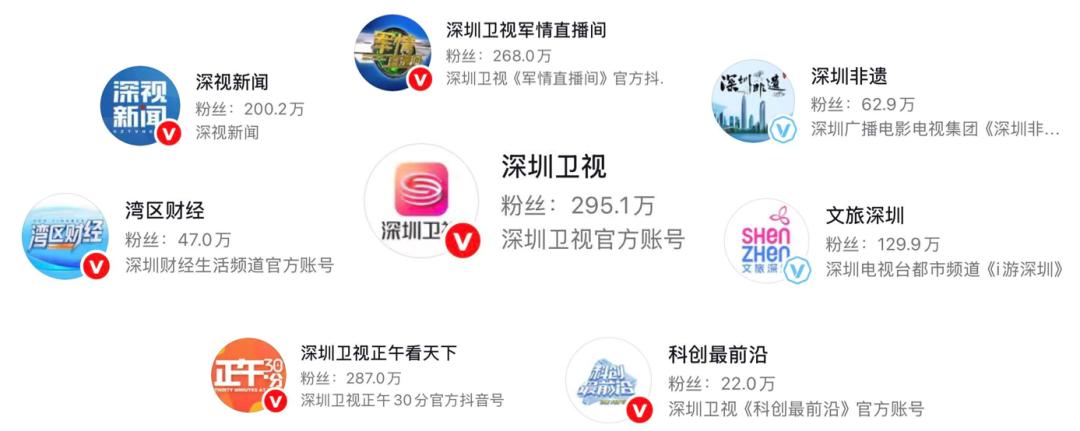
The larger the TV station, the more Douyin accounts it has. Even if a small number of local TV stations have not registered official accounts, the number of TV station accounts on Douyin is expected to have exceeded 3000.
The collective "late bloomer" trend of TV stations is entirely out of necessity. Around 2020, major TV stations have successively fallen into a shutdown wave. In 2025 alone, 75 channels were suspended, including channels under multiple provincial TV stations and first- and second-tier city TV stations. If they do not save themselves, TV stations can only wait to be shut down together with television.
The industry is in difficult times, and TV stations have to cling to the traffic thigh of short video platforms. The contention of a hundred schools of thought in the new era is essentially competing for Zhang Yiming's traffic pool.
However, the audience's taste and patience have already been spoiled by short videos and short dramas. If they want to break through from the new platform, TV stations have much more to lay down and learn than others.
TV Stations Show Their Special Skills in the New Track
When TV stations start to operate on Douyin, they gradually find that there is no crisis outside at all.
With decades of accumulated professional program production teams, exclusively collected and edited news materials, plus film and television copyrights purchased every year, TV stations use their profound resources to produce 1-minute short videos, which directly puts them several levels above ordinary self-media.
After browsing a few accounts, you will find that TV stations also have their own three standard short video types: people's livelihood news, wonderful clips of variety shows and TV dramas, and local information. They can attract attention with folk gossip and TV drama & variety show clips, while not forgetting to promote local culture and release convenient public science content. The content is as familiar and friendly as that on TV, solving the problem of not being able to watch TV on Douyin.
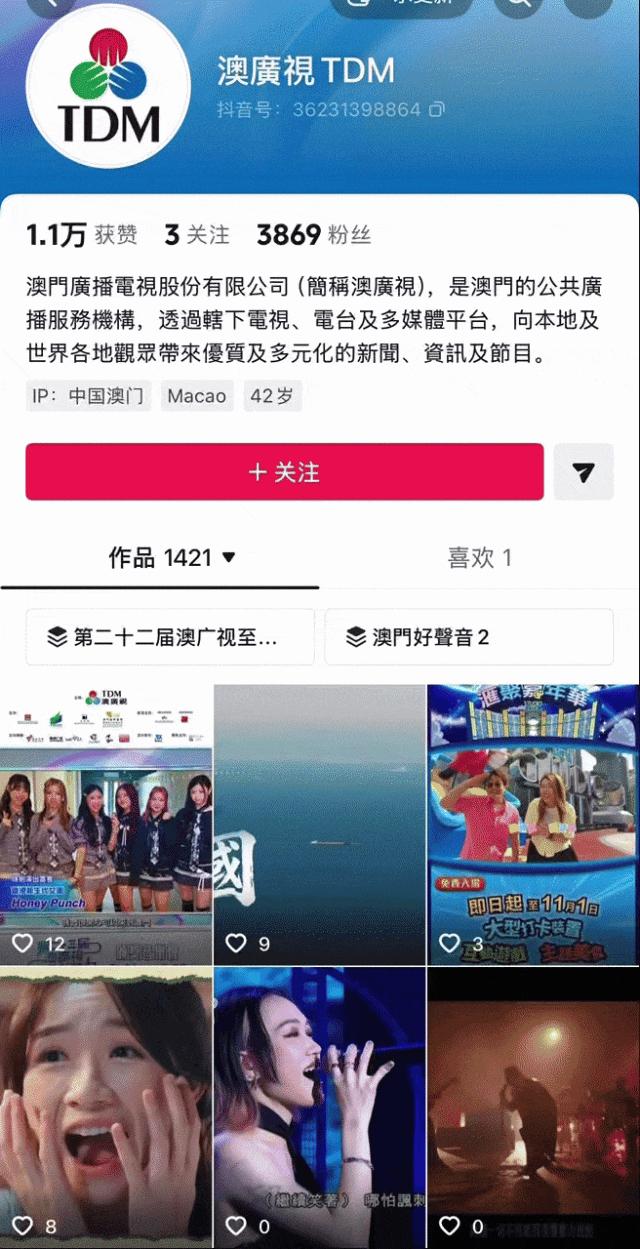
Of course, there are also some TV stations whose style has deviated all the way. For example, Macau Broadcasting Television @TDM Macau is currently selecting local original songs, indulging in playing MV and singer performances every day, and living as a car CD player in the short video era.
Source: Douyin
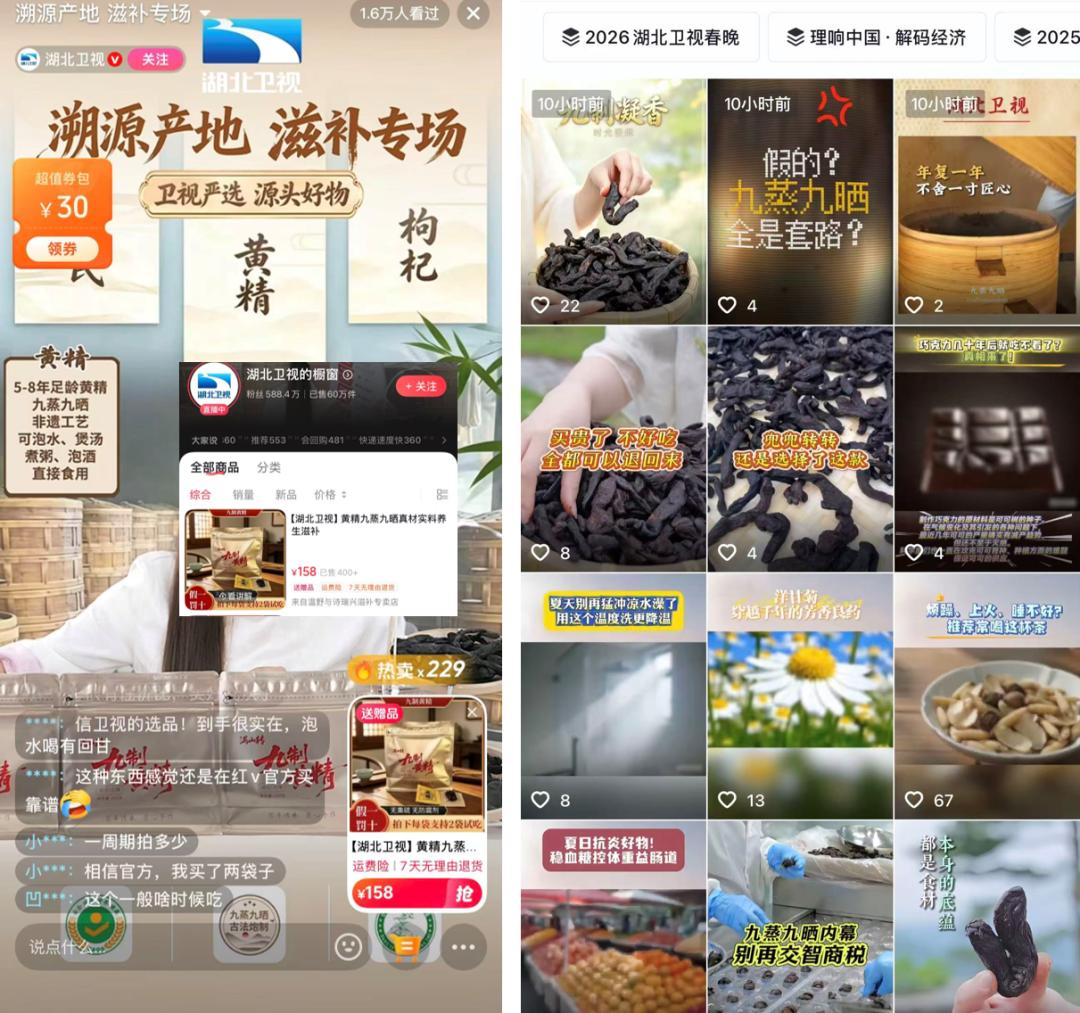
More TV stations have been selling goods so devotedly that they forget themselves. @Hubei Satellite TV seems to be possessed by the nine-steamed and nine-dried sealwort, popularizing the production technology and health-preserving effects of sealwort every day, and the best-selling products in its live streaming room and shop window are also sealwort, astragalus and wolfberry.
Occasionally, it suddenly remembers that it is still a provincial satellite TV, and then inserts a small life common sense between advertisements.
Source: Douyin
If you open the live streaming room of a TV station, you will find that live streaming with goods has become the daily routine of many TV stations, and some of them have reached a very professional level.
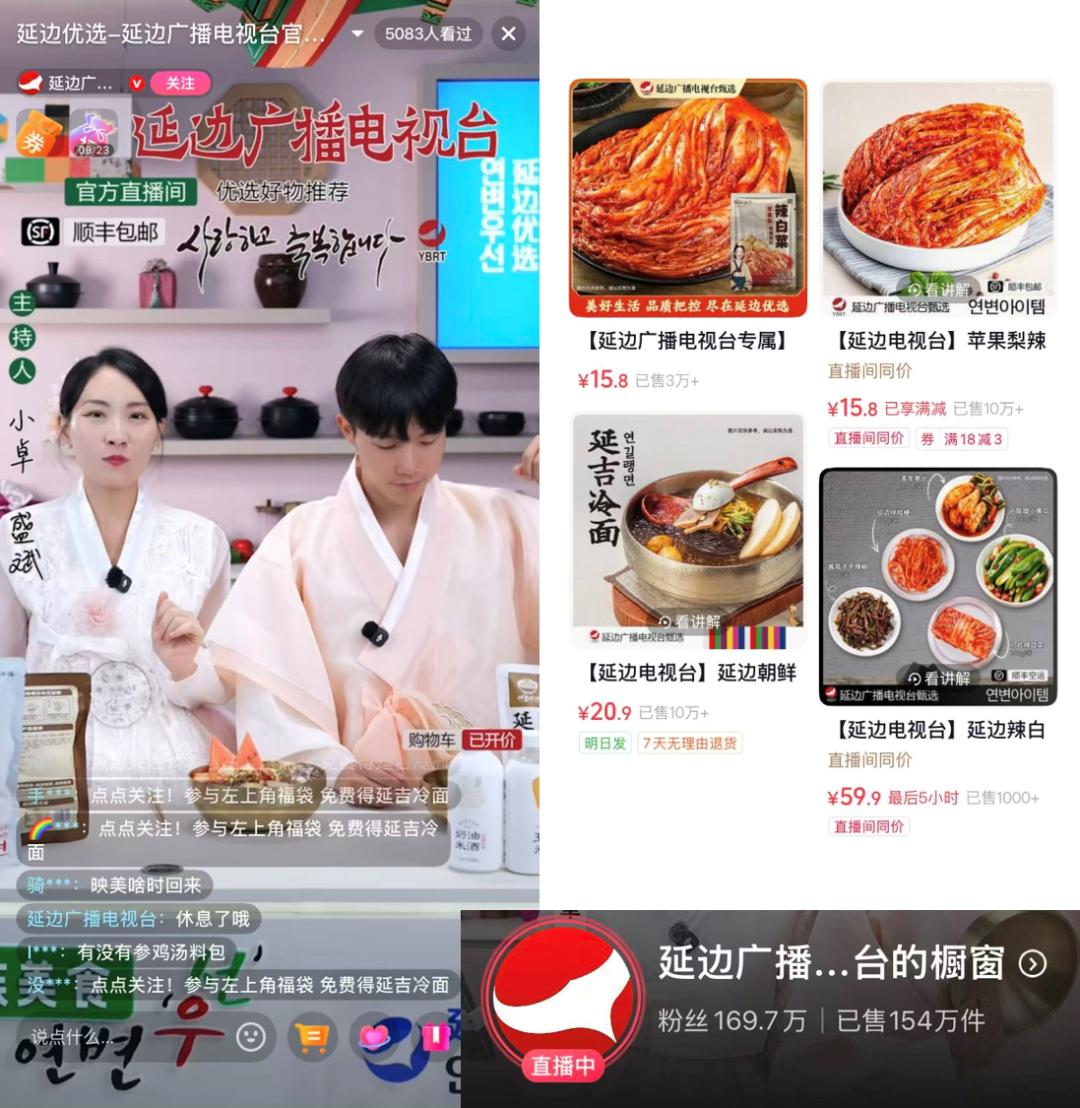
Yanbian Broadcasting and Television Station is definitely the gold medal seller among TV stations. Every time I open Douyin, it is live streaming, and it can broadcast 40 live sessions within 10 days. The background of the live streaming room is clean and tidy, displaying traditional Korean ethnic kitchenware. The host wears Korean ethnic costumes and introduces Korean cold noodles enthusiastically. The shop window is full of Korean ethnic characteristic food, and no one who clicks in out of curiosity can bear to leave empty-handed.
The reward for their efforts is very significant. Yanbian Broadcasting and Television Station only has 1.697 million fans, but the sales of products in its shop window have reached 1.54 million pieces, whose combat effectiveness is no less than a medium-sized supermarket. It is suggested to rename it "Yanbian Selection" or "Walk with Yan".
Source: Douyin
TV stations sell all kinds of goods in their live streaming rooms, from flower cakes of @Jinan Broadcasting and Television Station, baby pumpkins of the Literary Channel of Beijing TV Station, to natural crystals of @Guizhou Satellite TV. Some are local specialties, some are agricultural aid goods, and some are purely wholesale small commodities, selling whatever is popular.
Audience who enter the live streaming room will feel confused: is this still a formal TV station? Some sharp-eyed viewers also pointed out that the shop windows and live broadcasts of some TV stations have been outsourced to e-commerce companies, which is why there are so many goods being promoted.
TV stations show their special skills on short video platforms, covering everything from content to e-commerce. The ultimate goal is to adapt to the shift of audiences, expand the spread of mainstream voices, and earn money to maintain the operation of the TV stations.
According to the national radio and television industry statistical communiqués over the years, the revenue of TV stations from IPTV platform sharing, OTT integrated services and TV program sales are all declining, and live streaming with goods has become an important path for TV stations to realize monetization.
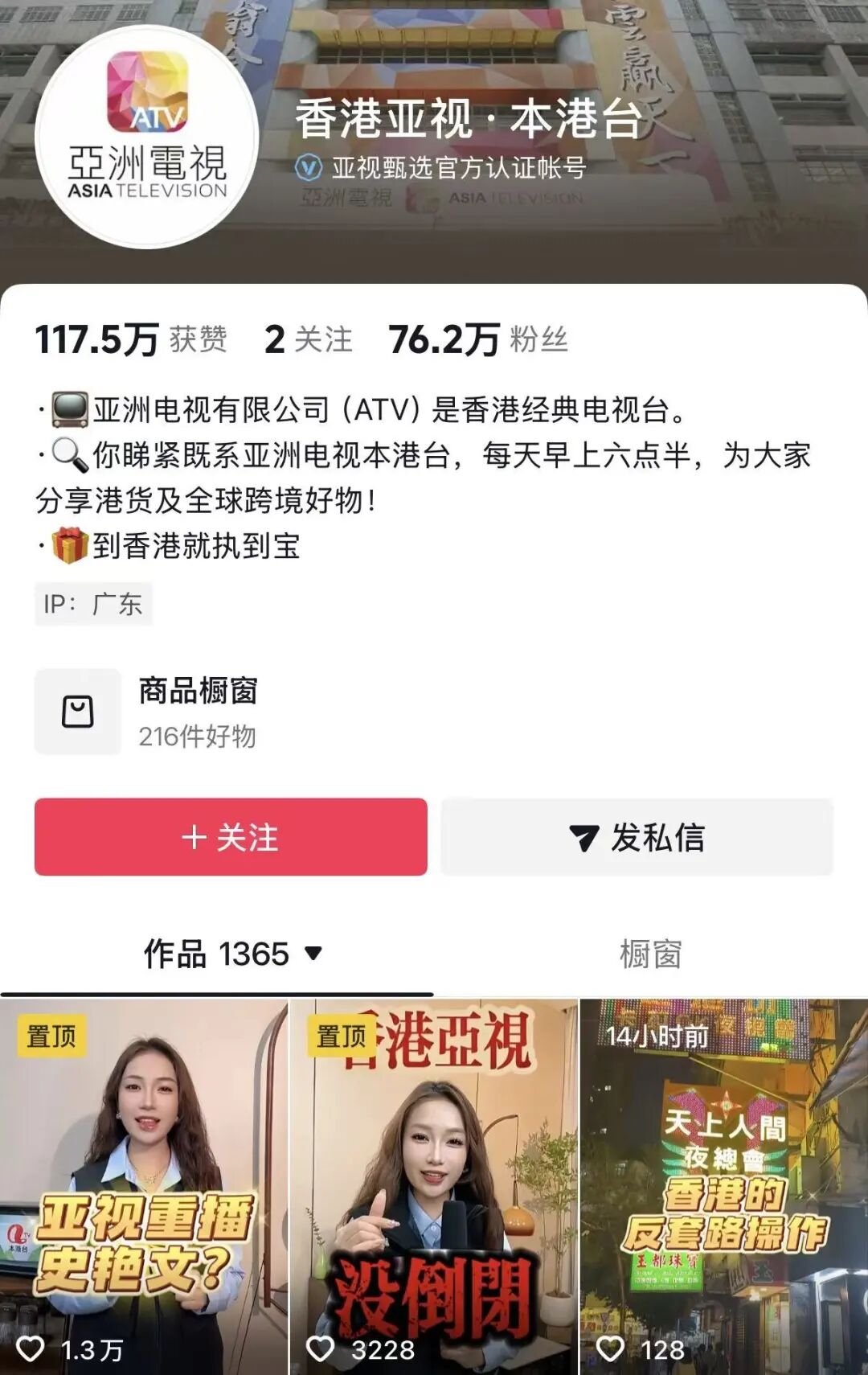
Some TV stations have even come back from the dead by selling goods. Asia Television (ATV) in Hong Kong, the old TV giant that produced classic TV series such as *My Date with a Vampire* series and *The Legend of Fong Sai Yuk*, made stars like Leslie Cheung and Rosamund Kwan famous, and once stood against TVB on equal footing, was once so poor that it couldn't pay wages, and officially stopped broadcasting as early as April 1, 2016.

The ATV on TV is dead, but the ATV on Douyin is still thriving. It has transformed into doing Hong Kong goods live streaming with goods, and apart from the name and logo, it is completely different from the ATV in the audience's memory.
Source: Douyin
TV stations are trying to keep up with the pace of traffic monetization, just like the old uncle in your hometown who works hard to shoot short videos and wants to be an internet celebrity. Some of their efforts are inevitably tinged with sadness. On Douyin, the audience does not have only dozens of channels to switch between, and will not give extra respect to TV stations just because of their reputation. TV stations also have to learn from the wild methods of amateur influencers to shout for sales hard.
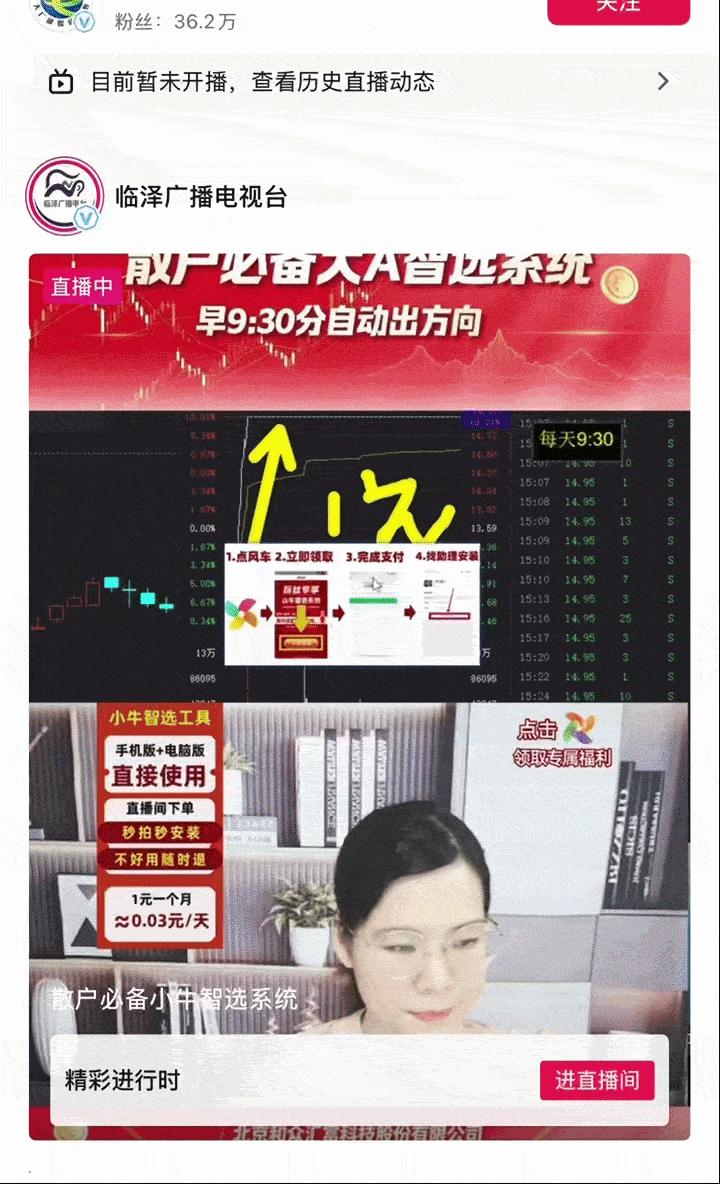
When I open the live channel and scroll down casually, @Linze Broadcasting and Television Station is teaching people how to trade stocks, the People's Livelihood Channel of @Henan Broadcasting and Television Station is tracking and reporting on twins looking for their relatives, and @Xinjiang Broadcasting and Television Station says nothing, just live streaming the most beautiful scenery of Xinjiang, which gives me and my wallet a moment of peace.
Source: Douyin
It is hard to say whether this is the decline or evolution of traditional media. Behind the struggle for survival by all possible means lies the deepest anxiety of TV practitioners.
This is no longer a simple dispute between old and new media. Television and short video platforms are two completely different battlefields.
The content distribution of traditional TV stations is top-down: audiences can only watch whatever the TV station broadcasts, and the number of people watching provincial satellite TV is larger than that of people watching county-level TV stations. But it is different now. Douyin's content mechanism and traffic are all decentralized. All traffic is in one pool. Even for TV stations that users have never heard of, as long as their content is appealing, the algorithm will still push it to a huge number of audiences.
Embrace AI, Full-scale Transformation
Choosing to embrace AI and use cutting-edge technology to re-equip their content and teams has become a new way for many TV stations to survive.
Some viewers have already found that the Douyin account of @Anhui Satellite TV is still playing *Blossoming Like Dreams* produced by real actors, but it has broadcast the AI drama *The Tale of Peach Blossom Pool* on TV, and the TV station has openly marked "AI Production" in the lower left corner.

Source: Xiaohongshu
Anhui Satellite TV has always been a pioneer who dares to try new things on TV dramas. Since 2009, it has uniquely introduced and intensively broadcast many classic Thai TV dramas including *Battle of Angels*, *Cupid's Trap* and *Diamond Controversy*, which once set off a boom of Thai dramas in China. Now it has taken the lead in applying AI on TV stations. Although there are controversies, it is more promising than being forgotten.
From virtual studios to AI short dramas, AI technology is increasingly widely involved in the content production of TV stations. The stronger the TV station's will to survive, the higher the AI penetration rate will be. While using AI to reduce costs and increase efficiency, they also have to worry about being deprived of the last human touch by AI. The hosts in the middle have to compete for attention with internet celebrities, and also compete for jobs with digital avatars in their own stations.
AI hosts have been widely used in major TV stations, such as Shengsheng and Shuangshuang of @Hunan ETV, and Xiaoting of @Jining Broadcasting and Television Station's More Jining. They can not only broadcast 24 hours a day without interruption, but also switch seamlessly between multiple languages, greatly reducing manpower and production costs. There is a trace of weirdness in this high efficiency, but now even the weirdness of TV stations may be ignored by no one.

Source: Douyin
At this moment, TV stations are eager to renovate all their assets with AI. @Hunan ETV took out the entertainment talk show *Super Talk Show* which stopped broadcasting in 2017, used AI to restore the young versions of hosts Wang Han and Ma Ke, repaired the famous scenes and skits of that year, and created the AI variety show *The Never-aging Talk Show Master* to awaken the audience's youthful memories.

Source: Douyin
There are no predecessors to imitate for these attempts, nor are there clear success criteria and ultimate goals. If TV stations want to survive, they can only wade across the river by feeling the stones in the traffic pool. These big bosses who have entered midlife crisis have been forced to become trendsetters who dare to make mistakes.
Launch the Ultimate Form — MCN
No matter embracing short video channels or using AI to produce more content suitable for the short video era, the goal of TV stations is the same: they must be good at making content, and also good at making money.
But after all, they have been in the media