Fang Taozi has risen to widespread fame, Joey Wong "makes a comeback", has AI technology completely changed the landscape of the acting industry?
On one hand, AI actors have already had representative IPs; on the other hand, the cooperation modes between AI and entertainers are becoming increasingly diversified. Audiences, who were initially skeptical, have gradually grown fond of this new model and begun to accept the pattern where entertainers participate in content creation through AI. This means that whether AI technology operates independently or cooperates with entertainers, it can develop more business formats in the cultural and entertainment industry.
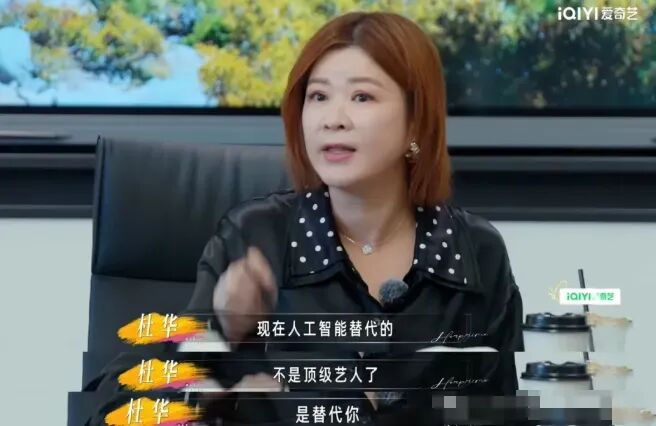
"Now artificial intelligence is no longer replacing top-tier entertainers, it is replacing you." "The entertainers who will be eliminated are those who have not formed their own IPs. Because there is no difference between using you, using an amateur, and generating a face with AI." In the recently hit show Sisters in Charge 2, Du Hua's views on the topic of AI's impact on actors have sparked heated discussions on social platforms.
Outside the show, AI is gaining an increasingly prominent presence in the film and television industry. For example, the AI short drama The Laid-off Girl became a smash hit with 200 million views, and the short drama This Second of Frenzy replaced its AI opening sequence with real human footage after triggering controversy. Amidst mixed praise and disputes, AI technology is quietly reshaping the landscape of the acting industry.
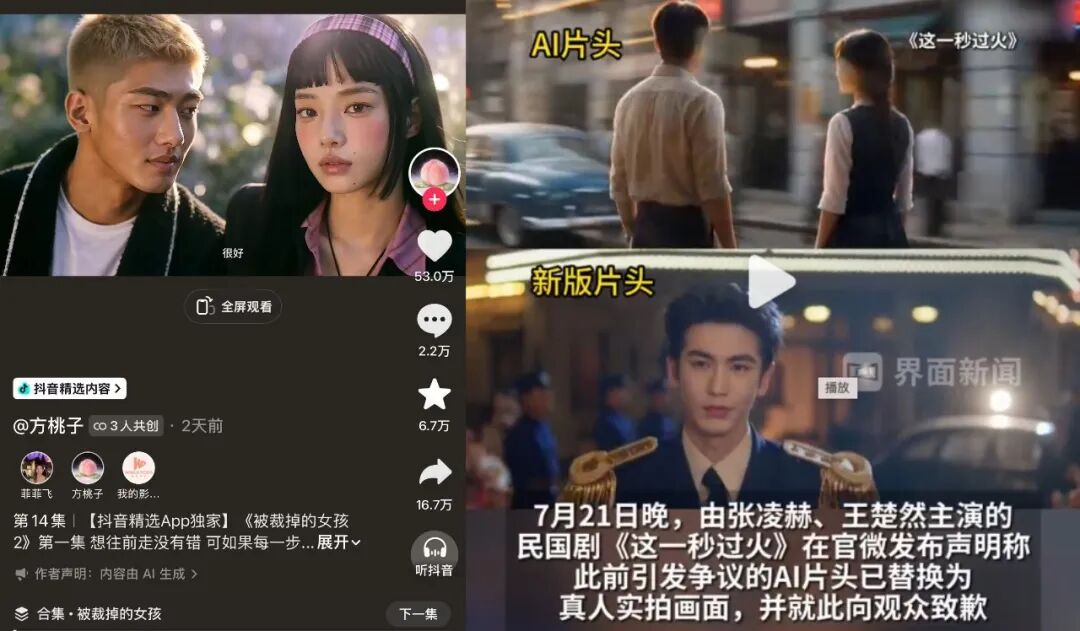
AI Actors Are Becoming Independent IPs
As the AI short drama The Laid-off Girl became a viral hit, the two AI actors Fang Taozi and Zhou Yiheng successfully caught the audience's attention. Beyond the drama series, the operation model of these two AI actors is completely aligned with that of real entertainers, and both have opened personal social media accounts. Now Fang Taozi has 401,000 fans, and Zhou Yiheng has 131,000 fans, which means that AI actors can grow from mere supporting tools in dramas to independent virtual entertainer IPs.
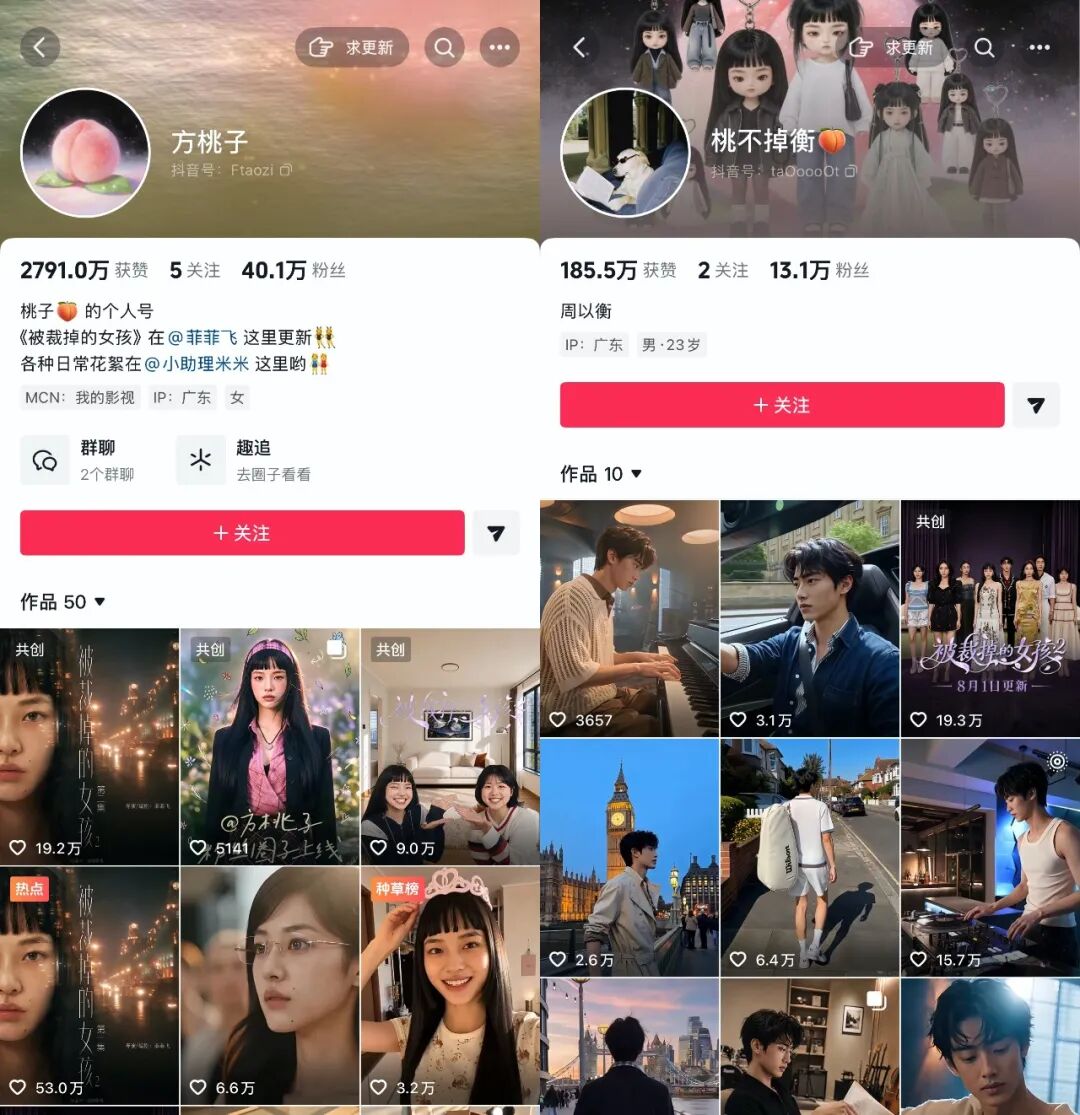
A close look at the content posted by the two on social platforms shows that there is not only drama promotion related to their personal works, but also fan-friendly content such as VLOGs and PLOGs, including snippets of daily life, work routines, gesture dance videos, and reading insights. The common feature of these contents is that they have a strong sense of interaction with netizens watching the videos, but the overall content is relatively conventional without many impressive highlights. If a large number of such AI actors emerge in the follow-up, the videos posted by Fang Taozi may soon be drowned in homogeneous content.
Rarity drives value. At a time when viral AI actors are still rare, many fans are willing to pay for Fang Taozi's content. Some fans call her "the first AI idol" and say "my goodness, an AI idol, it feels like we will chase a brand new type of star in the future". Some netizens also sigh that "on Douyin, you can even scroll through the daily life of an AI person"...
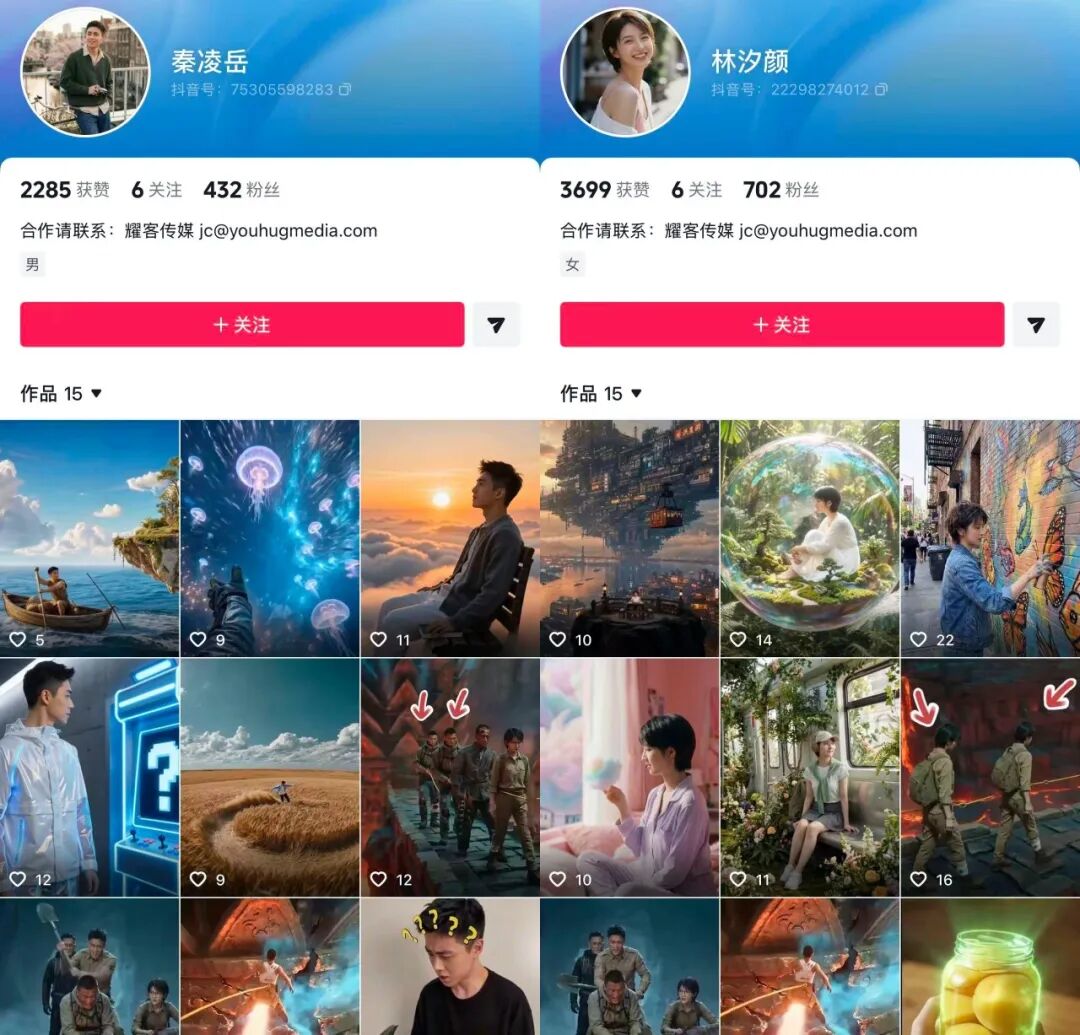
AI actors like Fang Taozi and Zhou Yiheng are not isolated cases. As early as March this year, Youhug Media announced the launch of the first batch of original AI entertainers with no real-life prototypes, Qin Lingyue and Lin Xiyan, who focus on short dramas and suspense new media content. At present, the two have co-starred in the AIGC drama Qinling Bronze Mystery Records, and opened personal social media accounts. Most of the content they post is drama promotion, their activity frequency is not high, and they only have more than 700 fans.
For AI actors, most real-life actors were originally not optimistic about them, or believed that AI could not completely replace real performances. As Hu Jun said: "AI can replicate all performance techniques, but it is difficult to replace a sincere heart. The precious part of acting is the collision of eyes and souls between people, which is hard to be replaced." Some others expressed strong resistance. Actor He Saifei once said in an interview: "No matter how much money I am offered, I will never authorize AI to use my image, and I will take the initiative to resist this model. AI cannot replicate the emotions that arise from the bottom of a person's heart."
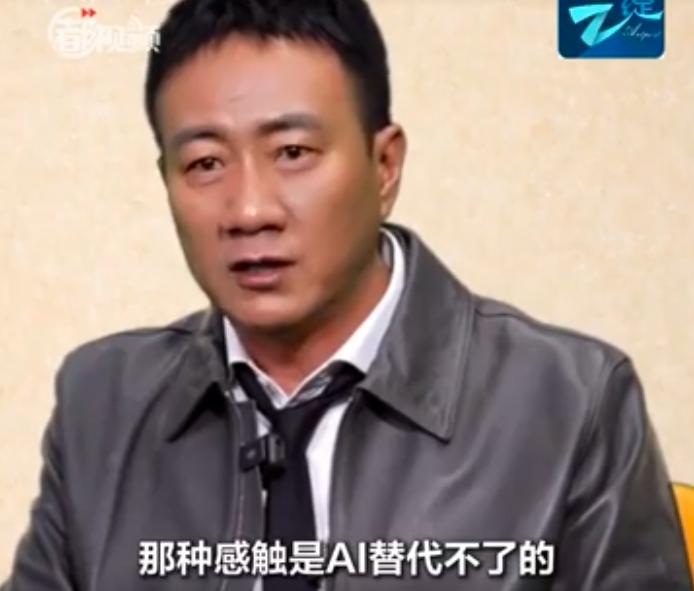
Even with all the doubts, the AI actors represented by Fang Taozi have successfully gone viral. Whether it is starring in short dramas or operating personal social media accounts, their operation model is basically aligned with that of real entertainers. It is predictable that AI entertainers will cover application scenarios ranging from variety shows to film and television works in the future. With natural advantages such as no schedule pressure and no risk of public image collapse, they will gradually form independent IPs with their own audiences and commercial value, and become a new force that cannot be ignored in the cultural and entertainment industry.
More Possibilities Emerge for the Integration of AI and Real Humans
In fact, as early as when the concept of the metaverse rose, the idea of creating digital human avatars identical to entertainers had quietly sprouted in the media industry.
Now with the arrival of the AI boom, the track of real-life digital humans has gained more possibilities.
First, AI drives the development of real-life girl groups. In March this year, Yuehua Entertainment launched HeyDream, Asia's first AI-driven real-life girl group. Different from conventional girl groups, HeyDream relies on AI to mass-produce promotional materials such as short videos, posters, and comic dramas online, while members participate in offline stages and fan activities in person, forming an operation closed loop of "AI drives traffic online, real members maintain emotional connection offline".
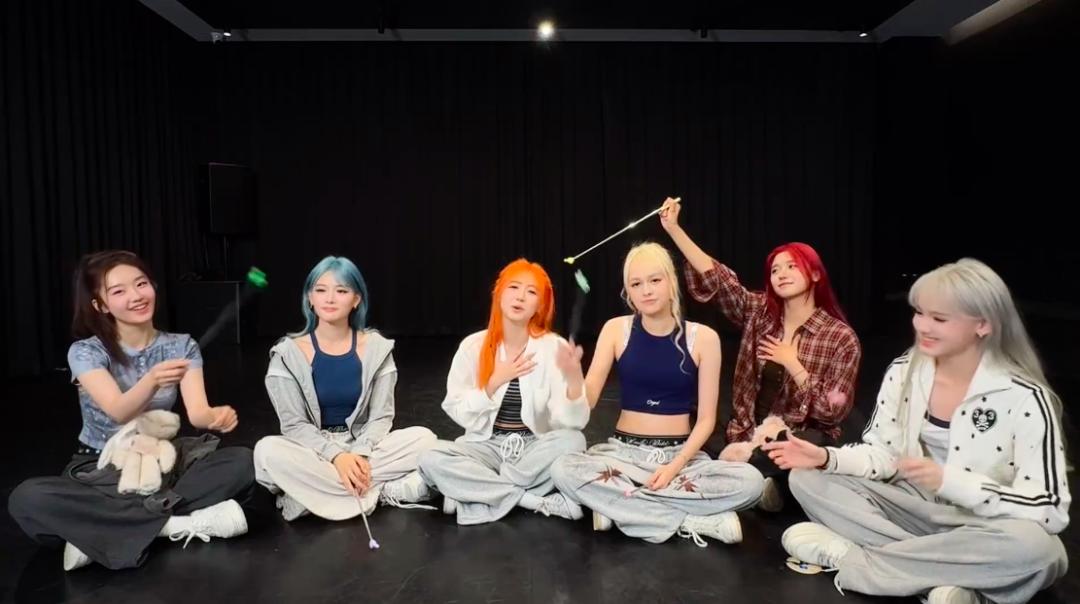
HeyDream has now launched its eponymous debut single and AI MV, and also launched the exclusive AI comic drama My Identity Can't Be Hidden Anymore, the Top Girl Group Are Demon Hunters! with all members as the main characters. 12 hours after its launch, the related short video topics recorded over 100 million views, topping all major comic drama charts, thus building the worldview of the idol IP. This strategy is somewhat similar to the earlier worldview built by aespa that combines real members with AI avatars, but it is the first attempt to empower idols with AI in China's entertainment industry, which has certain exemplary significance at present.
Second, media companies sign contracts to lock in entertainers' digital images for the long term. Yuxiao Media focuses on the authorization of real-life digital avatars for internet celebrities, signing contracts to enable amateurs and internet celebrities to achieve continuous content monetization without showing their faces. In March this year, Yuxiao Media announced the signing of a number of AI actors. One category is the AI images of two real internet celebrities Han Anran and Xu Zhibin, which can inherit the fan traffic owned by the internet celebrities and be used for the shooting of short dramas and AI comic dramas. The other category is real-life modeling of new actors, namely Chen Huizhi, Zhao Chenghao, Wu Lingran and Zhang Xiaonian, whose digital images are also generated based on real portrait authorization. This is equivalent to building an AI actor reserve library, providing sufficient resources for subsequent AI content creation. This announcement triggered certain discussions in the industry, but no viral representative work has emerged so far.
Third, entertainers authorize their portraits to AI for targeted creation of new works. At the iQIYI World Conference held earlier, Gong Yu, CEO of iQIYI, mentioned that real-life dramas will become increasingly rare. Live-action shooting will still exist, but it may become an intangible cultural heritage after many years. He also said that more than 100 actors under the company have signed contracts to join the AI entertainer library, and this statement triggered a lot of controversy and resistance at that time.
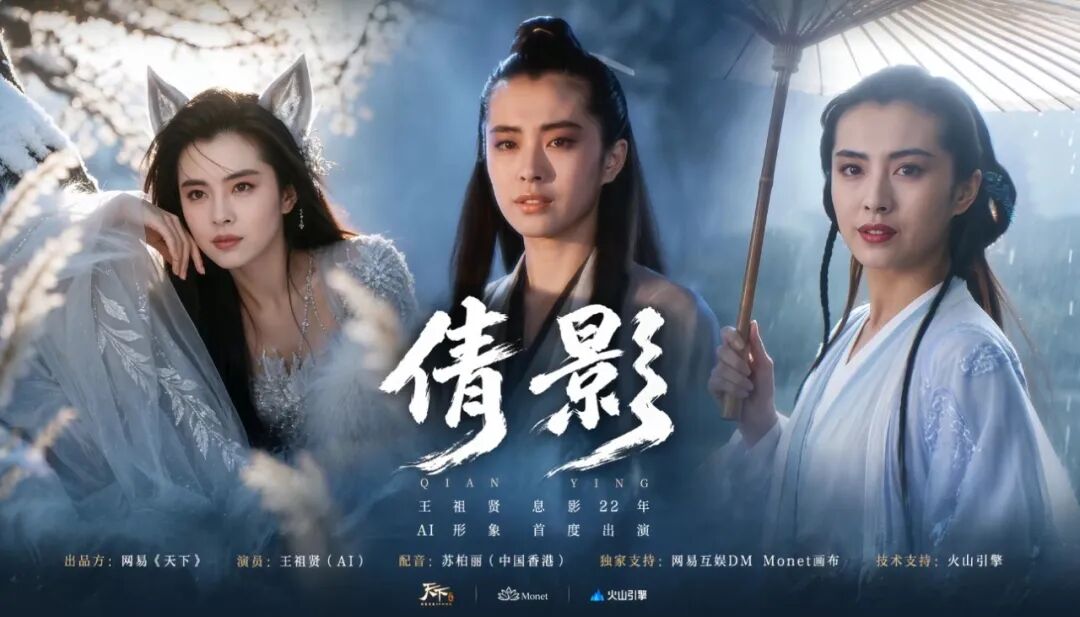
At present, there are many cases of cooperation between AI and well-known entertainers. Recently, Joey Wong, who has been out of the public eye for 22 years, officially opened the commercial authorization of her portrait in her peak years from 20 to 30 years old for NetEase's PC game Tianxia. AI technology was used to generate the advertising short film Shadow of Beauty and implant it into the game, making her the spokesperson for the game's 18th anniversary. This is a representative case of entertainers authorizing their faces for AI commercial use.
Similarly, on June 28th, Lawrence Ng officially announced that he would authorize his portrait of his 20s youth period. The production team used early video materials for AI modeling to generate the digital avatar of young Lawrence Ng, who played the leading role in an independent AI film. This is also regarded as a typical case of realizing the monetization of actors' digital assets, but the authorization has strict restrictions, not unconditional "selling one's face".
Taking Joey Wong's AI authorization for NetEase's game and Lawrence Ng's authorization of his young image for AI films as benchmarks, the model of entertainers authorizing their portraits to AI seems to have been proven feasible, and there are also cases of this model in the Chinese mainland. For the AI short drama adapted from Rao Xueman's Left Ear, the leading actors Chen Tianxiang and Zhang Jinyi only provided their portraits without participating in actual shooting; You Benchang, the entertainer famous for playing the role of "Jigong", authorized his young image for the micro short drama Jigong: The Fake Dragon Subduing Monk, and AI was used to restore the young version of Jigong. Even internet celebrities have joined this track, for example, internet celebrity Xu Shan authorized her portrait to the AI short drama Everyone in the Cultivation World Is an Old Monster, I Survived Till the End, which fully opens up the "Internet Celebrity IP + AI Industrialized Short Drama" business chain.
On one hand, AI actors have already had representative IPs; on the other hand, the cooperation modes between AI and entertainers are becoming increasingly diversified. Audiences, who were initially skeptical, have gradually grown fond of this new model and begun to accept the pattern where entertainers participate in content creation through AI. This means that whether AI technology operates independently or cooperates with entertainers, it can develop more business formats in the cultural and entertainment industry.
This article is from the WeChat official account "Du Yu" (ID: yiqiduyu), written by Xia Gudong, and published with authorization from 36Kr.