Takeout can be delivered to the sky, but delivery riders will not be laid off.
Speaking of low-cost airlines, you may have flown on JetBlue, Spring Airlines, 9 Air and so on, but if a DoorDash Air comes out, would you dare to take a ride?
No matter whether you dare or not, DoorDash Air will never carry passengers — in fact, DoorDash Air is this US food delivery giant's newly established "in-house drone delivery division":
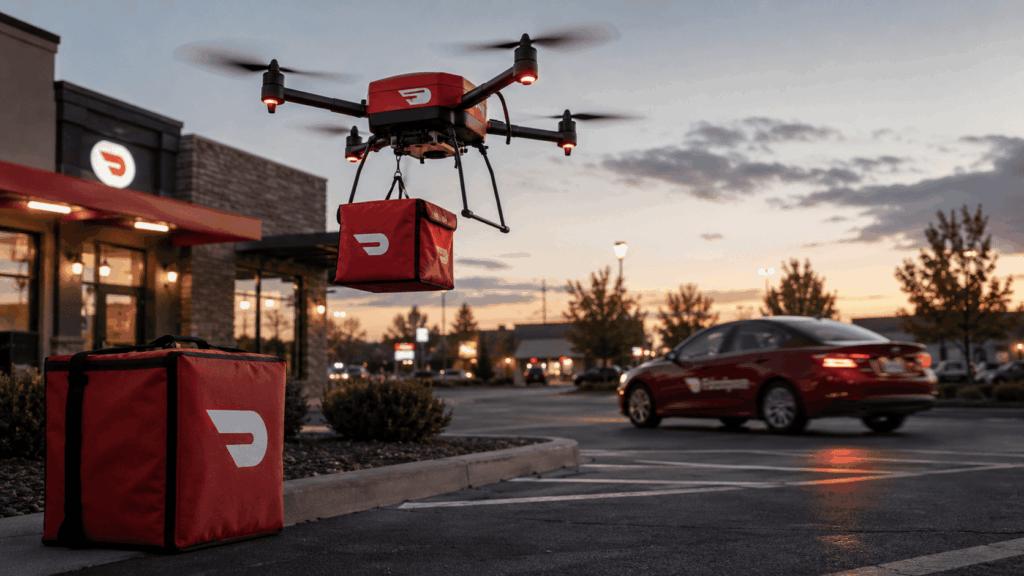
Image Source | Business Model Analyst
On July 29, DoorDash announced that it had successfully obtained the FAA (U.S. Federal Aviation Administration) P135 air carrier certification, and will establish the DoorDash Air division to take charge of the full-process operations of the unmanned food delivery business.
As the 8th drone operator in the United States to obtain P135 certification, DoorDash will evolve from "renting aircraft for delivery" to "independently designing aircraft, building ground facilities and operating delivery services".
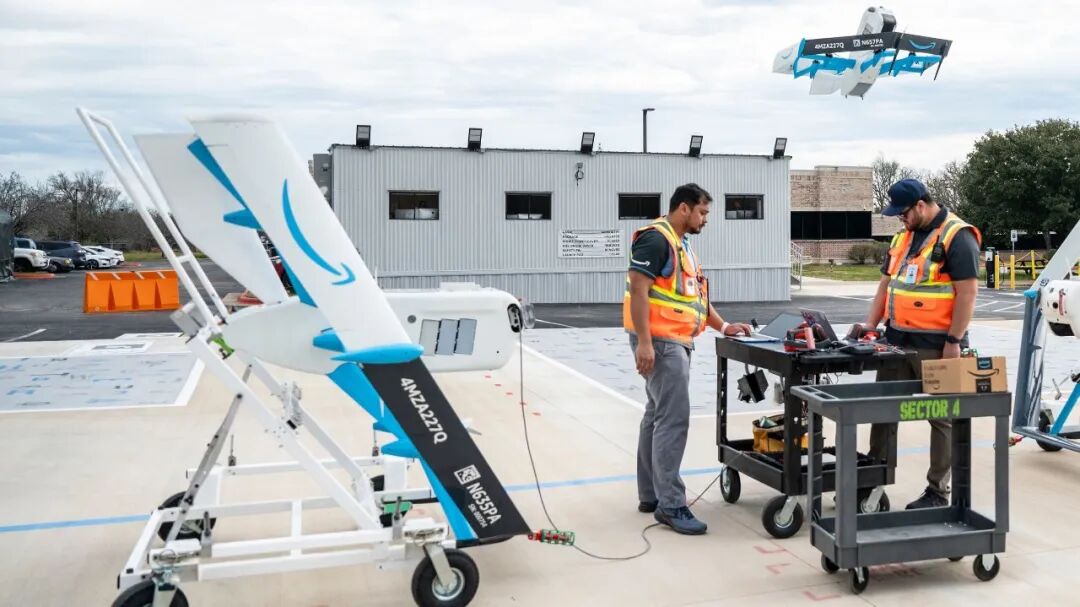
Amazon's delivery drone station | Amazon News
In its official announcement, DoorDash claims that for orders with a distance of no more than 5 miles (about 8 kilometers), its self-developed drones can complete the delivery within 25 minutes.
From Amazon, Meituan to DoorDash, many food delivery and logistics enterprises are integrating drones, autonomous vehicles and human delivery riders into the same delivery network, competing to see who can deliver the last dozens of meters at a lower cost, more quietly and more reliably.
Can DoorDash Fly? Not Tomorrow
It is necessary to pour a little cold water on the hype: although DoorDash has obtained the admission ticket to the "low-altitude economy", there is still a long way to go before "DoorDash Air can fly".
Essentially, FAA P135 is a necessary document for U.S. enterprises to transport goods for compensation via drones and conduct beyond visual line of sight delivery, but the FAA also stipulates that operators still need to obtain corresponding authorizations or exemptions for specific aircraft models, airspace and operation modes.
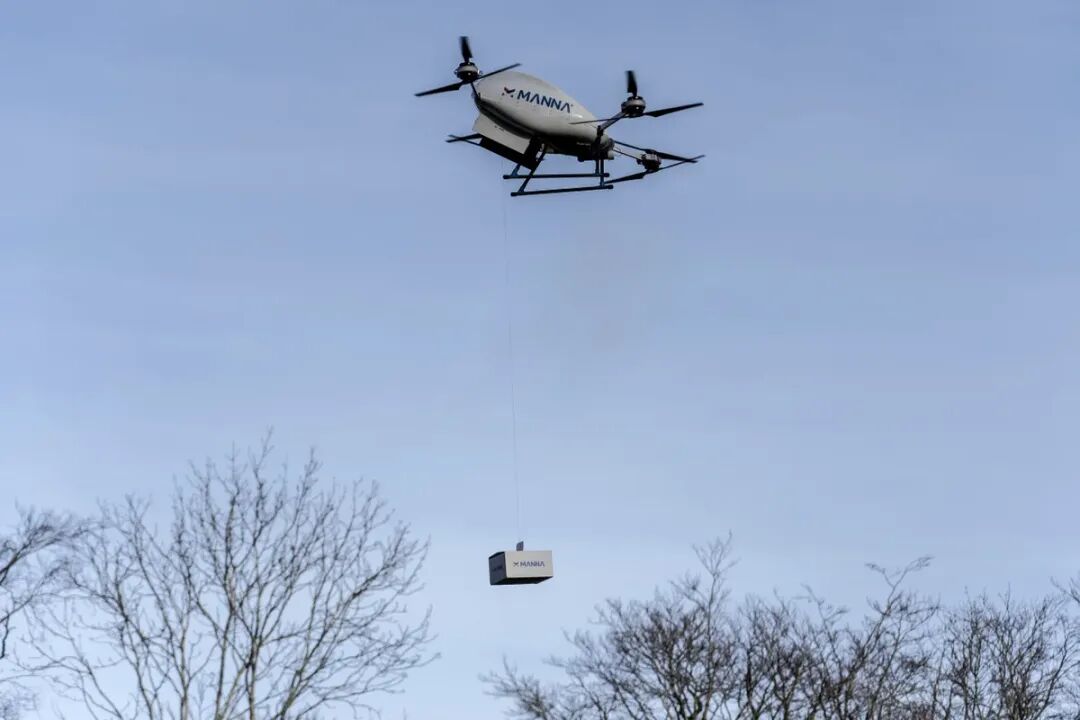
Manna's logistics drone | Scientific American
In other words — DoorDash has obtained the qualification to enter the airspace, but it still needs to apply for the permission to "take off with food orders" on a regional basis.
Up to now, DoorDash has not announced the appearance, load capacity, mass production plan and first batch of commercial operation locations of its self-developed drones. Its existing drone delivery operations in the Dallas-Fort Worth and Charlotte areas still rely on partners such as Wing and Flytrex:
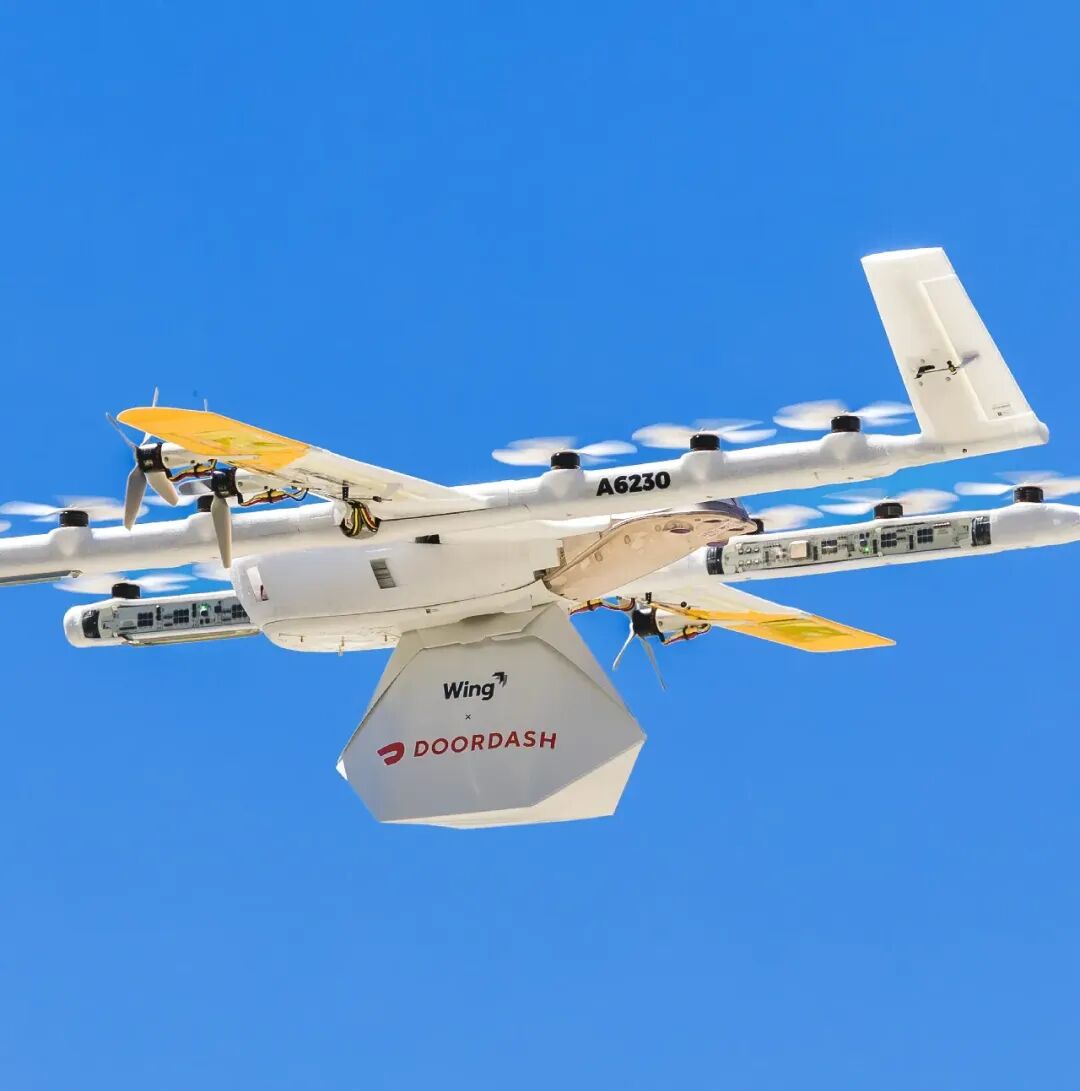
DoorDash delivery using Wing drones | The Verge
The real key point of DoorDash obtaining P135 is not "food delivery by air" — food delivery by air has long been possible, but that DoorDash has transformed from a capacity purchaser to a participant in the development of software, hardware and operation rules.
This follows the same logic as the Dot unmanned delivery vehicle and Autonomous Delivery Platform previously launched by DoorDash.
In the service areas, the system automatically decides whether to assign the food order to a rider, a drone, a road robot or a sidewalk vehicle based on factors such as cost, speed and location.
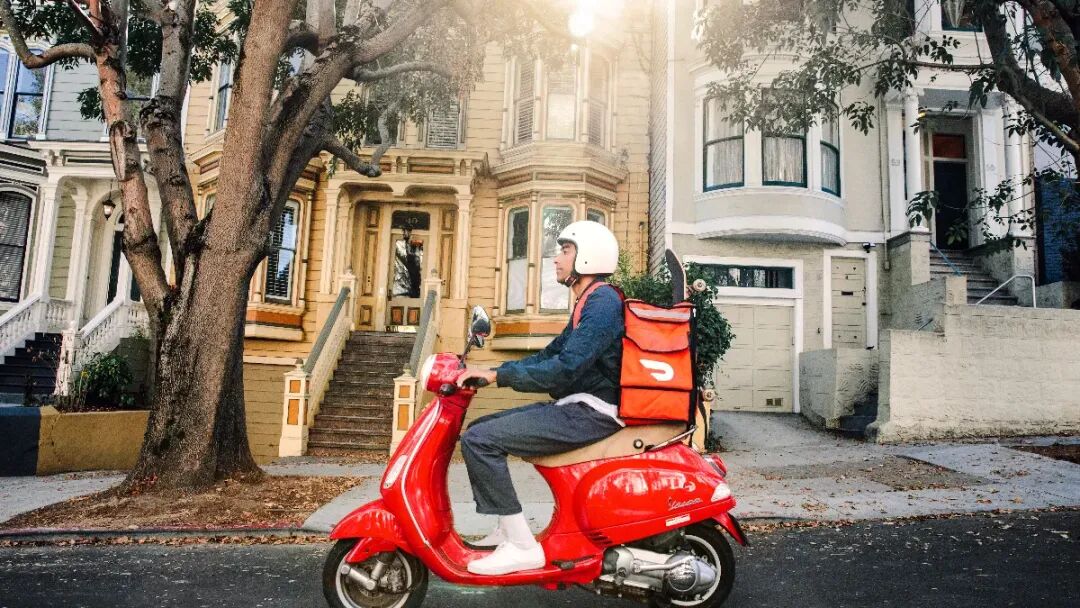
Image Source | Restaurant Dive
This hybrid business model also shows that the real competition point of unmanned delivery is not "who can fly", but "who can reasonably allocate delivery tools with different characteristics".
Unmanned Delivery Does Not Mean Zero Human Involvement
At present, logistics and delivery companies around the world are actually increasing their investment in unmanned delivery technologies, among which the most eye-catching route is of course drones.
After all, drones do not get stuck in traffic, and can achieve fully automatic point-to-point flight in designated airspace, which is suitable for light and time-sensitive orders such as medicines, meals and daily necessities.
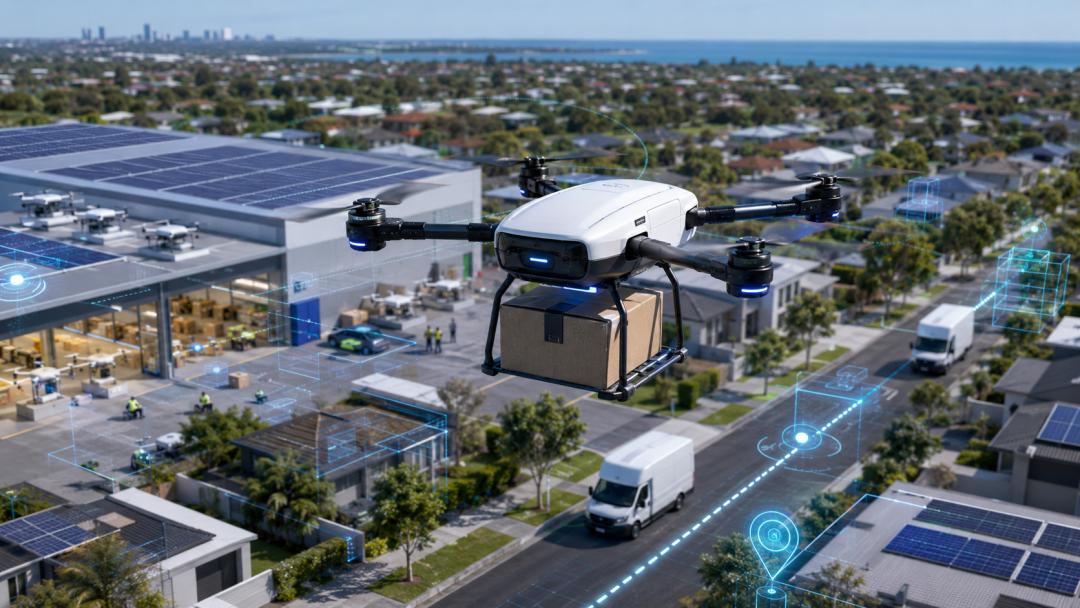
Image Source | Freight People
In the United States, Wing and Walmart have completed more than 1 million commercial drone deliveries, and plan to build more than 270 drone delivery points by 2027, covering more than 40 million U.S. residents.
Amazon has chosen a highly integrated model — it keeps orders, warehousing, aircraft and delivery networks under its full control. Its latest MK30 delivery drone is already capable of autonomous obstacle avoidance, flying in light rain, with noise reduced by nearly half compared with the previous generation:
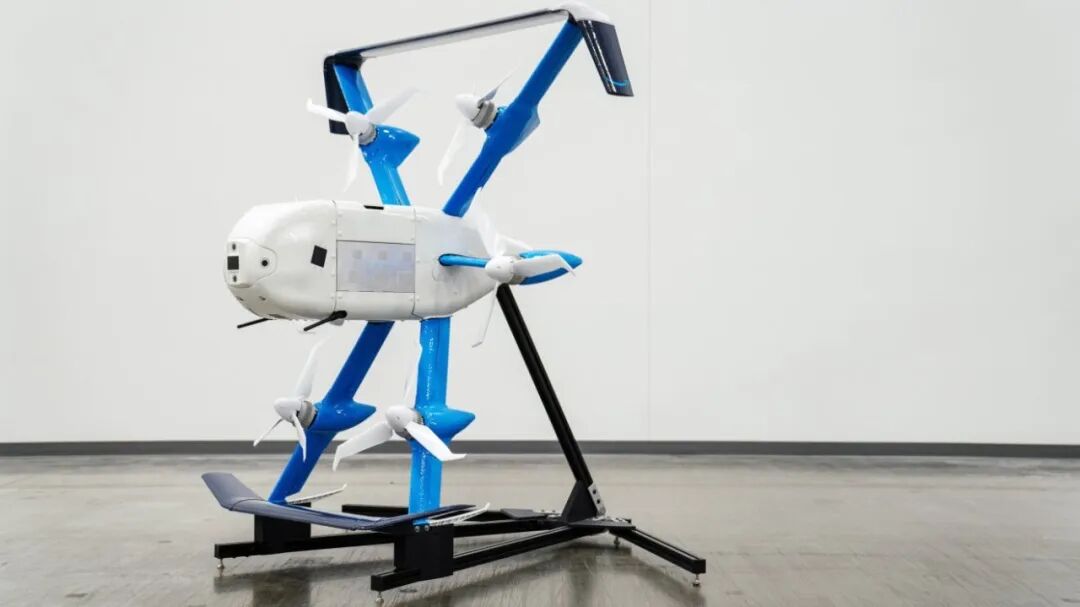
Image Source | Amazon News
In China, Meituan has taken a more "infrastructure-focused" route: using drones, automatic docking airports and cloud dispatch systems to jointly form a fixed urban low-altitude air network.
Up to now, Meituan's drones have completed more than 1 million delivery orders, covering more than 65 unmanned flight routes in cities at home and abroad including Shenzhen, Beijing, Shanghai, Guangzhou, Hong Kong and Dubai:
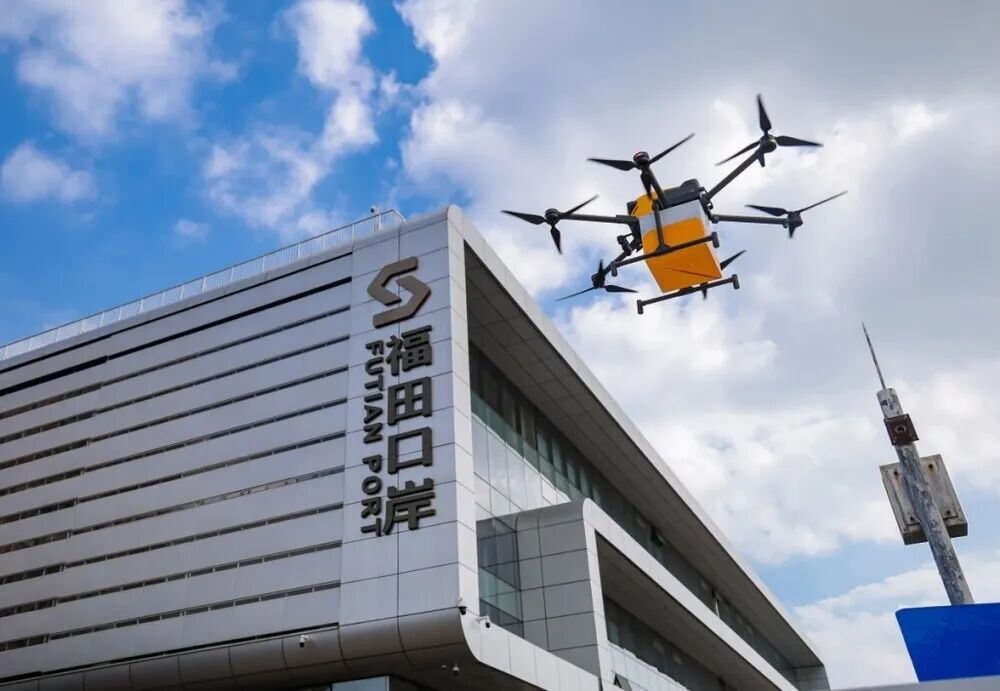
Image Source | The Standard (HK)
Although drones are suitable for urban spaces cut by rivers, mountains and congested roads, they also have very obvious limitations —
Drones can easily fly over 5 kilometers of traffic jams, but they cannot land directly on the window of the 25th floor, cannot "deliver goods to the door", and users still have to pick up their orders at designated food lockers.
At this point, the advantages of road unmanned delivery vehicles stand out: they can not only carry more orders for batch transportation, but also are more adaptable to complex weather and the "last mile" problem than drones:
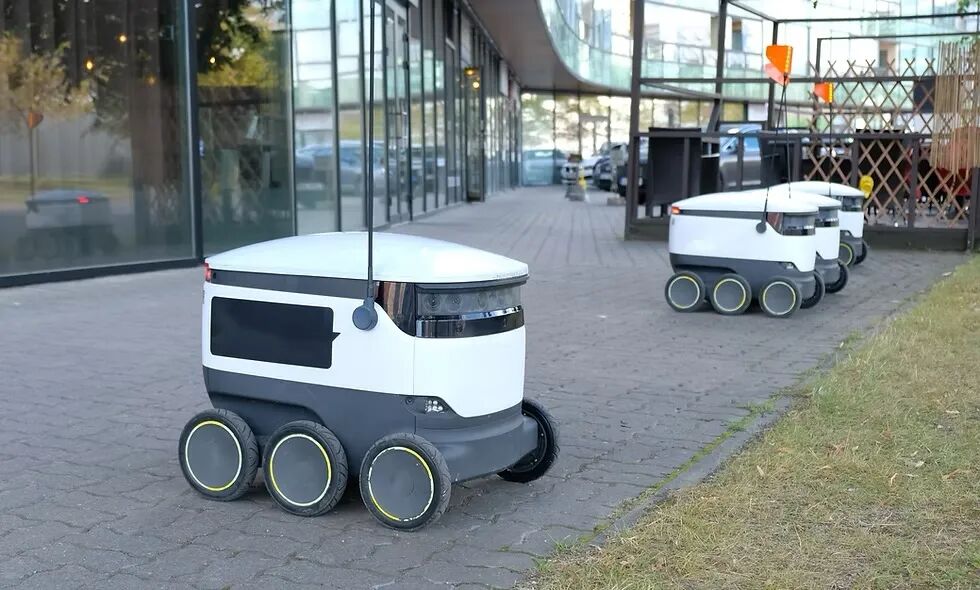
Image Source | Digital Purchase Order
Also according to Meituan's data, by the end of 2024, its autonomous delivery vehicles have completed nearly 5 million delivery orders, saving human riders more than 2.4 million kilometers of travel:
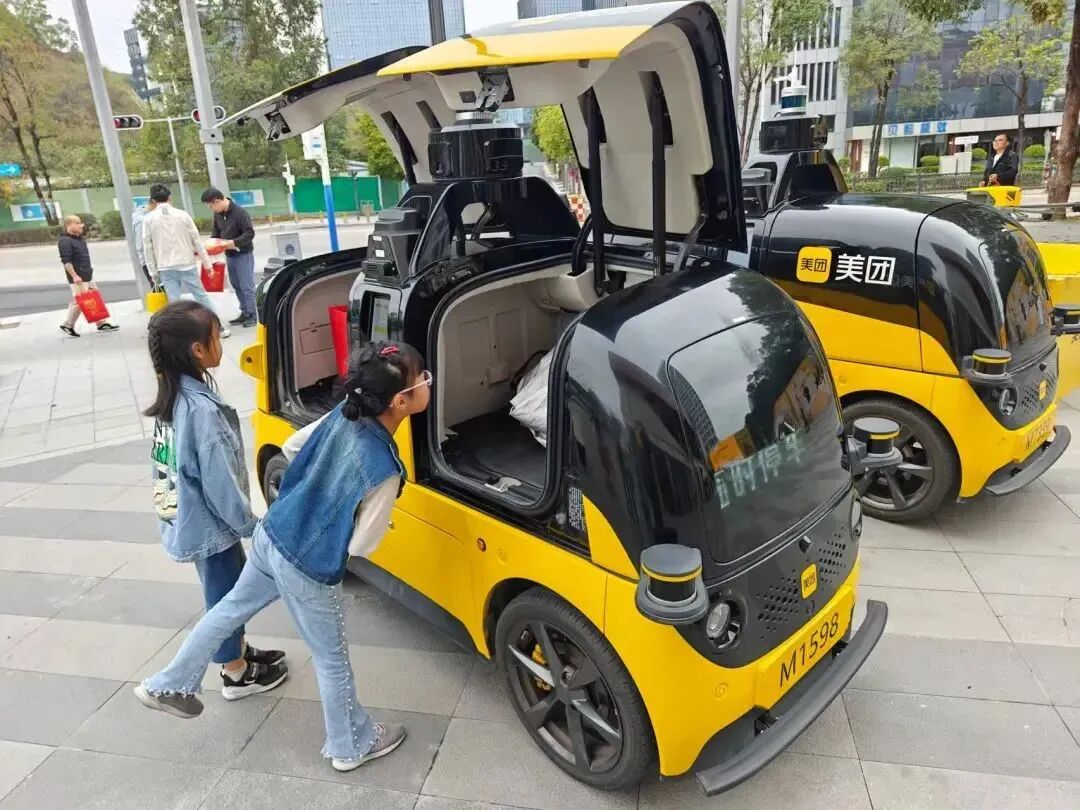
Image Source | Meituan
In contrast, DoorDash's Dot unmanned delivery robot has chosen a more niche path than large unmanned delivery vehicles, using its smaller size to try to solve the problem of "direct doorstep delivery":
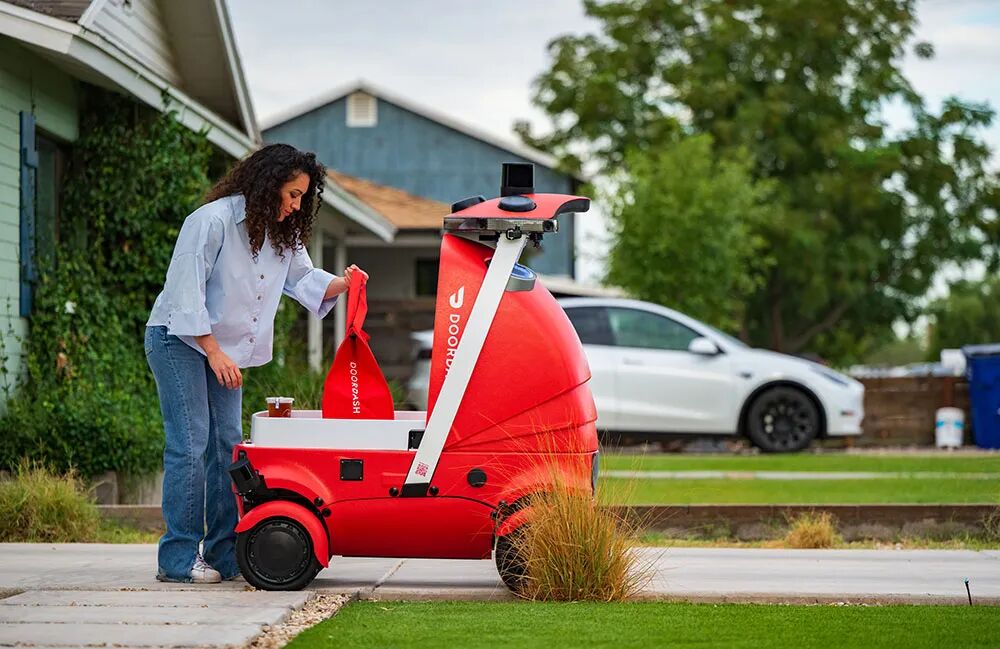
Image Source | DoorDash
However, this type of small delivery robot also has its own challenges — it travels faster than pedestrians and is smaller than cars, and can travel on both motor vehicle lanes and sidewalks, which means its recognition algorithm and driving algorithm are exponentially more complex.
The reality is that neither drones nor autonomous vehicles can handle all types of orders with a single automated technical route.
Drones are suitable for light, small and urgent orders; road autonomous vehicles are suitable for bulk transportation; small delivery robots are suitable for short-distance and low-speed scenarios; but when encountering unexpected situations in the complex real world, humans are still the most reliable fallback solution.
Unmanned Technology Also Needs Humanized Consideration
As expected, in areas where drone delivery has been launched, real users do not reject unmanned delivery.
According to an interview by AP News, in families that frequently use DoorDash's drone delivery, children will specifically run out to watch the drones fly; restaurant operators who have signed up for drone delivery also commented that drone food delivery is stable, and even their overall order volume has increased.
But the same report also records many completely opposite experiences —
Some users complain that the noise of drones is like "giant mosquitoes", some courtyards and trees limit the deliverable range, and of course there is the classic complaint of "cameras violating privacy":
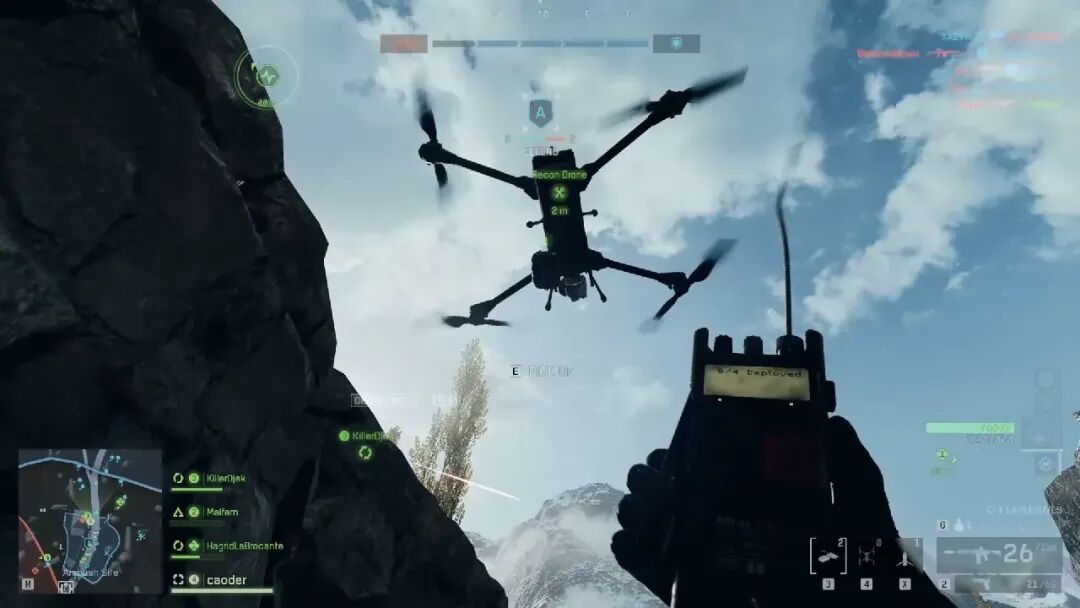
Image Source | Reddit
In China, where buildings are densely distributed, the main problems of drone delivery are that drones cannot "deliver goods to the door", property management teams are uncooperative, and the time periods available for drone delivery are mostly concentrated in late night hours.
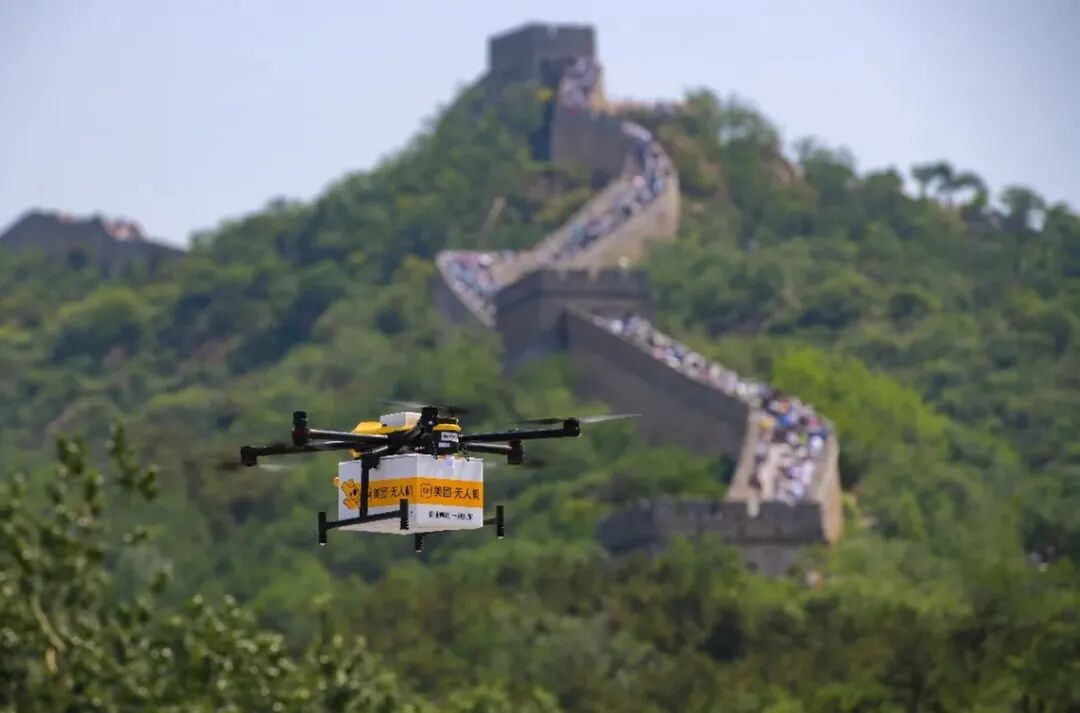
Image Source | Meituan
The biggest significance of DoorDash Air obtaining the certification is that a platform with a huge volume of real-time orders has started to develop and control its own flight delivery capacity in person.
But strictly speaking, its most valuable asset is still not drones or unmanned vehicles, but the comprehensive delivery algorithm that knows when the restaurant will finish preparing the food, which intersection is stuck in traffic, and who exactly should deliver the order.
In the future, it is unlikely that there will be a scenario where one type of device replaces all human riders in unmanned delivery.
A more realistic outcome is that machines take over routes with high standardization, repetitive operations or closed environments, while human food delivery workers scattered at the end of the delivery network handle stair access, property management issues, temporary address changes, and requests such as "please leave it at the door and don't ring the doorbell".
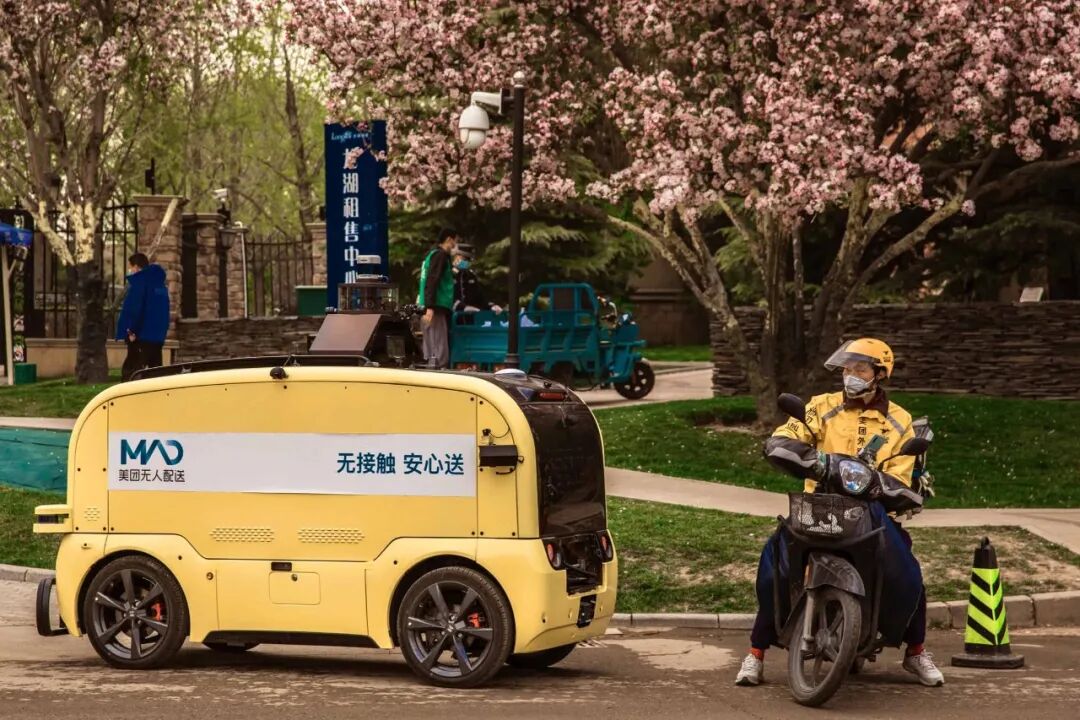
Image Source | The Wire China
From this perspective, the real sign of a mature unmanned delivery system is not that the sky is full of flying drones, but that users do not care at all whether their order will be delivered by a drone, a small vehicle or a rider when they place an order.
When technology disappears from the user experience, that is when it is most like a public infrastructure.