Tesla's Fire and Ice Moment
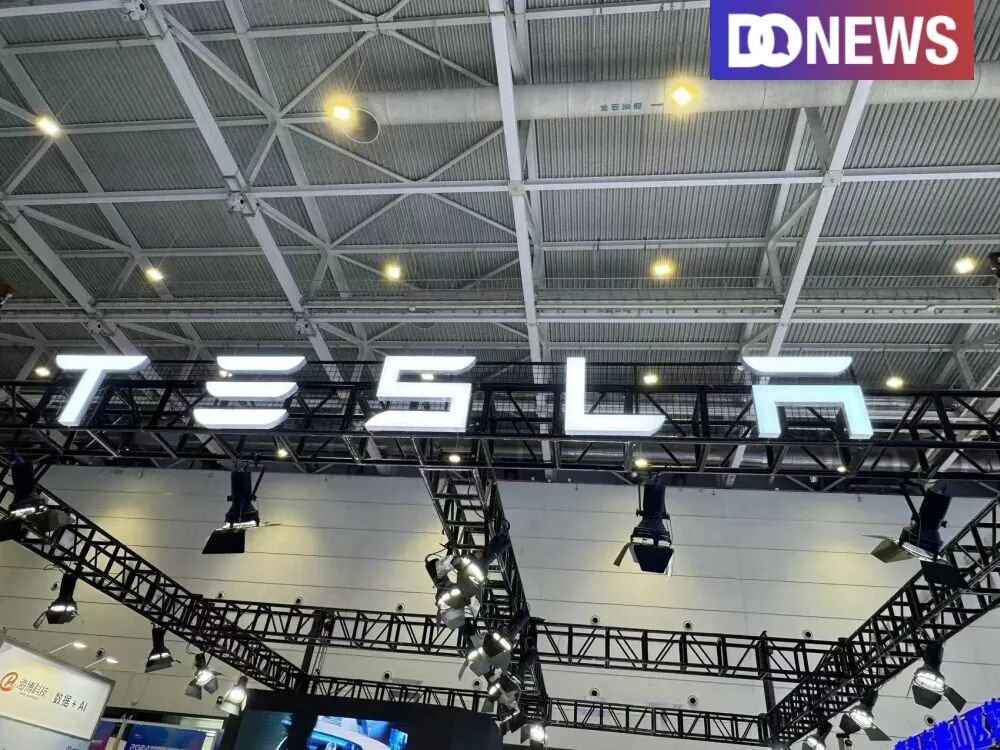
Elon Musk and his Tesla are still the top global tech influencers. Whether it is Tesla's new energy vehicles, assisted driving, humanoid robots, or SpaceX under Musk's control, they all demonstrate the ultimate charm of cutting-edge technology, triggering fanatical pursuit from global investors.
On July 30, Tesla announced that its 10 millionth electric vehicle rolled off the production line globally, making it the world's first enterprise with pure electric vehicle output exceeding 10 million units.
From 2006 to 2026, over 20 years, Tesla has grown from scratch to become a giant global automaker, and its electric vehicles are widely loved by consumers around the world. At the same time, Tesla's new business of humanoid robots is already on the way to mass production, and has become an important benchmark that influences the development trend of related industries around the world.
It is worth noting that on July 31, according to The Wall Street Journal, Tesla may sell or spin off its Chinese business to create conditions for a potential future merger transaction with SpaceX. The report cited sources familiar with the matter that some Tesla executives have been informed to prepare for the spin-off of the Chinese business before the potential merger transaction. Tesla's advisors have discussed a variety of potential separation options, including spin-offs, sales or closures.
However, on the flip side of the heated discussions sparked by the development of Tesla's new and old businesses, the sales of its new energy vehicles have increased but profits have declined instead. The new business has huge room for imagination, but its expansion has huge demand for capital investment, which triggers the market's calm thinking about its finance and even future development.
At present, Tesla is on the way to fully transform from an "electric vehicle manufacturer" to a "physics AI company", with half of the road covered by sea water and half by flames. After the release of its second-quarter financial report, Tesla encountered a cold reception in the capital market, and its stock price fell continuously. Obviously, the market is currently on the side of "sea water". To change the status quo, Tesla's performance in the second half of the year is crucial.
01.
Hard to stay unaffected
In the first half of 2026, Tesla's electric vehicle sales performance was remarkable. After consecutive declines in 2024 and 2025, Tesla returned to the growth track. In the first quarter, Tesla delivered 358,000 units globally, a year-on-year increase of about 6.5%. In the second quarter, Tesla's global deliveries exceeded 480,000 units, with the year-on-year growth rate expanding to 25%.
In the second quarter, Tesla delivered strong sales performance in many markets around the world. Among them, deliveries in the Americas, Asia-Pacific and EMEA (Europe, Middle East and Africa) markets increased by 60%, 27% and 12% quarter-on-quarter respectively. Tesla's delivery volume hit a record high in many markets including South Korea, Australia, Colombia, Japan, Thailand, Portugal, the Philippines, Chile, Slovenia and Lithuania.
As Tesla's core production base, the Shanghai Gigafactory recorded its highest output in the same period in nearly three years in the first half of the year, accounting for more than 54% of the total output; its delivery volume was nearly 468,000 units, a year-on-year increase of 28.4%.
From the perspective of specific models, Tesla Model Y, which has won the global sales championship for three consecutive years, is still very competitive. As of the end of June 2026, the cumulative global sales of Model Y exceeded 5 million units, of which sales in the Chinese market exceeded 2 million units; the cumulative global sales of Model 3 exceeded 3 million units, and sales in the Chinese market have exceeded 1 million units.
In the current white-hot competition in the global auto market, Tesla's performance is quite rare.
The global auto market has shown the characteristics of stock market competition as early as around 2021. The rise of new energy vehicle brands represented by Tesla broke the growth deadlock, shifting the growth logic of the auto market from "first-purchase driven" to "replacement driven".
However, in the past two years, with the continuous increase of the penetration rate of new energy vehicles, in the Chinese auto market, the retail penetration rate of new energy vehicles has even exceeded 60% in some months, and the stock game has entered a new stage of sharply increasing difficulty. "Involution-style" competition has become normalized, price wars in the auto market occur frequently, product homogeneity is serious, and profit margins have been greatly compressed.
The survival state of the Chinese auto market, the world's largest consumer market for automobiles, under the white-hot competition is highly representative. Under the continuous price war, the profit margin of Chinese automakers has declined steadily. Data from the China Automobile Dealers Association shows that the profit margin of the automobile industry has dropped from 6.1% in 2021 to 4.1% in 2025, and the profit margin in December 2025 was only 1.8%.
Tesla, which has deeply cultivated the Chinese market, failed to stay unaffected.
After market hours on July 22 Eastern Time, Tesla's 2026 second-quarter financial report showed that it achieved revenue of 28.236 billion US dollars in the second quarter, a year-on-year increase of 26%; GAAP net profit attributable to common shareholders was 1.114 billion US dollars, a year-on-year decrease of 5%; operating profit was only 398 million US dollars, down about 57% both year-on-year and quarter-on-quarter; the gross profit margin of the automotive business was 16.9%, further down from 21.1% in the first quarter and 17.2% in the same period of last year.
The sales of new energy vehicles are increasing, and revenue is increasing, but profits are declining, which means that Tesla has fallen into a situation of "more sales, more losses".
02.
Imagination Space of AI
During the critical period of Tesla's transformation from an "electric vehicle manufacturer" to a "physics AI company", its AI-related business is accelerating its growth.
In today's automobile consumption, intelligence has gradually become the consensus of consumers when purchasing cars, exerting an increasing influence on car purchase decisions. Intelligence has gradually evolved from the previous "plus item" to a "must-have item". According to the "2025 Urban NOA Automotive Assisted Driving Research Report" released by the China Association of Automobile Manufacturers, in 2025, the penetration rate of new cars with L2 level and above intelligent driving functions reached 66.1%, and more than two-thirds of new cars are equipped with these functions as standard. McKinsey's "2025 China Automotive Consumer Insight Report" pointed out that in 2025, ADAS (Advanced Driver Assistance System) functions have jumped to the third most important factor in car purchase.
Driven by consumer demand, the intelligent wave is reconstructing the global automotive competition pattern, and has become a key indicator that determines whether automakers can win in the future.
As of the second quarter of 2026, Tesla has 1.48 million global paying users for assisted driving, a year-on-year increase of 56% and a quarter-on-quarter increase of 16%. The installation rate of assisted driving for new cars in the North American market exceeded 50% for the first time. The cumulative mileage of assisted driving has exceeded 12 billion miles (about 19 billion kilometers).
Tesla's Robotaxi business is also continuously expanding its territory, and it currently covers many regions including Tampa, Orlando, Miami in Florida, Austin, Dallas, Houston in Texas, and the San Francisco Bay Area in California.
Tesla's Cybercab, the driverless electric car that has attracted a lot of attention and canceled the traditional steering wheel and driving pedals, has been put into production at the Texas Gigafactory and started engineering tests. This model is built exclusively for autonomous driving, and will become the main model in Tesla's driverless online car-hailing fleet in the future.
At present, Tesla's strategic focus has shifted significantly to embodied intelligence. Its humanoid robot Optimus V3 has become the weathervane of related global industries. According to the plan, official mass production will start in July-August, and it is expected to be put into external scenario applications in 2027.
To promote the development of humanoid robots, Tesla changed its focus from "cars" to "robots", announcing that it will transform the Model S/X production line at the Fremont factory into a dedicated production line for Optimus, planning to start mass production before the end of 2026 with a planned annual production capacity of 1 million units. At the same time, Tesla is preparing the second production line for robots at the Texas Gigafactory, with a planned production capacity of 10 million units, which is scheduled to be put into operation in the summer of 2027.
In addition, Tesla's computing power and chip business are also accelerating evolution. In the first half of 2026, Tesla's local computing power scale in Texas (calculated in megawatts of computing power) more than doubled. Tesla's Cortex 2 computing power cluster supports the development of software for both electric vehicle autonomous driving and humanoid robot autonomy, and will continue to expand its scale this year. The design of the next-generation AI 5 inference processor chip has been completed. This chip will be mainly used in humanoid robots and data centers, and Elon Musk proudly stated that it is "the best AI inference chip in the field of edge computing at present".
03.
Expectations and Gaps
In the capital market that focuses on growth expectations, Tesla can always tell good stories and gain real money support from investors.
In 2020, the wave of electrification and intelligence set off by new energy vehicle brands led by Tesla swept the global automotive industry. In this industrial revolution, companies in related industrial chains such as new energy vehicle manufacturing, power batteries, and autonomous driving technology R&D have become darlings of capital, creating one wealth myth after another.
Nowadays, with the increase of new energy vehicle penetration rate and intensifying involution, growth expectations have shrunk, and new energy vehicle related concepts can no longer cause much disturbance in the capital market. Tesla has begun to tell a new story of physics AI, and revalued in the capital market by this.
In June, after many years of bearishness on Tesla, JPMorgan Chase upgraded its rating from "underweight" to "neutral", and sharply raised its target price from the previous 145 US dollars to 475 US dollars. JPMorgan Chase's report pointed out that investors are looking beyond Tesla's slowing core electric vehicle business, focusing on future growth engines such as robotaxis, humanoid robots, AI chips and software services, which are expected to reshape the company's profit structure in the next ten years.
Humanoid robots, regarded as the most representative ultimate carrier of physics AI, can be said to be the most concerned existence in Tesla's new story. After the official appearance and mass production time of Optimus V3 were clarified in April, Tesla's stock price ended the continuous decline since 2026 and strengthened again.
The influence of Tesla's humanoid robots is global, just like the influence of its electric vehicles a few years ago. Across the ocean from Tesla, China's A-share market has set off a boom in humanoid robot concept speculation, and the mass production progress of Tesla's humanoid robots has become a weathervane affecting the trend of related stocks.
In the A-share market, there are many Tesla humanoid robot supply chain companies. For example, Tuopu Group, which provides lightweight chassis, thermal management systems and other parts for Tesla vehicles, is also a supplier of core components such as the electric drive actuators for Tesla's humanoid robot Optimus. When the market is chasing the humanoid robot concept, these Tesla supply chain companies have ushered in several rounds of rising market.
However, the biggest difference between this round of tech stock bull market and the valuation expansion or pure theme speculation in previous years is that the relevant leading companies are basically supported by solid profit growth and have certainty. However, the commercial landing achievements of related Chinese humanoid robot companies are considered by the market to be less than expected, and the delayed mass production of Tesla's humanoid robot Optimus V3 has become the biggest negative for related concepts.
Elon Musk's speech poured a basin of cold water on the market expectations. He bluntly said, "The mass production of humanoid robots is the most difficult manufacturing ramp-up in Tesla's history. Almost all components of humanoid robots are brand new, there is no ready-made supply chain, and a large number of links can only be completed inside the company." "For electric vehicles, Tesla can purchase specific parts such as wheels, side mirrors and windshields from existing suppliers; but for Optimus, there is no supply chain."
More critically, Tesla's new business is killing its performance certainty. In the second quarter of 2026, Tesla's operating expenses increased by 47% year-on-year to 4.353 billion US dollars, free cash flow was -1.092 billion US dollars, and capital expenditure surged by 142% to 5.789 billion US dollars, all invested in AI infrastructure, Robotaxi and Optimus robots.
Tesla executives said that capital expenditures are expected to continue to grow in the next two to three years, and capital expenditures this year will exceed 25 billion US dollars.
These bets on the future demonstrate Tesla's firm attitude towards the AI track, and to a certain extent establish the market's confidence in its future development. However, when these investments begin to drag down the current performance, they will also affect investors' attitude towards Tesla.
After the release of the financial report, Tesla's stock price plummeted on July 23, with a drop of as high as 14.52% on the day. The stock price fell from the opening of 341 US dollars per share to 319.69 US dollars per share, and the market value evaporated by about 214.5 billion US dollars (about 1.45 trillion yuan) in a single day, setting the record for the largest single-day market value loss in the company's history. After that, Tesla's stock price fell for several consecutive days. As of the close on July 30, its stock price once fell to 297.38 US dollars per share.
Tesla's new technology story is grand and attractive, which can be seen from the capital market's pursuit of it. However, when Tesla's new business fails to create excellent performance and deterministic growth logic, the market's bearish sentiment towards it is still inevitable.
Written by: Xu Yun Edited by: Yang Bochen Cover photo: Shot by DoNews
This article is from the WeChat official account "DoNews" (ID: ilovedonews), author: Xu Yun, authorized for release by 36Kr.