Amazon has taken tough measures, and the tide of "piggybacking" is receding.
In 1994, Jeff Bezos founded Amazon, starting its business by selling books.
At that time, Jeff Bezos set a rule: for the same book (with identical ISBN, content and binding), only one product detail page (listing) is allowed to exist. This means that different merchants selling the same book can sell their products by attaching to this detail page, which is the embryonic form of Amazon's "follow-selling" rule.
Later, in addition to its self-operated business, Amazon introduced third-party sellers and became an open platform, and continued the "follow-selling" rule.
Jeff Bezos designed this rule for several main purposes: first, to simplify pages. Avoiding a large number of sellers from repeatedly creating product detail pages when selling the same product, which would make consumers dazzled and confused about how to choose. Allowing "follow-selling" can make the pages more concise and orderly; second, to facilitate price comparison. When many sellers follow to sell the same product, they are competing for consumers on the same page. Naturally, these sellers will do their utmost to lower prices and improve delivery efficiency, and unanimously push Amazon's growth flywheel to operate at high speed with "lower prices + better services"; third, to avoid stockouts and enrich the ecosystem. Allowing "follow-selling" can solve the problem of insufficient supply, help the platform expand full-category SKUs at the lowest cost, form a never-out-of-stock product flow, and at the same time prevent certain brands or sellers from monopolizing links and deliberately raising prices.
From this perspective, follow-selling is one of the cornerstones of Amazon's entire ecosystem.
However, in recent years, Amazon's attitude towards "follow-selling" has changed, and it has frequently taken actions to adopt more and more restrictive measures against follow-selling behaviors.
Recently, Amazon has adjusted the "follow-selling" entrance on its pages. Once this adjustment is fully rolled out, it may cause seismic impacts.
Changes in the traffic pattern of follow-selling
Recently, some sellers have noticed that Amazon's follow-selling page has been adjusted: under the Buy Box of some product detail pages, the display of "Other sellers on Amazon" no longer appears.
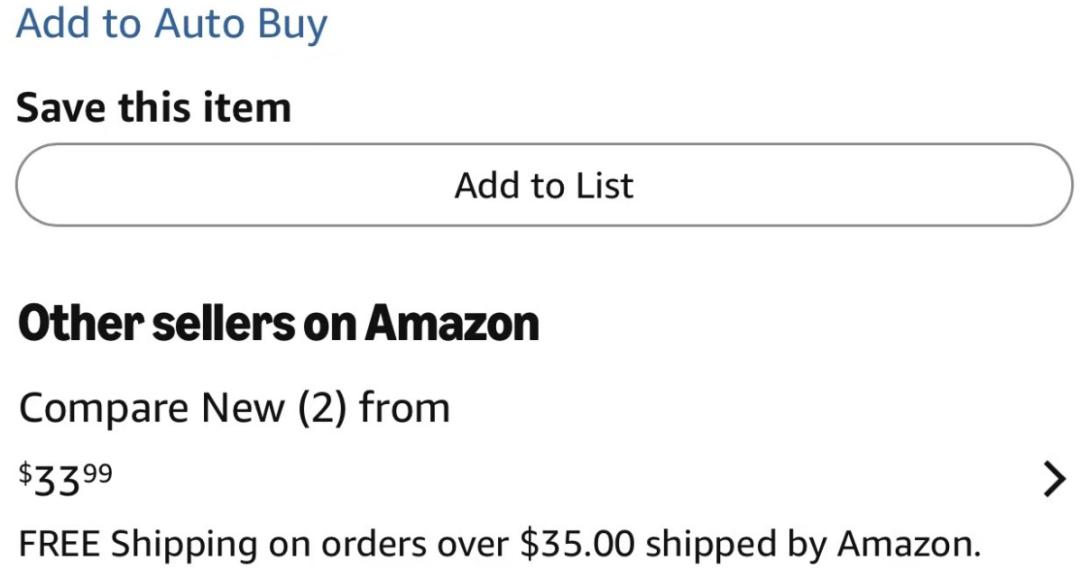
Figure / "Other Sellers on Amazon" on Amazon's page
In the new version of the page, all follow-selling sellers "Other Seller" are collected into a collapsed secondary page called "All Offers", and consumers need to click further to see them.
Follow-selling products are not displayed directly, consumers need to go through a more tortuous path to find them. As a result, their exposure and traffic will decrease accordingly.
It should be noted that this adjustment is still in the testing state. Some sellers have conducted tests, and the same ASIN (Amazon Standard Identification Number) shows different page results under different accounts and different delivery addresses. This means that Amazon may be conducting a gray test and has not yet promoted it on a large scale.
However, Amazon's attitude towards "follow-selling" is indeed changing. On March 31, 2026, Amazon officially implemented a new rule, which largely curbs the chaotic phenomenon of "following to sell by taking advantage of loopholes".
This new rule is "canceling shared inventory". The so-called shared inventory means that identical products will be classified by Amazon into a "shared inventory pool", even if these products come from different sellers. This easily creates a loophole: When a customer places an order, Amazon may find an identical product from the "shared inventory" in the nearest warehouse and deliver it to the customer. However, this product may be a counterfeit, defective or low-quality product from follow-selling sellers. This loophole has caused a lot of distress to many sellers.
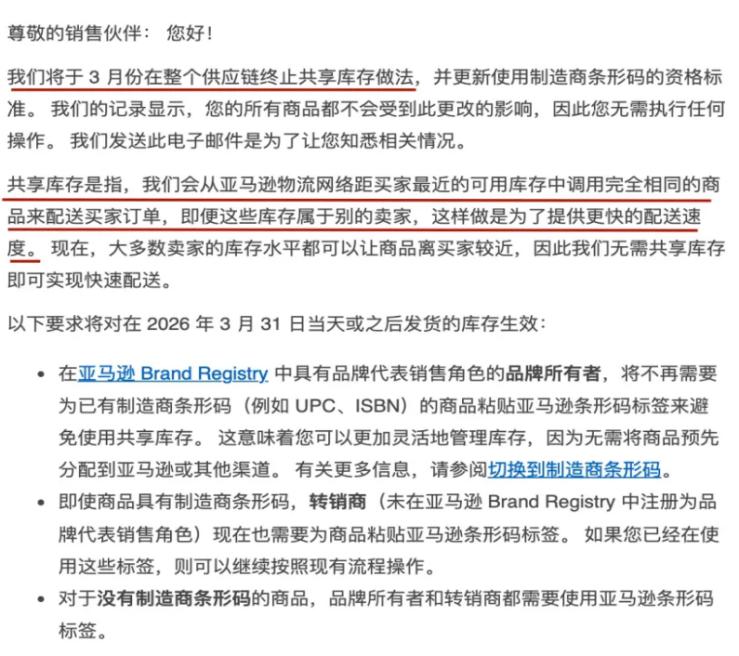
Figure / Amazon's notice on canceling shared inventory
Seller Lin Jun is a victim of this rule. Lin Jun sells electronic products, and one day he received an order from New York State. However, Lin Jun had no stock in the warehouse near the customer, so Amazon found an identical product in the "shared inventory" and delivered it to the customer. However, the product was of poor quality, the customer gave a bad review after receiving the goods, which caused great trouble to Lin Jun's subsequent operation.
This is obviously a loophole that is beneficial to follow-selling sellers. Now, this loophole has been plugged. Amazon stipulates that each product must be affixed with an independent FNSKU Amazon barcode when entering the warehouse, which avoids the "taking advantage of loopholes" of follow-selling products.
In addition, a series of actions taken by Amazon in recent years show that its balance is tilting from "follow-selling sellers" to "brand registered sellers" or "high-quality product sellers".
A few years ago, Amazon launched the "Transparency" program and "Project Zero", providing each seller who has completed trademark registration and brand filing with a unique product traceability code, which is pasted on the package before shipment and verified again when entering the warehouse. Follow-selling products without traceability codes cannot be shipped out of the warehouse, which fundamentally eliminates counterfeit follow-selling.
In addition, Amazon has also launched tools such as "Report a Violation (RaV)" and "Automated Brand Protection" in recent years, helping sellers to proactively report counterfeits and realize automatic brand protection.
This shows that Amazon's tendency of favoring one over the other is becoming more and more obvious: while rectifying follow-selling behaviors, it continues to upgrade its support for "high-quality product sellers" and "brand sellers".
With the continuous implementation of Amazon's measures to curb follow-selling, those sellers who do not pay attention to original design and compete for orders by follow-selling at low prices may face the situation of declining traffic and conversion rate, while sellers who insist on stocking in Amazon FBA warehouses, deeply cultivate the supply chain and adhere to original product design and branded operation will get greater support.
Amazon's overall strategic layout
Behind this adjustment lies Amazon's overall strategic layout.
In recent years, emerging e-commerce platforms such as Temu and TikTok Shop have advanced rapidly, with continuous growth in traffic and GMV, putting pressure on Amazon.
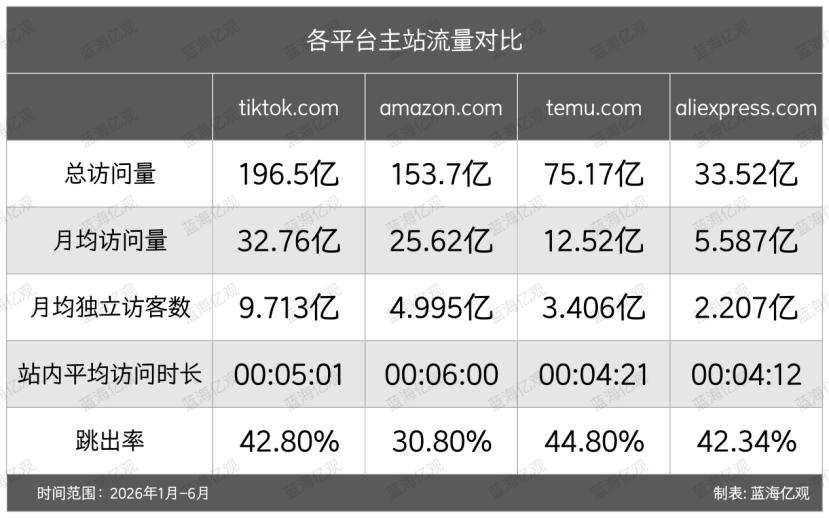
Temu and TikTok Shop have swept the market with the strategy of "low price + no-brand products", pulling more and more e-commerce platforms into a white-hot price war.
At the beginning, Amazon actively responded to the competition, and even introduced Temu's prices into its price comparison system. If a seller's product price is lower than Temu's, it will lose the Buy Box, leading to a drop in orders. However, under Temu's fulfillment by platform model, sellers save on freight, warehousing fees and advertising fees, and many Amazon sellers are simply unable to compete with Temu sellers.
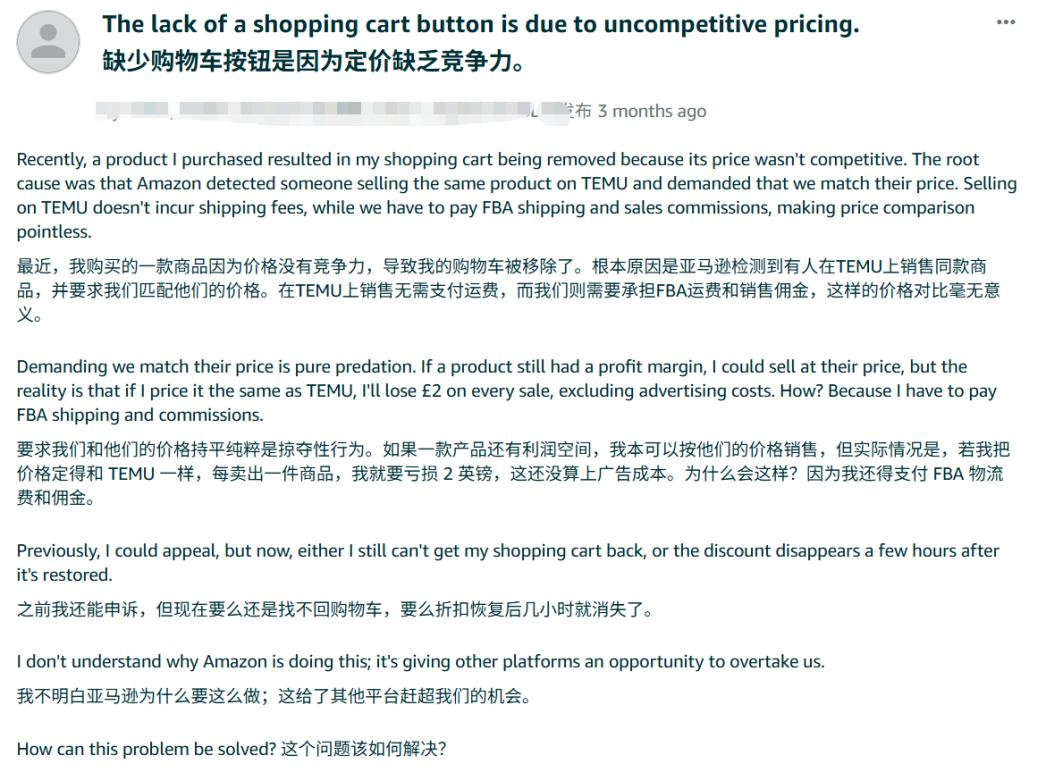
Figure / Sellers complain that they lost the Buy Box because their prices are lower than Temu's
After competing with Temu and TikTok Shop for a period of time, Amazon realized that being involved in an endless price war is a path with no visible future.
To this end, Amazon launched its own low-price mall Haul to carry out hierarchical segmentation in positioning, letting Haul continue to compete with Temu and TikTok Shop, while Amazon's main site embarks on a path of "curated products + brand operation".
Amazon intends to set up a banner, guiding sellers to transition from competition in the "price" dimension to competition in the "brand" dimension, encouraging sellers to deeply cultivate the supply chain, make product differentiation, meet consumer pain points, and continuously develop their own brands.
To this end, Amazon has continuously taken many actions on the "Brand Store", and specially released the "Brand Growth Ladder" to help sellers' brands grow in terms of traffic, users, promotion tools and other aspects.
Amazon is a traditional shelf e-commerce platform, and its core logic is: buyers actively search → compare quotations from various sellers → close deals at low prices. If Amazon continues to allow sellers to involute continuously under the follow-selling mechanism, Amazon's entire ecosystem may be trapped in the inefficient competition whirlpool of "search and price comparison" and cannot extricate itself.
Against this background, Amazon intends to gradually dilute the "follow-selling" function on its main site, concentrate traffic and resources on brand sellers or high-quality product sellers who hold the Buy Box, and at the same time form differentiated competition with Temu and TikTok Shop with "genuine product guarantee, next-day delivery, stable quality, worry-free after-sales service" and other advantages, so as to promote the healthy development of the entire ecosystem.
However, in any case, "lower price" has always been one of the driving forces for the operation of Amazon's growth flywheel. Amazon will not give up follow-selling fundamentally.
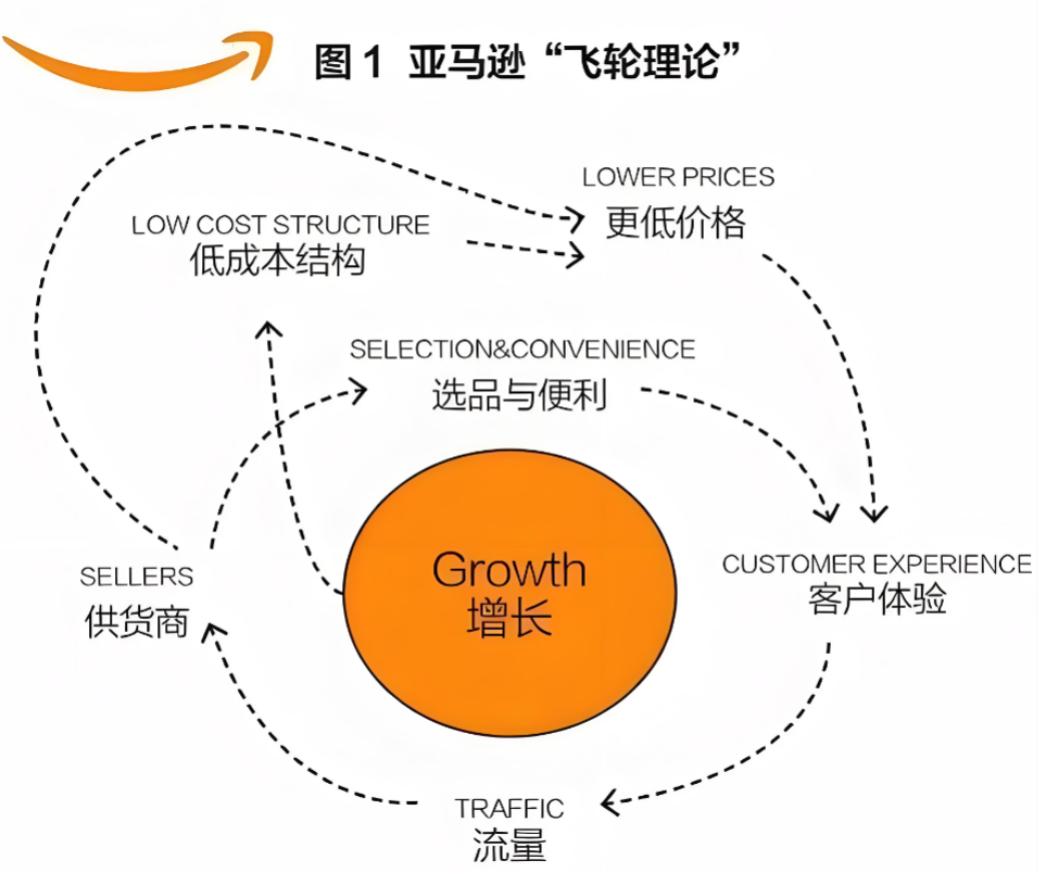
Not only will Amazon not give up follow-selling, it is also introducing a new price comparison mechanism in other places to ensure that the products on its entire site still have sufficient price competitiveness compared with offline channels and other e-commerce platforms.
For example, Amazon is also testing a function: on the search result page, add "More Buying Choices", which is almost equivalent to moving the price comparison entrance to the search result page in advance.
In summary, Amazon will dilute follow-selling but will not give up price comparison, because price is always a sharp weapon for e-commerce. (Blue Ocean E-View)
This article is from the WeChat Official Account "Blue Ocean E-View" (ID: egainnews), written by Blue Ocean E-View, and authorized for release by 36Kr.