Maverick Li Shufu makes another major move 16 years later
On July 23, in Almussafes, Valencia Province, Spain, Prime Minister Pedro Sanchez personally arrived at the factory to show his support, witnessing Geely Auto and Ford signing an agreement that was almost impossible to come by 16 years ago: Geely's wholly-owned subsidiary Geely SPV will invest 221 million euros to acquire a 34% stake in Ford Spain, while Ford retains 66% of the shares, and the two parties will jointly operate this old plant that was put into production in 1976 and was once the largest Ford production base outside the United States.
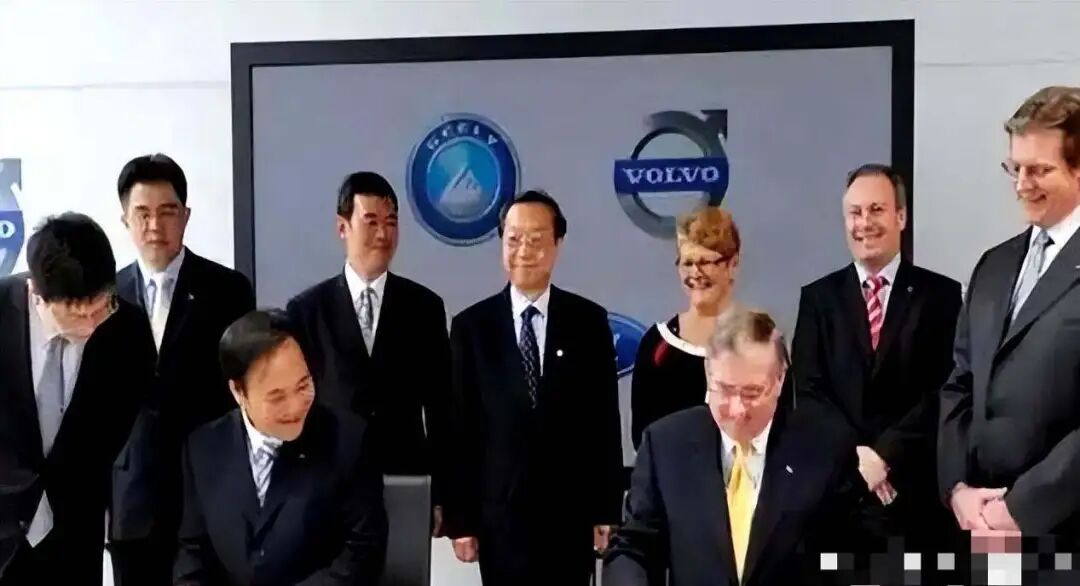
Looking back to 2010, an almost identical scenario had already played out once: at that time, Ford sold Volvo to Geely for $1.8 billion to offload its loss-making burden. Back then, Geely's net profit in the previous year was only 1.18 billion yuan, its main models were sold for tens of thousands of yuan each, and no one was optimistic about this "snake swallowing elephant" transaction.
16 years later, the script has been completely reversed: Ford posted a huge loss of $8.2 billion in 2025, its European market share fell to less than 3%, and the capacity utilization rate of the Valencia plant is only around 20%; Geely's overseas sales in the first half of the year reached 474,000 units, a year-on-year increase of 158%, and exceeded 100,000 units for the first time in a single month in June.
This plant has tied the fates of the two companies together again — only this time, it is not difficult to tell who needs whom more.
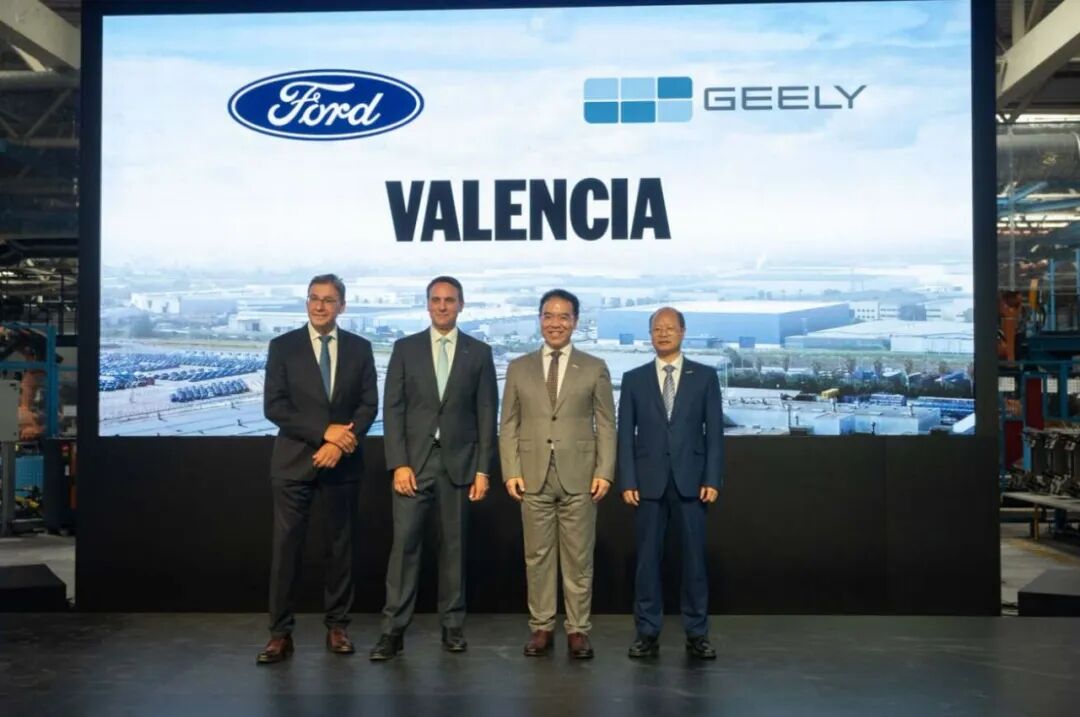
A 650 Million Euro Plant Acquired for 221 Million Euros
The acquisition announcement released by Geely shows that the 221 million euro consideration is determined through mutual consultation with reference to the "agreed enterprise value of 650 million euros" of the target company — 650 million multiplied by 34% is exactly 221 million euros. In other words, the overall price Ford set for this plant with an annual capacity of about 500,000 vehicles, a complete supply chain and a skilled workforce is 650 million euros.
Li Shufu's shrewdness is first and foremost hidden in this price.
Comprehensive information from Tianyancha Media shows that BYD's self-built greenfield plant in Szeged, Hungary has a total investment of 4 billion euros and a first-phase capacity of 150,000 units. It took more than two years from the official announcement to the trial production in January this year, and the official mass production was one year later than originally planned; SAIC's new plant in Galicia, Spain has a budget of about 200 million euros, a planned annual capacity of only 120,000 units, and is expected to be put into production at the end of 2028. Compared with these projects, Geely used less than a fraction of the cash of BYD's Hungarian project to lock in more than 30% of the capacity equity of a mature plant.
Geely only takes a 34% stake, does not hold controlling interest, does not consolidate the statements, and accounts for the investment by the equity method, while Ford still takes charge of plant management. The announcement clearly states that the joint venture is positioned only to carry out "contract manufacturing" of passenger cars, and will not engage in product design, R&D, brand promotion and sales. Strictly speaking, what Geely obtained is not the management right of a company. What it pursues are mainly two things: the qualification to produce freely in Europe two years later, and an existing local production line. This equity design is actually more valuable than the price.
The draft "Industrial Accelerator Act" released by the European Commission this March can explain why the share ratio is exactly set at 34%: the draft plans to set restrictions on foreign investment projects of more than 100 million euros: the shareholding ratio of foreign investors in EU enterprises shall not exceed 49%, the proportion of local EU employees shall not be lower than 50% (mandatory clause), and at least 30% of product procurement shall come from the EU. The draft has not yet taken effect, but the 34% share ratio is exactly within the policy red line, and this factor is most likely taken into account in the transaction design — signing before the rules are tightened is the most valuable part of this deal itself.
Since October 2024, the European Union has imposed anti-subsidy duties on pure electric vehicles made in China. The applicable tax rate for Geely is 18.8%, plus a 10% basic import tariff, the comprehensive tax burden reaches 28.8%. For a car with a CIF price of 20,000 euros, nearly 6,000 euros of extra tariffs need to be paid. Geely Holding Group (including Volvo) sold 225,000 units in Europe in the first half of the year. If this volume is completely imported as complete vehicles, the annual tariff bill will be calculated in hundreds of millions of euros. The 221 million euro shareholding cost will be earned back from the saved tariffs within a few years as long as the local production volume rises — this is the most direct return on this investment.
Ford Needs Geely
The Almussafes plant was put into production in 1976, and it is exactly 50 years old this year. It has rolled out more than 11 million vehicles in total, including Mondeo, S-MAX, Galaxy and Kuga. Several old models were discontinued one after another in the past few years. By 2024, only the Kuga model was left in this plant; in the whole year of 2025, the actual output of the plant was less than 100,000 units, which was only about 20% of the designed capacity.
In 2025, Ford's revenue reached a record high of 187.3 billion US dollars, but its net loss reached 8.182 billion US dollars — a one-time provision of 19.5 billion US dollars in special project expenses in the fourth quarter was directly related to the cancellation of some large electric vehicle plans and global business restructuring. In terms of sales volume, Ford sold 4.395 million vehicles worldwide in the whole year, and was surpassed by BYD's 4.6 million units for the first time. In the European market, Ford only sold 192,000 units in Europe in the first half of this year, a year-on-year decline of 15.2%, and its market share was only 2.7%.
In the same period, Geely Holding Group (including Volvo) sold 225,000 units in Europe, a year-on-year increase of 8.5% — the buyer's sales in Europe have exceeded that of the seller.
The Saarlouis plant in Germany that produced Focus has come to an end, and the manufacturing business in the UK continues to shrink. Ford's territory in Europe is retreating all the way, and Valencia is the position it wants to hold. But a plant with an operating rate of only about 20% is burning fixed costs every day. It either finds new models to fill the production capacity, or faces the trouble caused by plant closure and layoffs.
The arrival of Geely solves several problems at once: it spreads the fixed cost, preserves local jobs, and can make up for the shortcomings of new energy through joint development.
The future production plan of this plant has been arranged until 2028: Ford will continue to produce Kuga, and will launch a new hard-core compact SUV of the Bronco family by then, plus a new Ford-brand Crossover designed by Ford and jointly developed with Geely; Geely will launch two new energy SUVs. According to foreign media reports, one of them is EX2, the overseas version of Geely Xingyuan which sells tens of thousands of units per month in China. Sanchez's presence at the signing site is equivalent to the Spanish government's endorsement of this deal — the autonomous regions of Spain are competing fiercely for attracting investment from Chinese automakers.
From Exchanging Market for Technology to Exchanging Technology for Market
Looking back at the two handshakes between Geely and Ford, they just stepped on two different stages of the globalization of China's automobile industry. When acquiring Volvo in 2010, the transaction logic was a typical case of exchanging market for technology: Geely provided capital, Chinese channels and consumer market, in exchange for Volvo's brand, safety technology and global reputation. At that time, Geely needed to get rid of the "low-end commuter car" label with the help of Volvo. Li Shufu's judgment at that time was very accurate — Geely is Geely, Volvo is still Volvo, the two are not father-son relationship, but brotherhood.
This sentence later proved to be one of the most correct decisions he ever made.
16 years later, the party holding the core technology has become Geely. In 2026, Geely has complete three-electric technology, plug-in hybrid system, intelligent cockpit and assisted driving capabilities. Its global sales volume in the first half of the year reached 1.423 million units, with a new energy penetration rate of 56%. On the contrary, Ford, which once exported technology to China, needs to work with Geely to jointly develop a new energy Crossover to save its European business.
Geely is not the only Chinese automaker eyeing idle production capacity in Europe.
Nissan signed a memorandum of understanding with Chery in June this year. The first production line of the Sunderland plant in the UK will start OEM production for Chery as early as fiscal year 2027 — that plant used to be the efficiency benchmark in Europe, but its operating rate in 2025 was only 45.5%, while Nissan is planning to cut the number of global plants from 17 to 10. Stellantis has gone further: a new production line at the Zaragoza plant in Spain will produce Leapmotor B10, and it also plans to transfer the ownership of the Madrid Villaverde plant directly to the joint venture Leapmotor International, which is the first case among mainstream Western automakers. XPeng did not take stakes in any plant, and realized local manufacturing through Magna's OEM production line in Austria. As a result, its European orders have exceeded the capacity of the Graz plant, and it is now working on capacity expansion.
Caixin previously observed an interesting differentiation: when Chinese automakers land in Spain, they all choose joint ventures and rely on existing plants to revitalize stock assets; in Hungary, greenfield investment represented by BYD's 4 billion euro self-built plant is the main mode. The path of revitalizing stock assets through joint ventures has the advantages of fast speed, low cost, and shared risks, at the cost of giving up part of the control right; self-built greenfield plants can get full autonomy, but heavy asset investment and long construction cycle are unavoidable — it took BYD's Hungarian plant three years from the official announcement to mass production.
The reason why stock capacity cooperation is widely accepted is very straightforward: the existing production qualification, supply chain foundation and skilled workers are all in place. Transformation is much faster than new construction, and the initial investment is much lower, which is equivalent to moving into a fully furnished house. European automakers get rid of the burden of idle capacity, and Chinese automakers get the identity of local manufacturing and the qualification to avoid tariffs, each taking what they need. However, the EU's policy window is narrowing. The draft Industrial Accelerator Act has clearly listed restrictions on share ratio, employee proportion and procurement ratio, and the negotiation difficulty of each subsequent transaction will be greater than the previous one.
The Solid Foundation Behind 474,000 Units of Sales
In the first half of the year, Geely's cumulative global sales reached 1.423 million units, of which 474,000 units were overseas, a year-on-year increase of 158%, exceeding the total export volume of the whole year of 2025. Overseas sales accounted for 33.3% of total sales — one out of every three cars sold by Geely is sold overseas. This figure was less than 14% for the whole year of 2025, and it took only half a year for overseas sales to grow from a supplementary business to a pillar business.
Geely's half-year report explains why it dares to make a move in Spain at this time.
However, there are details worth noting behind this explosive growth. Geely's domestic sales actually fell by 22.6% in the first half of the year, and the total sales volume only increased by 1% slightly. The high growth in overseas markets is more like a rescue, which has effectively offset the domestic decline. In June, overseas sales reached 102,874 units in a single month, exceeding 100,000 units for the first time, achieving year-on-year and month-on-month growth for six consecutive months. The company also raised its annual export target from 750,000 units to 1 million units.
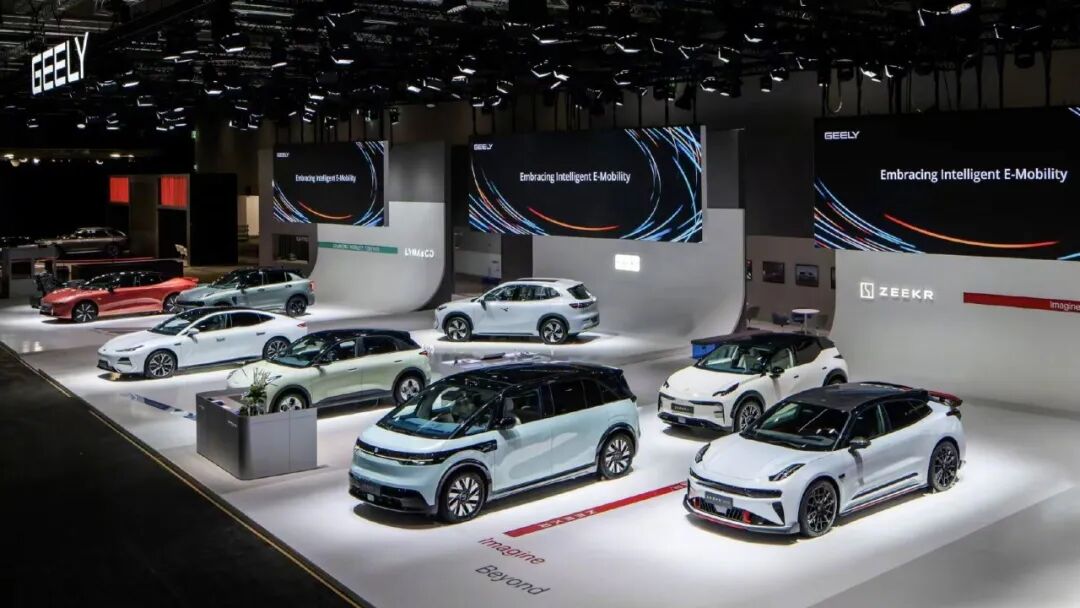
Among the products exported in the first half of the year, new energy vehicles accounted for 277,000 units, a year-on-year increase of 585%, accounting for 58% of total exports. This proportion has reached 61% in the single month of June. This means that Geely's overseas expansion does not rely on low-cost fuel vehicles to achieve large sales volume, but takes new energy products as the core output. Zeekr delivered 178,400 units in the first half of the year, a year-on-year increase of 97%, with an average unit price of about 350,000 yuan; Galaxy Starship 7 sold more than 220,000 units in 57 countries around the world, ranking first in the sales of plug-in hybrid segments in Croatia and Australia; Xingyuan topped the sales chart in Uruguay in the second month after its launch, and steadily ranked among the top three in monthly sales in Brazil.
In the first half of this year, Geely was also the only mainstream automaker with rising share price among A+H shares. 46 international asset management institutions and investment banks increased their positions or built positions. BlackRock became the second largest institutional shareholder of Geely with a 4.59% stake, and American Century Investment Management has increased its positions for ten consecutive quarters. The day after the acquisition announcement was released, Geely's share price rose more than 4% during intraday trading, hitting a maximum of HK$19.30. Both Citi and Jefferies gave buy ratings, with the highest target price of HK$30.
In the eyes of institutions, what is really valuable is the long-term space behind this light-asset globalization strategy — from Volvo's European plants, to the existing networks in the hands of Proton and Renault, to this Ford production line, Geely rarely builds its global layout brick by brick on its own, but more turns the resources of partners into its own springboard.