Apple has turned "phone rental" into an official service. Will this make iPhones more affordable for more people?
Just yesterday, Apple officially launched a new service called Apple Upgrade in the United States. In short, users no longer need to purchase iPhone, Mac or iPad in one lump sum, but pay for these devices on a monthly basis. After using them for a period of time, you can choose to buy the device out in one payment, replace it with a "new generation" product, or simply return it.
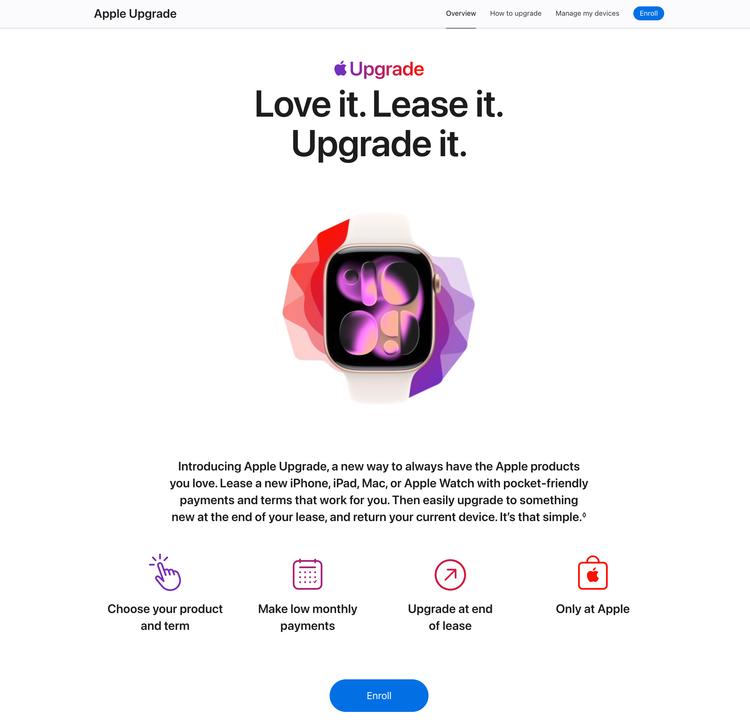
Image source: Apple
Many people may find this logic familiar, because similar models have long existed in China, covering everything from enterprise office equipment to personal digital products, such as the former "Yidianzu".
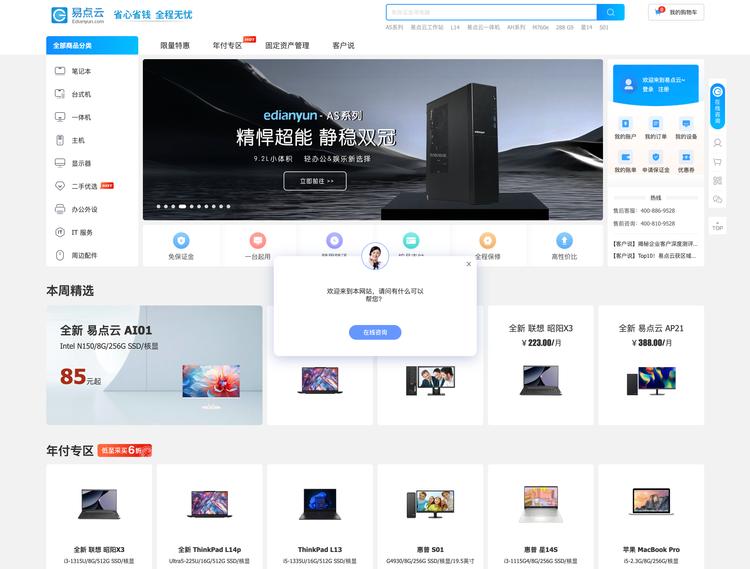
Image source: Yidianyun
The difference is that this time Apple itself is launching this service. It may seem like just a change of sales channel, but it has fundamentally altered one core point: are users "buying a device" or "using a device"?
In the past, buying an iPhone was a very straightforward "decision" for users. They spent a considerable sum to purchase the device, then used it as long as possible. Many people would use the same phone for three years or even longer: they would replace the battery when the battery life degraded, and consider changing to a new phone only when the performance of the old one was no longer sufficient. The entire device replacement cycle was entirely decided by the user.
Now, Apple is offering an alternative path: pay a small sum every month, and you can always rent the latest device. On the surface, this does lower the threshold for getting Apple devices, especially for people who are reluctant to pay a large sum of money all at once. This "monthly payment" method barely causes any psychological burden for users.
You can simply understand it as Apple expanding its "iPhone Upgrade Program" from iPhones to its entire product ecosystem. iPhone and Apple Watch support up to 24 installments, while Mac or iPad support a longer 36-month payment period. During the lease term, you can "upgrade" your device to a newer model at any time.
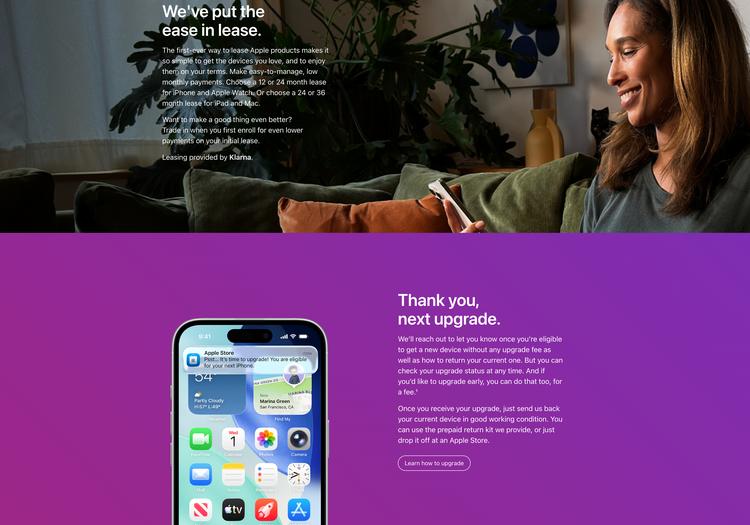
Image source: Apple
The problem, however, is that it only lowers the threshold of "starting to use the device" rather than the "overall cost".
Splitting the full price of a phone into monthly rental payments certainly seems much more manageable, but if you look at it over a longer period of time, this continuous payment model is very likely not cheaper than buying the device directly. Especially when users get used to "easily upgrading to a new device" every one or two years, they will barely have the chance to "stop" the payment.
This is just like Apple's other software subscription services. At first, the monthly fee is very small, but once it becomes the default option, users rarely seriously calculate whether the money they spend is worth it.
What is more interesting is that this model will change the relationship between users and their devices.
In the past, when you owned a phone, it was your "fixed asset". You could decide when to replace it, when to stop using it, and even resell it. Under the rental model, the device is more like a "resource in use", and your control over it is limited. You only have the right to use the device temporarily, not the ultimate ownership of it.
In this context, users will more naturally accept upgrading to a new device every year, since "I am paying for it anyway". This payment method also makes it harder for users to leave the Apple ecosystem, as the entire usage path is tied to a continuous payment system.
From Apple's perspective, this is obviously a much more cost-effective business. Getting users to pay continuously is clearly a more stable and predictable cash flow. More importantly, this bundled payment approach locks users into a more closed loop: everything from devices, operating systems to software services is bundled together.
Building the "moat" of the software payment ecosystem is what Apple has been working on for years. The only difference this time is that it has included "hardware" into its subscription system.
It started with iTunes and the App Store, then AppleCare, followed by Apple Music, iCloud, Apple TV+, and finally Apple One. Apple's first-party services have gradually helped users form a good habit of paying for "continuous experience", and now even the device itself has become an object that can be subscribed to.
Image source: Apple
In other words, what Apple is selling now is no longer just products, but a complete set of continuously operating usage relationships.
Will this new service make Apple devices "affordable for more people"? I don't think it will be that easy.
This brand-new "rental" service does make it easier for more users to start using Apple devices, but at the same time, it also makes users more likely to stay in this system and pay continuously for a long time, without seriously thinking about "whether I really need it".
To put it more bluntly: this service does not make Apple's devices cheaper, but makes the "high cost" much less noticeable.
You no longer need to face a large one-time expenditure, but spend money little by little in a more "painless" and acceptable way. When this method becomes mainstream, users may hardly be able to return to the old pattern of "buying one device and using it for many years".
This rental service is not so much a customer acquisition measure as Apple rewriting the rules for selling products: in the future, the way we use devices will increasingly resemble a subscription, rather than owning the product.
This article is from WeChat official account "Impartial Lab", written by Lu, and published with authorization from 36Kr.