How has Hangzhou, long tagged with the "soft" label, managed to foster such robust "hard bones" of core competitiveness?
These past two days, the listing of Changxin Semiconductor has gone viral across all major platforms, with its market value soaring to over 3 trillion yuan and claiming the top spot in the A-share market. The outside world has found that the biggest winner turns out to be Hefei, which has earned generous returns entirely by relying on its precise investment vision and long-termist spirit.
In fact, behind every standout hard-core city lies its unique development strategy. Take Hangzhou for instance: with its own set of ecological logic, it has fostered hugely popular tech upstarts including DeepSeek and Unitree Robotics.
In 2015, Liang Wenfeng, then 30 years old, had already established a firm foothold in the private equity circle through High-Flyer. At that time, his core idea was to use AI algorithms to restructure trading, while in his mind, the application boundary of AI was far beyond the stock market. This obsession with general artificial intelligence eventually gave birth to DeepSeek, which later gained global fame.
In 2016, Wang Xingxing also came to Hangzhou, and founded Unitree Robotics from scratch in a small 50-square-meter office in Binjiang District. In the early days of the entire venture, the robotics track was not favored by the market, and Unitree was even once labeled as a "toy" brand. At the most difficult time, the company had only a little over 100,000 yuan left in its account. Wang Xingxing had to suspend his own salary and even paid out of his own pocket to barely keep the company running. Now, Unitree Robotics has become the most popular enterprise in the domestic embodied intelligence field.
Today, the two enterprises have become two key players of the "Six Young Dragons of Hangzhou". At the 2026 World Artificial Intelligence Conference that concluded just a few days ago, more than 50 Hangzhou-based enterprises made a centralized appearance, covering the entire industrial chain from chips and computing power to robots. From the "Six Young Dragons" to the current "New Eight Steeds", and then to thousands of emerging sci-tech innovation startups, Hangzhou's hard tech landscape is no longer propped up by only a handful of scattered enterprises.
When people mention Hangzhou, non-local residents first think of the water towns in the regions south of the Yangtze River, and the mist-shrouded West Lake. The whole city exudes a soft vibe. Even its most well-known local enterprises are labeled as "soft": Taobao that focuses on e-commerce, NetEase that focuses on games.
What makes me curious is: why has a city famous for its "soft" features suddenly achieved collective breakout in the hard tech sector?
Hard-core CEOs, Their Arduous Journey to Today
In 2002, 17-year-old Liang Wenfeng won the top score in the national college entrance examination, with his score exceeding the admission line of Tsinghua University. While everyone advised him to seize the admission ticket to China's top-tier university, he gave it up decisively and chose to study machine vision at Zhejiang University.
In 2009, when Liang Wenfeng was still pursuing his postgraduate degree at Zhejiang University, he joined Shanghai Aiki Information Technology Co., Ltd. founded by his alumni as an intern. Zhou Chaoen, the founder, recalled his first impression of Liang: "He wore a pair of glasses, was gentle and polite, slim, and gave people a quiet and reserved impression." But this "quiet and reserved" intern often stayed in the office all day to work on technical problems after joining the company, "even not stepping out for half a day".
One year, the company was preparing performance programs for its annual meeting. Liang Wenfeng kept declining the invitation at first, saying he was not good at performing. After repeated invitations from others, he agreed. The moment he stepped onto the stage, he "instantly ignited the atmosphere of the whole venue". His performance was full of creativity and passion, and he won the first prize without any suspense. Zhou Chaoen said later: "That performance showed us his determination that 'if you do not do something, you must do it to the best once you start it'."
A person who looks "quiet and reserved" hides the tenacity of "either do not do it, or do it to the best" in his heart. This contrast has run through his life for more than ten years afterwards.
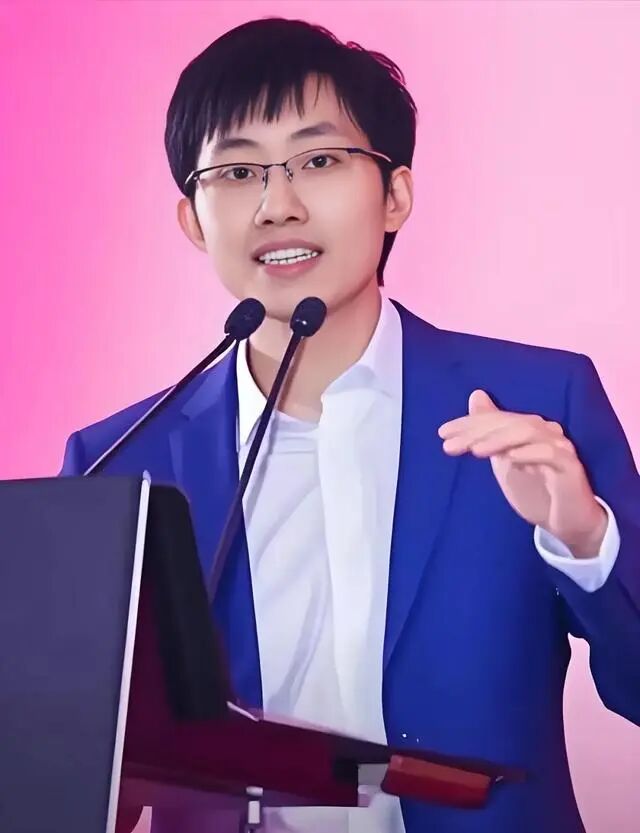
When Liang Wenfeng graduated, the quantitative private equity industry in Hangzhou had begun to take shape. Institutions including Longcheer Technology and Egret Investment settled in the city one after another, followed by a cluster of data service providers. He co-founded Hangzhou Jacobian Investment with his classmates from Zhejiang University, officially stepping into the quantitative investment field and taking it as the base for his in-depth exploration of AI.
In the following years, High-Flyer grew rapidly like a snowball with its own capital, and its scale exceeded 100 billion yuan in 2021. He then spun off DeepSeek as an independent entity, devoted himself entirely to developing general large models, and finally rose to widespread fame.
But for a very long period of time, the outside world did not understand him.
Yan Junjie, the founder of MiniMax, arranged a dinner with Liang Wenfeng for the first time, and the two had never met before. Yan arrived earlier, and saw a young man in a T-shirt sitting by the table, with plain clothes and an unremarkable appearance. The young man did not introduce himself, but directly asked a lot of technical questions. Yan thought to himself: "This assistant knows a lot about technology."
After chatting for half an hour, Yan Junjie could not help asking: "When will Mr. Liang arrive?" The "assistant" opposite looked up and said: "I am Liang Wenfeng."
As Liang Wenfeng appeared more in the public view, the public's understanding of him gradually deepened. There are always two traits in him that are in dynamic balance: one is "not fighting for unnecessary gains", the other is "never backing down from setbacks".
For example, some media reported that he set an iron rule in the early stage of starting his business: no financing, no equity dilution, no being kidnapped by commercialization. But as the global AI competition became increasingly fierce and leading enterprises poached talents aggressively, he broke the rule and started external financing. Even after making this compromise, he still firmly held the controlling stake and stuck to his own business philosophy.
This way of life forms a tacit contrast with another hard-core entrepreneur in Hangzhou.
Unitree Robotics founded by Wang Xingxing has already been the global leader in the shipment volume of quadruped and humanoid robots. In July this year, he put forward a judgment at the World Internet Conference: the "ChatGPT moment" of embodied intelligence will arrive in 2 to 3 years at the earliest.
Few people know that this pioneer in the track once stood at the crossroads of fate many times.
In 2016, when he prepared to start his business, he visited many cities and finally chose Hangzhou. He was attracted by the mature precision manufacturing chain here: molds, motors, complete machine assembly, all processes from design drawings to prototypes can be completed smoothly. For robots that require repeated mold modification and continuous trial and error, the time saved is extremely critical.
At the 2017 World Internet Conference, a group of industry leaders including Lei Jun and Wang Xing sat at the same table, while 25-year-old Wang Xingxing sat at the very edge. During the prototype demonstration, the robot dog crashed directly when crossing the threshold. The atmosphere at the scene was so awkward that no one spoke.
Zhang Peng, the founder of GeekPark, recalled later that Wang Xingxing did not even add the WeChat accounts of those industry leaders after the event, and no investor came to talk to him. Back to his place that night, he disassembled and reassembled the robot dog over and over again. At 3 a.m., he found the code loophole that caused the crash, and then posted one single word on his WeChat Moments:
Solved.
Later, relying on the supply chain advantages and open scenarios in Hangzhou, Unitree kept iterating its products. Its robot dogs have appeared in the Spring Festival Gala, Winter Olympics and Asian Games, and gradually seized the global market.
The personal choices of the entrepreneurs certainly stem from their own long-term vision, but the question really worth exploring is: why is it Hangzhou that can support the ideals of two top hard-core CEOs at the same time?
From the Ups and Downs of Two CEOs to the Inflection Point of a Whole City
The stories of Liang Wenfeng and Wang Xingfeng can be seen as a microcosm of Hangzhou's transformation to a "hard tech" city. Beneath this microcosm, the industrial foundation of the whole city is being completely renovated.
For a long time, Hangzhou has been labeled as a "soft" city. E-commerce, cultural tourism and games are the city's traditional strengths, which feature quick profits and large scale, but are essentially focused on model innovation. Every time people talk about hard tech, the first things that come to their mind are the hardware industry in Shenzhen, the chip industry in Shanghai, and scientific research institutes in Beijing, and Hangzhou was never related to the field.
Over the past decade, the office buildings in Hangzhou have been filled with e-commerce operation agencies, live streaming marketing teams and MCN institutions. Their signboards are densely distributed and keep changing, and the only thing that remains unchanged is that every enterprise wants to grab a share of the internet market.
Changes have been taking place quietly.
Last year, when I passed by West Wenyi Road, the directory signs in the lobby of an office building that used to be full of live streaming companies had been mostly replaced. Many new names with the suffixes of "XX Semiconductor", "XX Robotics" and "XX Intelligence" appeared. The convenience store owner downstairs said that many companies in the building have been replaced in the past two years. In the past, the people who came to buy coffee every day were all live streamers, but now they are a group of young people in plaid shirts who do not talk much, and all they discuss are models and chips.
The office buildings are still the same, but the people writing the stories inside have been completely renewed.
If we need to pick a representative for this change, it is probably Lao Zhou.
Lao Zhou has been working in the internet industry in Hangzhou for 12 years. He worked in e-commerce operation for the first 8 years, and then transformed to algorithm data services in the following 4 years, helping AI companies with data labeling and model testing. He told me that in 2016, all his friends were talking about how to get more traffic, improve conversion rate and increase GMV. Since 2025, all the topics have changed. Everyone is talking about large models, computing power, robots, the latest updates of Unitree's robot dogs, and what technical route DeepSeek has adopted.
Lao Zhou said a sentence that left a deep impression on me: "In the past, we thought hard tech was the business of Beijing, Shanghai and Shenzhen, and people in Hangzhou only needed to focus on e-commerce. Now we suddenly find that these hard tech achievements are right around us, and many of them are developed by people from Hangzhou."
Lao Zhou is not an isolated case. Around him, there are many similar people: people who transformed from internet operation posts to AI project managers, and product managers who switched to robot application implementation. Behind this trend, a large number of hard tech enterprises have taken root in Hangzhou.
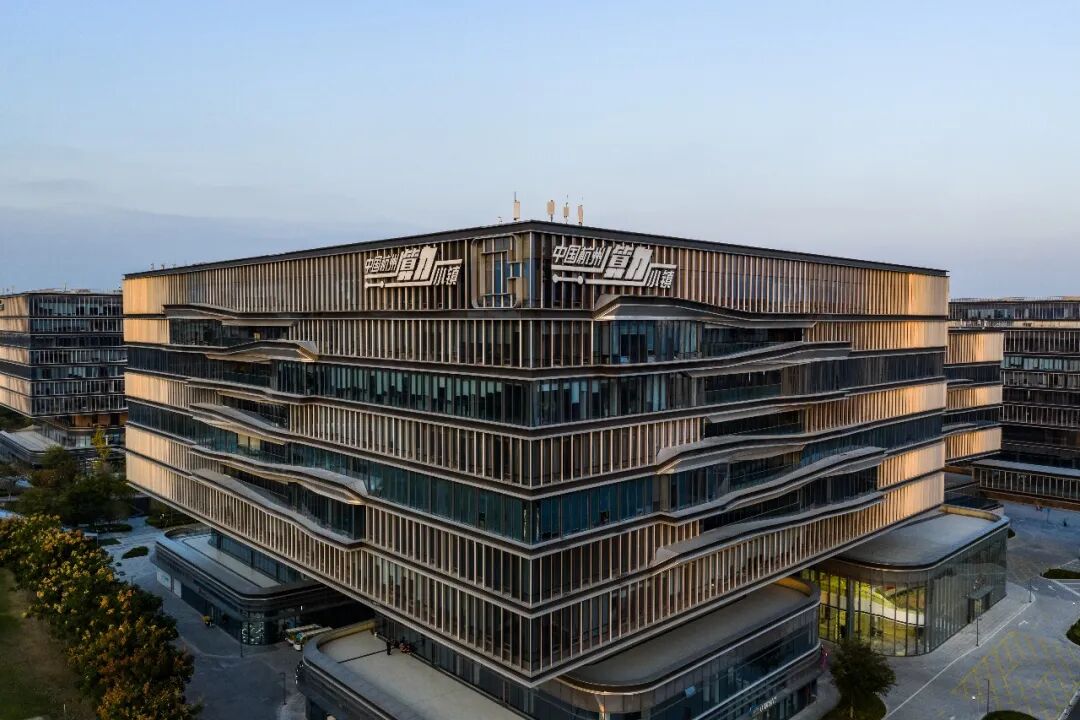
The collective breakout of the "Six Young Dragons" has made the whole nation re-recognize Hangzhou. These six enterprises — DeepSeek, Unitree Robotics, Game Science, BrainCo, Deep Robotics, and Qookka — are distributed across different tracks from large models to robot dogs, from game engines to brain-computer interfaces. None of them are engaged in e-commerce or internet platform business.
Right after the "Six Young Dragons", the "New Eight Steeds" are catching up quickly.
The eight enterprises, including Lingban Technology that develops AR smart glasses, Earthii that focuses on space computing power, Jinglianwen Technology that provides AI data services, Xino Future that develops dexterous robot hands, Xiwang Technology that develops AI inference GPUs, NanoCore that develops processing-in-memory chips, Biboost that develops intelligent chassis, and Enhe Technology that focuses on synthetic biology, are all rooted in underlying technology research and development.
The echelon development from leading enterprises to reserve teams has finally formed a solid industrial foundation. In the first quarter of 2026, Hangzhou's GDP reached 6.109 trillion yuan, ranking 8th nationwide; the added value of the core digital economy industry reached 1.77 trillion yuan, accounting for 29.0% of the GDP, with a year-on-year growth of 9.8%.
Why did this change take place? The answer lies in the unique sci-tech innovation ecosystem of Hangzhou.
What Kind of Soil Can Nurture Hard-core Companies One After Another?
The most remarkable advantage of Hangzhou is not simply inviting enterprises to settle in, but enabling enterprises to survive, grow and expand smoothly here.
Many cities provide policies, subsidies and office spaces for enterprises, but what Hangzhou does is more like cultivating a fertile soil: capital is willing to place bets in the early stage of startups, talents can settle down with peace of mind, technologies and products have real scenarios for verification, and government services remove the most time-consuming thresholds for enterprises step by step.
Therefore, the emergence of hard tech enterprises here is by no means accidental.
The first step of sci-tech innovation is always capital. Without financial support, hard-core technologies may not survive to the day of commercial landing.
In the winter of 2011, Huang Xiaohuang, Chen Hang and Zhu Hao, three top talents with education backgrounds of Zhejiang University and Tsinghua University and working experience in Nvidia and Google after studying in the US, gave up the stable jobs in Silicon Valley giants. They returned to Hangzhou, gathered 400,000 yuan in a residential apartment and founded Qookka.
At that time, they had no reputation, no industry connections and no mature business model. The company barely had any revenue in the first year and a half after its establishment, with a cash flow of more than 100,000 yuan being consumed every month. At the most difficult time, the company could hardly pay salaries. Without the aura of famous enterprises and high salary promises, no one was willing to bet on a company that could barely make ends meet.
In 2013, the 1.5 million yuan investment from Hangzhou became the life-saving fund. Zhu Hao recalled later: "The day when this fund arrived in our account, we finally did not have to rely on outsourcing projects to survive." Data from Tianyancha shows that Qookka was listed on the Hong Kong Stock Exchange in April 2026, with a market value exceeding 15 billion yuan. The initial 400,000 yuan gathered in a residential apartment has realized a value appreciation of tens of thousands of times.
This kind of "providing timely help" is not an isolated case. In 2009, Bank of Hangzhou established the first sci-tech specialized sub-bank in Zhejiang Province, breaking away from the traditional credit logic that prioritizes financial statements, and taking patents, technologies, team strength and growth potential as the core evaluation criteria. By the end of 2025, this bank has served more than 30,000 sci-tech innovation enterprises, and accompanied more than 500 companies through the whole process of getting listed.
With sufficient capital support, talents are the next essential element. The competition in hard tech sector is ultimately the competition for talents. But talent attraction work does not end with "bringing talents in". What is more important is to make them feel secure and willing to stay.
BrainCo, the brain-computer interface enterprise, has many founding team members from Harvard and MIT. In 2018, it was just a small company crowded in a humble office in Boston. The team from Hangzhou flew more than 10,000 kilometers to connect with the team, and each communication lasted for 3 to 4 hours.
What made Han Bicheng, the founder, feel very unexpected was that most of the topics the Hangzhou team discussed were about the future of brain-computer interface, and they also shared the latest progress of several brain-computer interface professor experiments in Hang