Behind the 3 trillion Changxin, a hidden Tsinghua circle
On July 27, 2026, the highly anticipated Changxin Technology was officially listed for trading. Its closing price on the first trading day reached 49.00 yuan per share, representing a 465.82% increase over the issue price. The total market capitalization at market close that day stood at approximately 3.28 trillion yuan, ranking it the top by market value on the A-share market.
The listing of one enterprise drives the growth of the entire industry — there are more than 30 semiconductor enterprises under the Tsinghua alumni ecosystem, covering the full industrial chain of memory, chip design, image processing, radio frequency, and AI chips. Their combined market capitalization had already hit the trillion-yuan level before Changxin Technology went public.
I go first, you follow
Every track in the chip industry lacks pioneers who dare to be the first to step in.
If no one takes the first step, there will be no path — capital cannot judge whether the direction is feasible, and local governments cannot decide whether to place their bets.
For Tsinghua alumni engaged in the chip industry, there is a prevailing mindset: go ahead first, be the first to charge in.
Those who move first take all the risks and explore the unknown with their own efforts.
In the image sensor chip track, Yu Renrong was the pioneer.
He founded Will Semiconductor in 2007, acquired OmniVision in 2019, and broke into the top 3 global CMOS image sensor vendors, with his net worth once exceeding 90 billion yuan.
In the radio frequency chip track, Feng Chenhui was the pioneer.
In 2012, he co-founded Maxscend with Xu Zhihan and Tang Zhuang to develop domestic alternatives for RF front-end chips, whose market value once exceeded 100 billion yuan.
In the AI chip track, Zhao Lidong was the pioneer.
In 2018, he founded Enflame Technology in Shanghai to develop domestic cloud AI training chips. Now, its STAR Market IPO application has been approved by the listing committee of the Shanghai Stock Exchange, with a planned fundraising of 60 billion yuan to fully invest in the R&D of new-generation AI chips.
Most of these people share one common identity — Class of 1985, Department of Electronic Engineering, Tsinghua University, who call themselves "EE85". From this single class, at least 14 people have entered the semiconductor industry, most of whom are industry trailblazers covering almost the entire chip industrial chain.
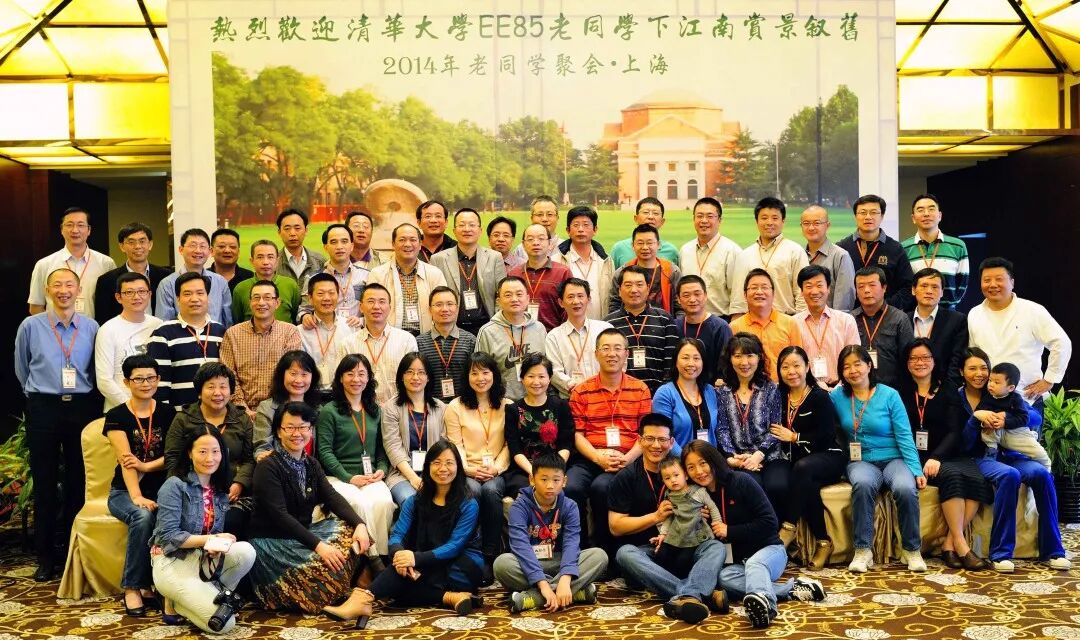
EE85 alumni gathered in Shanghai in April 2014, Source: Department of Electronic Engineering, Tsinghua University
EE85 is neither the starting point nor the end point.
Before them, earlier Tsinghua alumni co-founded OmniVision in Silicon Valley in 1995, and developed the world's first single-chip color CMOS image sensor.
80% of the OmniVision team are Chinese, 80% of the Chinese members are international students, and 80% of those international students are Tsinghua graduates. Later, Yu Renrong's acquisition of OmniVision was essentially taking over the baton from his senior schoolmates.
In 2001, another group of Tsinghua alumni returned from Silicon Valley to China and founded Spreadtrum Communications in Zhangjiang, Shanghai. Two years later, they launched the world's first integrated single-chip for GSM/GPRS multimedia baseband.
After EE85, Zhu Yiming is a typical representative.
He is from the Class of 1985, Department of Physics, Tsinghua University, but followed the same path — go ahead first, spare no effort, and make it work.
In 2005, he returned from Silicon Valley to develop NOR Flash, made the business a success, and built GigaDevice which now has a market value of over 400 billion yuan.
Then he stepped into the more challenging DRAM field — at that time, the global DRAM market was monopolized by three vendors: Samsung, SK Hynix and Micron. No foundry services were available, no IP could be purchased, so the only option was to build factories independently and improve the yield rate on their own.
In 2016, he took action and started building his own factory to explore the path.
Hefei placed its bet on him, invested hundreds of billions of yuan over 10 years, and reaped all the returns in 2026.
There is a cruel rule in the chip industry: few people are willing to be the first to invest, but once someone proves the feasibility of the path, massive resources will pour in rapidly.
When alumni from the same class charge into different tracks respectively, once one of them makes the business successful, the rest will have full confidence — Tsinghua people can make chips.
Will Semiconductor's acquisition of OmniVision verified the localization path of CMOS, so that GalaxyCore and SmartSens know clearly where the upper limit of the industry lies. After Maxscend realized domestic substitution of RF chips, subsequent RF enterprises avoided half of the potential pitfalls.
The Tsinghua ecosystem is not a group of people fighting separately, but a mutually verified radar network — once someone makes a breakthrough, others will immediately know the direction is feasible, the risk decreases, and the development speed increases.
Capital and supporting policies also follow up subsequently.
Hefei won the bet on Changxin Technology through the "investment-driven industrial introduction" model, and earned its reputation as "the most outstanding venture capital city in China".
After the National Integrated Circuit Industry Investment Fund verified the feasibility of the model, Wuhan also launched the combined strategy of "Tsinghua ecosystem technology + local government support + national capital", and successfully established Yangtze Memory Technologies Co., Ltd. (YMTC).
The synchronized development of the two national-level chip bases marks that China has sounded the clarion call for domestic substitution in the memory chip field at the same time.
The success of one track becomes the signpost for all other tracks.
Who supports the pioneers?
Why these people? Why are these people able to take the first step?
In 1956, Tsinghua University established the semiconductor major. Li Zhijian was one of the founders. He produced high-purity polysilicon in 1958, and developed silicon alloy transistors in 1960.
In the workshop on Tsinghua campus, this pioneer pushed China's semiconductor industry from scratch step by step.
The Institute of Microelectronics of Tsinghua was founded in 1980, the first national key discipline of microelectronics was approved in 1988, followed by the establishment of the Department of Micro-Nano Electronics in 2004, and the School of Integrated Circuits in 2021...
Tsinghua University's investment in the chip industry has never been interrupted for 70 years, and the investment intensity is growing increasingly.
In this long line of development, one person plays a very special role — Wei Shaojun.
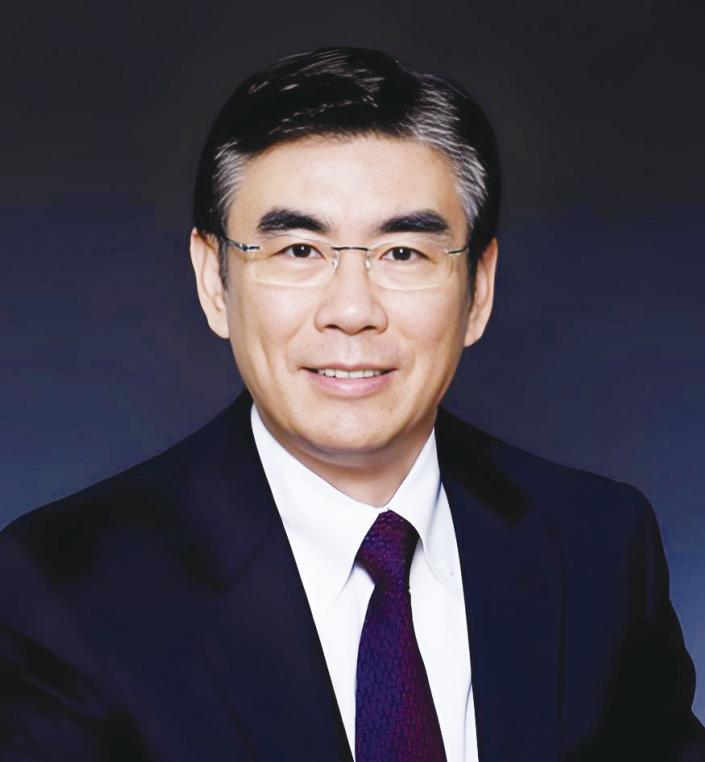
Source: China Informationization Weekly
He is a veteran in the semiconductor industry with experience spanning domestic and overseas markets, foreign-funded enterprises and state-owned enterprises. He once served as the president of Datang Telecom, and accumulated rich practical experience in the front line of the industry.
After returning to Tsinghua, he devoted himself to the field of reconfigurable chips, proposed a new paradigm of software-defined chips different from traditional GPU and instruction set architecture, and won the IEEE Industrial Pioneer Award.
Later, this concept was implemented in Qingci Technologies, a reconfigurable computing chip startup that is currently preparing for its listing on the ChiNext market.
He also serves as the chief technical engineer of the "Core High-Base" National Science and Technology Major Project, and is a key member of several core decision-making circles of China's chip industry.
Wei Shaojun still teaches on the campus of Tsinghua to this day. He has not founded any enterprise himself, but his students have established a large number of outstanding companies.
Wei Shaojun is far from the only one.
In 2021, the School of Integrated Circuits of Tsinghua University was established, with Wu Huaqiang serving as its first dean.
He is also a Tsinghua alumnus. After graduation, he obtained his Doctor of Engineering degree from the School of Electrical and Computer Engineering, Cornell University in the United States, and then served as a senior executive in an American technology company.
In 2009, he resolutely returned to Tsinghua campus and started his teaching career.
Apart from them, there are many more Tsinghua professors and educators dedicated to the chip field.
Since the production of single crystal silicon in 1956, generations of them have been deeply engaged in the semiconductor field: Li Zhijian developed the semiconductor industry from scratch, Wei Shaojun pushed IC design to the cutting edge of the industry, and Wu Huaqiang has cultivated thousands of outstanding talents for the industry, who not only make academic breakthroughs, but also connect the industry circles at home and abroad.
Over 70 years, several generations of academic institutions have cultivated more than 4,500 IC talents, 90% of whom have joined the front line of the industry.
The thriving EE85 community did not grow out of nothing. It is supported by the roots planted by generations of Tsinghua people for 70 years.
Where does the capital come from?
With solid foundations and sufficient talents, there is still one essential element missing — capital.
The chip industry is a huge capital consumer. Pure passion and small donations from alumni cannot support such a large industrial ecosystem. Behind the Tsinghua chip community, there is a capital line that runs parallel to the industrial and academic lines.
The first layer is the alumni fund.
In 2004, Zhu Yiming had very limited savings when he was in Silicon Valley, and wanted to start a business to develop memory chips.
He contacted Tsinghua alumnus Li Jun, who introduced him to Silicon Valley angel investor Shunpei Zhou, and then Tsinghua alumnus Deng Feng joined the investment. Several senior schoolmates raised a total of 920,000 US dollars.
This sum of money was all the startup capital of GigaDevice.
Deng Feng invested 50,000 US dollars. At the time of investment, he made a verbal agreement with Zhu Yiming that all the returns from this investment would be donated to Tsinghua. 12 years later, this sum of investment grew to 11 million yuan, and he did not keep a penny, donating all of it to Tsinghua.
This is not charity, but a closed-loop ecosystem.
Deng Feng himself is part of this closed loop. In 1997, he co-founded NetScreen with his Tsinghua classmate in Silicon Valley, which went public on NASDAQ in 2001 and was finally acquired by Juniper for 4.2 billion US dollars.
After obtaining the proceeds from the acquisition, Deng Feng did not retire on a private island. Instead, he returned to China and founded Northern Light Venture Capital, which now manages assets of more than 30 billion yuan, focusing on investing in early-stage technology enterprises.
The Tsinghua Entrepreneurs & Executive Club (TEEC) is the hub of this closed loop, whose mission can be summarized in six words: Receive help, help each other, offer help to others.
Deng Feng is one of the initiators of this club. In 2001, he and nearly 30 Tsinghua alumni jointly initiated the establishment of TEG, the predecessor of TEEC, in Silicon Valley, USA.
Deng Feng received help from his predecessors in his early days, funded Zhu Yiming later, and then donated all the returns back to his alma mater.
In 2014, the Shuimu Tsinghua Alumni Seed Fund was established.
It is the first fund in China dedicated entirely to supporting entrepreneurship of students and young alumni. All its partners are Tsinghua alumni, and it only invests in Tsinghua alumni, for a very simple reason:
There is no need for due diligence between alumni. Everyone in the circle clearly knows which laboratory you have worked in and who your supervisor is.
The second layer is professional chip funds.
WuYueFeng Capital was founded by three Tsinghua alumni: Wu Ping, Pan Jianyue and Li Feng, which has successively invested in GigaDevice, Wingtech Technology, Beijing Junzheng and Actions Technology.
Northern Light Venture Capital, founded by Deng Feng, has long accompanied the growth of early-stage hard-core technology enterprises.
In addition, Li Bin, who graduated from Tsinghua University School of Economics and Management, later led the restructuring of the 100-billion-yuan Tsinghua Unigroup through JAC Capital and Zhilu Capital, and served as its chairman.
The restructured new Tsinghua Unigroup covers the entire semiconductor industrial chain, with an annual revenue of 180 billion yuan.
All these funds follow the same logic: Our own people understand our own technology best.
The third layer is national capital.
The National Integrated Circuit Industry Investment Fund was established in 2014, with the first phase of 1.387 trillion yuan. Many of its heavily invested enterprises are connected with the Tsinghua ecosystem, such as Changxin Technology and YMTC.
State-owned assets of Hefei, Hubei Science & Technology Investment, and Yizhuang International Investment have also entered the market with capital and supporting policies, forming the iron triangle of Tsinghua technology + local policies + national capital.
The three layers of capital follow three different logics, and play different roles respectively.
Reinvest the proceeds to support the next generation of pioneers
The capital flows back, and the closed loop is completed.
There are many modes in this ecosystem, including but not limited to the following three:
The first mode is talents nurturing talents.
Deng Feng turned his 50,000-dollar investment into 11 million yuan and donated all of it to Tsinghua, which became a much-told story of repaying his alma mater. Seven months later, Shunpei Zhou, together with three other alumni Xue Jun, Xu Hang and Ni Zhengdong, followed suit and made donations.
Changxin Technology has set up a merit scholarship at Tsinghua, and its CEO Cao Kanyu, also a Tsinghua alumnus, personally returned to his alma mater to present the awards.
The second mode is successful modes replicating more successful modes.
Changxin Technology made the "Tsinghua technology + local policies + national capital" model a success, and Wuhan applied the same logic to build YMTC.
Pioneers verified the feasibility of the model, and later followers can directly replicate it. One city follows the footprint of another city, and one track is developed referring to the blueprint of another track.
The third mode is the university nurtures the industry, and the industry feeds back the university.
Tsinghua outputs talents, alumni funds invest in the angel round of startups, after the enterprises succeed and go public, they give returns and donations to the university, and the university continues to output more talents.
The trees planted by people like Wei Shaojun bear fruits, and the fruits fall back to the soil to nourish new growth.
In this closed loop, the pioneers complete the 0-to-1 breakthrough, the followers complete the 1-to-10 scaling, and the proceeds flow back to support the next generation to achieve growth from 10 to infinity.
The question of who supports the pioneers and where the capital comes from explains why the sustainable infinite growth can be realized.