In 2026, why do mobile phone manufacturers have to make Pocket phones?
The most intense battle in the consumer electronics industry in 2026 unfolds in a space no larger than a single pocket.
A niche product category once valued at 1 billion yuan by DJI itself has spawned a single product with sales of over 10 million units three years later. By 2026, Insta360, OPPO, vivo and Honor have started squeezing into this tiny market through different paths.
The pocket gimbal camera has evolved from a breakout hit of DJI into a new category fought over by the entire consumer electronics industry.
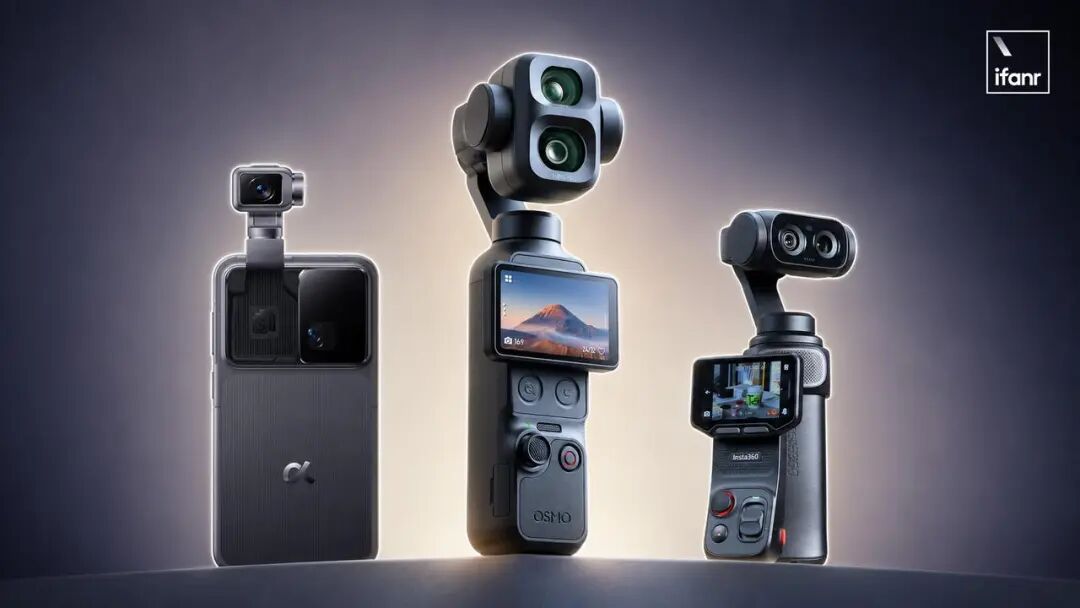
The timeline of pocket gimbal cameras has never been as dense as it is this year: In April, DJI released the Osmo Pocket 4; after a roughly two-month delay, the more professional dual-camera Pocket 4P finally went on sale. In June of the same period, Insta360 joined the fray with its first pocket gimbal camera Luna Ultra, equipped with a 1-inch main camera, 3x telephoto lens and detachable screen, stepping directly into the territory DJI has cultivated for years for the first time.
Honor took a more interesting approach, embedding a micro gimbal directly at the camera module position of the phone, paired with a 200-megapixel camera — this is a "Robot Phone".
According to ifanr's understanding, mobile phone manufacturers such as OPPO and vivo are also evaluating independent pocket gimbal camera projects. Public reports show that vivo has started recruiting test users for related products, while OPPO's internal project codenamed "Fuyao" is targeting a 2026 launch. Although the form and functions of the products are still subject to change, mobile phone manufacturers have already gathered around this gaming table.
It should be noted that for a long period before, when consumers mentioned pocket gimbal cameras, almost the only name that came to mind was DJI Pocket.
The question now is: Why did everyone, as if making a prior agreement, choose 2026 as their entry time?
A long-awaited growth curve
Mobile phone manufacturers have been waiting far too long for a new growth curve.
IDC data shows that in the first quarter of 2026, global smartphone shipments declined 2.9% year on year, ending the previous ten consecutive quarters of growth. The downward trend spread to every leading manufacturer, with Xiaomi, OPPO and vivo all affected. Mobile phone manufacturers are in urgent need of a new growth driver.
At this point, a device that has been verified by the market, priced at several thousand yuan, and whose technical stack is highly aligned with mobile phones, is irresistibly attractive.
And this market was almost unearthed after being buried for a long time.
There has always been an awkward price gap in the imaging market. At the lower end, mobile phone stabilizers priced at a few hundred yuan only solve the stabilization problem; at the higher end, interchangeable lens cameras priced from six to seven thousand yuan up to tens of thousands of yuan are the only options that can deliver satisfactory image quality.
Yet the 3000 to 5000 yuan price range in the middle is in the most delicate situation — this budget can get you an APS-C camera body, but not a decent lens; the 1-inch compact cameras that originally occupied this segment have lost competitiveness in the face of increasingly powerful mobile phone imaging, and their product updates have also fallen into stagnation.
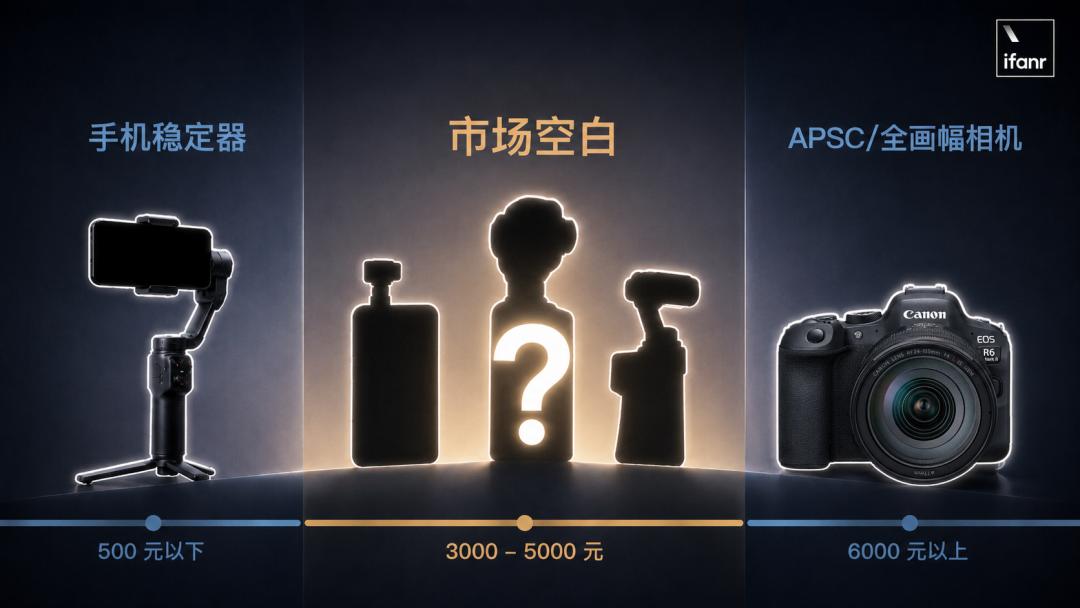
As a result, more and more people have found that when their phones cannot produce good photos and they only have a budget of 3000 to 5000 yuan, they have almost no other choices except to keep using their phones reluctantly, or grit their teeth and raise their budget to over 6000 yuan.
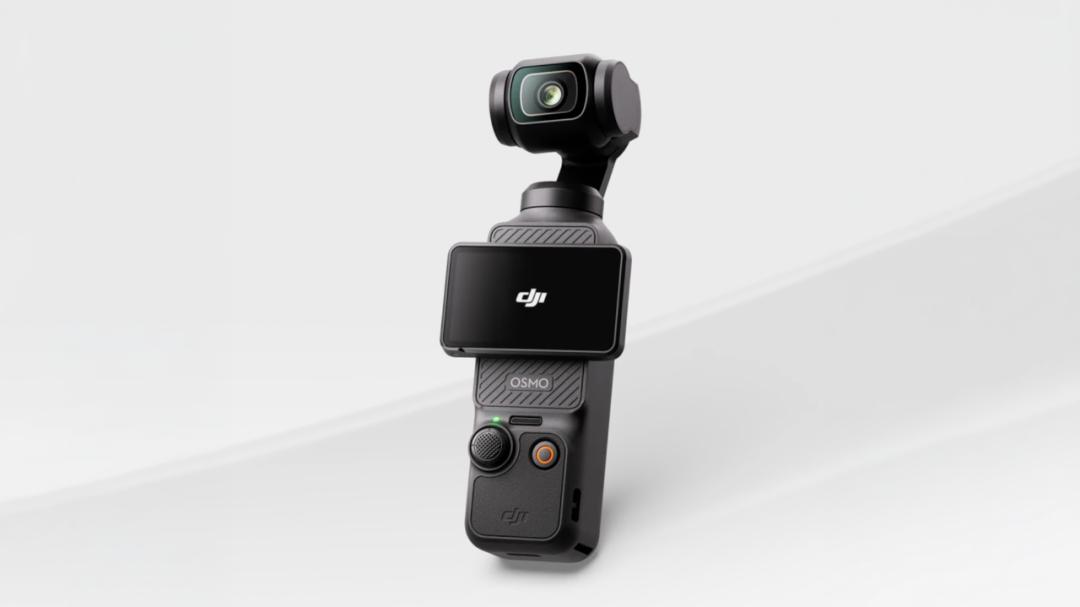
The launch of Pocket 3 injected unprecedented vitality into this price segment: it packs a camera, stabilizer, screen, and microphone into a device shorter than the palm of your hand, offering you the ability to "shoot anytime, get stable camera movement, and produce good-looking colors easily" at the price of 3499 yuan.
Frank Wang revealed in an interview with LatePost in 2026 that the Pocket 3 sold more than 10 million units in less than two years after its launch. DJI's initial judgment was that the entire handheld gimbal camera market was only worth about 10 billion yuan, but later they found that this category has quietly grown to hundreds of billions of yuan.
This is exactly the kind of growth curve that mobile phone manufacturers have not encountered for a long time — it has been verified by the market, but not yet fully finalized; it is close enough to the mobile phone supply chain, while leaving room for re-innovation.
More importantly, pocket gimbal cameras share almost all core capabilities with mobile phones: sensors, ISP, NPU, screens, storage, batteries, wireless connections, microphones, computational photography are all issues that mobile phone manufacturers deal with every day. The only three things they really need to supplement are precision motors, mechanical structures and gimbal control.
Making a pocket camera is almost a "piece of cake" for them.
But sitting at the gaming table and winning the game are two completely different things. When everyone can make a pocket camera with good image quality that is ready to shoot right after you pick it up, what makes you think users will buy an extra one from you?
Beyond parameters, mobile phone manufacturers have the opportunity to rewrite user experience
After a product succeeds, the most likely thing to happen in the industry is that everyone churns out a bunch of products with similar shapes and slightly different parameters.
Larger sensors, higher frame rates, longer focal lengths, brighter screens — these upgrades are certainly important. But if the final answer sheet submitted by mobile phone manufacturers is only a "Pocket that can transfer footage with its own brand's mobile phones", then they are still solving the problem that DJI already answered long ago. The real opportunity for mobile phone manufacturers does not lie on the parameter sheet.
The first opportunity is to get the operation logic right.
On the Osmo Pocket 4, to turn the gimbal, switch focal lengths, or adjust exposure, you have to rely on the joystick, physical buttons and touch screen. It sounds sufficient, but it is a completely different story in actual shooting scenarios. When shooting in portrait orientation, the buttons will be blocked; if you want to adjust exposure, you have to pull out the menu from the right side of the screen. This logic works fine when you are taking landscape or portrait photos slowly during travel, but when we recently covered an exhibition on site, we found ourselves flustered every few minutes.
A more ideal hardware solution is actually so simple that it almost feels old-school: the joystick only controls the gimbal, the lever only controls zoom, and the scroll wheel only controls exposure. One physical controller corresponds to one fixed function. Users do not need to look down to confirm "what mode I am in now", nor do they need to worry about whether the same joystick is controlling the gimbal, zoom or menu at the moment. It does not look very "smart", but it strictly follows the most important human-computer interaction principle.
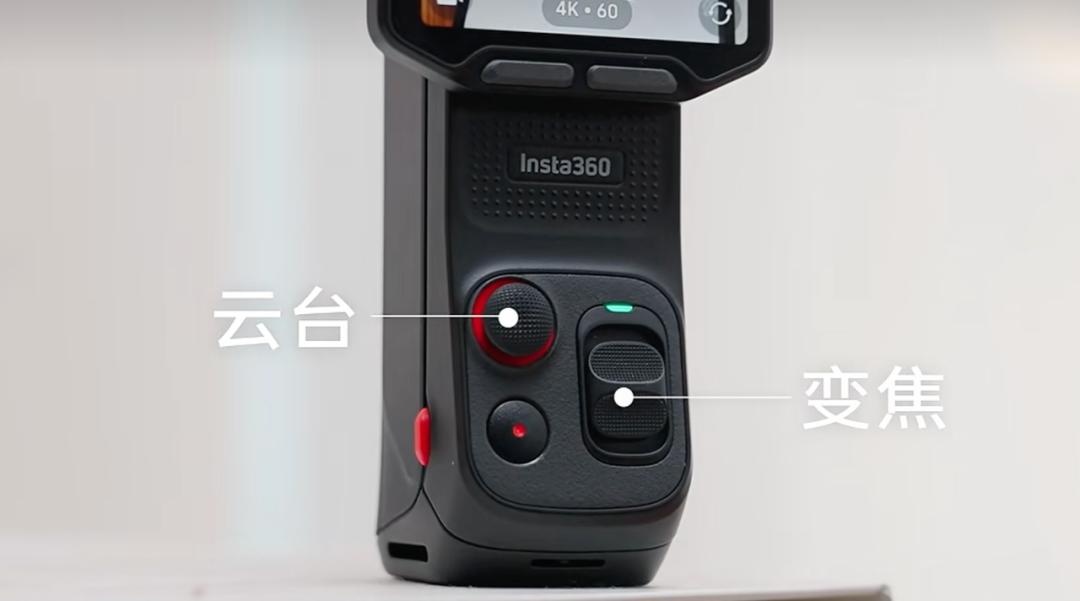
Exposure compensation especially should no longer be hidden in the secondary menu. People against backlight, switching between indoor and outdoor scenes, highlights in the sky, neon signs at night — every scene during travel forces creators to frequently adjust EV. Auto exposure can save you a few taps, but it can never replace your subjective creative intention.
Of course, making all commonly used functions physical is only one path. The other path is to create a number of simple scenario-based presets, so that users can get good shots as soon as they open the camera — this probably better plays to the strengths of mobile phone manufacturers. But the two paths point to the same thing: whoever allows users to no longer need to learn how to use the camera wins half the battle.
The second opportunity is to become a system-level external camera.
Imagine a vivo Pocket placed close to a vivo mobile phone. It should not just be "connected", but directly appear in the system's camera list — what WeChat video calls, Tencent Meeting, Douyin live streaming and third-party shooting software see, in addition to the front camera, main camera and telephoto lens, there is an extra "external gimbal camera". It is listed alongside other lenses on the phone, and is called by the system equally.
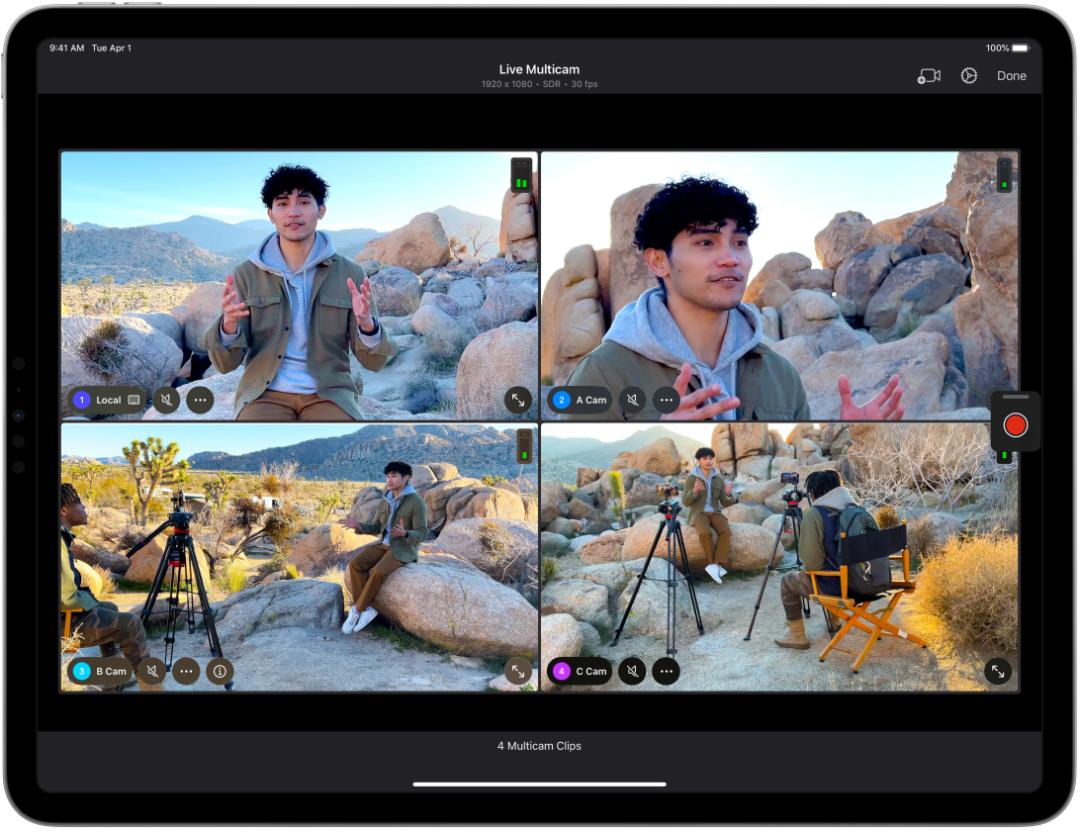
Going a step further, when the two devices are close to each other, the mobile phone and the Pocket can perform multi-camera recording and monitoring at the same time. This is not a fantasy: Apple's Final Cut Camera has already realized the same technical route: up to four devices can preview synchronously, and start and stop recording uniformly. The mobile phone and this external gimbal camera share the same set of time codes, colors and recording status — this is the capability that mobile phone manufacturers truly master, which third parties can hardly obtain completely.
The third opportunity is to let the footage complete the whole workflow automatically.
In the past, the Pocket relied on DJI Mimo for file transfer, which was already very fast and offered a good experience, but the hassle of connection and secondary processing in the app has never been completely eliminated. If it is done by a mobile phone manufacturer, as a native device, it should not be treated as an "accessory", but an extension of the mobile phone imaging system.
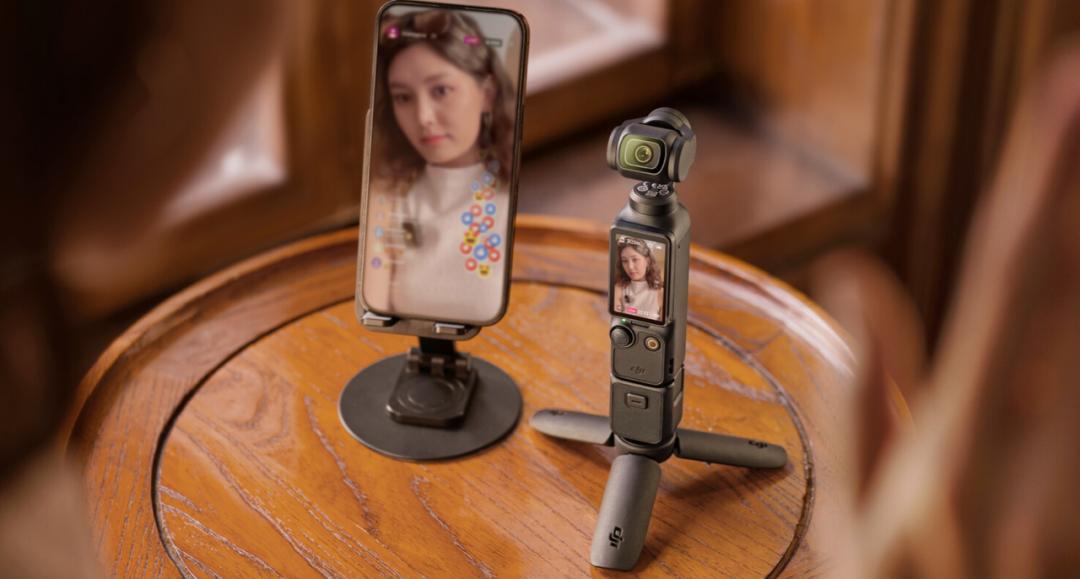
The ideal scenario is as follows: as soon as the camera starts recording, the low-bitrate preview file is synchronously written to the mobile phone album, with a dedicated Pocket tab in the album. Right after shooting, you can immediately review, favorite, roughly edit and share the footage without any waiting. The original footage remains quietly in the camera, and is transferred in the background when the device is idle, charging or connected to a high-speed Wi-Fi network.
When you tap "Favorite" on the Pocket, the corresponding clip in the mobile phone album will be marked with a star immediately, and the original clip will be moved to the top of the transfer queue; for long footage that is not favorited, only the proxy file will be kept until you actively download it.
The quality of collaboration ultimately depends on how many steps and how much waiting time it saves for users. At this stage, the advantages of mobile phone manufacturers are truly demonstrated. They understand mobile phones better than DJI, understand the ecosystem better, and know better how to smoothly push images and videos to social platforms. This is exactly the only unique advantage of mobile phone manufacturers that no one else can copy.
Breakout hits have emerged, but winners are still scarce
The 10 million units sales of Pocket 3 proves the feasibility of this type of product, but it has not proved that the category is mature enough to be divided equally by ten manufacturers.
Just like before AirPods, Earin had already made true wireless earbuds long ago, but failed to gain market acceptance; before Pocket 3, Feiyu had mounted the drone gimbal on a handheld device as early as 2013, and FIMI also made products with similar forms. The cruelest yet fairest rule in consumer electronics is that history rarely rewards inventors, only those who get everything right.
So what did Pocket 3 do right?
It crossed three thresholds at the same time: the 1-inch sensor creates a qualitative difference in image quality from mobile phones; the 2-inch rotating screen not only supports framing and both portrait and landscape shooting in terms of form, but also delivers an excellent "rotate to shoot" operation feel. It even adjusted the portrait exposure for different skin tones, which is clearly different from the traditional camera strategy of "prioritizing accuracy", while fully retaining the natural texture of camera output.
Finally, it used a small design of "3-shot Live Photo" to follow the Live Photo trend on social media, and easily solved the problem of difficult video sharing.
Xiaohongshu certainly provided favorable conditions, but DJI first built a truly flyable aircraft, so that the platform had content to amplify.

People who actually pay for these products can be called "lifestyle imaging consumers". They rarely judge a camera from the perspectives of sensor, dynamic range and resolution. What they care more about is: good-looking, immersive, easy, and reliable. They wonder: "Can this camera really capture my life in the style I love?"
The crowd behind this demand is far larger than photography enthusiasts. They want this camera to accompany them on their trips, dates, graduation ceremonies and concerts — covering almost all memorable moments in their lives.
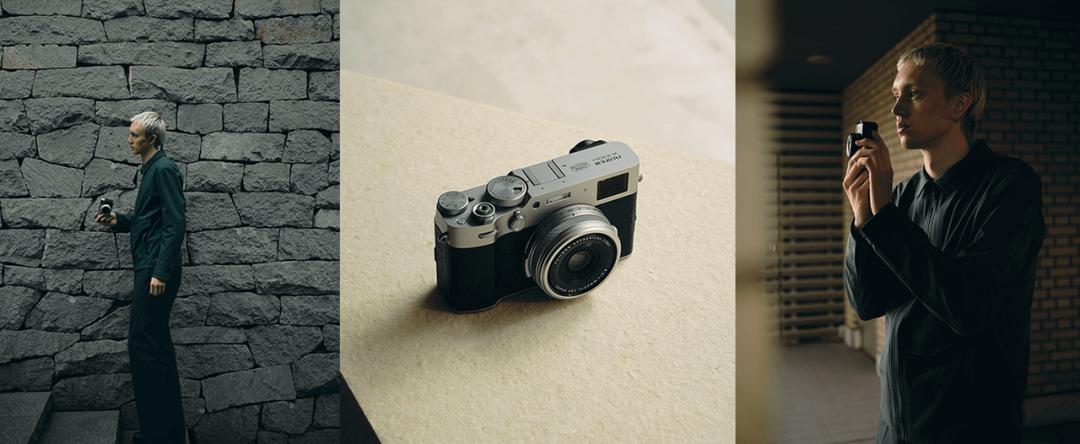
This is why CCD cameras, Fujifilm X100, Ricoh GR, Canon G7X3 and Pocket 3 have all become popular among the same group of users one after another: their technologies are vastly different, but they all deliver the same thing — a "shot guarantee". CCD cameras give you direct flash and retro digital texture, Fujifilm X100 gives you film simulation and high-quality direct output, GR users love its clear colors, while Pocket 3 is directly associated with various "once-in-a-lifetime photos".
This demand has truly reshaped the camera market. It reignited the shrinking fixed-lens camera market, and in 2025, global shipments of