A Nobel laureate has used AI to create a gene scissors from scratch, which is more precise than the one that has undergone billions of years of evolution.
AI has created a gene scissors that has never existed in nature.
What's more, it works better than the one polished by billions of years of evolution.
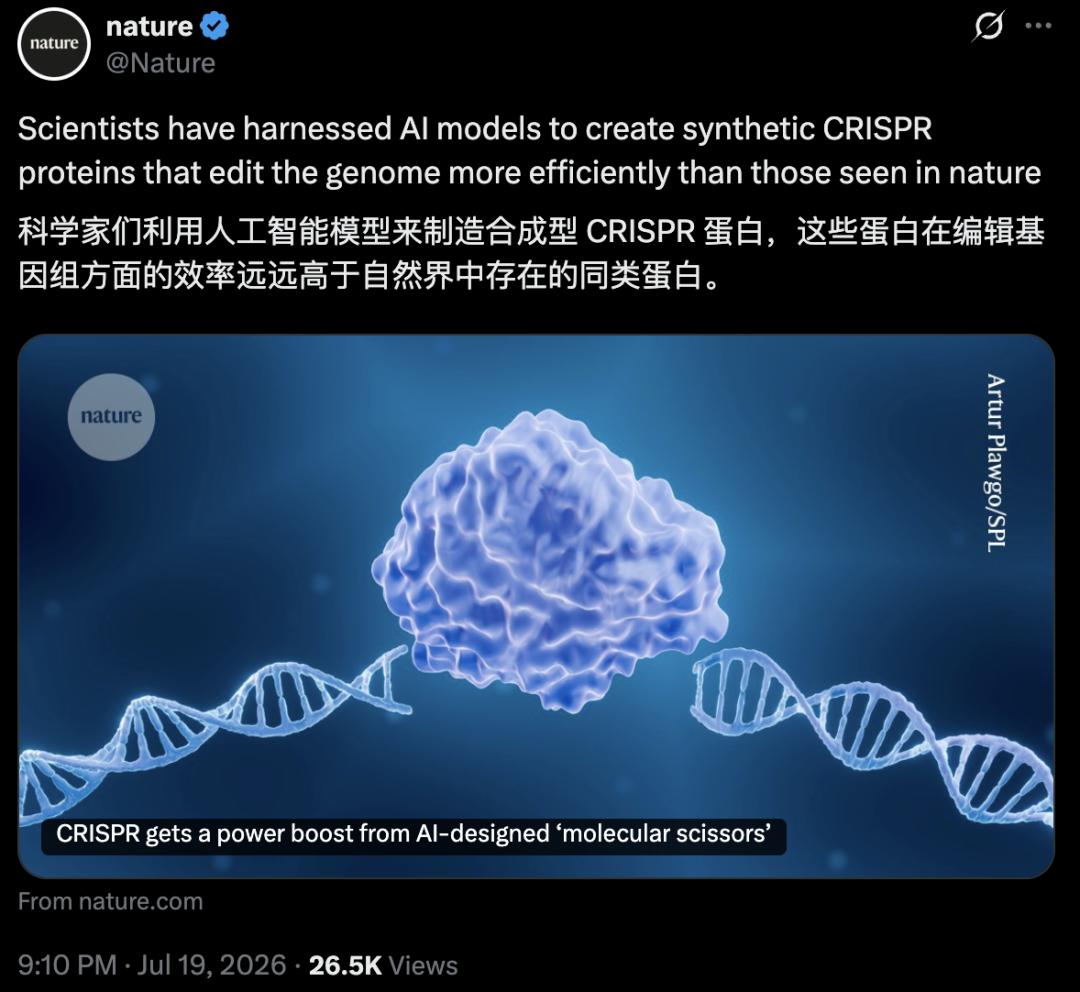
On July 16, Nature published the news: Scientists used AI to create a CRISPR enzyme that has never existed in nature, which can cut genes more efficiently than the "natural version". The related paper was published in Science on the same day.
The team leader is Jennifer Doudna, who won the Nobel Prize in Chemistry in 2020 for her work on CRISPR.
She once told Nature: "Proteins can be modified. But once you start trying, you will find that after modification, the protein basically stops working."
This problem has stumped humanity for more than a decade.
Then AI came along, modified 30% of the protein sequence, and the enzyme still remained functional.
This is just one of the development paths.
On another path, the startup company Profluent bypassed TnpB and directly generated a brand-new Cas9.
The results are equally remarkable: it cuts more precisely at the intended sites, barely touches the unintended sites, and its off-target editing rate is about 95% lower than that of the most mainstream SpCas9.
Tools forged by billions of years of evolution are being rewritten by AI in the design space.
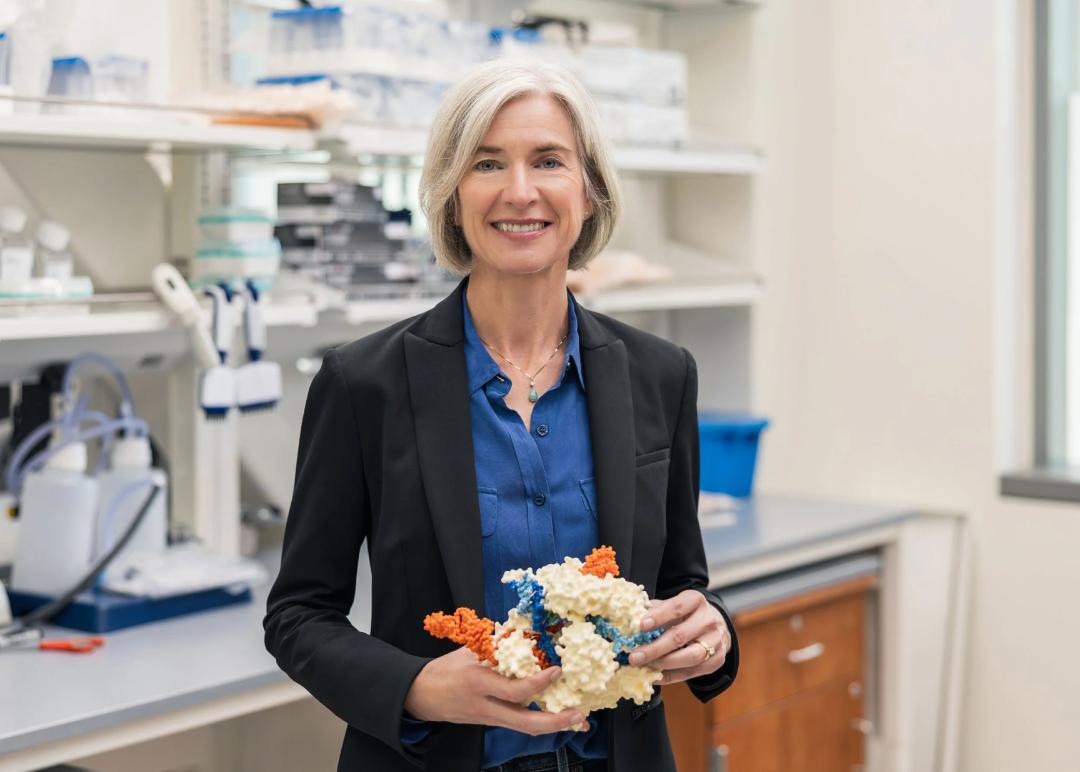
Jennifer Doudna, biochemist at the University of California, Berkeley, 2020 Nobel Laureate in Chemistry, and founder of the Innovative Genomics Institute. (Image credit: Jussi Puikkonen/KNAW)
Modifying 30% and still being functional — how counterintuitive this is
CRISPR was not invented by humans.
Whether it is Cas9 or Cas12, they are all ready-made "components" taken from bacteria.
Bacteria use them to resist viral invasion. Humans took a fancy to this mechanism, moved it into the laboratory, paired it with a guide RNA, and turned it into a "molecular scissors" that can accurately find a specific position among 3 billion base pairs to make a cut.
The Nobel Prize awarded to Doudna and Charpentier was more of a recognition for "discovery" rather than "design".
But this is where the problem lies. The borrowed "components" are not customized to human needs in terms of size and properties. To obtain smaller, more precise versions with lower immune responses and the ability to recognize more targets, we can only modify them bit by bit manually.
Yet these proteins are extremely difficult to modify.
Most Cas9 proteins are more than 1000 amino acids long, and the theoretical sequence space is 20 to the power of 1000: a number that is many orders of magnitude larger than the total number of atoms in the observable universe.
In such a huge space, the number of usable solutions is surprisingly sparse, and the scope that humans can explore is extremely limited.
So in the past few years, similar AI-assisted work has been done, but the modification range was generally only 1% to 2%.
Any slight additional modification would render the protein non-functional.
Two-step strategy of AI intervention
This time, Doudna's team did not target Cas9, but a type of miniature nuclease called TnpB.
They are smaller in size and, evolutionarily speaking, are the ancestors of Cas12.
The team wanted to find out: to what extent can this sequence be modified while retaining the ability to edit genes.
The first step was handed over to an AI model.
The researchers input the target structure of a certain TnpB — that is, what the protein should look like after folding — into the model, and then asked it in reverse:
How should the amino acid sequence be modified so that the protein can still fold into this shape.
The model output thousands of modification schemes.
But this step only solved the problem of "looking right". The fact that the protein folds into the correct shape does not mean it is functional.
So came the second step: train another model, feed it with the massive experimental data accumulated in past laboratories, and let it analyze the fine interrelationships between various parts of the protein.
Specifically, it identifies which fragments are the fatal weaknesses that cannot be touched, as any change to them will eliminate the protein's function.
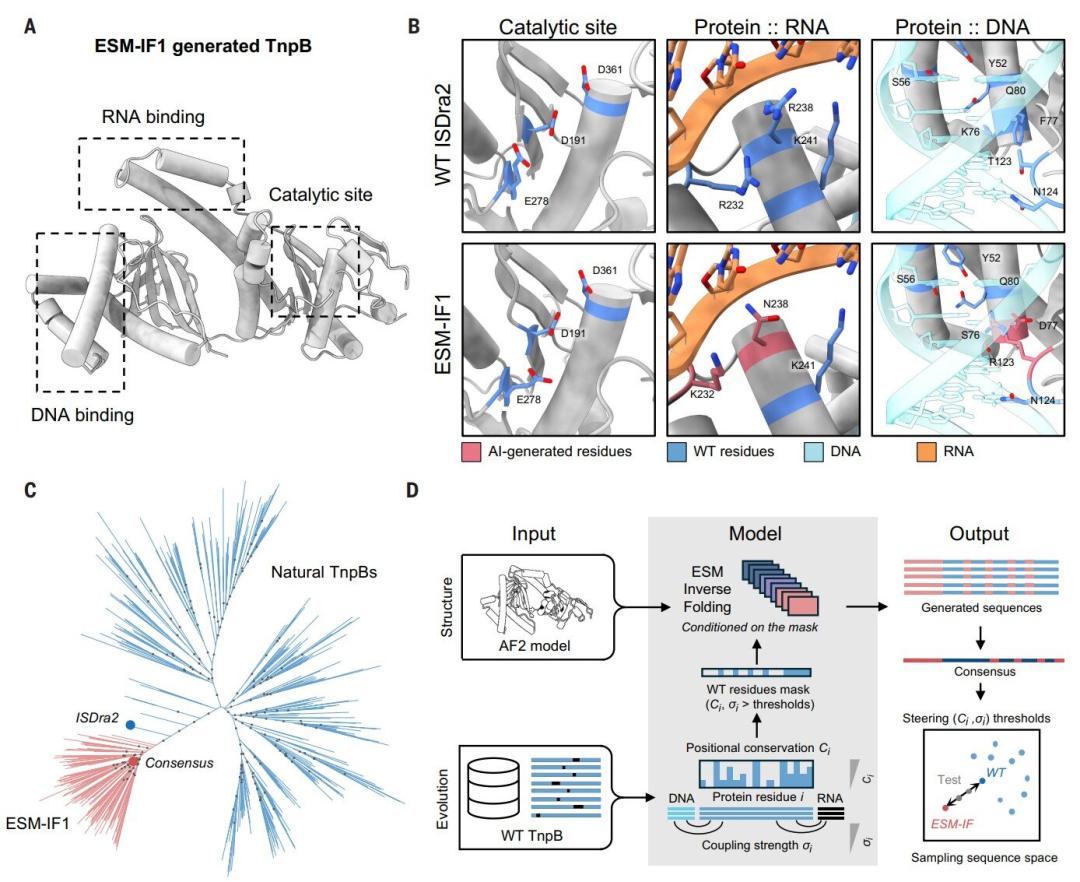
The TnpB design workflow of Doudna's team. The lower left part shows the phylogenetic tree, where blue represents the existing TnpB in nature, and the red cluster represents the AI-generated sequences, with almost no overlap between the two. The lower right part shows the technical route: the AF2 structure combined with the evolutionary constraint mask is fed into the ESM-IF1 model to generate new sequences. (Image credit: Science 2026, DOI: 10.1126/science.aed6123)
By combining the two models, a small batch of synthetic nucleases was screened out.
When subjected to standard tests, they were found to be capable of editing in bacteria, in plants, and in human cells.
Some of them even had higher efficiency in inserting or deleting target fragments than the existing natural versions.
Doudna mentioned this result and said: "It's quite exciting."
403 mutations — this pair of scissors has no relatives in nature
The first set of figures has been mentioned earlier: about 30% of the sequence of the synthetic version is different from the natural version, while the modification range of previous similar AI work was only 1% to 2%.
The second set of figures comes from the protein design company Profluent, which took a different path: instead of modifying TnpB, it directly generated a brand-new Cas9.
They systematically mined 26TB of genomic and metagenomic data, built a database of 5.1 million CRISPR-Cas proteins, and then used a protein language model to generate new sequences. The diversity of the generated sequences reached 4.8 times the known level in nature.
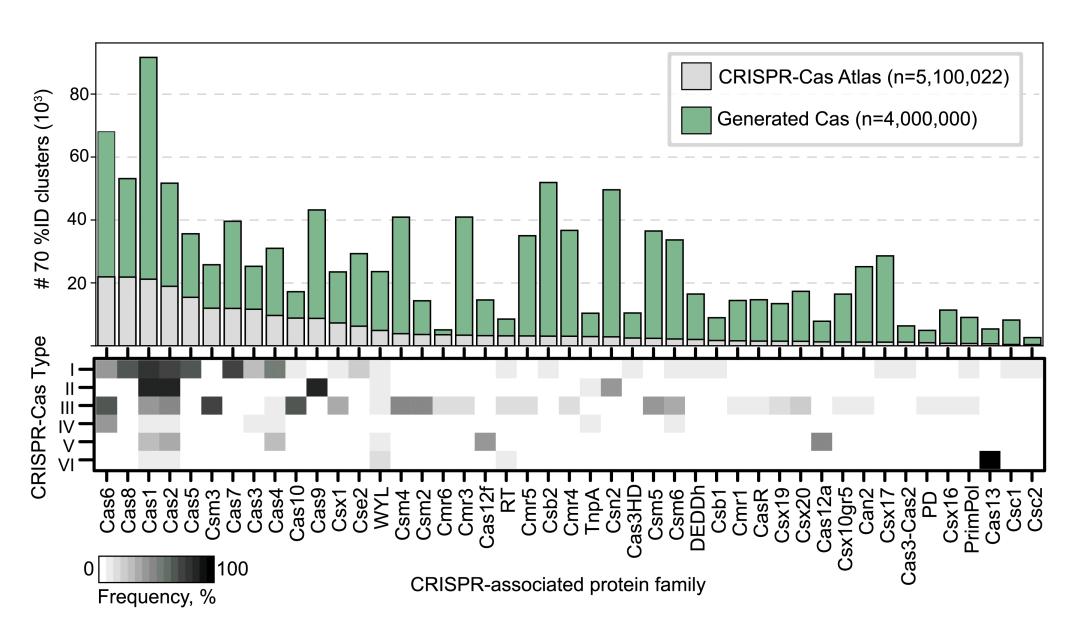
The diversity expansion of AI-generated sequences (light color) relative to natural CRISPR proteins (dark color), counted by the number of protein clusters. The heat map shows the distribution of various protein families in different CRISPR-Cas systems. (Image credit: Profluent)
48 sequences selected from them were sent to human cells for functional verification. The best one was named OpenCRISPR-1 and was made open source.
Its performance data is as follows:
The targeted editing efficiency is 55.7%, while that of SpCas9 is 48.3%.
The off-target editing rate is 0.32%, while that of SpCas9 is 6.1%.
The latter figure represents a decrease of about 95%.
This sequence has 403 mutations from SpCas9, and 182 mutations from any natural CRISPR protein in the database.
This is essentially creating a brand-new tool on Earth based on the concept of "gene scissors".
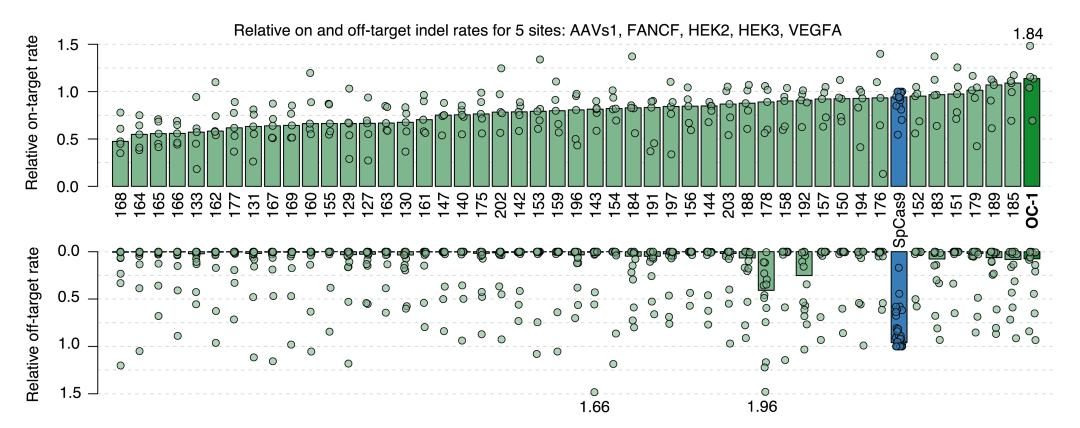
Multiple AI-generated nucleases (green, with dark green representing OpenCRISPR-1) have on-target activity comparable to or higher than SpCas9 (blue), while their off-target activity is significantly lower. (Image credit: Profluent)
The data of OpenCRISPR-1 comes from the research results announced by the company itself, and independent replication will take more time.
The experiments of Doudna's team have undergone peer review by Science.
From "Discovering Nature" to "Creating Nature"
Only by looking at these two paths together can we see what the real change is.
What AlphaFold solves is "what this sequence looks like": prediction and understanding.
Protein language models have taken a step further: figuring out what kind of sequence is functional and what the underlying rules are.
Now we are at the third stage: creating a sequence that has never been written in nature, and making it work in living cells.
Soeren Lienkamp, a molecular biologist at the University of Zurich, believes that CRISPR allows everyone to edit DNA at will, while AI-based protein design is enabling everyone to create new properties in the protein space.
People familiar with large language models will find this process somewhat familiar: this approach is almost the same as how text models learn language.
Feed in enough sequences, learn the internal grammar, and then start generating sentences that do not exist in the corpus.
In contrast, it is clear how much the previous path relied on luck.
Insulin was discovered in dogs, Cas9 was found in bacteria from a yogurt factory, and botulinum toxin came from a food poisoning incident.
None of these tools were designed; almost all of them were discovered by chance. Now there is a new path: starting from the desired function, and designing the molecule in reverse.
A Cas9 protein usually has more than 1000 amino acids, and the possible sequence combinations are 20 to the power of 1000, far exceeding the total number of atoms in the observable universe.
Evolution has been exploring in this space for billions of years, while a model can complete the process in just a few hours.
This is the truly impactful part of this matter.
The difference is that the AI that writes code produces programs that run in computers, and you can delete and restart if something goes wrong. The AI that writes proteins produces molecules that run in living cells. It modifies a real piece of genetic information, not a rollbackable operation result.
This is what makes it both more nerve-wracking and more exciting.
Can it conquer cancer or delay aging?
We cannot say that yet.
All the achievements mentioned in this article are currently limited to cell experiments, and these verifications are still in the laboratory stage.
There are still animal experiments, clinical trials, and drug approval processes ahead, each of which can take several years.
Is AI surpassing evolution?
A more appropriate statement is: some AI-generated proteins have outperformed specific natural versions on specific experimental indicators.
This is not the first breakthrough in AI protein design.
It has been five or six years since the continuous development of AlphaFold, RoseTTAFold, and protein language models. The preprint of OpenCRISPR-1 was uploaded to bioRxiv in April 2024.

One of its important significances is that AI-designed proteins have entered more complex biological systems and have fully realized the complete process of gene editing.
Le Cong from Stanford University, who participated in the development of some of the earliest CRISPR tools for gene therapy, shares the same judgment as Doudna: basic research using natural nucleases cannot stop.
The reason why AI models can run so fast is precisely the data accumulated bit by bit in laboratories over the past few decades. Once the data supply is cut off, the models will stop improving.
Doudna said that this work demonstrates the future form of AI and biology: we need AI tools to help us move faster, but to maximize the value of such models, we still need people who truly understand molecular mechanisms.
References:
https://x.com/Nature/status/2078829713942822983
https://www.nature.com/articles/d41586-026-02217-w
https://www.nature.com/articles/d41586-025-02135-3
https://press.airstreet.com/p/profluent-opencrispr-1-nature-magazine
https://www.iongenomics.bio/p/doudna-lab-uses-ai-to-create-new
This article is from the WeChat official account "AI Era", author: ASI Revelation, and is republished by 36Kr with authorization.