The innovative drug sector has staged a strong rally: Is this a rebound or a full reversal? Latest in-depth judgment from fund managers.
The long-dormant pharmaceutical sector has recently staged a "stunning comeback".
Since the end of June, the pharmaceutical sector has been on a strong upward trend. Over the past month, the overall biomedical sector has seen a maximum increase of over 20%, while the innovative drug sector has surged by more than 30%, reversing the previous deep correction slump.
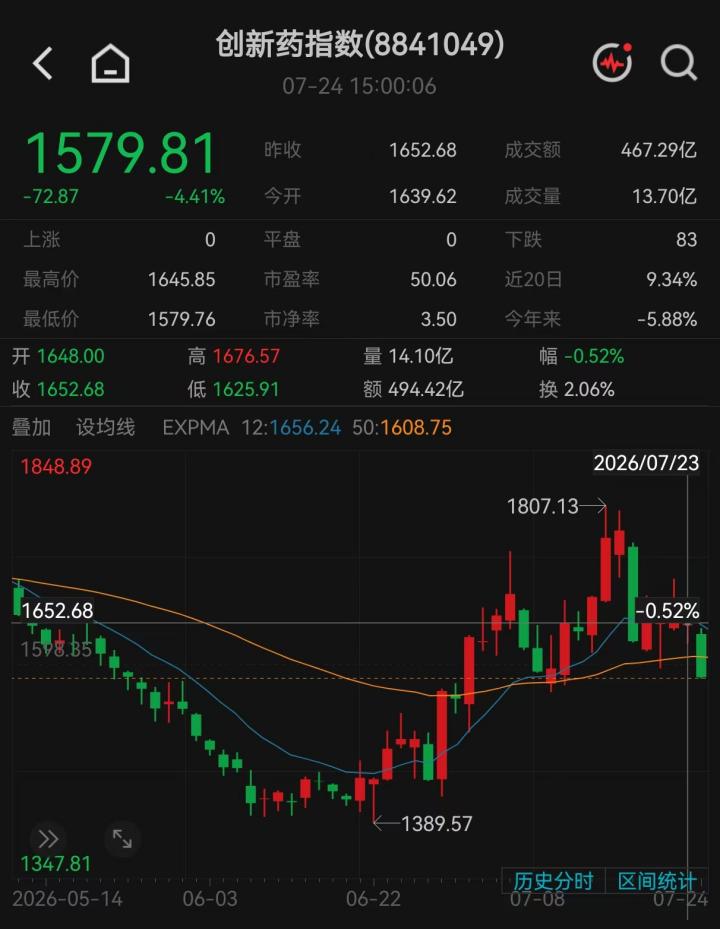
What factors have driven this sharp rally? Is this a rebound or a full reversal? Against the backdrop of high valuations in the technology sector, can the pharmaceutical sector take over as the structural main line for the second half of the year? Faced with internal differentiation within the sector, how should investors tap into potential opportunities?
To address these questions, reporters from China Fund News interviewed:
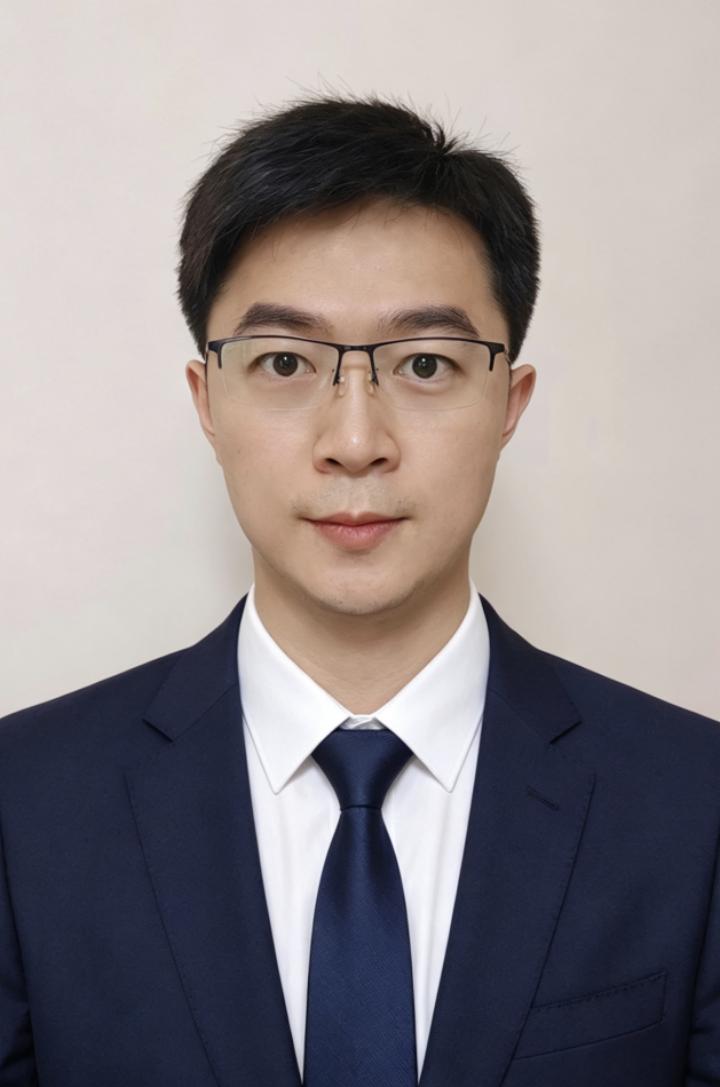
Cai Qiang, Fund Manager of Southern Medical Innovation Equity Fund

Chen Ximing, Fund Manager of Bosera Healthcare Mixed Fund

Ma Yiwen, Fund Manager of STAR Market Innovative Drug ETF, Guotai Fund

Zhou Sicong, Fund Manager of Ping An Medical Select Fund

Pi Jinsong, Fund Manager of Invesco Great Wall Healthcare Equity Fund

Tang Chen, Fund Manager of Nuoan Select Value Fund
The aforementioned fund managers believe that the core driving force behind this rally is the combination of valuation restoration and the resonance of favorable policy and industrial factors. While a full-scale reversal still requires performance verification, the current innovative drug sector and its industrial chain already offer high allocation cost-effectiveness.
Driven by the Resonance of Multiple Favorable Factors
Reporter from China Fund News: Recently, the pharmaceutical sector has performed strongly, especially the innovative drug sector, which has seen a maximum increase of over 20% in the past month. What are the main driving factors?
Cai Qiang: The recent strong performance of the pharmaceutical sector can be attributed to three core reasons. First, from May to June, the pharmaceutical sector experienced a significant decline: the A-share pharmaceutical sector fell by nearly 15%, and the Hong Kong stock pharmaceutical sector dropped by nearly 25, making many companies in the sector highly cost-effective.
Second, the fundamental expectations for the sector are improving. Chinese innovative drugs are making rapid inroads into overseas markets: in the first half of 2026, the total potential transaction value of overseas licensing deals for Chinese innovative drugs reached approximately USD 99.7-110 billion, accounting for 70% of the full-year figure in 2025. Meanwhile, China's national medical insurance policies have undergone directional changes, with the policy focus gradually shifting to a new stage that "balances cost control and encouragement of high-level innovation".
Third, from the capital perspective, funds have been highly concentrated in the AI technology sector since the beginning of the year. However, since the end of June, the clustered funds have started to loosen, and the market style is leaning towards balanced allocation. The pharmaceutical sector, which has good future growth expectations and is at a low valuation level, has the potential to attract capital inflows.
Chen Ximing: A key reason is that the industry remains highly prosperous. In the first half of this year, there were 81 overseas licensing deals for Chinese innovative drugs, with a total transaction value of approximately USD 110 billion, accounting for 80% of the total overseas licensing transaction value in 2025. The second reason is the previous industry correction, which created a price-value mismatch for many companies. Therefore, after the capital outflow from the AI sector came to a halt, the industry ushered in a rebound.
Ma Yiwen: The recent strength of the innovative drug sector is the result of the resonance of multiple factors. First, the policy side has seen institutional breakthroughs: the 2026 edition of the National Essential Medicine List has included innovative drugs in batches for the first time; the 12th round of centralized procurement continues to "free up space for new developments", saving medical insurance funds for innovative drug payments, which may effectively support the expansion of the innovative drug market.
Second, the fundamental recovery is better than expected. The CXO sector is highly prosperous, and the volume of oral polypeptide formulations has exceeded expectations; the CRO sector benefits from the recovery of overseas financing, and leading companies may raise their full-year guidance.
From a technical perspective, the intraday negative correlation between the innovative drug index and the technology index remains high. The recent weakness in the technology sector has provided liquidity support for the pharmaceutical sector.
Pi Jinsong: The main driver is the strong fundamentals of innovative drugs, with rapid performance growth. Clinical trials of new drugs from listed companies are continuously advancing, and heavyweight data of domestic innovative drugs has been released at academic conferences such as ASCO and ESMO. Some clinical studies have the potential to change existing treatment standards, and domestic innovative drugs are accelerating their integration into the global industrial chain through licensing deals. In the first half of the year, the stock price performance of innovative drugs significantly deviated from their fundamentals, and the recent rise is a correction of the previous overcorrection. In addition, after some funds flow out of the high-valued technology sector, they will continue to seek growth assets, and innovative drugs are one of the few directions with solid performance and strong logical support.
Zhou Sicong: The correction of the innovative drug sector that started in September 2025 lasted for 9 months, fully digesting the previous valuation premium, and the sector's valuation has fallen back to a relatively low level. At the same time, multiple favorable factors from the policy and industrial sides have resonated recently. Against the backdrop of high valuations in the technology sector, more and more funds are shifting from high-valued assets to low-valued ones.
Tang Chen: Essentially, the recent rise of the innovative drug sector is a valuation restoration. In May and June this year, the K-shaped differentiation in the market intensified, and tight sector liquidity led to an overcorrection, deviating significantly from the intrinsic value. Therefore, the sector already had the conditions for valuation restoration. Both the policy side and the industrial fundamentals of the innovative drug sector show an upward trend, making the valuation restoration reasonable. In addition, the upward prosperity trend of the upstream CXO and life science service sectors has gradually been recognized by the market, which has also become an important catalyst for the valuation restoration.
The Overall Pharmaceutical Sector Remains in a Restoration Phase in the Short Term
Reporter from China Fund News: Is this current pharmaceutical market rally an overcorrection rebound or a full reversal? What signals need to be met to confirm a reversal?
Ma Yiwen: We believe that the current market trend is more of a bottoming-out phase after an overcorrection rebound, rather than an immediate reversal. The recent rise is mainly a valuation restoration of previous pessimistic expectations. A sustained rally requires heavyweight clinical data, milestone revenue from drugs, and the realization of overseas sales sharing as core catalysts. The ESMO conference in the third quarter, milestone revenue from BD drugs in the next year or two, and the realization of listing sharing are key observation nodes.
Cai Qiang: I don't think we can simply generalize the pharmaceutical sector, because there are many sub-sectors within it, including innovative drugs, CXO, medical devices, traditional Chinese medicine, and pharmaceutical commerce, with very obvious internal differentiation. Therefore, a full-scale reversal of the pharmaceutical sector is not yet clear, and we need to select specific sub-sectors and individual stocks carefully.
In the short term, the overall pharmaceutical sector remains in a restoration phase. The current market pricing is still within the framework of existing BD deals and clinical data. A full-scale reversal requires the realization of overseas commercial profits from leading innovative drug companies, which will gradually peak around 2028-2029.
Tang Chen: It is still a reasonable judgment to regard the recent rise as an overcorrection rebound. The apparent valuations of the upstream CXO and life science service sectors have entered a reasonable range, and further future rises still need performance verification. The overall innovative drug sector has also entered a phase of performance verification and clinical data verification. In the future, we need to see continuous progress in "deepening BD", that is, the success of global phase III trials of licensed projects, overseas marketing applications, and the expansion of overseas sales. Of course, the sales expansion of domestically approved products after entering medical insurance is also one of the most important driving factors.
Pi Jinsong: It is most likely a reversal. Since the third quarter of last year, the pharmaceutical sector has continued to adjust without obvious negative fundamentals, mainly because the market style was biased towards extreme growth, and popular sectors siphoned off capital from the entire market. To judge whether it is a reversal, we need to pay attention to two points: first, the market style returns to a balanced state, with the proportion of pharmaceutical holdings in the top ten positions of public funds in the mid-term report reaching 3.95%, a historically low allocation ratio; second, the overseas licensing of innovative drugs in 2025 drove a comprehensive rise in the sector. As overseas expansion becomes normalized, the market will pay more attention to the quality of overseas deals, as well as the operational performance and clinical progress of companies' pipeline products. It is expected that high-quality companies will reverse first.
Zhou Sicong: The short-term trend is more driven by capital behavior and market sentiment, with great unpredictability. But in the long run, the industrial trend of innovative drugs is clear, with large upward space in the future, making it a sector worthy of long-term optimism.
Currently Offering High Allocation Cost-Effectiveness
Reporter from China Fund News: What is the current valuation level of the pharmaceutical sector and its industrial growth space? Does it have allocation value?
Tang Chen: The current valuation level of the pharmaceutical sector and the proportion of institutional holdings are both at historically low levels. The domestic industry will maintain a growth rate higher than the GDP growth rate, and with the expansion of overseas demand, the industry's growth rate in the next five years will significantly increase, further opening up growth space. After several years of industry clearing, the overall pharmaceutical sector is at a low point in the cycle. Innovative drugs are in the early stage of volume growth, the domestic medical insurance balance rate is high, there is room for recovery in consultation rates and treatment rates, and the certainty of overseas markets is gradually being verified. Overall, the sector has allocation value.
Cai Qiang: Currently, the PE of the Shenwan Pharmaceutical and Biological Index is about 32 times, at the 42nd percentile of the past decade; the PB is only 2.5 times, at about the 11th percentile. This indicates that the sector's asset valuation is still low, with high allocation cost-effectiveness. After the rapid rise of the innovative drug sector and its industrial chain, the valuation has been restored. Subsequent valuation digestion will rely on clinical progress, BD down payments, and commercial performance, so it is particularly important to select individual stocks carefully and avoid chasing the rise across the board. For other sectors such as medical devices, medical services, and traditional Chinese medicine, since their fundamental inflection points have not yet arrived, their valuations remain low, and their fundamentals need continuous observation.
Zhou Sicong: Previously, the innovative drug sector presented a typical mismatch state: the industry was moving forward, but stock prices were moving backward. The normal profit-taking washed out floating chips, and instead created a highly cost-effective "golden pit" for long-term funds. Next, as the pipelines that were previously licensed out on a large scale will successively enter the phase of international multi-center clinical data release, these key "milestone" progresses will replace the initial "down payments" and become the core catalyst driving the sector's valuation to expand again.
Ma Yiwen: Currently, the sector's valuation is in a reasonable range around the historical median, offering certain allocation cost-effectiveness.
Pi Jinsong: At present, the sector's valuation is relatively low. For innovative drugs, the market value space depends on peak sales, and in the short term, it depends on the realization of sales and clinical data. At present, the market value of most companies only reflects the potential of their domestic business, with little or no reflection of their overseas value. Domestic enterprises generally have a large number of pipeline products under development, and there is still room for market value growth. The sector has allocation value, and individual stocks need to be selected carefully. From 2025 to 2032, multinational pharmaceutical companies will face patent expirations involving USD 370 billion in sales, creating many opportunities for domestic innovative drugs to cooperate with overseas partners. Domestic enterprises have many potential molecules in directions such as ADC, small nucleic acid, and TCE, and cooperation with multinational pharmaceutical companies is expected to bring significant long-term value. From the policy perspective, this year's government work report listed biomedicine as a pillar strategic emerging industry for the first time. The domestic sales proportion of innovative drugs is low, with much room for improvement, and the domestic growth of innovative drugs is highly certain.
Expected to Become One of the Main Market Lines in the Second Half of the Year
Reporter from China Fund News: Going forward, can the pharmaceutical sector become one of the main market lines? Which sub-sectors are you most optimistic about?
Pi Jinsong: The pharmaceutical sector is expected to become one of the main market lines. There are structural opportunities in the pharmaceutical sector, mainly in the innovation direction, and we are optimistic about innovative drugs and CRO. The innovative drug industry is in an upward cycle, and the industry has moved from the stage of pure R&D investment to the stage of domestic and overseas commercial realization. Moreover, the industrial trend of Chinese innovative drugs going global has just started. High performance growth, overseas licensing deals, and clinical progress will enhance company value. Inward-looking CROs will benefit from the increased R&D investment in domestic innovative drugs, with rapid recovery in drug safety evaluation and clinical orders