Forced to venture across industry boundaries into the automotive and robotics tracks, the era of easy profits for upstream players in the home appliance sector has come to an end.
In Q1 2026, the performance of the home appliance market was within expectations.
According to the data released by AVC (Ovi Cloud), the retail scale of China's home appliance industry (excluding 3C products) reached 172.6 billion yuan in the first quarter of 2026, a year-on-year decline of 6.2%, with a 12.5% year-on-year drop in March alone. At present, many categories of China's home appliance industry have entered the stock market era.
By category, AVC's aggregated data shows that in Q1 2026, the year-on-year sales changes for color TVs, air conditioners, refrigeration appliances, laundry care appliances, large kitchen & bathroom appliances, small kitchen appliances, and cleaning appliances were -3.1%, -13.8%, -3.3%, -3.0%, -10.1%, -1.6% and -0.2% respectively.
The sluggish market sales have dealt a huge impact on some core upstream enterprises, such as refrigeration compressor manufacturers.
In July, leading domestic refrigeration compressor maker Donper Group released its performance forecast, estimating a net profit loss of 48.4 million to 58 million yuan for the first half of 2026. Its 2026 Q1 report shows that the company's main operating revenue was 1.689 billion yuan; the net profit attributable to shareholders was -16.7921 million yuan, down 137.11% year-on-year; the non-recurring profit-deducted net loss was 24.842 million yuan, down 182.2% year-on-year; and the asset-liability ratio stood at 66.73%.
Similarly, another leading compressor manufacturer, Changhong Huayi, posted an asset-liability ratio of 61.26% in 2025, higher than the 60.13% figure of the same period last year and exceeding the industry average of 42.78%. In terms of profitability, its gross margin in 2025 was 13.79%, lower than the industry average of 18.53%.
The home appliance industry itself is struggling to stay afloat, but the upstream sectors are having an even harder time — those enterprises once hailed as the "pearls" of the industrial chain are now facing unprecedented challenges.
Why Are Home Appliance Upstream Players Losing Money Despite Rising Sales?
In fact, the declining profitability of upstream enterprises does not mean their revenue figures are poor. Take Donper as an example: its 2026 financial report shows that the company's main operating revenue in the first quarter was 1.689 billion yuan, up 12.61% year-on-year; Changhong Huayi recorded an operating revenue of 11.781 billion yuan in 2025, ranking 4th among 35 enterprises in the industry.
However, the phenomenon of "revenue growth without profit growth" seems to have become the norm across the entire home appliance upstream supply chain.
Take the compressor sector as an example. Once known as the "heart" of modern industrial equipment and refrigeration systems, compressors used to boast high technical barriers and rich profits in the home appliance industrial chain. Today, their core status has plummeted sharply. In 2025, a reporter from *Appliance Magazine* conducted an investigation and pointed out that 2025 could be regarded as the least profitable year in the history of the refrigerator compressor industry.
Air conditioner compressors are facing the same situation. As reported by *Appliance Magazine* in August 2025, in the first half of 2025, the ex-factory prices of compressors from mainstream brands generally declined year-on-year, with some models seeing price cuts exceeding 10%. "Volume growth without price growth" became the key theme running through the whole year.
Why did this happen? The price war in the home appliance market is undoubtedly the primary reason.
In the past two years, the price war on the consumer side of home appliances has never ceased. Take refrigerators as an example. According to AVC's monitoring data, the price war in the 2025 refrigerator market was obvious: the market share of low-end models priced below 2,200 yuan rose significantly online, and the average price of side-by-side refrigerators dropped by 7 percentage points year-on-year offline and 14 percentage points year-on-year online in the first half of the year.
Since 2026, although many brands have signaled price hikes, this round of price increases is actually related to rising raw material costs.
It is reported that raw material costs account for about 54% of refrigerator production costs, which means that even with price increases, their profit margins will not expand significantly. Moreover, so far, this round of cost pressure has not been fully transmitted to terminal retail prices. All major brands remain cautious amid fierce competition, and some refrigerator models are still seeing price cuts.
The situation in the air conditioner sector is largely similar. The sluggish consumer market has directly led to shrinking profits in the downstream supply tracks.
On the other hand, as profit margins continue to narrow, many home appliance brands are actively building their own supply chains.
For example, Midea's GMCC and GREE's Lingda mainly supply their own parent brands. It is reported that Midea's GMCC once ranked first in the global sales volume of household air conditioner compressors. As of June 2025, GMCC's global annual production capacity of refrigerator compressors exceeded 58 million units, with cumulative shipments reaching 350 million units.
Brands nurtured by these industry giants not only serve internal needs but also sell products to external customers. Take Midea as an example: according to its financial report, Midea Group's ToB business revenue reached 122.8 billion yuan in 2025, up 17.5% year-on-year, and its proportion in total revenue rose from 18.5% in 2020 to 26.8%, which is mainly attributed to the outward expansion of its home appliance manufacturing capabilities.
Shrinking profits and the trend of brands building self-sufficient supply chains have put third-party independent suppliers in a more awkward position.
It is worth noting that the move of home appliance brands to build their own supply chains is not limited to the refrigerator, air conditioner and compressor sectors. In the entire current home appliance market, in addition to traditional industry giants, even emerging players are accelerating the in-house production of core components that were previously manufactured by OEMs, in a bid to improve profit margins.
Representative brands include Laifen, Xiaomi, Ecovacs, Bear Appliances... It is reported that Xiaomi positioned its large home appliance business as a strategic business of the group as early as 2023, shifting to self-research and in-house production; in October 2025, Wuhan Smart Home Appliance Factory with a total investment of over 2.5 billion yuan was officially put into operation.
Public data shows that the factory can reach a peak annual production capacity of 7 million units, with an estimated annual output value of 14 billion yuan, and can roll out one air conditioner in as fast as 6.5 seconds. It is conceivable that once the leading brands' self-owned supply chains are fully completed, the situation of upstream independent enterprises will only become more difficult.
Interestingly, some upstream enterprises have realized this point, and are gradually shifting their customer base from domestic to overseas markets.
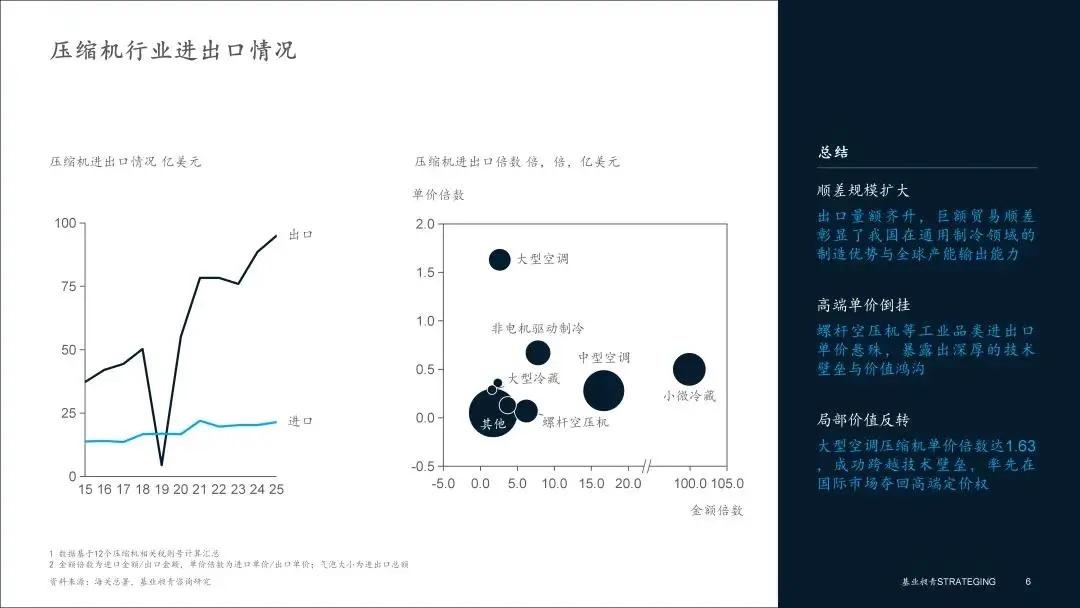
Statistics show that Changhong Huayi's overseas revenue in 2025 was 4.174 billion yuan, accounting for 35.43% of its total revenue. Donper has also established extensive partnerships with cross-border refrigeration manufacturers: in the first half of 2025, Donper's export volume of refrigerator compressors increased by about 37% year-on-year, with a domestic-to-overseas sales ratio of approximately 6:4; Sanhua Intelligent Control's overseas revenue in 2025 reached 13.323 billion yuan, accounting for 42.96% of its total revenue.
This summer, Europe was hit by an unexpected heatwave, leading to a sharp increase in shipments of cooling equipment such as air conditioners. Logically, the profitability of enterprises like Donper should have improved. But the reality seems to tell a different story. Trade factors are part of the reason, but another factor is that domestic brands are frantically seizing the European market.
Take air conditioners as an example. Data from the General Administration of Customs shows that in the first half of 2026, China's air conditioner exports to the EU reached 3.76 billion US dollars, up 43.2% year-on-year. In June alone, air conditioner exports to Europe soared by 72.8% year-on-year; the export growth of the niche category of no-installation portable air conditioners also exceeded 70%.
These exporting brands are basically established players such as Midea, GREE and Haier.
In other words, the days when upstream enterprises could easily reap dividends, both domestically and internationally, are gone forever.
Choose the Automotive Sector, or the Robotics Sector?
Of course, not all upstream enterprises' financial reports show such poor performance.
Take Sanhua Intelligent Control as an example. In 2025, the company achieved an operating revenue of 31.012 billion yuan, up 10.97% year-on-year; the net profit attributable to shareholders of listed companies reached 4.063 billion yuan, a substantial increase of 31.10% year-on-year. In terms of cash flow, the net cash flow generated from operating activities for the whole year was as high as 5.091 billion yuan, up 16.58% year-on-year.
Why was Sanhua Intelligent Control able to achieve counter-cyclical growth against the backdrop of a widespread industry downturn?
A large part of the reason is that while developing home appliance components, the enterprise has expanded its business into the automotive component sector.
Statistics show that in 2025, Sanhua Intelligent Control's automotive component business continued to grow, with annual revenue reaching 12.427 billion yuan, up 9.14% year-on-year, and the gross margin rose to 28.79%. Its customers include carmakers such as BYD, Volvo, Geely, Valeo, Mahle, Volkswagen, Mercedes-Benz, BMW, Toyota, General Motors, Li Auto and NIO.
This is not an isolated case. Cross-sector expansion among home appliance upstream enterprises has become a prevailing trend. New energy vehicles and artificial intelligence have become new tracks that enterprises are actively trying to enter after failing to secure sufficient profits in the home appliance industry. In addition to Sanhua Intelligent Control, Changhong Huayi's new energy vehicle air conditioner compressor business generated 668 million yuan in revenue in 2025, accounting for 5.67% of its total revenue.
Like many traditional sectors, the new rounds of market opportunities represented by new energy vehicles and artificial intelligence have provided many new possibilities for enterprise transformation.
The market scale growth of some automotive component segments does allow some enterprises to grab a share of the market in the future. A report from Zhiyan Consulting shows that as early as 2024, the demand for electric compressors for new energy vehicles in China was about 12.866 million units, with a market size of approximately 11.45 billion yuan; in 2025, the demand for electric compressors for new energy vehicles in China may reach 16 million units, with a market size of 15.2 billion yuan.
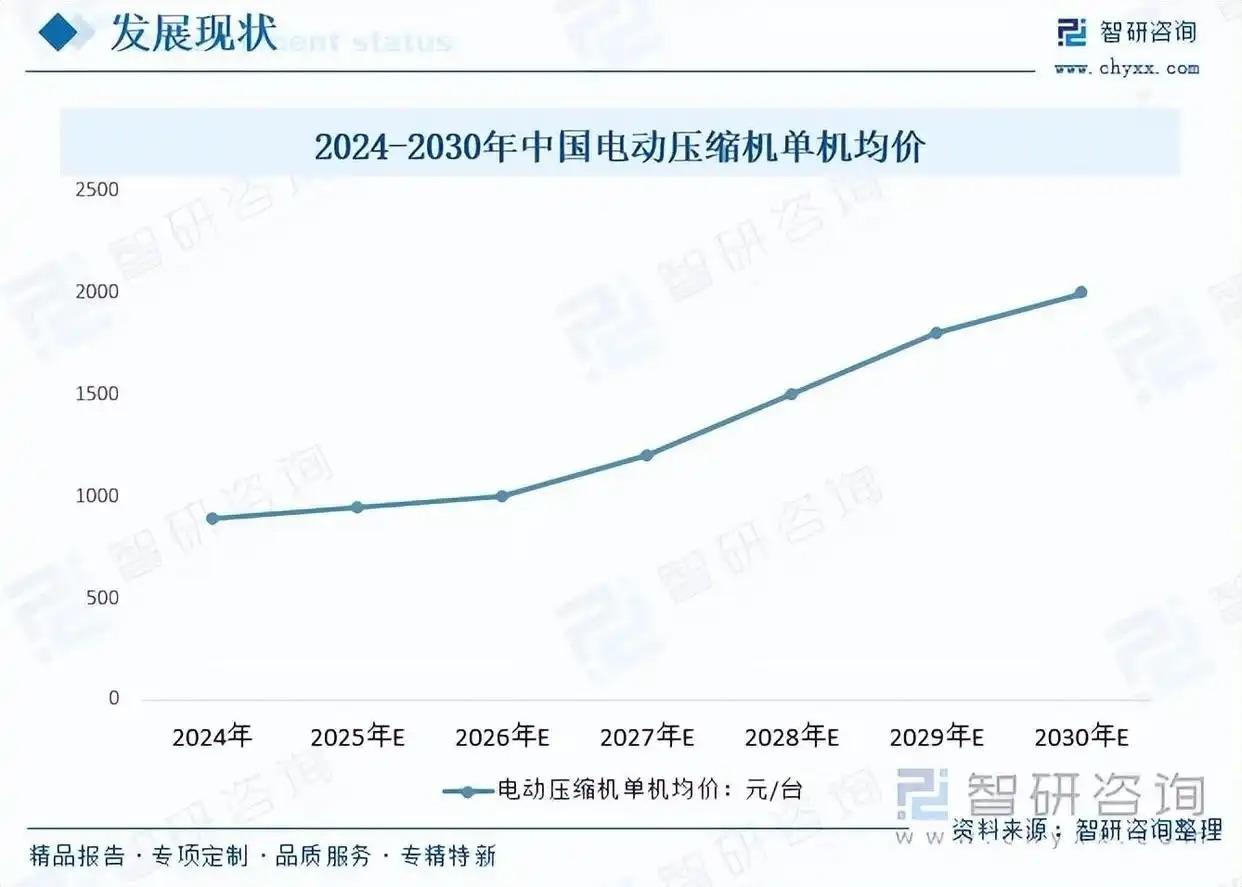
At the same time, the profit margin of the automotive sector is larger than that of the home appliance industry. While the price war in the upstream home appliance market continues to erode downstream profitability, the average unit price of electric compressors in China was 890 yuan per unit in 2024, which is expected to reach about 950 yuan per unit in 2025, and will rise to 2,000 yuan per unit by 2030.
In the first half of 2025, the gross margin of Sanhua Intelligent Control's automotive component business was as high as 27.96%.
The artificial intelligence industry may offer even more opportunities. It is reported that Sanhua Intelligent Control has clearly listed "robotics" as its new strategic business.
However, the question of choosing between the automotive sector and the robotics sector remains: can these new market opportunities really help home appliance upstream enterprises regain their former glory? The answer is not necessarily yes.
First of all, the costs required to expand into the automotive and robotics component sectors cannot be underestimated, especially the R&D costs.
Take Changhong Huayi as an example. In 2025, due to the company's continuous investment in key areas such as frequency conversion, commercial and vehicle-mounted compressors, its R&D expenses increased by 23.97% year-on-year to 443 million yuan, with its proportion in operating revenue rising from 2.99% in 2024 to 3.76%.
In the past two years, Sanhua Intelligent Control has also spent a lot on new business development. Public data shows that the company announced an investment of over 3.8 billion yuan in 2024 to build a robot actuator production base and expand its industrial layout. Meanwhile, the enterprise's R&D expenditure reached 1.35 billion yuan in 2024, and its R&D expenses hit 1.374 billion yuan in 2025.
Secondly, not all enterprises that expand into new tracks can achieve good results. After all, these sectors are already home to many strong and established players.
Take the automotive air conditioner compressor market as an example. According to a survey by the Huajing Industrial Research Institute, for a long time in the past, the top five manufacturers in China's automotive air conditioner compressor market by market share were Huayu Sanden, Aotaijia, Zhongcheng New Energy, Valeo and Fudi Technology, with market shares of 31%, 20%, 9%, 8% and 7% respectively, and the CR5 concentration ratio reached 75%.
In addition, the automotive sector is also building its own supply chains, which means that the existing dominant market structure may not leave much room for cross-sector enterprises to gain a foothold.
Furthermore, and this is the most notable point, while home appliance upstream enterprises are flocking to new tracks, traditional home appliance enterprises are also testing the waters in these emerging market opportunities. Over the past two years, it has not been news for home appliance enterprises to cooperate with automotive brands to replicate and migrate their living room ecosystem into vehicles.
Some supply chain enterprises nurtured by home appliance manufacturers have also achieved considerable success in the automotive sector.
A typical example is Midea's Welling. Welling migrated its air conditioner compressor technology to the automotive field. By the end of 2024, its three categories of automotive components — thermal management, electric drive and chassis actuators — had achieved cumulative deliveries of 3 million units, with the output of electric compressors exceeding 1 million units, and it has established supply partnerships with carmakers such as XPeng and NIO.
In July 2026, GREE Electric Appliances and Geely Group announced a partnership. According to the official announcement, the two parties will carry out joint R&D in the field of in-vehicle smart hardware, including new energy vehicle air conditioners, heat pumps and thermal management solutions, to migrate GREE's refrigeration, frequency conversion and compressor technologies, which it has developed over decades, to automotive scenarios.
As for choosing between the automotive sector and the robotics sector, up to now, these two new tracks have long been saturated with competitors.
The "Easy Profit Era" for Component Suppliers Is Gone Forever
In past business narratives, component enterprises were regarded as "hidden champions" in the industrial chain.
A dozen years ago, the home appliance subsidy program for rural areas and the golden era of the real estate industry drove home appliance sales to surge year after year; the popularization of fuel vehicles kept component suppliers flooded with orders. At that time, the goal of downstream brands was to seize market share and scale up operations. Suppliers, with core technologies in hand and strong partnerships with leading customers, could easily reap the dividends brought by downstream consumption expansion through economies of scale, as long as they kept pace with production capacity expansion.
During the period of rising consumption, compressors and valve components in the home appliance