Magic Leap has finally conceded defeat by stopping the R&D of head-mounted displays, and Chinese brands have taken up the banner of AR.
This AR headset company that deceived the whole world can no longer keep up its facade.
On July 9, Magic Leap announced a strategic transformation, stating that starting from October, it will cease the R&D of its own branded AR headset products and pivot to becoming a supplier of AR optical waveguide technology and a provider of complete device integration solutions. I know that just mentioning the brand name Magic Leap might not ring a bell for many people. But after seeing the following animated GIF, I believe everyone will recall it:
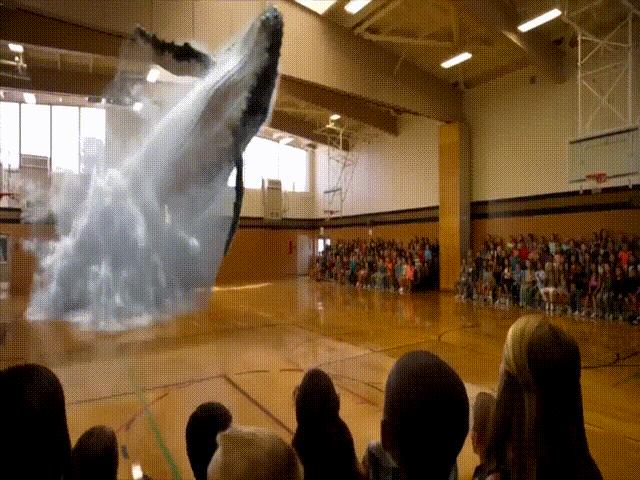
Image Source: Magic Leap
In March 2015, Magic Leap, an AR enterprise that had been established for only five years, released this demo video that took the world by storm. Even though a large number of industry insiders and digital enthusiasts pointed out after the video was released that it was created with computer-generated special effects, the over-the-top "acting without real objects" by the live audience might have been so convincing that countless netizens unfamiliar with AR technology believed Magic Leap had actually developed the "multi-person, multi-angle naked-eye 3D projection" technology shown in the demo.
Judging from the company's subsequent development, this highly controversial CG promotional video was very likely the "peak moment" in Magic Leap's entire history: in 2016, a large number of Magic Leap's core employees left the company; in 2017, Magic Leap launched its first AR headset product — Magic Leap One.
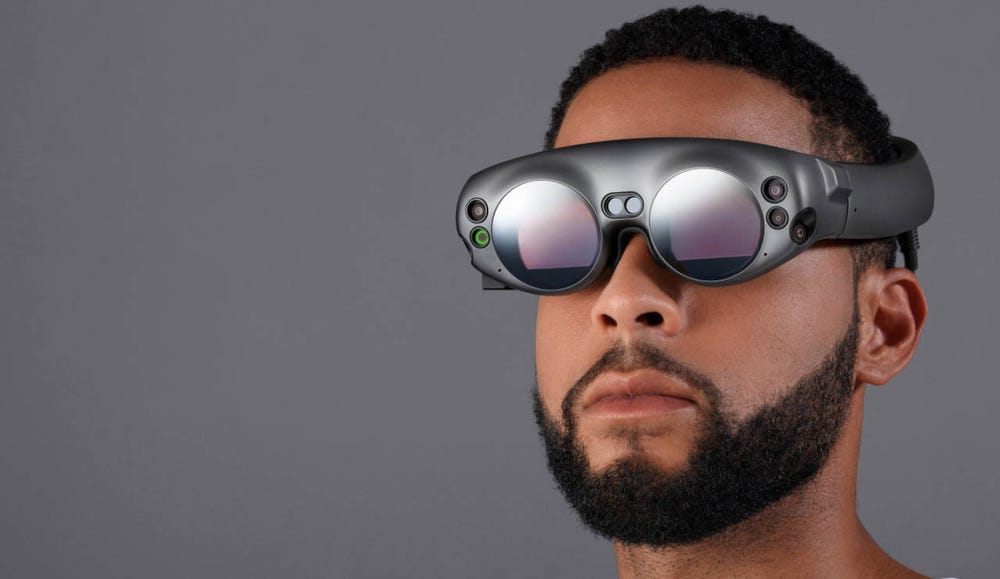
Image Source: Magic Leap
Clearly, using the Magic Leap One to watch a humpback whale leap in a stadium is no different from "seeing the world through a narrow slit", and the mismatch between the Magic Leap One and its promised performance also made the company widely questioned. With such a track record, when Magic Leap 2 was released in 2022, the company had already lost everyone's trust and became a marginalized player in every sense.
Against the backdrop of investors, executives, and core employees leaving one after another, Magic Leap's decision to "make a painful but necessary cut" by stopping in-house product development is actually something we could have anticipated. After all, at this moment, the only truly valuable asset Magic Leap has left is its AR optical waveguide technology.
Now, Leitech (ID: leitech) believes it is time to discuss these topics: from being the "golden child" of the AR headset industry to becoming a waveguide supplier, what exactly did Magic Leap do wrong? And more importantly, what insights can Magic Leap's current situation bring to today's AR products?
Magic Leap has major flaws in product positioning
From the perspective of "taking stock", Magic Leap's biggest problem is obviously false advertising.
In general, it is not a terrifying thing for a first-generation product to be immature — you can always iterate and improve it later. Back in 2015, an era that saw a boom in AR and VR hardware, users who were willing to experience AR and VR products had a basic understanding of such devices. Even if Magic Leap could not meet the industry's passing standards, it could have gradually polished its subsequent products to reach that level.
But that CG video from Magic Leap raised the product's capabilities to the level of a sci-fi movie, and even overshadowed the popularity of Microsoft's HoloLens, which had spent 5 years focused on R&D and could actually deliver a tangible product. Magic Leap's vague responses to the falsification of its promotional video further raised everyone's expectations for its products.
In fact, technically speaking, the hardware configuration of the Magic Leap One was not bad in 2018: its 40-degree horizontal FOV even exceeded the technical specifications of large manufacturers like Microsoft, and its optical waveguide imaging and split design also gave Magic Leap an advantage in wearing comfort compared to many all-in-one VR/AR devices.
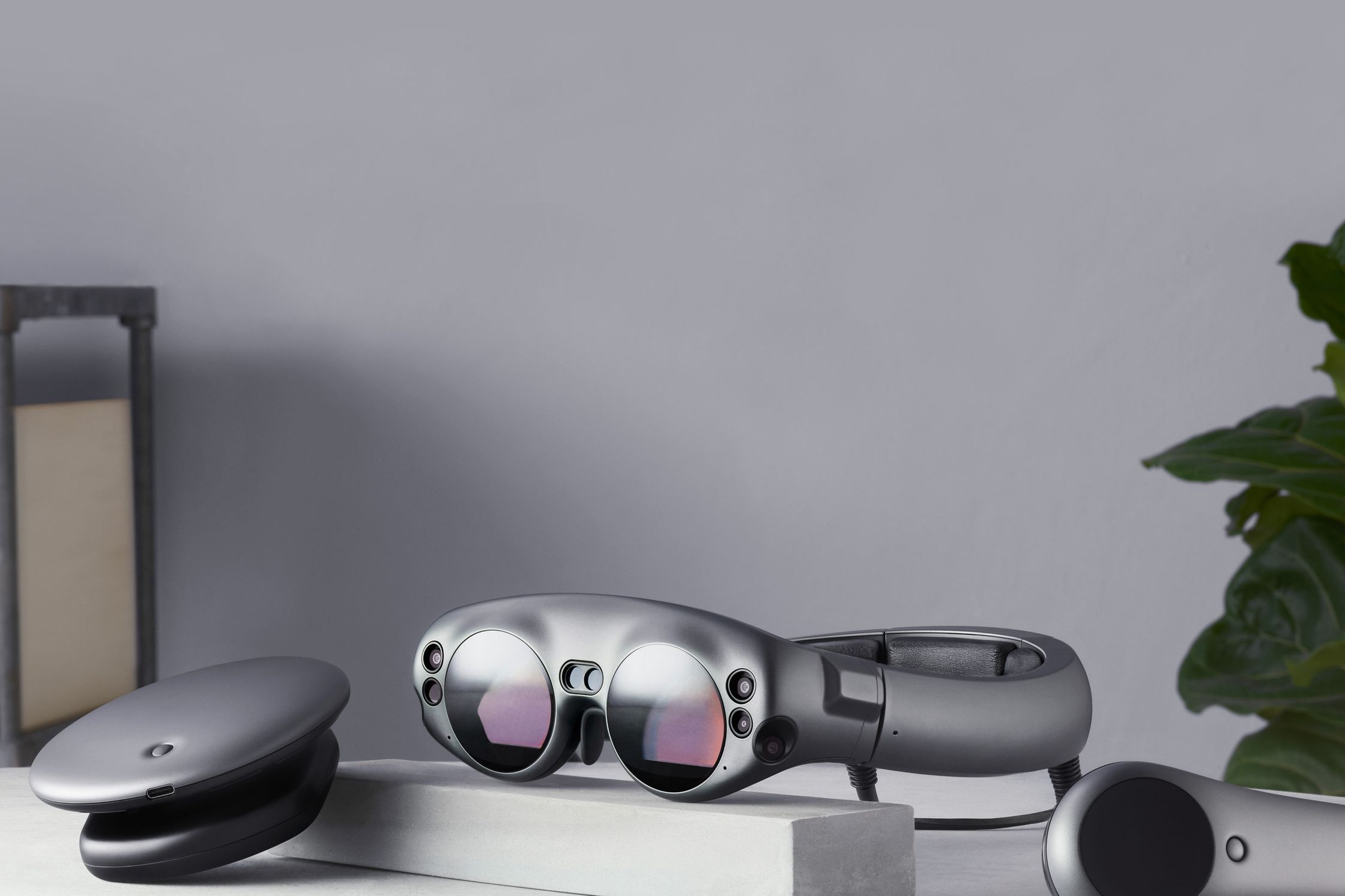
Image Source: Magic Leap
But the problem is, compared to the effects shown in the promotional video, the actual performance of the Magic Leap One fell far short. Even after its launch, the brand was evasive about the real performance of the Magic Leap One, only allowing a tiny number of media outlets to "experience it without reviewing it" under a non-disclosure agreement. This abnormal cautiousness made everyone start to wonder, "What else is Magic Leap hiding from us?", which pushed the brand to the edge of being labeled as a "scam".
But even if we set aside the product issues for a moment, looking back now, Magic Leap also ran into big trouble with its product positioning. Back in 2018, the era of booming VR and AR technologies, almost every industry giant had found its own product positioning: either partnering with the entertainment sectors like gaming and film and television to target the consumer market, or collaborating with industrial and medical enterprises to focus on the commercial market. Even Microsoft's HoloLens latched onto the US Department of Defense in its final days.
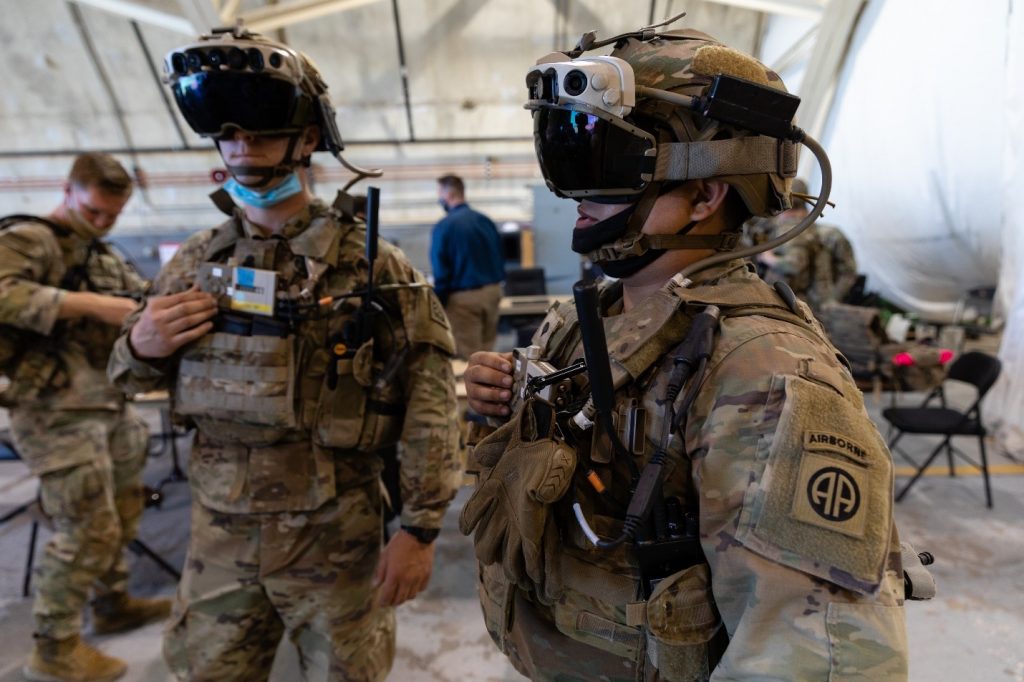
Image Source: Microsoft
But Magic Leap missed every suitable wave of opportunity: while Vive and Oculus were capturing the consumer market with relatively affordable prices, Magic Leap kept delaying its product launch; after laying off half of its employees and replacing its CEO in 2020, Magic Leap belatedly tried to compete with Microsoft's HoloLens for medical and defense orders.
Faced with a platform that was expensive, had a small user base, and kept shifting its development roadmap, even the most dedicated developers could hardly be motivated to build ecosystem content for Magic Leap. The hardware performance was less than half of what was promised, there was no content ecosystem, yet the price tag reached $3299 — even more expensive than the top-tier Vive headset. With product performance, pricing, and ecosystem all underperforming, Magic Leap's "defeat" became inevitable.
Chinese brands have taken up the banner of AR headsets
However, from Leitech's perspective, the situation Magic Leap finds itself in today is partly "self-inflicted", but on the other hand, we also need to consider the development of the market. Leitech believes that Magic Leap's biggest misjudgment was that it tried to sell AR headsets as the "next-generation computing platform" too early; the reason why Chinese manufacturers have thrived in recent years is precisely because they first set aside this overambitious burden.
Take XREAL as an example. Some people may not know that Chi Xu, the CEO of XREAL (originally named NREAL in its early days), has a Magic Leap background himself. But XREAL did not start by copying a high-priced AR headset with a closed ecosystem. Instead, it first turned AR headsets into an external large screen for smartphones and Switch, using an intuitive way to deliver an "out-of-the-box ready" scenario to users, so that users would know exactly what XREAL's AR headset can do on the very first day they take it home.
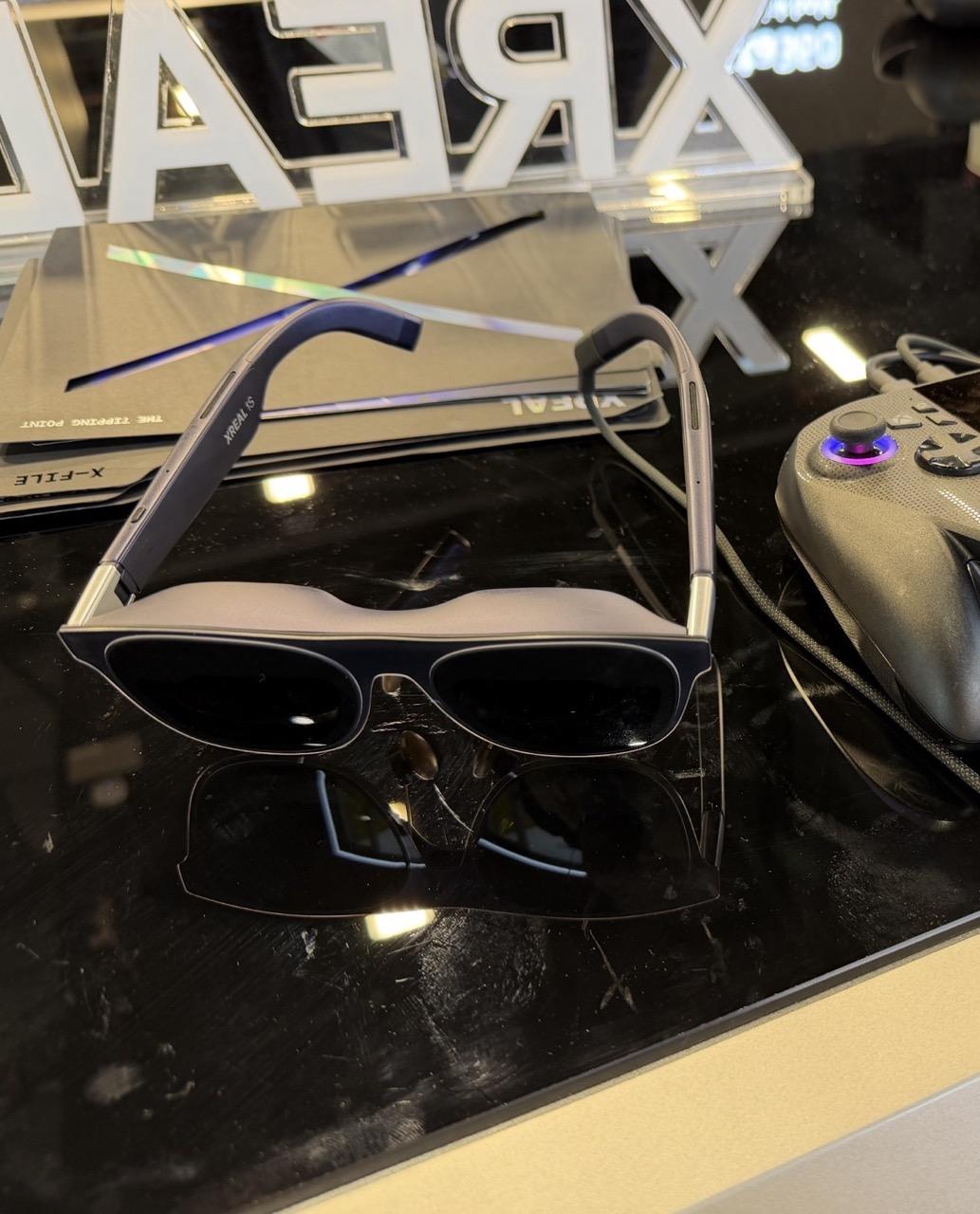
XREAL's AR glasses showcased at CES. Image Source: Leitech
This path later influenced the product philosophy of the domestic AR/AI glasses category. Domestic smart glasses brands such as Thunderbird, Rokid, MYVU, and Qianwen have been using optical waveguide solutions to make display glasses lighter, while integrating high-frequency functions like translation, teleprompter, navigation, photography, and AI assistants into daily scenarios, striving to let users experience the "value" of smart glasses the moment they put them on.
In addition, the mature digital product supply chain is also the confidence that allows Chinese brands to outperform latecomers. AR devices (including optical waveguide AI glasses) require mature optical engine and lens solutions, as well as a mature OEM system with stable quality control. Backed by the mature smartphone and wearable industry chain, Chinese manufacturers are far better than Magic Leap was in 2015, whether in terms of technological iteration speed, cost control, or yield management.
That is precisely why, from Leitech's perspective, Magic Leap's exit also signals that the banner of the AR headset industry has been passed to Chinese brands.
Consumer products are not its strength, but ML's technology has merits
Then the question arises: in 2026, an era when the price of AI glasses has dropped below 2000 yuan, how much of an advantage does Magic Leap — which has been "reborn" as a waveguide supplier — still have over the domestic supply chain?
From Leitech's (ID: leitech) point of view, although Magic Leap suffered a complete defeat in the complete device market, its accumulated optical capabilities over the years are still worth learning from.
In Google's AI glasses prototype, Magic Leap has integrated its own optical waveguide and Raxium microLED optical engine; its partnership with Pegatron has also complemented its large-scale manufacturing capabilities. For manufacturers who want to enter the AI glasses market but do not have years of accumulated near-eye display experience, this set of "legacy" from Magic Leap can not only shorten the R&D cycle, but also allow latecomers to avoid some of the detours Magic Leap took.
In addition, modern AI glasses with display functions generally adopt optical waveguide solutions, but based on Leitech's hands-on experience, some products still have room for improvement in aspects such as optical waveguide efficiency, resolution, and FOV. Magic Leap has years of technical experience in the optical waveguide field, and this valuable experience can all help improve product experience.
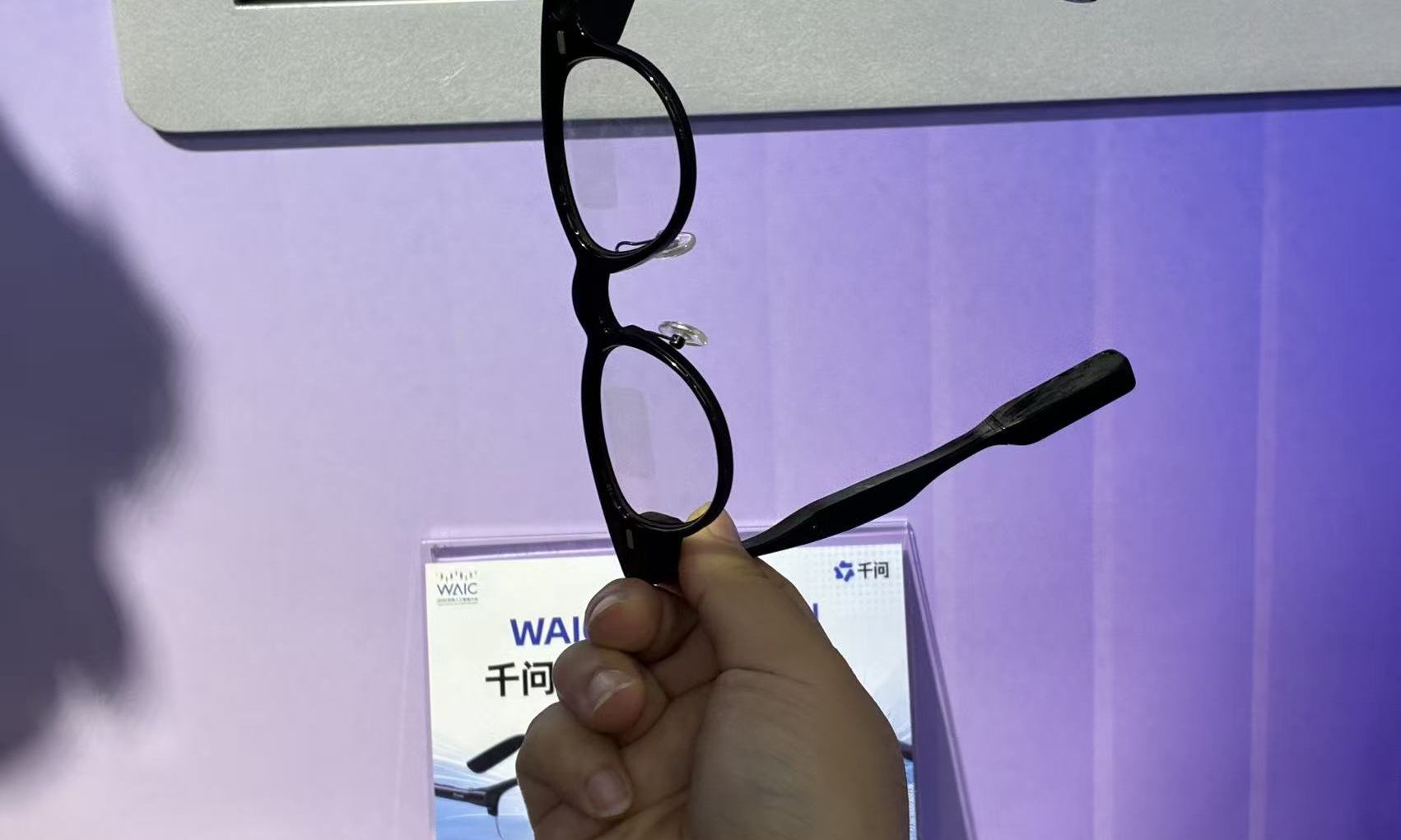
The Qianwen S1 glasses adopt a binocular dual-optical-engine optical waveguide solution. Image Source: Leitech
Of course, although these "technical legacies" of Magic Leap are useful, they cannot solve all the problems facing the smart glasses industry. For example, the biggest shortcomings of current smart glasses are the ecosystem and battery life, and Magic Leap's performance in these aspects is even worse.
But compared to a genuine "retirement", from Leitech's perspective, transforming into a supplier is already the most decent outcome for Magic Leap. From a product perspective, it is true that Magic Leap failed to deliver the product it envisioned 11 years ago, which counts as a failure. But from the industry's perspective, Magic Leap has left behind accumulated optical waveguide technology that can continue to be applied.
In 2015, Magic Leap "shocked" netizens all over the world with film and television special effects, making AR technology a mainstream topic. Today, 11 years later, Magic Leap chooses to use its technology to pave the way for the "rising stars" of the industry. If these "rising stars" can one day realize the AR effects shown in that old CG video, then Magic Leap can be considered to have "redeemed itself for its past mistakes".
This article is from "Leitech", authorized for release by 36Kr.