Dialogue with Runjian Co., Ltd.: What AI applications compete for is not only model capability, but more the closed-loop capability from Token to value creation.
On July 17, the 2026 World Artificial Intelligence Conference opened in Shanghai. As 36Kr's dedicated content window that has been deeply covering WAIC on-site for three consecutive years, the "Kr-Talk Future" live studio also launched on-site dialogues simultaneously on the first day of the conference. Ding Yong, Director and Vice President of Runchang Co., Ltd., accepted a special exclusive interview with 36Kr's "Kr-Talk Future" at the WAIC venue, sharing Runchang's exploration of building full-stack Token service capabilities and promoting enterprise-level AI implementation around topics such as Token production, application landing, value closed-loop, and overseas expansion.
The 2026 WAIC is themed "Intelligent Partners, Co-Creating the Future". As the artificial intelligence industry enters a stage of deepened application, industry focus is gradually shifting from model capability competition to application value creation. Compared with discussions centered on parameter scale, model performance, and technological breakthroughs in past years, the 2026 AI industry is focusing on a more core issue: how AI can truly integrate into enterprise business processes, lower application thresholds, and create value through tangible business outcomes.
Against this trend, Token has become a critical fundamental resource connecting computing power, models, and applications. For enterprises, AI implementation requires not only stronger model capabilities but also low-cost, high-efficiency, safe and reliable foundational support, as well as an application service system that can deeply integrate into business scenarios. In other words, competition in the AI industry is shifting from "model capability competition" to "value closed-loop capability competition".
Runchang's exploration is precisely focused on this direction: relying on the Wuxiang Cloud Valley Token Factory, by building full-stack capabilities for Token production, application, deployment, and services, the company lowers the cost threshold for enterprises to use AI. Through the AI FDE (AI Forward Deployed Engineer) delivery model, it combines tools, Tokens, and industry scenarios to help enterprises unlock the value of AI applications. For enterprise-level AI, the real key to successful implementation is not just providing technical capabilities, but enabling AI to enter business operations and continuously generate measurable business value.
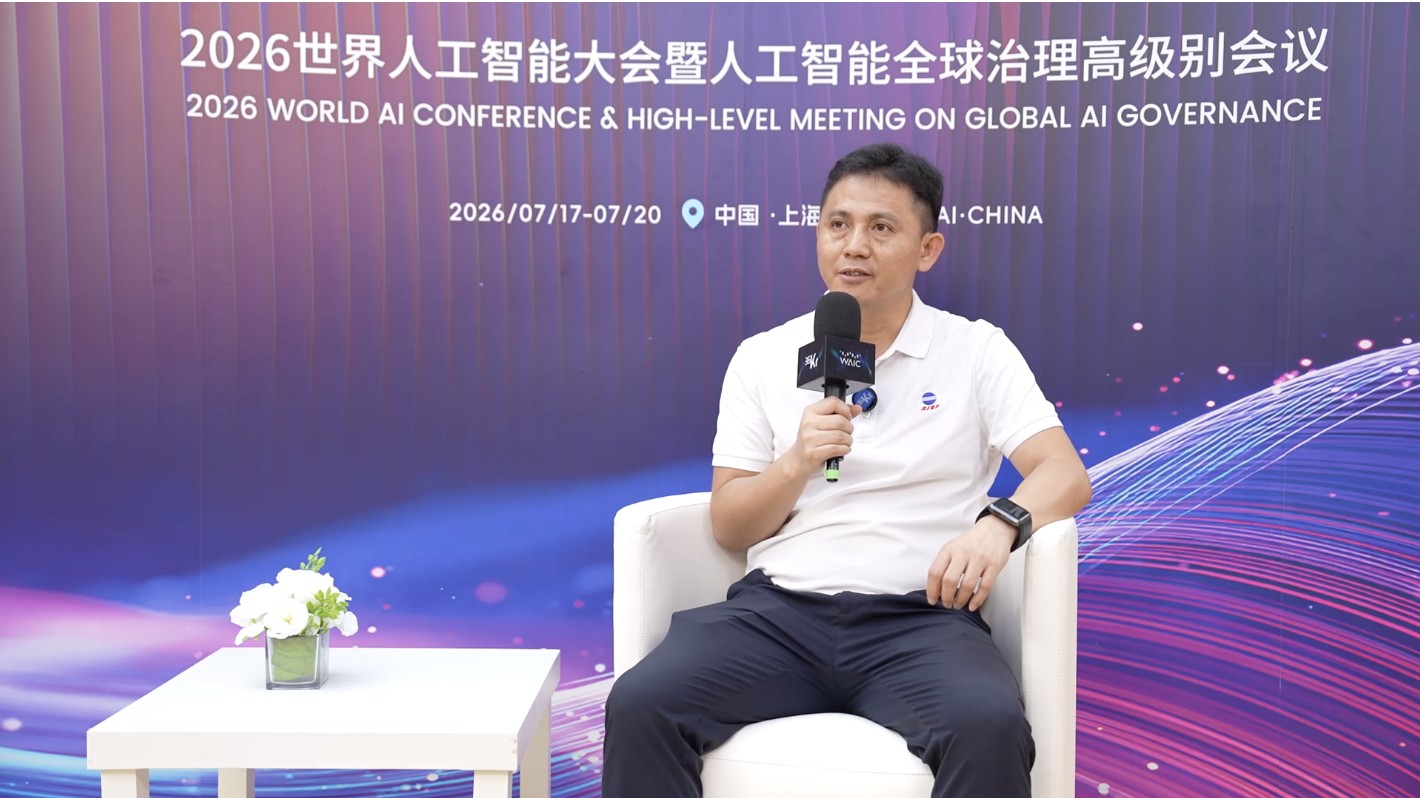
The following is an edited transcript of the dialogue, reviewed by 36Kr:
36Kr: Welcome, Mr. Ding, to our 36Kr "Kr-Talk Future Live Studio". At this year's WAIC, Runchang made its debut with the theme "Token Surge, Value Co-Creation" and set up four exhibition zones. What is the core content the company aims to showcase this time?
Ding Yong: These four exhibition zones highlight our full-stack capabilities built around the Token value closed-loop, covering links such as Token production, Token sales, Token applications, and final deployment and implementation.
The core highlights mainly include the following aspects:
First is the Wuxiang Cloud Valley Token Factory. At the current stage, performance optimization during the Token production process is of great importance. At this exhibition, we also launched the Runchan Platform of the Wuxiang Cloud Valley Token Factory. By optimizing Token throughput performance, we can achieve a 700% performance improvement, further reducing Token costs and making AI capabilities more inclusive.
Second is power cost optimization. Power cost is a major component of Token production, and the key to reducing power costs lies in the design of computing-power and electricity coordination. Based on Runchang's previous accumulation in the energy sector, we can better allocate the use of green power by combining virtual power plants with energy storage capabilities, thus lowering the energy cost in the computing power production process.
In addition, we have received approval to build a dedicated 220kV substation at the Wuxiang Cloud Valley Computing Center in Nanning, providing 480MW of capacity through dedicated transformers to deliver stable energy support for the computing center. This initiative is expected to reduce computing power usage costs by more than 30%.
By lowering the usage costs of these two technologies, the cost of the entire Token production process can reach an inclusive standard.
Furthermore, in the Token production link, with the rapid development of computing servers and GPU technology, cooling methods are gradually shifting from traditional air cooling to liquid cooling. Currently, we use micro-channel liquid cooling combined with 800V high-voltage DC technology to reduce PUE below 1.1, further optimizing Token production efficiency and cutting the cost of computing Tokens.
Next, in the Token application link, we must ultimately realize the implementation of the value closed-loop, which brings us back to the issue of AI application landing. Currently, we have proposed the AI FDE service system and defined it as VGE, which stands for "Value Growth Engineering". Simply put, we will dispatch the FDE team to the customer's site to jointly explore AI application scenarios and value with the enterprise.
Why do customers prefer this model? On the one hand, we can provide low-cost Tokens; on the other hand, we have a tool chain suitable for enterprise AI transformation. Some of these tools are on display in the exhibition zone, including Quchi MetaBase, OPC Team, and Apollo 11. We will bring tools and Tokens to the customer's site to help enterprises achieve value growth through real business scenarios.
Ultimately, we will quantify the economic benefits generated by each Token, allowing customers to clearly see the value created by AI applications and pay based on value results, thus forming a complete value closed-loop.
Take Apollo 11 as an example: it is an enterprise's cognitive foundation. Many enterprises, especially small and medium-sized enterprises and manufacturing enterprises, lack a holistic perspective in their operations. Apollo 11 can serve as this foundation, integrating a series of data including people, finance, materials, production operations, project management, and supply chain of the enterprise.
However, this integration does not adopt the traditional data middle platform approach. Instead, it is based on data ontology construction, combining business rules, data relationships, and data meanings, and leveraging model reasoning capabilities to form a real-time dynamic data ontology. In this way, enterprise managers can not only gain a more transparent view of the business operation process, but also further realize capabilities such as supply chain prediction and production capacity prediction. They can also analyze how to achieve target improvements. For example, if an enterprise hopes to increase production capacity by 20%-30%, through this cognitive foundation, it can analyze which links need to take what measures to reach the goal.
Currently, this solution has been implemented in seven or eight projects in the manufacturing industry, with very positive feedback from customers. Because enterprise managers have stronger control capabilities, and they can also pay based on the actual economic value created. A value closed-loop is formed in this process.
The final highlight is Token going global. Token going global is also a key direction we are currently focusing on.
First, the cost of Tokens overseas is currently relatively high, generally 10 to 30 times that of domestic costs. At the same time, the gap between China's open-source and closed-source large model capabilities and overseas counterparts is continuously narrowing, which also provides opportunities for Token going global. In addition, the VGE service system we proposed itself has the ability to export value. When we bring services overseas, subsequent operations will also generate Token demand, and our Tokens still have cost advantages.
Of course, Token going global requires basic conditions.
The first is latency capability. For overseas customers, Token services must meet actual business needs. Currently, relying on the construction of the Nanning Wuxiang Cloud Valley Intelligent Computing Center, we have connected to the link of the Nanning International Communication Exit and Entry Bureau and are conducting debugging. After it is officially put into use, the latency for the Southeast Asian region can be controlled at around 20 milliseconds, which is comparable to the domestic experience.
The second is price advantage. As we discussed earlier in the Token production section, we can offer more competitive costs.
The third is compliance capability. With the support of the Guangxi government, we have passed relevant approvals and obtained qualifications, which can meet the data processing and compliance needs of overseas customers. Therefore, we already have the necessary basic conditions in the field of Token going global, which is also one of the key directions showcased at this exhibition.
36Kr: You just mentioned the AI FDE model. What stage is this model currently in? Is it in the stage of demonstration verification, pilot cooperation, or has it entered actual delivery? Please give us a detailed introduction.
Ding Yong: It has already entered the implementation and delivery stage. In the manufacturing case mentioned earlier, we have implemented 7 projects through the VGE model. The specific approach is that we bring Tokens and tools to the enterprise to jointly carry out AI application construction with customers.
After the project is completed, we will evaluate the actual generated benefits and settle accounts based on value results, providing a transparent and quantifiable outcome. Currently, relevant contracts have been signed, and two of the projects have been delivered.
The entire AI FDE model is about the Value Growth Engineering team entering the customer's site to help enterprises realize AI application value through tools and Tokens.
36Kr: We see that the Dev Workshop area in the exhibition zone is very popular, with many AI tools available for developers to experience on-site. Does this exhibition experience focus more on efficiency improvement, cost optimization, security assurance, or business experience?
Ding Yong: These tools mainly solve two problems: faster and safer. First, faster. Take Apollo 11 as an example: when an enterprise has a cognitive foundation, it can clarify which links need to take actions to increase production capacity. However, the enterprise may face the problem of imperfect existing information systems, and development tools are needed for supplementation at this time.
The tools in our exhibition zone, such as Quchi MetaBase, can generate agents that meet your requirements with a single sentence and embed them into the enterprise's existing information system. OPC Team is a multi-agent collaborative framework that can execute complex tasks and realize rapid development of software and Agents. Traditional software development requires multiple roles such as product managers, project managers, and development engineers, while OPC Team can complete collaboration through digital human Agents. Enterprise users only need to put forward business requirements to quickly generate corresponding solutions, significantly lowering the development threshold.
Second, safer. Currently, all enterprises have increasingly high requirements for data privacy and security. Some data can be stored on the cloud, while some data must remain local. However, if enterprise data cannot be fully utilized, many AI value scenarios will be difficult to truly implement. Therefore, we provide localized service solutions, while addressing Token deployment issues, clarifying which Tokens are suitable for cloud usage and which need local deployment.
In addition, when enterprises use cloud-based AI capabilities, they also need supporting AI security capabilities to prevent risks such as model hallucinations and jailbreaking. Currently, we have also showcased relevant AI security products to provide guarantees for enterprise AI applications.
Overall, we hope to help enterprises achieve faster and safer AI application implementation through these tools.
36Kr: In which aspects does the company most hope to make progress next? What actions do you hope the outside world will focus on in the future?
Ding Yong: Runchang is positioned as a high-quality Token service provider. In the future, we will focus on several key directions.
First, increase the production capacity of the Token Factory. According to the current development trend, the production capacity of the Token Factory is growing very rapidly. At the current stage, we basically maintain a monthly doubling growth rate. However, increasing production capacity does not only mean how many Tokens can be supplied per hour, but more importantly, the richness of model capabilities. In the future, we need to provide more model combinations that meet industrial needs and are based on specific scenarios, rather than just general large models.
Second, promote the scaling of VGE, that is, the AI FDE service system. In the future, we hope to fully promote enterprise-level AI services, expanding from the whole country to the Southeast Asian market. At the same time, the speed of scaling is also a key focus for us.
Important indicators for measuring the scaling effect include the coverage scale of enterprise AI services, Token consumption volume, and user activity. We are continuously advancing around these two directions and maintain good development expectations for the overall strategy implementation.