2026 WAIC Observation: The AI glasses industry is long awaiting the Hundred-Glasses Battle
In July in Shanghai, the air is thick like unyielding syrup.
Standing at the entrance of the West Bund International Expo Center, the queue of people waiting to enter twists for dozens of meters. Sweat drips down their temples, and the line creaks forward like a snail. The security gate emits a short beep every few seconds, letting in a sweaty visitor.
The venue is crowded in another sense.

Source: Li Weike
More than 20 AI glasses manufacturers have filled most of the exhibition hall with their booths, and the air is mixed with the smell of disinfectant wipes and metal frames. People crowd around each booth, and the staff repeatedly wipe the fingerprints off the lenses, only for them to be picked up and put on by the next person as soon as they are put back.
A reporter from *Jixie Dao* squeezed through the crowd, took a pair of glasses from a visitor, and the moment he put them on, real-time translated Chinese subtitles appeared in front of his eyes. The German exhibitor opposite was saying, "This product is very interesting."
After taking them off, another pair was handed over. This time, the reporter saw his own heart rate curve floating in the upper right corner of his field of view. Changing to another pair, a to-do list popped up on the lens, reminding him "14:00 Interview the founder".
Standing in the middle of the aisle, with six or seven brochures in his pocket, each printed with almost identical words: smart, lightweight, hands-free, AI assistant. But after testing seven or eight products, only one question remained in his mind: Will I still wear this thing when I go out tomorrow?
And at the WAIC booth, no one could give a convincing answer to this question.
I. The Pearl River Delta Snaps Its Fingers
Four years ago, if someone told you that glasses would become the next computing platform, you might have thought he was talking about science fiction. But now, on a one-meter-wide counter in Huaqiang North, Shenzhen, you can get a pair of AI glasses with a camera for only 300 yuan.
This is not a miracle, but the overflow of China's supply chain capabilities.
From lens modules in Dongguan, optical lenses in Jiangxi, micro-batteries in the Jiangsu-Zhejiang region, to complete machine OEM in Shenzhen, a complete industrial chain has grown to an astonishing scale.
At the WAIC venue, *Jixie Dao* talked to an ODM factory located in Nanshan, Shenzhen. Mr. Chen, the boss, told us: If a customer puts forward a modification suggestion in the morning, a sample can be obtained in the afternoon; from project initiation to mass production, the shortest time is only one and a half months.
He casually picked up a temple module, pried it open to show us the internal structure: the main control chip, Bluetooth module, power management chip, microphone, and speaker are all integrated on a circuit board thinner than a finger.
Why is it so fast? Because most parts have ready-made public boards and public molds, no need to design from scratch. You only need to make choices on existing solutions, deciding which functions to add, how much weight to reduce, and whose chips to use.
More than 80% of the world's smart glasses manufacturing processes are concentrated in China. If Meta wants an OEM, it has to go to GoerTek; to implement optical solutions, it cannot bypass SightAI and Sunny Optical; display chips depend on JBD. These suppliers are no more than two hours' drive apart. If there is a problem with a part, the boss can ride an electric bike over to discuss it face to face.
Behind the figure of 80% is a dense industrial network.
In a pair of AI glasses with display functions, the optical display components usually account for 40% to 50% of the cost, and the chips account for another 20% to 30%, together accounting for more than 70%. Whoever masters these two parts holds the lifeblood of the entire industry.
The optical module is the eye of AI glasses, which determines the display effect, weight, and power consumption of a pair of glasses.
The core technology in this field is called optical waveguide. In Huzhou, Zhejiang, there is a startup company called Argus, which originated from the Department of Precision Instruments of Tsinghua University. They have overcome the "rainbow stripe effect", a problem that has plagued the global AI glasses industry for many years, and reduced the weight of the diffractive optical waveguide lens to less than 4 grams, as they put it, "less than the weight of a spoonful of salt".
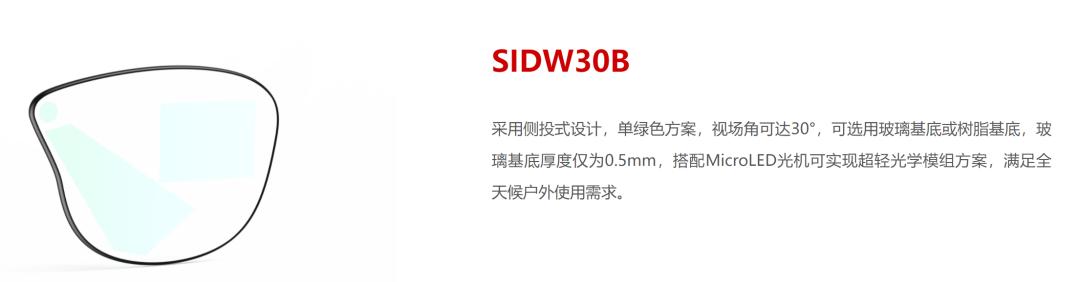
Source: Argus
The chip is the brain of AI glasses. It determines how fast AI models the glasses can run, how long the battery life can last, and how complex scene understanding it can achieve.
In this field, Chinese companies are also densely distributed. The BES2800 chip from Beken Technology in Zhuhai has become one of the core suppliers for Meta Ray-Ban, and Rokid's new AR glasses are equipped with Beken's 6nm chip. The Thunderbird V4 adopts a dual-chip solution of "Qualcomm AR1 + Beken BES2800", and ByteDance's second-generation Doubao AI glasses have also switched to the same combination.
It is worth noting that changes are taking place in the chip architecture. AI glasses are moving from a single chip to dual chips: a low-power chip is responsible for standby and basic interaction, and a high-performance chip handles AI reasoning and complex calculations.
Rokid's new product is equipped with Beken's 6nm chip as the main control, and also externally connects the Qualcomm Snapdragon Ultra Spatial Computing co-processor. This "dual-chip dual-system" architecture is becoming the industry standard.
As of July 20, more than 60 A-share companies in the AI glasses industrial chain have released their semi-annual report forecasts, and the upstream of the industrial chain has been the first to taste the sweetness of this feast.
Profits in the upstream chip sector have surged. Biway Storage predicts that its attributable net profit in the first half of the year will be 7 billion to 7.5 billion yuan, a year-on-year increase of more than 32 times; Shannon Semiconductor predicts a net profit of 3.5 billion to 4 billion yuan, a year-on-year increase of more than 21 times; SoC and storage control chip companies such as Fudan Microelectronics, Montage Technology, Rockchip, and Allwinner Technology have generally announced significant pre-increases or turnarounds from losses.
From optics to chips to OEM, every link in this industrial chain is accelerating. This has led to an awkward situation: the more brands rely on the supply chain to ship quickly, the more homogeneous the products become; the more homogeneous the products are, the less anyone can answer why users should buy yours instead of others'.
II. No One Has Fully Dug the Well of AI Glasses
The boom of AI glasses has largely benefited from the dividends accumulated in the era of smartphones.
GoerTek, Luxshare Precision, Lens Technology... These names, which were already OEM giants in the mobile phone era, have transferred their equally lean manufacturing capabilities to AI glasses.
For example, Lens Technology has reduced the weight of AI glasses to 49 grams, and the assembly gap is controlled to be almost indistinguishable to the naked eye; the "GTK" mark printed on the packaging of Meta's Ray-Ban AI glasses is exactly GoerTek's OEM code.
The roles of these ODM manufacturers are extending forward, integrating more and more links into a complete solution, from ergonomic design, chip platform adaptation, near-eye display optics integration, system development to mass production delivery.
For Internet companies, traditional eyewear brands, and AI startups, directly adopting mature reference designs and then customizing around appearance, functions, and AI models is often much faster than building a hardware team from scratch.
Then a core question emerged. *Jixie Dao* asked Mr. Chen, who has been doing OEM for so many years, when he thinks this industry will really take off. He thought for a moment and asked back: "How do you think smartphones took off back then?"
Nokia did not make the first mobile phone. It was the iPhone that redefined what a mobile phone was. The hardware always existed, but no one knew what it should look like or what it was for. The same is true for AI glasses now. What AI glasses lack is someone who can tell everyone "what it is".
Because when all core components can be bought on the open market, the hardware itself is no longer a moat. The weight you can achieve, the battery life you can realize, and the functions you can fit in can all be caught up by others within half a year.
The question "Why on earth should I buy your AI glasses" was repeatedly asked at the WAIC site. The manufacturers gave various answers, but they all converged to the same point: "What functions I can do" and "In what scenarios I can help you solve what problems" — translation, teleprompter, navigation, meeting minutes, memory storage, emotion perception...
Everyone is digging a well, looking for the scenario that makes users have to wear it. But so far, no one has dug this well to the end.

Source: Iflytek AI Glasses
*Jixie Dao* wandered around the venue for two hours and found that the core configurations of AI glasses are surprisingly similar: Qualcomm AR1 or Beken chips, a weight of about 40 grams, a multi-microphone array, and an AI voice assistant, with differences only in appearance design and software tuning. As Mr. Chen put it, 80% of the AI glasses on the market today are almost the same when you take them apart.
Of course, even though the supply chain has prepared all the parts, it is not as simple as stuffing the parts into the temples.
What the industrial chain can give you is the best hardware that can be achieved under existing technical conditions. But "the best" also has a ceiling. If the battery energy density cannot be increased, the weight cannot be reduced; if the chip process does not break through, computing power and battery life cannot be achieved at the same time; if the optical solution is not mature, display effect and lightweight appearance are natural enemies.
These bottlenecks can only be approached but not broken through by supply chain optimization. Breakthrough requires definition: telling this industrial chain which direction to move forward.
III. The Three Walls Trapping AI Glasses
Manufacturers are using their own ways to answer "What should AI glasses be", but more fundamental than the debate over routes are the three walls of AI glasses that no one can avoid.
The first wall is the impossible triangle of hardware.
Li Weike removed the display screen and local high-performance chips to reduce the weight to 26 grams; Moonix reduced the weight to 14.9 grams by actively giving up the camera and translation functions; Qwen's S1 glasses with display function had to adopt a hot-swappable replaceable battery design for battery life, meaning users have to carry several spare batteries when going out with the glasses.
Weight, battery life, and performance are naturally mutually exclusive. Adding a display screen will increase both weight and power consumption; installing a larger battery will make the weight soar; to keep it lightweight, you have to give up computing power, not even being able to perform local reasoning.
At present, the single battery life of AI glasses with display is generally only 2 to 5 hours, while screen-free products can last more than 8 hours. The result of consumers voting with their feet is that in the first half of 2025, the sales growth rate of screen-free AI glasses reached 463%. Between "usable" and "comfortable to wear", users did not hesitate to choose the latter.
The reason why this triangle is impossible is that each of its three sides has its own physical ceiling.
Battery energy density only increases by a few percentage points every year, but the computing power demand for AI models doubles every year; the chip process is approaching the physical limit, and each generation below 3nm is more expensive, more difficult, and less rewarding; to make an optical solution that is lightweight, high-brightness, full-color, and low-cost at the same time, no solution has been able to meet all four requirements so far.
After surviving one bottleneck, there is another problem waiting ahead. These problems are stuck at the bottom of basic science, and the pace of scientific breakthroughs does not depend on the release schedule of any company.

Source: Rokid
The second wall is more tricky than the first.
Technical problems can be overcome, but once social trust collapses, it is difficult to rebuild. At Rokid's booth, when the staff introduced "let's look at the payment", a nearby audience whispered: "Then can it also take a photo of me by just looking?" The unease behind this sentence is precisely the deepest anxiety of the entire industry.
At the end of 2024, two Harvard students conducted an experiment with a pair of Ray-Ban Meta glasses: the camera took a photo of a stranger, obtained the name through face recognition, and then used a large language model to cross-compare databases. In less than a minute, the other person's address, phone number, occupation, and relatives were all exposed. They did not open source the code, but issued a warning: Putting face recognition into smart glasses is an insurmountable red line.
Meta's response was to add a white LED light on the frame, which flashes when taking photos and stays on when recording videos. But this line of defense is fragile. Spend 9.9 yuan on a light-shielding sticker to stick on it, and the indicator light will stop working.
The core value of AI glasses comes from that camera. Without it, real-time translation cannot see the menu, navigation cannot understand road signs, and AI cannot recognize the things in front of you. But with it, wherever you go, you are like a walking surveillance camera.
This contradiction is not just a product problem, but a structural dilemma of the entire category. What it needs is not technical upgrading, but the reconstruction of rules across the whole society, about the right to shoot in public spaces, data ownership, and the boundaries of informed consent.
An industry cannot wait for rules to be fully established before developing, but it may be blocked by rules at any time during the development process, and the speed of rule reconstruction is much slower than hardware iteration.
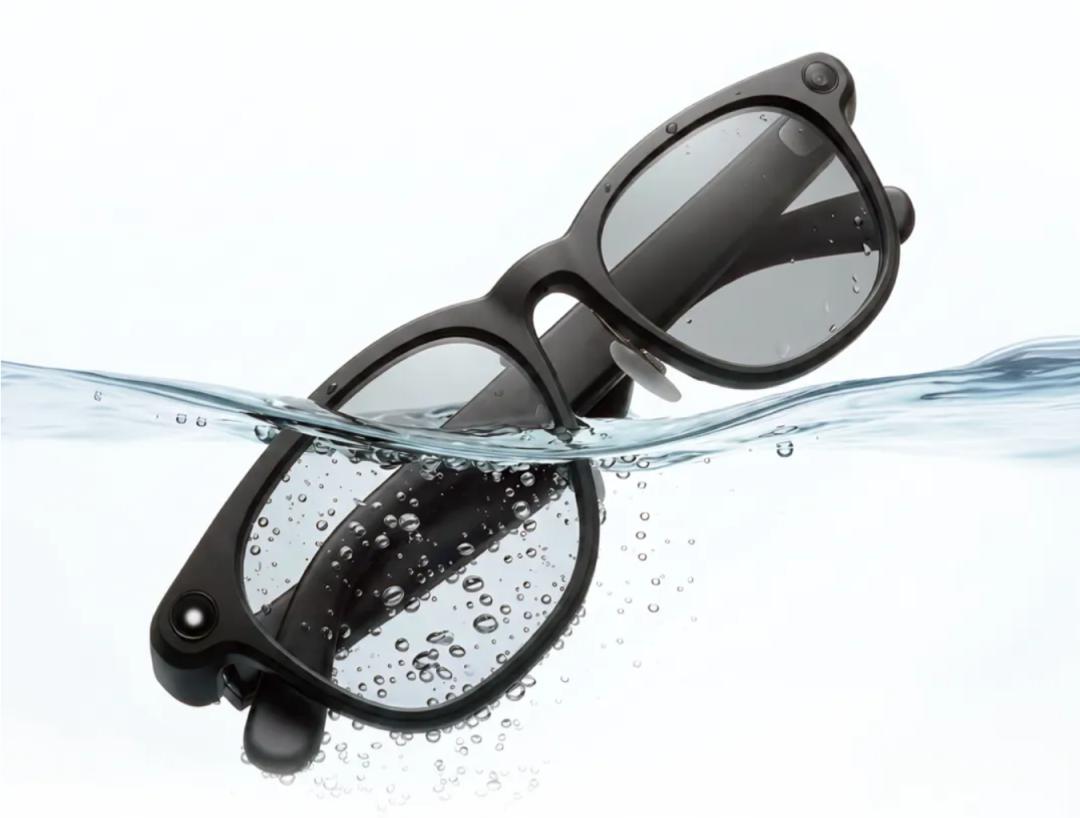
Source: Thunderbird Innovation
The third wall is the softest yet hardest, hidden in the minds of consumers.
AI glasses have launched more than 200 new AI functions, but Li Hongwei, CEO of Thunderbird Innovation, revealed at a press conference