Family infighting has once again broken out at a listed company, forcing the 83-year-old chairman to take on his daughter and son-in-law.
The capital market is never short of drama, but few stories lay bare the family rift-driven internal strife alongside a steadily worsening operational predicament to investors as bluntly as Oujing Medical's case.
83-year-old founder and chairwoman Huang Wanlan was openly staged a "palace coup" by her biological daughter Cui Han and son-in-law Hu Gang, who jointly submitted a proposal to remove her from the board of directors.
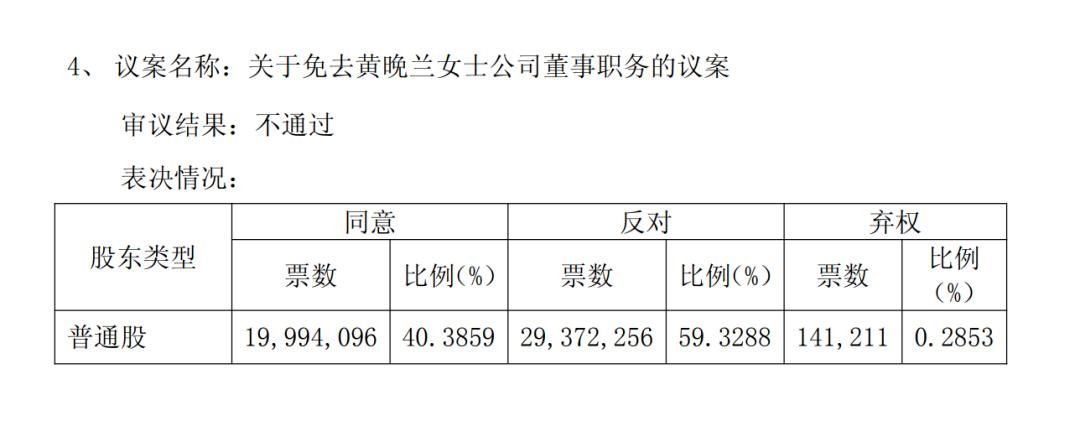
Image source: Internet
This power game that tore off the veil of family affection finally settled at the extraordinary general meeting of shareholders, where the removal proposal was rejected with 59.33% of votes against. The elderly chairwoman in her eighties barely retained her management rights, and this vigorous family power-grabbing turmoil temporarily came to an end.
Looking across the A-share market, sky-high-value divorce splits, second-generation heirs refusing to take over the business, siblings turning against each other... When blood ties meet capital, the "family affairs" of listed companies have long ceased to be private matters.
What kind of governance loopholes do these frequently staged family dramas expose? Can the existing rules provide sufficient safeguards to hold things together?
01
Unceasing Internal Strife, Mounting Performance Pressure
The root of the conflict traces back to the succession of the company's founders.
The technical foundation of Oujing Medical was built jointly by the couple Cui Fuzhai and Huang Wanlan. As the founder of the core technology, Cui Fuzhai was one of the company's leading decision-makers for a long period of time.
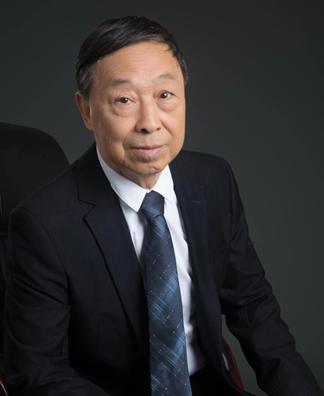
Photo of Cui Fuzhai. Image source: Internet
In June 2025, Cui Fuzhai passed away due to illness, and the 4.62% stake under his name entered the inheritance procedure.
On June 23 this year, the equity inheritance transfer was completed, with Huang Wanlan and her daughter Cui Han each receiving 2.5248 million shares.
Less than a month after the equity division was finalized, Cui Han and her husband Hu Gang successively put forward opposing proposals, bringing the family conflict completely out into the open.
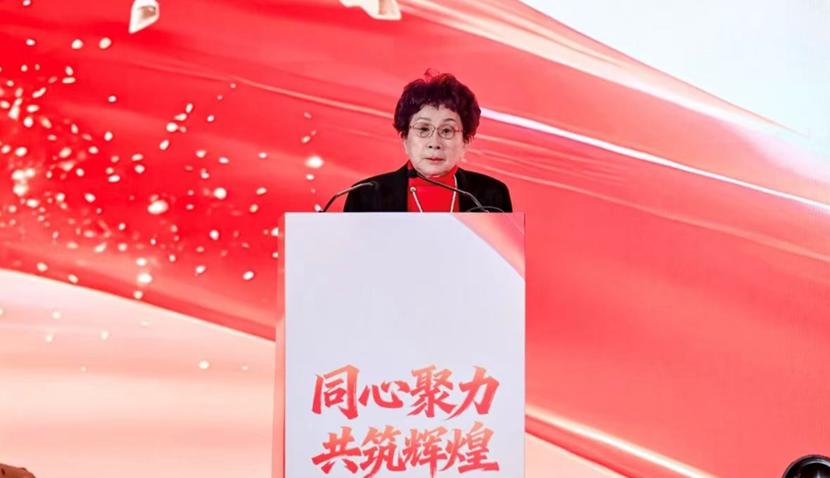
Photo of Huang Wanlan. Image source: Internet
Looking further back, the board re-election in November 2025 was the critical turning point that shattered the relationship between the two sides.
Hu Gang, who had long run the company as its chairman, was not nominated as a board candidate, and was directly excluded from the board of directors, with his mother-in-law Huang Wanlan taking over as chairwoman.
From that moment on, the power rift between the two generations could no longer be mended.
To recapture the company's management rights, Cui Han and her husband submitted two proposals in succession.
On July 8, the two proposed to remove Huang Wanlan from the board of directors; just one day later, they applied to add Hu Gang as a non-independent director, but the board of directors rejected the application on the grounds that "the number of directors would exceed the 9-person limit specified in the company's articles of association".
To win more votes of approval, Cui Han and Hu Gang put forward five justifications.
The core logic is: the company's share price has fallen below its issue price, indicating that the market does not recognize the company's value, which is detrimental to all shareholders; as Huang Wanlan is advanced in years with limited energy, in the highly competitive Sci-Tech Innovation Board environment, she can hardly fully, independently and diligently fulfill her director obligations in key matters such as major business decision-making and compliance risk prevention and control.
On July 20, the voting results of Oujing Medical's extraordinary general meeting of shareholders were released.
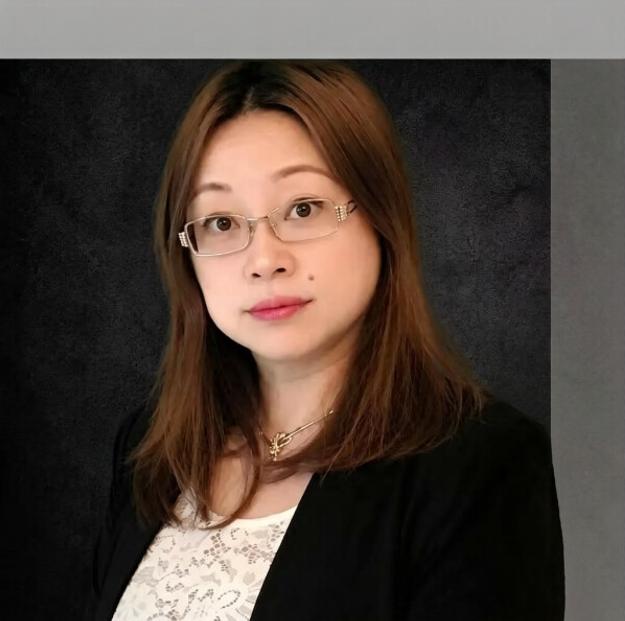
Photo of Cui Han. Image source: Internet
At this extraordinary shareholders' meeting, out of about 49.5 million attending voting shares, only 40.39% voted in favor of the removal, while opposing votes reached 59.33%. Most minority shareholders stood by Huang Wanlan, completely thwarting Cui Han and her husband's plan to seize control, and this family turmoil temporarily came to a close.
Amid continuous family internal friction, the fundamentals of Oujing Medical have also been under sustained pressure.
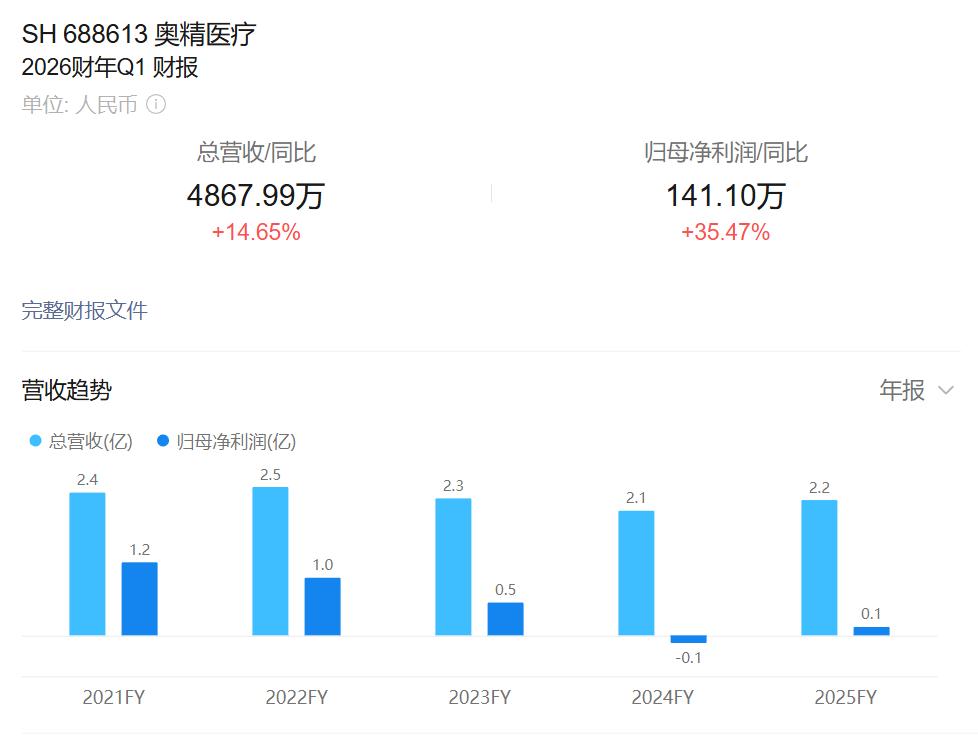
Chart of Oujing Medical's performance trends over the past five years. Image source: Internet
The company's main business is artificial bone repair materials. It hit its performance peak in 2021, with annual operating revenue reaching 236 million yuan, a year-on-year increase of 28.29%. Its net profit attributable to shareholders was 121 million yuan, and non-recurring profit and loss deducted net profit was 116 million yuan, marking the highest profitability level since its listing.
In 2022, the company's revenue rose slightly to 245 million yuan, with a year-on-year growth rate of only 3.92%. Affected by cautious distributors and rising operating expenses, its profit declined synchronously: net profit attributable to shareholders fell to 95 million yuan, and non-recurring profit and loss deducted net profit dropped to 79 million yuan.
In 2023, revenue fell 7.68% year on year to 226 million yuan, and profitability was nearly halved further: net profit attributable to shareholders was only 54 million yuan, and non-recurring profit and loss deducted net profit shrank to 26 million yuan.
In 2024, revenue continued to decline 9.03% year on year to 206 million yuan. The company recorded its first loss after listing, with a net loss attributable to shareholders of 13 million yuan, and a non-recurring profit and loss deducted net loss of 28 million yuan.
In 2025, the company achieved a net profit attributable to shareholders of 13.8392 million yuan, but in the same period, its non-recurring profit and loss deducted net loss reached 958,600 yuan.
Regarding the reasons for the 2025 performance growth, the company explained that the centralized procurement of orthopedic artificial bone products drove the continuous increase in clinical usage of its core product lines, leading to the growth of its annual operating revenue; meanwhile, the successive recovery of accounts receivable significantly reduced the credit impairment losses during the reporting period.
Entering the first quarter of 2026, the company's operating revenue was 48.6799 million yuan, and its non-recurring profit and loss deducted net loss continued to reach 1.2758 million yuan, with no relief to its operational pressure.
02
No Successor, Divorce Equity Split, and Internal Strife Leading to Bankruptcy
The "palace coup" staged by Oujing Medical against its chairwoman mother is just a microcosm of the governance predicament facing China's family-owned listed companies.
According to a review of recent cases by Phoenix Finance's *Corporate Research Institute*, many other types of family-related incidents have triggered changes in company equity, which in turn affect the stock price in the secondary market.
Behind each case lies the structural problems of family enterprises after going public.
Zhejiang Meida, the industry leader that created the integrated stove product category, has recently changed its controlling ownership.
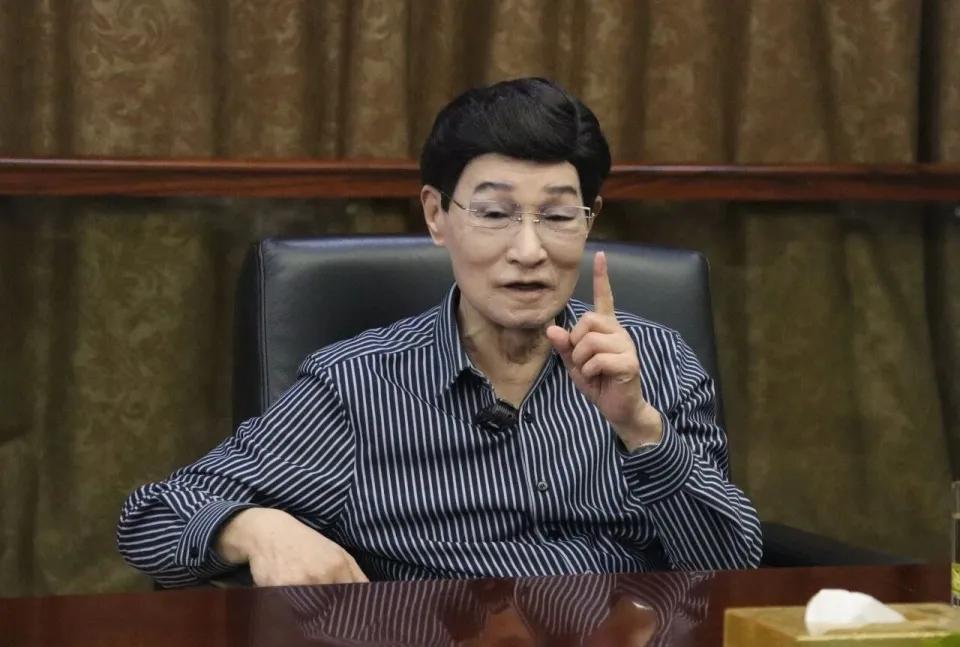
Photo of Xia Zhisheng. Image source: Internet
85-year-old Xia Zhisheng, founder of Zhejiang Meida, grew the enterprise from a small electroplating factory, and in 2003 led his team to develop China's first integrated stove, creating a brand-new category of kitchen appliances.
Unlike Oujing Medical's chairwoman Huang Wanlan, who refused to step down, Xia Zhisheng spent nearly a decade trying to get his children to take over the business.
His son Xia Ding, who holds a PhD in Economics from Lomonosov Moscow State University, resigned two and a half years after taking over as chairman, and went to Hong Kong to work in investment; his daughter Xia Lan has a securities industry background but no knowledge of factory production and offline channels, and resigned as general manager four months after taking the role, forcing 79-year-old Xia Zhisheng to come out of retirement to "put out the fire".
On July 16, 2026, 85-year-old Xia Zhisheng and his son Xia Ding transferred their combined 29.99% stake in the company to Shenzhen Xinglantu Industrial Investment Partnership at a price of 6.656 yuan per share, for a total transaction value of 1.29 billion yuan. After the delivery is completed, Shenzhen Xinglantu will become the controlling shareholder, and Zhang Haizheng, who has a cross-border e-commerce background, will become the actual controller.
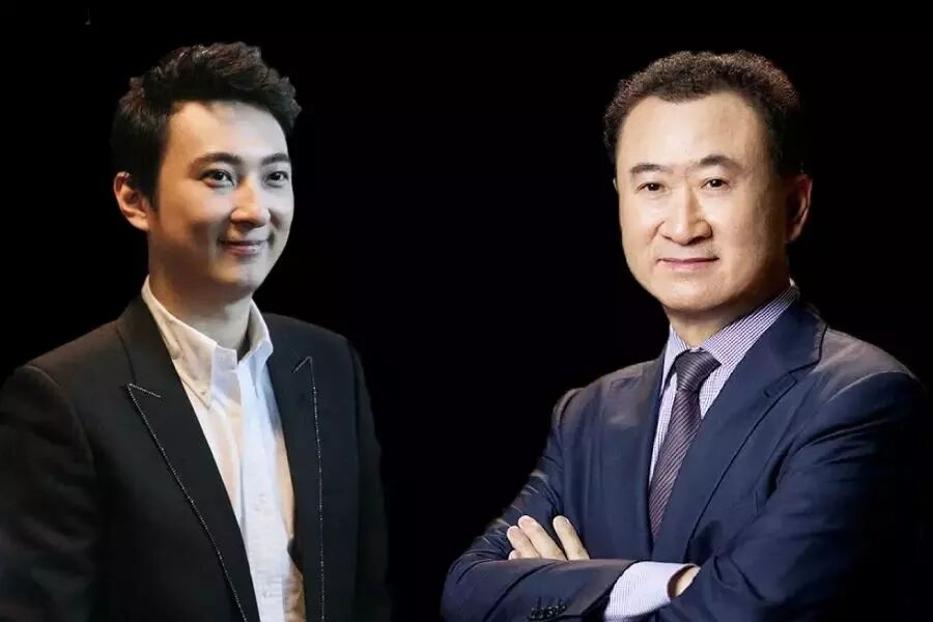
Photo of Wang Jianlin and his only son Wang Sicong. Image source: Internet
Zhejiang Meida is not an isolated case. Most of China's first-generation private entrepreneurs were born between the 1940s and 1960s, and are now generally 70 to 85 years old. Their children, mostly post-80s and post-90s, grew up in a completely different environment from their parents, making it easy to form a succession gap between the "first-generation founders" and the "second-generation enterprise heirs".
If the second generation's refusal to take over the business is a passive tragedy, then equity division due to marital breakdown is an active game of interests.
The practice of "technical divorce" was not uncommon in the A-share market in the past. According to the shareholding reduction regulations at that time, major shareholders were required to disclose their share reduction plans in advance, and could not reduce their holdings by more than 1% of the company's total shares every three months.
But the loophole was that the regulation only restricted individual major shareholders. If a major shareholder split their shares through divorce — for example, a major shareholder who originally held 20% of the shares split the stake after divorce, with one party getting 16% and the other getting 4% — the latter would no longer be classified as a "major shareholder", and thus would no longer be bound by rules such as share reduction quotas and pre-disclosure requirements.
2023 was known as the "year of sky-high-value divorces" in the A-share market. According to incomplete statistics, nearly 10 actual controllers or major shareholders of listed companies announced their divorces that year, with the total involved value exceeding 28.5 billion yuan.
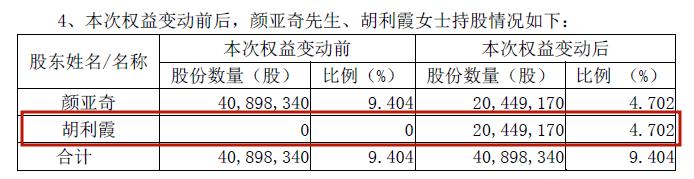
Chart showing the shareholding changes of Yan Yaqi and Hu Lixia. Image source: Internet
For example, in September 2023, Yan Yaqi, then chairman of Guoguang Co., Ltd., divorced his wife Hu Lixia, and split 20.45 million shares (about 4.7% of the company's total share capital) under his name to Hu Lixia. After the division, each of them held 4.7% of the shares, both below the 5% threshold.
But at that time, the regulatory authority had just stated that "no one may evade shareholding reduction restrictions through divorce". On August 25, 2023, the Shenzhen Stock Exchange issued the *Q&A with Investors (III) on Matters Concerning the Detailed Implementation Rules for Share Reduction by Shareholders, Directors, Supervisors and Senior Management of Listed Companies on the Shenzhen Stock Exchange*, which explicitly stipulates:
"Where major shareholders, directors, supervisors and senior management allocate shares through divorce, termination of legal persons or unincorporated organizations, company division or other forms, both the share transferor and the transferee shall continue to jointly comply with relevant provisions of the *Detailed Implementation Rules* and other related regulations on information disclosure, share reduction quotas and share reduction restrictions applicable to major shareholders, directors, supervisors and senior management after the share transfer is completed."
Therefore, when Hu Lixia reduced her shareholding in March 2025, she made a pre-disclosure as required.
The out-of-control share reduction expectation caused by equity division through divorce once caused short-term market tension, but regulators could still stabilize the pace of share reduction through rules.
For family-owned listed companies, a more fatal risk strikes the moment the founder suddenly passes away.
In February 2023, Zheng Yonggang, founder of Shanshan Co., Ltd., died of a sudden heart attack in Japan at the age of 65.
According to reports, Zheng Yonggang left six legal heirs after his death: his widow Zhou Ting and their three minor children, as well as his two sons from his ex-wife, Zheng Bin and Zheng Ju.
In interviews during his lifetime, Zheng Yonggang had repeatedly expressed his wish that his son Zheng Ju would take over the business.
In 2018, Zheng Yonggang said in an interview with *Zheshang Magazine* that he was grooming his son to take over, "My son