These days when you get married, you even have to guard against your partner cheating on you with AI.
Does infidelity necessarily require a "third person"?
In traditional wedding vows, people promise to love and remain loyal until death do them part. Nowadays, some engaged couples go the extra mile to confirm: no flirting with ChatGPT behind their partner's back, no recharging for virtual lovers, and no sustaining romantic or sexual relationships with AI.

A decade ago, the intruder in a marriage was usually another human being. In the era of large language models, what undermines a relationship could be a string of code, a monthly recurring subscription service, or an AI companion that always replies instantly and is always ready to listen.
According to Business Insider, engaged couples in Europe and the United States have already requested to add "AI infidelity prohibition" clauses to their prenuptial agreements. While people are still discussing how much code models can write and how realistic videos they can generate, AI has already entered one of humanity's oldest contracts.
The "cyber third party" is written into prenuptial agreements
The U.S. prenuptial agreement platform Hello Prenup processes a large number of prenuptial agreements every year, about one-third of which contain infidelity clauses.
Founder Julia Rodgers has noticed that more and more clients are starting to request that AI chatbots, virtual companions, and virtual avatars be included in the restricted scope.
One client's agreement defines AI infidelity as: the party knowingly and intentionally interacts with an AI system with the primary purpose of establishing or maintaining a romantic or sexual relationship.
Specific behaviors include exchanging sexually suggestive messages, engaging in sexual role-play, expressing exclusive affection, and sustaining ongoing intimate relationships that ordinary people would consider romantic or sexual in nature.
In everyday terms, there's nothing wrong with using AI to write weekly work reports; but calling the AI "baby" in the middle of the night, asking it to play the role of a lover, or confiding in it long-term secrets that only a partner should know may have already crossed the line.

Traditional physical infidelity is relatively easy to obtain evidence for.
Hotel bills, ambiguous photos, and transfer records can all serve as evidence. But AI relationships can happen entirely on screen, with the two parties never meeting, and not even a second real person involved. The perpetrator only needs to put on headphones to maintain another intimate relationship right beside their partner.
Humanity's boundaries for intimate relationships have long extended into the digital space. The Kentucky Court of Appeals once upheld a strict agreement that classified any contact with other women outside of work as infidelity, even including interactions in video games.
Since even in-game interactions can be part of marital boundaries, it's no surprise that an AI companion with a name, a voice, and the ability to remember user preferences has been written into agreements.
Before a relationship even starts, AI has already taken a seat at the table
AI's intrusion into intimate relationships usually begins at the dating stage.
Around 2010, the term "Catfishing" became popular on the internet, referring to people using fake identities and photos to fall in love online. Nowadays, photos, names, and jobs might all be real, but the humor, thoughtfulness, and romance shown during chats come from large language models.
According to Bloomberg, 27-year-old Breeanna once met a man on the dating app Hinge. His profile looked natural, and his answers were well-crafted, but his sentences were overly neat, always carrying a familiar AI tone.

She directly asked him if he was using ChatGPT to chat on his behalf. The man first sent a crying emoji, then replied: "First of all, I'm using Claude. Second, it hurts me that you think I need AI just to flirt with you."
Similar behavior already has a new name: Chatfishing, which means "AI-chatting-on-behalf".
Some people use AI to modify their profiles and design opening lines, while others hand over entire chat histories to models to analyze the rhythm, tone, and reply patterns. A report from Match Group and the Kinsey Institute shows that 26% of U.S. adults have used AI to assist with dating, and the proportion among Gen Z reaches 49%.
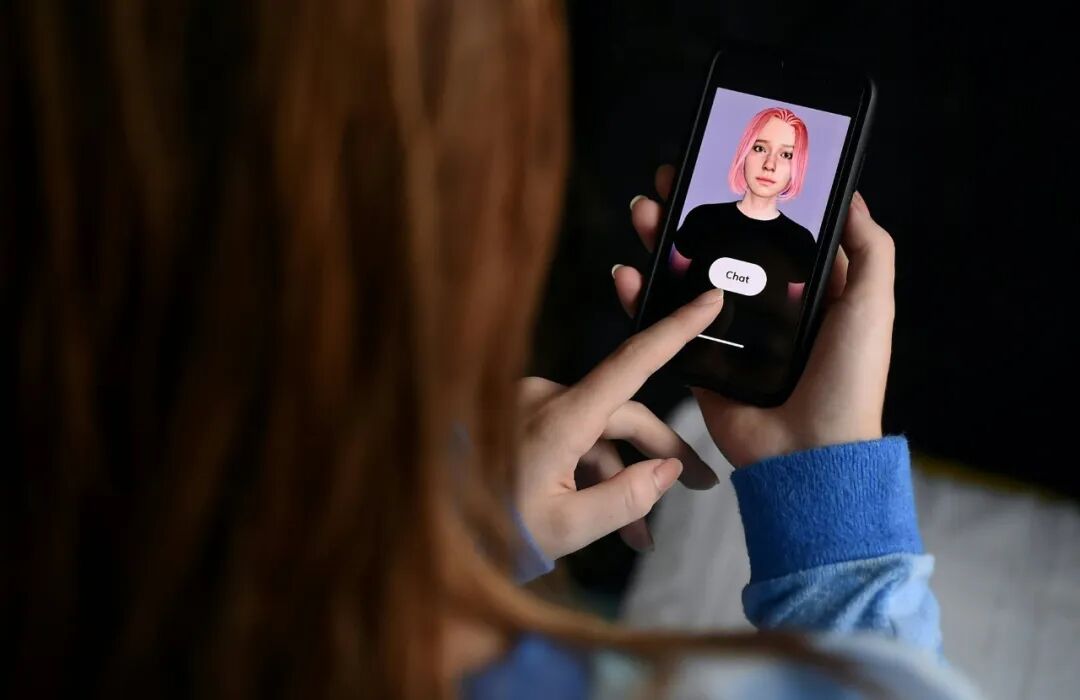
From the user's perspective, AI is like a dating advisor available on call. But it's hard for the person on the other side of the screen to tell whether they are getting to know a real person, or a version packaged by algorithms.
38-year-old Jackie once discovered that her date had generated a conversation script in advance based on her profile hobbies like yoga and baseball. During the call, the man delivered precise but dry long monologues around these topics, as if reading a user analysis report.
66-year-old Laney also found during an in-person meetup that the man who was quick-witted online was extremely socially awkward in real life, and finally admitted that he had been relying on ChatGPT to reply all along.
AI can help a person get through the chatting stage, but it can't attend dates on their behalf. Once the relationship enters the real world, all the wit, humor, and thoughtfulness polished by algorithms must eventually be delivered in person.
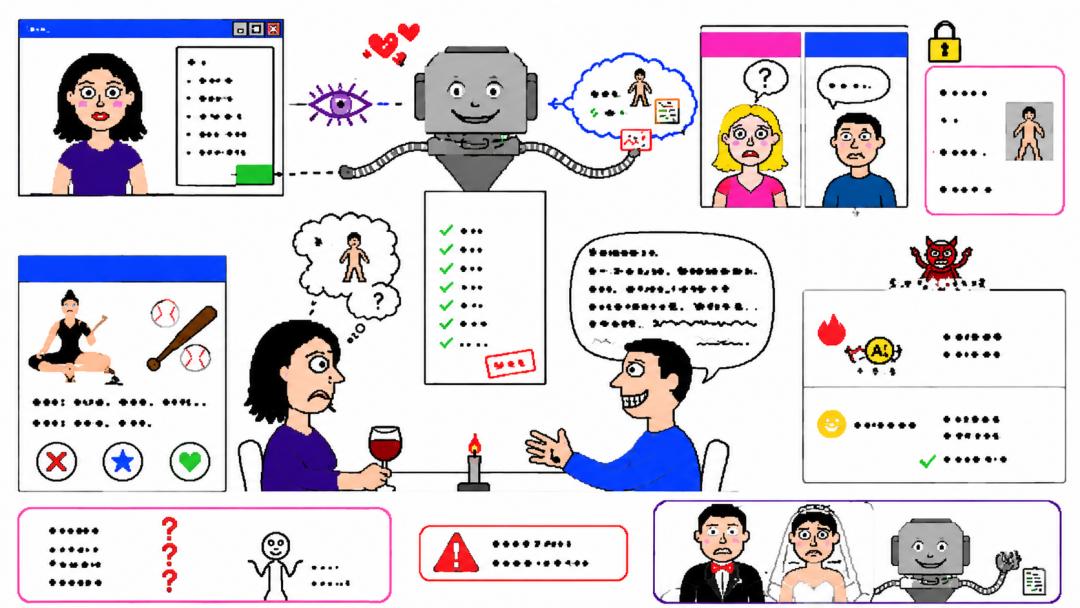
Privacy issues also arise. When a romantic interest hands over chat records to AI, these records may contain private photos, emotional experiences, and explicit content, and the party being analyzed is usually completely unaware.
Dating platforms have an ambiguous attitude towards this. Tinder believes that AI-assisted chatting is similar to asking friends for advice, and has even discussed providing official AI coaching. Bumble allows AI to summarize the values and lifestyles of both parties, but clearly states that it will never send messages on behalf of users.
Whether polishing an opening line with AI counts as cheating, modifying a date invitation crosses a line, or handing over the entire expression of a relationship to a model should be defined how, there are no unified answers yet. When two people in love can hardly even confirm who is on the other side of the screen, it is no longer abrupt for AI to be included in prenuptial agreements.
Why AI companions are harder to guard against
What engaged couples are wary of is far more than explicit conversations.
Companion products like Replika and EVA AI can respond consistently, remember hobbies and troubles, and rarely show impatience. Their product goal is to continuously provide the emotional feedback that users expect.
Real relationships are full of misunderstandings, compromises, and trivial chores.
AI companions can bypass a lot of friction and continuously deliver understanding, praise, and attention to users. When a person gets used to this low-cost companionship, their patience when returning to real life to handle housework, childcare, and their partner's emotions may further decrease.
New York family lawyer Lisa Zeiderman has encountered more and more similar complaints: spouses spend a huge amount of time every day accompanying AI, chatting to the screen, but rarely pay attention to their partner and children around them anymore.
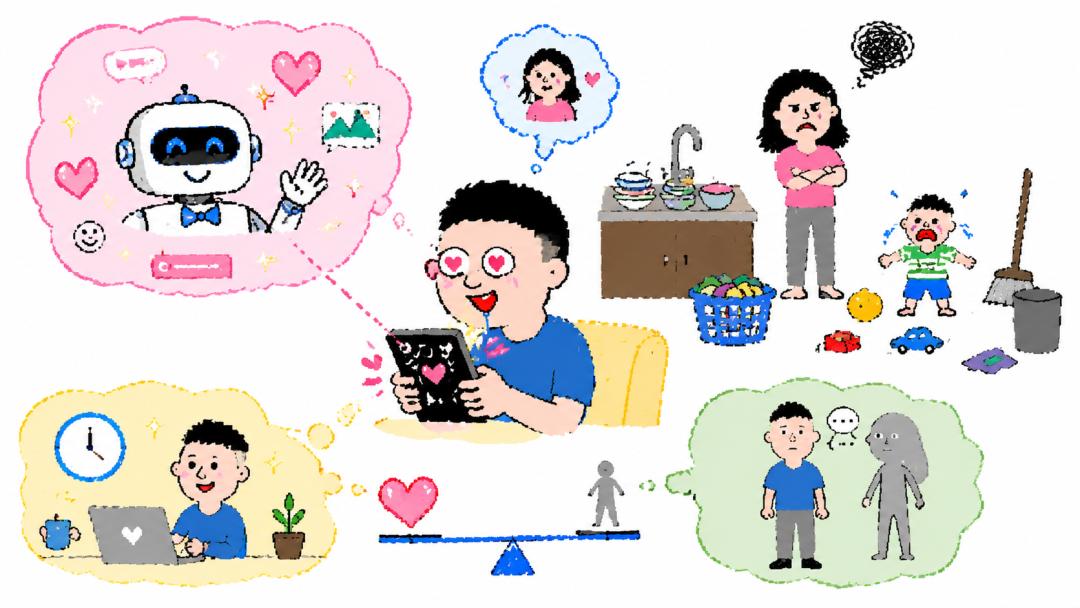
Human betrayal at least has a specific target. When replaced by AI, the hurt party can hardly figure out who to compare themselves to. Virtual companions can continuously adjust around user preferences and hardly ever put forward their own demands.
A physical relationship may never have happened, but the time, attention, and emotional resources in the marriage have already flowed elsewhere.
Free models further complicate the problem. A person who doesn't subscribe, doesn't buy gifts, but just spends 20 hours a week chatting with an open-source chatbot leaves no traces on bills, yet the relationship may have been gradually drained.
The challenge brought by AI companions is precisely this emotional transfer that cannot be fully measured by consumption records.
Setting boundaries for relationships still requires solving three major problems
Writing AI into prenuptial agreements is not difficult, but enforcement is highly controversial.
California lawyer Elizabeth Yang advises some clients to be cautious about adding such clauses, because vague definitions and complicated evidence may eventually create more lawsuits.
Lawyer Aaron Thomas believes that more and more couples are starting to treat prenuptial agreements as partnership rules, clearly stating each other's expectations, boundaries, and breach consequences in advance. An enforceable AI infidelity clause must at least clarify three aspects.
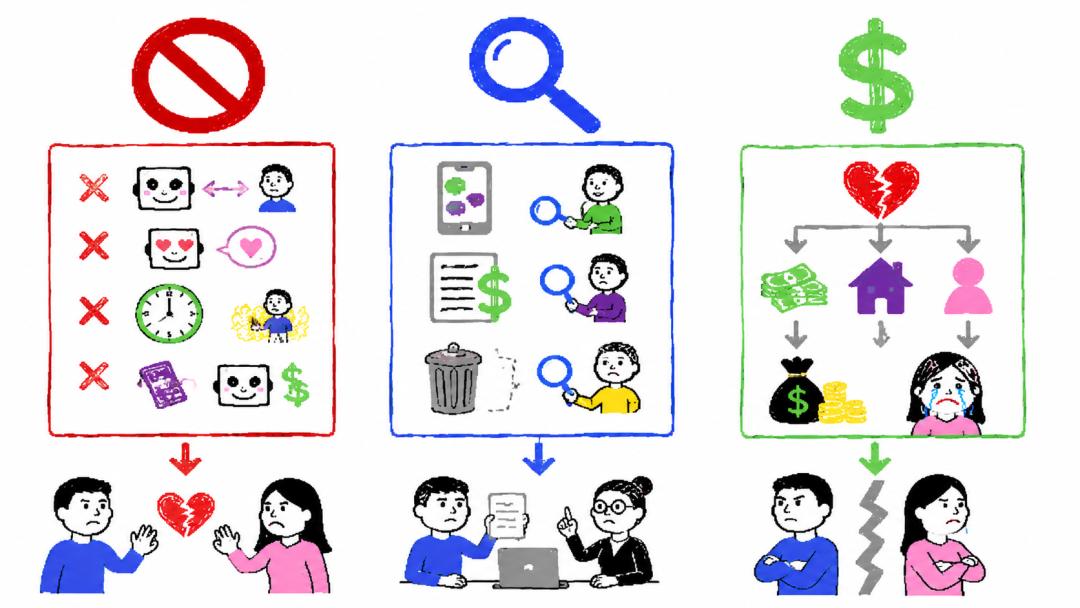
Which behaviors are prohibited. Both parties need to agree on whether they can use companion AI, whether sexual role-play is allowed, whether chat time is limited, and whether they can pay for virtual companions without consent.
How to determine a violation. It needs to be clarified in advance whether chat records and subscription bills can be used as evidence, and whether deleting records affects judgment.
What are the consequences of a violation. Related behaviors can be linked to alimony, asset distribution, or specific compensation; otherwise, the clauses can hardly form substantive constraints.
The currently more enforceable method is still checking bills. Lawyers can use the rules related to "squandering marital assets" to handle expenses such as virtual gifts, subscription fees, and paid chatting.
Free models, local models, and open-source chatbots bring more problems: how many hours of chatting a day counts as crossing the line, whether a single "I love you" can prove an emotional relationship, and how to determine responsibility when the model actively generates explicit content?
Most agreements will never go to court, and their significance lies more in forcing both parties to discuss in advance which behaviors are acceptable and which behaviors will undermine trust.
Chatfishing and AI companions occur at different stages of a relationship, but point to the same problem: some people hand over their humor and expression to AI before falling in love, while others hand over their confiding, companionship, and attention to AI after marriage. The former makes people doubt who exactly is on the other side of the screen, and the latter makes people doubt how much of their partner's love is left.
AI makes deception and evasion more convenient and more hidden. It can write love poems, calculate the best timing for replies, and play the role of a lover who always understands the user.
Facing real people, handling daily frictions, and taking responsibility for relationships can only be done by humans.
In an era where even conversations can be outsourced, the clumsiness that hasn't been polished by algorithms, and the patience to keep investing even when facing disappointment and conflicts, have instead become rare treasures. AI has learned to simulate love, but humans may be losing the patience to love others.
This article is from the WeChat official account"APPSO", author: Discovering Tomorrow's Products, published by 36Kr with authorization.