"Throwing 600,000 yuan down the drain": Franchisees rise in collective protest, has the wildly popular new-style Chinese dessert brand that boomed for two years finally fizzled out?
"Spent 600,000 yuan opening a store, but losing money almost every month";
"There are barely any customers in our stores, we can't even cover the rent";
"Not only are we losing money, but the headquarters keeps finding faults and issuing fines every other day, ranging from 500 yuan to 5,000 yuan";
Recently, the Chinese-style sweet soup sector can be described as "total chaos".
Stories of loss-making stores have been exposed one after another, and franchisees' posts about safeguarding their rights are everywhere.
From regaining popularity to cooling down, it took less than two years.
This time last year, we were still discussing "brands are frantically expanding stores, capital is flocking in, and major tea beverage giants are entering the market collectively, everyone is certain that sweet soup can take over from milk tea and recreate the myth of 10,000 stores". In the blink of an eye, bad news came one after another, a wave of store closures swept across the country, a large number of franchisees lost all their investment, leaving nothing but mess.
Why did this "prosperous scene" end so quickly?
Is there still a chance for Chinese-style sweet soup?
1
After just two years of "taking off", has Chinese-style sweet soup suddenly "stalled"?
Since last year, the reporters from Catering Business have observed that Chinese-style sweet soup was becoming the most popular growing track at that time.
Leading tea beverage brands such as Guming, Heytea, and Chayanyuese all poured into this sector. A large number of tea beverage franchisees escaped the fierce internal competition and bet their savings on sweet soup. The slogan of "70% high gross profit and payback in 8 months" touched the hearts of countless entrepreneurs.
Brands' store expansion was almost crazy: Moji Milk Company expanded to 1,050 stores in ten months, covering 31 provinces across the country; Zhao Ji Chuancheng, backed by Heytea's capital, exceeded 650 stores at its peak, with 200 new stores added annually; emerging brands such as Tangxu and Shanxin also grew rapidly.
Data from Tianyancha shows that in 2025 alone, more than 3,800 new sweet soup business entities were added nationwide, with the number of stores approaching 200,000.
At that time, everyone thought the sweet soup trend was really coming.
But before the wind blew for long, it went bad.
1. "Spent 600,000 yuan to last half a year, losing 20,000 to 30,000 yuan almost every month"
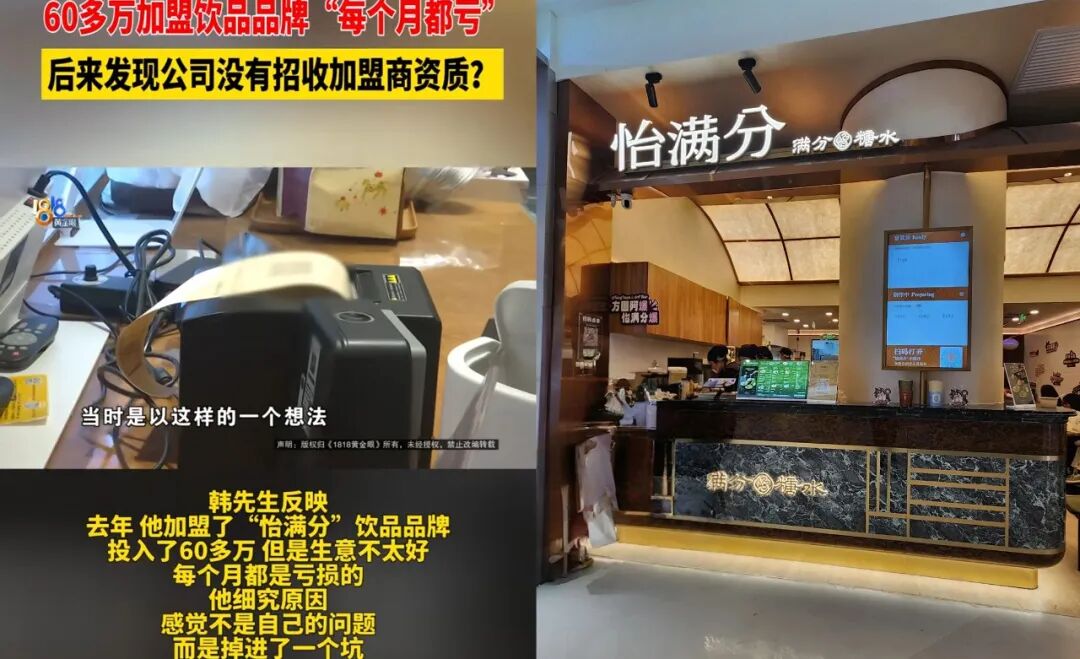
Mr. Han used to work in real estate sales. Last November, he came across the sweet soup brand "Yimanfen".
The investment promotion manager gave him a very attractive set of data: the monthly sales of the store are 200,000 to 300,000 yuan, with a gross profit of more than 70%.
Mr. Han was tempted. He invested more than 600,000 yuan in total and opened a store at Dingqiao Tianjie in Hangzhou.
The store opened on January 1 this year. The turnover was more than 110,000 yuan in the first month, which he thought was normal for a new store. But then, the turnover dropped to 80,000, 60,000, 50,000... all the way down. And the fixed expenses including rent, utilities and labor cost nearly 50,000 yuan per month.
"I lost money almost every month afterwards, losing 20,000 to 30,000 yuan every month," said Mr. Han.
What made him even more devastated was that the brand's operation policies were "changed overnight". "When I joined, it was a sweet soup store, but this year it was changed to a fresh-made tea shop, so our competitors immediately became Mixue Bingcheng and Guming."
Not only that, six new products were launched in May, but their sales were very dismal. "Every new product we launch fails, isn't this using franchisees to test the market?" Mr. Han was completely discouraged and planned to close the store in mid-July.
2. Expanded 1,000 stores in ten months, now being collectively "denounced" by franchisees
If Yimanfen is the epitome of small and medium-sized brands, then Moji Milk Company is the "protagonist" of this round of crazy sweet soup expansion, and also the brand that caused the biggest controversy.
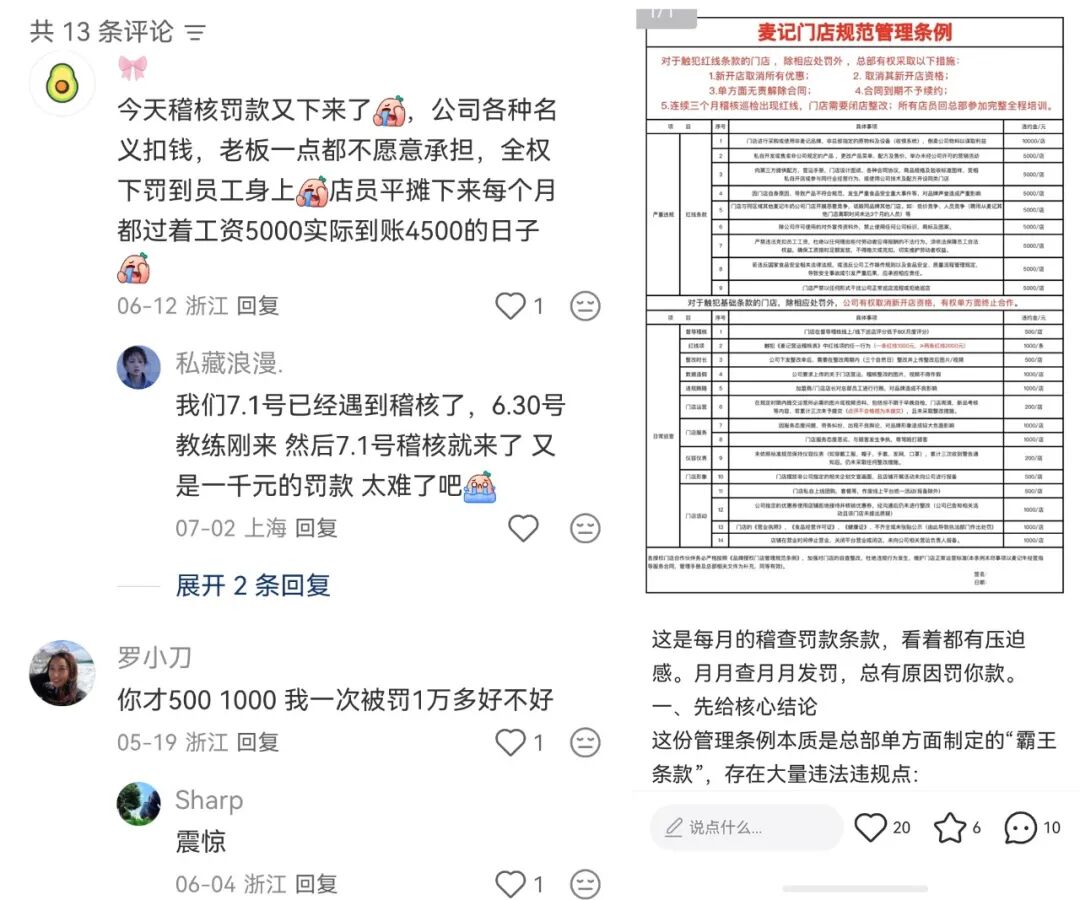
In early June this year, many Moji franchisees collectively "appealed for unfair treatment" on social platforms:
The revenue was far below expectations. Some franchisees reported that their mall stores with monthly rent over 20,000 yuan only had average daily sales of about 1,000 yuan. "There are barely any customers in our stores, we can't even cover the rent."
The gross profit margin shrank significantly. It was promised that the gross profit margin for in-store dining could reach 70% when joining, but in actual operation it was only 45%-50%.
Not only losing money, but the headquarters also finds faults to issue fines. "The headquarters comes to the store every other day, not to guide operations, but to find faults and fine money." They would check the refrigerator seals, minor damage to utensils, water stains on the floor, and you would be fined 500 or 1000 yuan if you are not careful. The fine expenses in a single month can exceed 5,000 yuan.
There were even rumors that "Moji Milk ran away". Although General Manager Xie Yongliang came out to refute the rumors, he admitted that the overall performance declined by more than 20% from March to April 2026, and also admitted that "making the stores survive better is what we care about most now". But this frankness just confirmed the dilemma of the franchisees.
3. Rushed to "expand territory" before the model was mature, irregular franchise chaos emerged frequently
There are also brands that have not polished a mature store model, but have already rushed to expand their territory.
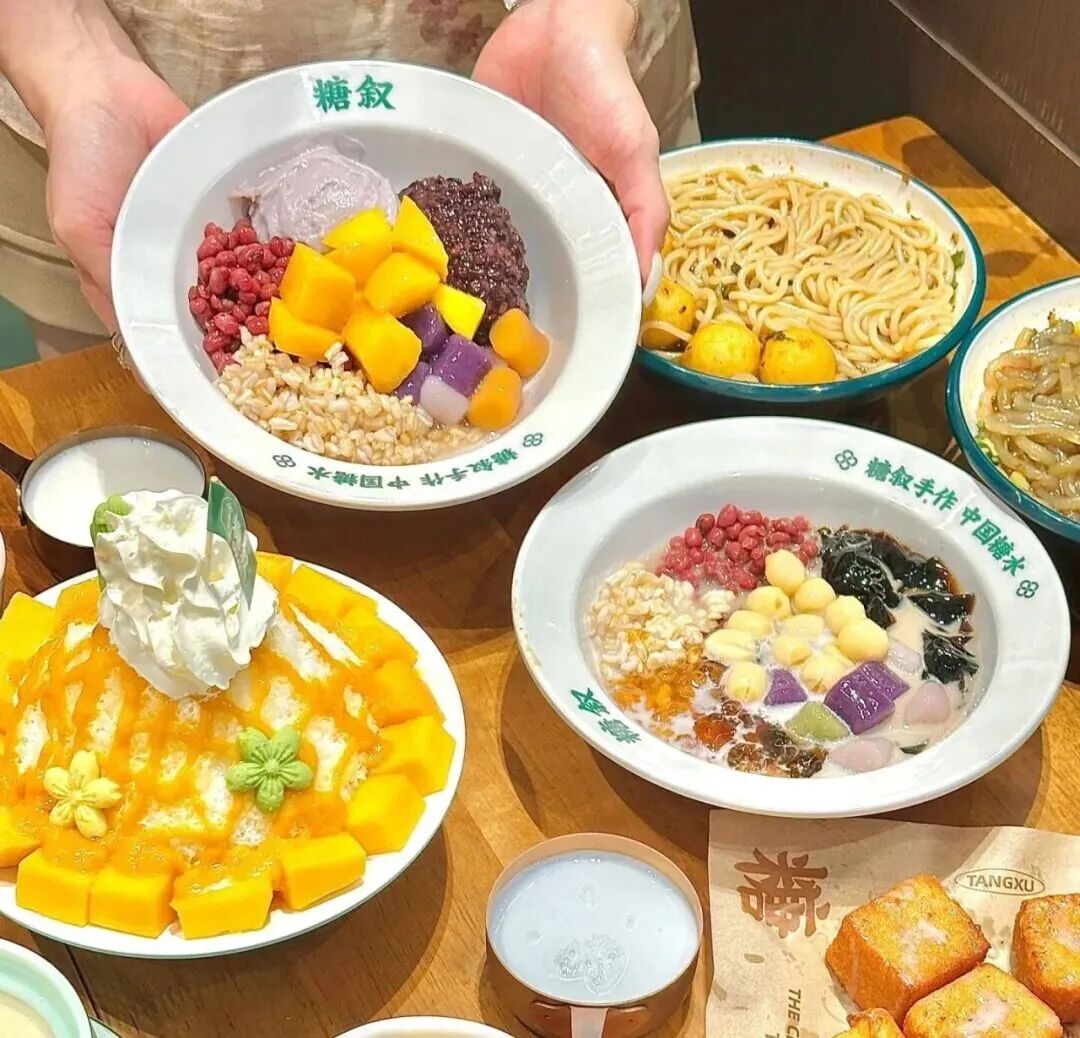
Tangxu, which originated in Jiangxi, opened national franchise in 2024. By October 2025, it had opened 219 franchise stores in 72 cities across 14 provinces.
But when the regulatory authorities inspected, they found that its 2 directly-operated stores were not established until November 2025, and had been in business for less than a year. It simply did not meet the legal franchise qualification of "two stores for one year" (at least 2 directly-operated stores operating for more than 1 year) in the Regulations on the Administration of Commercial Franchise.
This kind of rush to spread all over the country before maturity undoubtedly laid a lot of hidden dangers for itself.
The successive chaos has undoubtedly dealt a heavy blow to the entire new Chinese-style sweet soup sector. With the declining traffic and public opinion turmoil, many brands have been affected by the "cooling down".
2
Why did the new Chinese-style sweet soup, which added 3,800 new stores in a year, ebb so quickly?
From a "hot commodity" that everyone is chasing, to today's situation where franchisees lose all their money and leave, and everyone denounces it.
No one thought that the sweet soup, which was once highly expected, is now far from what we expected.
Tea beverage giants all entered the market, franchisees rushed to bet, and capital promoted frantically. Everyone defaulted that tea beverage can develop 10,000 stores, and the sweet soup category is more traditional and more widely recognized, so it should be easier.
But everyone ignored that although sweet soup and tea beverage seem to be both "drink" businesses, their underlying logic is completely different.
1. The large difference in consumption habits between the north and the south makes it difficult for sweet soup to "expand northward"
Sweet soup is more of a product from the south. It is a daily life in Guangdong, but a "novelty" in the north.
In Guangdong and Guangxi regions, the daily habit of "a bowl of sweet soup after meals" has long been formed. There are corresponding seasonal sweet soups for all four seasons, with stable consumption frequency. But outside the south, the market awareness is completely disconnected. Northern consumers position sweet soup as "occasional dessert" rather than a daily drink.
The data also shows that the new Chinese-style sweet soup is highly concentrated in high and medium-tier cities, and the penetration rate in the northern market is far lower than that in the south. Public data once showed that 75% of the stores of leading brand Zhao Ji Chuancheng are concentrated in its base in Guangdong.
More critically, the winter in the north is long. A bowl of iced Mango Pomelo Sago will not sell well after November, while tea beverage can smooth the seasonal fluctuation by relying on hot drinks, baked milk and other product lines.
The "strong in summer, weak in winter" nature of sweet soup makes it "waste" at least one-third of the year in the north. The cost and time of educating the market are far longer than expected.
2. Heavy dependence on in-store dining and low consumption frequency, the "light model" of tea beverage cannot accommodate the "heavy business" of sweet soup
The core advantage of tea beverage to reach the scale of 10,000 stores is that it can be taken away immediately after purchase, and has high consumption frequency.
You can bring a cup on the way to work, order a cup during a meeting, and drink a cup while shopping. The scenarios cover in-store dining, takeaway, and delivery, almost all daily moments such as commuting, working, and socializing, with lightweight 20-square-meter small stores and full coverage of high-frequency scenarios.
What about sweet soup? It is for satisfying cravings after meals and relaxing in the afternoon, so the frequency is naturally much lower. It also requires bowls and spoons, and relies heavily on in-store dining. The area of a single store is generally more than 70 square meters, and the investment in rent and decoration is much higher than that of tea beverage stores.
Customers have to sit down and spend more than ten minutes eating slowly, which makes it naturally insulated from the fast-paced consumption scenario of "drinking while walking".
Xie Yongliang once said frankly: "It is difficult for a shopping mall to accommodate 3 or 5 sweet soup stores at the same time." This is completely different from the density logic of tea beverage stores that "appear every tens of meters".
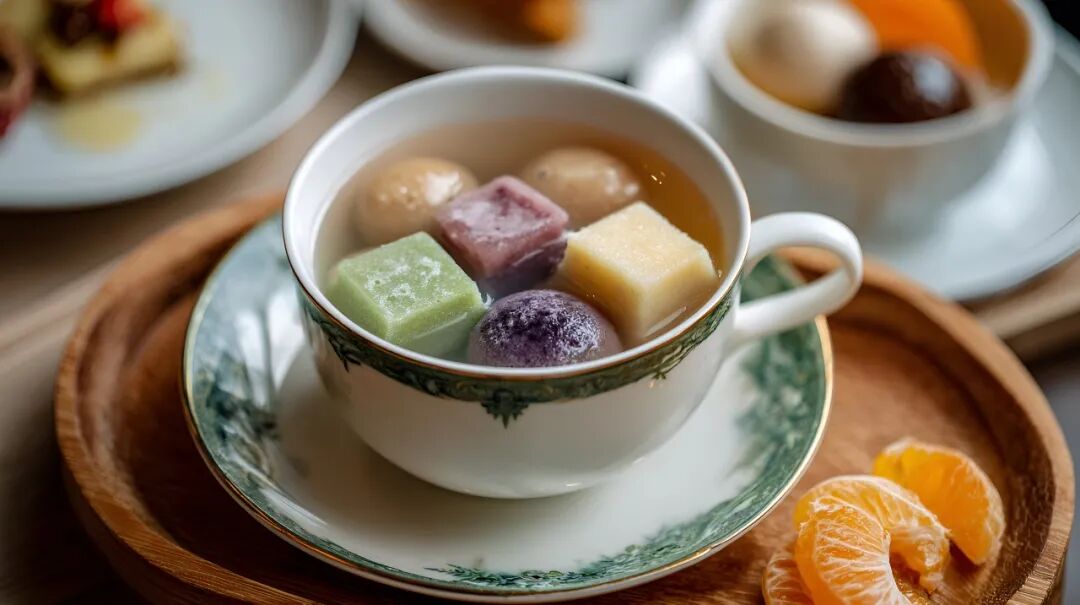
Low-frequency consumption combined with the heavy asset model of in-store dining leads to extremely weak anti-risk ability of sweet soup single stores. When the flow of people in the mall declines, tea beverage stores can still rely on delivery to survive, while the turnover of sweet soup stores will drop directly off a cliff.
After all, sweet soup is a good category, but it is neither a substitute for tea beverage, nor an upgraded version of tea beverage. It has its own clear market boundary, scenario boundary and growth ceiling.
In addition, the sector has just exploded, and a large number of fast-franchise brands have expanded wildly, without mature single-store model, false profit propaganda, and lagging supporting supply chain, which further amplifies industry risks and makes the ebb of Chinese-style sweet soup far faster than market expectations.
Summary from Catering Business Network:
Mistakenly treating sweet soup as tea beverage for large-scale and capitalized operation is the fundamental reason for this round of "cooling down".
Not all categories are suitable to be operated with the "tea beverage mindset".
It took over the overflow traffic of new tea beverage and caught up with the consumption trend of health preservation, which is correct.
But under the trend, it has clear scenario boundaries, regional boundaries and frequency ceilings.
It is more terrifying to be unable to retain customers after being popular than never being popular at all. For catering practitioners, sweet soup is a category worth doing, but don't expect it to replicate the "myth of 10,000 stores" anymore.
Returning to the profitability of single stores, polishing products well, and not being fooled by the brand's "scale story" is the only way to survive after this wave recedes.
This article is from WeChat official account "Catering Business Network", author: Yini, authorized to release by 36Kr.