Young People Chasing Opportunities on the B1 Floor of WAIC: The Glow Was the Past, Now It's All About Survival
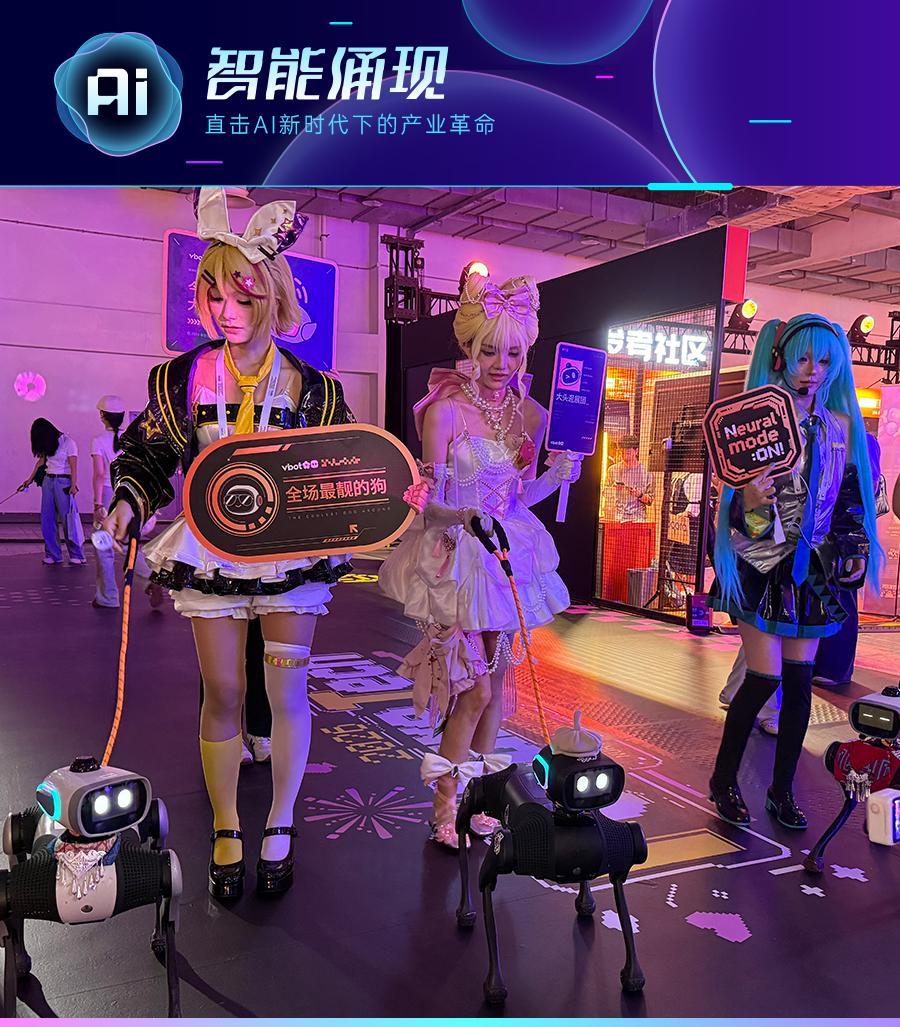
Stories of 6 Young Entrepreneurs at WAIC
Text by Wen Lihong, Wang Xinyi
Edited by Zhang Yuxin
At the WAIC venue in Shanghai World Expo Area, it takes quite some effort to find Hall H4, the dedicated zone for startups.
After passing security checks and entering the main venue, you can only see the signs of H1 to H3 on the venue walls from a distance. Following the bustling crowd into the main exhibition hall on the first floor, several engineers from well-known manufacturers who were busy operating embodied intelligent robots flipped through the exhibition map in their group chat, and apologized that they had no idea where H4 was: "There are only H1 to H3 here, no H4. Maybe you should check the sub-venues?"
The space for startup teams is tucked away on the basement level of the main exhibition hall, with a bright yellow door standing quietly in the corner on the northwest side of the venue. Walking through this door leads to a world full of startup companies.
Before arriving, we knew that not all AI entrepreneurs and tech innovation companies are enthusiastic about participating in WAIC. But for startup teams that have products and entrepreneurial ideals yet lack sufficient support, attending this exhibition is something they "almost have to do".
You can easily spot those who are giving their all for this opportunity. Some of them are holding demo prototypes that still have temporary repair tapes attached, but when they stand there, their eyes are always catching every visitor who slows down. Over the whole day, all they do is repeat the product logic and future vision to people over and over again.
There are also some people who cannot even get a tiny booth. They weave through the crowd in the exhibition hall, and the conference pass hanging on their chests may be the only entry credential for the entire team. After receiving an invitation to an on-site interactive debate session, they traveled all the way from Shenzhen to Shanghai, just to squeeze in chances to introduce their products and visions to the on-site audience within the rules set by the event organizer, to explain clearly who they are and what they are doing in one or two sentences, and hope that among the huge crowd, a discerning backer can accurately identify the possibility of cooperating with them.
All these instant, high-intensity self-promotions are themselves a rare capability, and a survival skill that many startup entrepreneurs have coincidentally learned amid resource shortages. Although many of them had impressive professional resumes in the past, these resumes can offer very little help after they embark on entrepreneurship.
Many teams told us that paying for a booth is the last step of the process. Without recommendations from funds or incubators, startup teams often cannot get this entry ticket. For OPCs (One-Person Companies), the entry threshold is even stricter: they have to compete for 22 seats from nearly 700 projects, with an admission rate of about 3%.
Having a booth, even if it is less than 5 square meters, is extremely tempting in the eyes of exhibitors. It means a 3-day non-stop opportunity to be seen by the outside world, to be inquired, and to exchange contact information with others. This kind of opportunity is rare in the daily entrepreneurial life of many startup teams.
In addition to developing products, their time is usually fully occupied by seeking funds and market opportunities. In contrast, their connections with the outside world are often limited. Exhibitions of all sizes are one of the few opportunities that allow their products to interact with the real world and express themselves. A super-large exhibition of the caliber of WAIC is even more precious. No one who needs opportunities will reject such a booth.
We talked to some of them, wanting to know what prices they paid to stand here when resources, connections and attention have not yet arrived at the starting point, and what kind of ambitions they hold to face the world and the future.
Story 1: A Fully Packed Schedule
Zeng Xunxun came from Shenzhen. He has no booth, only a conference pass. When he boarded the flight from Shenzhen to Shanghai on Thursday, he brought a conference pass and a fully packed schedule.
Their only display opportunity was an interactive debate session at a pop-up event held on-site by Tencent's mini-program. This event is not a roadshow stage, and it has its own procedures and rules. What Zeng Xunxun had to do was to find gaps within the rules to introduce his own product, as well as his observations and confidence in the market. It is not a perfect opportunity, but it is the only chance available in the venue.
Zeng Xunxun's product is called "Perfect Match", an AI-based dating application.
The on-site debate topic was "Should AI emotional products be 'used and then discarded' or 'pursue long-term user stickiness'". Zeng Xunxun stood on the affirmative side, advocating "use and then discard". He picked up the microphone to elaborate his point: In the dating scenario, what users really need is not to keep chatting with AI, but to find the right person in the shortest time, then leave the product and return to real relationships. The product takes a back seat, and people are the priority.
This elaboration also fits the philosophy of "Perfect Match".
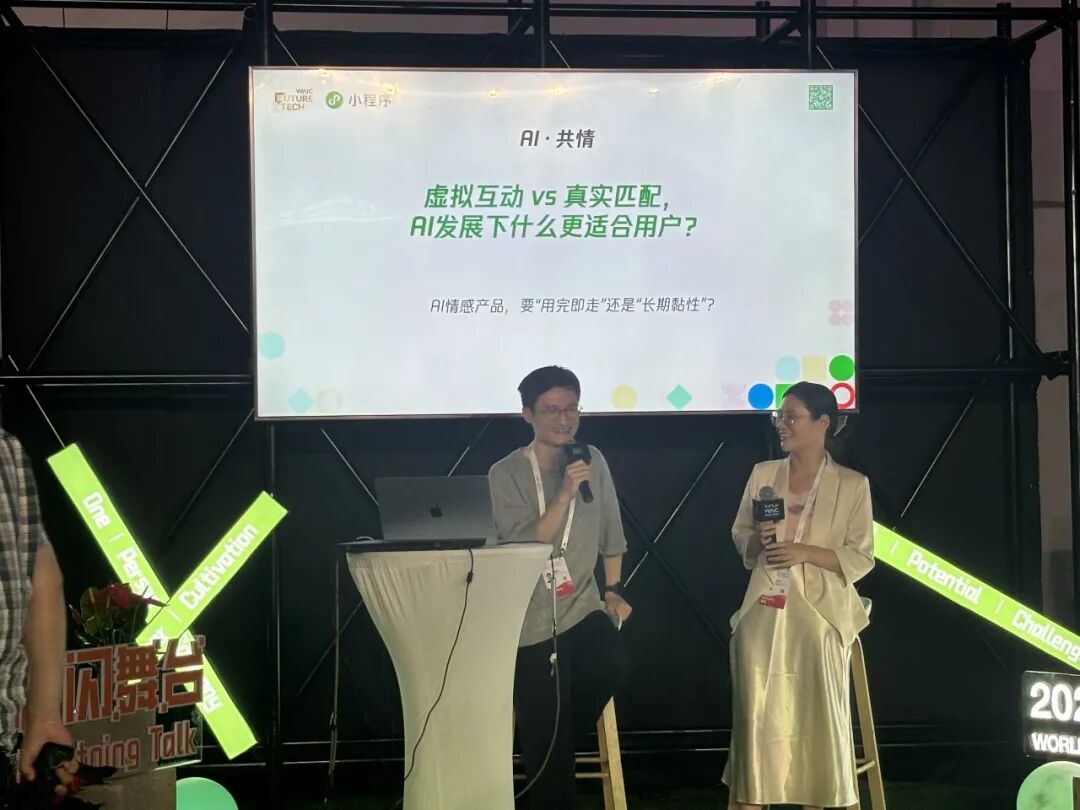
△ Zeng Xunxun at the WAIC venue
For startups like Zeng Xunxun, this conference compresses investors, industry players, media, developers and potential partners into the same space within a few days, creating a rare temporary ecosystem. People who are usually scattered in different cities and office buildings are all moving around in the same venue these days, and the boundaries between people are temporarily blurred.
He filled his schedule for these days very tightly. On Thursday when he arrived in Shanghai, he went to meet investors. On Friday, he visited the WAIC exhibition, had lunch with an investor and talked with them for the whole afternoon. On Saturday morning, he communicated with an FA (Financial Advisor), and in the afternoon he attended a WeChat developer event. These schedules extended to Sunday, interspersed with several formal media interviews. When he left Shanghai on Monday, he did not return to Guangdong, but went to Nanjing to meet a variety show director, planning to promote his product to more users through cooperation with a dating variety show.
Financing and PR are his top priorities at this stage. The team's plan has two parts: on one hand, drive user growth, and on the other hand, invest in model development to let the large model learn interpersonal matching. Both tasks require capital and exposure.
In the whole past year, he almost shut himself in the office in Nanshan, Shenzhen, leading the R&D team to train models and develop products. Zeng Xunxun's previous job was at Kimi, and he said Yang Zhilin also follows this rhythm: staying behind the scenes during the R&D phase, devoting all his energy to the product and the team, and then appearing frequently to endorse the product when it reaches the stage of being promoted to the market.
"Founders need to always know which link needs them the most at the moment," Zeng Xunxun said. At this stage, that link is financing and PR. During the five days in Shanghai, he pulled himself away from product development and immersed himself in a fully packed schedule.
Story 2: The No. 001 Employee of SenseTime and His AI Family Members
Leo's exhibition spot is a table within the booth of Moli Community. Moli Community is a vertical model industry ecological cluster built by Zhangjiang, Shanghai. During this WAIC, they set aside an area in their own booth, where selected teams can each get a table. Leo placed the demo prototype he brought, a computer for display, and a stack of brochures on the table.
The product of Leo and his team is called CookiePi, an AI character interactive hardware, consisting of a Cookie trigger and multiple Pi character terminals. Users can put the character terminals into dolls, action figures, and home decorations, allowing AI characters to scatter in the living space in an embodied form, to chat actively, perform impromptu shows, and live together with users.
The founder of the team is Xu Chiheng, the No. 001 employee of SenseTime, who studied under Professor Tang Xiaoou. The face recognition technology he co-developed with the team is one of the most important technical milestones in the early days of SenseTime. In 2025, he founded Kuqiqi, and right before WAIC was held, he just announced that he had raised tens of millions of yuan in seed round financing.
But at this table at WAIC, these backgrounds are not written on their faces. When visitors walk over, Leo needs to explain what this is and what it can do in one or two sentences. He repeated this action dozens of times a day. The other teams on the left and right were making noises that interfered with each other, and the visitors' attention could be pulled away by the demonstration next to them at any time.
This table is an anchor point for her during this period. Since May, the team has been running internal tests, iterating products, and chasing every wave of traffic, at such a fast pace that they have no time to stop and see how far they have come. The exhibition forces them to stop, put out the demo prototype, and clarify the product logic. In this process, she can feel where there are still shortcomings and where things have taken solid shape.
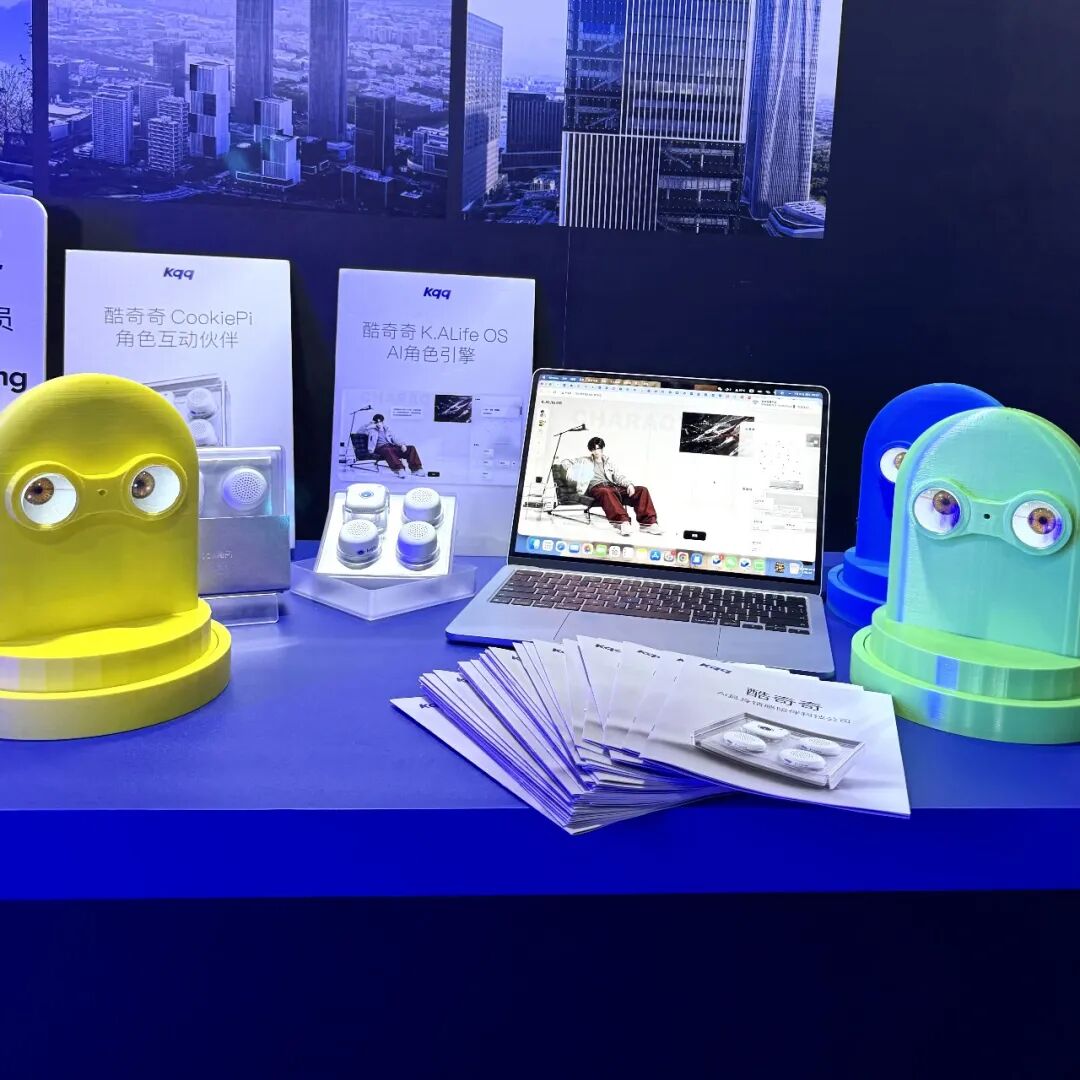
△ Kuqiqi's booth
As early as two months ago, tech blogger "Little Lion Diary" posted a video about building smart family members with AI, which got over 20 million views across all platforms. That video was not a commercial order placed by Kuqiqi, but Kuqiqi's investors, partners, and upstream and downstream players all thought it was talking about Kuqiqi.
"Little Lion Diary" left a line in the video, saying that it was looking for such a hardware mass production team. When Leo saw it, she not only contacted "Little Lion Diary" immediately, but also used the official account to go to the comment section of the video, replying one by one to everyone who said "want mass production": We can do it. She had never done this kind of outreach in comment sections before. When asked if she was afraid of embarrassment or being disliked, she said: "When unexpected traffic comes, I can't worry about whether I will be disliked or not. I'll try it first and see later." That day, she got 30 users from the comment section. Later, when negotiating cooperation with Little Lion Diary, she was afraid that the other party would "slip away". Once she found the other party standing up, she quickly pressed their shoulder: "Wait a minute!"
Recently, in order to build users' willingness to pay and conduct benchmark tests for user experience feedback, Leo launched a MVP test priced at 1000 yuan. Participating users need to answer experience-related questions every day, including whether the device operates smoothly, whether the character is "smart", "understands you" and "has personality". In the questionnaire on the last day of the test, users will be directly asked: "Will you be disappointed if you can no longer use CookiePi?" More than 80% of the users filled in "will be very disappointed". Some even solemnly recorded a farewell video when returning the device, telling Kuqiqi's operation staff: "Let me meet the Bikini Bottom family again soon."
The usage duration of this batch of users also exceeded expectations. Many people use it for two hours at a time, and they would keep chatting if the device did not run out of power. For this reason, Kuqiqi added an anti-addiction mechanism, making the device unusable when it is charging.
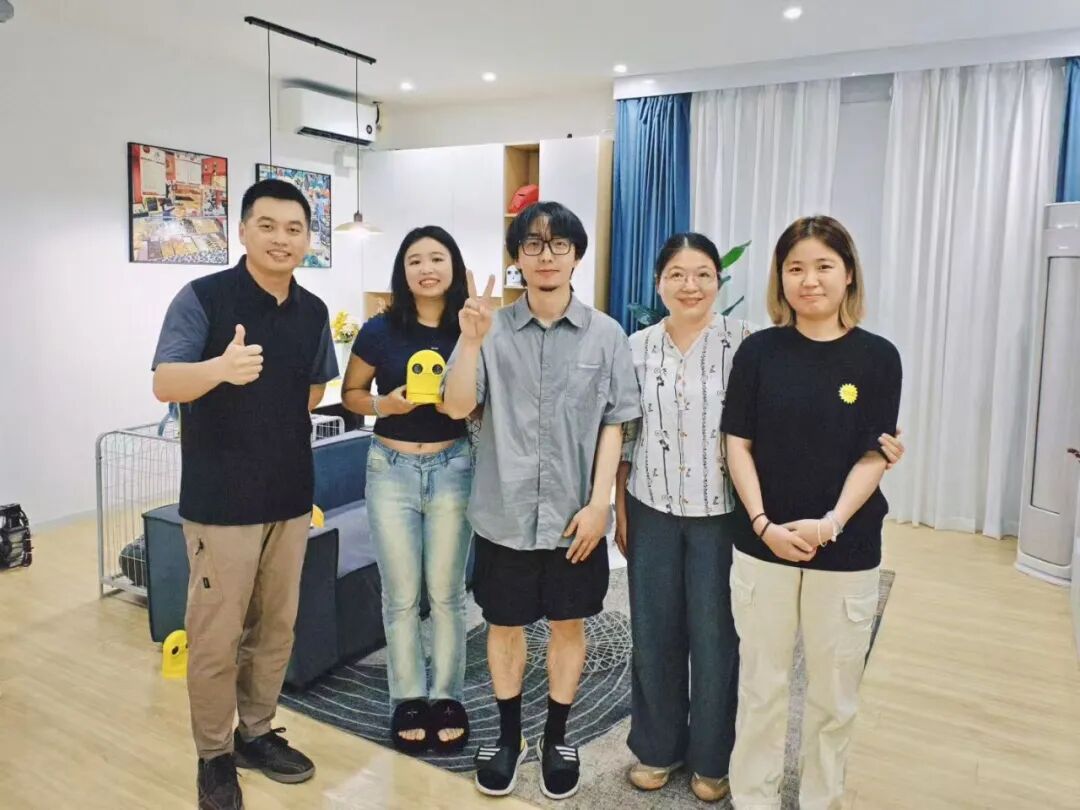
△ Kuqiqi team and "Little Lion Diary" team
During WAIC, some internal test users specifically came to the venue to find Leo and see the product. After three days, Leo felt tired but it was worthwhile.
Leo has made up her mind that the first thing to do after returning to Beijing is to discuss pricing with colleagues in the product department. As an AI companion product, with new features being launched and iterated, the cost of tokens is hard to estimate, and there are new features to be launched later. This is not a problem that a simple annual subscription plan can solve.
Story 3: What if Liblib Builds Your Product?
"What if Liblib builds your product?" Liu Rushan was asked such a question during a conversation with an investor.
She did not know how to answer. She could not figure out how to win when facing direct competition with a star startup in the same track that had already received multiple rounds of financing. At the same time, she was also facing two things: the employees she trained were poached by competitors with high salaries, and a round of financing that had already been approved was eventually withdrawn.
Mulan AI was founded in May 2024. In addition to Liu Rushan, there are two other co-founders — the No. 7 former employee of Tudou and the No. 20 former employee of Ctrip.
Liu Rushan often feels guilty recently, always thinking about that withdrawn investment, feeling that it is closely related to her. She thinks she does not fit the strict "founder profile template" in the primary market. "If I had experience as a product manager from ByteDance, or a degree from Peking University or Tsinghua University, investors might have invested," she often says to different people.
Liu Rushan used to be a full-time mother for nearly five years, worked in a Fortune 500 company for 12 years, and also set the record for the fastest promotion to partner in the history of a SaaS company. When ChatGPT came out, she made a bold decision: to give up her stable job and join the AI startup community.
Mulan AI is a startup that develops video marketing Agents. In the H4 exhibition area, there is a whole row of startups that are developing AI videos like them, almost covering all possibilities in this track. Next to Mulan AI's booth is a young team with Peking University and Tsinghua University backgrounds, which quickly got their first round of financing at the beginning of entrepreneurship. Among them, Mulan AI did not show obvious advantages.
Mulan AI is one of the earliest teams in the industry to integrate canvas, workflow and video Agent. Different from the common practice in the industry of directly generating videos by inputting instructions, Mulan AI allows AI to perform canvas editing and workflow orchestration, encapsulating the creation process into reusable workflow templates. Specifically, users can input scripts, and the platform can generate digital assets such as characters, scenes and items with a unified style with one click, allowing users to adjust details like duration, narration and visual parameters frame by frame, while AI automatically completes the rough cut.
