The summit that predicted the "dot-com bubble" has begun to discuss the "AI bubble".
If you are a heavy internet user, I believe you must have come across such legends: in some mysterious corner of the Earth, the elites of humanity gather regularly to discuss and decide the future and destiny of the entire human civilization. For example, the French Revolution is said to have been planned by the Freemasons. Napoleon's disastrous defeat at Waterloo is allegedly orchestrated by the Illuminati. The Federal Reserve, which controls the lifeline of the global economy, is said to have been truly founded by the Freemasons.
First of all, it must be made clear that these legends are basically "conspiracy theories" born from over-association and forced connections. For instance, one of the arguments for claiming that the Freemasons are behind the Federal Reserve is that there is an eye symbol on the US dollar, which looks very much like the iconic "All-Seeing Eye" of the Freemasons. But in fact, long before the emergence of Freemasonry, this eye symbol appeared extensively and frequently in Christian art and European sculptures, referring to God's omniscience and blessing. As part of the Christian cultural circle and a country where people must place their hands on the Bible for various oaths, it is not surprising at all that the United States printed this eye on its currency.
The widespread spread of these conspiracy theories also has very sufficient psychological explanations behind it. Some people believe that the reason why people are willing to believe in the existence of the "Illuminati" and "Freemasons" is that they cannot accept the various difficulties brought about by the unpredictable changes in society, so much so that they would rather imagine an evil force manipulating the world behind the scenes, thus gaining a certain sense of certainty.
But strictly speaking, these legends are not completely "fabricated out of thin air". With more specific qualifiers and a shorter timeline, there are indeed some "elite gatherings" that fit the description, such as the Sun Valley Conference.
The Sun Valley Conference was originally a small-scale exchange forum in the venture capital industry, initiated by the US investment bank Allen & Company. It is held every July on a fixed schedule, and the content of discussions during the conference is usually not made public. The turning point came in early 2000, when the dot-com bubble began to collapse sharply. Coincidentally, Fortune magazine was authorized for the first time to disclose the closing speech of the Sun Valley Conference at the end of 1999, and people found that Warren Buffett had predicted all this as early as July 1999, more than half a year in advance. Since then, the Sun Valley Conference has instantly become a must-attend annual event for global investors and entrepreneurs to ensure that they "see the future first".
This year is even more so. When all funds are highly concentrated in artificial intelligence, when giants like Google and Oracle begin to issue unprecedented century bonds, and when everyone instinctively thinks of the dot-com bubble, people are very eager to know what will be discussed at this year's Sun Valley Conference. Interestingly, the man who single-handedly created all this anxiety, Sam Altman, the head of OpenAI, took the initiative to spoil everything: "Everyone is asking me if AI is getting a little too expensive."
The Most Severe Crisis of Confidence
As mentioned earlier, even without Sam Altman's revelations, people could guess that "AI" is bound to be the main topic of this Sun Valley Conference. What's more, Sun Valley is a real valley, specifically located in Hailey, a town in the inland state of Idaho, USA. There are no direct flights, let alone high-speed rail, and transportation can basically only rely on private planes or driving. Considering the notoriously poor infrastructure of the United States, besides artificial intelligence, what else is worth all this trouble for these giants who create industry trends?
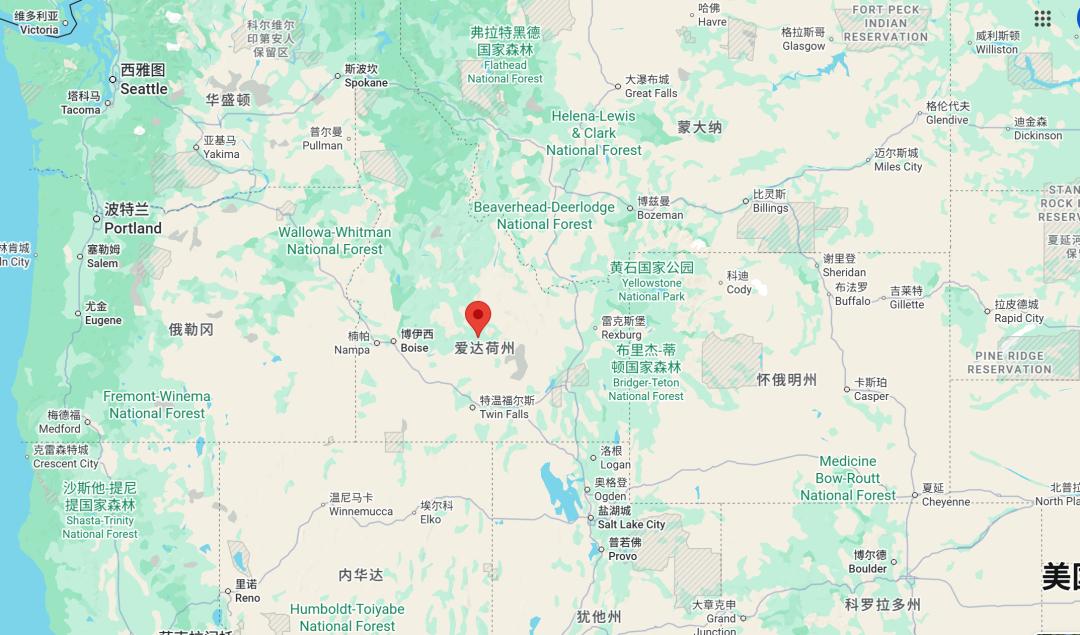
(The location of Sun Valley on the map of the United States)
The key problem is that in the past few years, the narrative people believed in was that artificial intelligence is the technology of the future, and the application of this technology can greatly improve human work efficiency, thereby bringing higher growth. However, as the capabilities of models improve and so-called AI Agents begin to emerge in large numbers, people find that those seemingly basic and clumsy tasks in their hands are not so easy to replace. If a person chooses to fully embrace AI Agents, without selling courses or running self-media accounts, they are likely to only gain ambiguous learning costs and huge unemployment anxiety.
By the summer of 2026, even tech giants could no longer hold on, and blockchain giant Coinbase provided a classic case.
In May 2026, Brian Armstrong, CEO of Coinbase, announced on his personal social media that the company would lay off 14% of its staff, citing the need to cope with the "downturn cycle of the entire industry" and that "he had seen how engineers use AI to complete tasks that used to take months in just a few days". He also predicted in the layoff notice that "there will be a huge change in the work efficiency that a small, focused team can produce, and this change is accelerating day by day".
But this determination only lasted for a month. In June 2026, Brian Armstrong began to share "how to save on AI expenses" on his personal social media, saying that Coinbase is "working hard to automatically assign user queries to lower-cost models for processing", with the goal that "in the next 12 to 18 months, 80% of the workload will run on models that cost only 1% of the current ones". To achieve this goal, Coinbase, a purely American company, chose to "go its own way" and will try to use Chinese-made LLM models as the default models, on the grounds that "these models are much cheaper than those from leading US AI labs such as Anthropic and OpenAI".
Also in June, a report from KPMG described the same observation: their survey found that among all enterprises that tried to integrate artificial intelligence into their work scenarios, only 26% of the enterprises were clear about the costs they needed to pay and could achieve controlled cost reduction and efficiency improvement. The rest of the enterprises basically had certain cognitive blind spots, and even 26% of them completely misjudged the costs that artificial intelligence would incur. A large number of companies spent their annual budgets within a few months, and one of the most extreme cases was that the actual cost exceeded the budget by 6 times.
Also in June, the fintech company Comviva also released a "pessimistic report". Titled *The AI Efficiency Gap: Measuring the True Value of Artificial Intelligence Beyond the Hype*, the report surveyed executives from 200 world-class companies. The survey results pointed out that in the past two years, 90% of the surveyed enterprises had increased their investment in artificial intelligence, but only 12% of them could generate new "revenue growth" as a result. Under this premise, 86% of the executives were asked by the board of directors to explain the "rationality of AI investment", and only 16% of these executives had sufficient evidence to respond to the doubts.
Even the model that is currently a model of enterprise-side application in the artificial intelligence industry — Claude Code — is actually uncertain whether it can clearly help enterprises "reduce costs and increase efficiency". Praveen Neppalli Naga, CTO of Uber, made it clear in an interview with *The Information* earlier that as of April this year, the company's AI budget had been completely used up, and the most budget-consuming part was Claude Code, which forced him to "rework the plan" and "continue recruitment in the software engineering field".
This is the prequel to the 2026 Sun Valley Conference. According to local media reports, *The Boise Dev* reported that a large number of rallies and demonstrations appeared around the venue of this conference, with themes centered on "focusing on economic fairness, corporate responsibility, and the financial challenges facing working families". It can be said that the artificial intelligence industry is experiencing the biggest crisis of confidence since its inception. As the biggest vested interest in the AI boom, Sam Altman and OpenAI have a responsibility to respond.
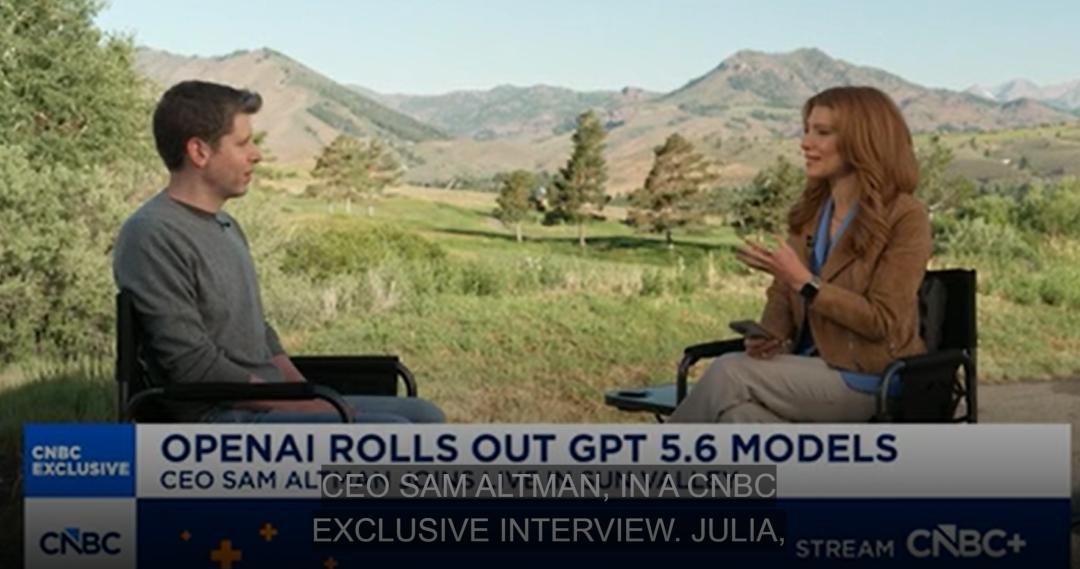
(Altman being interviewed exclusively, with "Sun Valley" in the background)
On July 9 (during the conference), Altman was interviewed live by CNBC and revealed that "The cost of artificial intelligence is the most important topic at this year's Sun Valley Conference... Everyone is asking what we can do to reduce costs or increase output". Altman took the opportunity to promote his product, telling those worried bosses that their newly launched GPT-5.6 Sol is the answer to this problem. According to their calculations, GPT-5.6 Sol requires 54% fewer tokens on agentic coding tasks than before, and is "no less than or even better than" competing models on the market.
But the next conversation is quite thought-provoking. When discussing whether large models will face more social responsibility-related regulations, Altman suddenly started complaining: "I think there are too many negative comments about artificial intelligence... And, you know, most of the negative comments have not come true."
The host asked Altman to explain specifically what the "negative comments that did not come true" refer to. Altman said: "So far, I have seen very little unemployment — there were predictions that 50% of jobs would disappear. But I also mean all the negative impacts that may come from using this technology. So far, the situation is better than many people feared. For a new technology that has been adopted so quickly and deeply, the progress is smoother than many people expected — of course the process is not perfect, part of the reason is precisely that we have always focused on making these models both safe and useful. For example, now the government has become another partner, and they will also participate in testing models and finding problems. I think this is a good thing, as long as the process is transparent, fair and efficient."
The host thought Altman had evaded some specific questions, so he tried to guide the topic: "While you are working hard to reduce costs for customers, computing and memory costs are constantly rising. What impact will this bring?" Altman's answer became very general: "This is definitely an unavoidable obstacle... We have to be smarter and come up with more algorithm-level improvements to offset the rise in infrastructure costs, while allowing customers to continue to enjoy price cuts."
The host continued to provoke: "There are reports that Chinese models are catching up with the models released by leading US labs... Are you worried about the rise of Chinese models?" Altman said: "China's open-source models are indeed getting better and better. I think that's fine. But I also think we will continue to have the best models in the world, and what people really want is the best models."
In addition, Satya Nadella, CEO of Microsoft, reportedly also focused on "the whole society's crisis of confidence in AI" during a roundtable at the Sun Valley Conference. And compared with Sam Altman, Nadella's attitude was more candid. According to media participants, Nadella's speech ended with a focus on social acceptance. He reminded the tech elites present that they should take the public's fear of disruptive technologies seriously.
The Unavoidable Artificial Intelligence
Of course, the Sun Valley Conference is not a gathering of fortune-tellers. The reason why it has attracted so much attention is that, besides tech elites predicting the future, another key reason is that many transactions that have completely changed the industry landscape are said to have been agreed upon during the conference, such as Jeff Bezos's acquisition of *The Washington Post*, Disney's $19 billion acquisition of ABC, and Google's $1.65 billion acquisition of YouTube.
Therefore, apart from the "artificial intelligence bubble", another highlight of this conference is the "potential blockbuster transactions", but everything still cannot avoid "artificial intelligence".
First of all, according to a scoop from tech self-media Puck, Jeff Bezos and Marc Andreessen, founder of a16z, held a dialogue during the conference, with the theme centered on the "space race". In this dialogue, Bezos described the vision of "space data centers" at length, saying that in the future, gigawatt-level data centers may be deployed in space or even on the moon, using continuous and stable solar energy to alleviate the power, water and land constraints faced by ground data centers, and using this topic to explain the logic behind his long-term investment in the space industry.
It should be noted that a few days after the end of the Sun Valley Conference, multiple media reports said that Bezos's commercial aerospace company Blue Origin had launched its first round of external financing, planning to raise $10 billion at a valuation of $130 billion. This fund will mainly be used to improve the production and operation capabilities of their self-developed rocket "New Glenn", so as to gain the ability to compete with SpaceX. In addition, according to CNBC reports, Coatue Management will lead this round of financing, committing to invest $4 billion, and Bezos himself will add $2 billion in personal investment by cashing out Amazon stocks and other means.
Combining the two, it is not surprising news that a16z will become an investor in Blue Origin in the future, Blue Origin will spend a lot of money to acquire some communication infrastructure companies to support the networking and operation of satellite internet, and acquire companies with licenses related to spectrum and orbital positions.
Secondly, Brian Schimpf, co-founder and CEO of Anduril, was also invited to this Sun Valley Conference. After the decapitation operation in Venezuela and the conflict in Iran, Anduril, which focuses on defense AI systems and military drones, has become one of the most popular unicorns in the US capital market, with its valuation soaring from $30 billion in June 2025 to over $60 billion. But in an interview with the media during the conference, Brian Schimpf said that the valuations of many companies are based on future growth expectations, and the current market pricing can hardly be regarded as rational, and the whole is in the "hype cycle" stage.
Based on this premise, Brian Schimpf said that Anduril is currently suffering from this, "the valuation has also been affected by overheating", so it will consider slowing down the IPO plan, and advise startups that "they should measure whether to go public based on whether investors can get good returns three years after the listing".
In addition, shortly after the end of the Sun Valley Conference, Microsoft CEO Nadella also wrote a technical blog talking about a dilemma in the current AI commercialization.
Nadella said, The reason why the protection of intellectual property (or "information property") has been continuously emphasized and has become the most unshakable fundamental law in commercial civilization is that "knowledge" is not a resource, it will not be consumed, and it can be copied at zero cost. Under this premise, the more valuable "knowledge" is, the harder it is to trade as a commodity, and it is often transacted in the form of "high premium", because "once it is known, it no longer has tradable value". For example, suppose someone is selling you a "secret that can double the efficiency of your factory". As the buyer, you have the right to ask for the disclosure of the content to prove that the price is reasonable, but once the seller discloses it, the value returns to zero.
But in the AI era, everything becomes very distorted: in order to better train models and make better use of AI to optimize work efficiency, enterprises have to open up their proprietary knowledge (such as prompts, error correction feedback, business logic, etc.) for training; the improvement of model capabilities does help the enterprises that provide information, but the training results are also owned by large models at the same time, and no longer become the "exclusive property" of these enterprises; at the same time, when the models have stronger capabilities and enterprises rely more on artificial intelligence to work, large model vendors will gain more revenue from enterprises.
Nadella described this cycle as a "paradox", believing that if an enterprise wants to fully embrace artificial intelligence now, it actually has to pay a "double price", and thus predicted that enterprises will inevitably fight for a right — the right to use the output generated by the model to fine-tune or train their own models. Nadella said: "This is just the right that every enterprise should have when aligning AI with its own responsibility system. In the cloud computing era, enterprises accumulate data; in the AI era, what they accumulate becomes learning outcomes. The trust boundary must also change accordingly... It is no longer just about protecting information, but about protecting the ability of organizations to learn, adapt to changes, and allow intelligence to continue to compound and grow."
Otherwise,