When did you catch the Vibe Coding bug?
I've become addicted to working on projects with Vibe Coding, to the point where I don't even feel like playing games anymore.
On weekends in the past, I would always launch a city-building management game, like the Anno series I picked up some time ago, getting lost in constructing buildings and setting up production lines. But now, whether it's weekends or weekdays, I sit at my computer, open an OpenCode window, and start "getting things done" — letting it help me write code, analyze data, brainstorm novel ideas, and even debate different viewpoints with me. I can sit there for an entire day, which reminds me of the "just one more turn" feeling I had when playing Civilization back then.
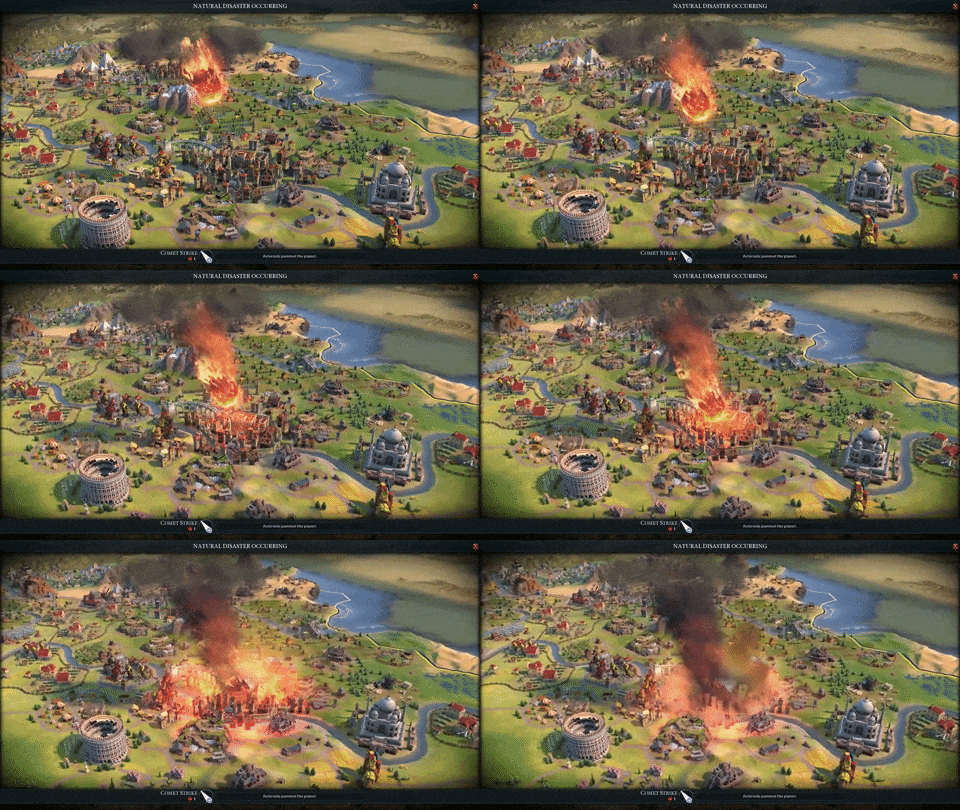
Every time I feel my nerves are shot and I can't keep going like this, I open the Steam game library to relax, only to give up after staring at it for ages — damn it, none of these games are as fun as Vibe Coding.
All my friends who got into Vibe Coding are showing similar symptoms: glued endlessly to that terminal text window, with no desire to do anything else.
How did this turn into an addiction? Here's my take: the core of this isn't about how powerful AI is, but something far more fundamental: what humans love most is never total certainty, nor complete randomness — it's "semi-randomness" at just the right proportion: you know the general direction, but you can't predict the exact outcome. You vaguely anticipate what's coming next, but the result always brings an extra surprise beyond your guess.
And that "surprise" is just enough, not too much or too little, to make you go "wow".
Where does the joy come from?
Dopamine isn't the "pleasure molecule".
When you take a bite of a surprisingly delicious dish and feel happy, you might think dopamine is rewarding you. But what dopamine actually does is: before you take that bite, it predicts how good the dish will taste; then after you actually eat it, it calculates the gap between "reality and expectation".
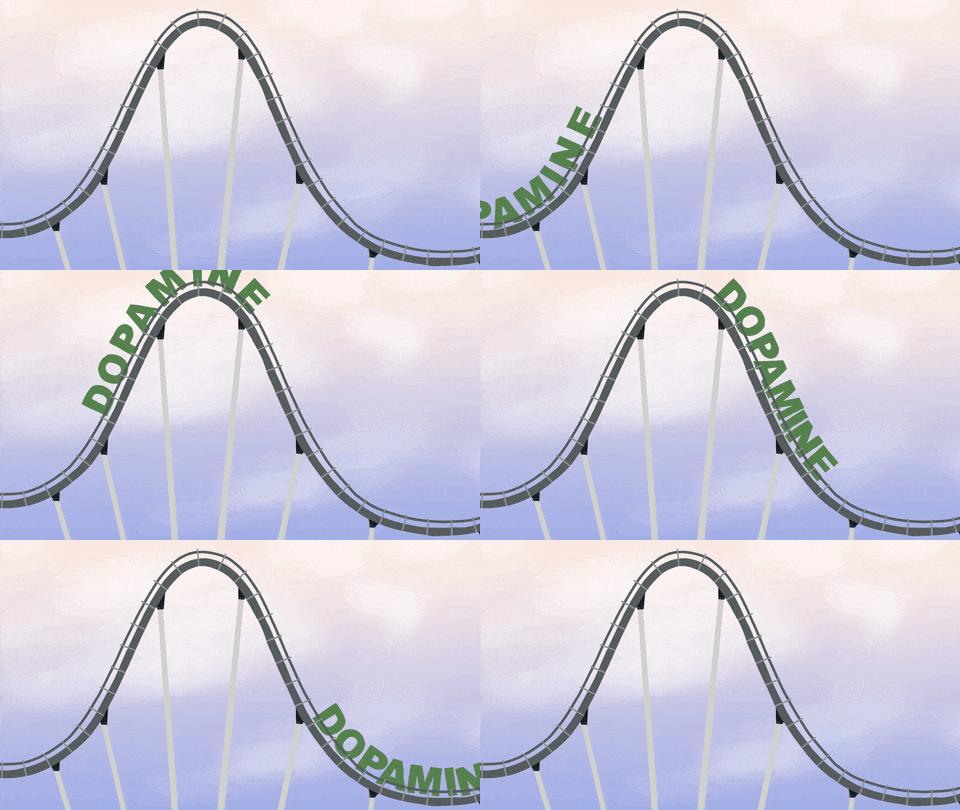
Neuroscientists call this gap the reward prediction error. If reality exceeds expectation, the error is positive, dopamine surges, and you feel excited, delighted, and reach for another bite; if reality falls short of expectation, the error is negative, dopamine is suppressed, and you feel disappointed, bored, and put down your chopsticks. If reality matches expectation exactly, the error is zero, dopamine doesn't change at all — no happiness, no pain, you just think, eh, it's just okay.
That's why the maximum sense of bliss from food hits the very first moment the food touches your tongue, when the gap between expectation and reality is the largest.
This theory was first discovered by Wolfram Schultz in the 1990s through monkey experiments. His experiment was simple: when a monkey saw a light turn on, it knew a drop of juice would land in its mouth the next second. At first, the monkey's dopamine neurons didn't react when the light came on; they fired intensely when the juice dropped, because it was a surprise. Later, when the link between the light and juice became completely predictable, the monkey got excited when it saw the light, but showed no reaction when it drank the juice, as there was no surprise left. Then Schultz turned on the light but didn't give the juice, and the dopamine neurons' firing decreased, leaving the monkey deeply disappointed.
Only when Schultz occasionally gave an "unexpected juice drop" — like giving juice directly without turning on the light — would the monkey's dopamine explode.

See, that's the core of the matter: total certainty is boring; total randomness makes you give up; only semi-randomness gets you hooked.
Gambling addiction works through the exact same mechanism. The most addictive gambling games are those that introduce some (real or fake) element of skill: you're not guaranteed to win, but you're fed the illusion that "I almost won". When you actually win under this system, you get an unprecedented dopamine rush, and that's how you get addicted. Game designers have known this for ages. The most addictive game mechanics are all built around this kind of "unexpected, yet perfectly reasonable" surprise.
When I do Vibe Coding or use AI to assist with writing, it's similar to these game mechanics — but even better, because it's not a pre-scripted story, it's a semi-autonomous collaborator that responds to you.
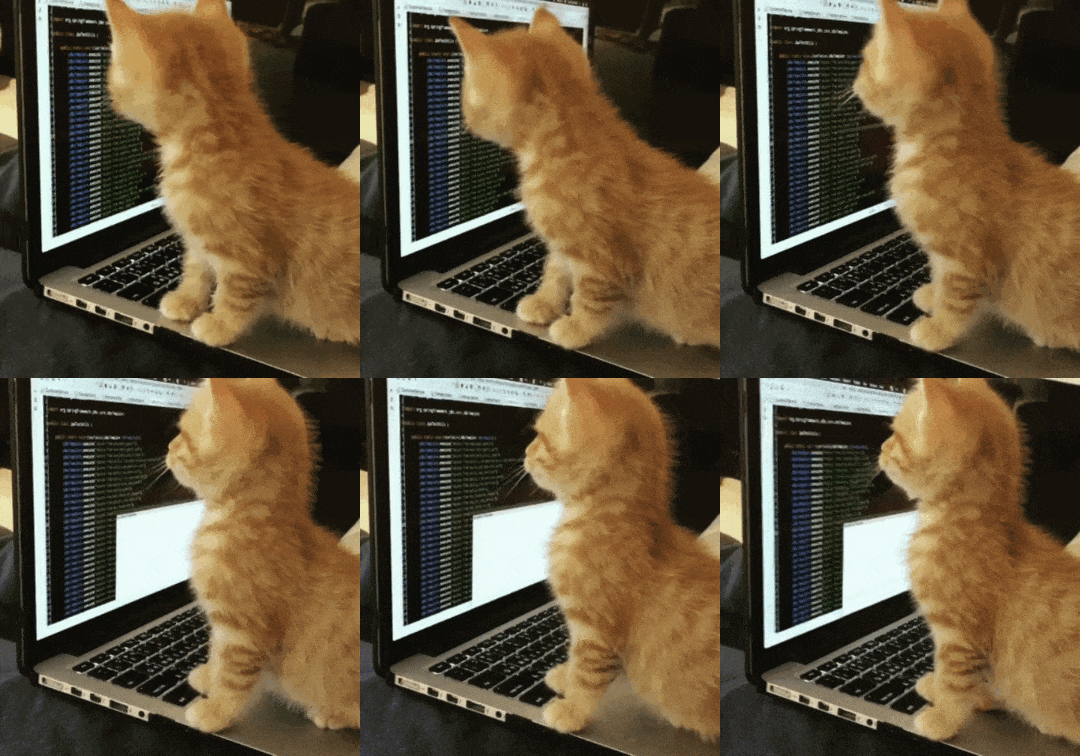
Put plainly, it's like a slot machine; more elegantly, it's like jazz
Let me try to describe what happens in my brain when I work on a project with AI.
Take for example when I ask it to help me build the world setting for a new novel. I have a rough idea of the work's worldview, but no details, and many parts are not fully thought through. So I give AI my most initial outline, and ask it to flesh it out.
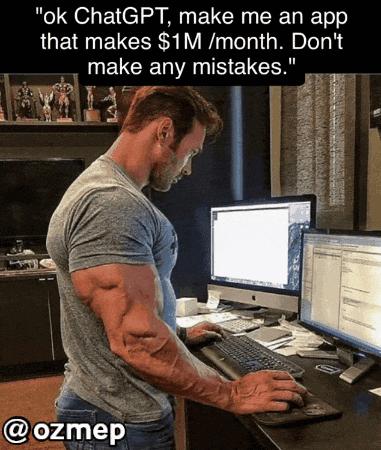
Then it starts outputting. Line one, line two, line three. I stare at the screen, like listening to an unfinished piece of music. Most of the time it follows my train of thought, including some elements I expected, and I nod to myself thinking that's right, that's exactly how it should be. But there are also plenty of times when it doesn't fully understand my idea, the whole setting veers off in a weird direction, or it develops that typical AI "vague, unpolished" feel — then I'll yell at it, saying what the hell is this, that's not what I meant. But the moments that excite me most are the "beyond expectation" bits: those perfectly logical setting mechanics I never thought of, that connect several reasonable, isomorphic yet extremely distant elements, giving me a whole new understanding of the whole thing. At that exact moment, the dopamine in my brain explodes, just like Schultz's monkey getting an unexpected double serving of juice.

The same thing happened when I studied AI image generation last year: the process of typing a prompt, pressing the button to generate an image, is completely isomorphic to pulling the lever of a slot machine to make it spit out numbers: you're full of anticipation, but randomness ensures the result won't fully match your expectation. AI rarely gives you complete satisfaction, it usually produces an answer that's "okay but not good enough". This situation almost compulsively makes you keep wanting to try again: not because there's some task that absolutely has to be finished, but because you want to see if next time it can produce another surprisingly great result.
Later I realized this feeling is a lot like jazz.
You listen to a jazz improvisation. The musician stands on stage, you don't know what note they'll play next — and neither do they. But you vaguely know they won't step outside the harmonic framework. Within that framework, there are infinite possibilities. They play a note you never expected, but it doesn't sound off-key, instead it pushes the whole melody to a new emotional peak. You can't help but yell inside your head, yes, that's exactly it.

When you work on a project with AI, whether it's text or code, you are the musician, the audience, and the conductor all at once. Your prompt sets the theme; AI's generation is the improvisation; after seeing the result you decide where to go next, which is laying down the next harmony. You're not consuming a pre-written melody — you're participating in a generative, never-repeating, surprise-filled creative process.
That's why it's more addictive than playing games. No matter how open-world a game is, its surprises are pre-designed — the developers preset that you'll meet that monster here, trigger that cutscene there. But the surprises generated by AI are surprises in the truest sense. They're not some programmer's pre-planned trick, they're a random walk of the language model in probability space that just happens to collide with your needs.
This kind of surprise carries a raw, authentic sense of reality.
Creation is the most fun thing for humans
Thinking this through, I suddenly understood another thing: why do so many people feel empty after scrolling short videos, playing games, or binge-watching shows?
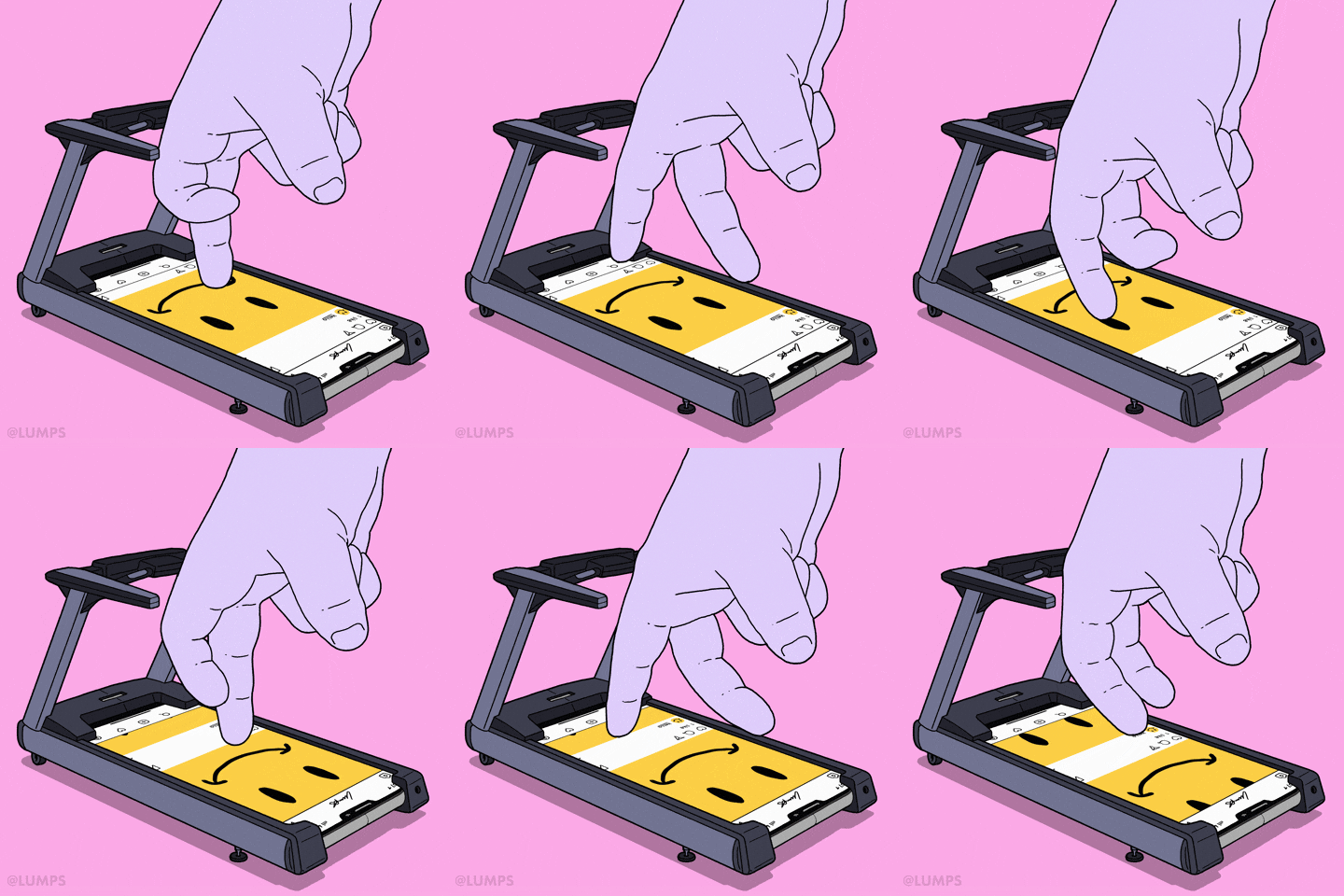
Those things can also activate dopamine. A funny video hits your funny bone, a plot twist catches you completely off guard — these all create prediction errors that give you a rush. But the problem is, you're passive. You're the audience sitting in the jazz club, not the musician on stage. Your dopamine fires, but your sense of self-efficacy doesn't grow. When you finish the session and close the screen, nothing's left — just like eating a whole bag of chips: you get the calories, but barely any nutrition.
The human species has a very peculiar trait: we love leaving traces. Ancient humans drew bison on cave walls not for anyone else to see, they just wanted to draw; medieval craftspeople carved invisible patterns on church pillars not for pay, they just wanted to carve. Driven by this "I just want to do it" feeling, humans built an entire industry around scale models. Modern people write open source code on GitHub, post answers on Zhihu, share notes on Xiaohongshu — for many, their motivation isn't money at all, it's that feeling of "I was here, I made this".

AI hasn't taken that feeling away — it's amplified it. In the past, if you had an idea, the barrier to building it from scratch was extremely high. Now you have a smart assistant: you just need to give it your vague vision, it lays down the skeleton, and you make the choices and tweaks. The efficiency of creation is improved, and the joy of creation is amplified too — because you spend far more time in that semi-random, high-prediction-error flow state, instead of doing mindless grunt work.
So it's not that I don't love games anymore — I just found something more fun than games. Games are pre-built prediction error machines designed by others, but working on projects with AI means I'm building my own prediction error machine, and playing alongside it. This machine has no pre-loaded script, every session is an improvisation, no replays, no walkthroughs, no final level to beat.
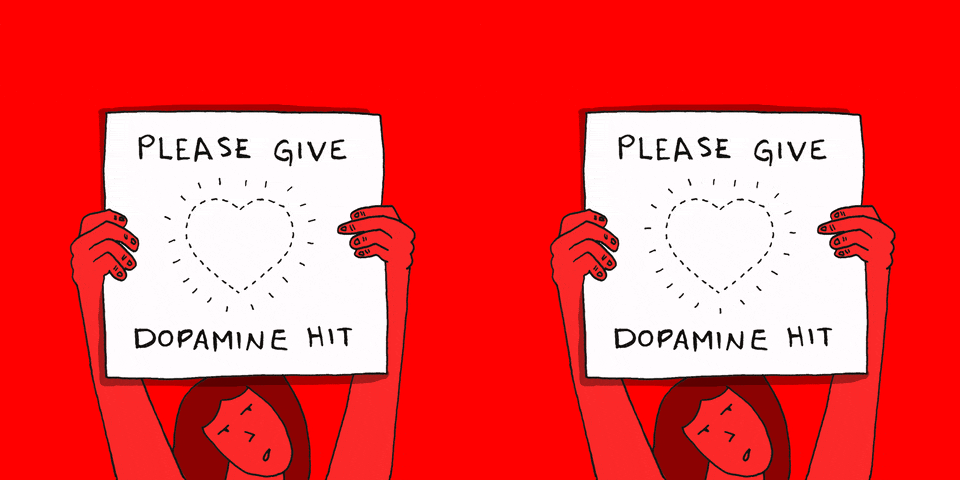
Creation is the most interesting thing you can do as a human being.
Working on projects with AI feels exactly like that. You send out a prompt, but you don't know how it will respond. In that "not knowing", you find that most primitive alertness and excitement — the kind that belongs to hunters and explorers, facing an uncertain world. Then you realize that this excitement isn't given to you by AI, it's something it helped you awaken. It's always been inside your brain, there just wasn't the right trigger before.
Now the trigger is right at your fingertips. All that's left is for you to decide whether to sit down, and start that never-ending improvisation.
This article is from the WeChat public account "Guokr" (ID: Guokr42), written by Deng Siyuan, and published with authorization from 36Kr.