China's most "delicious" railway hides a grand taste migration
From the misty expanse of the Yangtze River to the banyan trees and plantains along the Pearl River, a railway track weaves together the most authentic living atmosphere in China's inland heartland. If you peel back the geographical shell and lean in to savor the flavors along this railway, you will find it a "gourmet artery" running through China's interior, akin to a gradual mellowing of intense spiciness and a vibrant infusion of local terroir: starting from the rich, bold sesame paste of Wuhan, moving on to the pungent, fiery stir-fried chilies of Hunan, and finally settling into the subtle fragrance of dried tangerine peel and slow-simmered Cantonese soup in Lingnan. Retracing this century-old railway, the "spiciness" and "freshness" of China's inland regions undergo wonderful transformations amid the endless flow of geography and local produce.
01
Over a century ago, as the Yuehan Railway was extended, Wuhan became a critical transportation hub connecting north and south. Before the opening of the Wuhan Yangtze River Bridge, southbound trains relied on railway ferries to cross the Yangtze, with travelers crowding onto the ferries to watch the river wind whip up waves. This railway, paired with the ever-flowing Yangtze River, jointly forged Wuhan's raw, rugged dockside character.
This dockside spirit first seeped into people's daily meals. Wuhan mornings are awakened by the steaming heat of "zao" (breakfast culture). Alkaline noodles are blanched in boiling water until 70-80% cooked, quickly fished out and tossed with oil, then topped with thick black sesame paste, chili oil, and diced spicy radishes. A bowl of hot dry noodles, finished in a few quick bites, was the most efficient "industrial fuel" for dock laborers and railway track layers back in the day, and it remains an indispensable morning ritual for Wuhan locals.
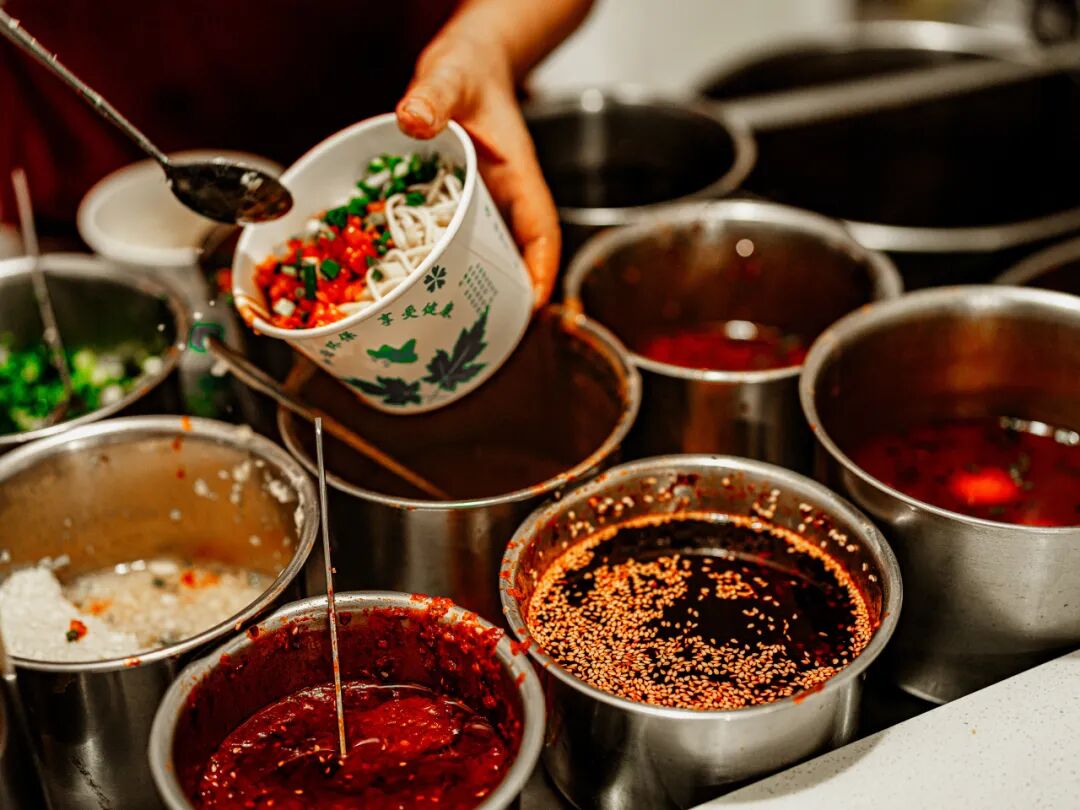
Wuhan Hot Dry Noodles
Deep in the alleyways, a large iron wok sizzles. Veteran chefs spread mung bean batter into thin pancakes, top them with eggs, then add layers of glutinous rice, mushrooms, fresh meat, and pickled mustard greens, cutting the mixture into squares with a quick flip. The crispy-outside, chewy-inside Three-Fresh Tofu Skin is another beloved breakfast staple for Wuhan locals. Pair it with a bowl of fresh fish paste noodle soup, made by simmering river fish until the bones dissolve into a milky white broth, dip a fried dough stick in it, sprinkle plenty of white pepper, and the bold, savory kick hits right at the back of your palate. Wuhan's spiciness differs from the numbing spiciness of Sichuan and Chongqing—it's a "dry, fiery heat" mixed with pepper, brine, and savory sauce, straightforward and uncompromising.
If eating hot dry noodles while walking down the street from a paper bowl embodies the "freewheeling spirit" of making a living outside the home, then slow-simmered pork rib and lotus root soup cooked in a coarse clay pot overnight represents the tender affection reserved for family. Pink, tender lotus roots grown in the rich silt of the Jianghan Plain become soft and fluffy after hours of simmering, turning the soup a deep pink hue that melts in your mouth. Pair it with a plate of crisp, sweet Hongshan Chinese kale in winter, and this single dish perfectly captures the city's dual character—bold and outgoing outside, warm and nurturing at home.
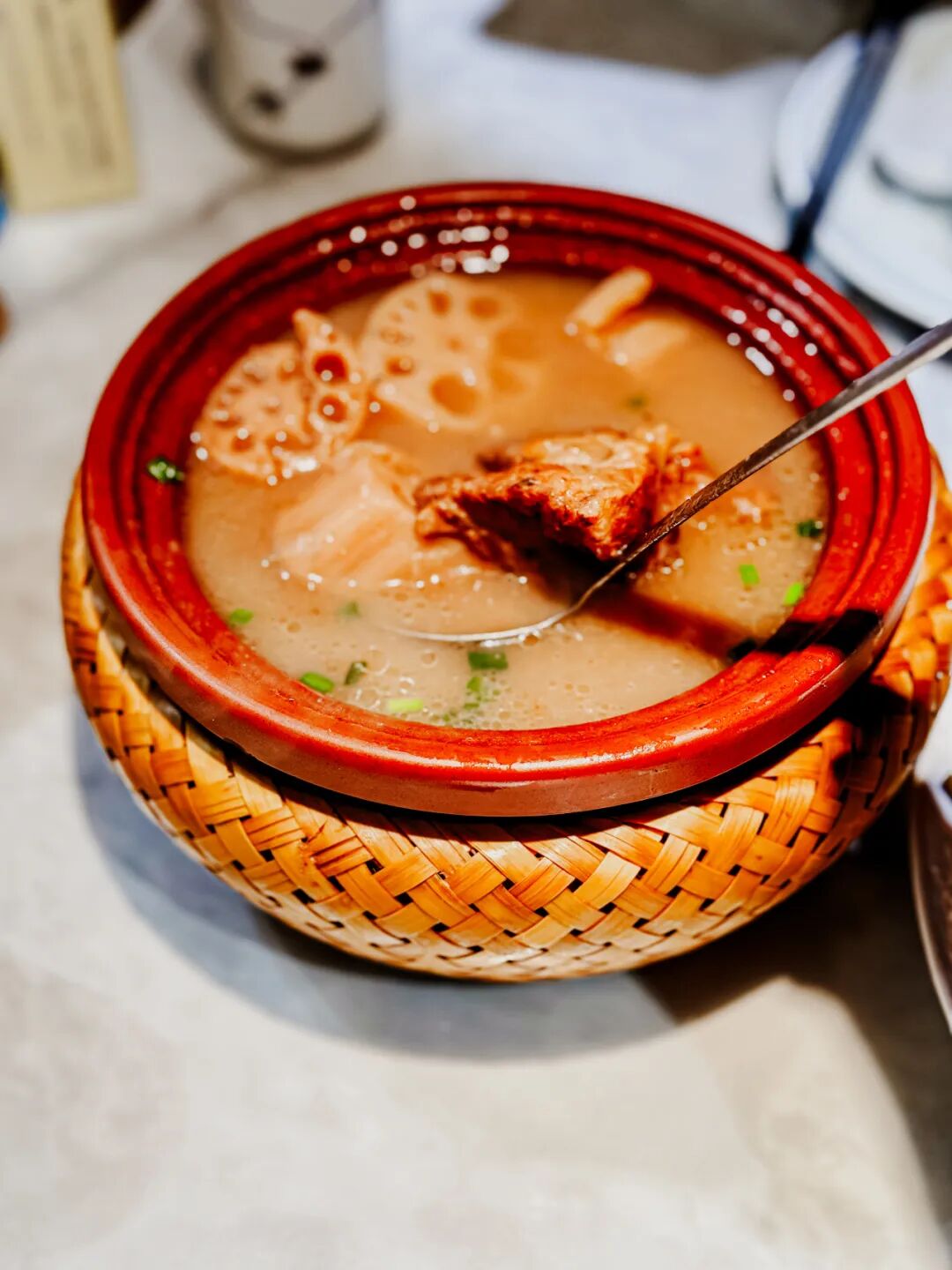
Pork Rib and Lotus Root Soup
Beyond these signature breakfasts, Wuhan's culinary landscape extends far further: flavorful, chewy Jingwu duck necks marinated in spiced brine are the perfect late-night snack to pair with drinks; steamed Wuchang fish, tender and fresh with no hint of fishiness, is the most direct gift from the Yangtze River's waters. This blend of freewheeling energy and warm everyday life weaves together the most vivid daily scenes on Wuhan's dining tables.
02
The railway heads south, carrying that freewheeling spirit into Changsha. In 1904, Changsha officially opened as a trading port, and soon after, the Changsha-Zhuzhou section of the Yuehan Railway was completed, linking the millennia-old water transport ports along the Xiang River with modern industrial railway freight. The old Changsha North Station, located in today's Kaifu District, was once the busiest logistics hub, where textiles, minerals, and imported goods from all over the country were distributed. Rooted in Chu culture, which carries a natural romance and wildness that defies the rigid rituals of the Central Plains, this rejection of "mediocrity" bursts vibrantly to life in Changsha's cuisine.
A bowl of heavy, spicy Changsha shredded pork rice noodles, with lard at the base and garlic shoots as garnish, features soft yet springy noodles that awaken the entire city in the morning. As night falls, the old streets beside the railway fill with the intense heat of woks. The Super Wenheyou, a massive contemporary art installation nested among skyscrapers, blends neon lights and lively street energy to create a one-of-a-kind Changsha nightlife scene. At night markets, glossy, fragrant crayfish stir-fried with whole crayfish are cooked until their shells turn crispy, requiring diners to suck every last bit of flavor out; Changsha stinky tofu, crispy outside and tender inside, comes with a spoonful of soulful chili sauce; in ordinary local restaurants, stir-fried pork with local screw chilies bursts with meaty aroma, the simplest yet most addictive dish on Changsha dining tables. Changsha's spiciness leaves no room for retreat, hitting straight at the back of your palate, mirroring the unyielding, stubborn "baman" (perseverance) spirit deeply embedded in Hunan culture.
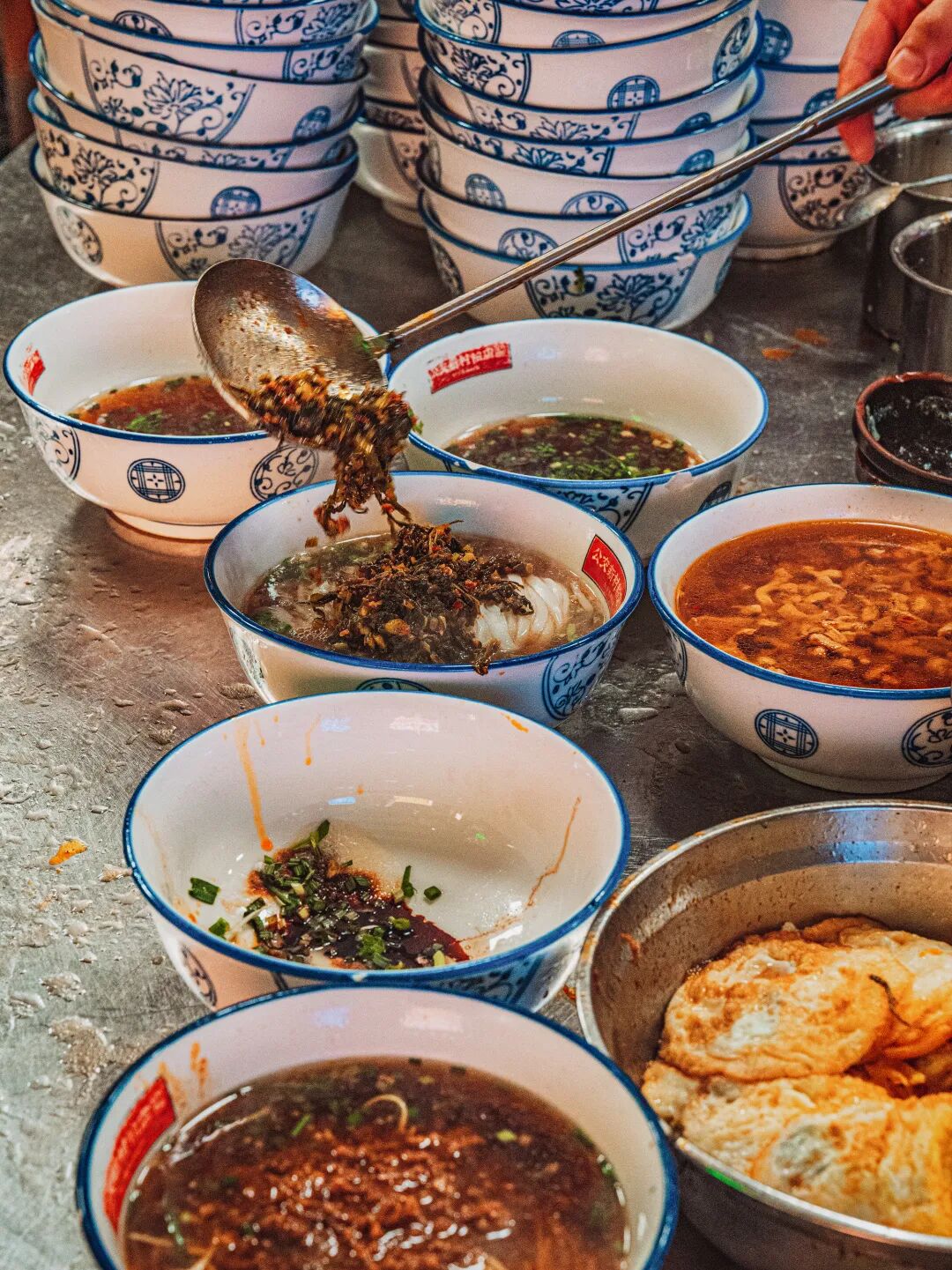
Rice Noodles
Changsha locals' love for sweetness is equally bold: outside the Huogong Palace on Pozi Street, sugar-fried rice cakes are deep-fried until crispy outside and chewy inside, sprinkled with white sesame seeds; Sister's Rice Balls, with thin wrappers and flavorful fillings, come in sweet and savory pairs, a shared childhood taste for generations of Changsha residents. A cup of tea from Cha Yan Yue Se has almost become the city's first calling card for out-of-town visitors, with long queues forming a unique street scene of their own.
The train continues south into Zhuzhou, a city that was literally "pulled into existence" amid the whistles of intersecting railways. Walking into the Tianxin District of Zhuzhou feels like stepping into a profound Soviet-style industrial film, home to the "Cradle of China's Electric Locomotives." Today, CRRC Zhuzhou Locomotive still develops world-leading Fuxing high-speed trains and maglev trains beside the old factory buildings, keeping the industrial heritage of national key technologies alive.
In Zhuzhou's Tianxin District, the "Cradle of China's Electric Locomotives" has taken root
This profound industrial character is also reflected in the local cuisine: Youxian dried tofu from Zhuzhou, strictly marinated and roasted, has a firm, chewy texture with a wild smoky aroma that grows more flavorful the more you chew; while Mao's Braised Pork from neighboring Xiangtan is bold and unapologetic, made without a single drop of dark soy sauce—relying entirely on caramelized rock sugar to give the pork a glossy red hue, tender and not greasy, with a perfect balance of sweet and savory. Beyond that, Liling steamed dishes form their own unique style, served in clay pots or steam bowls: steamed pork with rice flour is tender and flavorful, and chopped chili fish head is layered carefully, locking in the natural freshness of the ingredients, an essential showstopper dish at local wedding and funeral banquets.
03
The Xiang River, Lei River, and Zheng River converge in Hengyang, creating a wide river surface and dense water networks. As a key node on the Yuehan Railway, Hengyang witnessed the most turbulent chapters of modern Chinese history, fostering a unique railway and industrial culture. Today, visitors remember not just the old factories and railway tracks, but also the fresh flavors nurtured by the convergence of three rivers.
Hengyang locals usually start their mornings with a steaming bowl of fish noodles. Fresh live fish is cooked to order, fried in hot oil until golden on both sides, then boiled in water and added to a milky bone broth simmered overnight. Served with rice noodles thinner than those in Changsha that soak up the broth perfectly, a sip of the rich soup wraps your entire body in warmth. Main meals are equally wonderful: crispy, sour-spicy Hengyang crispy pork tripe, cut paper-thin with masterful knife skills, has a satisfying crunch; Yulin Xiangyao, a layered dish stacked from sweet potato balls at the bottom to quail eggs on top, symbolizes rising success; outside-crispy, inside-tender Chuanshan tofu balls burst with soy aroma when bitten into; fragrant Qidong daylilies are perfect for stir-fries or soups. Hengyang locals strike a perfect balance between the fiery spirit of Hunan warriors and the gentle refinement of scholars.
Further south, the train heads toward the largest natural geographical boundary in southern China—the Nanling Mountains. Chenzhou, nestled in the Nanling mountain range, was historically known as "Linyi," the "tail of Chu and head of Guangdong" since ancient times. Before fully crossing this mountain range, Hunan's spiciness reaches its final, most intense peak. A bowl of Qifengdu fish noodles topped with red chili oil, so spicy that diners break out in a sweat and crave more, is a lifeline for Chenzhou locals; Dongjiang fish, nurtured by the icy waters of Xiaodongjiang Lake, has firm, sweet flesh that tastes incredible whether steamed or made into soup; Anren pork-killing noodles, emphasizing absolute freshness of ingredients, are served hot and fresh in a single big pot; Jiahe blood duck, with a strong wild mountain vibe and rustic cooking style, stir-fries duck meat with duck blood, blending spiciness and fresh flavor.
A well-preserved section of the Yuehan Railway ruins lies in Yizhang County, Chenzhou. Wandering through the overgrown mountains, historical sites like Zheling Tunnel and Provincial Border Tunnel are still clearly visible. On the mottled blue-brick tunnel entrances, you can even see construction notes and inscriptions left by engineers during the Republic of China era. This 20+ kilometer ruin site, with multiple bridges and tunnels connected together, stands like exposed marks of time etched into the land.
04
After passing through the dark, long tunnels of the Nanling Mountains, sunlight re-enters the train car, and you step onto the land of Shaoguan, Guangdong. This region has long been a critical gateway connecting the Central Plains and Lingnan, from the Meiguan Ancient Pass excavated under Zhang Jiuling's leadership to the north-south Yuehan Railway. For thousands of years, people, goods, and flavors have continuously converged here. As a result, this geographical boundary never broke the continuity of local cuisine. Nanxiong, in Shaoguan, located at the southern foot of the Dayu Mountains, has become a "hardcore" spicy food stronghold in Guangdong Province thanks to its humid, cool climate and unique geographical environment.
The famous Nanxiong Meiling Goose King and Bamboo Shoot Braised Duck use local free-range geese and ducks, stir-fried with massive amounts of special chili paste and fresh chilies. The intense spiciness is so bold that even people from Hunan and Jiangxi who pride themselves on eating spicy food will be impressed, blending Jiangxi's salty spiciness and Hunan's fragrant spiciness perfectly. Meanwhile, Hakka Stuffed Tofu, brought south by migrating Hakka people, has lightly fried outer skins and tender, juicy fillings; preserved vegetable braised pork, tender and not greasy, melts in the mouth with a perfect sweet-savory balance—these are living fossils of ancient Chinese population migrations, preserved right on the dining table.
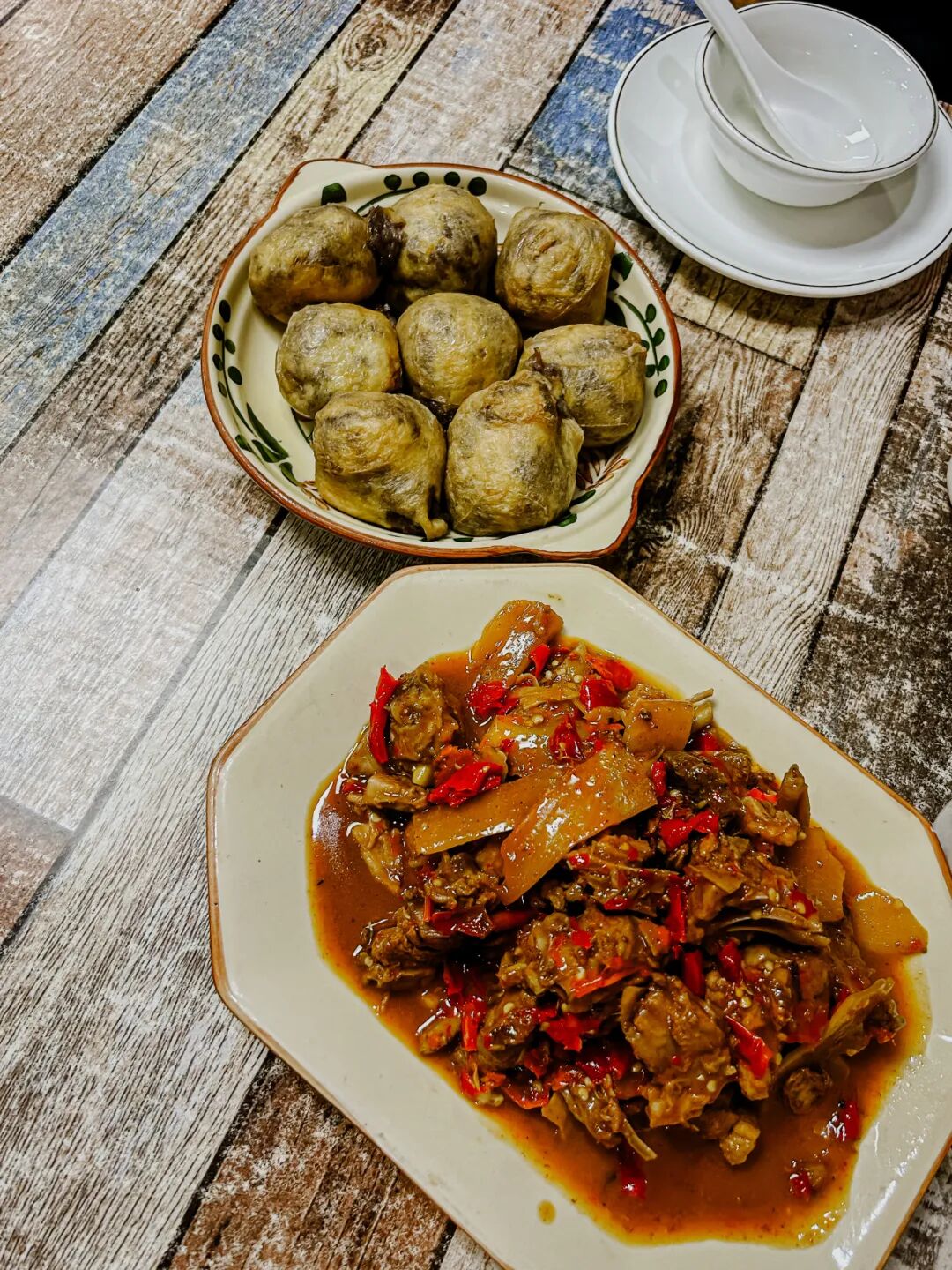
Hakka Stuffed Tofu with Taro / Meiling Duck with Sour Bamboo Shoots
When the train finally pulls into the Pearl River Delta and stops in Guangzhou, this Yuehan Railway journey reaches its final destination. Under the arcades of Enning Road in Xiguan, craftsmen hammering copperware spend their days amid the clinking sounds; on Shamian Island, the old prosperity of the century-old trading port is still vivid. The air no longer carries the pungent smell of chilies, but is filled with the moist mist of the Pearl River and the subtle fragrance of dried tangerine peel. From Wuhan's "dry heat" and Changsha-Zhuzhou-Tan's "fiery spiciness," after crossing the Nanling Mountains, the flavors mellow into "lightness" in Guangzhou—a lightness that represents the ultimate respect for the natural taste of ingredients.
"Eating in Guangzhou"—the most cherished ritual lies in the yum cha (tea and dim sum) tradition. Hand-crafted shrimp dumplings are translucent, wok-fried beef chow fun bursts with smoky heat, and crispy, tender hanging roasted geese from open-air kitchens are perfectly balanced by tangy plum sauce to cut through the richness. Pair these with a slow-simmered Cantonese soup cooked for hours according to seasonal changes and body needs, warm and nourishing. If you still have an appetite, head to the Xiguan streets for a bowl of boat porridge or a rice noodle roll, where the aroma of rice blends with the sweetness of river seafood—the most everyday love letter this city writes to your taste buds.
Guangzhou's late-night scene is equally vibrant: a plate of wok-heavy Typhoon Shelter-style fried crabs at street-side stalls, bursting with garlic aroma, is the most popular showstopper for late-night snacks; a bowl of silky, smooth double-skin milk at a dessert shop gently concludes this entire flavor journey from dry spiciness to fresh lightness, bringing the Yuehan Railway to a perfect end.
This winding Yuehan Railway, stretching over a thousand kilometers, uses its sleepers and rails to write the culinary code of China's inland heartland: Wuhan's dockside dry spiciness, Changsha's street-smart fragrant spiciness, Hengyang's fiery pursuit of freshness, Chenzhou's wild intense spiciness, Shaoguan's gateway salty spiciness—all finally merging into Guangzhou's natural, original freshness. Every part of this is a joint creation of mountains, rivers, geography, and the flow of local traditions.
A hundred years later, the railway still extends southward, and the best way to experience this journey is still to get off at the next stop and enjoy the locals' most ordinary, everyday meal.
Transportation Tips
Nostalgic Travelers: We recommend taking K-series regular-speed trains. Although the journey takes longer, it lets you experience the gradual changes in terrain along the way, especially the breathtaking views when passing through the Nanling tunnel clusters.
Efficiency-Focused Travelers: The Wuhan-Guangzhou High-Speed Railway is the top choice, taking roughly 4 hours in total. We suggest choosing a window seat to admire the landscape transition from the Jianghan Plain to the Lingnan Hills.
Precautions
Climate: South of the Nanling Mountains, the weather is hot and humid, with many mosquitoes in summer—prepare mosquito repellent in advance. Diet: The spiciness level in Hunan is extremely high; if you have a sensitive stomach, bring stomach medication beforehand. Photography: Stay safe when photographing railway facilities, and never step onto the railway tracks.