80,000 stores closed in a year, yet supermarket bakery sections see long queues: Who has eaten into the market share of street-side bakery shops?
In old-school romance dramas, the street-corner bakery is often where the male and female leads first meet. In reality, these small "dream-making" shops are disappearing in droves.
According to Narrow Door Restaurant Eye, 87,000 bakeries across the country closed down in the past year, while fewer than 15,000 new ones opened, making the "one opening, six closures" pattern the norm. Meituan's survey data is equally grim: the average lifespan of a new bakery is only 32 months, and over 57% of stores shut down within two years of opening.
On the other hand, posts about must-buy baked goods at Sam's Club on Xiaohongshu remain extremely popular, fresh food supermarkets like Hema are expanding their bakery sections, and private home bakers specializing in handmade pretzels have order backlogs stretching a full year ahead...
So the question arises: Who exactly is eating into the street-side bakery's market share?
The Baking Frenzy, and the Vanishing Street-Side Shops
The baking industry never seems to run out of "viral hits."
In the Chinese-style baking segment, there was the iconic viral item—meat floss buns from Baoshu's. Last spring, crispy-on-the-outside, chewy-on-the-inside butter rice cakes suddenly exploded in popularity, with brands like Lu Hexi and Baoshu's jumping on the trend, leading to temporary stock shortages at many stores.
Western-style baking has also seen a constant stream of viral products. From the early "dirty chocolate buns" to later thick egg tarts and ciabatta, and the recent Dubai chocolate cookies that took the internet by storm, a new nationwide viral baked item emerges roughly every six months.
Why does the baking industry produce so many viral products? The reason is not complicated.
First, humans have a deep physiological preference for sweetness. Sweet food triggers the brain to release dopamine, making it the lowest-cost, most accessible source of emotional comfort in today's high-pressure, fast-paced modern life. In this sense, baking is essentially an emotional business.
Second, the internet amplifies and accelerates this trend. Social platforms like Xiaohongshu and Douyin have turned food into visual consumer goods. Baked goods like cakes and bread have natural advantages: they look good, are photo-worthy, justify long queues—appearance equals traffic, and traffic equals popularity.
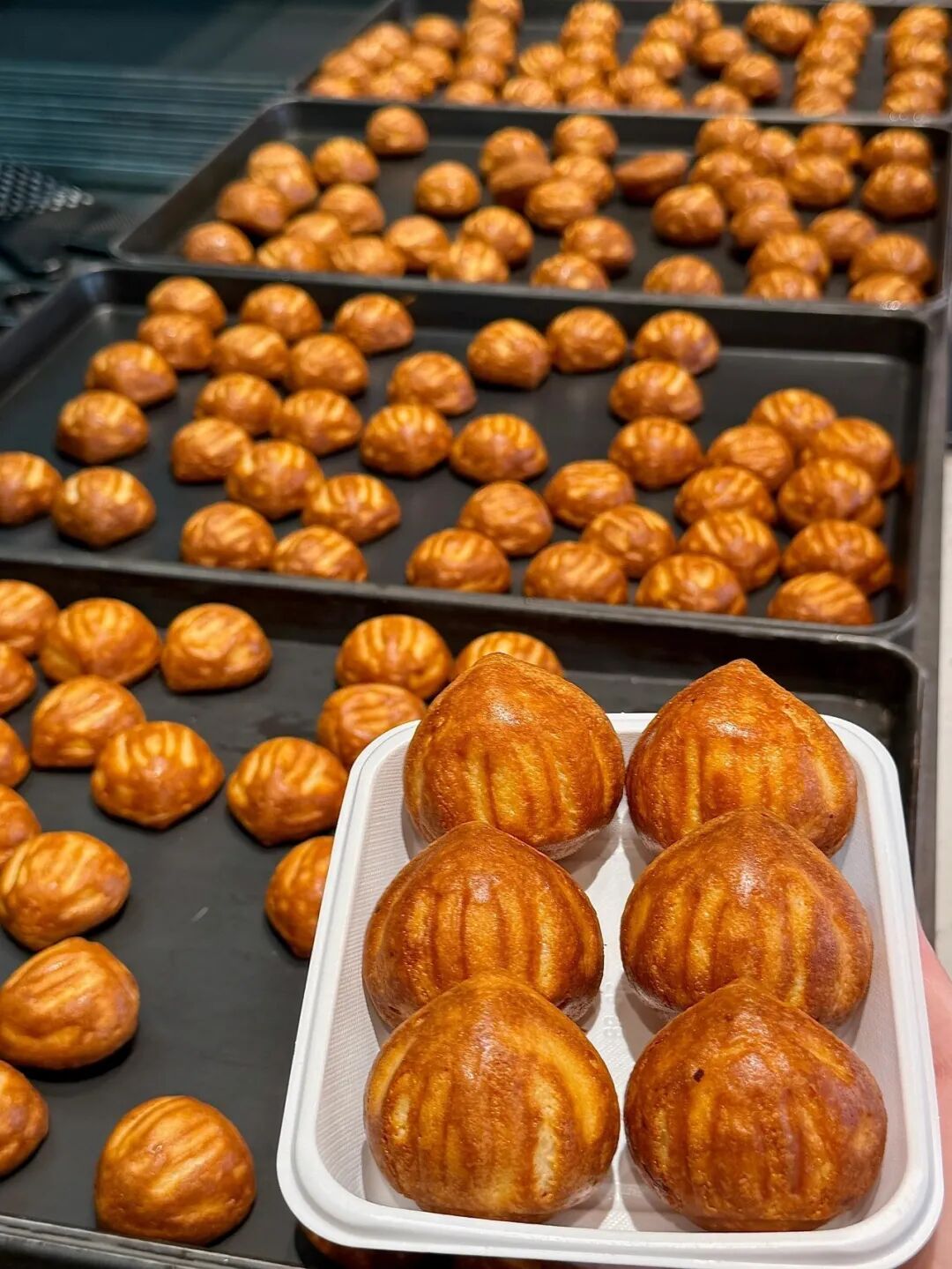
Butter rice cake. (Source: Xiaohongshu @Niuniu Gains a Little More Weight)
However, the hype generated by online traffic has not been evenly distributed to every industry player. Viral items come and go, while street-side bakeries keep closing down in batches.
The author believes that the core reason for the closures of street-side bakeries can be summed up in one sentence: poor risk resistance. Specifically, it breaks down into three aspects:
First, outdated products that no one wants to eat. Old brands like Christine and BreadTalk have been selling the same basic items for over a decade. Their traditional high-sugar, high-fat offerings feel out of place in today's health-conscious, low-fat consumer environment. This doesn't mean high sugar and fat are inherently bad—brands like BUTTERFUL&CREAMOROUS and Youhe also sell similar products, but they use better ingredients, offer more variety, and keep things fresh. Traditional bakery bread, by contrast, is overly sweet, greasy, and unoriginal—so why would consumers choose it?
Second, rising costs are eating into profits. Rents for prime street locations increase every year, leaving small independent shops with no bargaining power. Large old chains have many stores and large staff rosters, which push up labor costs significantly.
On top of that, baking demands high-quality ingredients. Cakes made with vegetable cream just don't taste as good, but animal cream is expensive, and prices for butter and flour often fluctuate. If shops raise prices to cover costs, a regular loaf of bread could easily cost 20 to 30 yuan—who would be willing to pay that?
Third, outdated business strategies. The era of "good wine needs no bush" is long gone, but traditional bakeries are still passively waiting for customers to walk in. Consumers' attention has already been captured by brands that are better at marketing. In an age where almost anything can go viral, those who can't navigate the internet can't secure their future.
The Plight of Street-Side Bakeries
A closer look at the baking industry reveals that street-side bakeries are in an awkward position.
Once upon a time, street-side bakeries were almost the only option for buying decent bread and pastries. Today, the bakery sections in supermarkets have become a favorite spot for young people.
9.9 yuan for 4 croissants, 8 large cream puffs, 14.9 yuan for a box of mochi, and the slightly pricier Swiss rolls cost 59.8 yuan for 16 slices—less than 4 yuan per piece... These prices are not limited-time promotions, but the daily norm in supermarket bakery sections. Many large supermarkets also implement time-based discount systems, such as 30% off after 8 PM and 50% off after 9 PM.
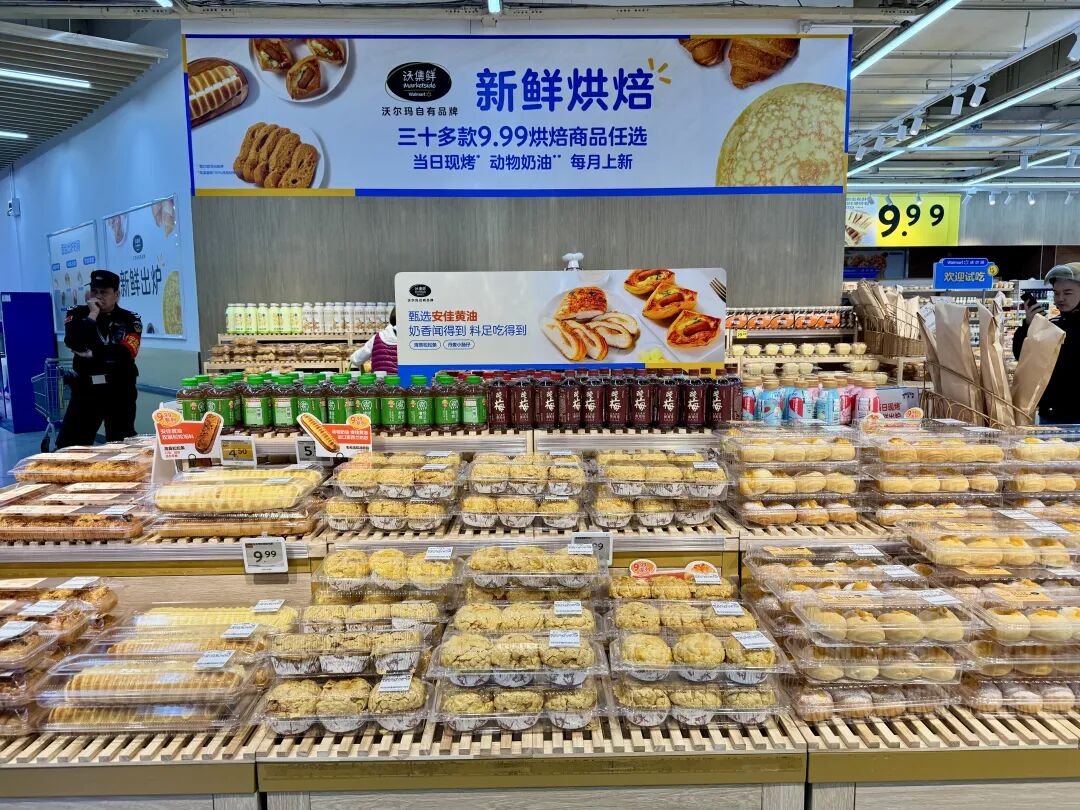
Bakery section in Walmart. (Source: Xiaohongshu @qiuwda)
Around 2021, Sam's Club's mochi and Swiss rolls started gaining massive exposure on social media. People gradually realized that supermarket bakery sections are a great alternative—you can grab a loaf of bread while grocery shopping to cover the next day's breakfast.
On Xiaohongshu, posts sharing "must-buy baked goods at Sam's" and "must-buy baked goods at Hema" get huge traffic. The taste of these supermarket baked items may not be more exceptional than expensive premium bakery products, but they are definitely not bad, and they come with the backing of large supermarket chains.
Data confirms the boom in supermarket bakery sections. In 2024, China's baking market exceeded 611 billion yuan, with the annual sales of supermarket bakery sections growing by over 20%—far outpacing the industry average. Looking at specific channels and products, Sam's Club's Swiss rolls have annual sales exceeding 1 billion yuan, while Hema's strawberry box cakes have annual sales exceeding 100 million yuan, a 80% increase from 2023.
Some premium supermarkets like Pang Donglai and Ito Yokado have even broken with convention, moving their bakery sections to the main entrance, using the aroma of freshly baked bread to replace the traditional fresh produce section as their first impression for customers.
If you don't feel like going to the supermarket, online platforms also offer solutions.
In February this year, Meituan's Xiaohongshu Supermarket launched its own brand "Xiaohongshu Bakery," focusing on freshly baked goods sold only on the day of production. With just a few taps on their phones, consumers can have baked treats delivered to their door along with their dinner orders.
These supermarket and platform bakery products, leveraging standardized factory production and bulk ingredient purchasing, have minimized costs to the extreme, making them highly cost-effective options.
By contrast, a croissant at a street-side bakery often costs over 10 yuan, and a filled soft bread can go for 20 to 30 yuan. Compared to the supermarket's 19.9 yuan for 4, the price difference makes customers do the math in their heads.
Moreover, street-side bakeries have no valid explanation for why their products are so expensive. When there are no visible differences in ingredients, techniques, and taste between their products and those of supermarkets, price naturally becomes the deciding factor. Under this standard, street-side bakeries clearly have no advantage.
Baking Penetrates Every Consumer Scenario
Compared to industry competition, what is more fatal to street-side bakeries is the shift in consumers' purchasing habits.
At some point, consumers no longer need to make a special trip to a bakery to buy baked goods.
They grab a box of mochi while grocery shopping, pick up a pack of toast when buying water at a convenience store, add a soft cookie to their Luckin Coffee order for breakfast on their commute, and even find a row of freshly baked croissants at hotel breakfast buffets...
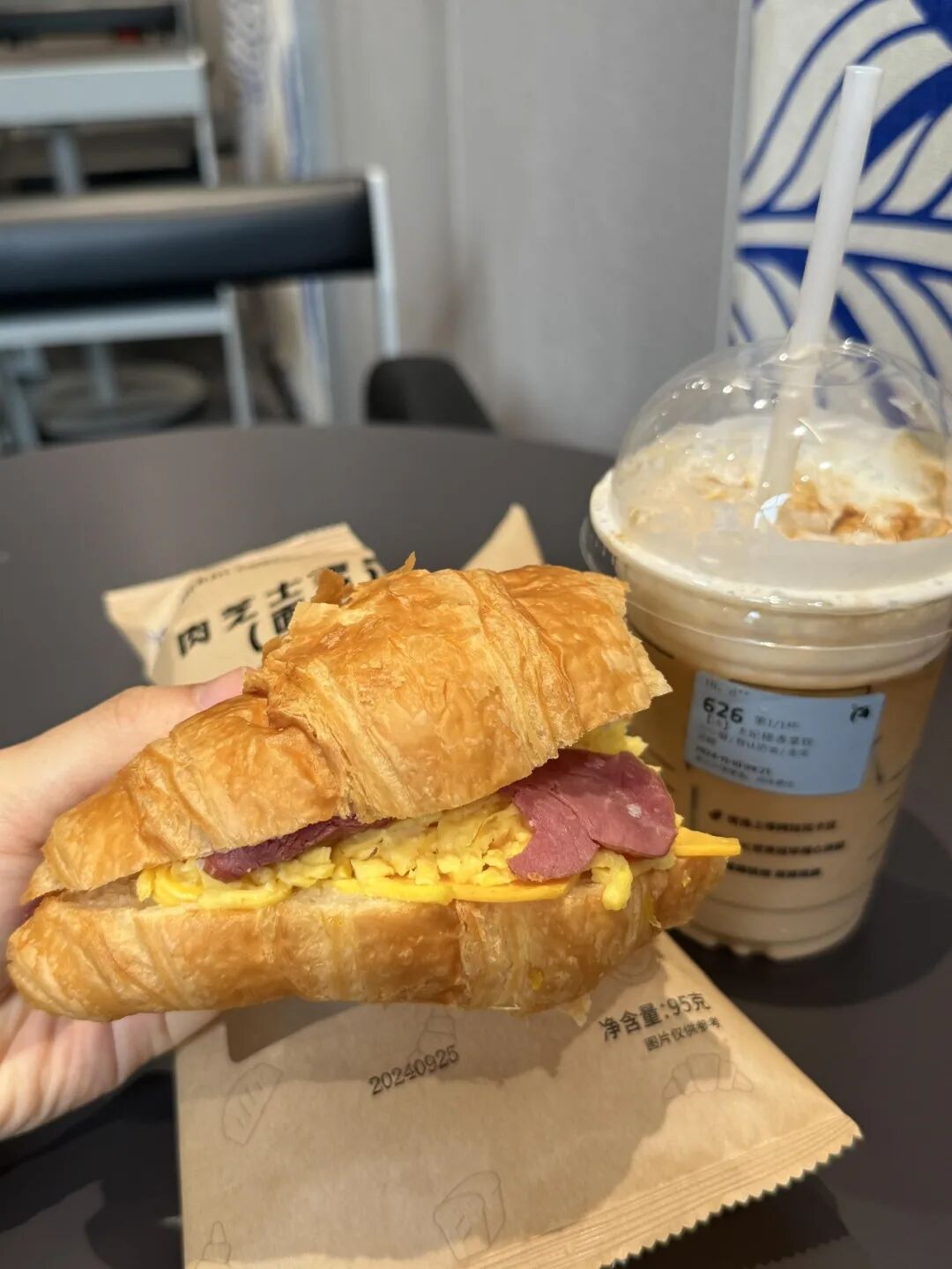
Baked goods from Luckin Coffee. (Source: Xiaohongshu @Momo the Soda Lover)
Purchasing baked goods is no longer a dedicated activity—it has penetrated into scenarios like supermarkets, convenience stores, new-style tea shops, cafes, and hotels. The channel advantage that street-side bakeries once enjoyed is visibly fading away.
Faced with a price war, street-side bakeries might find ways to cut costs—but if consumers no longer have the habit of making a special trip to a bakery, where will their customers come from?
Over the past few years, the baking industry has seemed bustling, with capital pouring in and viral products popping up one after another. But behind the lively facade lies an extremely high elimination rate. It is almost impossible to make long-term profits relying solely on a single street-side shop today.
There are some successful examples in the baking industry that might offer ideas for street-side bakeries struggling to survive.
For instance, Ginza Nishiwagawa from Japan focuses exclusively on premium raw toast, with a per-person price of nearly 100 yuan, yet many consumers still visit it out of admiration. It has already opened three stores in high-end shopping malls in Shanghai. The famous French bakery brand GC has only one store in mainland China, located in Guangzhou's TaiKoo Hui. It does not chase viral trends, specializing in French croissants and other puff pastry products, and its repurchase rate far exceeds that of other bakeries in the same business district.
Moving online, there is a group of private home bakers on Xiaohongshu who make pretzels and bagels. They do not run physical stores, emphasize handmade craftsmanship, and have relatively low production efficiency—but through good word of mouth, they have won over a large group of consumers who are willing to pay a premium for "handmade" products.
These cases show that offline bakeries need to "follow the flow of customers" and adapt to consumers' purchasing habits. Moreover, the market does not lack bakeries with highly homogeneous products—but it lacks baking brands that can perfect a specific product and build trust with consumers.
Today's consumer market is returning to rationality. Surveys show that about 60% of consumers choose supermarket bakery products due to price factors. If they compete on price, specialty bakeries will probably never outperform large supermarket chains. But if they excel in a niche category to the point that customers think of them first when craving that product, bakeries will have more reasons to be visited.
This article is from the WeChat public account "BrandPrism", written by Li Xinyu, edited by Tian Tian, and published with authorization from 36Kr.