46,000 units with firm orders in just 1 hour, sold at twice the price in Germany: What exactly makes XPENG MONA L03 so exceptional?
On July 16, He Xiaopeng stood on the stage of the launch event in Munich and delivered a speech entirely in English with a Hubei accent for the first time. There were over 1,000 people in the audience, with cameras focused on him, and he had just gone through a thrilling moment right before the event.
During the group interview, a reporter asked curiously if He Xiaopeng had secretly practiced this full-English speech for a long time. His answer was very candid: "Regarding this full-English speech, I barely did any preparation. Actually, I took the wrong passport, which made me arrive in Munich 24 hours late. I had no time to prepare, so I just went straight on stage. Our communications team was extremely worried about this."
On that very day, XPeng officially launched the first global model of its MONA series, the XPeng MONA L03, and announced sales would open in 65 countries worldwide. In Germany, the starting price is 35,600 euros (approximately 275,900 RMB), which is more than double its domestic price range of 123,800 to 156,800 RMB.
On the day of the launch, firm orders for the MONA L03 exceeded 46,000 units within one hour. The model is on track to become another hit product, marking a strong start for XPeng's full-scale global expansion.
What exactly did He Xiaopeng want to convey to the outside world by holding this launch event in Munich?
01 Before talking about the car, XPeng first introduced "Who We Are"
XPeng did not enter the overseas market particularly late. Its first overseas landing point was Norway, which served as a common "springboard" for Chinese automakers entering Europe at that time, as the new energy vehicle penetration rate in Norway had already reached 90% several years ago.
Up to now, XPeng has delivered over 60,000 vehicles in total across Europe, but brand recognition remains an unavoidable shortcoming. The pre-launch workshop and the post-event group interview both confirmed the same fact: apart from a small number of people who have participated in XPeng's activities, most overseas users are still unfamiliar with the brand.
That's why He Xiaopeng did not rush to introduce the vehicle. Instead, he started by sharing a "connection story". He mentioned that the German automotive industry has a long tradition of naming enterprises after their founders, such as Mercedes-Benz and Bosch. XPeng Motors is named after He Xiaopeng himself, which conveys an attitude of "being fully responsible for product quality". XPeng used this familiar concept for Germans to explain the origin of its seemingly unfamiliar Chinese brand name.
After that, He Xiaopeng spent half of the event answering a more fundamental question: What kind of company is XPeng, exactly?
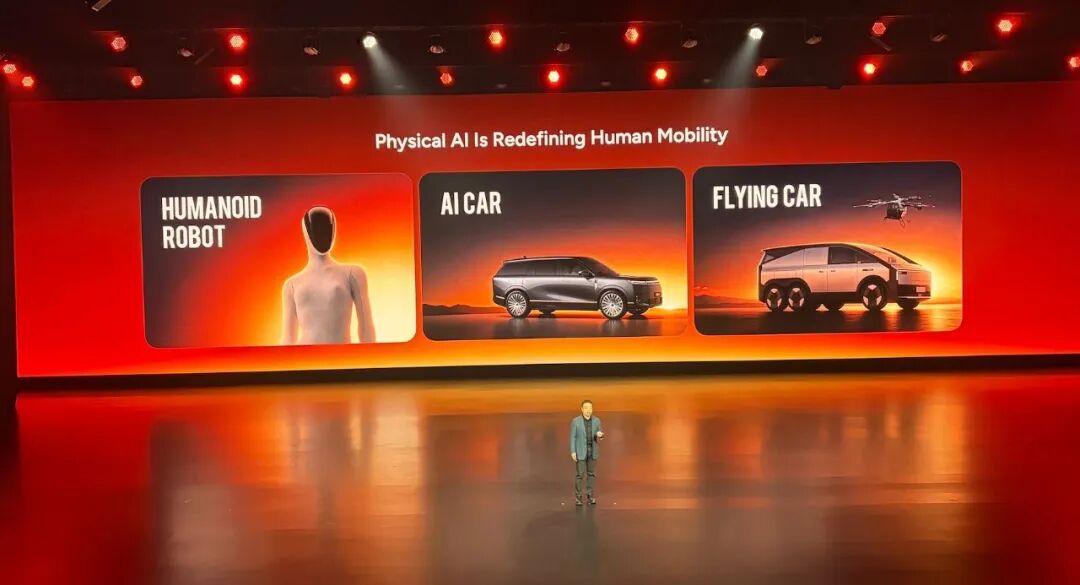
XPeng introduced its "Physical AI" strategy to overseas audiences in Munich | Image source: GeekPark
He Xiaopeng has been sharing this answer in China for almost a year: XPeng positions itself as a "Physical AI" company.
This business logic runs through XPeng's three core business lines: For humanoid robots, with 8 years of accumulated technical expertise, XPeng has made continuous breakthroughs in ultra-realistic human-like forms, automotive-grade safety and mass production capabilities, and edge-side AI performance, and plans to enter global commercial scenarios by 2027. For flying cars, XPeng has received over 7,000 cumulative orders, and has built the world's first flying car factory with a planned annual production capacity of 10,000 units, accelerating the progress of large-scale mass production.
The last business line is AI-powered vehicles: XPeng's total global sales have exceeded 1.2 million units, with its sales network covering 65 countries and regions and more than 1,200 retail stores.
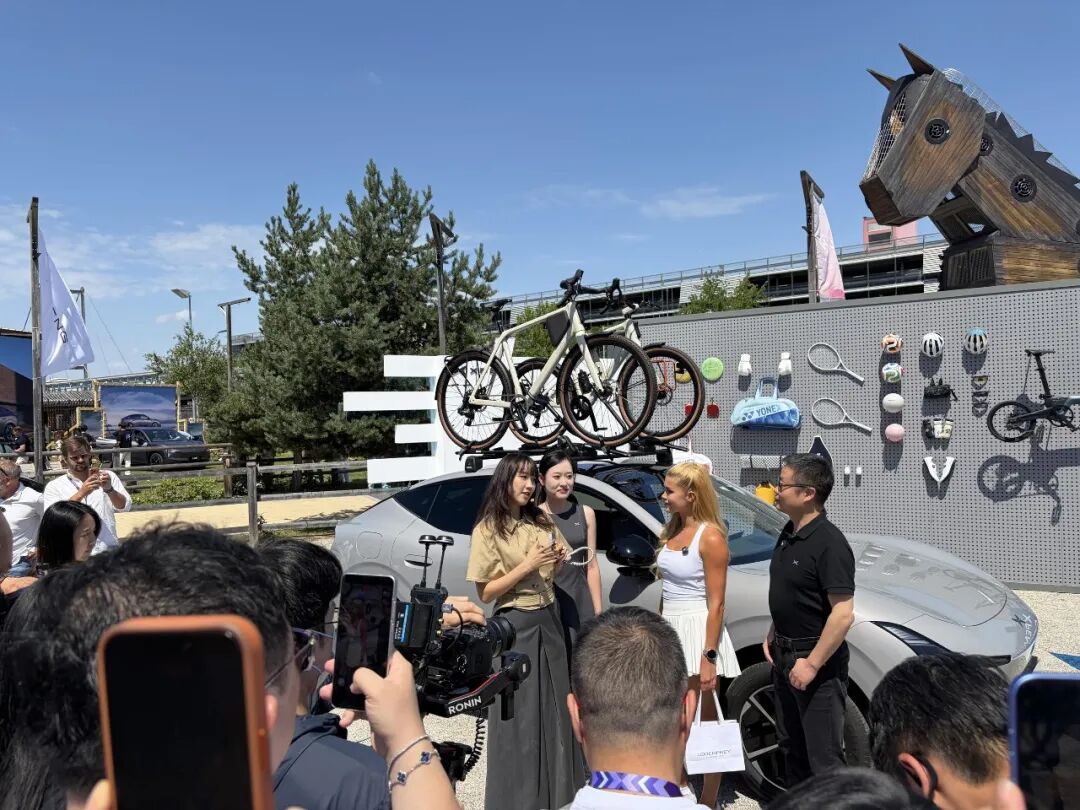
XPeng hopes to boost its overseas brand awareness through fitness influencer Pamela Reif | Image source: GeekPark
In addition, XPeng invited Pamela Reif, the most influential fitness influencer in Germany, to serve as the product experience ambassador for the MONA L03. Her fitness videos went viral on Bilibili during the pandemic, and she recently opened an account on Sina Weibo. XPeng hopes to use a well-known public figure recognized by audiences in both China and Germany to raise its brand awareness.
02 Two top priorities that European users care most about
In the second half of the launch event, the MONA L03 itself finally became the main focus.
In China, range anxiety is hardly a "problem" anymore. But for overseas users, especially European consumers, range anxiety and winter charging experience remain their core concerns.
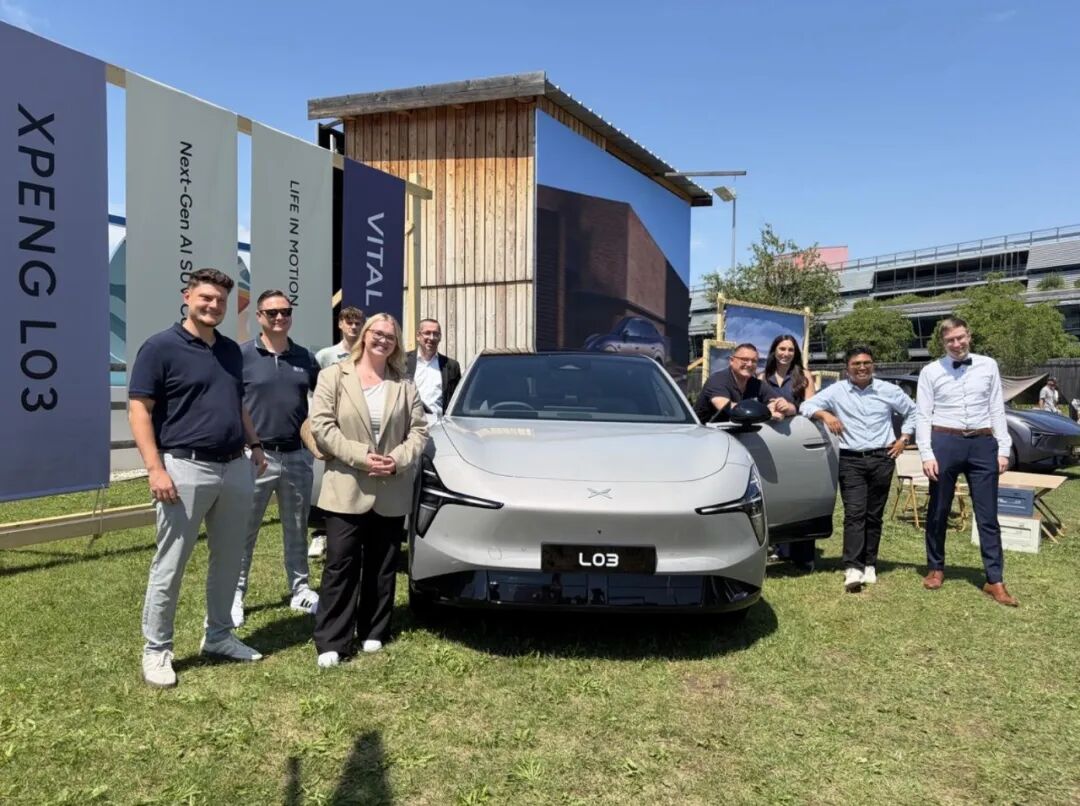
After experiencing the XPeng MONA L03, guests spoke highly of its exterior design and interior quality | Image source: GeekPark
XPeng's solution is to continue its domestic strategy by offering both pure electric and extended-range powertrain options.
For the pure electric version, the L03 offers two battery capacity options of 56/79 kWh, delivering CLTC pure electric ranges of 525/625/650 km respectively. Its fastest DC fast charging time from 10% to 80% is 19.1 minutes, while the extended-range version can charge from 30% to 80% in as fast as 10.1 minutes.
The extended-range model is equipped with a 37.2 kWh battery, delivering a CLTC pure electric range of 315/325 km, and a combined total range of 1330/1380 km.
During the group interview, an overseas media raised a sharp question: "Will offering extended-range models damage XPeng's pure electric brand image?" He Xiaopeng first recalled the decision to develop extended-range technology: "In China, we discussed multiple times whether to launch extended-range models and chose not to. But in 2022, I visited Mexico, and in 2023, I went to Africa. I found that in many countries around the world, charging infrastructure lags far behind that of China, the United States and Europe, possibly by more than 10 years." This experience solidified XPeng's determination to develop extended-range vehicles.
He believes that pure electric is the ultimate solution, but extended-range technology is a realistic choice to "serve users in countries with different infrastructure levels", rather than a compromise.
If range optimization is a "make-up lesson" for improving infrastructure adaptability, then the overseas deployment of advanced driver assistance systems (ADAS) is the real highlight of this launch event.
Prior to this, European users generally had low awareness of ADAS, and most automakers did not regard ADAS as a key selling point for promotion. But XPeng took the opposite approach: the European road intelligent driving video displayed at the event showed that its VLA 2.0 system can accurately identify and understand European-specific traffic signs, independently handle complex urban scenarios such as roundabouts, unprotected left turns, narrow-road passing, and construction detours, and even learn the local parking habit of "driving in front-first and exiting rear-first".
Regarding the reason for prioritizing ADAS, He Xiaopeng gave a critical timeline judgment: "I predict that the DCAS regulation will most likely be implemented in the first quarter of next year. We are very likely to become the world's first brand to launch ADAS services that comply with the latest DCAS standard, and we will strive to achieve this goal."
This means that starting from 2027, XPeng plans to gradually roll out its ADAS to global users. This is not a simple matter of "porting the Chinese solution overseas", but requires targeted optimization for Europe's complex right-of-way rules and road environment, with a focus on enhancing pedestrian priority, traffic sign recognition, and implicit traffic rule understanding capabilities.
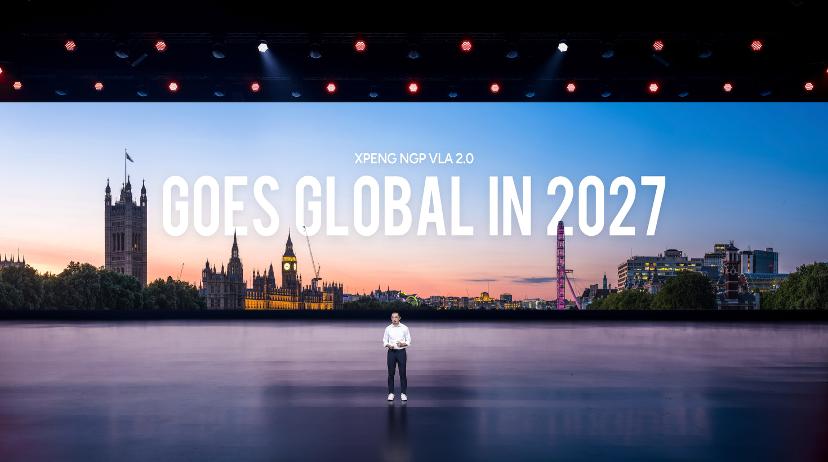
XPeng will roll out its ADAS to global users in 2027 | Image source: XPeng Motors
China's traffic environment is more complex than Europe's, so the ADAS trained in such an environment has stronger overall performance, but many details need to be re-adapted to local habits. For example, in China, pedestrians at intersections without traffic lights usually do not cross the road abruptly; in Europe, pedestrians and cyclists will naturally expect vehicles to yield, and they will protest loudly if vehicles fail to give way in time.
This is why XPeng emphasizes that it must specifically train the "yield-to-pedestrian culture" for European markets such as Germany, and a large number of "unspoken rules" can only be learned through local data collection.
The same applies to parking habits. Liu Xianming, head of XPeng's General Intelligent Center, mentioned that Europeans are used to parking "front-end first" into parking spaces, which is different from the common reverse parking practice in China. This requires the parking algorithm to be re-optimized specifically for European street scenarios and narrow garage environments. The launch event also demonstrated two features: manually drawing a parking space to complete parking, and pressing a button after getting off the vehicle to let it automatically drive out of the parking space onto public roads.
03 Trust is the ultimate challenge for automakers going global
XPeng has stated on multiple occasions that by 2027, its overseas sales target will account for more than 20% of its total global sales, with Europe serving as its core overseas market.
As XPeng's first truly global model, the MONA L03 acts as a strategic fulcrum for XPeng's globalization process. We are very pleased to see Chinese automakers like XPeng expanding their footprint in the global market, but beyond the fanfare, the challenges they face are also very real.
Before the launch event, casual conversations with foreign industry insiders revealed two completely different attitudes: some recognized the MONA L03's sleek design and high-quality interior, believing that it can compete directly with luxury brands like BBA without pressure; while others, especially German consumers who are extremely particular about driving handling, have doubts about XPeng's handling tuning. After all, in a country with unrestricted speed on many highways, "the feel of driving" is a deeply ingrained standard for car buyers.
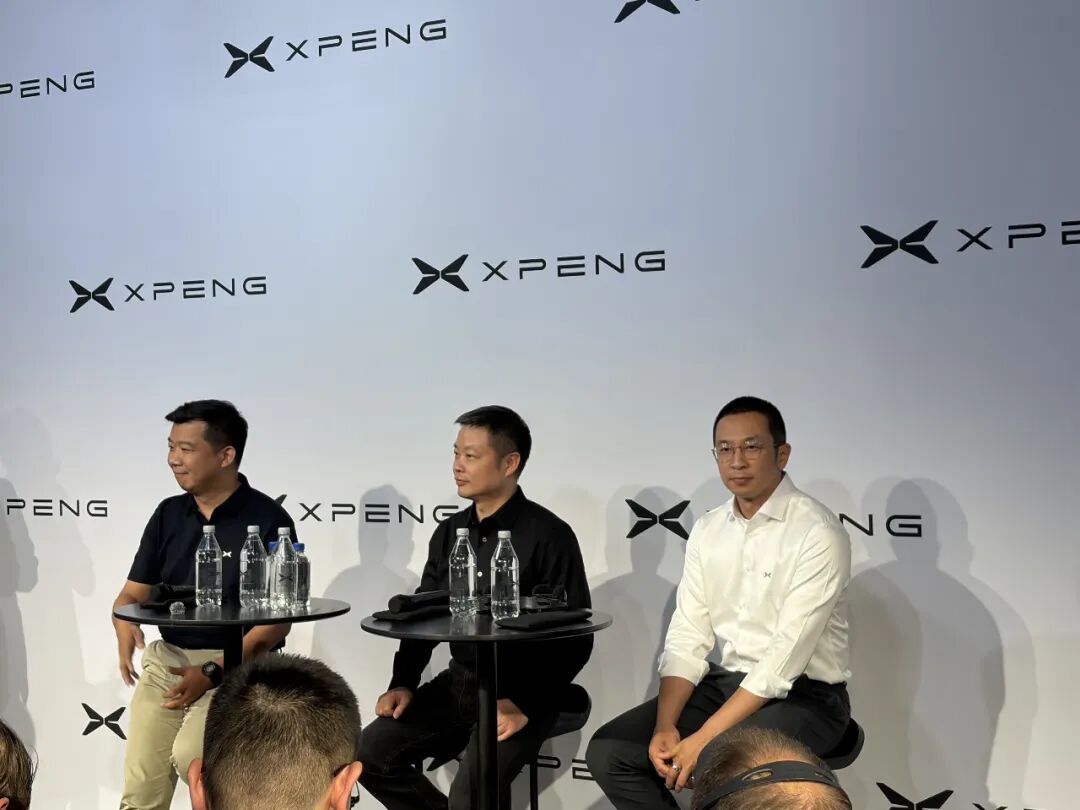
The post-launch group interview almost turned into a dedicated communication session for overseas media | Image source: GeekPark
XPeng also released new signals regarding its factory layout. At present, its first European factory is located in Austria, built in partnership with Magna, where the XPeng G6 and G9 have started production. He Xiaopeng revealed that since last year, XPeng has been negotiating new factory projects and cooperation plans in different European countries, with potential locations concentrated in regions south and southeast of Germany.
He also specifically mentioned: "I am actually very much looking forward to exploring different new cooperation possibilities with our shareholder Volkswagen. XPeng is a very open company, and we are willing to explore new cooperation opportunities with various enterprises including Volkswagen."
In terms of product strength and technical competence, Chinese automakers are highly competitive in the global market. But whether they can achieve long-term success mainly depends on whether they can win the trust of local markets. That's why throughout the entire launch event, He Xiaopeng spent a lot of time talking about seemingly trivial details such as "yield-to-pedestrian culture", "unspoken traffic rules" and "European parking habits". Behind these details lies a core truth: in the second half of Chinese automakers' global expansion, competition is no longer about product parameters and low prices, but about the depth of understanding of local social cultures.
Therefore, whether the MONA L03 can achieve hot sales in Europe is just a short-term performance indicator. What will truly determine the success of XPeng's — and even the entire Chinese automotive industry's — global expansion is whether it can turn the concept of "In Europe, for Europe" into a set of fully implementable and mature operational methodologies.
This article is from WeChat Official Account"GeekPark" (ID: geekpark), written by Zhou Yongliang, edited by Jing Yu, and published with authorization from 36Kr.