Luckin Coffee x Duolingo make a new official announcement. Why do tea brands always need co-branding collaborations?
The collaboration between Luckin Coffee and Duolingo has gone viral again.
Featuring Luckin's deer mascot Lucky and Duolingo's green owl mascot Duo, the two brands launched 11 co-branded new products under the theme "11 kids born in the second year of marriage".
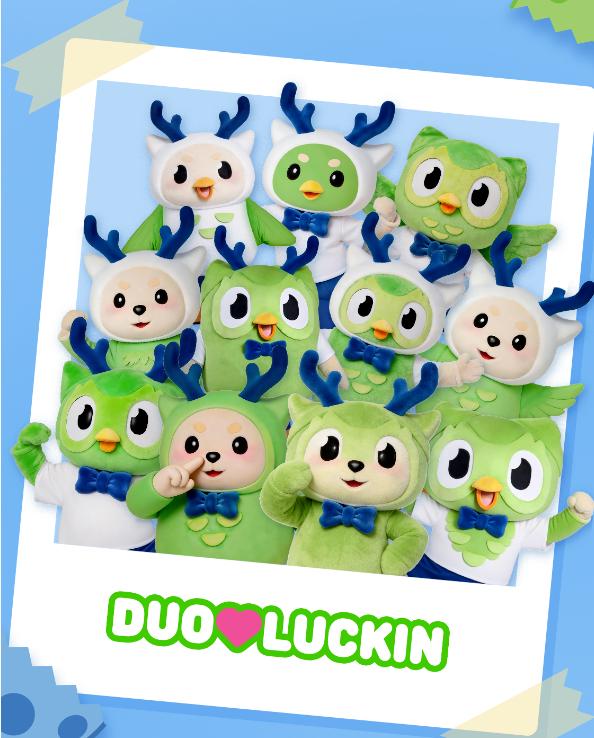
Image source: Luckin Coffee WeChat Official Account
The two brands even created a full family tree in all seriousness, marking allele traits for each child's antlers, bird face, and feather features from the eldest C-Rui'er to the 11th Duo'erwa, even assigning lethal mutation genes, making it look as formal as a high school biology exam paper.
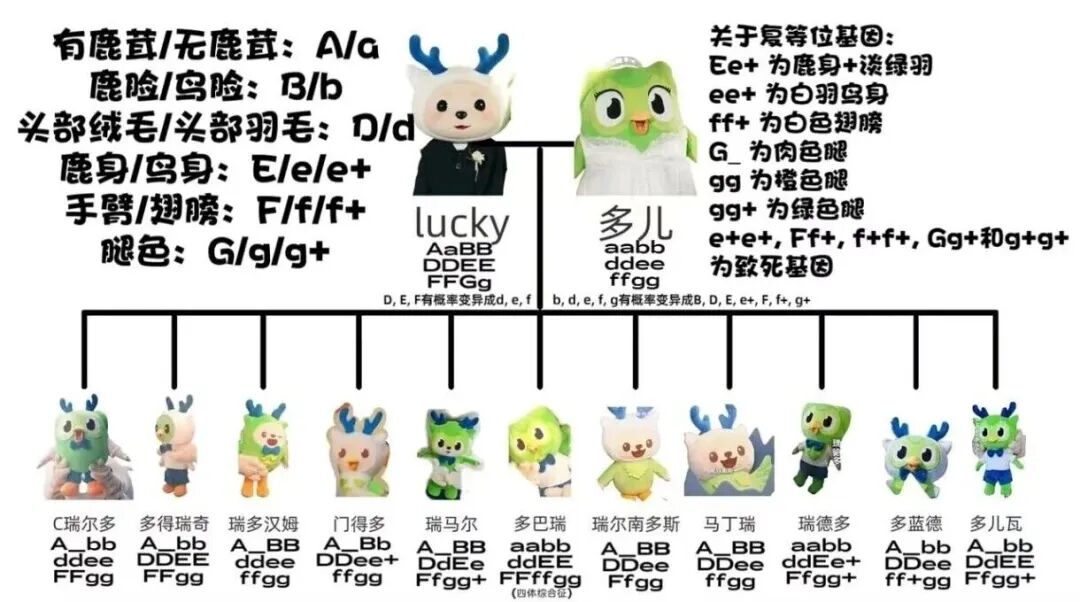
Image source: the internet
The lush green Duo the owl cake and soft cute Lucky the deer cake have been hailed by netizens as the ultimate power couple. The full set of merchandise including co-branded cups printed with the couple's images, special-shaped cup sleeves, football collectible cards, lucky charm keychains, and butt-shaped mugs fully amplifies the immersive vibe.
If you pay a little attention, you will find that this is not the first time the tea and coffee industry has gone viral through collaborations, and it will definitely not be the last.
Various brand collaborations such as Heytea × CHIIKAWA, Mellow Tea × Love and Deep Space, and Cotti Coffee × The God of Slaughter have become an unspoken standard practice in this industry.
Many people think collaboration is a marketing idea that adds extra value. But collaboration is not brands doing addition, but a survival strategy found by the tea industry when facing the triple pressures of traffic anxiety, user migration, and brand aging at the same time.
Collaboration is not doing addition, it is seizing users
Many people interpret collaboration as a "1+1>2" brand superposition. Putting two brand logos together and changing the product packaging counts as a collaboration. This is a superficial understanding.
Collaboration is mutual access to each other's user groups. In the current era of fierce competition and severe homogenization in the tea industry, it is already difficult to acquire new users relying solely on products themselves.
Collaboration is the most efficient way to "borrow traffic". Exchange the other party's user pool for your own new customers. The choice of collaboration partner is essentially choosing "who the next batch of target users will be".
First, customer acquisition efficiency under traffic anxiety. The cost of acquiring new users in the tea industry keeps rising, and the ROI of traditional advertising is getting lower and lower. Collaboration can directly reach the partner's user pool at an extremely low marginal cost.
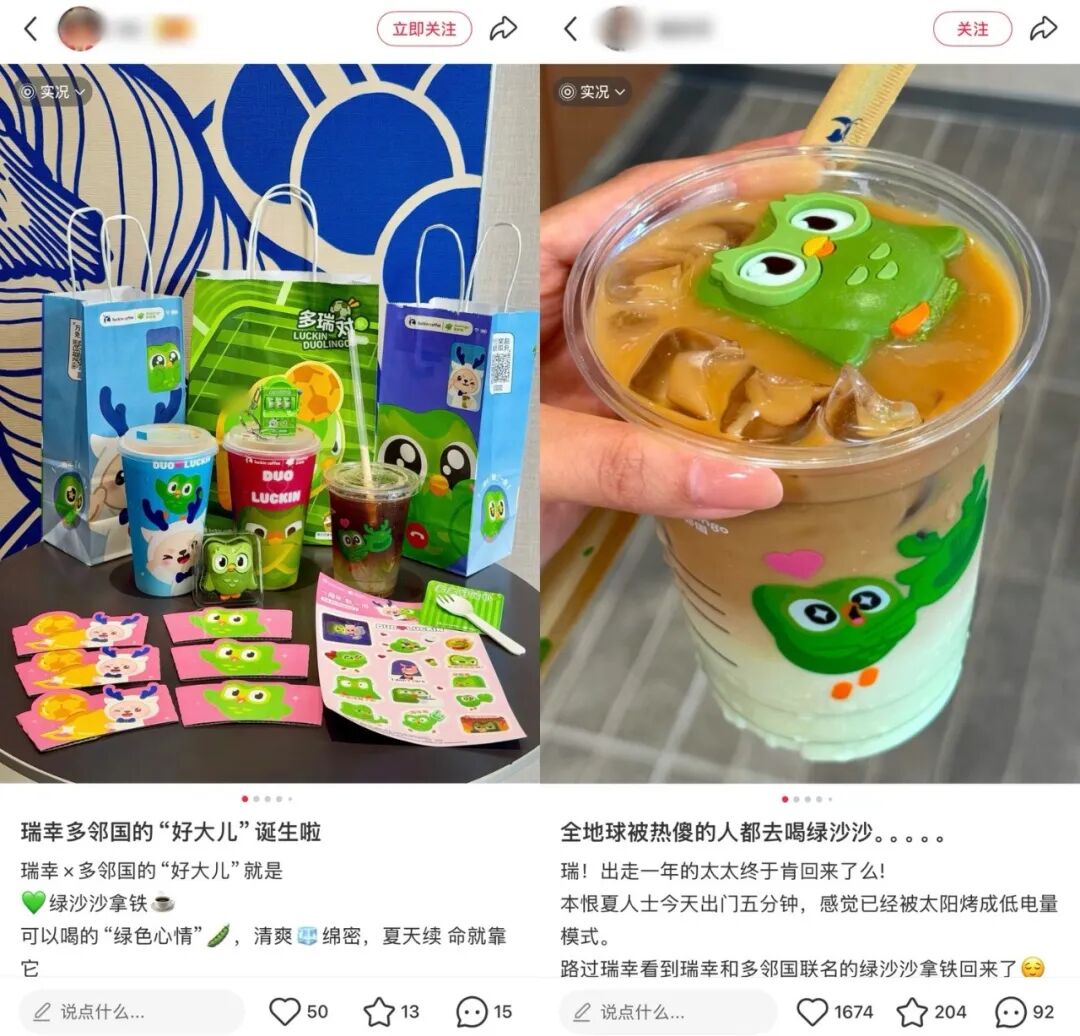
Image source: Xiaohongshu
Luckin Coffee targets the massive learner group and Gen Z users behind Duolingo. The two user profiles overlap highly, so the collaboration naturally achieves cross-group penetration. Luckin packaged their partnership into a serial narrative of "proposal - wedding - having kids", and their first collaboration in 2025 generated extremely high topic views, while Duolingo also saw growth in new downloads that month.
Second, breaking through group boundaries amid user migration. The attention of modern consumers is dispersing faster, making it difficult for a brand to reach all target users through a single channel.
Heytea chose CHIIKAWA, the core purpose of which is to enter the fan group of the healing anime IP. This is a group of people that Heytea could not reach through product iteration and store upgrades. On the first day of the collaboration, many stores across the country were overwhelmed with orders, and the ceramic mugs were resold for 50-70 yuan in the second-hand market. The inherent fan power of the IP was directly converted into new users for the brand.
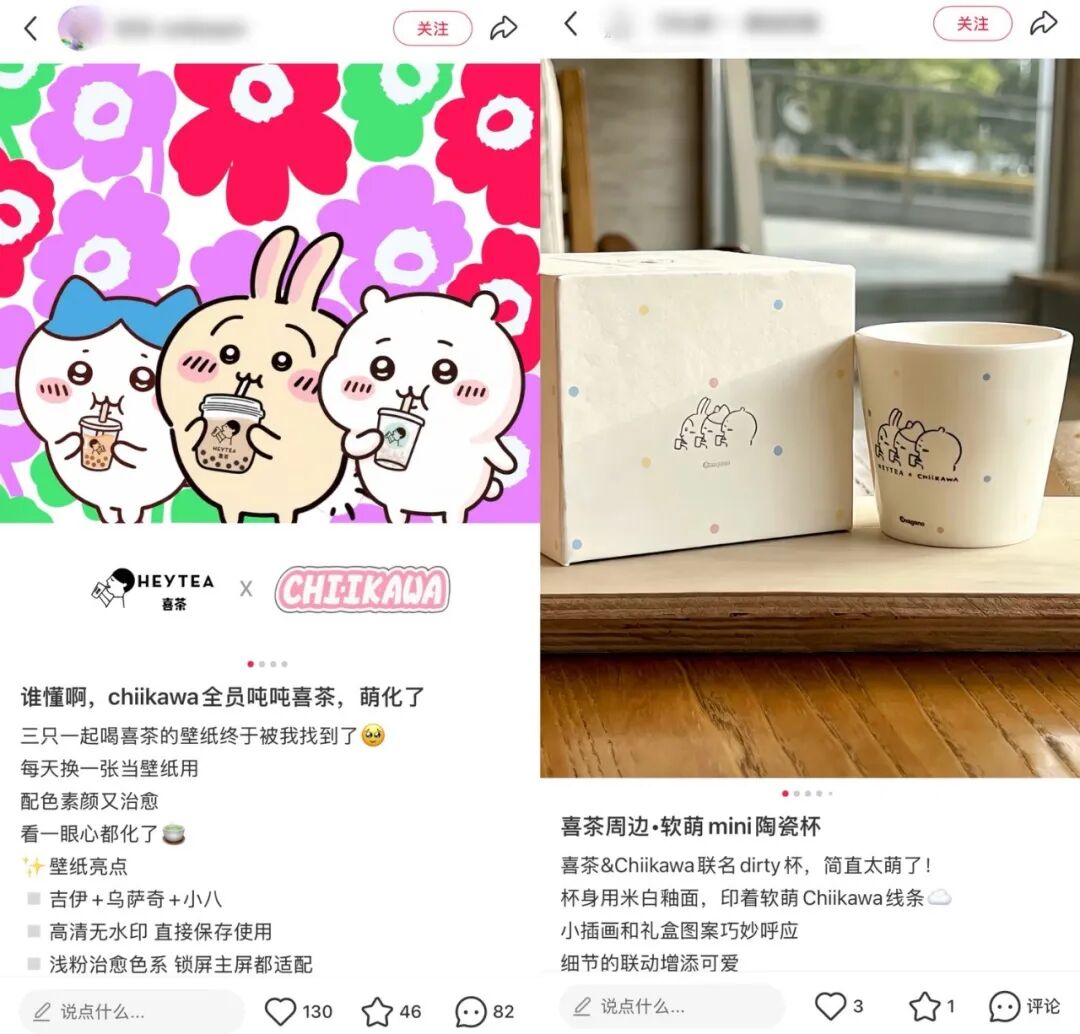
Image source: Xiaohongshu
Third, precise positioning of brand positioning. The choice of collaboration partner is the brand telling the market "who I want to be friends with".
Mellow Tea × Love and Deep Space precisely covers the otome game user group. On the launch day of the collaboration, the system crashed and all merchandise was sold out in seconds, which also brought a large number of new users to the game IP in reverse.
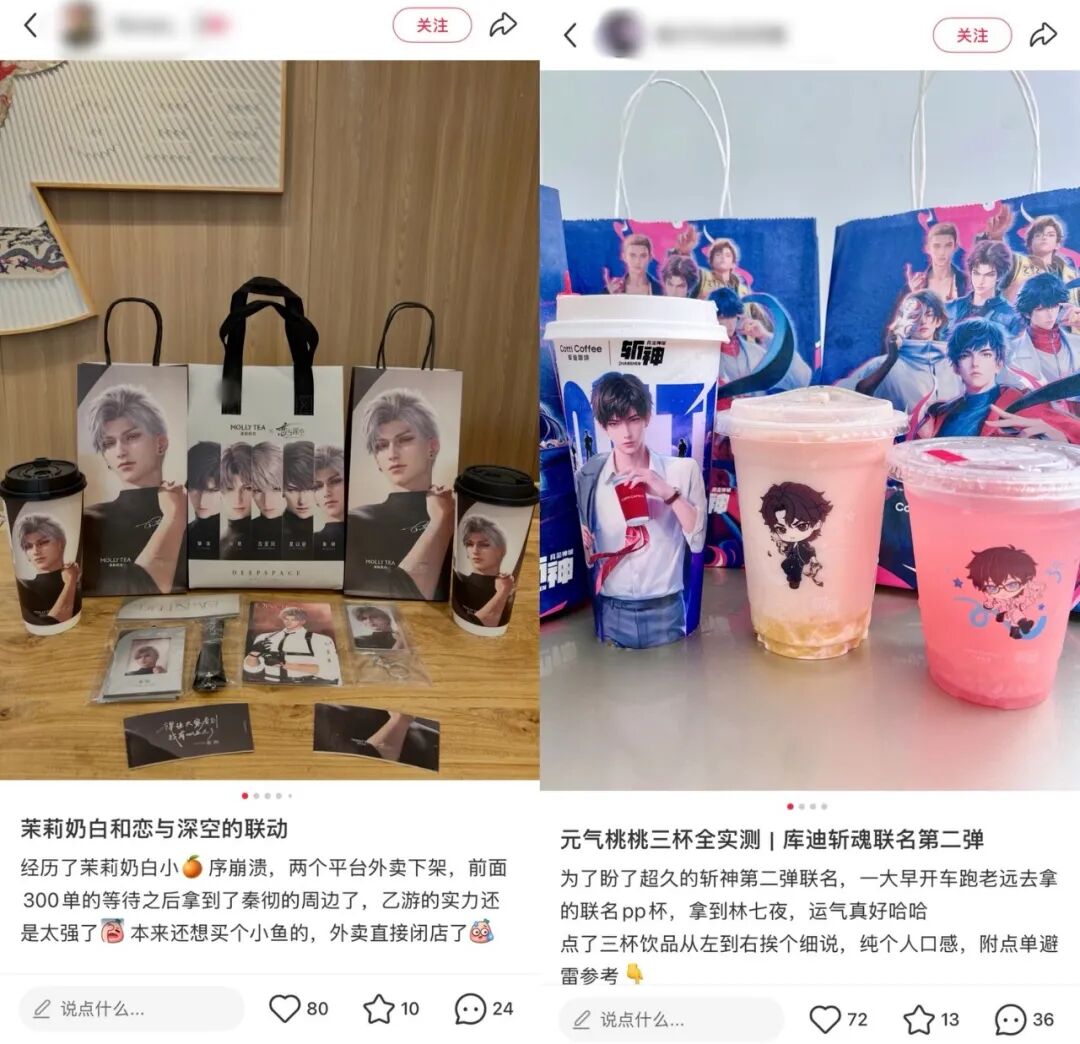
Image source: Xiaohongshu
The two groups achieved mutual penetration. Cotti Coffee × The God of Slaughter launched the collaboration just four days after the second season of the anime premiered, capturing the young audience's desire for collection and social sharing with the immersive experience of watching the show, drinking coffee, and collecting merchandise.
The collaboration partner determines the next growth pool that the brand can reach. Choosing the right IP means choosing the right next batch of users.
The "freshness period" of a cup of tea only lasts three months
There is a harsh reality in the tea industry: hit products usually do not stay popular for more than one season.
Products are iterated at an extremely fast pace, and users quickly lose their sense of novelty towards flavors. A hit product that people are queuing up for today may be ignored by everyone next month.
In an era of scarce user attention, brands need to continuously create "worth noticing" reasons. Collaboration uses external IPs to continuously create time-limited scarcity to fight against user aesthetic fatigue.
Co-branded products inherently have a "limited edition" attribute. They are not just a drink on the regular menu, but a time-sensitive cultural event. Consumers are not just buying the flavor, but the sense of urgency of "go and check it out before it's gone".
The co-branded merchandise of Heytea × CHIIKAWA, from mini ceramic mugs to work ID-style metal badges, are all designed as small and exquisite collectibles. The Usagi item has a significant resale premium due to the character's highest popularity.
These merchandise items become social currency, and users' photo sharing forms secondary communication, extending a single collaboration activity from "buying a cup of milk tea" to a social topic that lasts for several weeks.
Meanwhile, during the 2025 autumn promotion, Bawangchaji launched the limited new product "Sichuan Journey Song" in collaboration with Sichuan's famous panda Hua Hua, and held themed pop-up events. This is not a simple IP authorization, but embedding the regional cultural symbol into the product narrative to create a scarce experience that "only exists at this moment and this place".
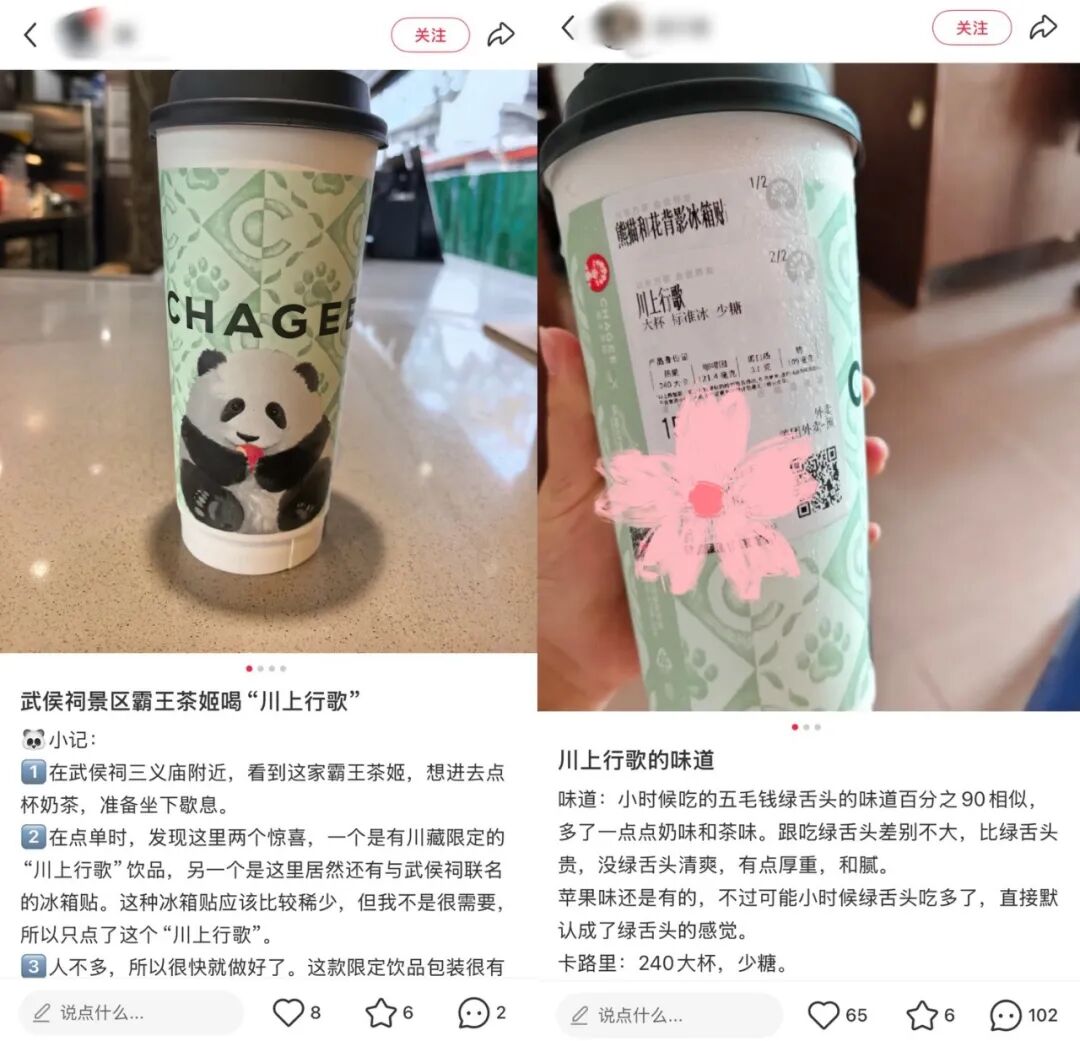
Image source: Xiaohongshu
As the freshness period of products themselves gets shorter and shorter, collaboration has become the core method for brands to maintain their market presence.
It is not to make the brand look better, but to keep the brand "always making noise, always having new things going on".
What is sold is not the product, but identity recognition
The two pressures of traffic anxiety and aesthetic fatigue can at most slow the brand down, but brand aging can make the brand forgotten.
Many brands think collaboration is to sell more products. But modern consumers, especially Gen Z, have highly emotional and symbolic consumption behaviors. Behind a cup of co-branded milk tea is the self-expression of "I love this IP" and "I identify with this lifestyle".
What brands achieve through collaboration is the transformation from functional drinks to emotional symbols, which cannot be achieved by simple product upgrades.
First, precise hit of emotional resonance. The success of Luckin × Duolingo is not just because the coffee tastes good. Duolingo's owl Duo, known for urging users to check in on their learning, inherently carries the dual emotions of learning anxiety and slacking off at work.
When Luckin's cup sleeves are printed with phrases like "Aren't you studying at all?" and "Only drinking without studying? I'm really speechless", consumers are not just buying a cup of coffee, but an identity recognition of a worker being urged constantly. The two parties packaged their business partnership into a serial narrative, turning the brand from a commercial symbol into a CP that users are willing to follow updates on.
Second, emotional projection and companionship of childhood memories. Grandpa Doesn't Make Tea × Chibi Maruko-chan, under the theme "Eat ice with big bites, so relaxing", precisely hits Gen Z's childhood memory points.
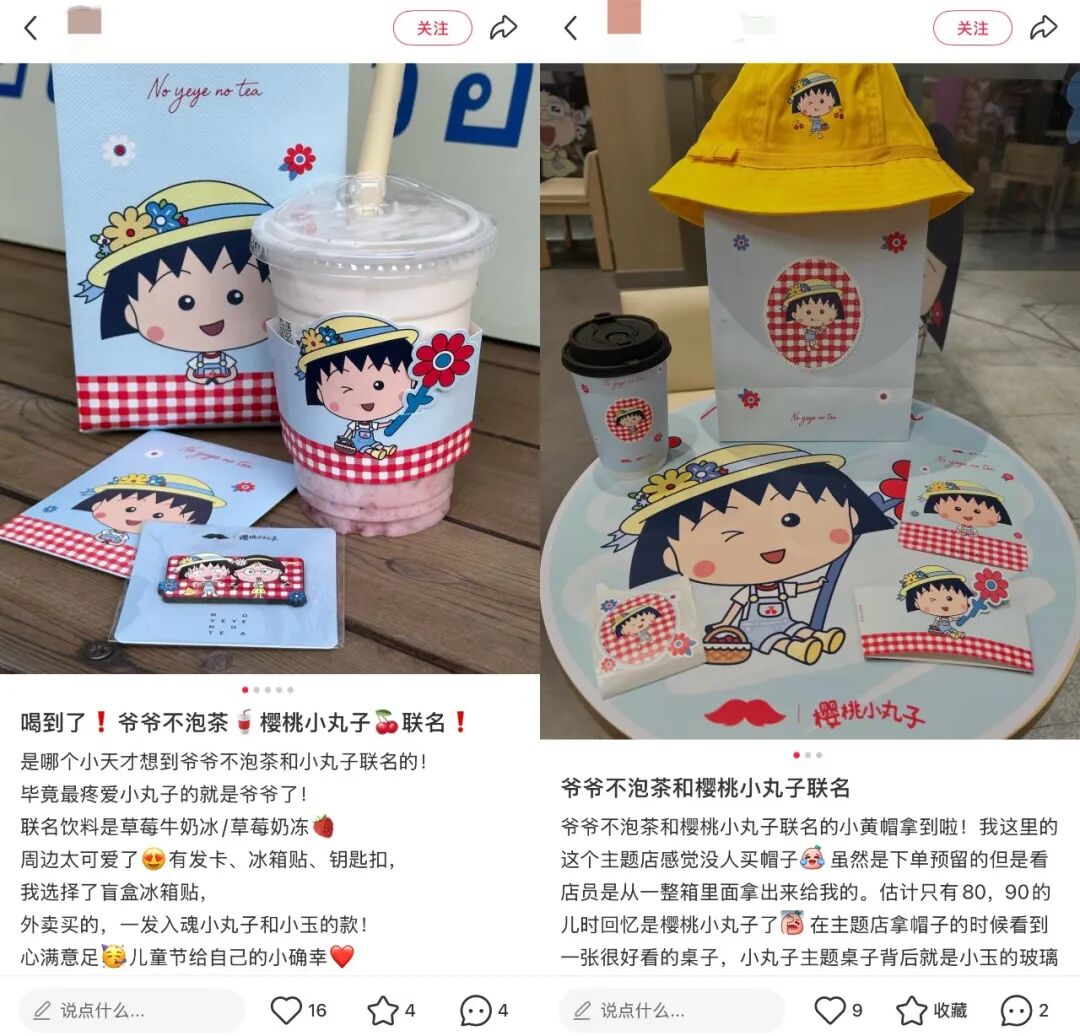
Image source: Xiaohongshu
Chibi Maruko-chan's ordinariness, laziness, but kindness and optimism builds an emotional projection model with low threshold and high resonance. The brand turns a cup of tea into a container of emotional companionship, and consumers are not just buying strawberry milk ice, but an emotional comfort of returning to childhood.
Collaboration is the fastest shortcut for tea brands to build cultural recognition, and also the core weapon to establish differentiated memory points in homogenized competition.
Conclusion
Tea brands will most likely continue to do collaborations in the future.
It is not because brands lack creativity, but because attention is too expensive in this era, user loyalty is too low, and competitors launch new products too fast. Collaboration is an effective solution found by this industry under traffic anxiety.
But brands that can truly survive through cycles ultimately have to return to the product itself. Collaboration can bring a one-time viral hit, but it cannot bring long-term brand assets.
Which tea brand's collaboration do you prefer? Feel free to share your thoughts in the comments~
This article is from the WeChat Official Account "TopKlout" (ID: TopKlout), author: Xiao Yang, published with authorization from 36Kr.