In the harsh winter of the film industry, how wild are the side businesses of film and television companies?
The harsh winter for the film and television industry is still ongoing.
The latest semi-annual performance forecast shows that all leading publicly listed film enterprises including Ruyi Pictures, China Film, Bona Pictures, Hengdian Pictures, and Jinyi Pictures have predicted losses in their non-recurring net profits.
With their core business failing to generate profits, staying alive has become their top priority.
In fact, it is not a new thing for film enterprises to run side businesses, but this round of winter cycle is extremely long and the industry pressure is unprecedented. Is this full-scale cross-sector self-rescue a panacea for breaking through the predicament, or a risky move that only offers temporary relief at the cost of long-term survival?
Cinemas Are No Longer Just Cinemas
The most intuitive scenario for ordinary people to perceive the changes in the film and television industry is in movie theaters.
In the past, the process of watching a movie was to collect tickets, buy popcorn, watch the movie, and then leave. Now when people go to cinemas, they may also visit trendy toy stores, open blind boxes, check in at popular milk tea shops, and purchase self-developed snacks from the cinema.
This change is fully demonstrated in the Wanda Cinema system operated by Ruyi Pictures.
In June 2026, Ruyi Pictures (002739.SZ) officially launched the 2.0 phase of its "Super Entertainment Space" strategy. At present, the trendy lifestyle integrated store "Time Inside", 52Toys trendy toys, Pai Cube experience store, and trendy milk tea brand Lucky Coconut have all settled in Wanda Cinemas. Meanwhile, it has independently developed food and beverage brands "Talk with Water" and "Three-Hour Little Time" to create differentiated products.
The leading cinema chains share a similar idea for scene transformation. Targeting the summer consumption boom, cinemas under China Film (600977.SH) have newly launched IP derivative zones, and implemented immersive experience activities such as parent-child parties, themed DIY handicraft sessions, and interactions with film and television characters, to precisely tap the consumption potential of family audiences.
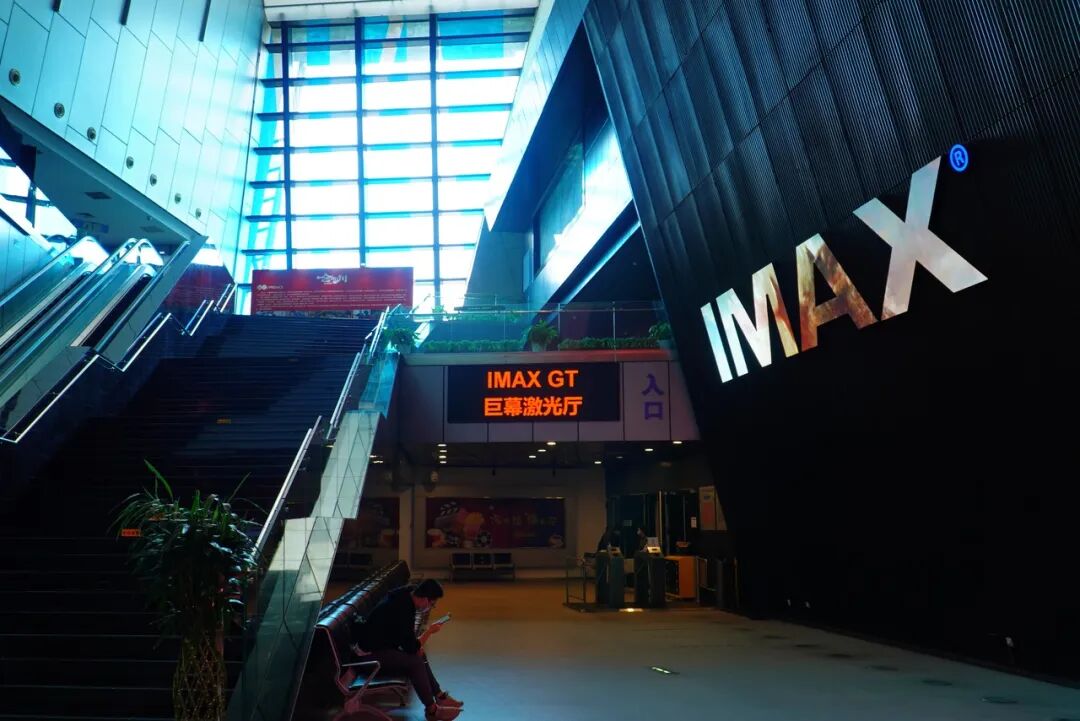
Apart from the transformation of offline business formats, cinema chains including Wanda, Hengdian, China Film, and Jinyi have successively launched new content covering sports events, e-sports tournaments, offline concerts, and high-quality stage plays, effectively revitalizing the idle screening schedules of cinemas.
Event live broadcasts have a fixed core audience base, with significantly higher operational stability. Currently, the industry has widely implemented the market-oriented mechanism of "group screening": setting a minimum number of viewers for events like the World Cup and top-tier e-sports tournaments, the screening will proceed as scheduled if the number is met, otherwise tickets will be automatically refunded, to reduce the loss from empty auditoriums at the operational level and maximize revenue.
Among all types of live content, e-sports events have particularly outstanding commercial value, with profitability far exceeding that of regular movie-watching businesses. In 2026, Hengdian Pictures held the COA9 Global Finals of "Identity V" across five cities, with exclusive viewing tickets priced at 69 yuan, which is about twice the average ticket price of this year's summer season, and the audience flow far exceeded that of regular films in off-peak periods.
The scene boundaries of cinemas are also continuously expanding. Most cinema chains host offline activities such as community reading clubs, corporate annual meetings, fan meetings, and anime-themed exhibitions. Meanwhile, value-added services like late-night screenings and lunch break rest areas have been launched one after another, breaking the restrictions of fixed business hours and further increasing revenue.
Cross-sector Operations, Each Showing Their Unique Skills
Moving upstream along the film and television industry chain, film and television companies have leveraged their own advantages to launch differentiated cross-sector layouts.
All players are highly familiar with IP derivative operations. Light Chaser Animation, which has long focused on animation IP, is a benchmark player in this track. During the hit run of "Nezha 2" in the 2025 Spring Festival season, the company covered more than 30 categories and launched over 200 derivative products through IP licensing, fully releasing the commercial value of its top-tier IP.
Based on this, Light Chaser Animation has clarified a new strategy, focusing on the dual core businesses of "IP Creation + IP Operation" to build a development model of "small company, big IP", and deeply lay out IP derivative formats such as collectible merchandise, trading cards, collaborative games, offline brand stores, and theme parks to further tap IP value.
Ruyi Pictures focuses on the cross-sector IP collaboration model, having reached cooperation with top-tier game IPs such as "Genshin Impact", "Identity V", and "Love and Deep Space" to launch offline co-branded activities; it collaborates with popular IPs such as Nezha, Butter Bear, and Sanrio to develop a series of derivative products, while independently incubating trendy toy IPs to build a diversified IP matrix.
Games are another hidden strength of Ruyi Pictures. Its controlling shareholder China Ruyi has long been deeply involved in the game track, accumulating a mature industrial foundation and full-chain resource reserves. While fully taking over Ruyi Pictures and upgrading the entire business format of Wanda Cinemas, in June 2026, it joined forces with Ruyi Pictures to launch 27 new game products in a centralized manner.
AI film and television has become a booming track that leading film enterprises are flocking to.
Bona Pictures (001330.SZ) has independently developed the "Boka One-click AI Short Drama" product, and its domestically produced first AI feature film "Sanxingdui: Future Past" has obtained the official "Dragon Seal" distribution license, and is expected to be released within 2026.
Huayi Brothers launched the "H·AI Spark Plan", planning to produce 9 AI short dramas and 1 AI feature film; while Huanxi Media has partnered with Paradigm Intelligence to carry out cooperation in fields such as AI production, digital humans, and interactive film games.

Among all cross-sector layouts, Huace Pictures has made the most bold transformation, directly stepping out of the content track and entering the AI computing power infrastructure sector.
In May 2026, Huace announced that it plans to invest no more than 3.3 billion yuan to purchase servers for providing external cloud computing power services. The financial performance of its computing power business is indeed outstanding – it achieved a revenue of 126 million yuan in 2025, a year-on-year increase of 602.65%, with a gross profit margin of 36%. In the first quarter of 2026, the revenue of this business reached 70 million yuan, and its revenue share jumped to over 17%.
Each Has Its Own Challenges and Risks
Can side businesses save the performance of film and television companies?
Heavy-asset cross-sector layouts are the first to face huge hidden dangers. In 2014, Huayi Brothers made large-scale investments in real-scene entertainment projects such as film towns, but the Jinan Changqing Film Town closed down hastily only 17 months after opening. From 2018 to 2024, the company accumulated losses of over 8.2 billion yuan, and in April 2026, it was applied for reorganization by creditors, with its stock renamed "ST Huayi".

Even the seemingly light-asset IP derivative track cannot guarantee stable profits. The upfront development of IP requires high investment, carries high risks, and the probability of creating a hit product is low. Once the products are unsalable, they will directly result in losses.
Ruyi Pictures, which focuses on film-game collaboration, also has obvious shortcomings. Ruyi Jingxiu (a subsidiary of China Ruyi) is good at game distribution, but lacks strong heavy-duty independent development capabilities. The martial arts MMO game "The Great Feng's Night Watchman" was planned to be launched alongside the hit of the eponymous drama series, but due to multiple defects in IP restoration, gameplay adaptation, and art presentation, its test run was postponed, entering a long-term revision and adjustment phase.
Another leading player, Huace, which has bet on the computing power track, is facing multiple operational pressures. The huge investment of 3.3 billion yuan in expanding computing power has directly increased its financial burden. In the first quarter of 2026, its short-term loans rose to 1.735 billion yuan, a year-on-year increase of nearly 200%. The computing power industry features rapid technological iteration and drastic cyclical fluctuations, servers face obsolescence and depreciation in only three years, which will further aggravate the financial pressure on Huace Pictures.
From heavy-asset cultural tourism, IP derivatives to games and computing power, the cross-sector side businesses of film and television enterprises are a form of self-rescue breakthrough under the industry's harsh winter, but side businesses can only amplify performance flexibility, and it is difficult for them to become a lifebuoy to reverse the predicament in the short term.
How to balance the growth demands of industrial extension with a stable and controllable financial bottom line, and embark on a non-radical, sustainable diversification path, may be the core proposition that film enterprises need to deeply consider at present.
This article is from the WeChat official account "Zebra Consumption" (ID: banmaxiaofei), written by Chen Biting, published with authorization from 36Kr.