China Life is stable, Ping An is profitable, CPIC is thriving, Taikang is breaking through, and New China is advancing: the hidden strengths and weaknesses of the five major life insurance companies
A transformative shift is underway in the life insurance industry, moving from the era of "scale supremacy" to "value supremacy".
According to the 2025 China Insurance Industry Competitiveness Research Report, in the first half of 2025, the top five life insurance companies all recorded net profits exceeding 10 billion yuan, with the top 10 firms accounting for 94.6% of the industry's total profits. Industry resources are rapidly concentrating toward leading players at an unprecedented pace.
Against this backdrop, what are the core competitive strengths held by the five giants — China Life, Ping An Life, China Pacific Life, Taikang Life, and New China Insurance? What areas still require improvement?
China Life's Iron Team: Steady Giant Under Hidden Pressures
In terms of hard power, China Life's industry moat is nearly impossible to cross.
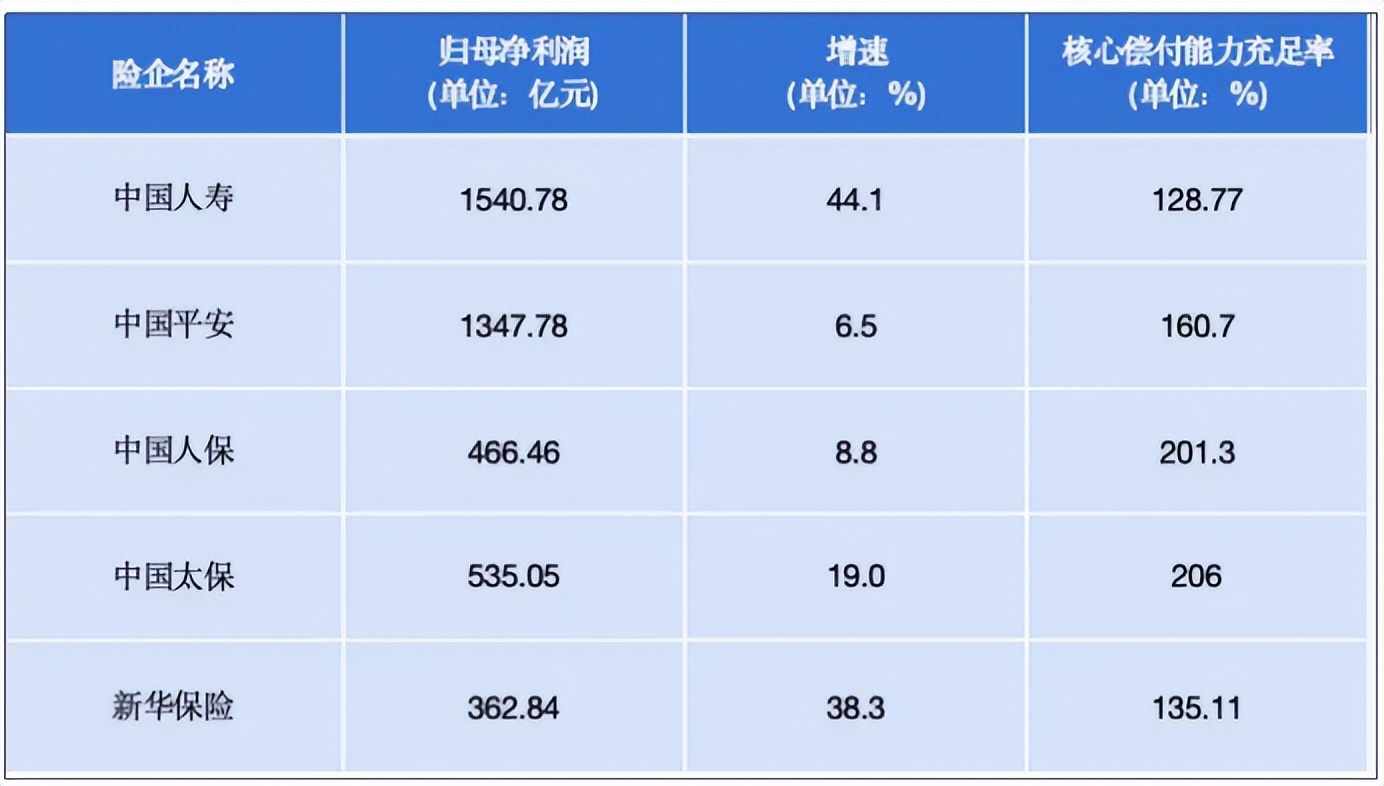
First, the unbreakable scale and capital barrier. By the end of 2025, China Life's total assets exceeded 7.59 trillion yuan, with its life and health insurance reserves ranking first among global life insurers. Its 2025 attributable net profit reached 154.078 billion yuan, a 44.1% year-on-year increase, demonstrating robust growth atop its massive existing scale.
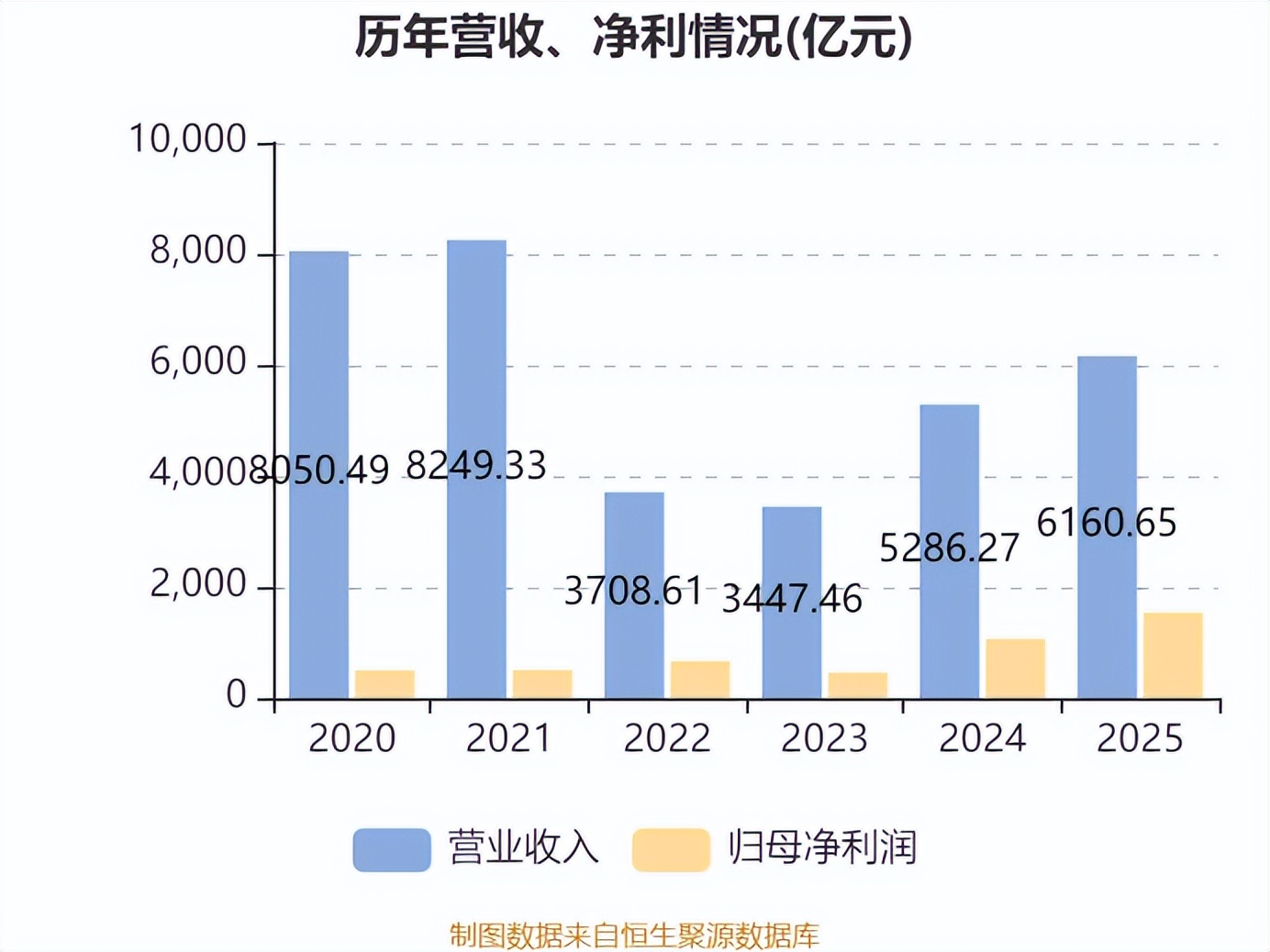
(Image source: China Securities Journal)
Second, precise upgrades in asset-liability coordination. China Life closely follows market trends, continuously iterating on participating and other variable products. It also taps into emerging economic sectors by deploying substantial "patient capital" into semiconductors, artificial intelligence and other industries, effectively balancing liability-side costs and asset-side returns while strengthening risk prevention defenses.
Third, strong omnichannel penetration. The individual insurance channel serves as its core foundation, contributing 85.9% of new business value. Its offline branches cover every corner of China, while its mobile app and 24/7 95519 customer service line make it the only life insurer with fully equal service coverage across urban and rural areas.
Finally, as a pioneer among state-owned financial enterprises, it has long functioned as an economic stabilizer in livelihood protection and emergency response, aligning with the strategic requirements of the 15th Five-Year Plan to support rural development and expand financial literacy — its policy-related advantages are self-evident.
However, these massive strengths also create heavy burdens during the transition process.
On one hand, its digital transformation is conservative and slow. Its online service response speed and interactive experience lag behind agile internet insurers, with uneven service quality at grassroots branches leading to inconsistent customer digital experiences.
On the other hand, its enormous existing business volume and large offline agent force make it slow to adapt to industry trends like "execution in line with regulatory requirements" and declining assumed interest rates, carrying significant historical legacy issues that slow its pace of change.
China Life operates like an aircraft carrier — extremely stable, but requiring considerable time and space to turn.
Ping An's Sharp Edge: High Barriers, High Premiums
If China Life's defining feature is "stability", Ping An Life can be summed up by "sharpness". It prioritizes tech empowerment and a fully integrated financial ecosystem over raw scale, allowing it to claim the title of "profit champion".
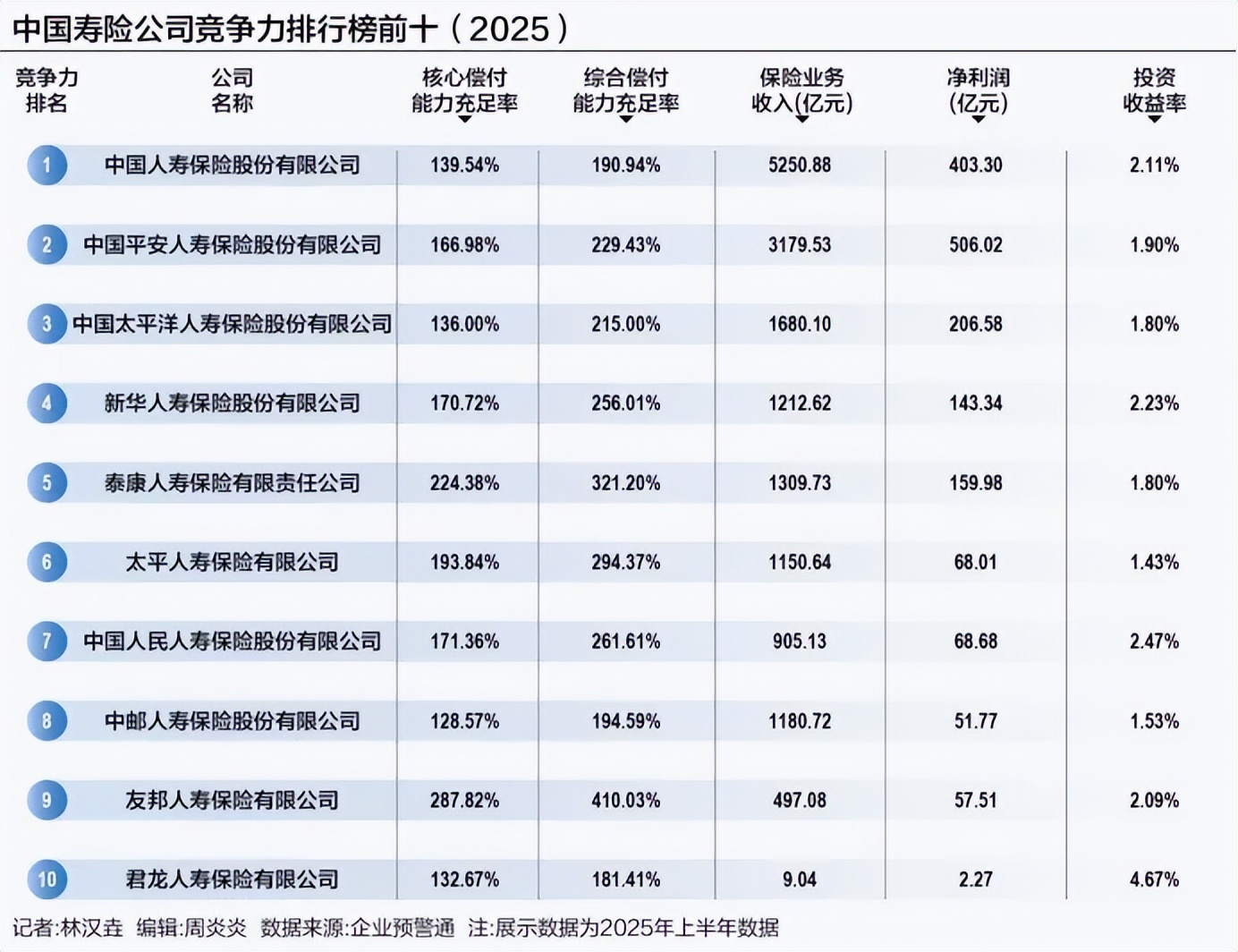
In the first half of 2025, Ping An Life led the industry with a net profit of 40.33 billion yuan, reflecting exceptional profitability.
(Image source: 21st Century Business Herald)
Ping An's core strength lies in its unreplicable technological DNA and ecosystem synergy.
First, tech empowers the entire value chain for maximum operational speed. Ping An boasts the industry's most advanced tech infrastructure, with fully digitalized, intelligent capabilities in automated underwriting, AI customer service, and instant claims settlement. This cuts service time and reduces operating costs, placing it at the industry forefront in both customer experience and operational efficiency.
Second, its integrated financial ecosystem delivers distinct advantages. Backed by Ping An Group's interconnected ecosystem, it combines resources across life insurance, property insurance, health insurance, banking, and securities to share customer bases and cross-promote services, maximizing the lifetime value of each client while drastically lowering customer acquisition costs compared to peers.
Third, dual stability in risk control and returns. In the first half of 2025, its core solvency ratio reached 195%. With mature, well-established risk management systems, it can deliver strong investment returns even in a low-interest environment, demonstrating solid resilience to risks.
Finally, it led the industry in upgrading its agent workforce. Amid the broader industry push to streamline and improve agent quality, Ping An was the first to complete the professionalization of its agent team, moving away from mass recruitment strategies to achieve per-capita productivity and retention rates above industry averages.
Behind its premium, professional positioning, Ping An still has notable shortcomings.
First, its products are expensive with overly complex terms. The added value of its integrated financial ecosystem makes its products low in cost-effectiveness for mass-market consumers, and dense policy terms make it difficult for ordinary people to understand coverage quickly, causing it to lose many potential customers.
Second, it faces heavy compliance pressure. Even as its team continues to improve, many agents still engage in misleading sales practices, leading to excessive consumer complaints in the short term that damage its brand reputation.
Ping An is a well-rounded "six-dimensional warrior", but its excessively high entry barriers deter many consumers.
China Pacific Life's Steadiness: Step-by-Step Progress
Amid the aggressive expansion of the life insurance track, China Pacific Life stands out as a distinct "steadiness advocate".
It has no ambition for rapid explosive growth, nor does it make reckless market moves. Striking a perfect balance between scale, profitability, and risk, it is the most reliable long-distance runner in the industry.
In 2025, China Pacific Life recorded a net profit of 53.505 billion yuan and a comprehensive solvency ratio of 206%, with all indicators meeting regulatory requirements and no obvious major flaws.
(Image source: Wind)
China Pacific Life's core competitiveness lies in its strict attention to detail and commitment to balanced development.
First, cautious asset-liability matching. Amid volatile industry interest rates, it carefully manages its duration gap with rational asset allocation, delivering strong risk resistance during market rate cuts with no major performance fluctuations.
Second, it balances excellent service experience and cost-effectiveness. Among the five giants, China Pacific Life has the highest satisfaction rating for online services, with easy operation, fast claims settlement, and responsive support. Its products are also affordably priced with low brand premium, better meeting the demands of the mid-to-mass market.
Third, balanced channel layout. It avoids over-reliance on a single sales channel, developing both individual insurance and bancassurance businesses simultaneously. The rapid growth of its bancassurance channel in 2025 has brought sustained premium income, forming a solid foundation for its operations.
Finally, it pre-emptively entered the health care blue ocean. Focusing on the "insurance + retirement community" model, it leverages the aging population trend to convert real elderly care services into insurance purchases, boosting customer loyalty and building a solid market base.
However, excessive steadiness also erodes its aggressiveness.
On one hand, while Taikang achieves explosive growth and Ping An completes its transformation, China Pacific Life's premium income rises steadily with no breakout hit products or aggressive customer acquisition tactics.
On the other hand, it lacks competitiveness in the high-end market, with a significant gap compared to foreign and joint-venture insurers in ultra-high-net-worth exclusive wealth management and premium health check-up services, resulting in insufficient high-end brand influence.
China Pacific Life is a long-distance runner — not the fastest, but every step is solid and reliable.
Taikang's Breakthrough: Disrupting the Industry Through Integrated Elderly Care
While peers are still comparing premium scales and return rates, Taikang Life has already transcended traditional mindsets.
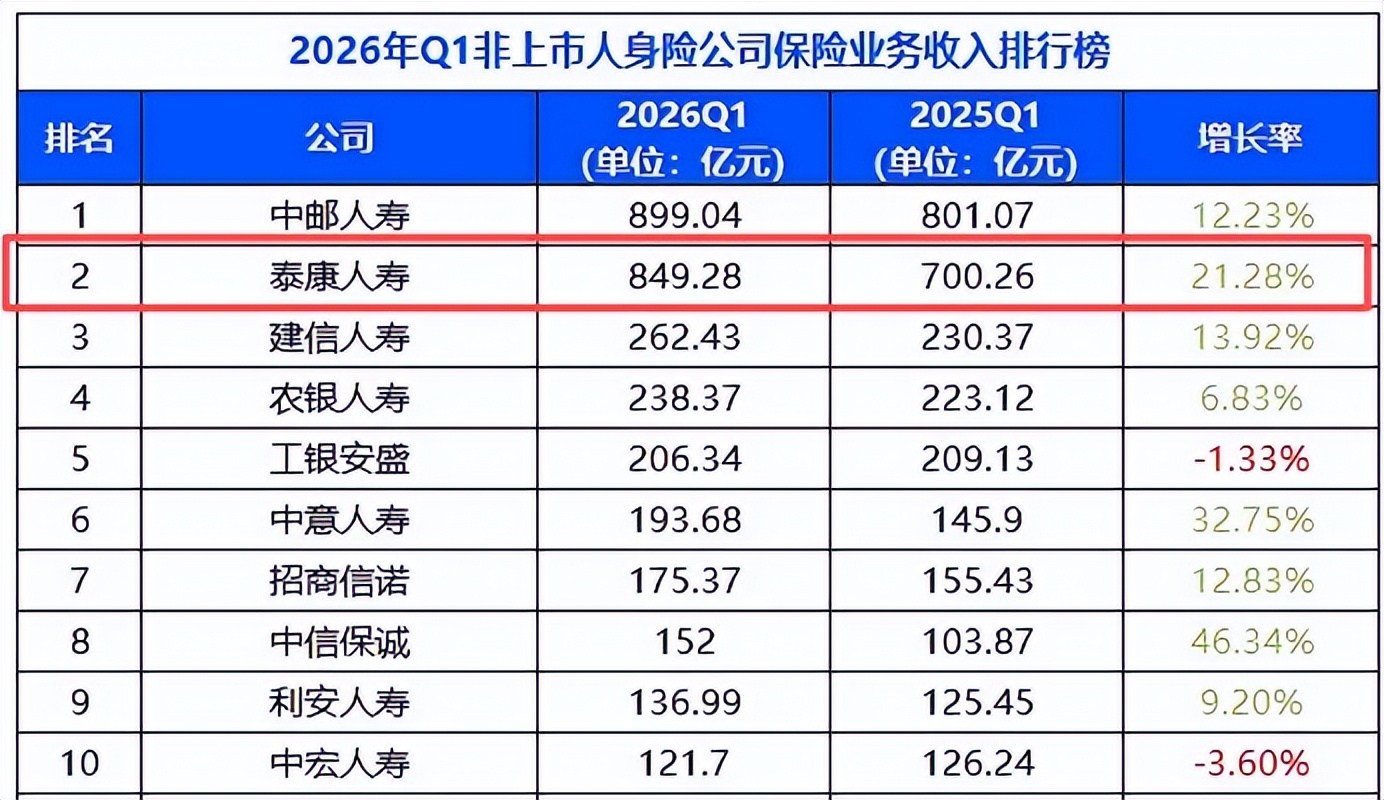
In the first half of 2025, its comprehensive solvency ratio reached 321.20%, ranking first among the five giants. In Q1 2026, its premiums grew 21.28% year-on-year, showing greater operational flexibility than any competitor with massive untapped potential.
(Image source: Baoguan)
Taikang's unique secret weapon is a physical ecosystem moat that competitors cannot replicate in the short term.
First, the first enterprise to build a closed-loop "health, elderly care, wellness, and rehabilitation" ecosystem. Through large-scale investment in premium retirement communities, top-tier hospitals, and rehabilitation centers, it organically combines intangible insurance products with tangible medical care services. Insurance is no longer just "post-event reimbursement", but a full-lifecycle health and elderly care service that creates extremely high industry entry barriers.
Second, strong financial backing provides robust support. Even with continuous increases in asset investment, it maintained a healthy comprehensive solvency ratio of 160.15% in Q1 2026. Its abundant capital supports long-term strategic planning for its entire ecosystem, delivering exceptional risk resistance.
Third, high-level high-net-worth customer management. Premium elderly care financial products like "Happiness Appointment" attract a large base of high-net-worth clients. It holds strong brand recognition in retirement finance and premium health care, with industry-leading high-net-worth customer retention and repurchase rates.
Finally, massive growth potential. Taikang breaks away from the industry's slow-growth cycle, continuously expanding the high-end market through differentiated marketing with leading premium growth rates.
Success comes from heavy assets, but risks also stem from heavy assets — Taikang's weaknesses are equally obvious.
On one hand, retirement communities and medical institutions are capital-intensive investments that tie up massive funds, delivering low returns that put short-term pressure on corporate cash flow. Its performance is vulnerable to macroeconomic shifts and occupancy rates of its facilities.
On the other hand, its service entry barriers are excessively high. Its core ecosystem resources primarily serve high-end clients, with premium products that are unaffordable for the general public, leading to low market penetration among mass consumers.
In summary, the "silver economy" has a long return cycle that tests investors' patience and financial strength.
New China Insurance's Transformation: Single Growth Driver and the Struggle for Progress
New China Insurance is the only dedicated "life insurance specialist" among the five giants, as well as the most active "aggressive investor".
It does not blindly pursue an all-encompassing business model, instead focusing on life insurance while daring to innovate, carving out a unique path of its own.
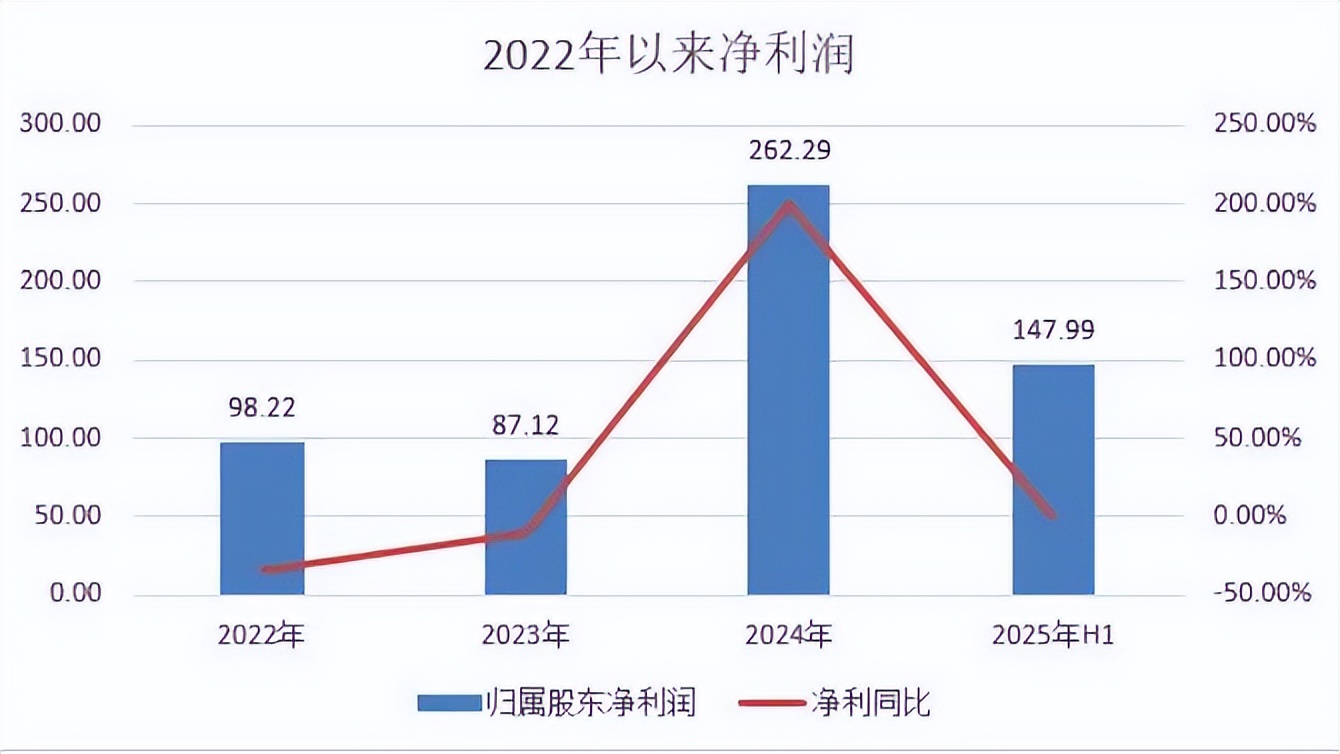
In the first half of 2025, New China Insurance delivered strong results with a 5.9% investment return rate, 14.799 billion yuan in net profit, and premium income exceeding 120 billion yuan, placing it in the industry's first tier.
(Image source: Wind)
New China Insurance's biggest highlight is its specialized core business and diversified investment portfolio.
First, a financially strong enterprise with bright prospects. It has extensive experience in capital market operations, allowing it to capture market trends and adjust positions proactively. It can generate returns even during stock market downturns, with investment income serving as its primary profit source.
Second, full dedication to its core business. It abandoned diversified operations like property insurance and banking to focus entirely on life and health insurance, maintaining clear core business positioning. Its insurance products can quickly adapt to market changes, with fast claims settlement and streamlined procedures, resulting in extremely high core business concentration.
In addition, strong capital strength supports expansion plans. At the end of Q1 2026, its core solvency ratio stood at 130.55% with a comprehensive solvency ratio over 200%, providing a thick financial safety cushion that allows it to continuously expand its product portfolio.
Finally, it holds a leading market position, backed by hundreds of billions in premiums. With decades of deep expertise in life insurance, it boasts strong brand recognition and a solid customer base, wielding significant industry influence.
However, extreme concentration also creates shortcomings from a single-dimensional development model.
On one hand, its product and business lines are overly narrow. Without supporting offerings like property insurance, annuities, or integrated financial services, its revenue is limited to life insurance premiums and investment returns, leaving it vulnerable to industry cyclical risks.
On the other hand, its digital transformation lags behind. Its online service platform lacks sufficient service categories and functionality, resulting in poor customer experience compared to Ping An and China Pacific Life's smart service systems, putting it at a disadvantage in digital competition.
New China Insurance thrives against the trend through its core business and investments — its strengths are focus and flexibility, while its weaknesses are insufficient diversification and digital maturity.
The Four "Survival Rules" for Life Insurance
It is clear that the competitive logic of the life insurance industry has fundamentally changed.
With deepening aging, prolonged low-interest rates, and stricter regulation, the industry has completely left behind the era of extensive growth and entered the final phase of refined operations. Four future survival rules will determine the life and death of all insurance companies.
Rule 1: Abandon reliance on interest rate spreads, prioritize variable returns.
Traditional fixed assumed interest rate products have fully exited the market. In the low-interest era, the pure interest-spread profit model is outdated. Going forward, participating variable-return products will dominate the market. The core competitiveness of insurers will lie in tight alignment between their balance sheets, sharing risks and benefits with customers to maintain stable operations.
Rule 2: Evolve from "policy payer" to "ecosystem service provider".
Standalone insurance products and claims services have reached their limits. Future competition in the life insurance market will no longer be about product variety or pricing, but competition across the entire industrial chain. Whoever controls upstream and downstream links including hospitals, retirement communities, rehabilitation centers, and health management will capture high-value customer resources and gain market dominance.
Rule 3: Digitalization reconstructs the entire industry's value