With its half-year profit surging over 600 times, when will the leading storage chip maker's stock hit the bottom?
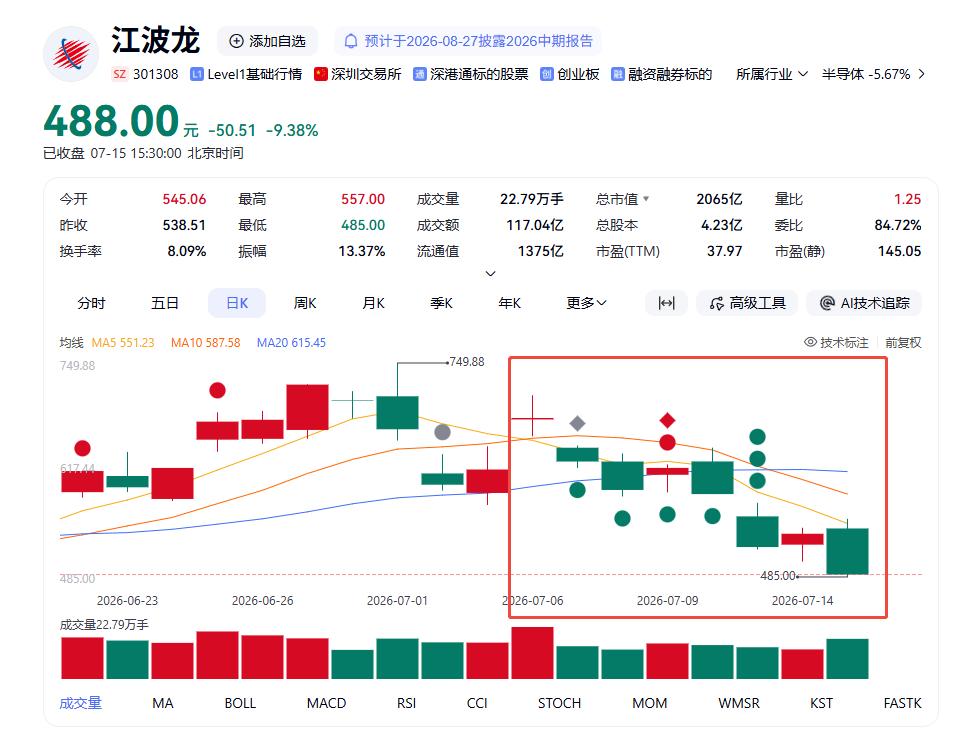
On July 15th, Longsys, the leading stock in the A-share storage sector, continued its downward trend. By the close of trading that day, its share price stood at 488.00 yuan, marking a single-day decline of 9.38%. The total trading volume for the day reached 117.04 billion yuan, with a turnover rate of 8.09%, and its total market value retreated to 206.454 billion yuan. After a cumulative drop of over 31% in eight trading sessions, Longsys's billion-dollar semi-annual report actually became the starting gun for capital profit-taking.
Let's rewind the timeline to just over a week ago.
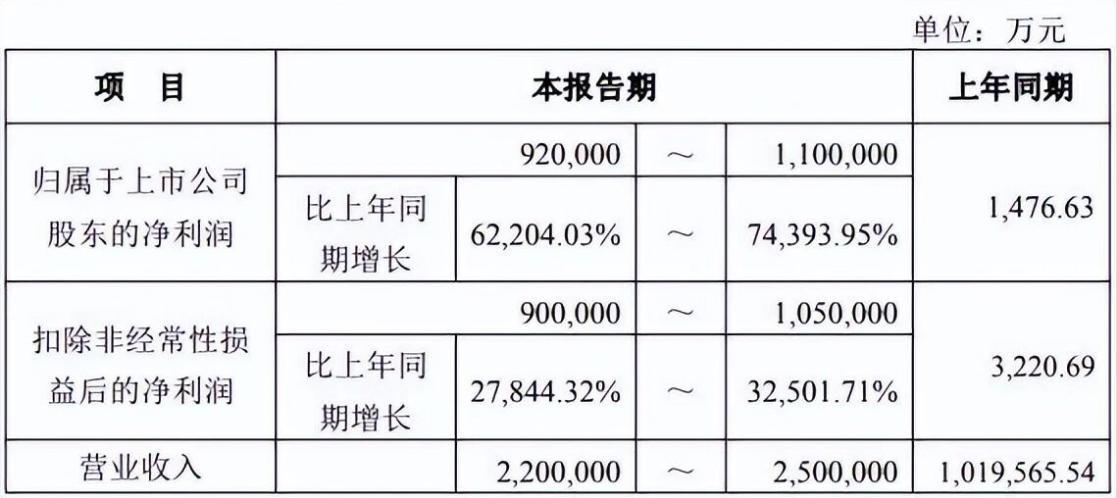
On the evening of July 3rd, Longsys released its 2026 semi-annual performance forecast, projecting a net profit of 9.2 billion to 11 billion yuan for the first half of the year, with a year-on-year growth rate surging directly to 622 to 744 times. Its non-recurring profit and loss net profit is expected to reach 9 billion to 10.5 billion yuan, and revenue is forecasted at 22 billion to 25 billion yuan, more than doubling year-on-year.
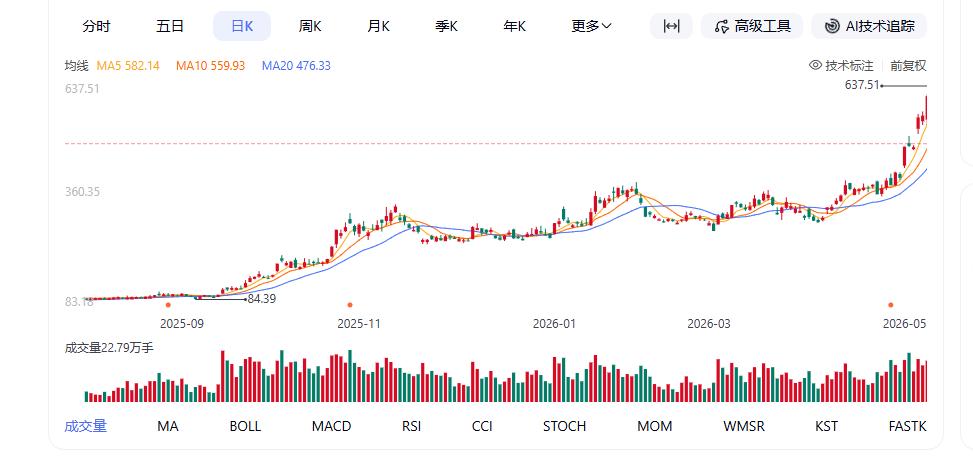
After this record-breaking performance report was released, the stock price directly hit a phase high of 710 yuan on July 6th. However, before the chasing capital could react, it plunged all the way afterward, forming the typical A-share market pattern of "good news landing triggers a pullback".
Many people's impression of Longsys may still be stuck as "a storage module manufacturer", but the story of this Shenzhen-based company is far more extensive than the figures on its financial reports.
Founded in 1999, Longsys was originally one of the countless trading merchants in Huaqiang North, starting its business by reselling storage components.
In 2017, it acquired the Lexar brand under Micron, instantly gaining access to global channel resources and the admission ticket to the high-end consumer market.
After listing on the ChiNext in 2022, the company invested heavily in tackling independent R&D technologies and deploying high-end packaging and testing capacity, gradually shedding the label of a pure module OEM and transforming into a technology-driven storage enterprise.
Over the past year, with the reversal of the storage cycle and the explosion of the AI industry, the company's stock price has risen all the way from the 80-yuan range in mid-2025, with an annual maximum increase of over 150%. Its market value once exceeded 260 billion yuan, firmly securing its position as the leader of the A-share storage sector, and it has now become the world's second-largest independent semiconductor storage manufacturer.
Its three major brands have clear divisions of labor: FORESEE, which focuses on the industrial, automotive-grade, and domestic information technology markets; Lexar, which targets the high-end consumer storage segment; and Zilia, which is rooted in the local Latin American market. Its products cover almost all mainstream scenarios, including servers, smartphones, smart terminals, the Internet of Things, and security monitoring.
The fact that the company can earn in half a year profits that it could not achieve in previous decades is indeed largely driven by the powerful industry trend, which cannot be underestimated.
Currently, the global semiconductor storage industry is in a new round of high prosperity cycles. The rapid expansion of AI servers, AI PCs, and edge-side smart devices has directly pushed storage demand to a high level. On the other hand, the overall expansion of global storage wafer capacity is limited, and leading original equipment manufacturers are prioritizing their production capacity for high-performance computing storage products like HBM. The supply of general-purpose storage products has remained tight, and the mismatch between supply and demand has continued to drive up the prices of storage chips, laying a solid foundation for the profit recovery of the entire industry.
Forecasts released by IDC show that the global enterprise-level solid-state drive market will reach 48.2 billion U.S. dollars in 2026, a year-on-year increase of 42%, with AI-related demand serving as the core growth engine.
However, industry trends always favor those who are prepared, and Longsys has solid strengths to seize this wave of dividends.
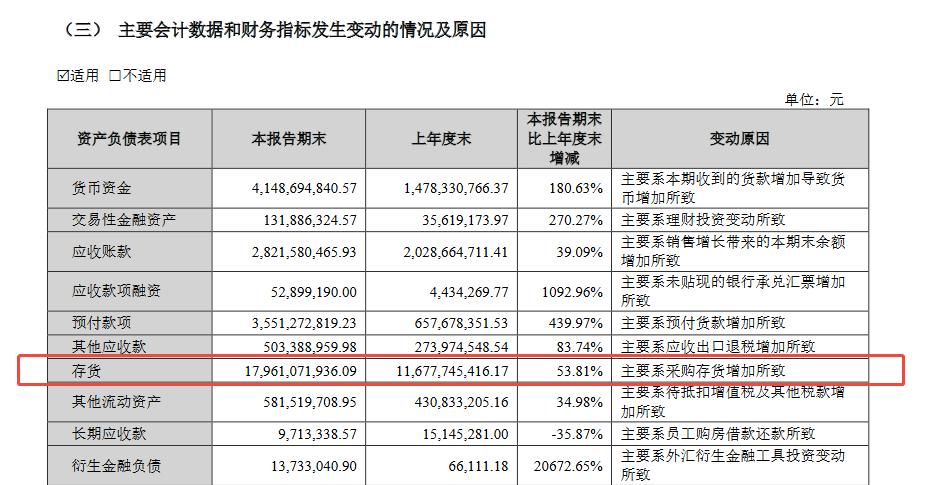
The most critical advantage lies in the stability of its supply chain. During the reporting period, the company successfully renewed long-term supply agreements with several leading global storage wafer manufacturers, directly securing a stable supply of core raw materials. More importantly, at the bottom of the industry cycle, the company made decisive strategic stockpiling moves. When the price cycle entered an upward phase, these inventories were directly converted into substantial profit flexibility. Data shows that the company's inventory scale reached 17.96 billion yuan at the end of the first quarter of 2026. Sufficient inventory not only ensured its order delivery capability but also allowed it to fully capture the dividends from the rising prices of storage chips.
If Longsys only relied on stockpiling to profit from industry cycles, it would not be able to support a market value of over 200 billion yuan. In recent years, the company has continuously invested in R&D, building a technology system centered on its self-developed SPU master control chip and HLC software architecture. Combined with its own high-end packaging and testing capacity, it has established comprehensive product competitiveness.
At present, the cumulative deployment volume of the company's self-developed SPU master control chip has exceeded 140 million units, and UFS4.1 products equipped with 5nm process master controllers have achieved large-scale shipments. After completing joint technical optimization with AMD, the company can reduce the DRAM usage of edge-side AI products by approximately 40% through its SSD storage agent and HLC technology. These technical advantages have ultimately been translated into product premium capabilities.
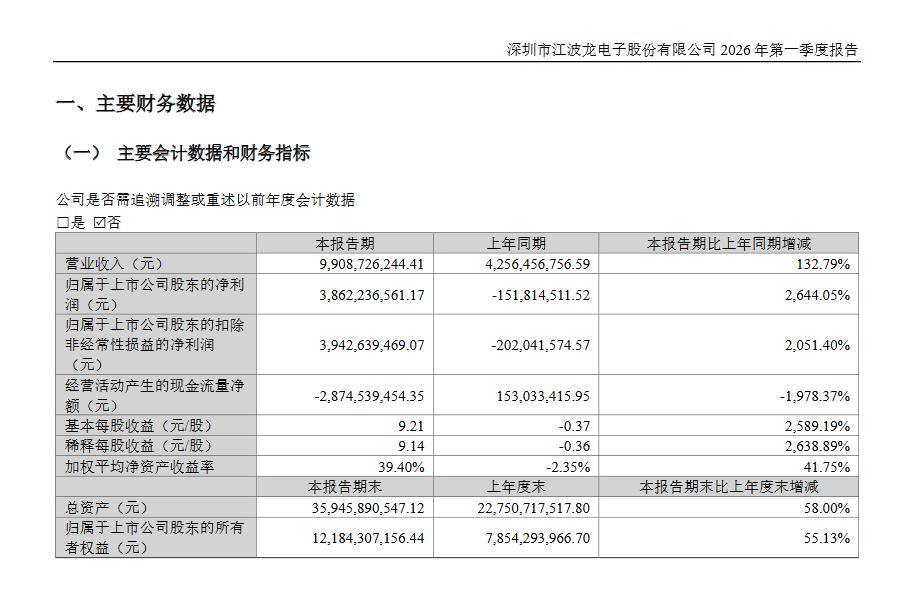
In the first quarter of 2026, the company achieved operating revenue of 9.909 billion yuan and net profit attributable to shareholders of 3.862 billion yuan. Based on a rough calculation using operating revenue and operating costs, the quarterly gross profit margin reached a historical high of 55.53%, significantly outperforming the industry average. The driving effect of technological upgrading on profit quality is clearly reflected in its financial statements.
Of course, this hundredfold year-on-year growth rate also needs to be examined to filter out low-base distortions.
In the first half of last year, the storage industry was still lingering at the bottom of the cycle, and Longsys's total net profit for the entire first half of the year was only 14.7663 million yuan. The low base effect is an important reason for the explosive year-on-year growth rate.
However, sequential data shows that the growth resilience remains strong: the company realized a net profit attributable to shareholders of 3.862 billion yuan in the first quarter, and the estimated net profit range for the second quarter is 5.338 billion to 7.138 billion yuan, representing a sequential growth of 38% to 84%. Its profitability is still in an accelerated upward channel. Currently, market institutions' forecasts for the company's full-year net profit are concentrated in the range of 14 billion to 20 billion yuan.
How long the high prosperity of the storage industry will last, and the actual implementation effects of the company's technological upgrading and globalization layout, will all become core variables affecting the trend of its market value.