The AI-native narrative of Step Mobile, just take it with a grain of salt.
A "newcomer" has stormed into the AI phone arena.
On July 13, model company StepStar (hereinafter referred to as "Step") held a launch event to unveil its AI phone, the "STEPX Neo".
On the surface, this seemed like a positive development, proving that the entire industry is doubling down on AI smartphones. Previously, Samsung, Huawei, and OpenAI had all been vocal about their ambitions, with capital pouring in, manufacturers rushing to release products, and the market appearing to be in a state of vigorous competition.
However, after the launch event concluded, despite a flood of overwhelmingly positive press releases, skepticism still permeated the market.
Why? Because the entire presentation revolved around concepts, visions, and promises of "redefinition," while completely failing to address the most fundamental, practical questions.
Even more notably, on July 15, regulators released filing information for seven on-device large language models for smartphones. The list included Xiaomi, Huawei, OPPO, vivo, Apple, Samsung, and Nubia — every major manufacturer was accounted for, but Step was conspicuously absent.
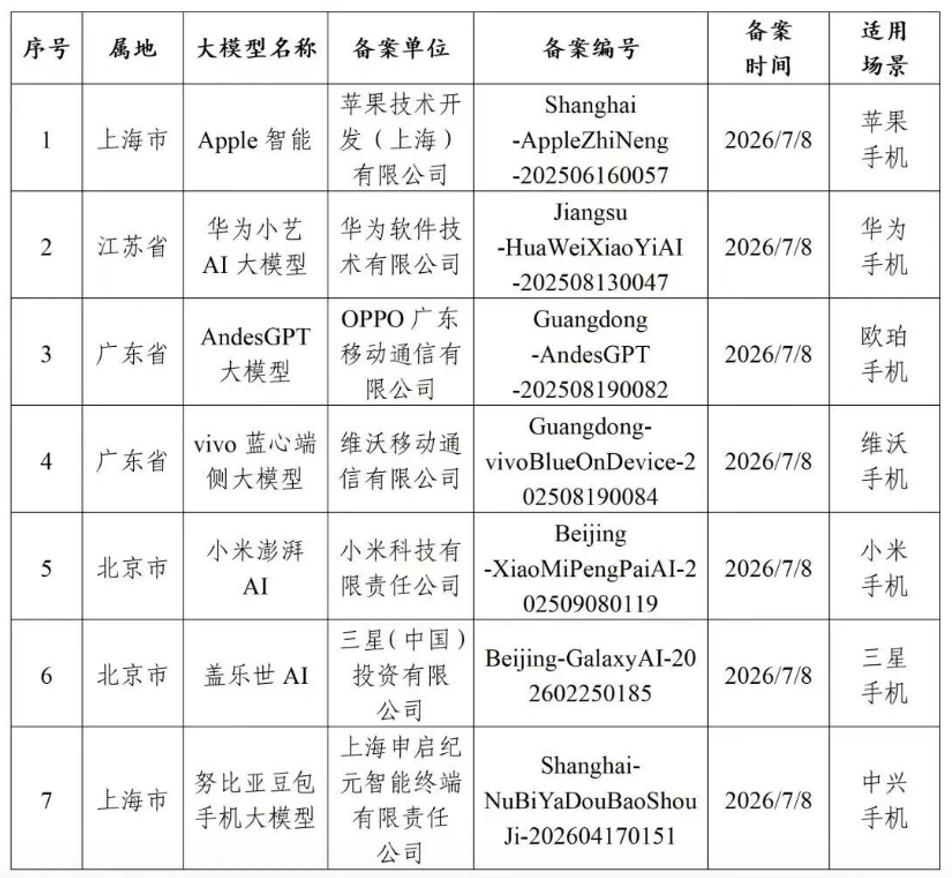
Figure: Filing information for seven on-device generative AI services for smartphones
For Step, this is clearly unwelcome news. In many respects, the AI phone may be nothing more than an entry ticket for the company to pitch its model and ecosystem story to investors. Before a tangible product actually materializes, all the talk of "redefinition" can only be taken with a grain of salt.
-01- Step Enters the AI Phone Market
On July 13, Step held a launch event for its new device brand. The company's chairman, Yin Qi, unveiled four offerings at once: the terminal brand STEPX, the agent-native operating system Step AOS, the personal AI agent Amoo, and its first agent-powered smartphone, the STEPX Neo.
The market is no stranger to Yin Qi. A 38-year-old graduate from Tsinghua University's prestigious "Yao Class," he was previously a co-founder of Megvii, one of the "Four Little Dragons" of China's AI 1.0 era. In January this year, he took over as chairman of StepStar, overseeing the company's overall strategic direction and technical roadmap.
Yin Qi openly acknowledged that his friends in the hardware industry repeatedly warned him, "Don't touch hardware." He admitted, "I really wanted to listen to that advice, but in the end, I went ahead and did it anyway."
Why was this move non-negotiable? According to Yin Qi, a "memory wall" currently blocks AI agents: WeChat doesn't know what you browsed on Taobao, and Taobao has no access to your calendar schedule. He argues that "opening a door for an agent on a legacy system will always keep it a guest. Building a home designed for agents is what makes them native residents."
As a result, Step set out to create a "doer" device that can proactively complete tasks for users, leading to the launch of its first agent smartphone, the STEPX Neo.
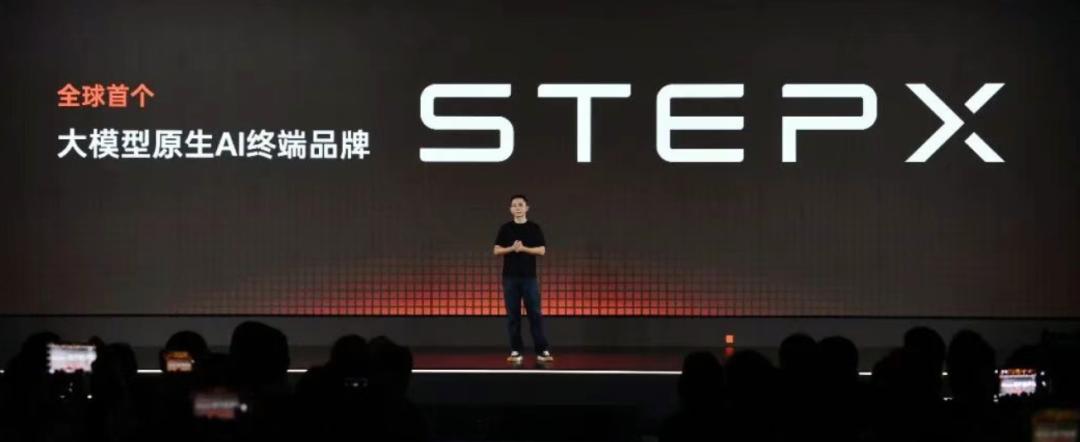
According to the company, the STEPX Neo smartphone runs the agent-native operating system Step AOS and features the new personal AI agent Amoo.
Yin Qi explained that at its core, the STEPX Neo does not follow the industry's common approach of "layering an AI assistant on top of Android." Instead, it introduces the Step AOS operating system built natively for AI agents.
On the memory front, Step AOS uses a dual-domain memory architecture, with memory recall for routine queries taking as little as 15 milliseconds. The company states that this allows the agent to remember user preferences, habits, and past interactions, rather than starting every conversation from scratch.
Furthermore, in terms of interaction paradigm, Step AOS achieves a shift from "process-driven interaction" to "result-driven interaction." For example, when a user simply says "Order me a coffee for 2 PM," the agent can independently complete the entire workflow: opening the app, selecting items, placing the order, and processing payment.
In terms of hardware, the STEPX Neo is fully ODM-manufactured by Wingtech, which handles complete device design, supply chain management, and mass production. Step itself only focuses on AI system integration and model adaptation.
Additionally, Step announced that the STEPX Neo has passed the L3 certification under the national standard for "AI Terminal Intelligence Grading," making it the only agent smartphone currently holding this level of certification.
However, the market has not embraced Yin Qi's glowing self-assessment. Right after the launch, industry analysts pointed out that a company that only does "system adaptation" claiming it has "rewritten an entire operating system" is akin to describing interior renovation as building a house from the ground up.
Veteran tech commentator Ning Ge also finds the product far from "stunning": "These demonstrations are mostly showcasing technical AI capabilities — multi-step task breakdown and cross-app automated operations. Previous AI assistant explorers have already tried similar approaches; this isn't a ground-breaking 0-to-1 innovation. The only difference is that Step has packaged it under the grand narrative of an 'agent-native operating system.'"
According to Ning Ge, what the public really cares about are the practical questions: "What screen does this AI phone have? What chip powers it? How big is the battery? What camera configuration does it use? What's its price range? When will it go on sale? These standard, essential details that every phone launch should cover — Step didn't answer a single one of them."
Immediately after the event, Ning Ge criticized: "Throughout the entire presentation, concepts kept piling up — agent-native design, dual-domain memory, cloud-edge collaboration. But all the concrete, tangible information that consumers actually need to know was completely missing."
Ning Ge remarked, "The whole event felt more like an AI narrative roadshow targeted at capital markets, rather than a product launch for everyday consumers."
-02- What Does Step Have to Build an AI Phone?
In reality, for the market, the more direct question is: Does Step actually have the capability to build an AI smartphone?
On paper, the answer is that Step does possess certain foundational strengths.
In terms of model capabilities, Step has released over 40 self-developed models to date, with its Step series foundational models ranking in the top tier on international evaluation benchmarks.
Beyond that, Step has partnered with manufacturers including OPPO, Honor, and ZTE. Its models have been pre-installed on approximately 60% of leading smartphone brands, with total device deployments exceeding 42 million units.
On the capital side, Step completed a B+ round financing of over 5 billion RMB in January this year, followed by a new round of nearly $2.5 billion in financing in May. Core players across the consumer electronics supply chain — including Wingtech, Longcheer, OmniVision, and ZTE — all participated as investors.
Not only is Wingtech an investor, it is also the contract manufacturer for the STEPX Neo. This deep partnership provides a certain level of assurance for supply chain stability and production capacity.
Yin Qi himself noted during the launch that his PhD research focused on hardware sensors, while Step's terminal division president Ni Jiayue is a seasoned hardware industry veteran, leading a team with over a decade of supply chain experience.
Even so, Yin Qi openly admits that Step holds great respect for hardware. He acknowledged, "A company must have the right DNA from the very beginning. Without a culture that integrates software and hardware, it is extremely difficult to excel in hardware development."
Based on these factors, the market recognizes that Step has some basic capabilities. But that does not guarantee that Step will succeed. At least for now, massive challenges lie ahead, hurdles that would make most competitors think twice before proceeding.
The most immediate and fatal barrier is the ecosystem wall, a challenge that Doubao Phone has already encountered. Cross-app automated operations were flagged as unauthorized plugin activity, with banking apps outright blocking such interactions.
To address this, Yin Qi explained that Step is taking the API protocol route, signing official interface access agreements with platforms like Alipay, Meituan, and Didi. This does bypass the security risks of simulated clicks, but it also reveals a critical gap: WeChat, Taobao, and Douyin are not among the initial partner list.
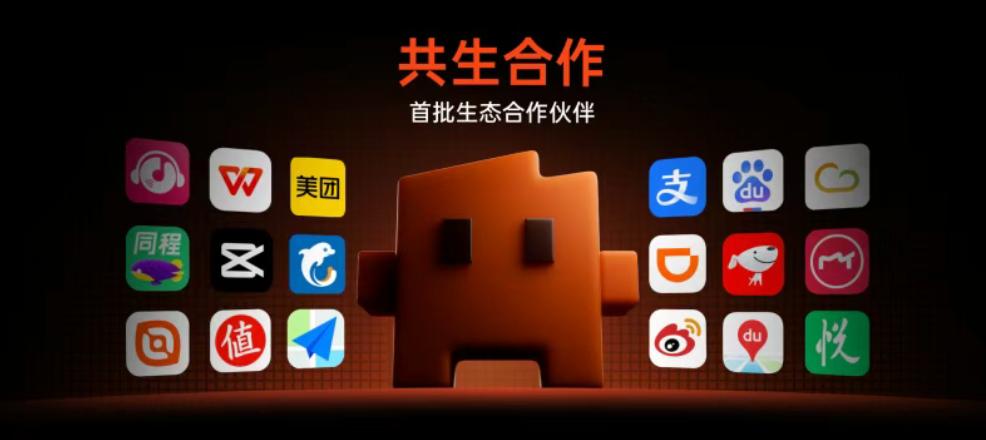
Most notably, Tencent — a strategic investor in Step — did not even publicly endorse the STEPX Neo launch.
Tencent is one of StepStar's most important institutional investors. It first participated in Step's Series B round and has continued to increase its investment in subsequent funding rounds. Yet at this phone launch, WeChat was conspicuously absent from the initial ecosystem partner list.
When asked about this, Yin Qi only stated that "in-depth discussions are ongoing." However, many analysts believe the core issue is that Step's API-based access model directly conflicts with WeChat's interests in controlling traffic distribution and closed-loop transactions.
In other words, Tencent has invested in Step, but it has not yet decided how concessions from WeChat would work in a smartphone context, so the partnership remains stuck at the "discussion" stage.
To put it simply, the three critical pillars required for a successful AI phone — a top-tier large language model, complete hardware and software engineering expertise for devices, and mature, controllable influence over a full ecosystem — Step has touched on all of them, but has not fully secured any of them.
From this perspective, Step has the basic ability to build an AI phone, but none of its strengths are particularly dominant.
-03- Is This Move Absolutely Necessary?
This leads to the essential question: Facing so many challenges, why does Step have to push forward with this strategy?
The answer is simple: This isn't a matter of "wanting to do it" — it's a situation where "they can't afford not to."
During the launch, Yin Qi presented a slide with three sentences that quickly went viral on social media: "If you act too late, there will be no room left. If you act too early, you might waste all your effort. If you don't act at all, you will have no future." These words sound like a joke, but for Step, every line reflects a harsh reality.
First, let's unpack the "acting too late" scenario.
For Step, the most pressing reality is that the commercial value proposition of large language models is rapidly diminishing.
Over the past year, domestic large model API prices have plummeted by over 90%. Revenue from simply selling API calls or computing power cannot possibly cover the hundreds of millions of dollars in costs required to develop foundational models.
Even though Step has deployed its models on 42 million devices, covering 60% of leading domestic smartphone brands, being a supplier is fundamentally a "dependent" position. Phone manufacturers can replace your model at any time, just like swapping out a trivial screw.
In other words, if Step doesn't board the AI phone train now, it will truly be too late.
Next, the "no future if you don't act" scenario.
This is an urgent reality for Step, which is currently approaching its IPO milestone. According to Qichacha, Step completed its shareholding restructuring in April 2026, dismantling its red-chip corporate structure. In May, it just closed a nearly $2.5 billion Pre-IPO financing round.
The next logical step for Step is to find the right window to launch its IPO.
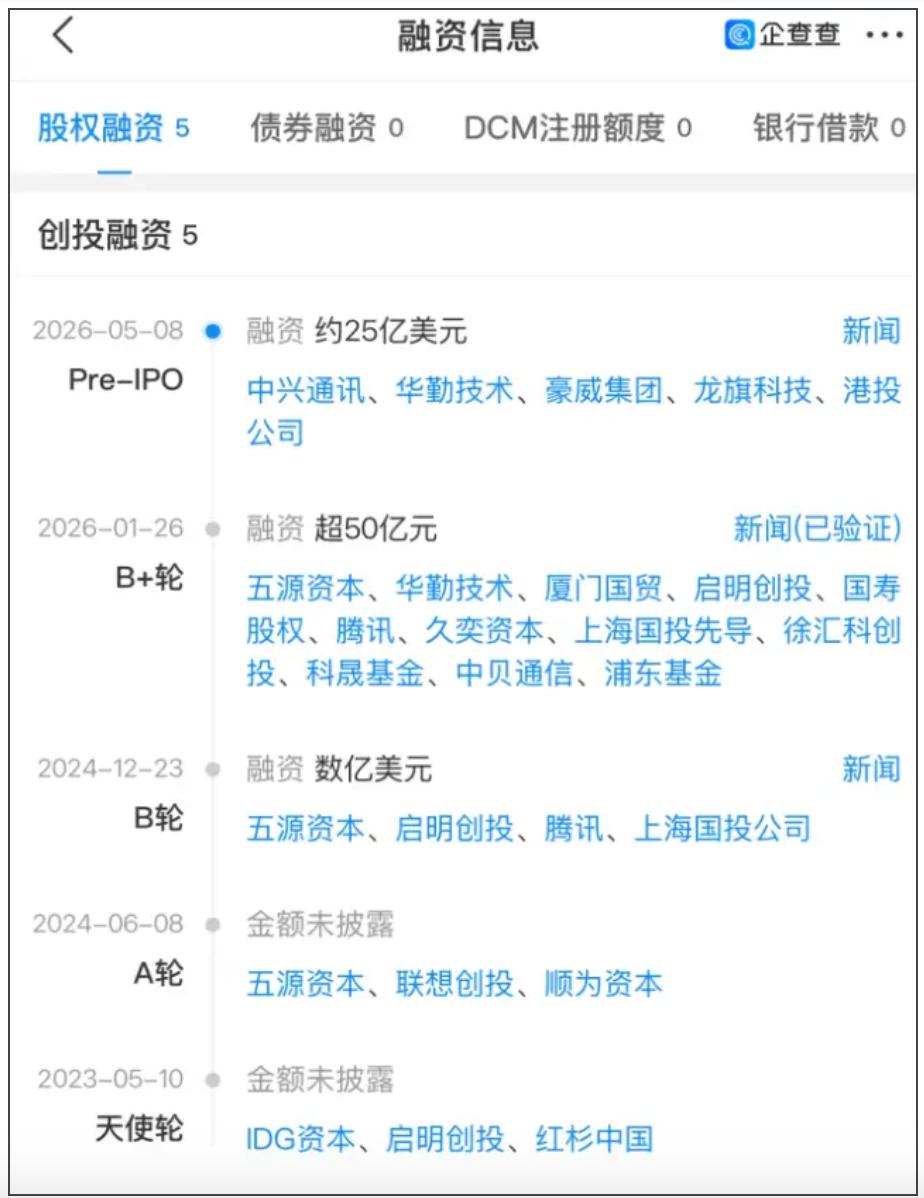
Figure: StepStar financing information, Source: Qichacha / Tingting Tech screenshot
Standing before Step now is the challenge of figuring out "how to continue telling its growth story." The truth is, to justify a multi-billion Hong Kong dollar market valuation, simply relying on "selling APIs" will never be enough.
Capital markets demand a proven, predictable commercial closed-loop. And the narrative of "AI + devices defining future interaction" is far more compelling for supporting a high valuation than a business model based solely on metered API usage.
This means that Step's smartphone venture is essentially a forced "survival declaration." The company is attempting to replicate the successful software-hardware integration model in the agent era, taking full control of its operating system and device entry points to avoid being reduced to a low-margin technology pipeline.
Of course, Yin Qi offers a more straightforward explanation. He frames it as a classic "chicken or the egg" dilemma: To build an operating system, you need hardware to run it; to build hardware, you need an operating system to define it.
Step's choice is to incubate both the "chicken" and the "egg" simultaneously. Without launching a groundbreaking new device first, the Step AOS cannot form a complete value loop, and consumers will never get to experience it.
However, this path isn't something only Yin Qi wants to take. Competitors are already moving forward, and they are pulling ahead of him.
According to reports, during the WAIC event on July 17, Nubia will showcase its second-generation Doubao Phone developed in partnership with ByteDance — a mass-produced flagship device that consumers can actually purchase directly. Meanwhile, Honor will also unveil its Robot Phone at the same event.
These self-proclaimed "world's first" agent smartphones are all competing in the same space, highlighting that there is no universally accepted standard yet. Everyone can claim to have the "first" product precisely because no one has truly cracked the market and achieved sustainable success.
At the end of the day, what are the real odds of Step succeeding? At this point, the chances don't look particularly high.
Ning Ge states frankly that in terms of overall model experience, the products he's more looking forward to are not from Step: "There are multiple AI phones in development across the market. As a total newcomer to the smartphone industry, Step faces an uphill battle just to convince consumers to trust them."
After the launch, another analyst commented sharply: "The AI revolution will eventually reshape the smartphone industry, but Step is unlikely to emerge as the central figure driving that transformation."
That said, from another perspective, Step has at least secured a seat at the table. The philosophy that "doing something is better than doing nothing" has been put into action.
Now, whether Step ends up "wasting all its effort" or successfully "breaking through the barriers" will depend entirely on what tangible products Yin Qi can actually deliver at the second-phase launch event scheduled 100 days from now.
(All names in this article are pseudonyms.)
Disclaimer: This article is for informational purposes only and does not constitute any investment advice.
This article originates from the WeChat public account "Tingting Tech", written by Chen Ke, edited by Rao Xiafei, and published with authorization from 36Kr.